Category Archives: bicycles

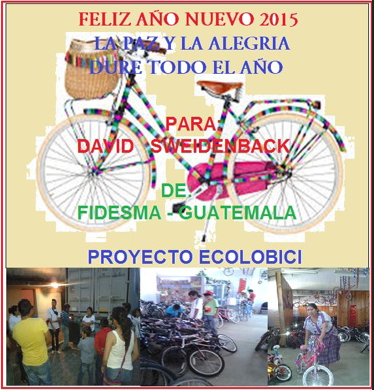
Happy 2015 from FIDESMA – Guatemala

FELIZ-Au00D1O-NUEVO2015Hola David, Muchos Saludos, Esperamos se encuentre bién, con bendición en su casa. Agradecemos a Usted y su asociación, todo el apoyo que nos da, es un proyecto que beneficia a muchos hogares y familias, hace más feliz la vida de muchos niños, jovenes y personas que jamás pensaban que podían tener una bicicleta para su ayuda personal y laboral. Adjuntamos una sencilla tarjeta, de todo corazon, deseamos que lo usted esté haciendo sea de bendición para todos los que le rodean.

Hasta pronto,

Margarita Caté y compañeros
FIDESMA Guatemala


Dear David, Greetings from FIDESMA. We hope that this letter finds you well and that all is well with your family. We would like to thank you and your organization for all of the support that you give us, for all of the families that have benefitted from P4P and the children and young people that have improved their situation in life with a bicycle. We have created this simple card with all of our hearts and sincerely feel that all of your work is a blessing to everyone that comes in contact with Pedals for Progress.

Until we speak again,

Maragarita Caté and Associates
FIDESMA Guatemela

In Honor of Sean Tyrrell

By Fran Tyrrell

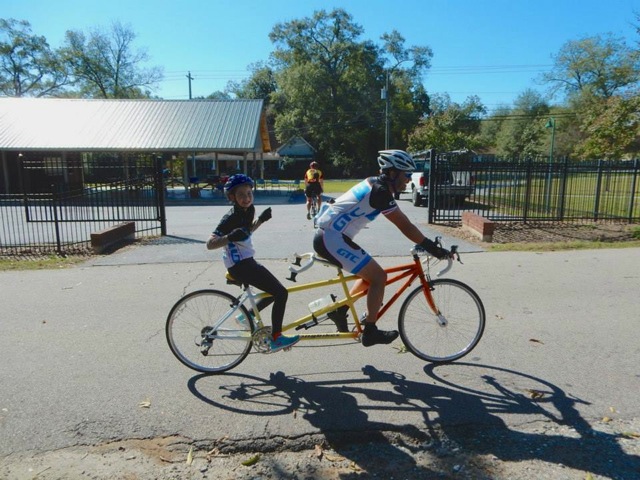
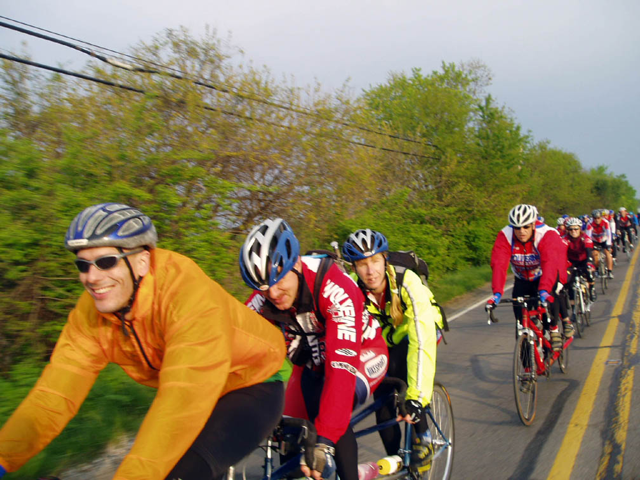
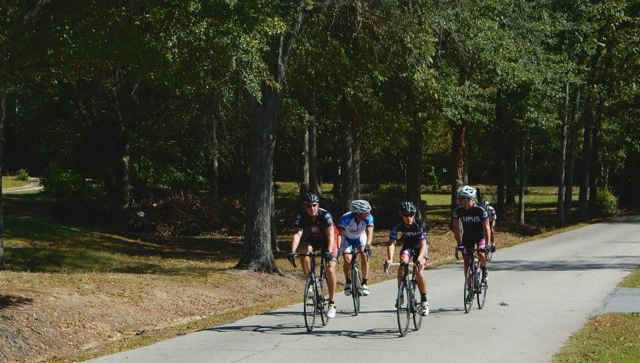
“On October 18th, 2014, a memorial bike ride in honor of my husband, Shawn Tyrrell, was held in Gwinnet County, Georgia, by members of his bike club, the Gwinnett Touring Club (GTC). Shawn was an active member of the club, and toured with them both in Georgia and in Europe. Shawn passed away from a heart attack in 2013. Members of his club wanted to honor him by holding a group ride, and I was asked to pick a charity. I had heard of Pedals for Progress from my sister, who lives in West Orange, New Jersey, and the great work that this organization provides. Since Pedals for Progress is a group that combines our love of cycling with a global commitment to sustainable programs in developing countries, it was the perfect charity to choose. We had a beautiful day for the ride, and were provided with support along the route by club members, and even a police escort! We look forward to holding this event annually in the future.”

gtc2 triple_Shawn GTC

For the Love of Bicycles

IMG-20141128-WA0006Even from the earliest days 25 years ago, not too long after we began to deliver bicycles, some young person who wants to race is hanging about, often willing to work for free just to be around bicycles. At first I really discouraged racing clubs because our real goal was income generation, workers getting to work. The love of bicycles and the love of racing have always won out. The people who work in the bike shop and the people who hang around there are always great bicycle enthusiasts.

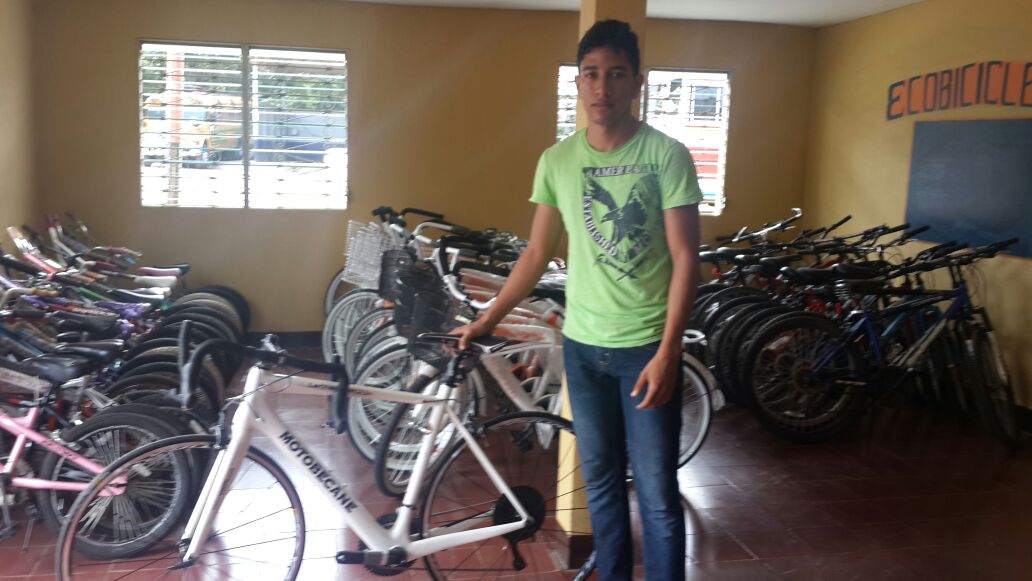
Juan Carlos Jimenez is such a young man. 18 years old, he works in a bicycle parts shop in Rivas, Nicaragua. In his spare time he is preparing for upcoming competitions racing up and down the steep jagged foothills of western Nicaragua. Thanks to the donation of this beautiful carbon-fiber Motobecane bicycle to Pedals for Progress, Juan Carlos has an exceptionally good bike to race.

I have often been asked, Is this bike too good? No bicycle is too good. There is a purpose for every bicycle. We seek to ship the highest quality bikes possible and when we can obtain such a beautiful racing bike, there is a great demand for that bicycle overseas.

Green Mountain RPCVs Collect 3,000th Bicycle

IMG_1300

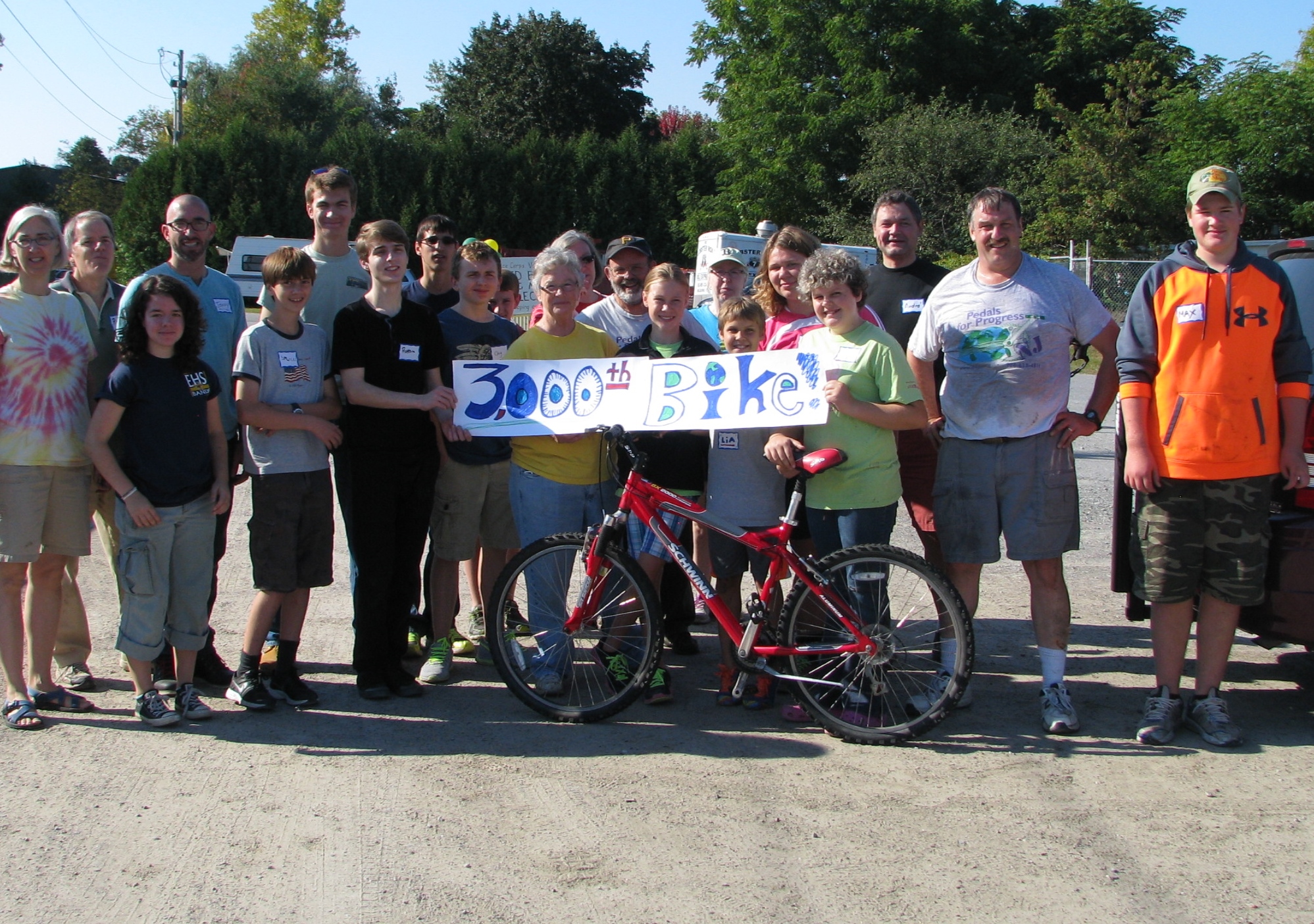
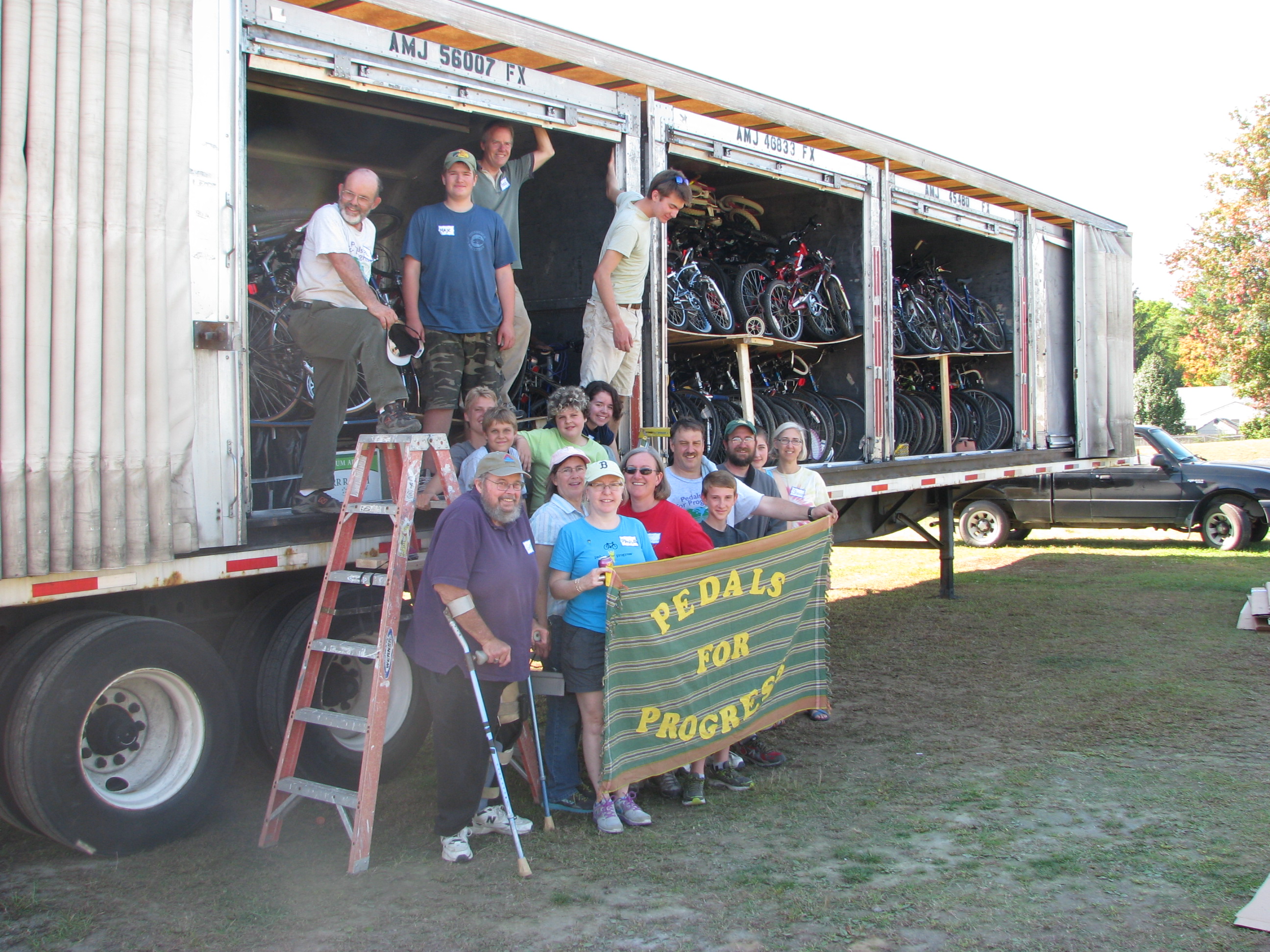
The Green Mountain Returned Peace Corps Volunteers held their 16th annual used bike and sewing machine collection for Pedals for Progress on Saturday, September 27, 2014, in Essex Junction, Vermont. During the 4 hour event, community members donated 169 bikes and 29 sewing machines.

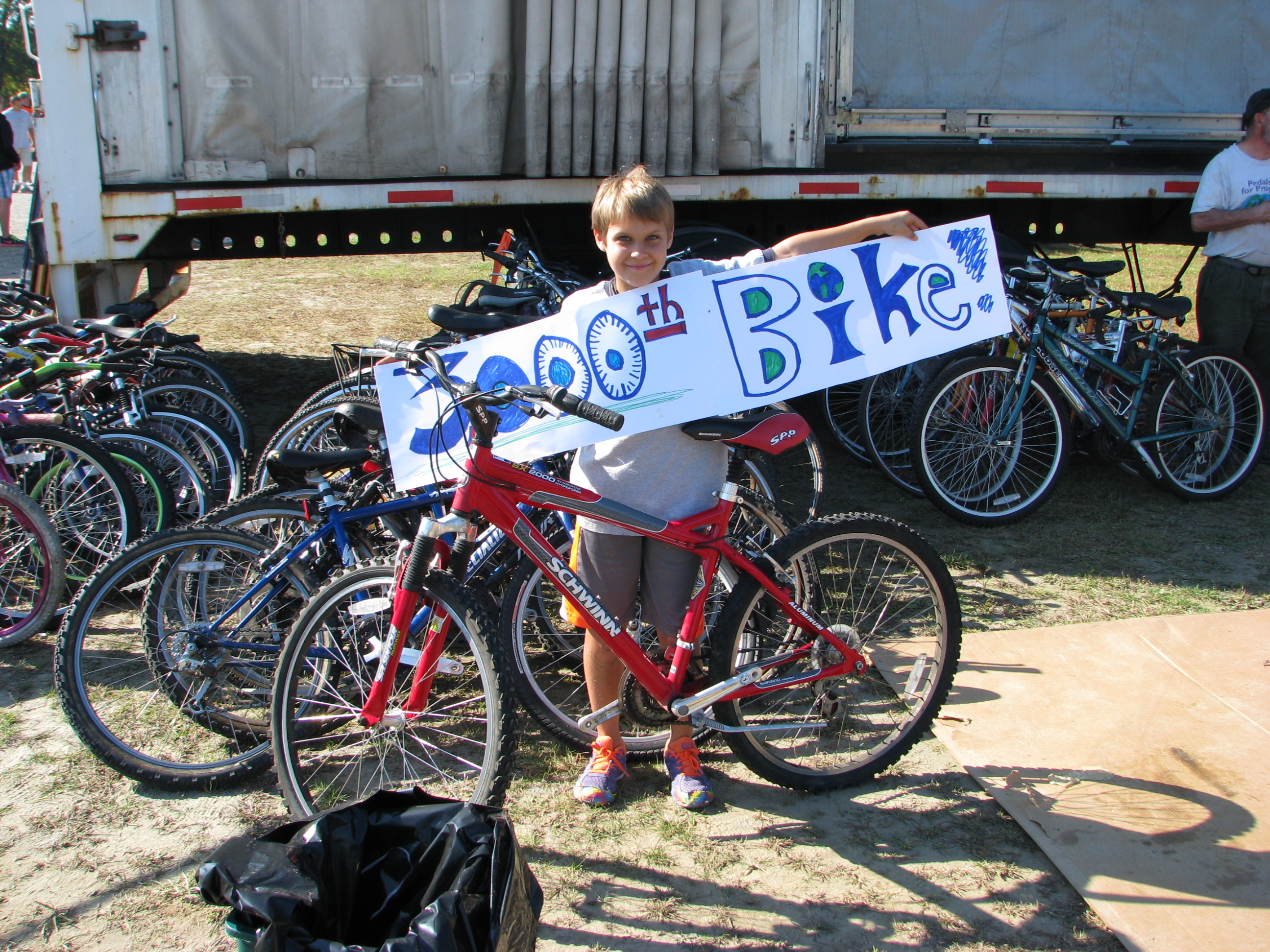
A highlight of the day was the donation of the 3,000th bike the group has collected – a bright red Schwinn. The surprised donor was greeted by a cheering group of volunteers, and was presented with a Pedals for Progress ceramic mug.

Since their first collection in 1999, the group has shipped 3,143 bikes and 78 sewing machines to Pedals for Progress from northern Vermont. FedEx has donated the shipping of all of these bikes from Vermont to New Jersey and for the past few years they’ve had exuberant help on collection day from teenage members of Ripple, a local ecumenical youth group.


2014 3000th bike

IMG_1362

Paso Pacifico Turtle Rangers

by Michael Sabrio
Fall 2014 InGear

The Spring 2014 InGear newsletter introduced the turtle rangers of Paso Pacifico. The rangers patrol beaches in southwestern Nicaragua to try to protect the turtles that nest there. Through a happy collaboration of Paso Pacifico, the Turtle Conservancy, and Pedals for Progress, the rangers now use P4P bikes for commuting and patroling.
DSCN0753ostionalPlayaAnimaRangersGaryRmsNoSalvador

In February Gary Michel and I visited the Paso Pacifico rangers and got a first-hand look at what they do. The Paso Pacifico staff in California and Nicaragua were extremely helpful in arranging the logistics. (Thank you, Kate Dolkas!) Paso Pacifico driver Don Meyer Roderíguez picked Gary and me up in Rivas for the 35-mile ride to Ostional Beach, where we would meet the rangers. Claudia Perla, a Paso Pacifico forest ecologist, came along for part of the ride.

Besides their work with turtles, Paso Pacifico has projects on monkeys, reforestation, and “felinos grandes” (big cats) among others. (In 2010, a Paso Pacifico camera trap got photos of a couple of jaguars in areas where jaguars were thought to have been extinct for many years.)

About half our ride was on excellent paved roadway. We passed through the beautiful Pacific Ocean resort town of San Juan del Sur, then headed south on rough unpaved roads. We were there in the dry season, so we had only the bumps, ruts, potholes, and dust to deal with. We wondered how much worse it is in the rainy season and how far the rangers had to travel to get to their patrols. Claudia rode with us to a site near Ostional where she planned to spend a few days with a local family setting up a monitoring program to help determine food resources for spider monkeys. We said goodbye to Claudia and continued down the road to Ostional.

Coco Beach

We stopped at Coco Beach, where Paso Pacifico has one of its turtle hatcheries. A hatchery is a rectangle in the sand near the beach with wire fencing and a covered top to provide shade. Inside, individual plots of a few square feet are marked with the date the eggs were found and estimated date of hatching. Here at Coco Beach, there were no turtle eggs. A sign said that there was lodging and a restaurant here; if you want a vacation truly off the beaten path, this is the place for you.

Refugio del Flor

Our next stop was at Refugio del Flor, a national reserve famous for massive influx of Olive Ridley turtles. Nicaraguan soldiers were posted here when we visited. A board that shows counts of nesting turtles by month and by year has some big numbers – between 23,000 and 30,000 turtles from September through November of last year – but any relief you feel is tempered by very high mortality rates for newborn turtles – at least 90%.

Ostional
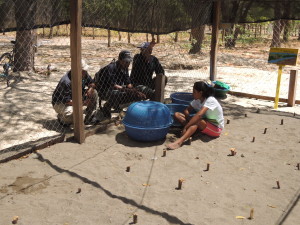
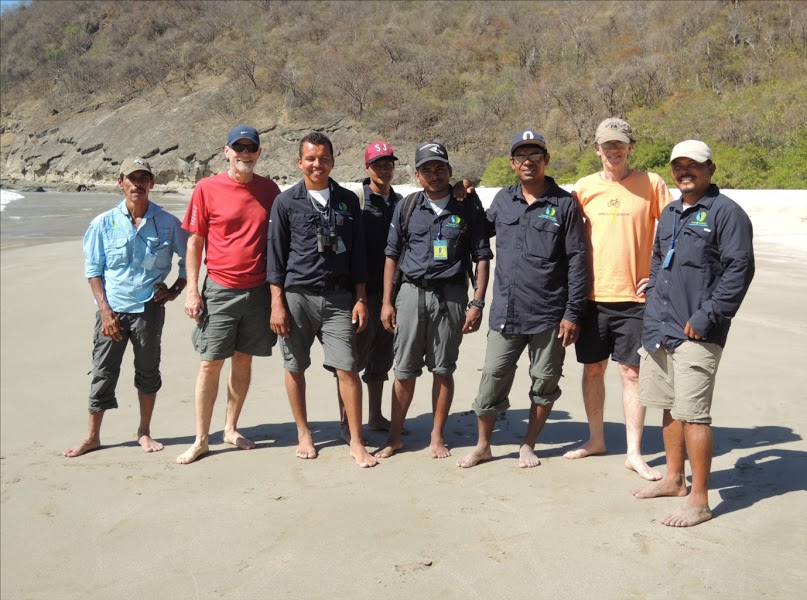
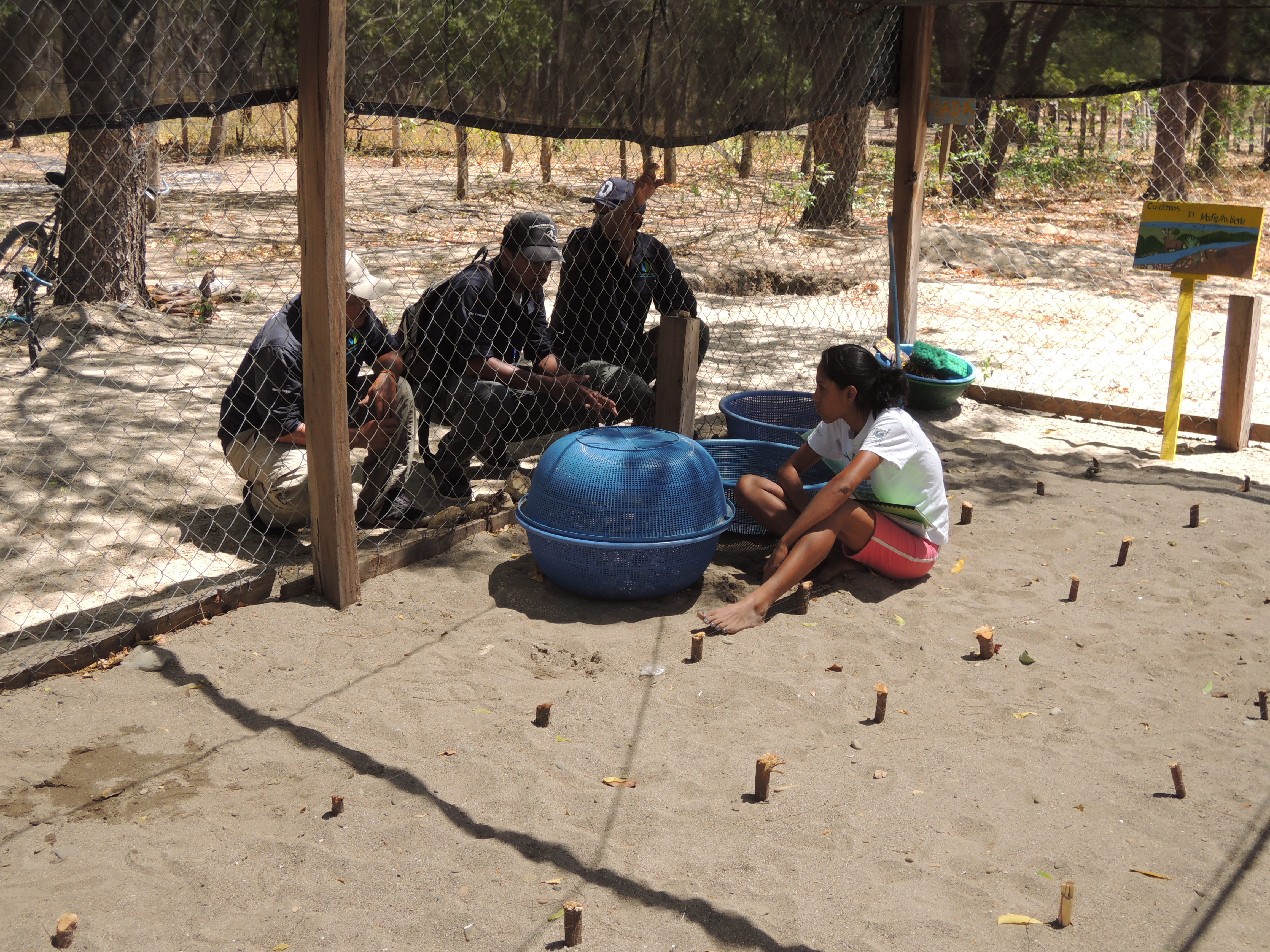
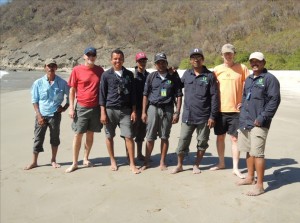
DSCN0722ostionalViveroEmpleadaAndRangersOur final destination was the beach at Ostional. Salvador Sánchez, the Paso Pacifico turtle coordinator (how’s that for a job title), lives right here with his family in a spectacular isolated spot on the beach. We met the rangers on duty that day: Daniel, Eliezer, Erick, Felix, Jairo, Jorlin, Marcos, and Salvador. They had their trusty P4P bikes. Gary and I mounted a couple more P4P bikes that Meyer had picked up from our long-time contacts in Rivas, the Santana family. We left these two extra bikes for the rangers at the end of our ride. Salvador, some of the other rangers, Gary, and I rode our bikes a few hundred yards south to another of the Paso Pacifico turtle hatcheries. Paydirt!
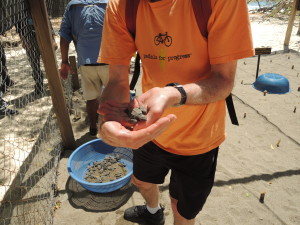
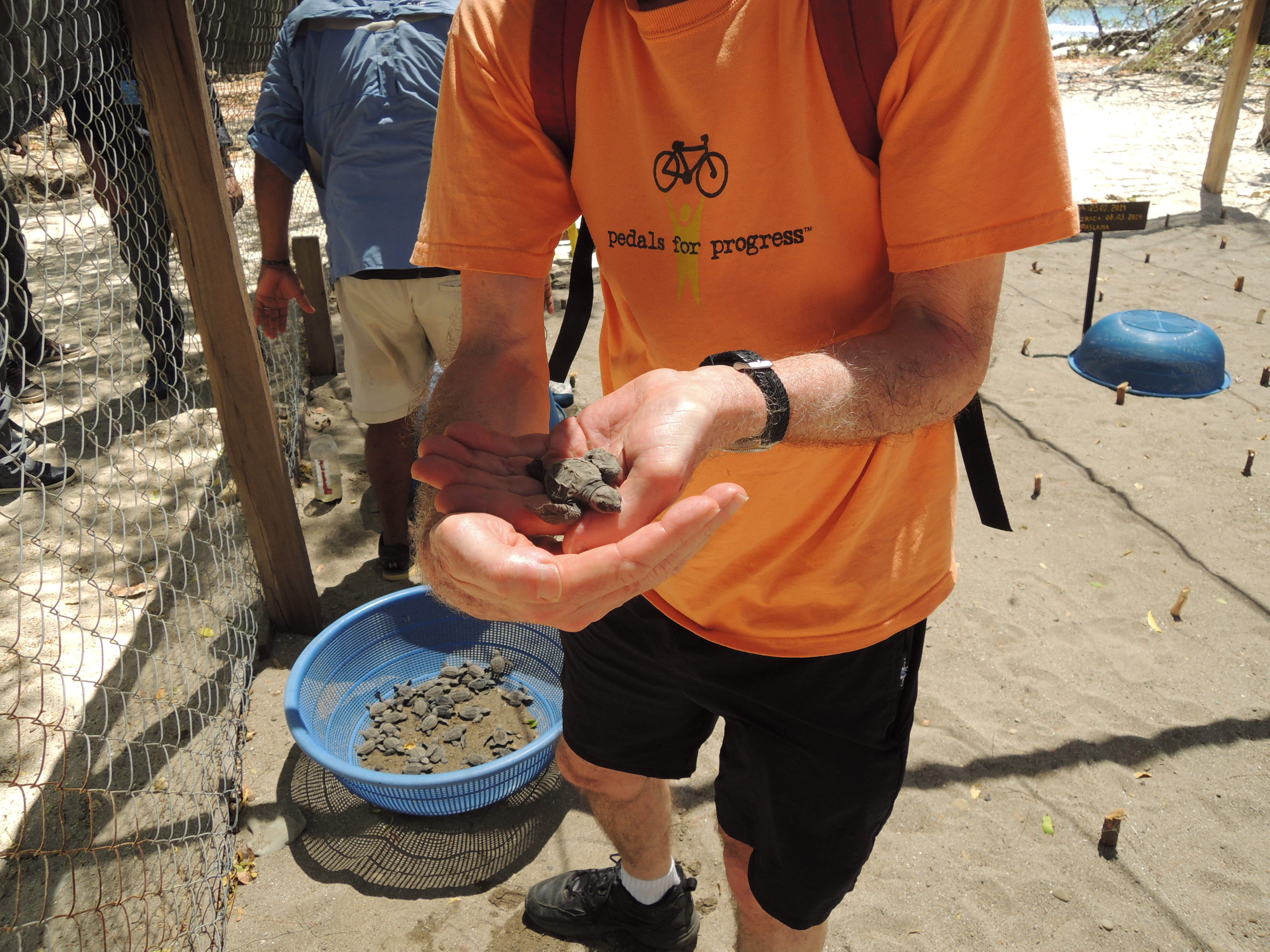
DSCN0717ostionalViveroTurtleRmsA batch of a few dozen turtles had just hatched that day. A Paso Pacifico employee was tending them, keeping them safe and healthy. They were to be released that night into the Ocean, which was a few dozen yards from the hatchery. Because of predation by gulls and other shoreline animals, the first few minutes of a turtle’s life – from the time they emerge from the nest, crawl across the beach, and plunge into the ocean – are hugely dangerous. The Paso Pacifico program saves the turtles from at least this threat.

We rode our bikes back to the beach at Ostional and took a boat ride to a nearby beach that is a popular turtle nesting site. One of the rangers dug up a nest where the turtles had recently hatched and counted several dozen eggshells plus 4 marble-sized eggs that had not developed. We hoped that the turtles hatched here had made it safely to the Ocean. Because the turtles come ashore at night, the rangers’ schedule must accommodate them. A couple of the guys on our ride were getting ready to start their 6pm to 6am shift. They explained that their jobs are sometimes routine and sometimes dangerous. Sometimes there is nothing to report. Rangers have no official authority to confront or stop poachers, who may be armed. The rangers rely mostly on their ties to and respect from the community. It also helps that Paso Pacifico pays compensation to local people who help with its conservation programs. People who find a turtle nest get money when they bring the eggs to a Paso Pacifico hatchery. Families who lose livestock to predation by the big cats and even people who can show evidence of the cats (such as cell-phone photos) are also paid.

Besides being incredibly interesting and beautiful, our trip gave us a better appreciation of how much a bicycle can help people do their jobs where transportation is unreliable and expensive. We also have a better appreciation of how hard it is to balance the preservation of ecosystems and rare animals with the day-to-day survival of very poor people.
High Gear Cyclery and Pedals for Progress Team Up to Change Lives

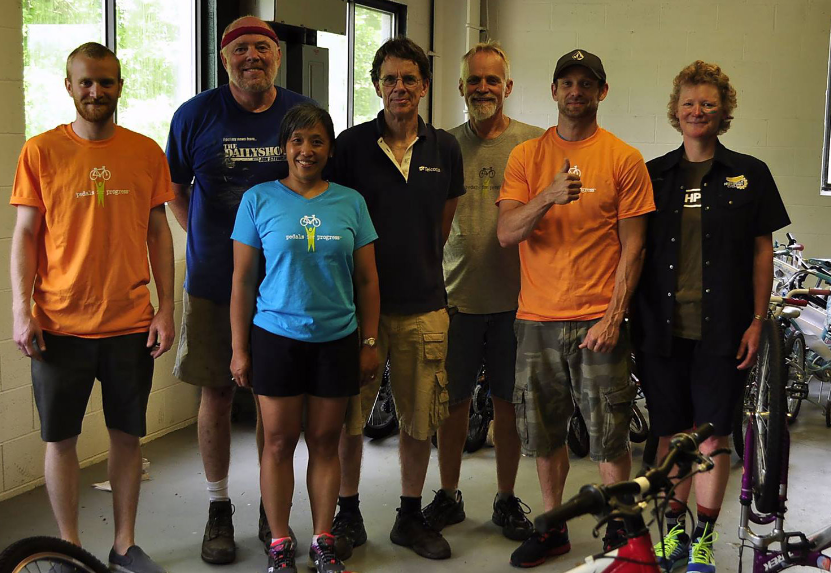
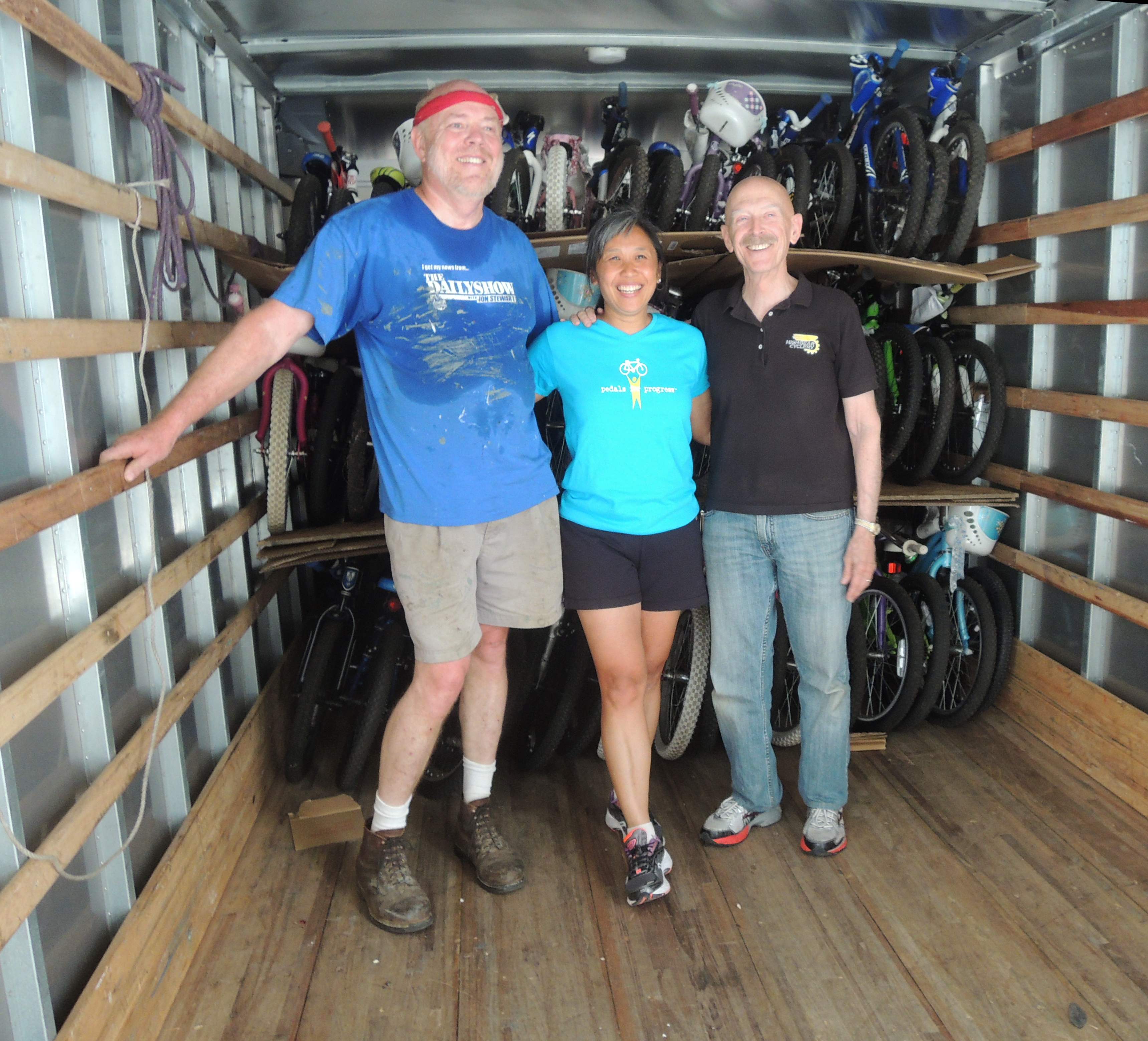
2014fallHighgearGroupHigh Gear Cyclery is pleased to have partnered with Pedals for Progress (P4P), with the first load of 193 kids’ bikes being readied for shipment to Guatemala in mid-June, 2014. There will be a container load of previously loved kids bikes from our NJ customers shipped to be distributed to families in Guatemala.

Bike-shop-quality kids’ bikes are built to last a long time. However, kids grow up fast, and their bikes get set aside when they’ve outgrown them. High Gear began to offset this trend years ago when they started a Trade-up Program. These bikes now can be put to good use and provide value to customers after a child has grown out of his/her bike and can help change the lives of families here in the US and in less developed countries. When customers bring back the bike purchased at High Gear they receive a Trade-up Credit to use toward the purchase of any new bike in the store.

Over the years High Gear Cyclery has donated more than 2,000 used kids bikes to a variety of local charities This is the first time that the used bikes will be shipped overseas to change lives.

2014fallHighGearRoneYeeDave

It was great luck that High Gear has a number of kids bikes and P4P was planning a shipment to a charity named FIDESMA in Guatemala for June. Given the average height of many of the Guatemalans, the 24-inch kid’s bike will become an adult bike to be used by a mother or father who now can get to work to do their job and get home in time to take care of the kids, and support themselves.

Each 16- and 20-inch bicycle will go to a child who will now be able to go to school on a regular basis. With a bicycle comes a life change, ease in getting to school and more time to study or play. There are 16-inch bikes for seven, eight and nine-year-old kids who are going to use them to commute to school. The 20-inch bikes will go to older kids who may use them for a combination of work and school commuting. Of course, as a bike shop, High Gear Cyclery believes that bikes can change anyone’s life. Sometimes we just don’t appreciate just how much impact a bike can have on a life. The stories and success of P4P shine a new light on just how important a bike can be in someone’s life and on a village and an economy.

Update on Our Partner Ecovolis

by Patricia Hamill
Fall 2014 InGear

7Just recently, we received some positive updates from Ened Mato, CEO of Ecovolis in Albania. He announced that there have been 4 successful projects put in motion that were made possible through our partnership with them.

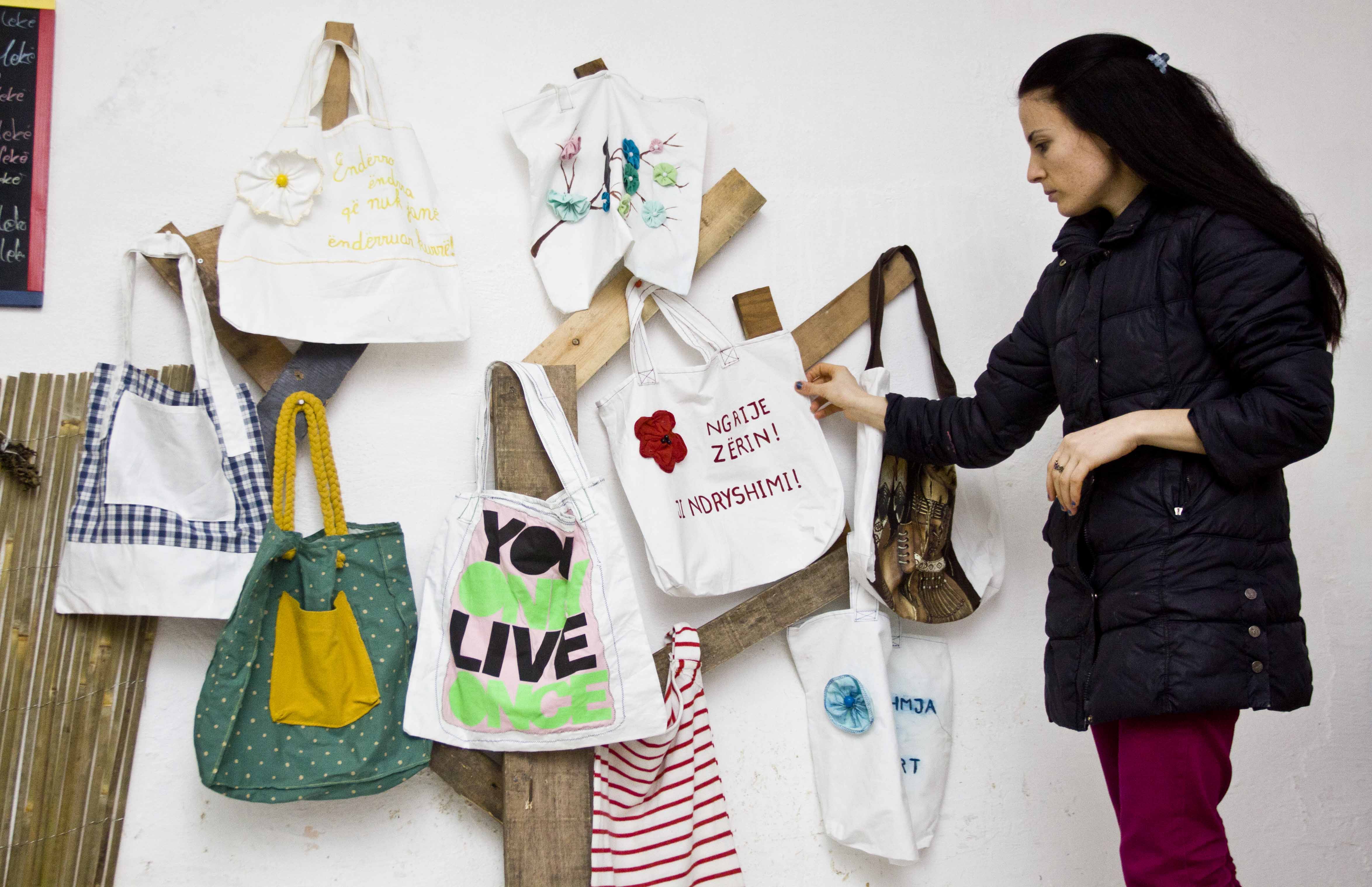
The first project he told us about was the development of an entrepreneurial endeavor called Trasta o Nona (The Sack is the Best). With the 20 sewing machines P4P was able to ship to them, 5 disadvantaged young people gained employment making cloth bags to replace the heavily depended on plastic bags from stores. In three months, 3,000 bags were sold. Even better is the fact that their overhead so far is 0 since the material comes from coffee companies and donated clothing.

The second success story is about a movement called Release Lanes or the Free Bike Lanes Movement that was started by thousands of bicycle enthusiasts in Tirana. They are actively protesting the lack of bike lanes and poor driver awareness that the cyclists must deal with daily. Funding from P4P’s involvement was the catalyst for this activism and all participants readily acknowledge our part in their cause.

As most of you know, not all of the bicycles shipped elsewhere go solely to new owners to use. In some cases, as with Ecovolis, the cycles are sold to the public and then the funds collected are used for improving the lives of the local population. For instance, the first $7,000 (USD) earned from a bicycle sale was directly transformed into something called Ecological Gardens. Five public gardens in Tirana that were languishing from neglect, now have solar panels installed, parking for bicycles, and recycling receptacles. All make these locations cleaner and more relaxing now.

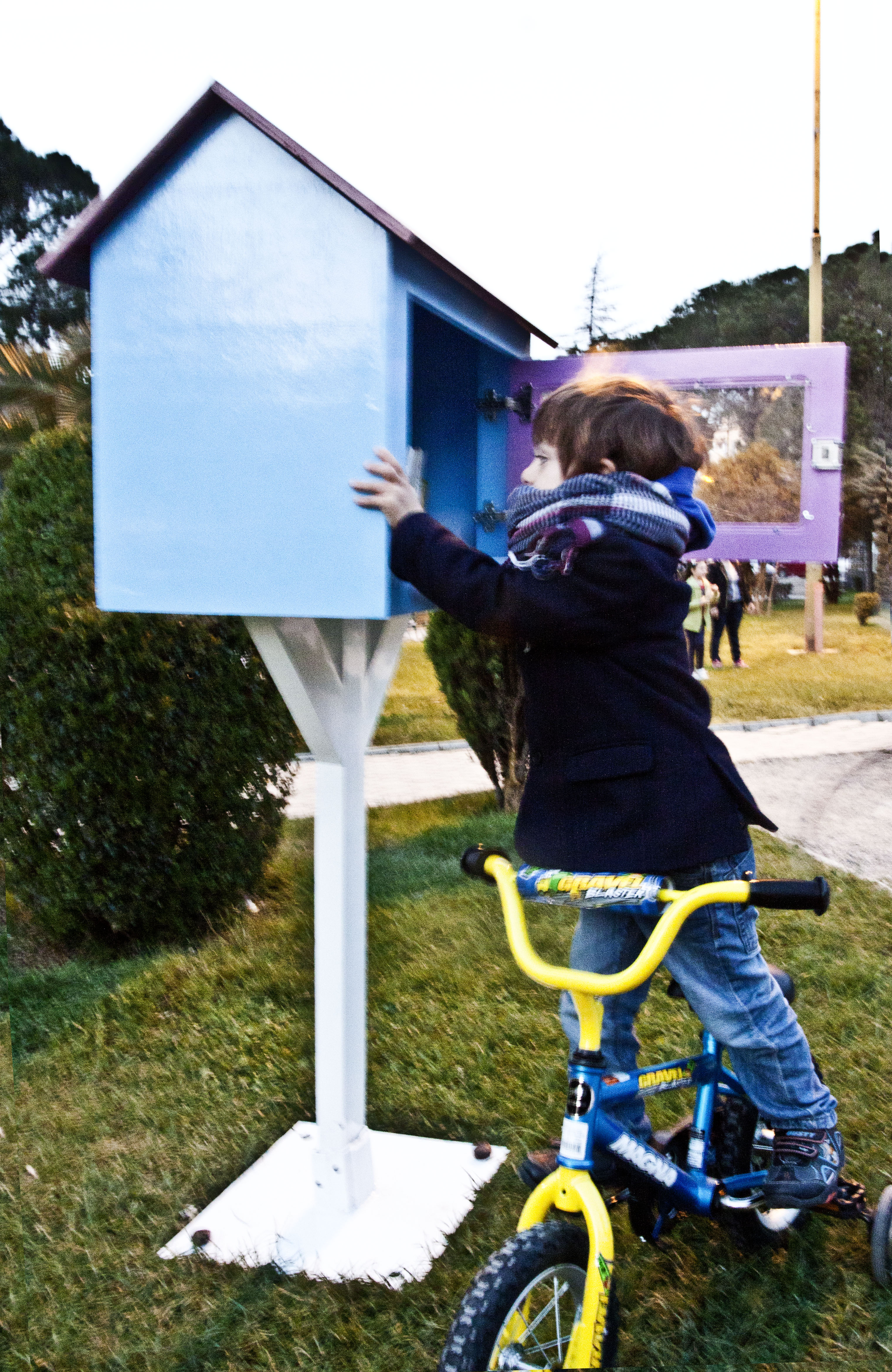
Ened also informed us that some funds collected in April from bike sales was put to use building small freestanding “libraries” in some of the parks and playgrounds in Tirana. Children are able to take a book out of the little library and then return it for another. Lastly, some of the bikes at the time of the sale were reserved for the children’s daycare center Shtwpiza e Ngjyrave (House of Colors) so that the little ones would have more options for playtime.

2 (1)

As their web site states, Ecovolis was created to be “ . . . a program that will forever change the way people perceive [Tirana], how they experience and perceive transportation, creating a more vibrant city, a place where people want to work and live with a quality and entertaining environment.” In these days of reinventing ourselves and putting concerted effort into recycling all that we can, it’s always gratifying to learn how the donated bicycles and sewing machines from the States become more than used cycles or machines elsewhere. They become clean energy sources, earth friendly bags made by newly employed people, books for children, and even garden plots. It might be time to take a trip to see Tirana’s improvements in person.

Mr. Mahmudu

by Fuseni Bense
Fall 2014 InGear

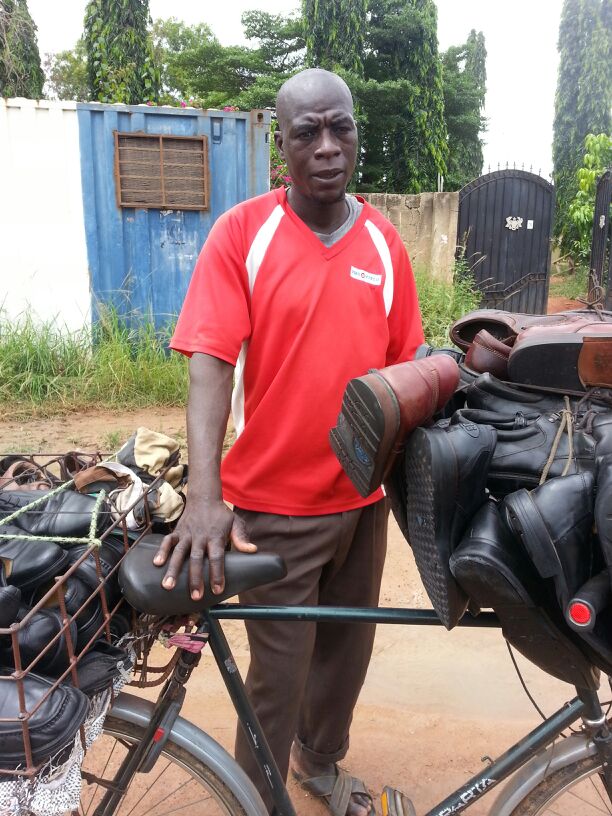
Mr. Mahmudu is a native of Kidal from Northern Mali who moved to Ghana due to the conflict in his hometown (Kilda) where he lived before. Because of the extent of the conflict and the threat involved, he tried to move his wife and six kids to southern Mali in order to escape the risk involved in the fighting.

Mr. Mahmudu getting ready for work.

As he moved to Southern Mali, things were not easy for him as well. He later survived suicide attacks which led to the death of one of his daughters with others severely injured. Only one child survived with no wound in the attack.

Later, the incident left him with no choice but to move to Ghana alone in order to earn a living to cater for his wife and kids. When he came to Ghana, he had nothing in hand to start a trade to satisfy his basic needs as well as to take of his wife and kids back in Mali. He later joined a construction firm as a laborer. After a few months as a laborer, he was able to save an amount of GH$50. He then started to sell used shoes, a business he had earlier thought of on his arrival in Ghana.

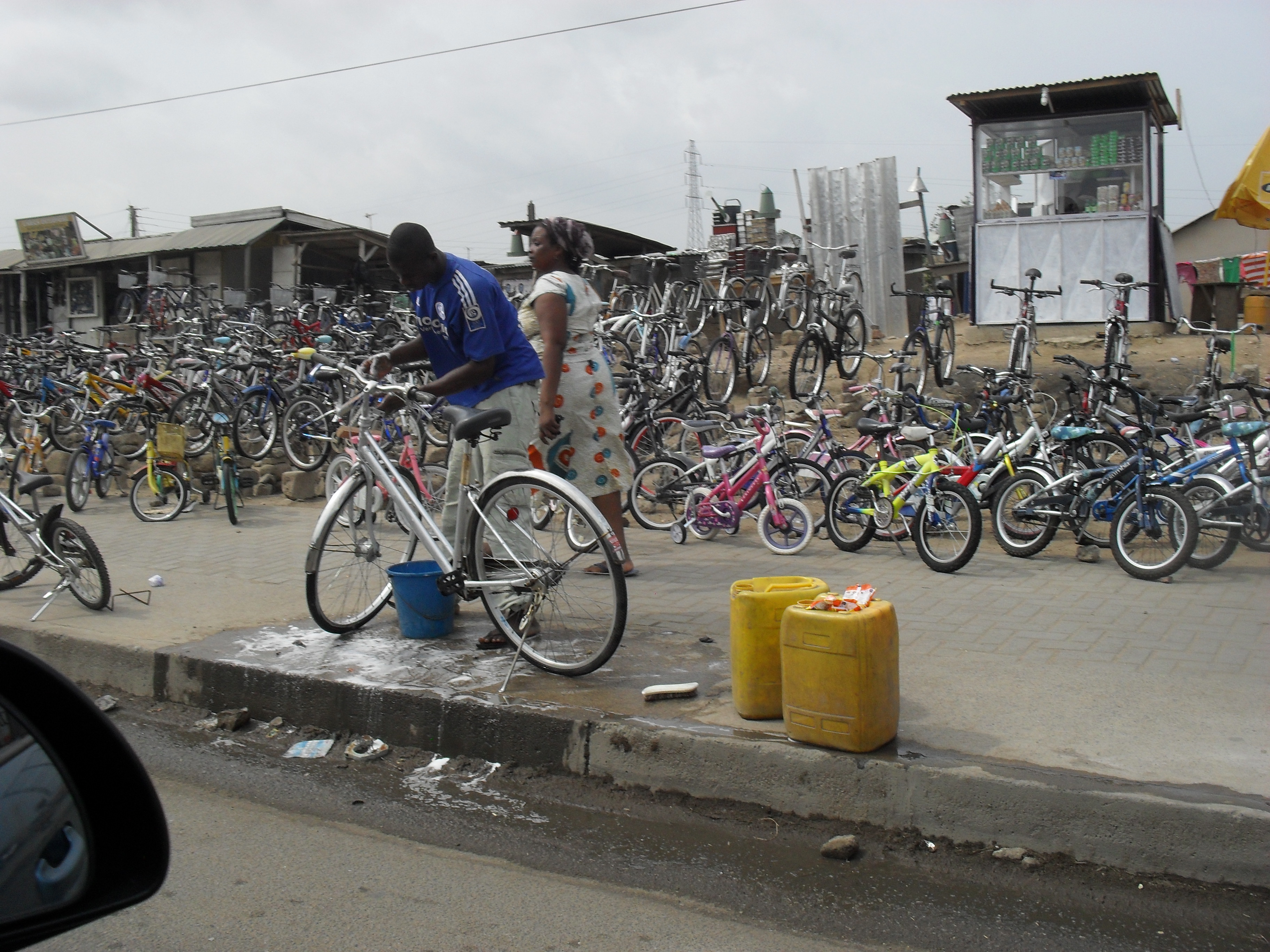
He then bought from a wholesaler 5 pairs of shoes with which he began his trade. Mr. Mahmudu had to carry the shoes on his head and shoulders and comb around the city for about 30 – 40 Km/day trying to sell them to make a living. He later heard about the tremendous help WEBikes gave to the needy and came there to seek for assistance to own a bike which could help him cover more Kilometers so he can sell more to boost his income.

WEBikes, a Non Governmental Organization, assisted Mr. Mahmudu with a bike at a cost of $10 only. Mr. Mahmudu became more mobile with the help of the bike given to him by WEBikes and P4P and his trade grew. Thanks to WEBikes and P4P, Mr. Mahmudu can now take care of his wife and kids. The kids now attend school in the capital of Mali (Bamako).