Category Archives: Collectors

Pedals for Progress and School-based Community Service

by Kelli McMahon
Spring 2012 InGear

As a middle-school teacher, helping twelve- and thirteen-year-olds understand the importance of giving back to their community and their world is just as important as teaching them how to infer meaning from a text, how to organize their writing, or how to solve for x. I am lucky enough to work in a building where community service opportunities are abundant and there seems to be constant flow of fundraising for different causes. When I started teaching here at Tohickon Middle School in Doylestown, PA, eight years ago, I, along with the team of teachers I worked with, wanted to create a community service activity that stood out from all of the other options already in place. We wanted something that would not only help others, but would give our particular team of students a chance to learn something new and important and provide a chance for them to work together to build a strong relationship. One of the teachers on our team had heard of Pedals for Progress and suggested that we hold a bike drive. After a little research into the organization, we decided to give it a try.

Since then, we have held eight bike drives—one each year—and have collected over 800 bicycles and approximately $9,800.
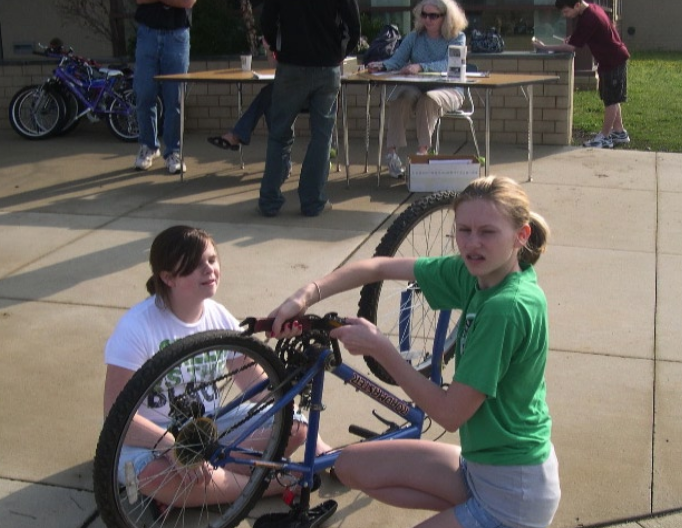
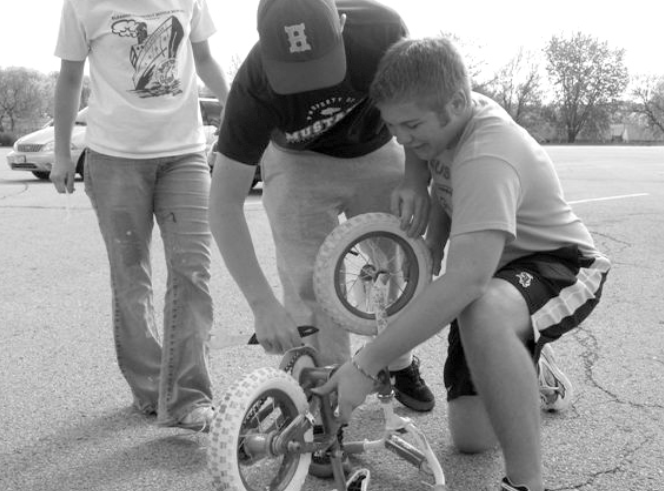
Students preparing a bicycle for the shipping container

Along with the knowledge that the lives of over 800 individuals have been improved, the students involved in the bike drive have a great learning experience. Each year, our new team of 7th graders is presented with the task of organizing the bike drive. To do this, the students learn many life skills that cannot be taught in a classroom. First, students must research the countries where the bikes might be sent and attempt to grasp the need present in those countries. In a time of cell phones and computers and iPods, it can be difficult for kids to understand that there are people in the world who consider running water and transportation by motor vehicle luxuries; so, having the students research the countries with which Pedals for Progress partners gives the students a glimpse into how people in other, less fortunate parts of world live. This not only helps the students realize how the bikes will improve the lives of those receiving them, but also helps them understand how fortunate they are.

After researching the countries, the students work together in groups to develop an advertising plan, which includes designing a flyer that they can distribute in their neighborhoods and communities. It would seem that getting people to come to our bike drive each year would get harder and harder, being that it is held in the same town and advertised to the same community each time. One would expect that the flow of used bikes would run dry sooner rather than later. However, with our new crop of seventh graders each year come new ideas and new motivation and they always seem to get the word out about the drive to people who have not been reached before. This has led to our successful run of bike drives. Working in their groups to advertise the bike drive, the students learn the benefits of teamwork. This makes the relationships among our students stronger. Throughout this process the students also gain some insight into how to market an idea, which is a very important and relevant skill to have in today’s world.
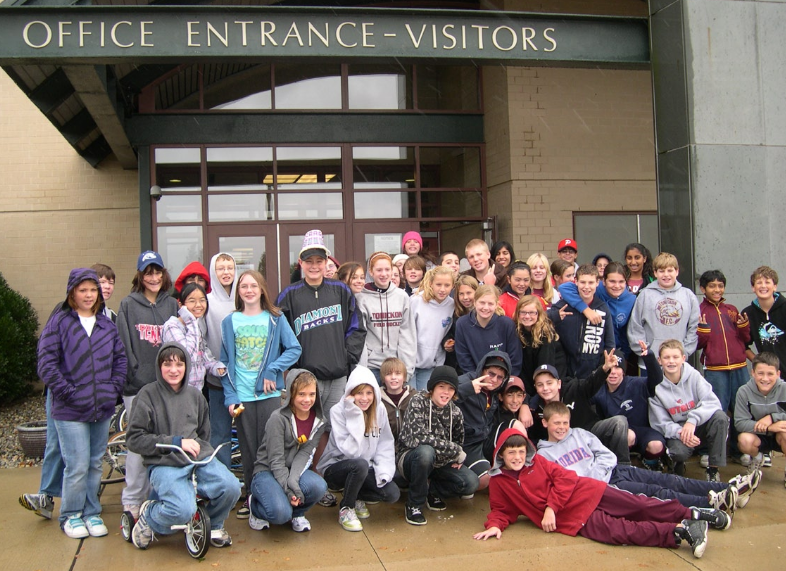
Students in front of the Tohickon Middle School Building after their collection
Students in front of the Tohickon Middle School Building
after their collection

Finally, after researching and planning and advertising, comes the day of the bike drive—the day when all of the hard work and effort put forth by the students pays off. Over our eight years holding a drive, we have collected bikes in wind, sun, rain and even a rare October snowstorm. Each time, no matter what the weather, it is a day of teamwork, fun, and memories. The kids enjoy working together to “break down” the bikes to prepare them for shipping and assist the donors with the bikes they are coming to deliver. The people who come to donate are always so grateful to get rid of the bikes that were clogging their garages and that they didn’t know what to do with. This aspect of hosting a Pedals for Progress Bike Drive is such a perfect model for a community service activity.

Everyone wins. The students gain invaluable life lessons and teamwork skills. The people who donate are happy to have found a home for their unwanted, but not unusable, bikes that were taking up much needed space and gathering cobwebs. Most of all, the lives of the individuals who receive the bikes in different parts of the world are forever changed. Getting to work or school, reaching needed medical attention, and accessing water and food sources all become easier for those that the bikes reach. Hosting a Pedals for Progress Bike Drive is the ultimate win-win and we look forward to doing year after year.
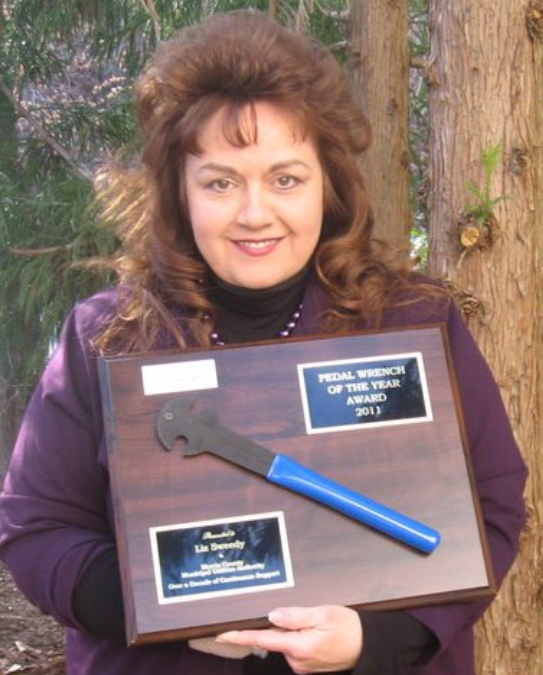
Keep on Collecting: 2011 Pedal Wrench of the Year Award Shows Us How To Stay Involved

by Patricia Hamill
Spring 2012 InGear

Liz Sweedy: 2011 Pedal Wrench of the Year Award

The philanthropic spirit descends upon most of us in various ways and at differing frequencies throughout the year. We may tire of the interruptions of our favorite radio programs and figure our $5 will get the fund drive chatter to end sooner or we may be unable to resist the angelic face of the child at the door shaking the collection jar. But what truly differentiates the sporadically involved donor from the civic minded, community service for the community’s sake organizer? The tireless and ongoing dedication to and enthusiasm for a cause. Liz Sweedy is one of those enthusiastic people. Since 2003, she has been in charge of coordinating the annual Pedals for Progress bicycle collection events for the Morris County Municipal Utilities Authority (MCMUA) in New Jersey.

According to P4P’s 2011 Pedal Wrench of the Year award winner, “My passion for P4P has been in full gear ever since our first bicycle collection event occurred, and that’s for two reasons. First, I’m very happy that unwanted, used bicycles have been spared from spending an eternity in landfills. Second, I’m delighted that these bicycles, which I fondly call ‘precious gems,’ provide assistance and joy to folks whose lives are virtually transformed as a result of having them.”

To date, this municipality has coordinated the collection of literally thousands of bicycles. The members of the MCMUA are not the sole participants in this collection process. The County College of Morris in Randolph donates the use of one of its parking lots for the County’s June collection day. Members of a local Boy Scout troop volunteer by unloading bikes from vehicles and doing some mechanical preparation so the bikes can be shipped. Local newspapers, cable TV programs referencing P4P, or signs advertising the event are what draw bicycle donors who happily include $10.00 along with each bike, understanding that this helps alleviate transportation costs.

This is only one example of groups of people from disparate organizations coming together and coordinating an ongoing, efficiently run bicycle donation event that repeatedly draws enthusiastic participants. The Boy Scouts of America and some Rotary clubs have offered financial assistance for events similar to the one sponsored by the MCMUA and some municipalities receive the $10.00-per-bicycle fee from local service organizations. This makes it possible for people to donate bikes that are occasionally collected from roadsides or illegal dumping sites without having to reach into their own pockets for the accompanying $10. Another option is to apply to a local municipality for a New Jersey Clean Communities Mini-Grant Clean UP Program. These grants tend to be awarded to non-profit organizations that conduct litter cleanups. The non-profits apply the funds from the mini-grant toward the fee for the bicycles that are found and donated.

One would think that it is not so easy to interest people in participating in a cause, much less year after year; but, when local businesses, organizations, and schools cooperate and dedicate their efforts, the results are often staggering. As Sweedy puts it, “In a nutshell, my organizing and executing P4P collection events causes me to experience all sorts of good feelings. Hurrah for P4P—may its wheels continue to turn!” No matter how near or far the recipients of your philanthropy reside, active and continuing participation in your community has long-reaching and lasting benefits for everyone involved.

Long Island Gives Back

by Bette Bass
Summer 2011 InGear

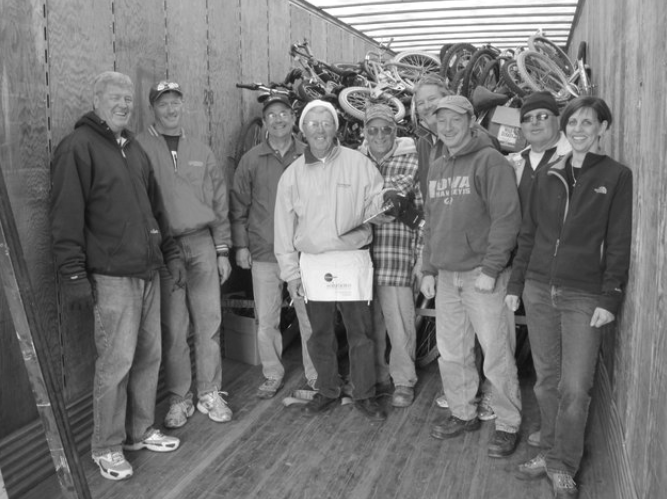
Long Island RPCVs at work on April 16th, 2011

The Returned Peace Corps Volunteers of Long Island began over 20 years ago as a way to meet and reconnect with other former Peace Corps volunteers, and for the first few years was primarily social. Every year we would set aside a portion of our dues to contribute to a worthy cause. After awhile we decided that we wanted to do more. At that time, one of our members, Kathy Williams Ging, heard about Pedals through an RPCV friend who lived in New Jersey. In October of 2003, due to efforts by Kathy and Charles Bevington, we had our first collection in Hicksville, at a location that was supplied by Brian Richardson. We got to meet Dave and successfully collected 33 bikes. At our annual business meeting later that fall, we decided to make this an annual group effort. After deciding to switch our collections to the spring, we had our next collection in April, 2005. It has become an important part of our group’s activities every year since.

Over the years we’ve supplied 892 bikes and about 10 sewing machines, and enough money to cover the $10 per bike cost, usually with an additional cash donation. Many of us have been involved throughout this journey. Kathy Williams Ging, Linda Restaino Merola, Tom Montalbano, Charles Bevington and I (Bette Bass) have been coordinators through the years. We’ve held collections in both Nassau and Suffolk counties, so that more people can be involved, and we can have a larger pool of potential bikes. We have used parking lots all over Long Island, including Hauppauge Middle School, the Massapequa Public Library, a bank in Huntington, a sailing association in Sayville, a Temple in Port Washington, and a bicycle shop in Rocky Point.

We have partnered with other organizations as well: Hauppauge Middle School, in Hauppauge NY, provided a space and held cookie sales and other fund raisers for two years. Linda Restaino Merola was instrumental in obtaining the space for us. We collected so many bikes at our Huntington bank location that Linda and her husband Lou Merola stored about 30 bikes at their house overnight since they didn’t all fit on the Pedals truck. The Wet Pants Sailing Association Juniors, of Sayville, came out in force one year under Tom Montalbano’s lead—this was probably our most scenic spot, right on the water in Sayville. Last year, as part of their Mitzvah Sunday, we partnered with several Temples in Port Washington. Jerry and Nancy Federlein, both LIRPCV members, coordinated the Mitzvah Sunday. This year, Rocky Point Cycle, in Rocky Point, supplied our space. They also accepted bikes before the collection date. Lyn Dobrin, of Lyn Dobrin Ink, another LIRPCV member, has handled all of our publicity, and we have had numerous newspaper articles, radio announcements, and this year, an appearance on an NBC cable news show with Chuck Scarborough.

Over the years, we have come to regard Pedals as our own. Some of us have purchased our own tools to process bikes. Many of us have made mini collections, driving around the area picking up bikes and donations as we go. Tim Ging, Larry Hohler, Linda and Lou Merola, Tom Montalbano,and Jerry and Nancy Federlein, Bill Reed and Mary Watros have done this almost every year. Jennifer Monahan and Michael Kretschsmann have rented a small truck and brought 10 to 12 bikes and a few sewing machines a year from the East End. This has given us access to even more people and bikes. I (Bette Bass) discovered a real talent for making sure people give their $10 per bike. I enjoy explaining why it’s so important for everyone to donate. My favorite activity is using the photos Pedals sends to show children who are donating a bike just why it’s so important and how much difference it makes to other children. I feel that we’re starting a new generation of caring, giving people. As individuals, Pedals has really struck an emotional chord with each of us. We all, whether we returned 45 years ago or last week, know that transportation is one of the keys to having a better life all over the globe. Most of us were in rural areas where there are very few cars, and buses are a sometime thing. The time and effort put into just getting from one place to another takes a toll on the whole family. The addition of sewing machines to our collections was very welcome—providing someone the means to earn a living is a wonderful gift. The Returned Peace Corps Volunteers of Long Island is already planning for our next collection in April, 2012.

Happy 20th anniversary to Pedals for Progress, as we celebrate Peace Corps 50th Anniversary as well!!

Westfield Police Department Donates 20 Bikes to Westfield Knights of Columbus

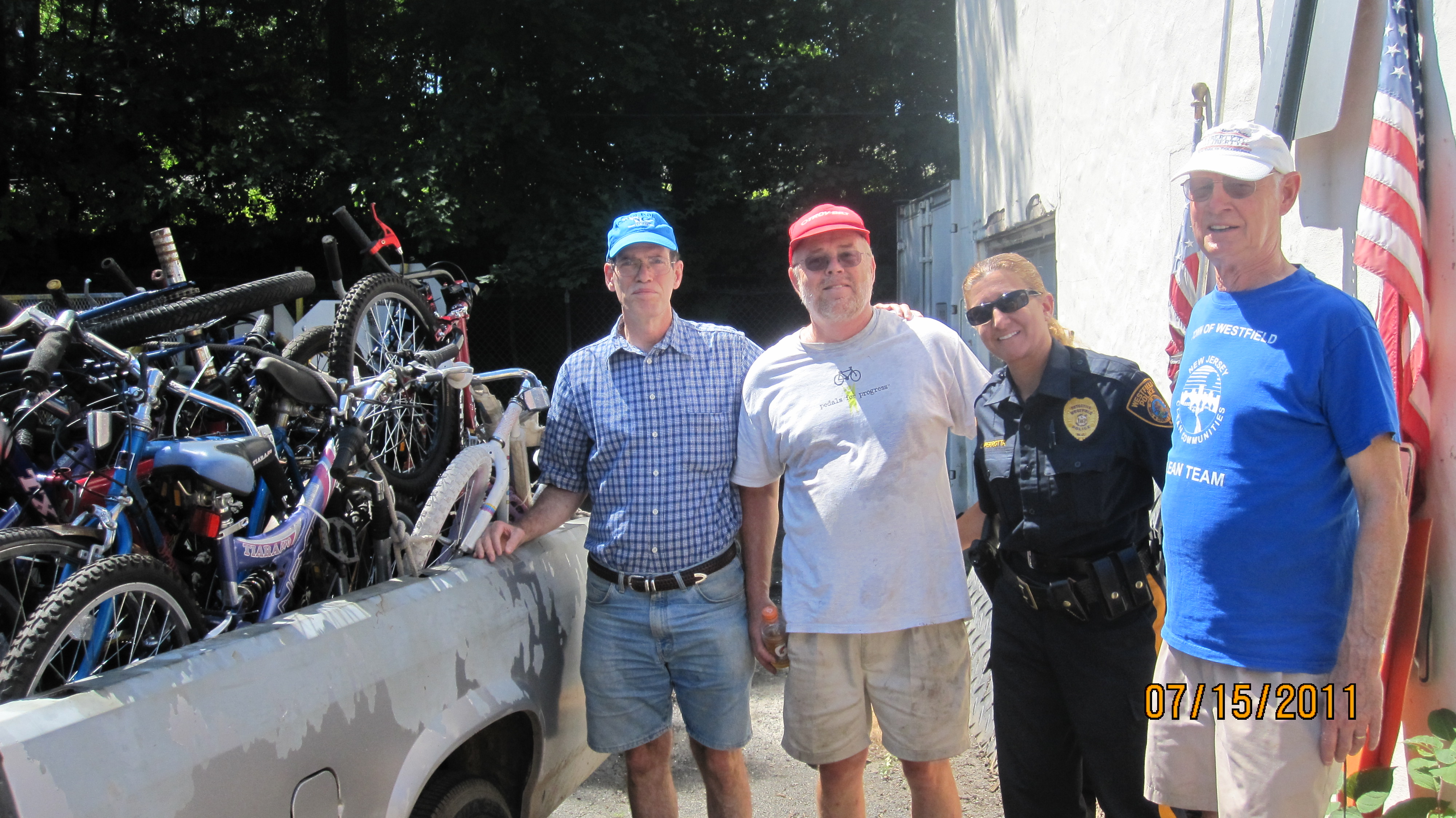
On July 15, 2011, Sgt McErlean and Detective Lisa Perrotta of the Westfield Police Department donated 20 used bikes to the Westfield Knights of Columbus (KOC). The KOC worked with Warren Rorden (Westfield Rotary Club) to arrange for the bikes to be picked up by Pedals for Progress (www.p4p.org), a nonprofit group that ships the bikes to third-world countries to go to people that use them for transportation.  In the attached photo you can see some of the bikes as well as (left to right) Walter Korfmacher (member  Westfield Knights of Columbus), David Schweidenback (President of Pedals for Progress), Detective Lisa Perrotta (Westfield Police Department) and Warren Rorden (member Westfield Rotary Club).

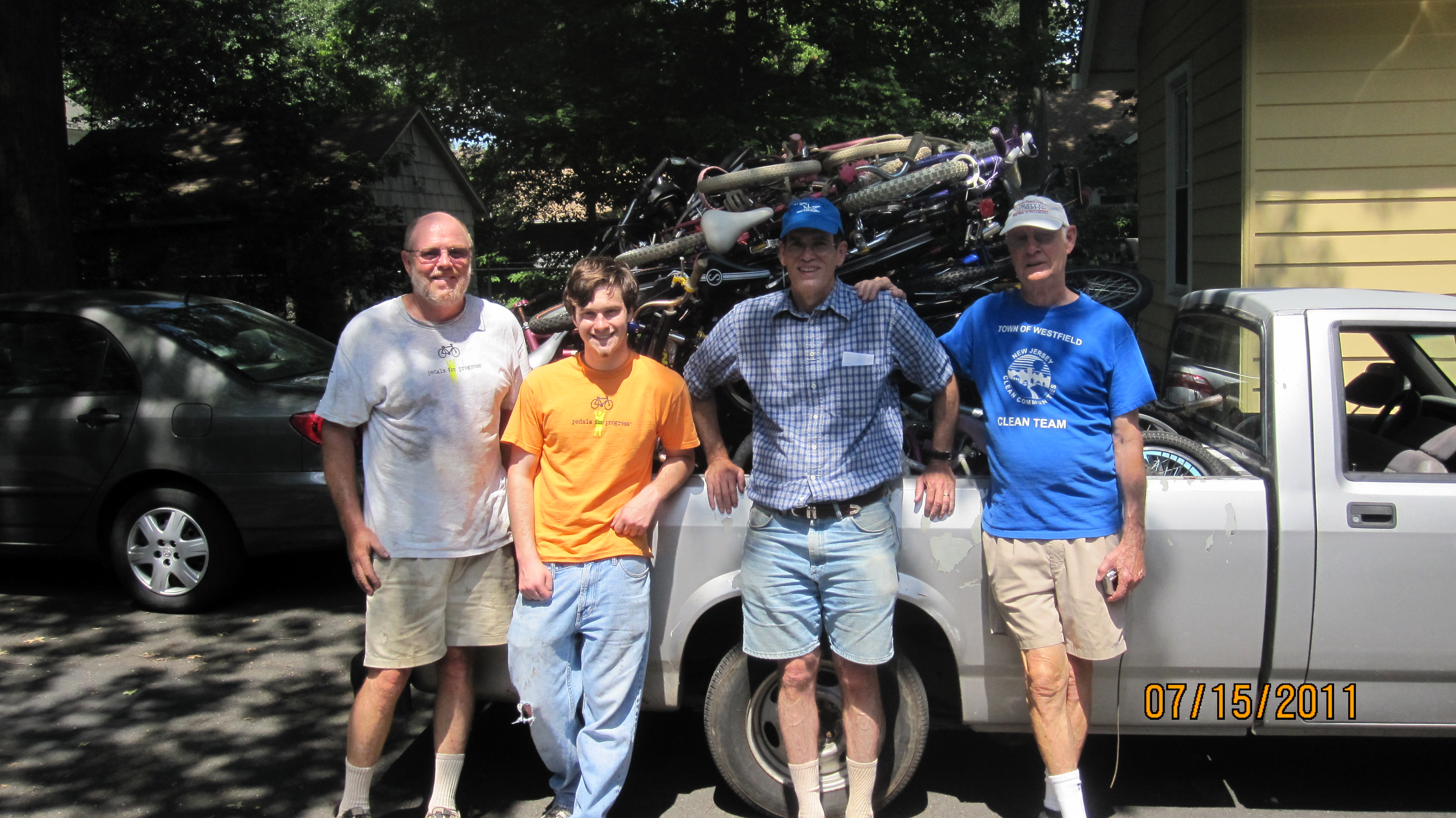
Then, Walter Korfmacher added 10 more bikes to make it 30 bikes total to Pedals for Progress. As shown in the second photo, all 30 bikes were loaded into one pickup truck. In this photo (left to right): David Schweidenback (President of Pedals for Progress), Jason Drew (intern at Pedals for Progress), Walter Korfmacher (member Westfield Knights of Columbus) and Warren Rorden (member Westfield Rotary Club).

2010 PEDAL WRENCH AWARD WINNERS

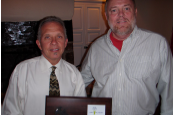
From time to time, Pedals for Progress likes to give out its prestigious Pedal Wrench of the Year Award to volunteers who, through outstanding individual and group effort, have collected large numbers of bicycles for us to ship overseas. This year we are pleased to have three great honorees. In 2010, P4P would like to honor (from left to right) Warren Rorden, Henry Hansen, and Gerry Agasar.

A significant amount of our annual bicycle volume is collected by Rotary Clubs—over 35 percent of our bikes pass through the hands of Rotarians. These three men are the coordinators for the P4P projects of their individual clubs; each of them has been consistently running collections on behalf of P4P for over a decade. Each of them have led their clubs to collect well in excess of a hundred bikes for us every one of those years. It’s a fantastic accomplishment, one that has required a great deal of effort for them individually, as well as for their clubs.

Connecticut Checks In

by Jackie Johnson
Spring 2011 InGear

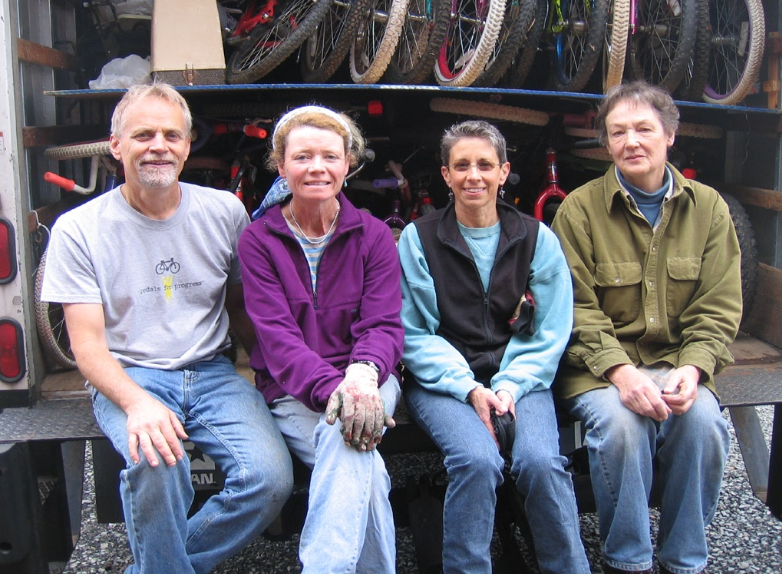
Jackie Johnson with collection crew

I was prompted to call Pedals for Progress in September of 2002 after I read a small article in Hope Magazine (long since out of business). The article told the story of Dave Schweidenback launching Pedals for Progress following his experience in the Peace Corps and referenced the 57,000 bicycles that had, at that point, been shipped to partners in sixteen countries. This was a year after the 9/11 attacks and our nation was on the verge of war. I felt a burning need to do something positive and meaningful, ideally involving my husband and two children (who were then 10 and 12 years old). The article so inspired me that I immediately called Pedals for Progress and said I wanted to organize a bike collection in northwestern Connecticut, where I live. Even though Pedals had never held a collection so far from their base in High Bridge, New Jersey, their response was positive.

Because the fall collection season was already underway, I was encouraged to organize my collection the following spring. But I felt I had to act immediately. I ultimately spoke to Dave and explained why I couldn’t wait until spring. He was reluctantly convinced and our first Pedals for Progress collection was held at Holcomb Farm, an arts and environmental center, in Granby, CT, on December 7, 2002. An enthusiastic group of volunteers collected and processed a very chilly 42 bikes that day. They are still the core group of volunteers who have shown up every year since.

May of 2011 (yes, we’ve since switched to spring) will mark our 10th annual collection and will bring our count to over 1500 bikes collected. It would never have been possible without our amazing bike-processing guru/crew leader Tony King, Bruce and Bobbi Sullivan, who always remember to bring everything I forget, and the King and Johnson families.

Over the years, we’ve added many new regular volunteers—the Mayock Family, the Desiderato/Raggio Family and groups of students interested in community service. Sometimes people just happen to see what we’re doing and stay on to help. The greatest joy is that a bike collection truly is an inclusive community event. Anyone at any age can take part, and donors and volunteers alike share in the joy of knowing they’re making a difference in the lives of others. And often the stories donors tell us about the “lives” of the donated bikes are amazing!

Frequently these days, when I’m in the Center (a New England term for downtown) of our small town, someone stops me to ask when the next bike collection is. I feel so fortunate to have noticed that article back in 2002. While we’re a few hours away from High Bridge by car and much farther still from many of the places our donated bicycles have gone, Granby, Connecticut, is blessed to have a thriving Pedals for Progress community.

A Letter from the Heartland

by Tim Weitzel
Fall 2010 InGear

Spring 2010 collection in Dubuque

Hello to everyone from the Heartland of America—Dubuque, Iowa to be exact. Dubuque is an old river town of about 62,000 people situated on the banks of the Mississippi River. I suppose many of you would think of Iowa as flat as a pancake, but Dubuque’s topography is more similar to San Francisco than to the Great Plains.

I first talked to Dave Schweidenback four years ago. In 2006, after roughly five years of “thinking about it,” I decided to try in some small way to “help someone.” My daughter, Erica, had returned from Haiti in 2002 with horrific stories of poverty and the immense transportation problems of that island. Being an avid road bicyclist, I had 3 or 4 “extra” bikes in my garage. My plan was to collect a few more and send them to a Catholic missionary in Port au Paix. I now laugh at how naïve I was. By the time I looked up, I had 30 bikes in my garage with no idea what to do next. Over coffee, a good friend of mine said simply, “Why don’t you check the internet? Somebody is probably already doing that.” And of course they were!

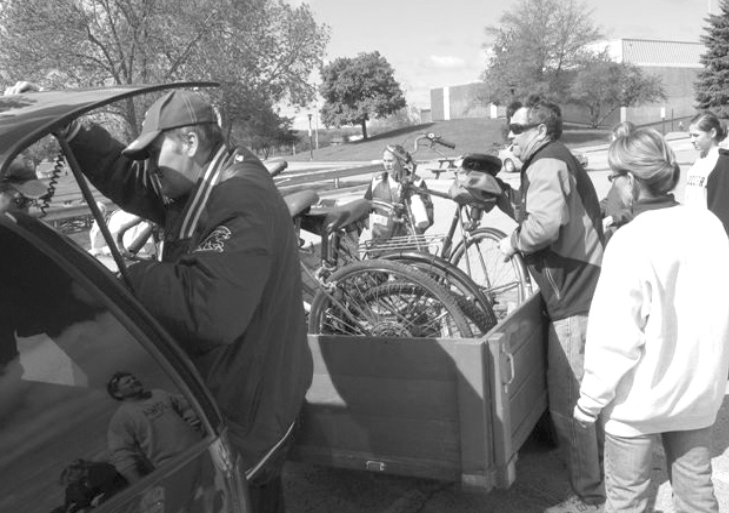
Bikes arrive at the collection site

I called a phone number at Pedals for Progress and some guy named Dave answered. We talked for a long time, and though I wasn’t sure he liked me, I needed to get rid of “my bikes.” My next problems were determining how I would get them to New Jersey and how much would I have to pay. I kind of remember Dave saying something about $10.00 a bike, which meant something like $300.00, plus shipping to New Jersey. I soon learned the economics of philanthropy! But, like super heroes, Ding Bell, Jack Blosch, John Markham, Paul Schultz, Tim Hodge, the Dubuque Noon Optimists, the Dubuque Bike Club, and Joe Bitter burst onto the scene. Almost overnight, it seems now, I went from a one-man show to a well oiled, yet still somewhat unorganized, group of dedicated bike collectors.

We still scramble for money, but things always seem to work out. We often talk and dream about how to collect more bikes or how to get them to New Jersey and beyond more efficiently. I see no turning back now. Our immediate goal is to continue to organize and plan for future collections.

Processing a child's bike for shipment to P4P
Processing a child’s bike for shipment to P4P

When Dave asked me to write this article about Pedals for Progress presence in Dubuque, I was proud, humbled, and a bit surprised. Proud, because I really believe we have helped lift families out of poverty and made their lives a bit easier. Humbled, because I am just a small part of the Dubuque operation: much, much credit goes to the unsung volunteers, the Dubuque Noon Optimists, Dubuque Bike Club, Jack Blosch, Ding Bell, and my father, George Weitzel. Surprised, because when I started out four years ago I envisioned collecting 50 bikes at the most. We currently have collected 1663 bikes and I am constantly amazed at the community support we receive. Finally, above all, I am thankful to Dave Schweidenback for trusting someone from half a country away whom he has never met, and to all the donors who continue to bring in their bikes.

Helping Children: Soccer Equipment in Ghana

Spring 2010 InGear

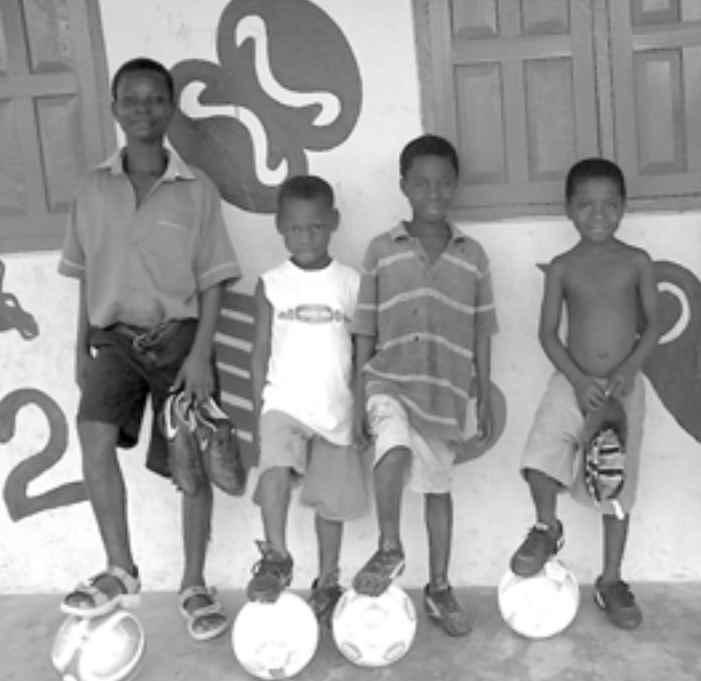
Recipients of soccer equipment from the Westchester NY Cycle Club

In the United States, it’s a common sight to see kids in schoolyards and backyards, on the beach or on the street, get together to play a casual game of football or just to toss the pigskin around. The same is true all over the world, except in most places the ball in play belongs to the other football—soccer. The boys and girls of Okurase, in Ghana, are no different than so many around the world; they use sports to compete, make friends, and lose themselves in happy play. It’s good for health and socialization. Often, however, children in underdeveloped countries lack the resources for actual soccer equipment, so they improvise. Stones are wrapped around with duct tape, sandals substitute for athletic shoes, cardboard boxes stand in for nets. The children damage their feet and legs playing a game they love with inadequate gear. Again, unfortunately, Okurase is no different.

Last year, the students and faculty of South Brunswick (NJ) High School and the Westchester (NY) Cycle Club collected a large amount of soccer equipment that, combined with other small donations, added up to forty soccer balls and eighty-six pairs of cleats, which we placed in the second shipment to Ghana last year.

As a general rule, Pedals for Progress does not ship a great deal of sporting goods for the children in towns where we distribute bicycles. In the past, we’ve often had problems with foreign customs, so many of our overseas partners requested that we no longer include them in our shipments, even though the equipment is deeply coveted. So we now collect only a little bit every year. The inclusion of sporting goods does not meet P4P’s mission goal of economic development, but in small amounts, for the smiles on children’s faces, it is one of the best goodwill gestures. Poverty is especially difficult on children during their formative years and we believe that sports can lead to a more peaceful society.

Westchester: A Well-planned Collection Turns Out Even Better Than Planned

by David McKay Wilson
Fall 2006 InGear

When the Westchester Cycle Club began planning a used bicycle drive for Pedals for Progress, we hoped to collect 150 bikes. That was enough to fill the truck we rented to deliver them to High Bridge, New Jersey, where Pedals for Progress is based. But then we partnered with several houses of worship, a few community groups, and we knew we’d need to rent a second truck. In fact, we needed every inch of three trucks, including Pedals for Progress’ own box truck, to fit the 543 bikes and 10 sewing machines we collected on April 1, 2006.

2006fallWestchesterVolunteerNone of us could’ve guessed when we first started planning that we’d hold the second largest collection in Pedals for Progress’ 15-year history. It’s a credit to the generous residents in the northern suburbs of New York City, who came in droves with their used bikes and checkbooks. Word of mouth, flyers, and Kenneth Edding’s article of the upcoming event in The Journal News generated lots of publicity. Of course, without all the cheerful volunteers who all came together in the sprawling parking lot behind Memorial United Methodist Church, we’d never have been so successful. They gathered at 8 a.m. that morning brimming with energy even though the weather report called for a 50 percent chance of rain. But Reverend Joe Agne assured us that he’d ordered up an ideal day. Soon, we saw patches of blue in the morning sky, and as the sun peeked through, some happy cardinals sang their sweet songs.

We didn’t have to wait long to get cranking. Our biggest donor, the Andrus Children’s Center in Yonkers, had delivered 65 bikes ahead of time. An official from the Children’s Center saw the article about the bike collection and called saying she already had bikes. Initially, she didn’t have a way to get them all to our lot in White Plains, nor did she have $650 to cover the $10-per-bike shipping charge. Sure enough, though, she found a local moving company willing to donate a truck to move them. And even though the Westchester Cycle Club already committed $750 to the event, a plea for additional contributions on the Club’s online message board raised $650 more to cover these bikes.

2006fallWestchesterProcessingSo when we arrived Saturday morning, 65 bikes were waiting to be addressed. That’s when Pedals for Progress CEO Dave Schweidenback, in his bright orange T-shirt and white bandanna, gave us all a quick lesson in how to process bikes for shipment: remove the pedals and Zip-tie them to the frame, loosen the stem bolts and turn the handlebars parallel to the frame, lube the chain. Once we got started, our first truck arrived with 25 bikes from Camp Olmstead in Cornwall-on-Hudson. This truck also held another 30 that a Westchester Cycle Club member had in her garage. These were donated by members of her synagogue and local school PTA. And we had to make a second trip to her house to retrieve 40 more bikes, including 20 donated by a local police department, which had cleaned out a storage room crammed with abandoned bikes. The PBA also kicked in $200 to help cover shipping costs.

Finally, Dave Schweidenback provided a valuable lesson in packing a truck to the gills with bikes. Bikes were put in side-by-side alternating front wheel forward then rear wheel forward. With the handlebars turned parallel to the frames, the bikes were flat enough to fit about 15 in the width of the truck. Once a row was complete a sheet of plywood was laid on top of the bikes and another row was stacked on top of the first. When all was done and loaded, the trucks were packed so tight there was barely enough space left to fit the buckets of tools.

2006fallWestchesterBikesAs we worked on filling the last truck, Reverend Agne’s weather guarantee dissolved in a deluge that soaked the volunteers in a surprisingly warm spring rain. No matter. We filled the truck, and by 1:45 p.m., our second team of drivers was on their way to New Jersey. That’s how we collected, processed, packed and delivered 543 bikes. There had been a job for everyone—a seven-year-old wheeled processed bikes for loading, teens earning community-service credits for high school packed the trucks, and senior citizens loosened pedals and bolts that hadn’t seen a wrench in decades. Finally, at a little after 6:00 p.m., our second truck returned from Jersey concluding a long but satisfying day.

In retrospect, it seems like we only touched the surface as we mined our region’s garages and basements for used bikes. We had 245 individuals bring 433 bikes. Three organizations brought an additional 110. Yet thousands of households are within a 20-mile radius of our collection site, and nearly every household has at least one unwanted bike collecting dust in a garage or basement. We just know there are more bikes for Pedals for Progress out there. There has to be. We’ll get those next year.