
Category Archives: Uncategorized

Spring 2019 Newsletter

Spring 2019


Kinship in Guatemala, 2019: It is so much more than bicycles and sewing machines

By Scott Shreve
Spring 2019 Newsletter

So, you’ve been thinking about a project you could do to help someone across the world have a better life. In searching the internet, you come across the Pedals for Progress site and think, hmmm, maybe the youth group in your community would want to collect old bicycles and send them to others to help with getting them to a job or healthcare. This is exactly how my wife and I came to know Pedals for Progress some 13 years ago. A lot has changed since then. Our church youth group has collected more than 800 bikes and over $10,000 to support sending bikes overseas. There’s been a spin-off program known as Earn a Bike established in our community to give guys in the Rescue Mission, post-prison program, and substance use programs an opportunity to use some volunteer time to get a bike of their own. More recently, my wife and I traveled to Guatemala as we wanted to see first-hand what it’s like when the bikes and sewing machines “land” in another country, how they get used. Along the way we learned a lot about kinship, building communities, and gratitude.

There are a lot of do-gooders in the world, in all shapes and sizes. Some help for a day, others go on to make giving a part of their entire life. When you start a project, like a bicycle collection for your community, you will quickly realize there will be a mixture of excitement in your group, along with others who may be there more out of curiosity than anything else. Some will likely be there to remind you of why this initiative will not work. Have faith. All these people have a role in the success of your collection, whether their contribution is adding to the fun and energy of a new project or perhaps tempering the enthusiasm with the reality of where to store the bicycles and how to prepare for the scraped knuckles along the way. Welcome all to the project, make sure you include a healthy dose of fun along the way and say thank you to your group and contributors many times.

One sunny morning, as our bicycle collection was coming to a close, some people walking by our church stopped to ask if they could get a bike? We proudly shared with them that our youth group was collecting bicycles to be sent overseas for people needing transportation. The passersby shared that they too needed transportation, could we help them? “No, sorry, these bikes are to go overseas.” Having to share these disheartening words with our church neighbors didn’t set well with us. All kinds of thoughts were going through my mind. Somewhat thankfully, I got called away from this conversation when a youth group member called for help in getting the pedals off a bicycle. I helped with the pedal removal but the question about how to serve those in need of bicycles more locally remained.

The community of bicyclists has been described as being made of tribes. These tribes are made up of mountain bikers, road bikers, those who tour, messengers (in a class all of their own), commuters, and others. The intersection of these different tribes comes at bicycle repair shops, bike clubs, and perhaps coffee shops. Bicycle clubs put their activities on their websites where you’ll find a combination of races, rides, socials and advocacy events. On one of these websites I heard about a Recycle Bicycle program that operated in a nearby city. I volunteered there and was amazed at how many bicycles they gave out, how they connected with their community, helping guys in halfway houses, getting kids a working bike and helmet, and being a beacon for sharing in the fun of fixing up and riding a bike.

Hmmm … perhaps we could establish a similar program in our city. The head of Recycle Bicycle of Harrisburg jumped at the idea of expanding a similar program in our city and after getting enthusiastic approval to operate as part of the Lebanon Valley Bicycle Coalition, we held an Earn a Bike session in the parking lot of a local Rescue Mission. It was a delight to see the smiles on the guys’ faces as they fixed up bikes and realized their new found freedom to explore the area in ways that walking wouldn’t allow. Then a local businessman (Willie Erb) offered warehouse space for our Earn a Bike program and we’ve been up and running on the 4th Saturday monthly for the past 5 years. This Earn a Bike program works closely with the Lebanon Rescue Mission, the Jubilee post-prison, and VA substance use programs. This upcoming year, we’ll be reaching out to support students at the local community college as many of these students are at or below the poverty level and a bicycle can make getting to class or a part-time job a lot easier. All of these activities led my wife and me to want to visit Guatemala and see how others use bicycles to support their community.

After a dozen years of working with a youth group collecting bicycles for P4P, we wondered what is it really like to be on the receiving end of a shipment of bicycles. Is there a crowd of people waiting as a cargo container arrives at the village? What type of bicycles are most valued? How do they put the diversity of bikes to use? Are the smiles on the bicycle recipients as wide as those we were seeing with our Earn a Bike program? With guidance from Dave Schweidenback, we chose to visit Guatemala. It gave us pause to see that the U.S. State Department had warnings online for tourists about increasing violence in parts of Guatemala but we found some solace that the Guatemalan program had been working with P4P for many years.

For us, Guatemala was a blend of beauty, poverty, and guns. We landed in Guatemala City and barely traveled a few blocks in a taxi before we saw firsthand the pervasiveness of guns. While we were stopped at a traffic light, a pickup truck pulled up next to us with six guys in the back of the truck. Each of the guys had a rifle over his shoulder. When we got to our hotel, we realized all of the stores downtown had armed guards. I’d never seen a McDonalds with an armed guard before. Who would have thought the fries could be that good?
Our experience in the villages outside Guatemala City was much different. We were welcomed by just about everyone we met and did not see any guns. Our driver, Hugo, became a fast friend and took us to our destination, San Andrés Itzapa. Hugo had spent time in the states but delightfully shared the beauty of his home country, including the historical charm of Antigua and sites along our meandering path to San Andrés Itzapa. As we entered the village, we stopped to tour a convent. I had met some medical missionaries along the way and they graciously offered to show us their setup in the convent, where for one week, they serve the local community in any way they can. Interestingly, the convent happened to be “just across the street” from the dirt road we needed to take to get to the P4P bicycle program known here as FIDESMA. Thankfully our driver had a strong faith as we drove down a long and ever narrowing dirt road to finally come to FIDESMA. In this desolate village outpost we quickly learned about kinship.

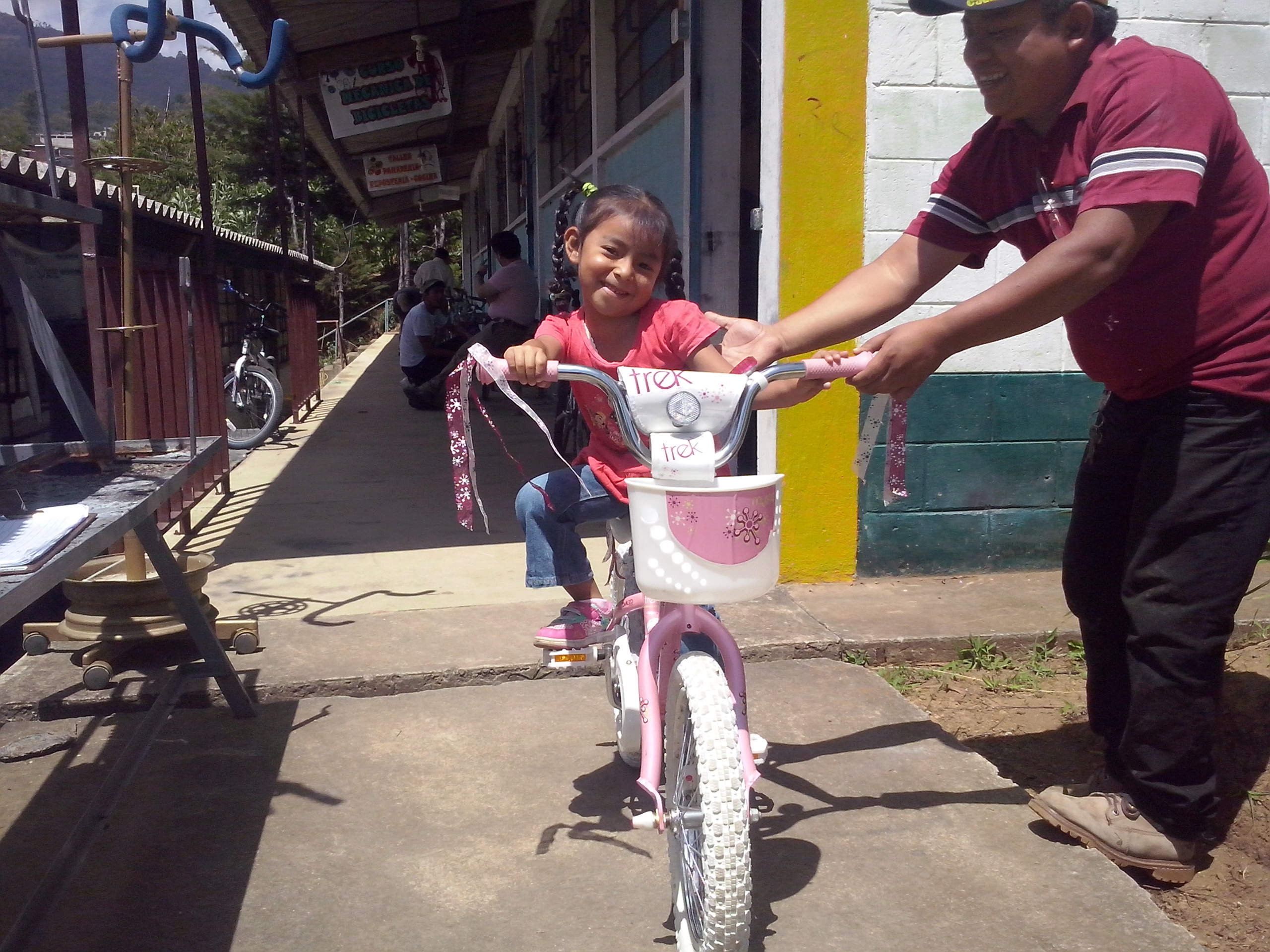
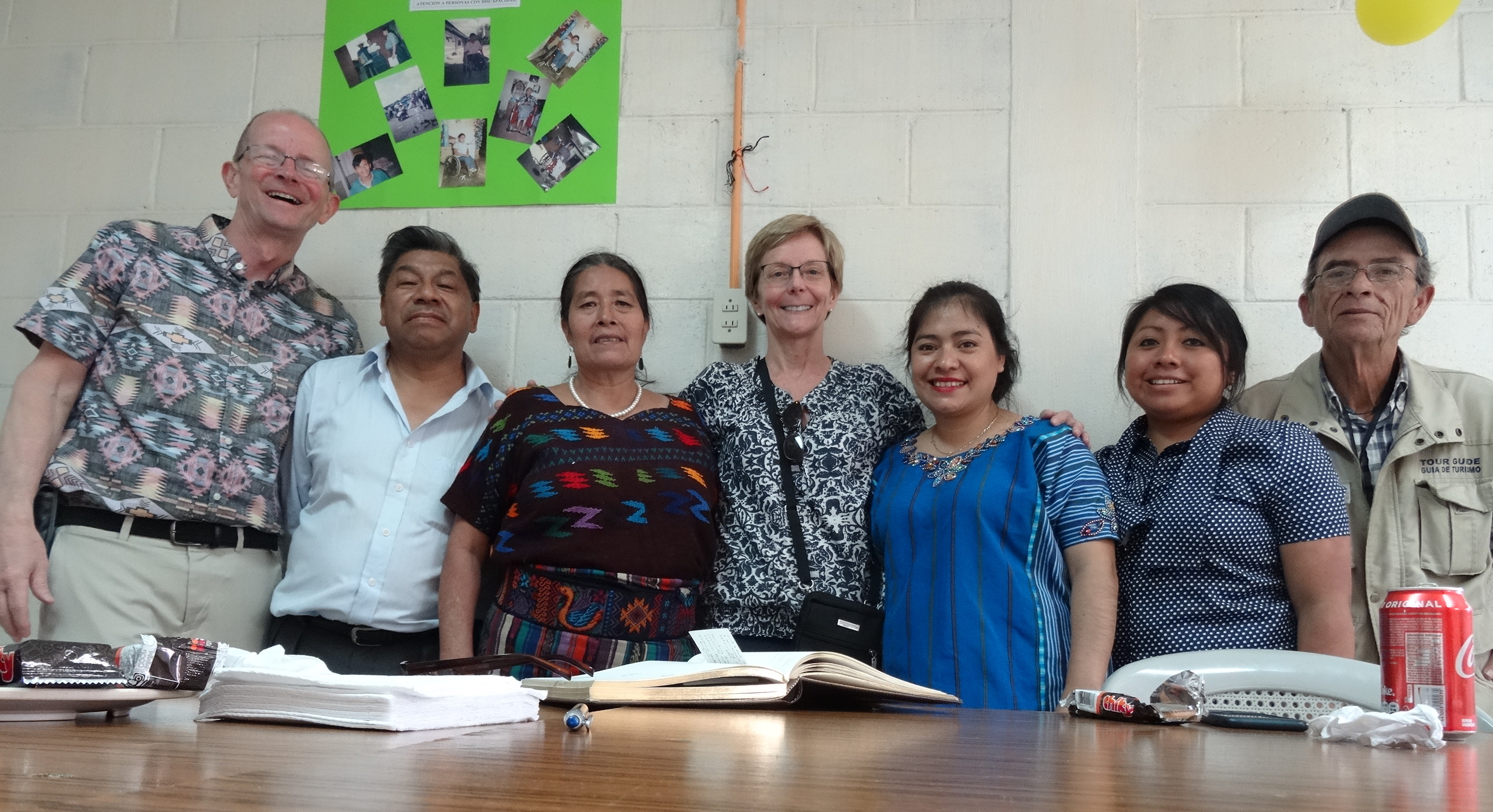
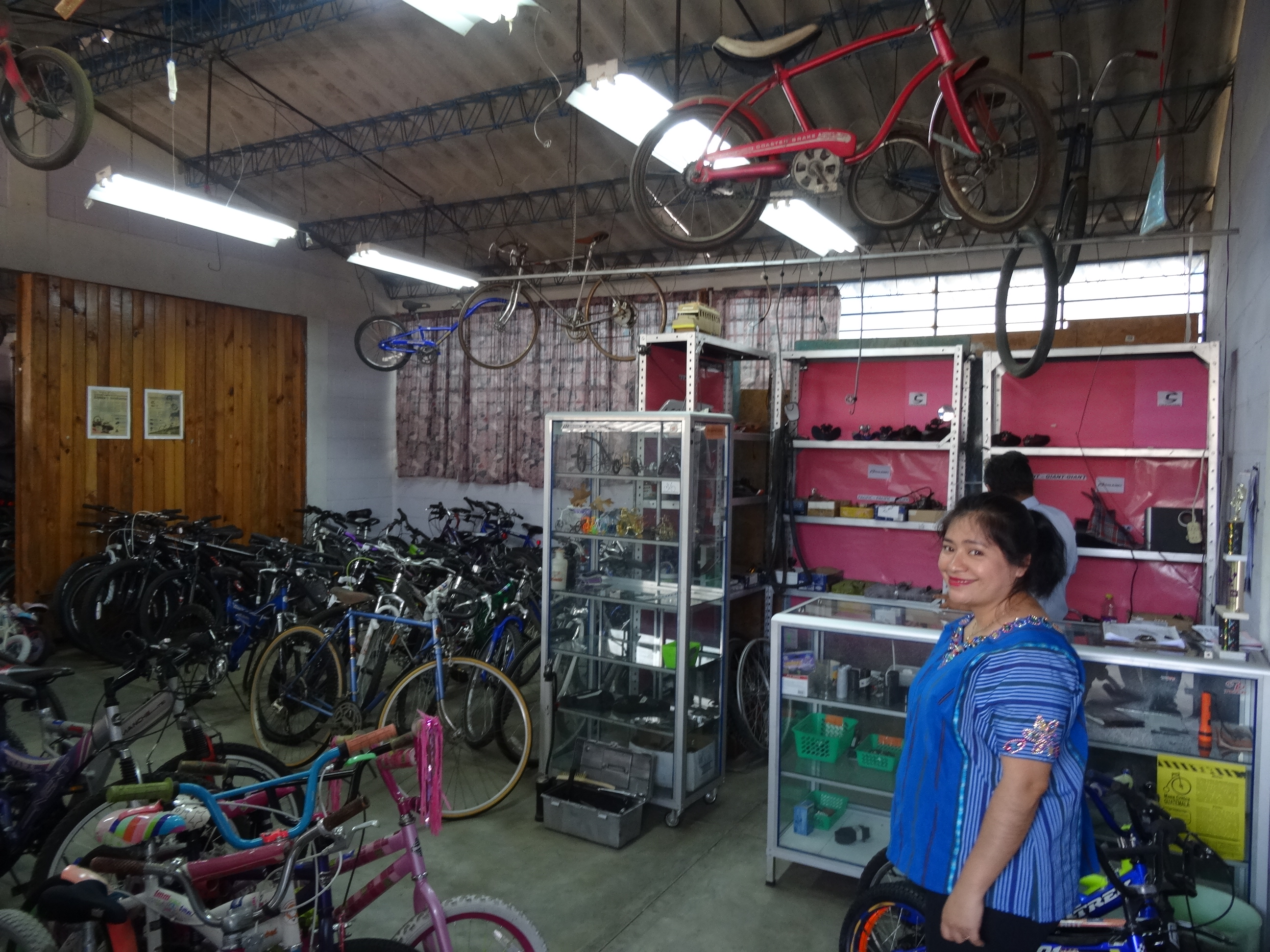
In this hilly corner of a village, a handful of caring souls have made it their mission to empower others. Decades ago they received a shipment of bicycles and set up shop, fixing up and sharing these bicycles with others. The shop was clean, spacious and filled with a wide assortment of well-maintained bicycles. I have to admit, I was a bit envious as our Earn a Bike shop wasn’t as nice as theirs. Remember though, only the first container of P4P bicycles is shipped without charge to the partner, so the Guatemalan shop has been sustained by selling and repairing bikes to meet their customers’ needs since their first shipment in 1999. Bicycles are only one part of FIDESMA. The next room was a classroom set up with sewing machines used to teach sewing skills, perhaps a skill more readily converted to Qs (quetzals, the Guatemalan currency) than having a bicycle. But wait, there’s more. The next room over had a large workshop for teaching welding. I was beginning to think we had stumbled onto a homemade vocational–technical school, which it was in many ways. Aside from the empowerment of learning these trades or getting a bike, customers could also get much needed dental care in a room at the end of the building. In a country devastated with gang violence and poverty, we saw first-hand how Margarita, Arnulfo, Isabel, and others were able to create a sustainable program to care for others with a “hand up”, not just a “handout”.

We were honored to sit down with the crew from FIDESMA for snacks and a soda. I can’t put into words how kind and generous they were to us in sharing their program. We told them how our visit made it all the more rewarding for us in collecting the bikes that end up in Guatemala and elsewhere. The conversation at the table drifted in all sorts of directions including a desire by my wife and me to help Guatemalans in the midst of so much turmoil. It just so happens that there is a young woman in their village who is looking to go to community college and we have a spare bedroom in our home to support an exchange student. Perhaps through connections like P4P, Sewing Peace, and exchange students, we can do our small part to build kinship across the borders that separate us.


2019: Sewing machines for women locked in blood feuds in northern Albania

By the EcoVolis Team
Spring 2019 Newsletter

The Kanun of Lek Dukagjini is a set of traditional Albanian laws originally codified in the 15th century. The Kanun includes laws on religion, family, work, and honor, including laws sanctioning murder in blood feuds. Blood-taking or retaliation has affected many families — including women, mothers, and children — in the Malësia e Madhe and Shkodër regions of Albania. Under Kanun, affected families have no right to leave their homes, under penalty of death.

Today Kanun affects over 106 families, 83 convicted of Kanun crimes. Though Kanun-sanctioned violence is illegal in Albania, the state is still ineffective in dealing with it.
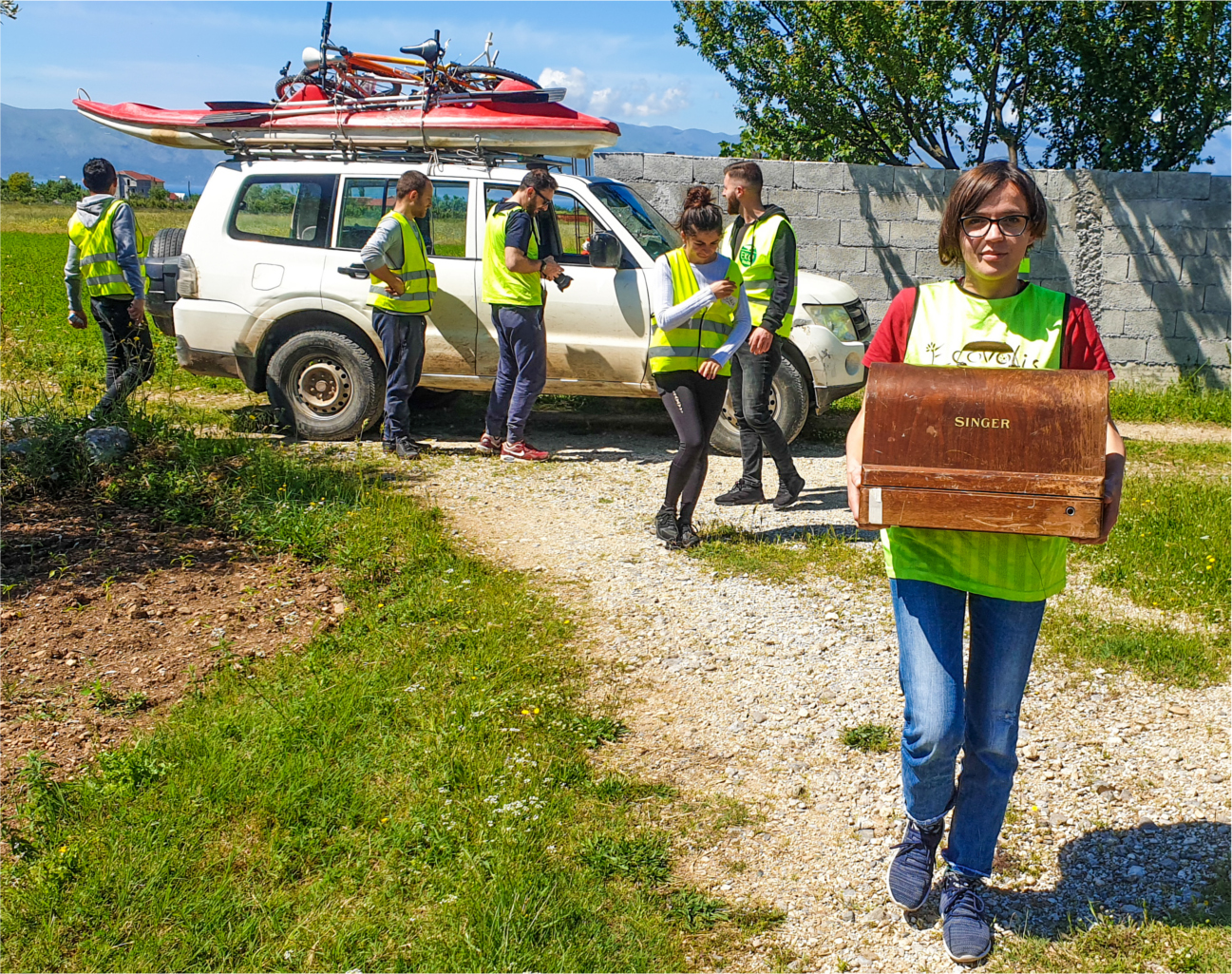

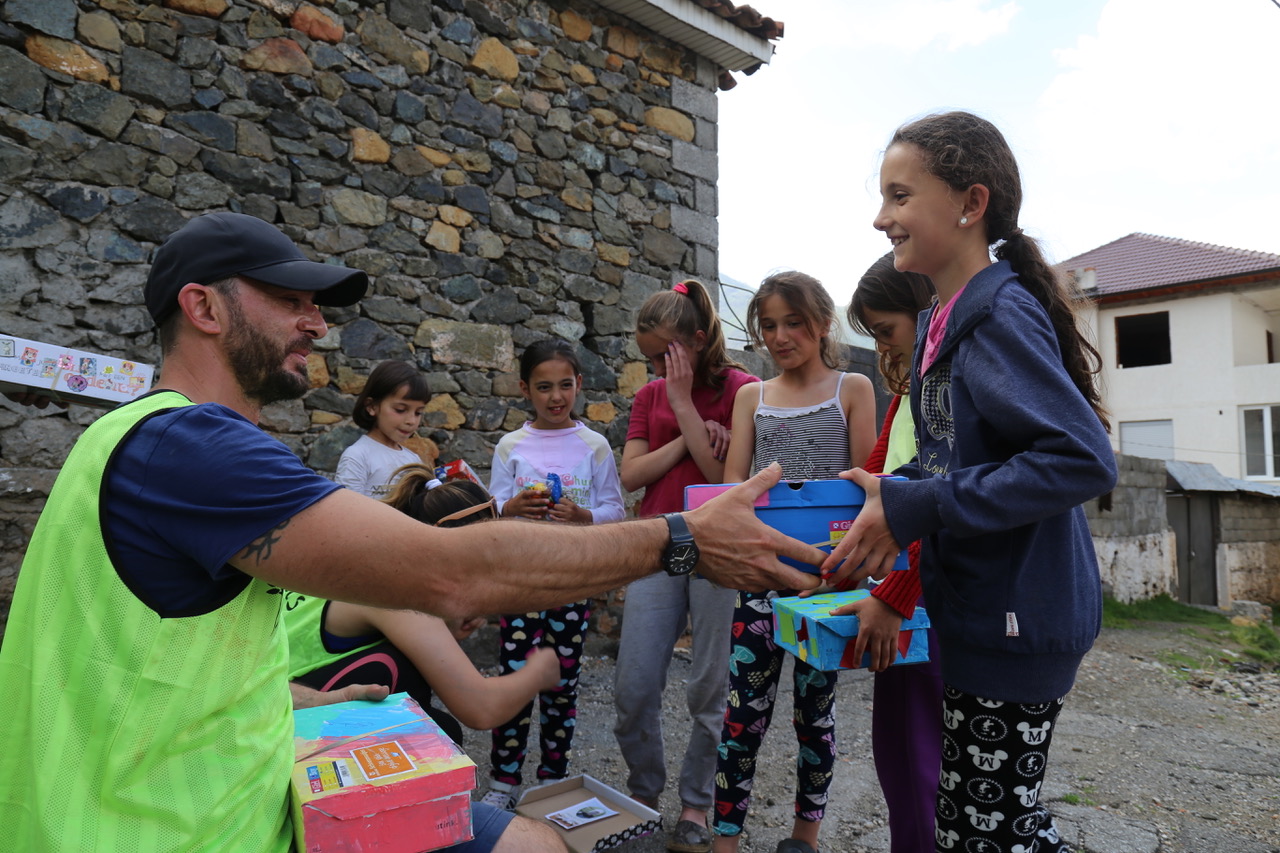
PASS/Ecovolis undertook a house-to-house campaign to donate dozens of sewing machines to women of these families. On May 13, 2019, we brought sewing machines to the confined households in Malësia e Madhe. We had the opportunity to hear about the hardships of living with their isolation: the poverty, the inability to work and support children, the inability of children to go to school and to have a normal childhood.


“It’s impossible,” says Anjeza, a mother of four, “raising the children, keeping the family locked up without any support or job opportunities. We do not know how our destiny will go.”
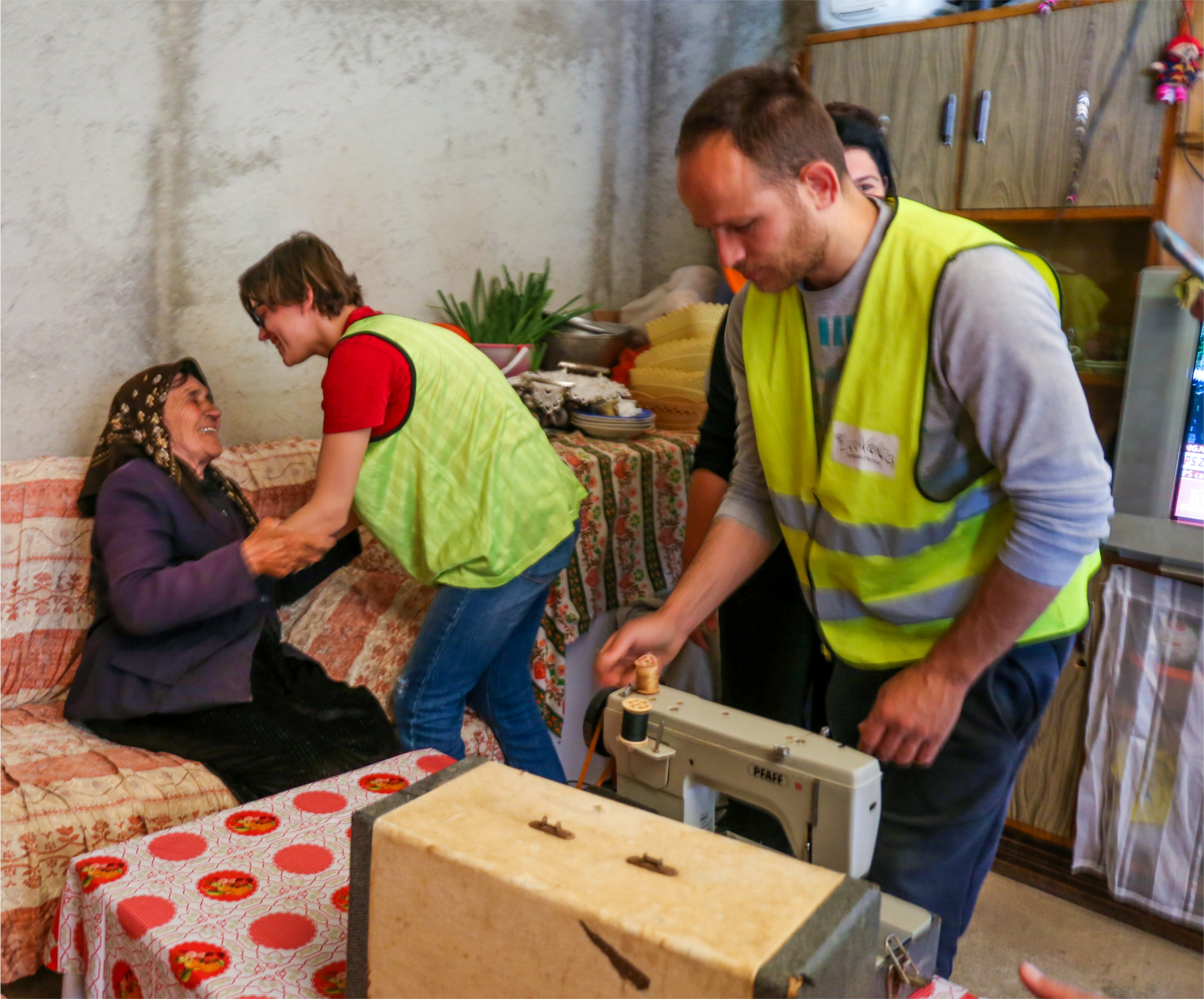
PASS has raised concerns about these families several times. In the fall 2015 P4P newsletter, we decribed the effect of Kanun on children’s lives. Children are not allowed to leave their family property, so they may be deprived of school and education. PASS visited several of these families to donate bicycles that children can ride at least in their yards.

Together with Sewing Peace we believe we have given some hope for dozens of women in an impossible situation. As always, thanks to P4P/SP for this opportunity!


[
PASS/Ecovolis facebook post on the sewing machine project (in Albanian, but with lots of photos)]


Tanzania 2019: Does life ever get you down?


Spring 2019 Newsletter

Do you feel like you have the weight of the world on your shoulders?

In October 2018 we planned to ship a container to Aid the Needy in Homa Bay, Kenya. On October 1st, the Kenyan legislature changed the import laws, effectively barring us from the country. The warehouse was full and it was imperative that we make that shipment to make room in the warehouse for the bicycles coming in.

Switching to plan B, I had two potential partners in Tanzania to whom we could send the shipment. The first, The Norbert and Friends Foundation, was a very solid well-known NGO that I knew could do a good job. There was a second, smaller, younger organization called MATOLO which sent in the best proposal I have gotten in 28 years. As E.F. Schumacher notes in “Small is Beautiful”, sometimes smaller organizations are more creative and effective than larger organizations.

I decided to send the first container shipment for Tanzania to MATOLO and we shipped it out in early October, just in time to make room for the incoming bikes from our collections. The shipment arrived in Dar es Salaam in early January 2019. I was working with my contact there to get the container quickly out of customs because you only have a few days to empty the container or the shipping line starts charging you a daily fee called demurrage. Demurrage in Dar es Salaam is $120 per day!

By late February I was getting really nervous because the storage fees were building and it was going to be difficult for MATOLO to be able to pay those storage fees. Apparently in mid-February they just walked away. I wrote daily emails begging for an update and I finally realized by the beginning of March that the first group did not have the legal authority nor the finances to get the container out of customs.

In early March I started the process of changing the consignee to The Norbert and Friends Foundation. Once a container has been delivered to port it is extremely difficult to change the consignee. It took most of the month of March and into early April to get the paperwork changed. At this point in March 2019 we had made over 395 shipments overseas and I had never needed to do this before. It was a very steep learning curve.

By mid April I was able to get the paperwork changed but by then the storage fees had added up to a sum much greater than the actual cost of shipping. It was getting to the point that we might have to abandon the shipment. There are two ways to think about abandoning a shipment. On one hand, it would be a great loss for our program partner to not receive the 479 bicycles and 119 sewing machines. On the other hand if the container is abandoned it is sold at public auction. The bicycles and sewing machines would still go to individuals, but to individuals we don’t know. So the cargo is not lost; it is only lost to our organization and our partner. Still it would be a bitter pill to tell the foundation that paid for the shipping that we “lost” the shipment. It is hard to lose a 40-foot container that weighs 11,000 pounds! It wasn’t really lost — we knew where it was, we just didn’t have the legal authority to get it.

The Norbert and Friends Foundation and Pedals for Progress started petitioning the shipping line to give us a bit of a break. After all, this is a humanitarian aid shipment. Demurrage for shipping lines is like icing on the cake — a boost to their bottom line. It is pure profit. Weeks of negotiation went by as the cost of the storage went up by $120 per day. When the shipping line gave us their first invoice, it was a pretty shocking number. I fearfully went to a currency converter; they wanted more than $10,000. The initial shipping cost was $5000.

Abandon the container and look like a fool to our funders, come up with money that none of us had, or continue to negotiate. Norbert decided he was not going to give up and he kept hounding the shipping line to bring down the price to some reasonable cost. There were daily emails for weeks on end trying to convince the pertinent authorities that although we were liable for these expenses, we were trying to do something good for the benefit of the country. Our shipments really do increase the productivity of the population, which in itself improves the economy and therefore the country.

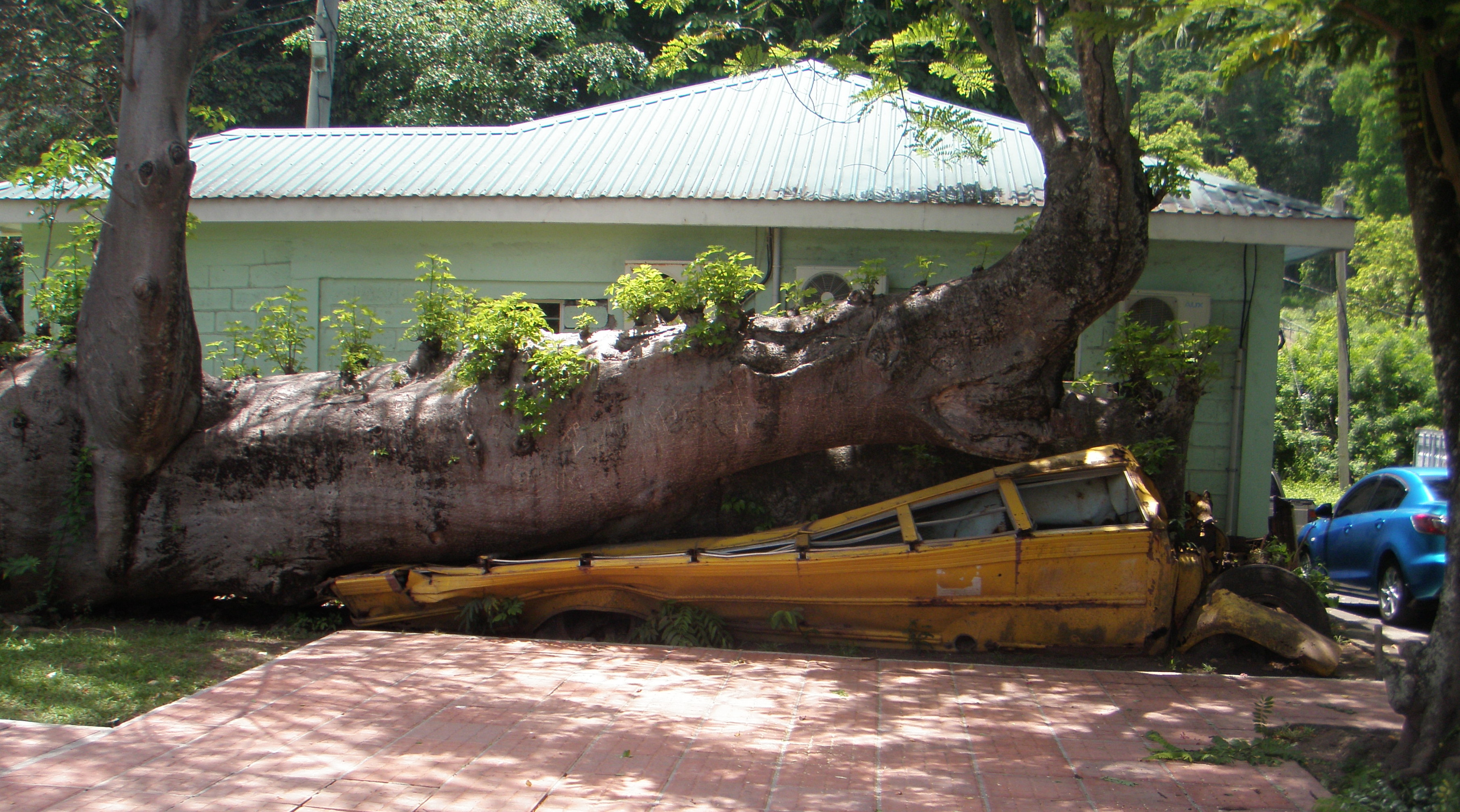
In the end the shipping line relented, I think in part because they just wanted to stop having to deal with Norbert and P4P on a daily basis. And the government also helped get some of the fees waived. So after four months of feeling like this school bus on the island of Dominica (where I took this picture on vacation), a tremendous weight has been lifted off Pedals for Progress and The Norbert and Friends Foundation. It was expensive, but the container is out and will soon be delivered to the Arusha Valley in northern Tanzania. Our new partner, N&FF, is an extremely positive and capable organization. Norbert has proved himself under difficult conditions. I have been trying to get a container of bicycles into Tanzania for almost a decade. I have struggled to find a partner who can get the job done. We now have that partner. Our greatest thanks to Norbert Mbwiliza for his tireless efforts at securing these bicycles and sewing machines for the people of the Arusha Valley. The 8-month transit is over and I look forward to all the good reporting I’m sure we’ll get from northern Tanzania.


Uganda: Report from the Mityana Open Troop Foundation, January–April 2019

By Mathew Yawe, Executive Director
Spring 2019 Newsletter

BackGround

The Mityana Open Troop Foundation was started in 1997 by a group of Boy Scouts who had been affected by socio-economic issues leading to their dropping out of school. Others had been affected by HIV/AIDS due to loss of their relatives and guardians. The initiative started as a community program by raising awareness of the HIV/AIDS scourge. We held talk shows on health. We promoted environmental protection, child nutrition in risky communities, food security, support and education to vulnerable people, and functional adult learning among those who cannot read.

The high school drop-out rate caused by socio-economic factors and the nature of the Ugandan education system, which emphasizes theory, resulted in a high youth unemployment rate: 64%. Crime rates among youths in Uganda, specifically in the Mityana area, were high.
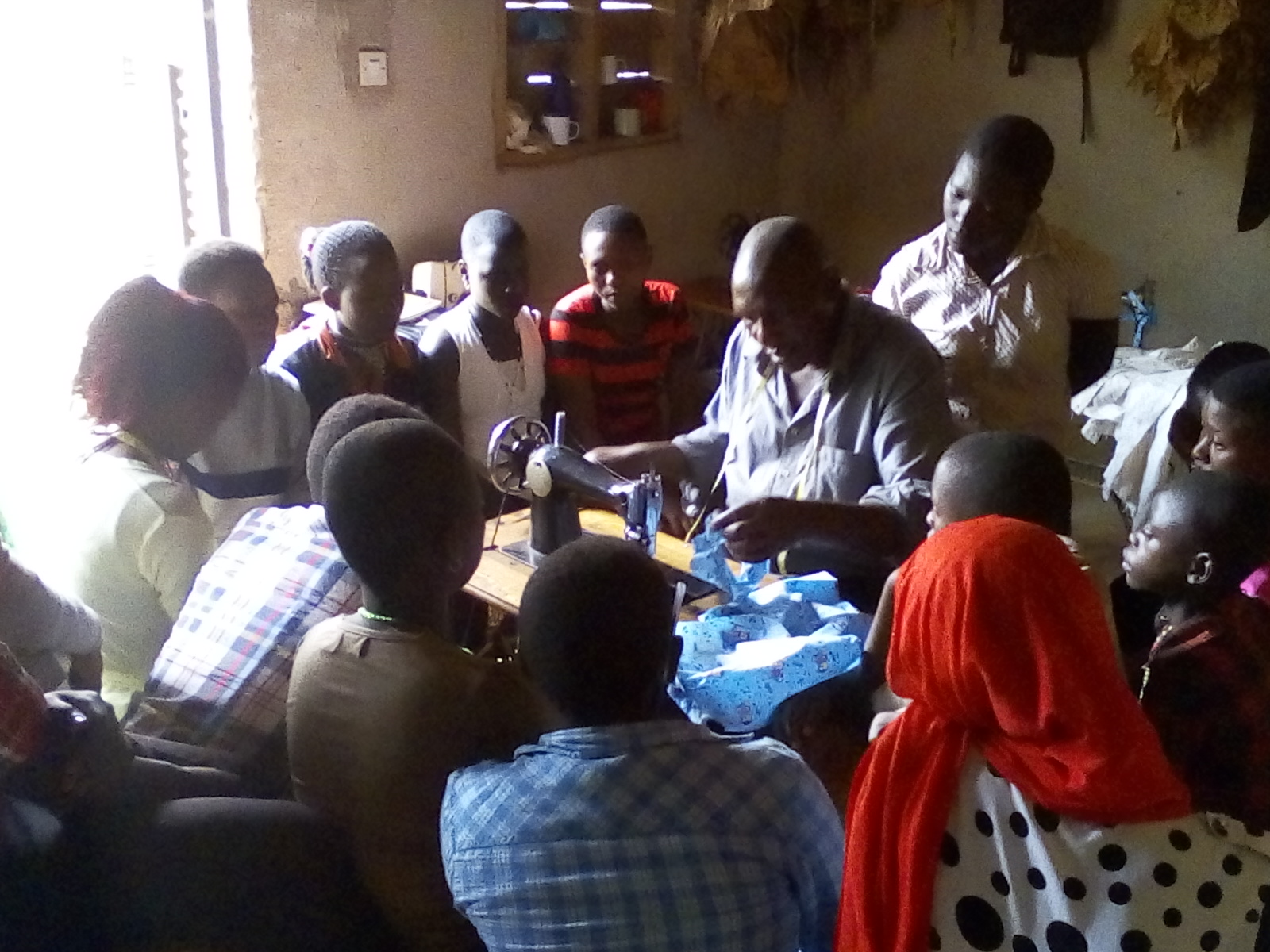

Because of these concerns, our organization started a Vocational Skill Training project in 2007 to recruit vulnerable youths. With support from partner organizations in the U.K., we started working with parents and other members of the community to mobilize unemployed youths in Mityana who had interests in acquiring vocational skills. We recruited school dropouts who didn’t complete their studies because they couldn’t afford school fees. We recruited girls who dropped out of school due to unwanted pregnancies. We also advocated for girls who were sex workers to abandon that activity and join our project. The project is currently recruiting single mothers and disadvantaged youths to be trained in:

  • tailoring, designing, and fashion
  • hair dressing, beauty, and weaving
  • carpentry and joinery
  • motor vehicle mechanics (parts 1, 2, and 3)
  • crop and agriculture skills
  • languages (English and Luganda), writing, speaking and
    algebra

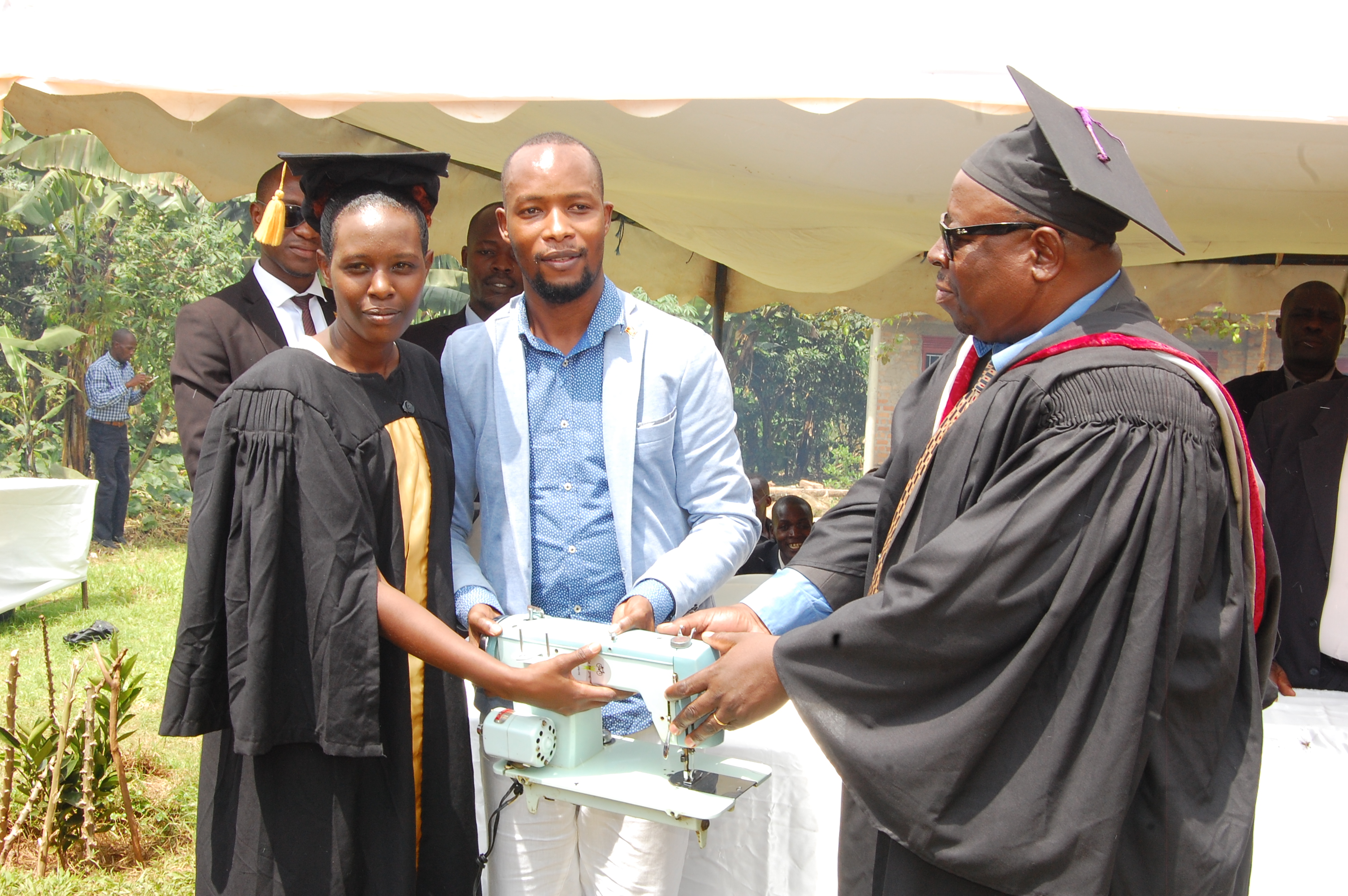
Each course takes 2 years. At graduation, trainees are awarded certificates along with start-up tools or sewing machines to enable them to go into the market and start their own businesses.

Mission

Empower marginalized vulnerable youths, orphans, and women through vocational skills acquisition and promoting better standards of living.

Aim

To reduce unemployment and over dependency among the marginalized groups of people.
Objectives

Mityana Open Troop Foundation aims at achieving the following objectives:

  • Create community awareness on sexually transmitted infections.
  • Create a conducive educational atmosphere by fully equipping the vocational project with all the necessary training tools/machines along with working materials.
  • Help vulnerable children attain education by sponsorship and scholastic material support.
  • Develop, promote, and educate children about nutrition.
  • Construct shelters for the poor, elderly, widows, and orphans.
  • Provide start-up tools to all who graduate from our program, to enable them to start their own businesses.


Achievements

  • During the training period of January – April 2019, we recruited 85 new trainees, for a current total of 112. In November 2018, 71 trainees graduated and left a big gap at the training centre!
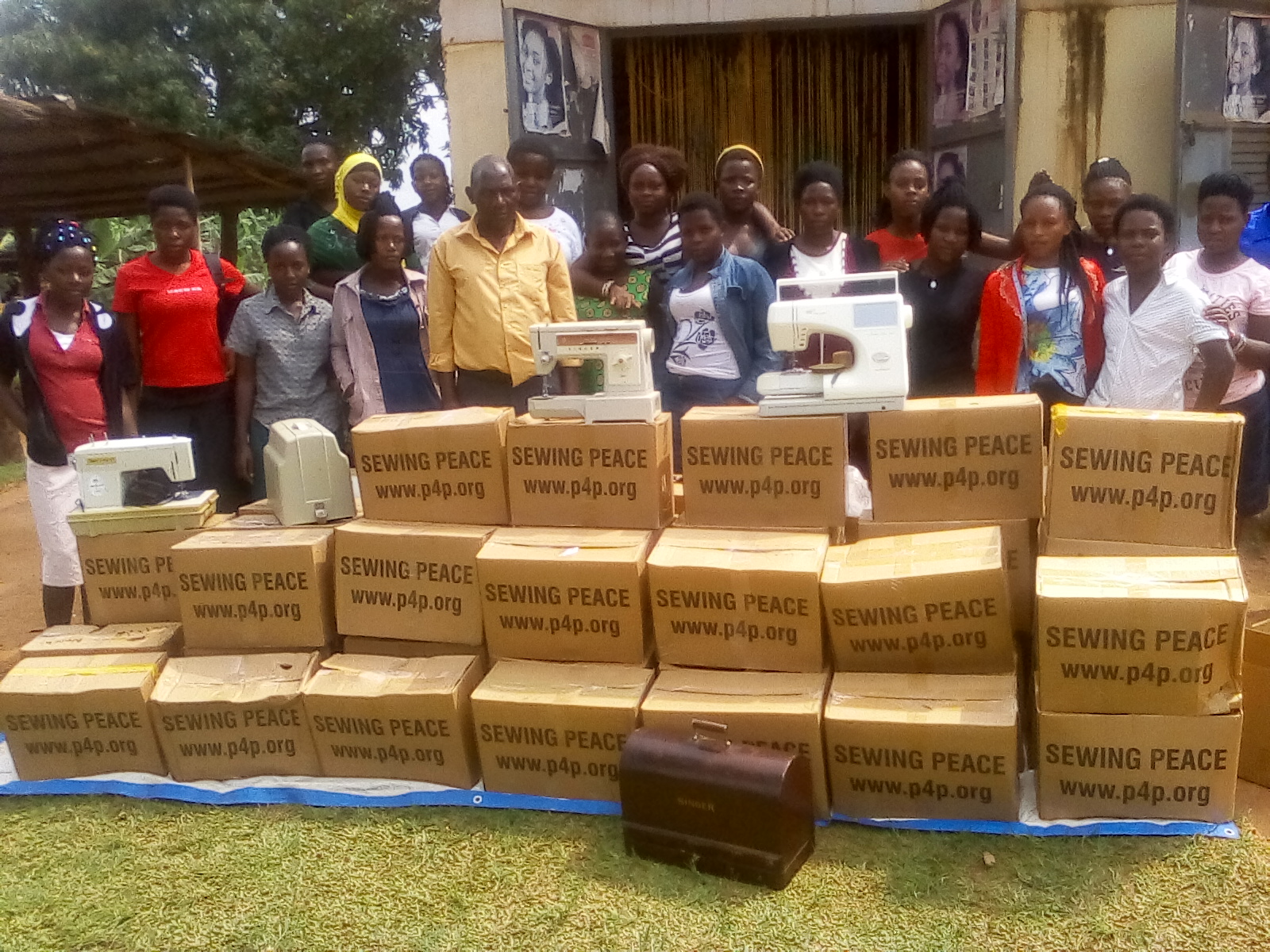
  • Sewing Peace, our sewing machine partner, managed to approach The Dewan Foundation and asked them to kindly sponsor the shipping of 2 pallets to our Vocational Project in Uganda.
  • The project has conducted training in all the courses mentioned above.
  • Project trainees participated in athletic competitions and did well.
  • Project trainees participated in a debate on the topic, “How can one overcome AIDS?”
  • Project trainees together with scouts volunteered in clearing brush
    around the well that is the village water source.
  • The project with support of Mr. Nino Ardizzi and Ms. Madison Ardizzi of Canada began construction of a wooden poultry house, where trainees will learn poultry farming, though the house has not yet been roofed and completed.

Appreciations

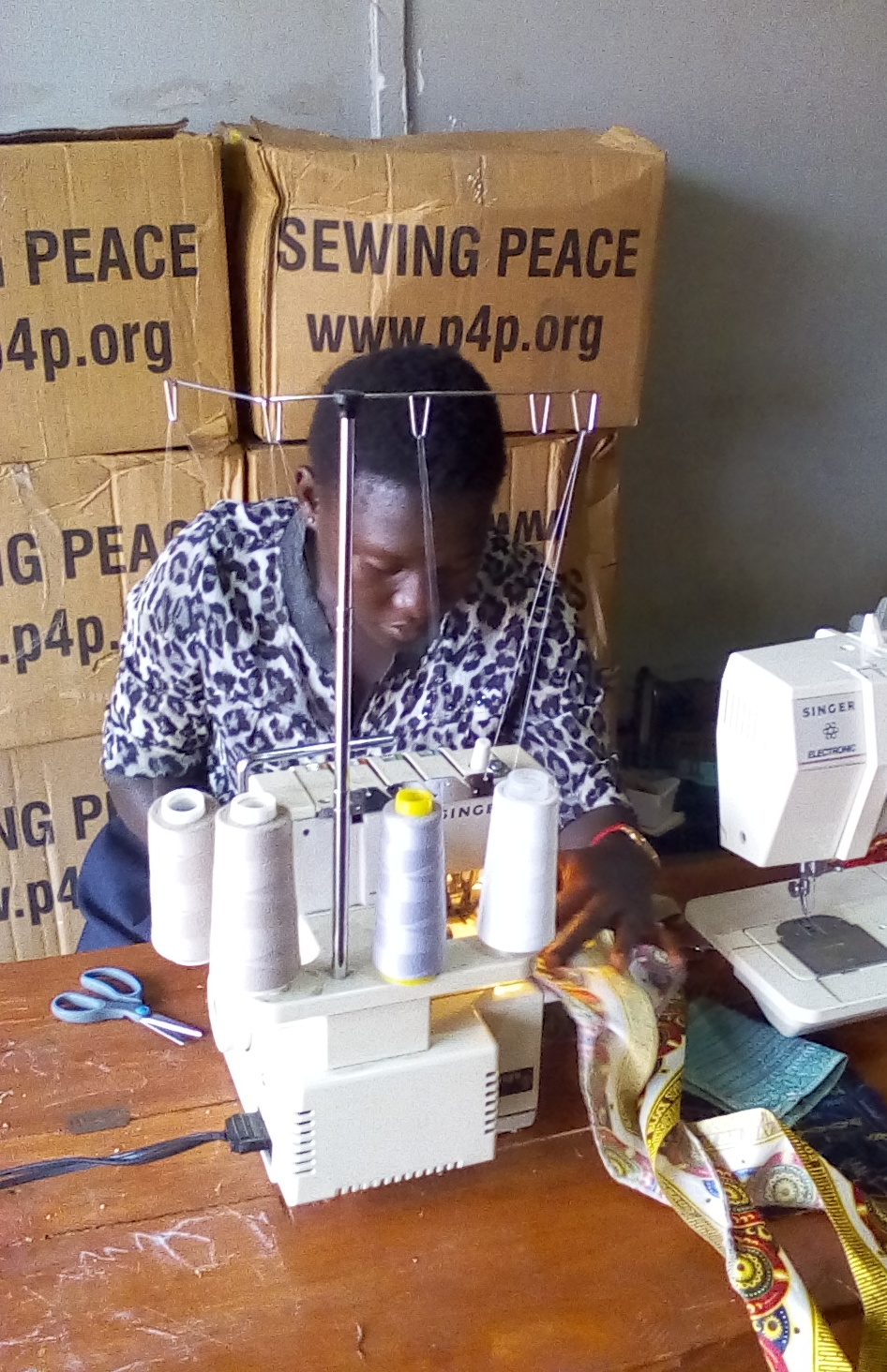
  • Many thanks go to Sewing Peace, for donating us nice sewing machines, which have really made a great change in our communities and made possible the sewing training workshop at our project. Initially the machine-to-student ratio was 1 to 5 trainees; now each trainee has a machine. We praise Mr. David Schwiedenback for always caring for our project. We also thank all volunteers involved in refurbishing the sewing machines and the sewing machine donors.
  • We extend many thanks to The Dewan Foundation for having kindly funded the shipping of sewing machine pallets to our vocational project in Uganda. Please continue with your kind spirit; we appreciate your great care.
  • The project extends many thanks to Mr. Nino Ardizzi and Ms. Madison of Canada for supporting us in constructing a poultry house, though it is not yet completed.
  • We thank the Government of Uganda, through its Ministry of Education and Sports, for always sponsoring 50 disadvantaged youths at our vocational project.
  • Thanks go to Kolping Mityana Womens project, which sponsors some 15 orphans at our vocational project. The funds from the Ugandan Government and from Kolping have supported paying the instructors and providing meals for our trainees.

Challenges
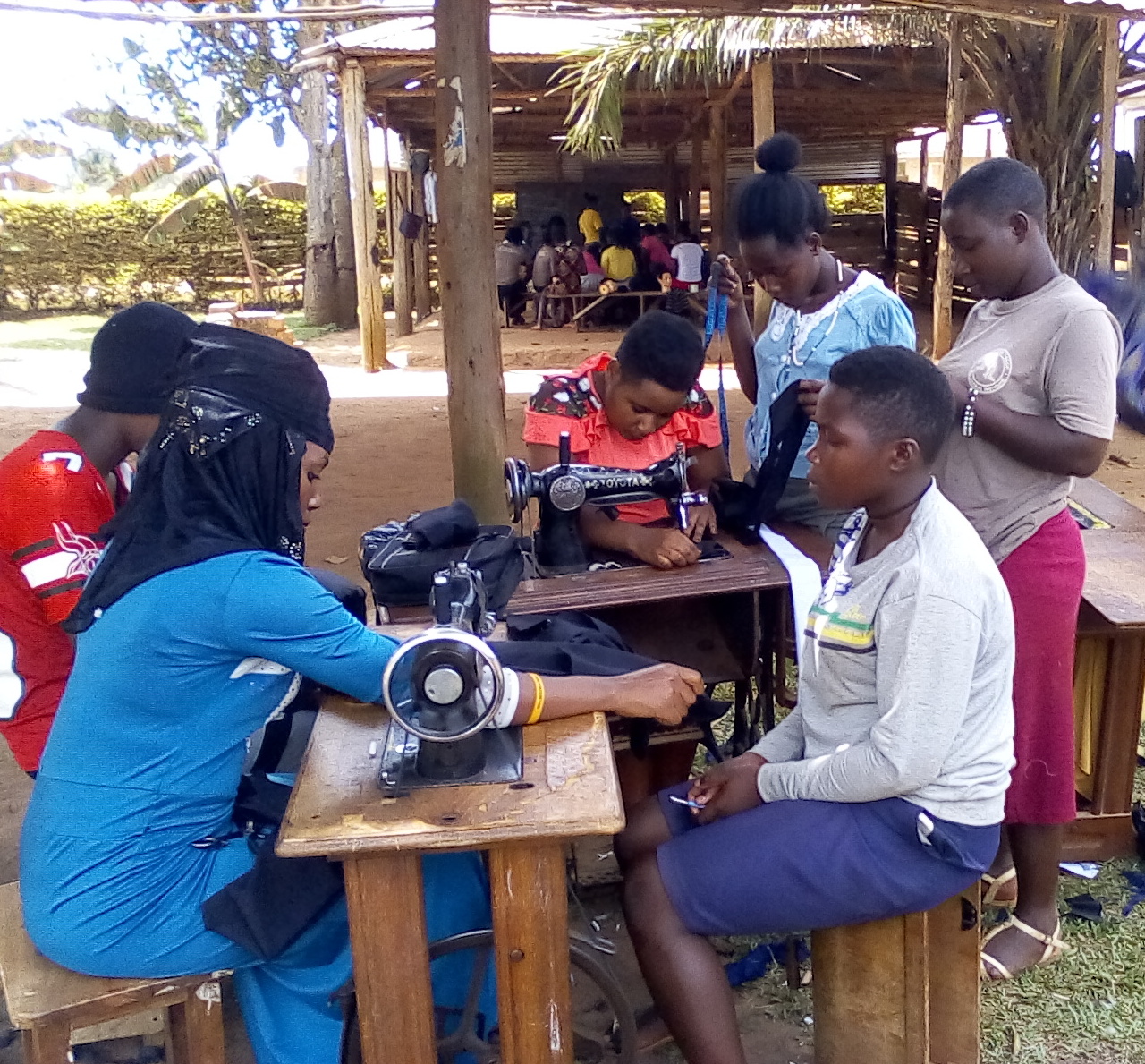
  • Insufficient classroom space has Very Very much affected our programs, as we must sometimes train outside, where it is not safe when it rains and where it can be extremely hot. Lack of classroom space also forces us to limit the number of trainees who can enroll in our programs.
  • We charge little tuition for our training, but unfortunately some still cannot afford it! As a result, the project sometimes cannot pay instructors on time or provide meals for trainees.
  • It is a challenge for us to pay shipping costs and Ugandan import fees for the sewing machines donated to us by Sewing Peace.

Future Plan / Way Forward

  • Construct a 2-classroom block to accommodate all potential trainees.
  • Continue to get sewing machines shipments from Sewing Peace.
  • Partner with and visit other U.S., Canadian, U.K., and other organizations and other vocational training programs to learn how they operate and how they sustain their institutions.

Conclusion

On behalf of the Mityana Open Troop Foundation, I conclude by thanking once again whoever has supported us financially and in-kind, and those who have worked tirelessly towards the development of our project. Thank you very much.


Sewing Machines in Vietnam, 2019

By Hanh Nguyen, GM of The Dariu Foundation (TDF) in Vietnam
Spring 2019 Newsletter

Our vision is creating a positive impact for 1 million people by 2025 using microfinance and education. On the path to advance our mission, we have been kindly supported by generous partners, one of which is Pedals for Progress (P4P) / Sewing Peace (SP).

In 2018, TDF got one container of 500 used bicycles granted to the most disadvantaged students and 30 sewing machines to low-income women in Da Nang city. The sewing machines were given to women with unstable employment and of low-income families. The program was aimed at supporting the selected women to generate jobs and improve their incomes. In addition to the sewing machines, TDF also provided each of them with micro-credit of $1,000 as working capital for the business.
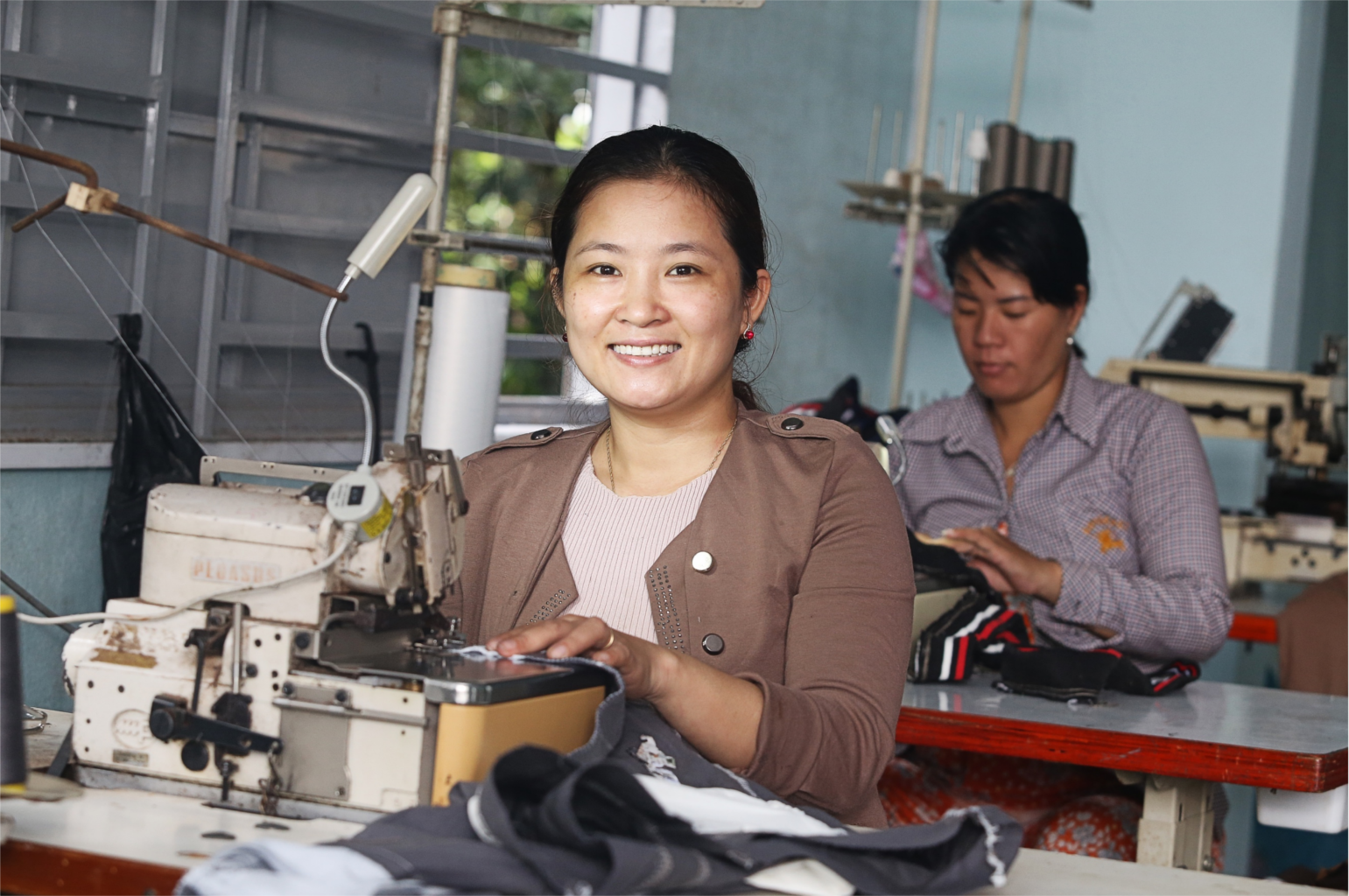

In December 2018, we visited the beneficiaries and learned that most of them had better employment and more income. Lanh Nguyen, a 40-year old mother, was one of the program members. She told us that her family had a hard time before she got a sewing machine from Sewing Peace via The Dariu Foundation. She tried different jobs but her family’s situation remained vulnerable. She had to work from dawn to dusk, but still could not make ends meet. She had no savings.

In 2014 she got a job at a garment factory more than 7 miles from her home. Every day she rode to work with her old bike, and it took her more than an hour for the ride. In 2016, the factory cut its staff; Lanh kept her job but it was changed to part-time. Her income was reduced by half. At this time her children started school, which made their life all the more difficult.

In 2018, she got an SP sewing machine in a Dariu program and started a business at home with three other women in the village. “I told my peers that we need to work together so that we can provide sewing services for the local companies. If it is only me, the company would not give me their jobs, because I could not meet the deadline and the quantity,” Lanh explained. “Now, five other women have joined us, so we can take bigger orders. I’m very happy that we can work together like a small company where every member contributes their own machine, and a little capital,” she added.

Now each member in the workshop has a stable income and personal savings of $2 per day. Their plan is to attract another 20 local women from the same background to join their workshop in 2019.

“With sewing machines from SP and micro-loans from TDF, we have been able to start and expand our business, creating stable income for our families and earning money for our children’s education,” said Lanh Nguyen.

Thanks to generous support from Sewing Peace and the Dariu Foundation, tens of families have improved their quality of life and earned greater respect in their families and communities.


Nigeria 2019: New Country, New Partner

Spring 2019 Newsletter

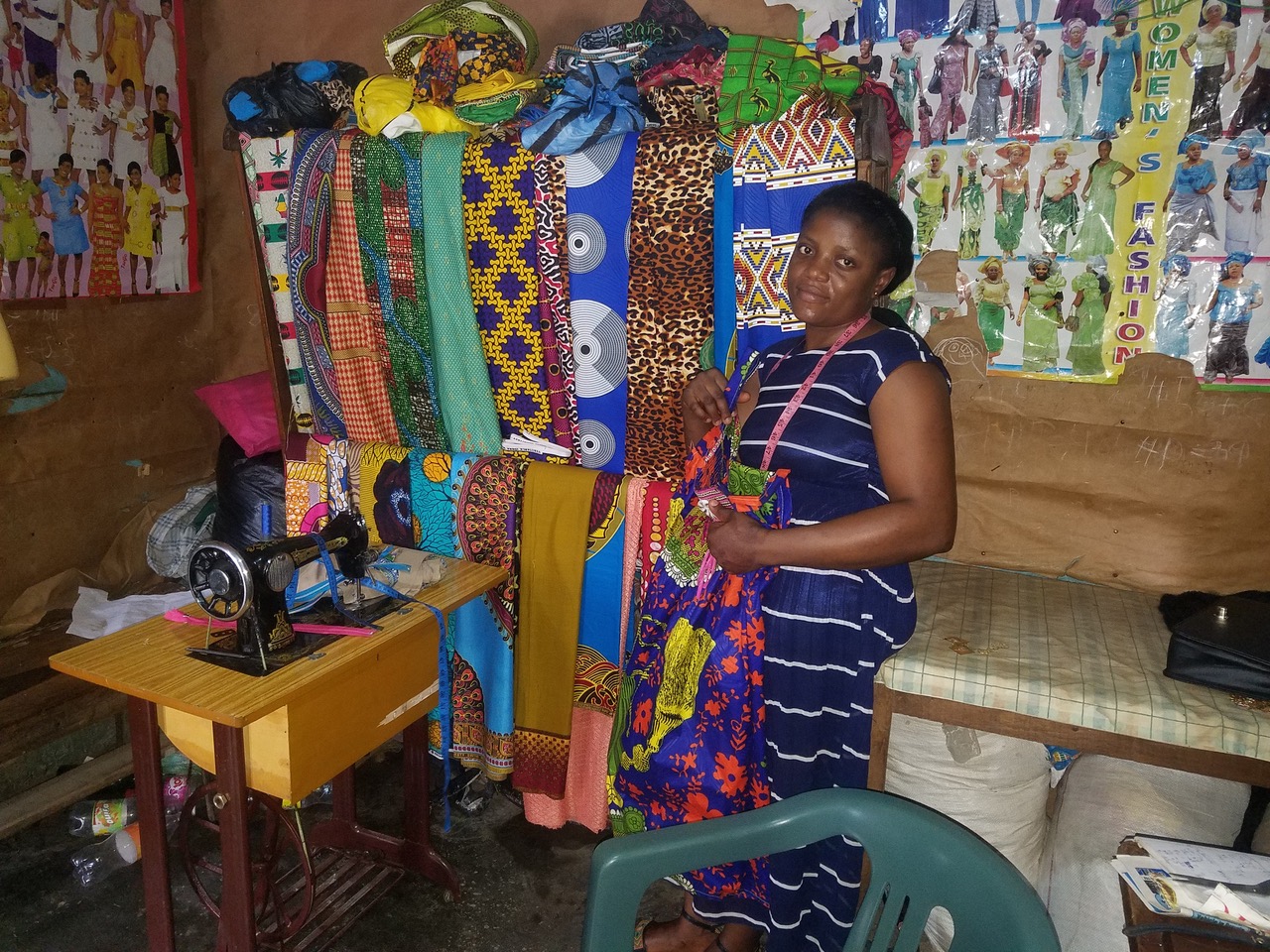
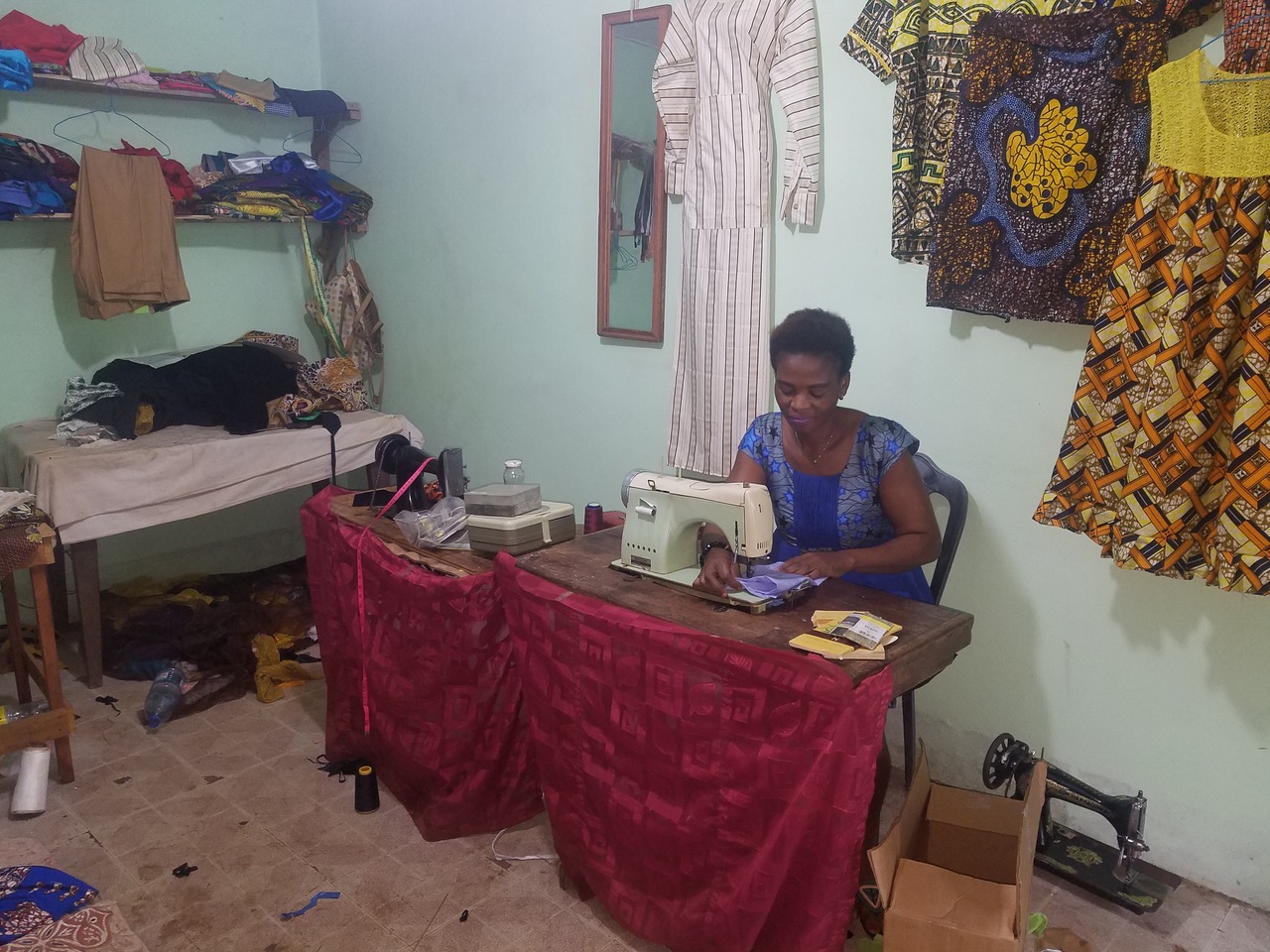
On March 19, 2019, Pedals for Progress and Sewing Peace signed a partnership with the New Jersey affiliate of the Peace Maker Community Foundation (PMCF), Nigeria.

PMCF has organized training initiatives for widows and youth for the past 12 years. They offer training in photography, event planning, decoration, fashion design, soap making, and baking. Working with local and national government groups, they plan to open bike shops and a sewing center in Nigeria. Their programs are open to all citizens.

We made contact with PMCF through Shola Adedeji, MPH, a pastor in New Jersey. Ms. Adedeji had planned a trip to Nigeria for later in March, so she came to the Sewing Peace warehouse and picked up four sewing machines to carry back to Nigeria.
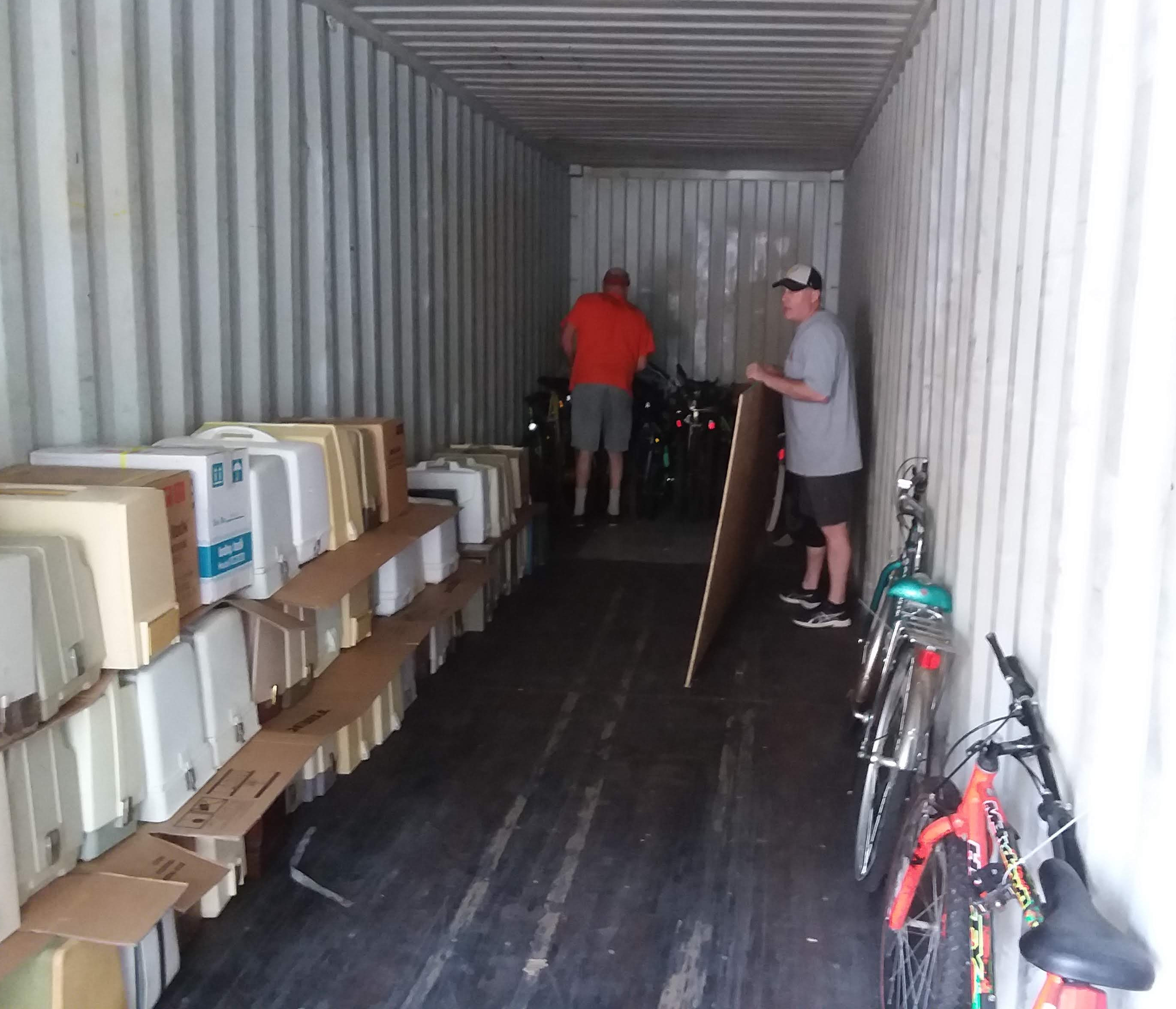
When a full container became available for shipping in June, we were able to fund it thanks to the Clif Bar Family Foundation. Our revolving fund idea is that the profits from this shipment will be able to fund the next shipment, and so on.

On June 7th we did a small preload: we loaded a row of bikes and moved a bunch of sewing machines into place for the main loading.
On June 8th, the main crew loaded 463 bikes and 141 sewing machines.
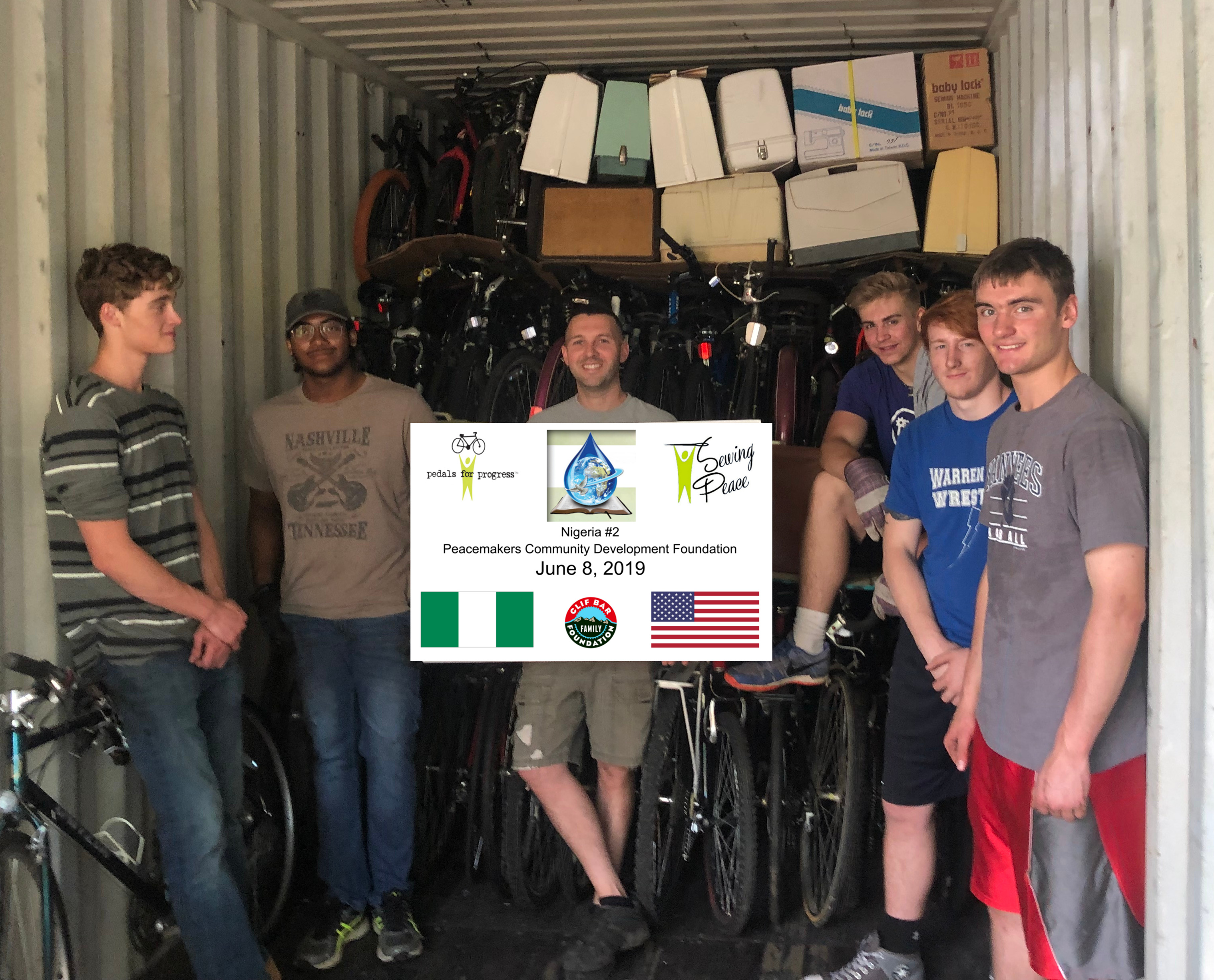
Nigeria is a new country for Sewing Peace and Pedals for Progress — a first container in 2019, but hopefully many more to come.


Collecting Sewing Machines for Sewing Peace, 2019

Spring 2019 Newsletter

[Editor’s note: this is a report from one of our very best sewing machine collectors, who wishes to remain anonymous. The dozens of machines we get every year from this volunteer arrive clean and in perfect working condition.]

I am the recycling coordinator for a solid waste management district.  I work with five transfer stations, three of which collect used sewing machines for me.

The collection of sewing machines here is a group effort. The employees at the transfer stations keep an eye out for sewing machines and set them aside for me to pick up. Plus, of course, we have generous donors who not only provide the machines but also throw in thread, extra needles, bobbins, pins, etc. The older machines are my favorites; I’ve been working on one that is 81 years old and came with its original manual. It’s a trooper.

The process of collecting and shipping the machines has evolved over the years. In addition to cleaning, oiling, and testing the machines, I now make drawstring bags to hold sewing notions, sew dust covers, cut out and embroider felt pin-holders, and put together sewing kits for each machine. And there’s my long-suffering husband, who has accepted the annexation of an entire room in our house for the Sewing Peace project.

My hobby has become a labor of love for people I will never meet but feel very connected to through a shared appreciation for sewing machines. I am very grateful to have the opportunity to contribute to Sewing Peace’s wonderful mission.


P4P/SP Partners as of June 2019 ( 🌐 Map)


ALBANIA, Tirana, PASS/EcoVolis: 7,371 bikes (2010 – 2019), 326 sewing machines (2010 – 2019)

GUATEMALA, Chimaltenango, Fundacion Integral de Desarrollo Sostenible y Medio Ambiente (FIDESMA): 9,865 bikes (1999 – 2019), 294 sewing machines (2003 – 2019)

KOSOVO, Kastriot, GoBike: 450 bikes (2018), 50 sewing machines (2018)

NIGERIA, Lagos, Peace Maker Community Development Foundation: 463 bikes (2019), 145 sewing machines (2019)

TANZANIA, Arusha, The Norbert and Friends Foundation: 469 bikes (2019), 119 sewing machines (2019)

TOGO, Vogan, Association Défi et Révolution de la Vie Rurale: 72 sewing machines (2019)

UGANDA, Mityana, Mityana Open Troop Foundation: 209 sewing machines (2017 – 2019)

Twenty-Eight Year Bicycle Grand Total 157,770

Nineteen Year Sewing Machine Grand Total 4,767


Financial Sponsors

A SPECIAL THANKS TO OUR SPONSORS AND MAJOR CONTRIBUTORS:

John Alexander & Jane Divinski
AXA Foundation
Biovid
Sherman Carll
CCG Facilities Integration, Inc.
Mrs. Diane Claerbout and Professor Jon Claerbout
Clif Bar Family Foundation
Dariu Foundation
Dewan Foundation
ExxonMobil Foundation
FedEx
Pamela Hanlon Charitable Fund
Jack & Donna Haughn
Robert & Laura Hockett
Leo & Helen Hollein
Elliott & Kathleen Jones
Gary & Mary Kamplain
Dorothy Magers
Helen & William Mazer Foundation
David Schweidenback & Geraldine Taiani
South Brunswick Education Association
Andrew Williams & Emily Winand
Kermit Leslie Young, Jr.


P4P/SP Board of Trustees

John Alexander, Treasurer
Unit 3230, Box 470
DPO, AA 34031 – 0470

David Schweidenback, President & CEO
86 E Main St
High Bridge, NJ 08829

John Strachan
95 Old York Rd
Hopewell, PA 18938

Andrew Williams
642 Jersey Av Apt 3
Jersey City, NJ 07303

Robert Zeh, Secretary
5 Woods Edge Ct
Clinton, NJ 08809


P4P/SP Staff Directory

Dave Schweidenback – Founder and CEO

Gary Michel – VP and Collection Coordinator

Lori Smith  – Office Manager

Michael Sabrio – Webmaster


Tue Jun 11 21:58:25 EDT 2019

President’s Message, Spring 2019

Our 28th spring collection season is well underway. We have a number of new collection sponsors and a number of new international partners. In my last message I spoke of having completed our goals in communities such as Rivas, Nicaragua, having saturated the area with bicycles. That has created the opportunity to open new programs in new countries.

In fiscal 2019 we have already resupplied our now-oldest programs: in 1999 we first shipped to FIDESMA in Guatemala with a grant from the New England Bio Labs Foundation, and in 2010 we first shipped to PASS/Ecovolis in Albania with a grant from the Clif Bar Family Foundation and the Soros Foundation. We have been able to create a new bicycle and sewing machine partnership with The Norbert and Friends Foundation in Arusha, Tanzania, thanks to the Jos Claerbout Family and William and Helen Mazar Foundation. Peace Maker Community Development Center in Lagos, Nigeria, should have a container of bikes floating towards them by the time you read this letter.

This year we resupplied Albania, Guatemala, and the new Tanzanian project with sewing machines. We will also be sending sewing machines in both of the bicycle shipments for Nigeria and Gambia. Independently, with a grant from the Dewan Foundation, we have made sewing-machine-only shipments: the first to resupply the Mityana Open Troop Foundation in Mityana, Uganda, with 72 more sewing machines, bringing their total to 207, and the second to open a new relationship with a shipment of 72 sewing machines to Association Défi et Révolution de la Vie Rurale in Togo. Togo, Nigeria, and Gambia are all new countries for Pedals for Progress and Sewing Peace.

Creating a new successful distribution point overseas, simply described, is starting a new business. Starting a new business takes investment. Pedals for Progress and Sewing Peace have been extremely successful in identifying the most motivated, dedicated and hard-working partners worldwide. Indeed our overseas partners, through their efforts, make P4P/SP so uniquely successful. From here in New Jersey we supply them with the pieces, but it is up to our international partners to put those pieces together to become a long-term distributor such as FIDESMA in Guatemala or PASS/Ecovolis in Albania. When they are successful and can take multiple shipments, there are greater economies of scale and experience. Our final success is when that bicycle or sewing machine is in the hands of a local customer. It is crucial to our success to have a fair and equitable distributor receiving our product overseas.

Thank you to all the individual donors as well as our essential corporate and foundation donors for allowing us the opportunity to continue on our mission to empower sustainable economic development by recycling bicycles and sewing machines from the U.S. and shipping them to motivated people in the developing world. We literally can not do it without you!


Spring 2018 Newsletters

Progress and Peace in Uganda

By Patricia Hamill
Spring 2018

In July of 2017, Sewing Peace sent 73 refurbished sewing machines to the Mityana Open Troop Foundation (MOTF) & Vocational Project for their tailoring and designing workshops. The relationship with MOTF is a promising one and steadily growing. After the delivery, we were soon notified that these machines were put right to use and helped a number of participants earn their certificates of completion in the two-year program. Start-up machines were presented to graduates so they could move on to business ownership or employment in tailoring and sewing.

Participants, predominantly young men and women between 13 and 25 years old, are often those who have been orphaned young and have no family to depend on or those whose families cannot afford their education. Some teenagers are already parents themselves. Lack of job skills is inevitably a consequence of these factors as they have faced severe financial and social boundaries that prevent them from becoming independent earners. But with the continued availability of the vocational workshops and machines, the success rate grows and more of these people can reverse or mend their monetary dilemmas.

The vocational program does offer other courses such as hairdressing and hair weaves, carpentry and joinery, auto mechanics, agriculture, and animal husbandry, but the sewing courses are especially in demand. In July, the ratio of machines to people was 1:4, sometimes 1:5. With the additional machines, the current ratio of machine to participant in the workshops is now 1:3. According to Matthew Yawe, the Executive Director of Mityana Open Troop Foundation & Vocation Project and the country representative for Pedals For Progress/Sewing Peace in Uganda, a recent graduation ceremony that included the presentation of the sewing machines to the trainees who had completed their program “enticed and attracted more trainees from all the surrounding areas and they also brought in their children to study.” Many hope to join and to graduate with “nice sewing machines from [the] project.” The sewing department, last year, had a population of 30 trainees; this year, there was an increase to 45.

The sewing program has set up a shop in their town from which they sell some of the machines. The income enables them to pay the instructors and meet the shipping and customs costs.

One of the graduates of 2017, Resty Masane, put her new sewing machine to work on the veranda of her parents’ home in Nalyankanja, an area about 18km (11 miles) from Mityana. This 20 year old joined the vocational project in 2015. She had completed her “primary seven,” which is the last of seven years of academic study before students move on to six years of secondary schooling, but her parents did not have enough money to send her for this next stage of studies. Her parents are farmers who manage to grow enough for home consumption and have just a little left to sell or trade in order to buy other requirements. In fact, Resty’s parents paid her sewing program fees by bartering beans—a reliable crop in their climate—and maize for her vocational studies. Something of value exchanged for something of value: It’s a win-win arrangement.

Resty’s contracts include making uniforms for a village secondary school and two village primary schools. She earns between 10,000 and 15,000 Ugandan shillings (approximately U.S. $2.65 to $4.00) Since she can make 3–5 uniforms a week and also do repairs for a fee, she has an income that is reliable and a skill that will remain in demand. To add to her success, she now pays school fees for her five siblings. Resty also puts the barter system to good use by providing some uniforms to a sister’s school in lieu of paying fees. Her income also helps defray the cost of medication for her family and enables her to maintain a phone, which of course lets her stay in touch with clients and schools.


Also in 2017, Ereth Nampijja, a 21-year-old woman, graduated after taking a tailoring and fashion design course. She lives in Busunju-Mityana, located 30km (about 19 miles) from Mityana. She had been a good student, moving from primary school to completing her O levels—the exams taken after the first 4 years of secondary school—but her family could not afford to send her for the critical last two years. As a result, she could not sit for the A levels (final exams) or graduate. It was then that she approached MOTF to participate in the vocational program. Two years later, Ereth’s ambition and effort cumulated in a certificate of completion and, with what help her parents could offer, she now has a three-month lease of a space in the market where she can repair or repurpose second-hand clothes to sell from her shop or via mobile vendors who take the goods to the rural villages to sell.

Ereth averages about 7,000 Ugandan shillings (approximately $1.85) per day. This newfound financial independence allows her to rent a room near her shop and provides her with daily meals. Like Resty, she can provide funds for medication and cover school fees for her brothers and sisters. Her goals are to grow her business and to have more room to store her machine and finished products safely from the elements.

As this article was being finalized, we heard from Matthew that the recent shipment of 64 more machines reached MOTF and were being made ready for the next class session. The heavy-duty machines especially pleased him because the orders for school uniforms can also be completed with the institutions’ embroidered emblems and garments made from heavy fabrics can also be made and mended as part of the graduates’ added services offered.

As is to be expected, there are ongoing challenges for the program. These, however, are a result of the progress it has made. This growth in enrollment means that the existing workshop is at maximum capacity and the instructors often have to create shelters outside under the trees where they set up the sewing machines for classes. With the better part of six months of the year bringing substantial rainfall, this makeshift environment is not a viable long-term option. MOTF is, as always, looking to the future and plans to be able to reinvest in and improve their facilities as they continue to sell machines and bicycles from Pedals for Progress. The record of success stories can only continue to expand from here.


Report from Cameroon, Spring 2018

By Orock Eyong
Spring 2018

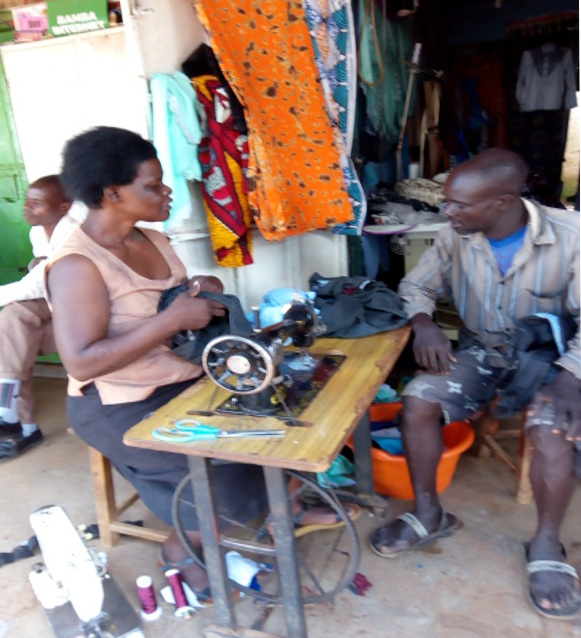
United Action for Children and Sewing Peace are implementing a One-Girl-One-Sewing-Machine project in the Buea and Mamfe communities. The project aims at promoting entrepreneurial skills to enable young girls and women to create employment. The program targets young girls and women who are just starting as well as those already established in the tailoring business.

The zigzag sewing machine and other accessories sent by SP are very useful as they give the women experience in specialized sewing with different stitches. Some of the women have added new services because of the zigzag machine. The machine is a great favorite because it allows the women to do quick specialized tailoring while avoiding travel to use other machines that are costly and unreliable.

The stories from our beneficiaries are bitter–sweet. Though they earn a living from tailoring, they missed out on life experiences such as interacting with peers, being taken care of, and education. Such is the plight of many young girls from vulnerable families. They are forced to go into the labour market earlier in life to make ends meet. Since formal education is too costly for them, increasing accessibility to vocational skills is a good alternative. Through coaching, mentoring, and other training they can learn skills such as book keeping, costing and pricing, business planning, health and development.

UAC is excited and proud to bring these stories of the beneficiaries of the project.

Juliet Mungwa

My name is Juliet Mungwa and I am 31 years old. I dropped out of school from senior two because my parents didn’t have enough funds to keep me in school. Fortunately I had acquired the tailoring skill from a vocational institute. I was able to borrow a sewing machine from one of our family friends and I started tailoring. I have been tailoring for four years now. My clients, adult women and younger boys. I sew skirts, dresses, blouses and shorts. I earned between 25,000 FCFA (Central African CFA Franc) to 75,000 FCFA a month (U.S. $44 to U.S. $133). Thanks to two additional machines from SP, I am now between 50,000 FCFA and 100,000 FCFA (U.S. $89–$178). From this I am able to save 10,000 FCFA (U.S. $18) for myself, and I spend the rest on taking care of my 3 siblings since my mother cannot afford to take care of the family.

Loveline Aben

I am a 27-year-old single mother of five. Before the UAC/SP project I did not have enough money to buy the machines I needed to meet the demands of my customers. Because of donated machines from SP, I was able to increase the number of machines in my shop and keep up with demand. Thanks to the new machines, my income has increased and I am able to expand my shop and easily pay for food, health care, and the education of my children. I also reinvest part of my profits into the business to acquire working material. I get my orders from parents who bring the uniforms of their children. The photo shows some of the uniforms I tailored for a primary school.

My plan for the future is to get tenders from at least 3 schools to make uniforms. In that way I will have a stable clientele. I also want to get a new location in the trading centre where I can station my business to attract more clients. I hope to get some training in business planning, where my knowledge is limited. I am so grateful for the support given to us through the One-Girl-One-Sewing-Machine project.

Margaret Oyere

I am 35 years old and a mother of five children living in Bolifamba village community. After I completed my training, my husband, who is a subsistence farmer, bought me a manual sewing machine, which enabled me to establish a business as a seamstress in our community. I can now manage to work independently and save my own personal income instead of relying on my husband for daily and other needs. I am now able to assist my husband in the education of our children and taking care of their health.

Thanks to the donation of an electric sewing machine from SP through UAC, I can now promptly tailor modern dresses and all types of local casual/occasional wear for women and children. The machine has helped to boost my earnings and image before my customers. I now earn U.S. $35 per day without strain as compared to $25 before the new machine from SP. I am becoming a self-reliant, independent income earner.

P4P would like to thank the Clif Bar Family Foundation for their continuing support, that support allowed P4P to pay for the shipping costs of the first shipment of bicycles for our new program in Cameroon.


New Collection Partner: Habitat for Humanity, Warren County, New Jersey

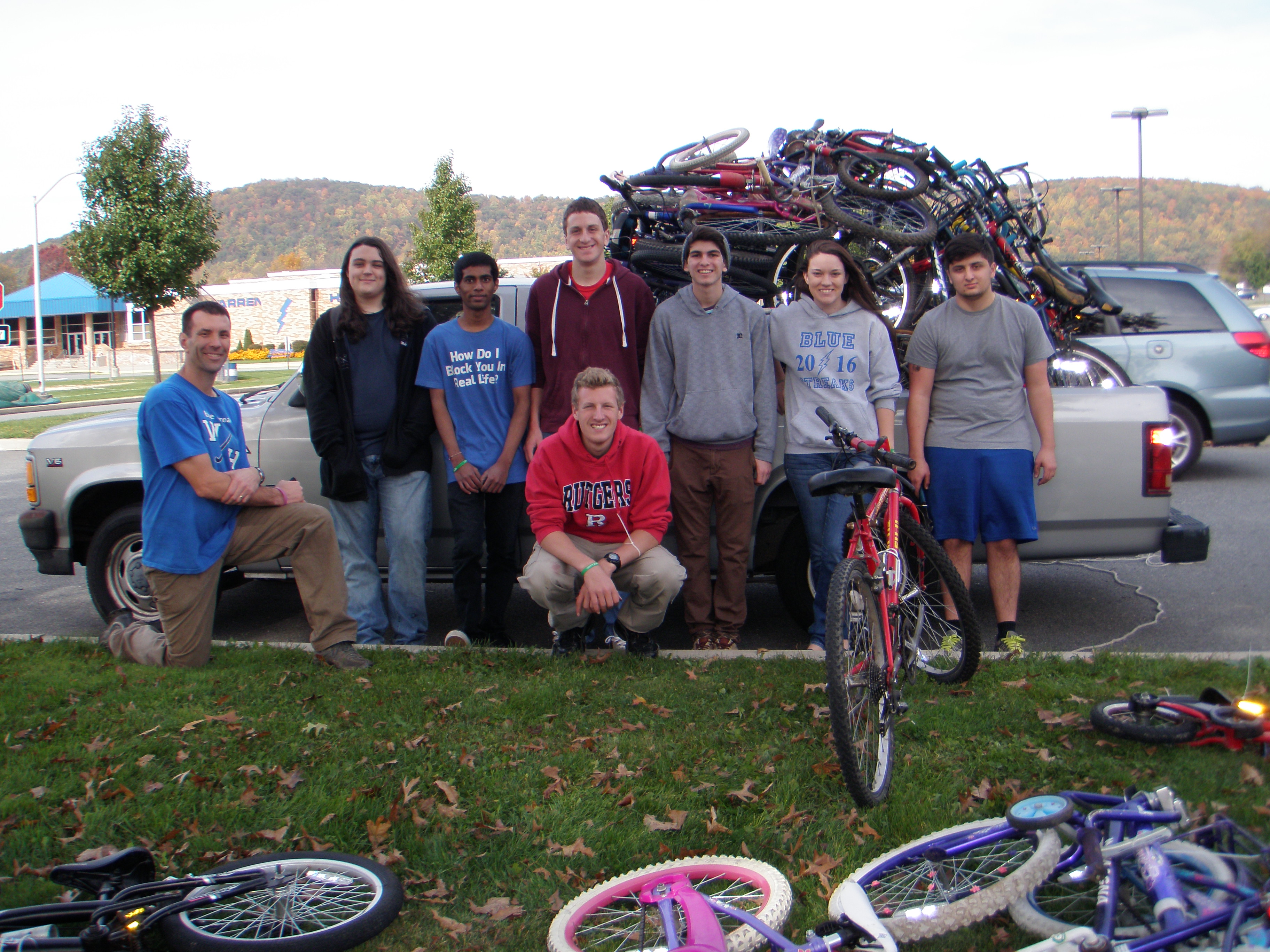
Pedals for Progress is proud to announce a unique new collection partner: Habitat for Humanity of Warren County New Jersey. The partnership is due to Daryl Detrick of the computer science faculty at Warren Hills Regional High School (WH) in Warren, New Jersey. Daryl is also director of the WH Chess Club. He and his students have been volunteering at both Habitat for Humanity and Pedals for Progress for the last few years.


For the past several years, the Chess Club has gotten a number of bicycles from Habitat for Humanity for their annual Pedals for Progress bicycle collection. Habitat for Humanity has been collecting more bicycles than they can sell. P4P’s challenge is to get a minimum $10 donation with each bicycle and sewing machine; this donation is a fundamental part of our business model. To pick up a bicycle or sewing machine, prepare it for shipping, truck it to the warehouse, and pack it away in the warehouse so that is ready to be shipped, we spend an average of $20. Every time someone donates a bicycle or sewing machine with $10 we still need to independently raise another $10. We refuse a lot of bikes that don’t come with money — it is better to collect perhaps fewer and stay in business than collect a whole bunch and be bankrupt.

In 2018 Daryl got into a conversation with the Habitat county director Ben Eskow. Daryl mentioned that he might have to take fewer bikes because he was having trouble raising the $10 per bike that Pedals for Progress needs just stay in business.

Ben met with his staff and board at Habitat for Humanity. They were keenly aware that they were receiving many many more bicycles and sewing machines than their resale store could possibly use. Habitat for Humanity also has some discretionary funding that they can use for international programs. The board of Habitat for Humanity of Washington County decided that they would contribute the $10 per bike and sewing machine to Pedals for Progress and Sewing Peace. Therefore P4P/SP will now be able to pick up their extra bikes and sewing machines on a regular basis.

This is a wonderful collaboration between two institutions searching for a way to help the poor have a better life. Pedals for Progress has a new source of bicycles, which we hope may produce up to 250 bikes this first year. From the perspective of Habitat for Humanity, they have a volume problem and they have found a way to solve it within their mandate by partnering with Pedals for Progress and Sewing Peace. Win-win for the betterment of all.


New Partner in Kenya: Aid the Needy

By Tom Ademba
Spring 2018

Aid the Needy is a community-based organization registered by the Ministry of Social Services operating in Rachuonyo South Sub-County, Homa-Bay County in Kenya. It was started in 2007 through initiatives of local young people to spearhead development among unemployed young people. The organization has transformed lives through sustainable small-scale self-help initiatives. To help young people start their own businesses, we give them vocational skills, including training in sewing, masonry, and carpentry.

Vision: A community where all are empowered to prosper and lead dignified lives through self-help initiatives.

Objectives:

  1. To build, equip, and manage a community training centre for young, underprivileged community members to acquire vocational training.
  2. To train and educate young people out of school, with a special focus on young women, in skills that would enable them to be self reliant.
  3. To improve the quality of life in the poverty-stricken villages, taking into consideration the cultural context and issues that hinder women from realizing their economic power and potential.
  4. To stimulate and strengthen community groups, to help them develop income-generating activities, and to enable them to fight stigma and prejudice.


Some of our achievements:

  • Since inception, the organization has trained many young people, including disabled youths, in vocational skills and enabled them to start their own businesses.
  • With funds from Aidlink Ireland, we launched a micro-enterprise project to support small-scale farmers.
  • We received funding from World Mercy Fund Austria to educate young farmers on the agricultural value-added chain so they can earn more income.
  • We have recently approached Pedals for Progress to support our community with sewing machines. P4P shipped 72 electric sewing machines to support our training programs and help young people start income-generating projects.

We are grateful to all our partners and in this year we pay our sincere gratitude to Pedals For Progress for the way they fast-tracked the shipment of the sewing machines to support our community project.

P4P thanks the William and Helen Mazer foundation for their continued support and interest in the development of East Africa and for aiding in the cost of shipping 72 sewing machines to Kenya.


New Partner: GoBike Kosovo

By Kushtrim Gojani
Spring 2018

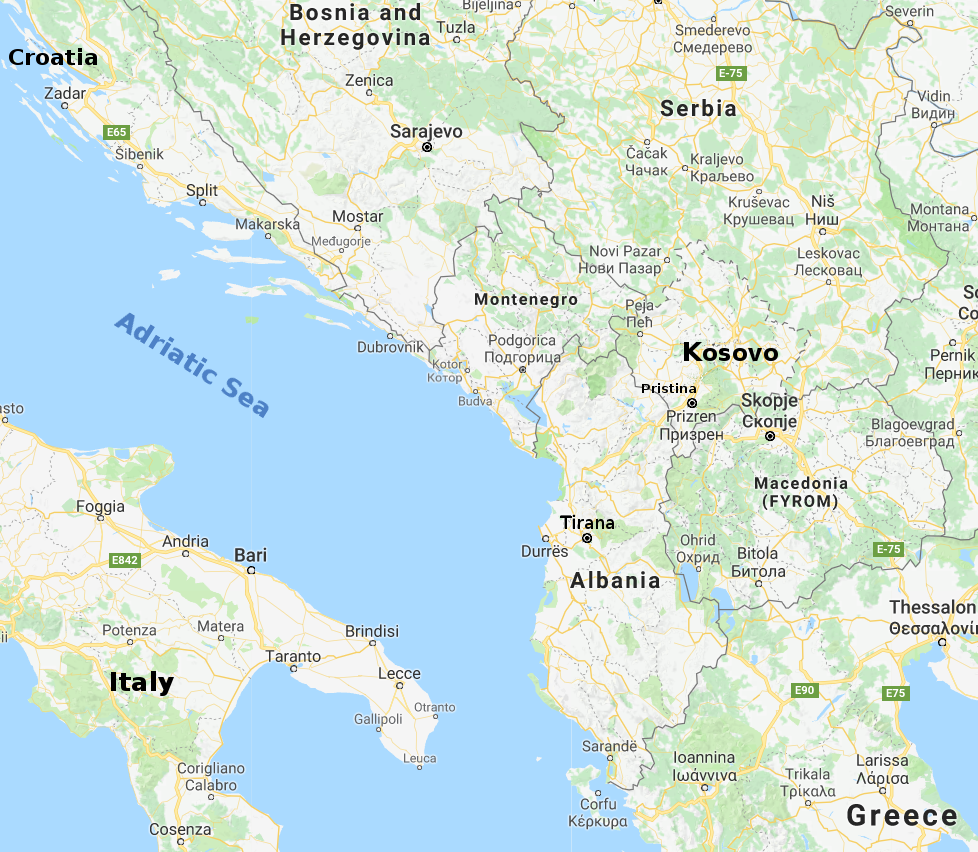
GoBike LLC is located in Pristina, the capital of Kosovo, Europe’s youngest country. Kosovo is a landlocked country bordering Albania, Montenegro, Serbia and Macedonia. Kosovo owes its independence largely to U.S., U.K. and other European partners who intervened in 1999 to stop ethnic cleansing of the Kosovo Albanian majority by the policies of Slobodan Milosevic, the President of ex-Yugoslavia. NATO troops are still present in Kosovo, and the U.S. Army has a base in Kosovo, Camp Bondsteel, which can hold up to 7000 soldiers.

The partnership between Kosovo and the U.S. is strategic. Kosovars are extremely grateful towards the U.S. for its continued support, and Kosovar Albanians (more than 90% of Kosovo’s population) tend to be very friendly towards the U.S. This gratitude is visible across Kosovo’s cities, but most notably in Pristina, where one can walk down Bill Clinton Boulevard, turn onto George Bush Street, and end up in Madeleine Albright Hall.

Like all post-war countries, Kosovo faces many political, economic, environmental and social challenges. Although it has the youngest population in Europe (more than 60% are below 25 years old), the unemployment rate remains at 30%, and at around 60% for youth and women. Kosovo is entirely reliant on energy produced from lignite, which is extremely polluting and a perennial health hazard. Post-war development and the corruption associated with it have taken a negative toll on the environment; quality of air, water and soil; increased congestion in cities; and deforestation in rural areas. Kosovo’s capital is often ranked one of the most polluted cities on earth.

In response to these problems, I established GoBike LLC in November 2017 with the mission to promote cycling and bicycle use in Kosovo, reduce transport-related carbon footprint, and improve Kosovo cyclists’ well-being. The vision of GoBike is a Kosovo society with an improved quality of life and environment. Partnering with Pedals for Progress has been crucial to getting this start-up business going.

GoBike aims to stimulate bicycle use, increase the number of cyclists in city streets and thus reduce pollution from traffic, and make cycling in Kosovo safer and enjoyable for all. We seek to identify, support, and promote all those who use bicycles as a main mode of transportation, and to lobby for improvements of urban infrastructure for cycling.

GoBike strives to be the number one bicycle provider in Kosovo, with specialized bike shops for rentals, sales, and maintenance. Our business will focus on the organization and promotion of cycling events (excursions, festivals, cycling clubs, etc.) and education of citizens on the importance of bicycle use. This, indirectly, will affect the greater demand for bicycle rental and sale services. In the future, GoBike plans to establish the very first public bicycle rental system, initially in the capital, with the hope of expanding to other cities.

GoBike’s chosen area of focus is not only important in and of itself, but it also has multiple benefits to the environment, contributes to health, and supports Kosovo’s economy and tourism. Kosovars brand themselves as “The Young Europeans”. Hopefully, Pristina and other Kosovo cities will have the cycling infrastructure and attitude towards bikes as other European cities like Copenhagen, Amsterdam, anand London.

Pedals for Progress, thank you ever so much for your contribution and support. I look forward to reporting the details of the concrete contribution our joint endeavor is making to ease Kosovo’s environmental and economic challenges.


Kosovo
Population: 1,920,079 (2017 est.)
Area: 10,908 sq km (slightly larger than Delaware)
GDP per capita: $12,003 (2017 est.)


New Partner in Peru: Alianza Arkana

By Laura Dev & Techa Beaumont
Spring 2018

Sewing Peace has just received a request for sewing machines for Shipbo artisans in the Peruvian Amazon. [Note: P4P/SP plans to ship sewing machines to Alianza Arkana on 20 June 2018.]

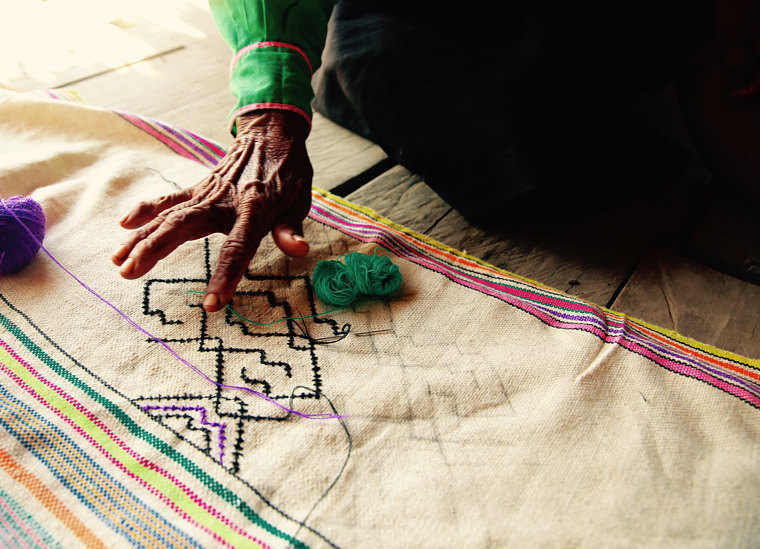
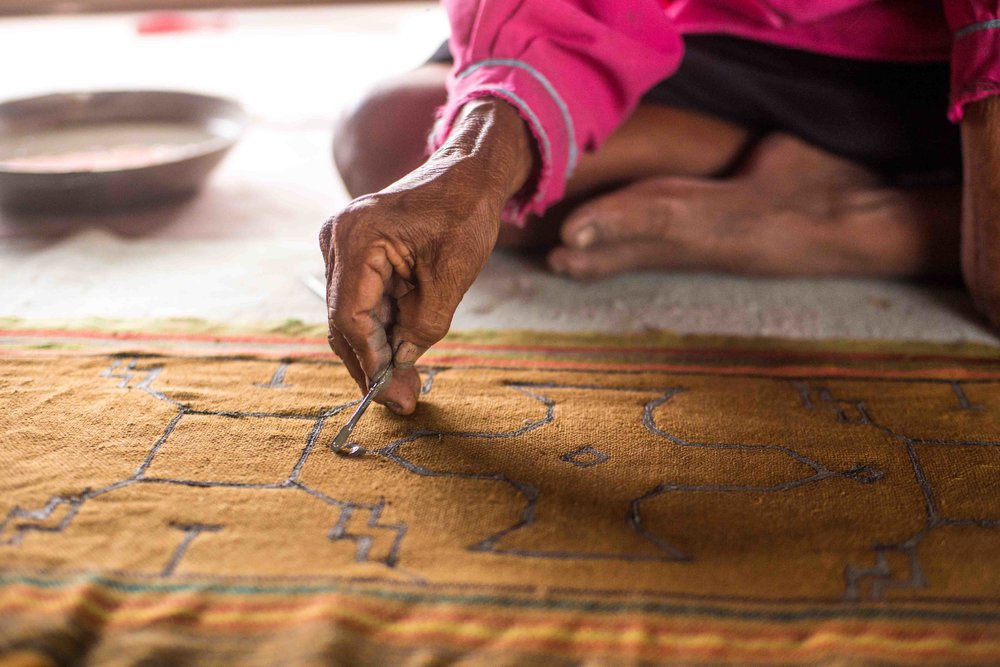
The machines are going to the Non Kene (Our Design) Project of the Pucallpa-based NGO, Alianza Arkana, a small not-for-profit that works with Indigenous Shipibo communities. They have experience facilitating workshops for women and youth, and have close relations with several women artisan groups in both the urban townships of Yarinacocha as well as rural Shipbo villages of Paoyhan, Santa Clara, Betania and San Francisco.

Indigenous Shipibo artisans aspire to improve skills and access a wider market for their products. Our vision is to link maintenance of cultural knowledge and improved livelihoods by developing professional capacity to establish a collective brand, including skills, business and leadership training, new equipment, seed funding, and networking to reach new markets for Shipibo artisans. The provision of sewing machines to these artisans will provide an essential resource to them in meeting these aspirations and improving their income potential.


Current Status: In June 2018 we will facilitate the first in a series of several workshops in response to requests by the women artisans in the Shipibo Native community of Paoyhan. Paoyhan is a small village in the Peruvian Amazon, 4–5 hours by boat from the nearest city, Pucallpa. The workshop aims to increase their skills at making clothes, sewing-machine use, and fashion design. Common to many Shipbo artisans whose livelihood is based on selling their wares to foreigners, these women wish to improve their artisanal products and expand their markets in order to meet basic material needs such as food, medicines and education for their children. Over 70% of Indigenous communities in the Amazon live in material poverty and around 30% in extreme material poverty. Traditional artisanal embroidery is an important part of Shipibo culture, and at least 80% of Shipibo households gain income from the sale of these products. However, the artisans here do not have easy access to markets to sell their wares, nor are they trained in using technologies like sewing machines that would enable them to make more complicated types of clothing that can sell for higher prices.

We have partnered with the women-run artesania committee in Paoyhan to plan this workshop, and are bringing in women from the Shipibo Meken artesania collective in Pucallpa, led by Jovita Maynas Bardales, to teach more advanced sewing techniques and fashion design. The goal is to provide training for the Paoyhan women artisans, as well as help build relationships between the rural and urban artisan groups.

Workshop Details: The proposed workshop series has a dual purpose to train participants in clothes-making, and (once acquired) how to use a foot-pedal sewing machine, and will also serve to build community and organizational capacity within and among women artisan groups. By the end of the first 3-day workshop, participants will have learned how to make sewing patterns, and will have made an article of clothing using their newly acquired skills. Ideally, this workshop will be followed by ongoing workshops to learn more advanced skills with sewing machines. We also hope to bring in other fashion-designers, and continue to develop capacities for entrepreneurship, marketing, and product development. These sewing machines will be essential to enable these women to continue to apply the skills learned in the workshop, and ongoing workshops and support will ensure that they have the skills needed to make good use of the machines toward their goals of creating better markets for their wares.

Distribution Strategy for Sewing Machines: Initially we will target participants in the Paoyhan workshop and provide pedal-powered sewing machines to the artesania committee in the village of Paoyhan for their own uses. If we find that current solar energy in the village is sufficient to power electric sewing machines, we will provide these as well. We expect to deliver 15–30 sewing machines to this village depending on availability of electricity.

Following this initial provision of sewing machines, we will plan for further provision of sewing machines to other communities in collaboration with workshops and other events that engage artisans in showcasing and further developing their skills in sewing and fashion design.

Based on the following criteria, sewing machines will be distributed to Shipibo artisans who:

  1. live in urban townships of Pucallpa or more remote Shipibo villages and have either completed a workshop conducted by the project partners on sewing and fashion design or otherwise have demonstrated existing skills and knowledge of sewing machine techniques
  2. are not in a financial position to buy their own sewing machine
  3. will, based on successful participation in a workshop or existing demonstrated skills, be able to utilise the sewing machine to increase their livelihood.

Pricing:
The sewing machines will be provided free of charge to participating artisans. Where artisans or artisan collectives are not in extreme material poverty, they will be asked to make a token contribution of an artisanal product as an indication of their ‘buy-in’ and valuing of the tool provided. Money generated from the sale of the donated artisanal products will be used to fund future workshops.


Report from Albania: A Special Day for Bulqizë Kids and Communities

By the EcoVolis Team
Spring 2018

Bulqizë is an Albanian town about 40 miles northeast of Tirana, the capital. During the Communist era Bulqizë was a mining town well known for the high quality of its chromium and copper. At its peak it was home to around 50,000 people with full employment and excellent infrastructure – including schools, health centers, and roads. Mineral enrichment and smelting factories also provided employment for surrounding rural communities.

Today Bulqizë has been reduced to an isolated settlement with fewer than 14,000 inhabitants, who still live in the old and decaying Communist-era apartment buildings erected 45 years ago. Unemployment is high and the majority of families live at or below the poverty line. The tragic loss of life of men who work in the mines has left their families with little or no income. Community members and children thus feel financial and other kinds of pressure, and social problems continue to worsen.


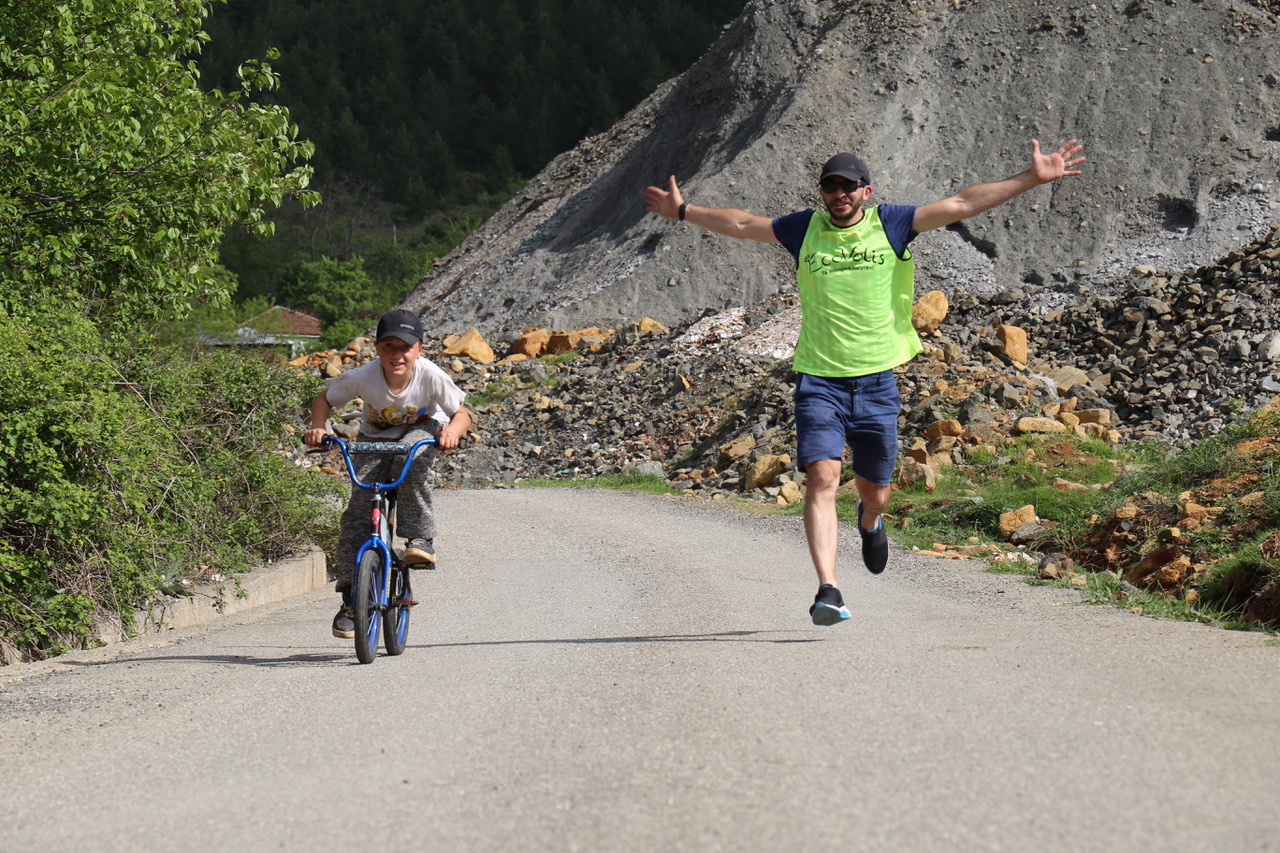
On 1 May 2018, EcoVolis Albania headed to Bulqizë to meet with these communities and donate more than 20 bicycles to the most needy children and families. We also distributed boxes of clothes, toys, books, and modest supplies, providing some much needed relief. EcoVolis activists spent the day in the town talking to people about their lives, hardships, experiences, and daily issues. They also helped children to get on their bikes for the first time in their life, talked to them about their school, dreams, and what it is like growing up in Bulqizë. A local organization joined EcoVolis in this activity, helped us identify the most needy families, and facilitated our interaction with the local community.

At the end of the day, our EcoVolis team headed back to Tirana with fond memories of the children and their excitement when they got their new bikes. At the same time, we realize how much more support is needed in Bulqizë. With a series of similar activities in other vulnerable communities across Albania, our EcoVolis Team has given people there a happy break in their everyday routines. Though we can’t make a fundamental change in their lives overnight, we can give children the hope that their future can be different from their parents’ and we can inspire them to dream big like their peers elsewhere in Albania and the world.


Report from Guatemala, Spring 2018

[We just got this short note from FIDESMA, our long-time partner in Guatemala.]

Maria Arecely Reyes Tala is an eight-year-old fourth grader.

She is a girl with dreams. She is a happy, playful little person. She used to see the other girls with their bikes, and was always hoping to have a bicycle of her own. Now she has one.

From the first moment that she got her bike from FIDESMA, she was very eager to learn how to ride it. She learned very fast and now handles the bike very well and rides a little every day. She likes to run errands at the store and ride all around town making mischief.

Pedals for Progress and all their collaborators and volunteers bring smiles to Guatemalan and many other children.

Thanks to P4P for your support, which allows us to offer bikes at prices that everyone can afford.


Our Partners

P4P/SP Active Partnerships as of June 10, 2018 ( 🌐 Map)

ALBANIA, Tirana, PASS, community development: 5,902 bikes (2010 – 2018), 230 sewing machines (2010 – 2018)

CAMEROON, Buea, United Action for Children, youth development: 462 bicycles (2018), 100 sewing machines (2018)

ETHIOPIA, Solar Energy Foundation, small-business training and development: 72 sewing machines (2017)

GUATEMALA, Chimaltenango, Fundacion Integral de Desarrollo Sostenible y Medio Ambiente (FIDESMA), small-business promotion: 9,409 bikes (1999 – 2017), 274 sewing machines (2003 – 2017)

KENYA, Homa Bay, Aid the Needy, community development: 72 sewing machines (2018)

KOSOVO, Kastriot, GoBike, community development: 450 bikes (2018), 50 sewing machines (2018)

PERÚ, Ucayali region, Alianza Arkana, community development, 1st shipment June 20, 2018

TANZANIA, Dar es Salaam, She Can Foundation, community development: 217 sewing machines (2016 – 2017)

UGANDA, Mityana, Mityana Open Troop Foundation, community development: 137 sewing machines (2017)

UGANDA, Iganga, Office of the Mayor, community development: 69 sewing machines (2018)

VIETNAM, Dariu Foundation, Can Tho City, community development, 528 bikes (2018)

Other shipments of bicycles between 1991 and 2018 have gone to non-profit agencies in Appalachia, Colombia, the Dominican Republic, Ecuador, El Salvador, Eritrea, Fiji, Ghana, Haiti, Honduras, India, Madagascar, Malawi, Mexico, Moldova, Mozambique, Namibia, New Guinea, Nicaragua, Pakistan, Panama, Peru, Senegal, Sierra Leone, the Solomon Islands, South Africa, Sri Lanka, Venezuela, and Vietnam, as well as other unlisted groups in Ghana and Nicaragua.

Other shipments of sewing machines between 1999 and 2018 have gone to non-profit agencies in Costa Rica, the Dominican Republic, El Salvador, Georgia, Honduras, Jamaica, Kyrgyzstan, Moldova, Panama, St. Vincent/Grenadines, Sierra Leone, and Yemen as well as other unlisted groups in Cameroon, Guatemala, Kenya, Tanzania, and Uganda.

2015: 3,179 bikes, 310 sewing machines
2016: 2,760 bikes, 285 sewing machines
2017: 3,644 bikes, 533 sewing machines
2018 YTD: 2,431 bikes, 361 sewing machines

Twenty-Seven Year Bicycle Grand Total 154,907
Eighteen Year Sewing Machine Grand Total 4,188


Major Donors

John Alexander & Jane Divinski
AXA Foundation
Biovid
Sherman Carll
CCG Facilities Integration, Inc.
Mrs. Diane Claerbout and Professor Jon Claerbout
Clif Bar Family Foundation
Dariu Foundation
FedEx
Pamela Hanlon Charitable Fund
Jack & Donna Haughn
Robert & Laura Hockett
Leo & Helen Hollein
Elliott & Kathleen Jones
Gary & Mary Kamplain
Dorothy Magers
Helen & William Mazer Foundation
David Schweidenback & Geraldine Taiani
South Brunswick Education Association

Andrew Williams & Emily Winand
Kermit Leslie Young, Jr.


P4P Trustees

John Alexander, Treasurer
UNIT 3230, BOX 470
DPO, AA 34031 – 0470

David Schweidenback, President & CEO
86 E MAIN ST
HIGH BRIDGE, NJ 08829

John Strachan
95 OLD YORK RD
HOPEWELL, PA 18938

Andrew Williams
642 JERSEY AV APT 3
JERSEY CITY, NJ 07303

Robert Zeh, Secretary
5 WOODS EDGE CT
CLINTON, NJ 08809

P4P Staff

Gary Michel, Vice President, gary@p4p.org
Lori Smith, Office Manager, lori@p4p.org (908) 638-4811
Michael Sabrio, Webmaster, michael.sabrio@gmail.com

Summer 2017 Newsletters: Online Only

Pedals for Progress
Sewing Peace
Post Office Box 312
High Bridge, NJ 08829
908-638-4811
pd4ls@comcast.net
www.p4p.org

June 15, 2017

Dear Donors,

Winter finally ended—I thought it never would—and we are back to collecting bicycles and sewing machines. This spring we have already made three shipments of sewing machines to new partners in Ethiopia, Uganda, and Liberia. And we have made two shipments of bicycles: we shipped a container of bikes to WeBikes in Ghana, their 20th container, and we made our 19th shipment to our long-term partner FIDESMA in Guatemala. This shipment to Guatemala was very special indeed because within that 40-foot container was our 150,000th bicycle shipped!

For the first time, our newsletters are online only.

Traditionally we have sent our newsletters InGear and InStitch, both full of great stories, prior to sending a solicitation letter such as this. The world is changing and P4P/SP needs to change with it. Printing and mailing a hardcopy newsletter costs several thousand dollars. To save money, we are not going to print our summer newsletter; for the first time we are going to have this summer’s newsletters online only. Being old school, I like to have a physical newsletter that I can hold in my hand and read and we will probably print such a newsletter in November for the end of the year. But for now our summer newsletters are going digital. They are available with all our newsletters on our website . The newsletters have exciting success stories from Central America, Africa, and Central Asia that I am sure will inspire you.

Our crew does the hard work of collecting, preparing, and shipping the thousands of bicycles and hundreds of sewing machines we ship every year. P4P/SP gives thousands the opportunity to lift themselves from poverty but we are basically a logistics company. We transfer opportunity by taking recycled goods and moving them to where they can do the most good. We need your continuing financial support to accommodate the domestic trucking, warehousing, and international shipping of our growing production.

Please make a donation today. Your donations guarantee many individuals the opportunity to be successful.

Sincerely,


Dave Schweidenback
Founder and President
Pedals for Progress


Pedals for Progress is a New Jersey 501(c)3 nonprofit corporation.

Environmental Laureates’ Call for a CO2 Emissions Tax

March 13, 2015

eef-logo

Floods, storms, droughts, wild weather fluctuations and the associated economic destabilisation plague the world. Polar ice shields are melting and the sea is rising. Severe heat waves, freshwater exhaustion, local air pollution and the dramatic loss of biodiversity are reaching alarming levels.
Current policies on the burning of coal, oil and gas are making it harder and harder to reach the international goal of limiting global warming to 2°C above pre-industrial levels, let alone the 1.5°C target called for by the least developed countries and small island states, whose very survival is threatened by climate change.

Economic policies in nearly all countries are increasing, not reducing CO2 emissions – the main culprit behind global warming. Fighting climate change and achieving economic growth are too often regarded as an either-or choice.

At the Paris climate summit in December 2015, 194 countries will meet to adopt a new climate change agreement. Countries are being asked to come forward with their own ambitions and plans for curbing carbon emissions.

Pricing carbon is the most cost-effective way to reduce emissions and at the same time to catalyse the economic paradigm shift the world needs to survive. The carbon price stimulates clean technology and market innovation, boosting new, low-carbon drivers of sustainable economies.

Taxing carbon emissions creates the incentives to encourage decision-makers at all levels of society to reduce CO2 through less use of fossil fuels, more renewable energy, and increased energy savings.

The carbon tax could start relatively low to ease in the transition (e.g. $5/t CO2) and be ramped up annually (e.g. $1/t CO2) to maximise effectiveness.

Carbon taxes have major advantages over CO2 trading schemes. They are easy to administer,can be made predictable and are less vulnerable to cheating and loopholes.

Revenues should partially be used to finance the international Green Climate Fund to help developing countries mitigate and adapt to climate change and maintain healthy ecosystems. We, winners of the world’s environmental prizes attending the 4th International Convention of Environmental Laureates, call on governments to introduce a tax on CO2 emissions and to phase out fossil-fuel and nuclear subsidies to help put humankind on track to avert catastrophic climate change.

EEF version of this document (PDF)

A New Face and a Fond Farewell

P4P’s long time office manager Beverly Merchant will be retiring around the end of the month. Beverly has been the linchpin at the center of the organization keeping track of all the loose ends. We certainly wish her a healthy and happy retirement with a sincere thank you for all of the work she has done on behalf of the organization. And even though we will miss Bev, this opens a door for someone else to take her place. I would like to introduce all of you to Lori – lori@p4p.org. Lori has big boots to fill but I am quite confident that given a little time she will do great as our new Office Manager. All of you Autumn bicycle collectors, this is a great chance to call up to say hello to Lori, last change to say goodbye to Bev, and a wonderful time to schedule your Autumn collection.


P4230053


Dave

Donation to Hunterdon Medical Center

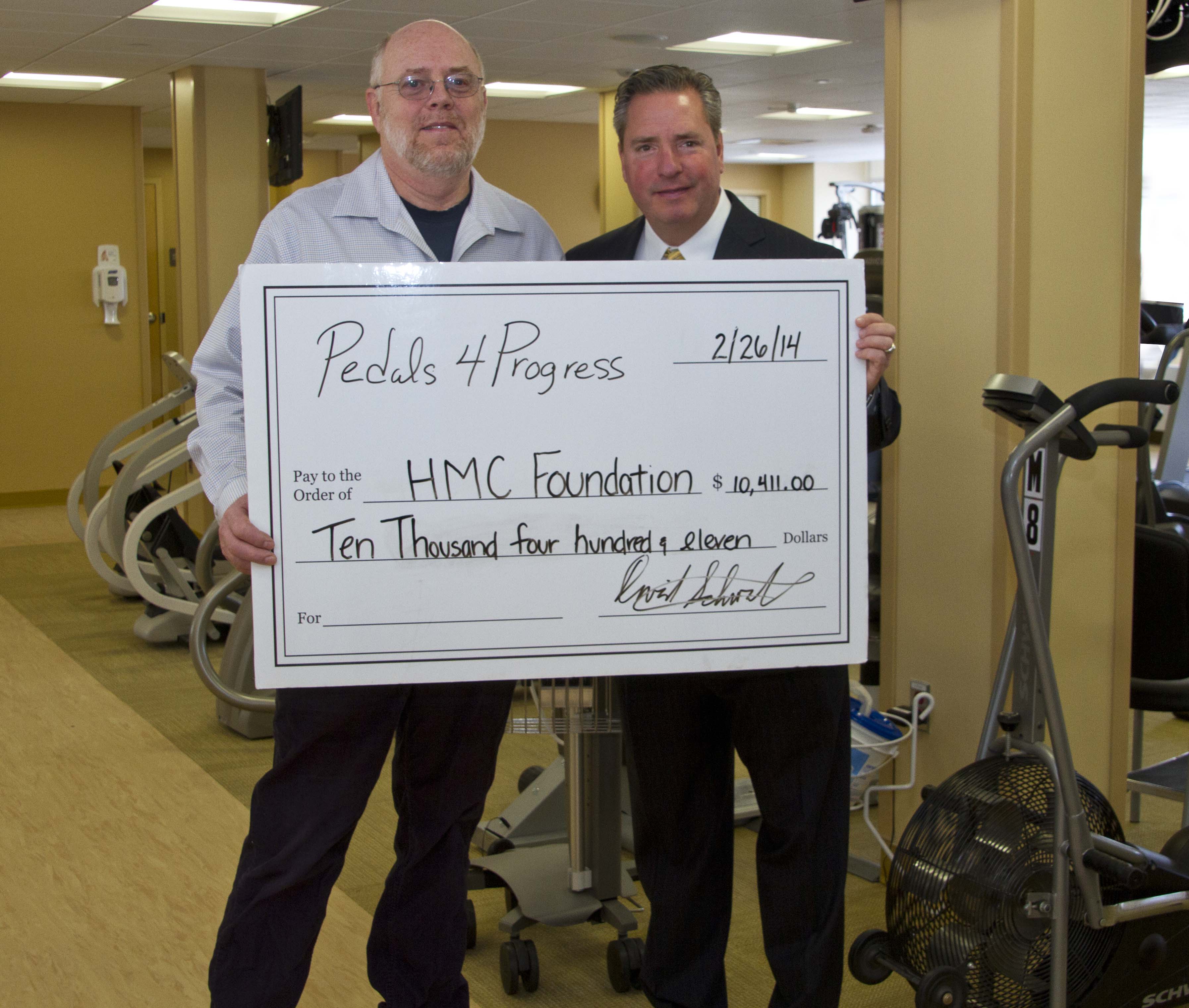
Pedals 4 Progress PhotosmallPedals for Progress, a local non-profit that helps to send used bicycles to developing countries, donated over $10,000 to the Hunterdon Medical Center Foundation. The funds will be designated for the cardiopulmonary rehabilitation program at Hunterdon Medical Center. The cardiopulmonary rehabilitation program recently moved to a larger renovated space at the hospital.

The Great 100 Charity Ride

The Great 100 Charity Ride has three mileage options of 38, 62, and 100 miles. The ride is fully supported, including designated Rest Stops.


Ride the challenging 38 Mile Option,  the 62 Mile Option (Metric Century), or the full 100 Mile Option (Full Century).

This year’s ride benefits Pedals for Progress.
https://www.p4p.org

Start / Finish @ Luzerne County Community College

1333 South Prospect Street Nanticoke, PA 18634

Minimum Suggested Donation: $25.
Registration Opens @ 6:30am
Ride Starts @ 8:00am
——————————————————————
Ride Maps, Cue Sheets, GPS Downloads here:

38 Mile Option
http://ridewithgps.com/routes/2939423

or http://www.mapmyride.com/routes/view/254048019

——————————————————————
62 Mile Option
http://ridewithgps.com/routes/1414795

or http://www.mapmyride.com/routes/view/126295185
——————————————————————
100 Mile Option
http://ridewithgps.com/routes/1414777

or http://www.mapmyride.com/routes/view/126296947
——————————————————————


http://www.meetup.com/UpstateVelo/events/130805082/

A Loss in the P4P Family – Floyd Merchant

Please join us in sending our sympathies to Beverly Merchant due to her recent loss.

In lieu of flowers, memorials to:
ASPCA
PO Box 96929
Washington, DC
20090-6929

Freedom House
3 Pavillion Road
Glen Gardner, NJ
08826.

Floyd S. Merchant

Floyd S. Merchant, age 80, of Clinton, NJ passed away on Wednesday, June 19, 2013 at home after a long illness.

He was born on December 3, 1932 in Woodcliff Lake, NJ.  He lived in Clinton, NJ for 32 years, moving from Pattenburg, NJ.

He was the son of the late Floyd S. and Marion Lunan Merchant.

He was the husband of Beverly Blumberg Merchant, celebrating 32 years of marriage.

He was a retired Sargent 1st Class in the US Army.  He served in the US Air Force, completing 2 hitches in the Air Force and was also in the National Guard.  He retired from the Army Reserve as a SFC.

Mr. Merchant graduated with 2 Bachelor’s Degrees; one from Ricker College in mathematics and one from Edison College in psychology.  At age 70, he completed his Master’s Degree in Neuropsychology from Saybrook University in San Francisco, CA.

He operated his own alarm installation service “Hunterdon Security”, installing security alarms in the Hunterdon County area.  Floyd was also an Electrical and Mechanical Engineer at Bell Labs in Whippany, NJ.  In the last 15 years, he worked as a security guard at Foster Wheeler in Perryville, NJ.

Survivors in addition to his wife include 2 sons; Daniel White and his wife Retha of Missouri and Arthur H. Merchant of Basking Ridge, NJ.  1 daughter; Susan Walsh. 1 step-son; Kenneth Stern and his wife Sandra of Sandy Hook, VA. 4 grandchildren; David Walsh, John White, Samantha Stern and Cassidy Stern.

Calling hours will be Tuesday, June 25, 2013 from 2-4 and 7-9pm.  Funeral Service will be Wednesday, June 26, 2013 at 10am.  All at Scarponi-Bright Funeral Home, 26 Main Street, Lebanon, NJ.  Interment will be private.

In lieu of flowers, memorials to ASPCA, PO Box 96929, Washington, DC, 20090-6929 or Freedom House, 3 Pavillion Road, Glen Gardner, NJ 08826.