Category Archives: bicycles

P4P Bike Number 150,000

Summer 2017 InGear

In April of 2017 Pedals for Progress collected and shipped its 150,000th bicycle.

P4P’s initial goal in 1991: ship 12 bicycles to Ecuador. This initial estimate is short, so far, by a factor of 12,500.

Our Partners

P4P has shipped to 36 countries, from Albania to Vietnam. We’ve shipped 2 bikes to Papua New Guinea and 42,672 bikes to Nicaragua. We’ve made one shipment each to India, Jamaica, Kenya, Malawi, Pakistan, Papua New Guinea, Sri Lanka, and Venezuela. We’ve made 82 shipments to Nicaragua, 40 to El Salvador, 32 to Ghana, 19 to Guatemala, and 18 to Barbados. As of June, 2017, we’ve made 378 bicycle shipments and 24 independent sewing machine shipments.

Programs end because of changes in our partner organizations, import laws and fees, bureaucracy, and sometimes outright corruption. But most countries are eager for the programs we support—the economics make sense for our partners and the bikes clearly improve the lives of the people in their communities. We always have more demand than we can fill.

As of June, 2017, our active partners with both a bicycle program and a sewing program are Albania, Ghana, Guatemala, and Nicaragua. Our active partners with sewing programs only are Ethiopia, Kenya, Kyrgyzstan, Liberia, Tanzania, and Uganda.

Choosing partners is not an exact science. Groups from around the world find us in several different ways, including the internet, magazine articles and other publications, and word of mouth. P4P has a formal procedure that potential partners use to request a shipment. They make a proposal that gives us basic information about their location, size, history, and business plan. In some cases P4P can find a way to fund a first shipment, but our business model is that the partner must pay for shipping; that payment is more evidence of their good faith.

Some of our partners we know only at a distance. Other partners we have met personally, in the U.S. and in their home countries. We have seen their kids grow up and join P4P partner businesses. We have taken terrifying auto rides with insane drivers, hiked and biked through spectacular countryside, visited their bike shops and their business, educational, and health programs. We are continuously impressed by the generosity, resourcefulness, and hard work of our partners and their communities around the world.

Bike Number 1: 1991
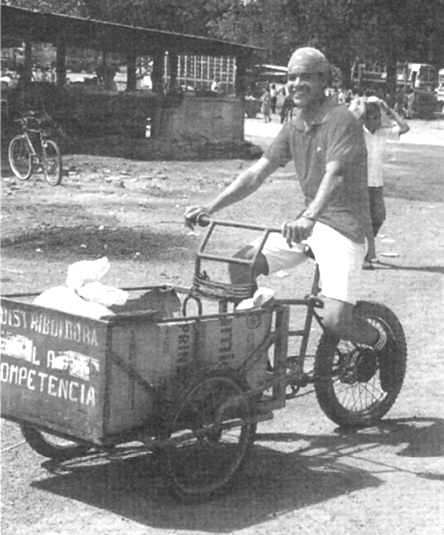
Nicaragua Produce Bike

For its first couple of years, P4P shipped bikes as part of shipments from other groups. We sent our very first bikes to Nicaragua, though to a partner we no longer have.

In 1992 we made our first shipment to Rivas, Nicaragua, where Wilfredo Santana had the business that became EcoBici, which is still our partner today. In 1993 P4P started filling its own containers, and Wilfredo and Dave worked out the revolving fund idea: P4P would pay for the collection of bikes in the U.S., our partner would pay shipping costs, and the partner would make enough profit selling, maintaining, and repairing the bikes to pay for the next shipment.

Bike Number 50,000: 2001
2001fallPanama

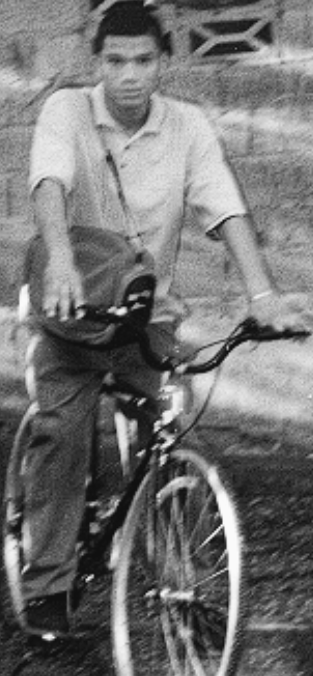
We can’t find any specific information about the 50,000th bike we shipped. Our records show that it must have been 2001. We shipped 20 containers that year, and we were nearing our peak production. In 2001 we shipped to South Africa, Honduras, Nicaragua, Barbados, Panama, El Salvador, Ecuador, and Ghana. Perhaps we were too busy collecting, prepping, and shipping bikes to notice the 50,000-bike milestone.

Let’s just pick one of our 2001 bikes and pretend that it is number 50,000. Here’s a typical happy story about how bikes improve lives: A note from Panama in our Fall 2001 InGear newsletter tells the story of seventeen-year-old Jose Luis Bethancourt, who was ready to drop out of school because of family finances. His commute to school by bus not only cost money, but took hours because of traffic, so Jose had no time for a job that would raise income for the family. He got his first-ever bike from P4P, which eliminated the bus fare and dramatically reduced his commute time. As a result, Jose had time for a job as well as for school.

Bike Number 100,000: 2006
fall2006mateoFamily

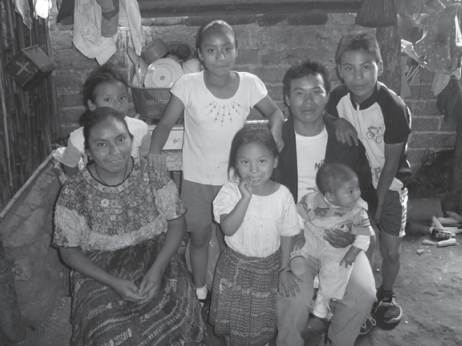
We got our 100,000th bike at a collection sponsored by the Somerset Hills Kiwanis on June 24th, 2006, at the Sunset Inn in Clinton, New Jersey. Leonard Lance, then a New Jersey State Senator, was on hand to thank the surprised donor. Now in 2017 Leonard Lance is the U.S. Congressional Representative of the New Jersey 7th District. So P4P can improve the lives of U.S. politicians as well as people in our partner countries!

We shipped the 100,000th bike to FIDESMA in Guatemala, one of our most long-standing partners. P4P’s Reykha Bonilla followed the bike to Guatemala, met our good friends and partners at FIDESMA, and met the owner of P4P bike 100,000, Mateo Patzan, a working father of 5 and amateur bike racer. The Fall 2006 InGear newsletter has the whole story of bike number 100,000.

Bike Number 150,000: 2017
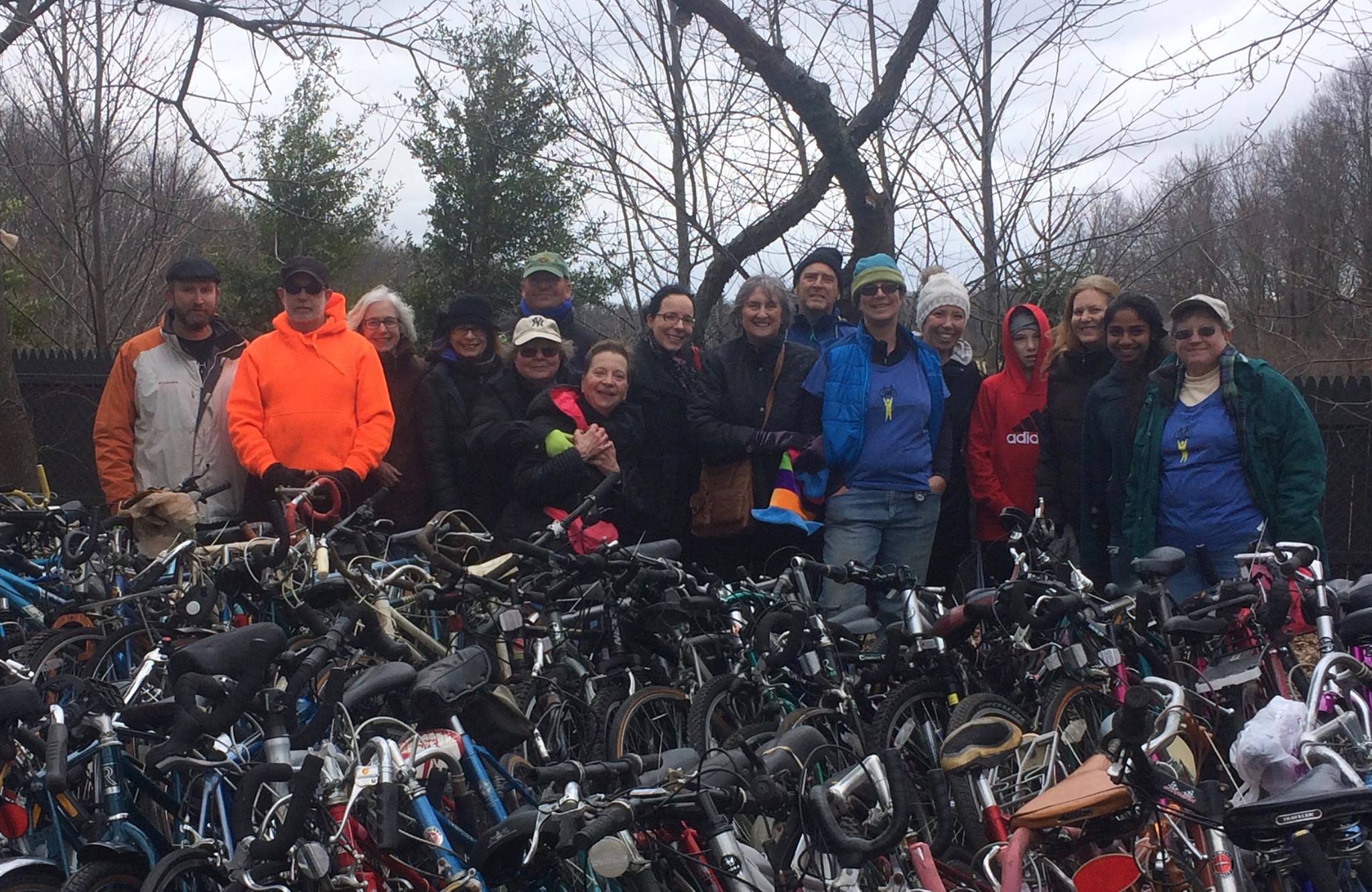
Fast forward to 2017. On April 1, the Long Island Returned Peace Corps Volunteers collected P4P bike number 150,000. On April 22 we loaded the bike into a container bound for FIDESMA, the same destination as bike number 100,000. At midday, June 6th, the bike arrived at FIDESMA in San Andrés Itzapa, Guatemala. It’s fitting that these are the groups that collected and received our 150,000th bike.

The Long Island RPCVs have been one of our most successful collection partners. They rotate collections around Long Island to maximize their reach. Their first P4P collection was in 2003, their second in 2005, and they’ve held collections every year since. The Long Island RPCVs are featured in this article from Summer 2011.

We’ve already mentioned FIDESMA, our Guatemala partner, because they got our 100,000th bike in 2006. FIDESMA has been our partner since 1999. We are good friends as well as professional partners with the principals. For example, the summer 2012 InGear newsletter has this article about a visit to New Jersey from Señora Maria Margarita Caté de Catú, founder of FIDESMA.

[At publication time for this Summer 2017 newsletter, bike 150,000 did not have an owner. Now that it does we can tell the whole story.]

What’s Next

In 2016 P4P had the first uptick in bicycle collections since 2001. Let’s hope bike collections continue to improve.

Even though we are celebrating a bicycle milestone, we should mention sewing machines. Since 1999, P4P has shipped sewing machines along with bikes. Like bikes, sewing machines give people a way to improve their economic circumstances. A sewing machine can be a job in a box. In 2015 we created the Sewing Peace brand as an option for carrying on our sewing machine activities separately from our bicycle activities. If only sewing machines are involved, we have multiple advantages: with collections, with shipping, and with partnering. For collections, we can target groups more likely to have sewing machines to donate. For shipping, we can send much smaller loads, loads that do not take a full container, and so are much cheaper to ship. And for partnering, we can find groups abroad that may not have the capacity or expertise to deal with 500 bikes at a time, or that may not even have a bicycle program.

So we are now the same single organization, but doing business both as Pedals for Progress and as Sewing Peace. It’s been a rewarding 26 years. We look forward to many more.
The Significance of the Bicycle to the Rural Teacher

Summer 2017 InGear

The teacher, as would be widely agreed, plays an invigorating role in the nurture of a human being. It is for this reason that teachers ought to be given apt remuneration and motivation for their services.

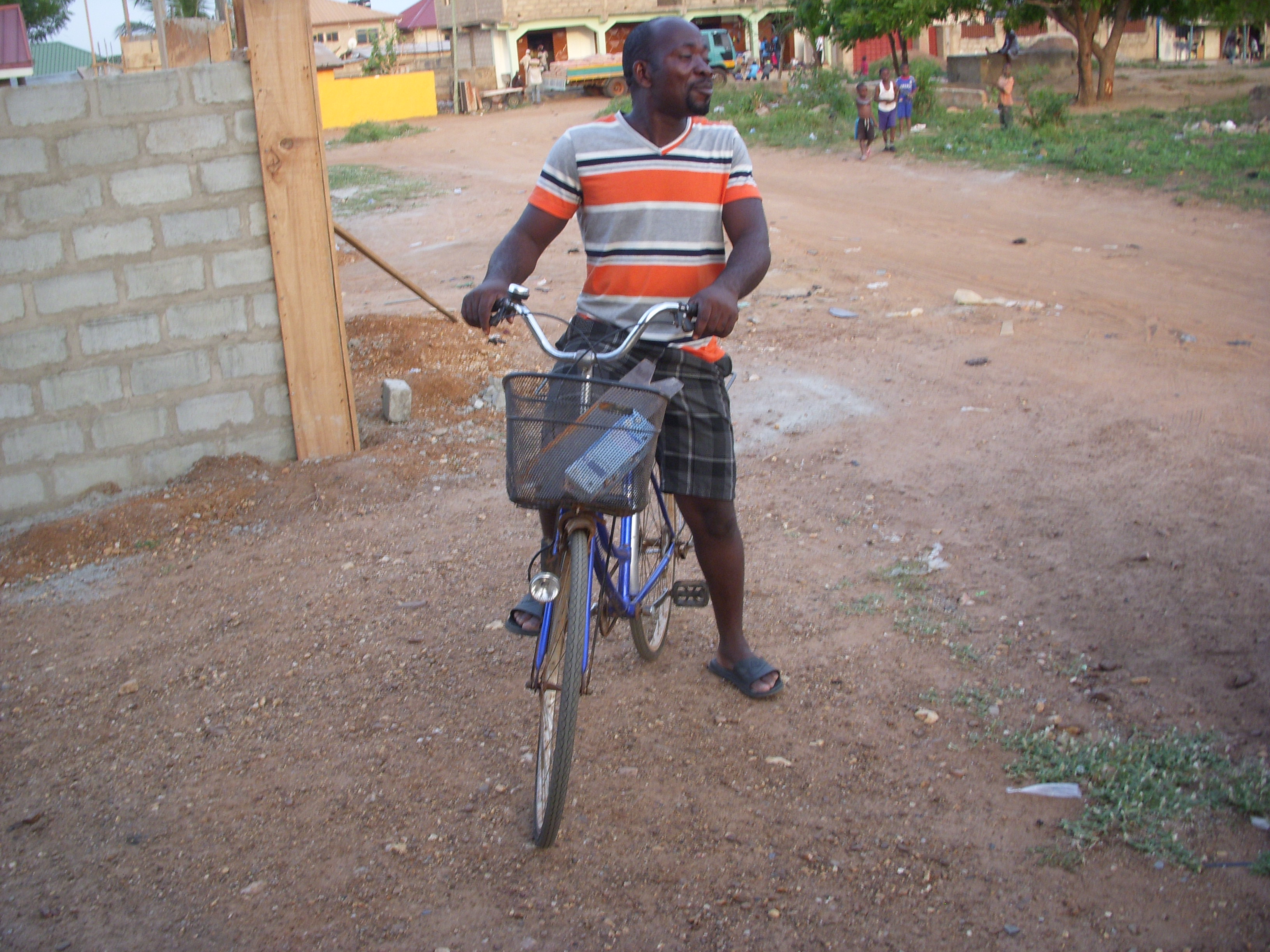
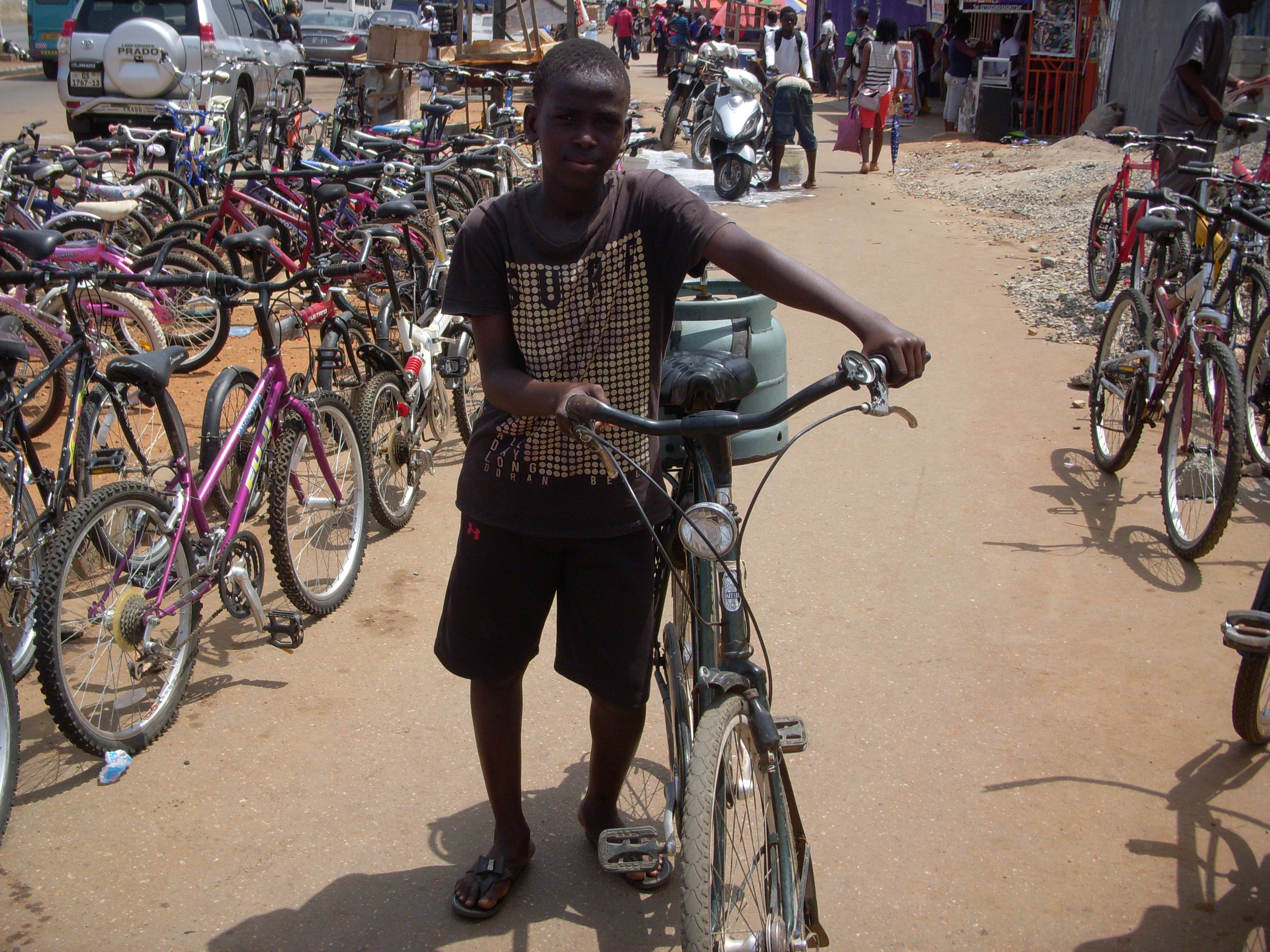
Teachers in rural areas like the Northern Region of Ghana have particular needs, and bicycles play a vital role in their lives.

A teacher who teaches up north and does not possess a bicycle is like a farmer going to the farm without a machete. Not to make a storm in a tea cup, but anyone who has lived in the rural northern part of Ghana could attest to the fact that living there can be very cumbersome.

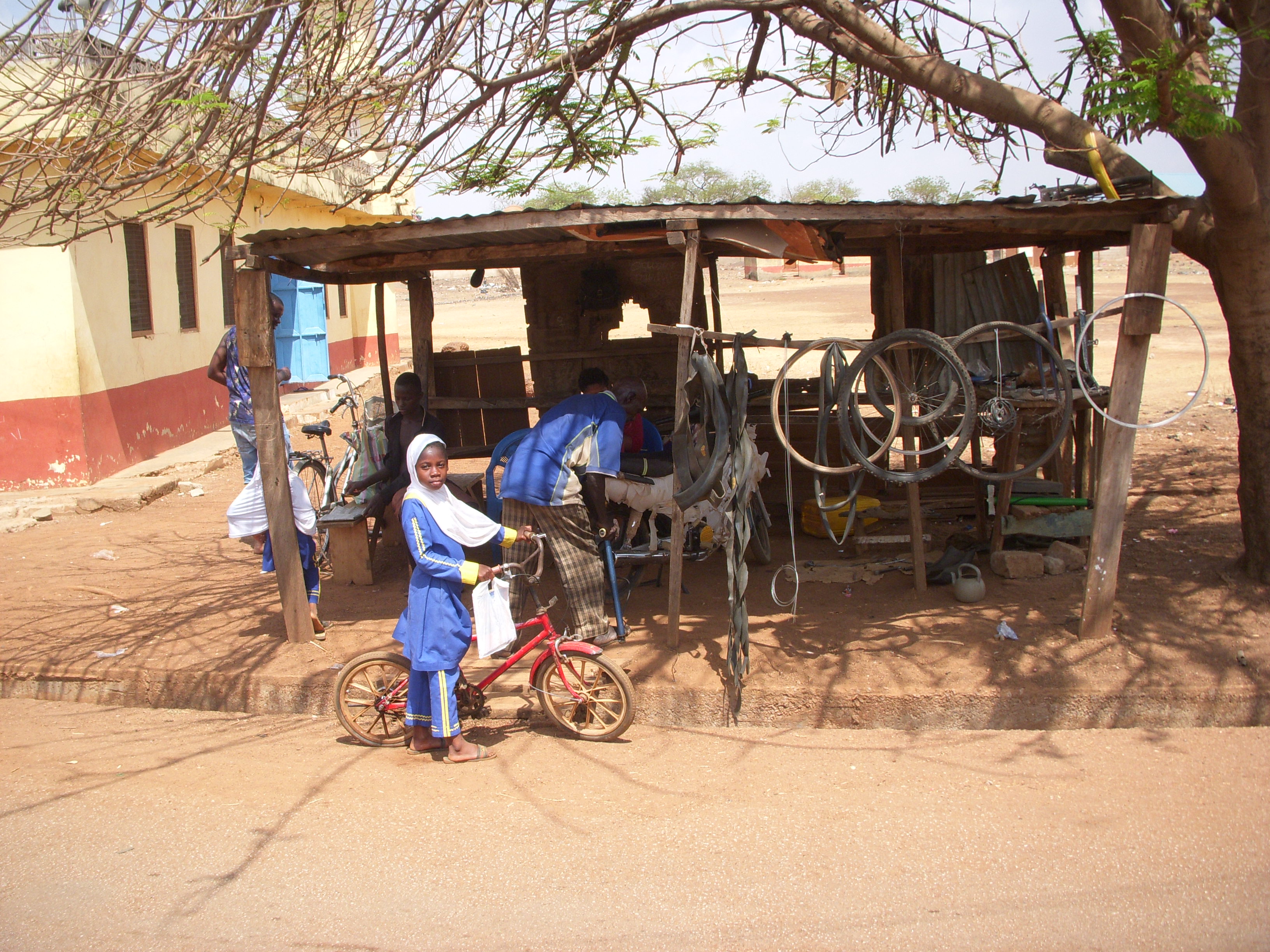
In some places a teacher can get to school on time only by commercial bus. But in some areas the bus operates only once a day. Having a bicycle is a much more reliable means of transportation.

The bicycle is therefore invaluable in the life of the rural teacher.

Adongo the Bicycle Mechanic

Summer 2017 InGear


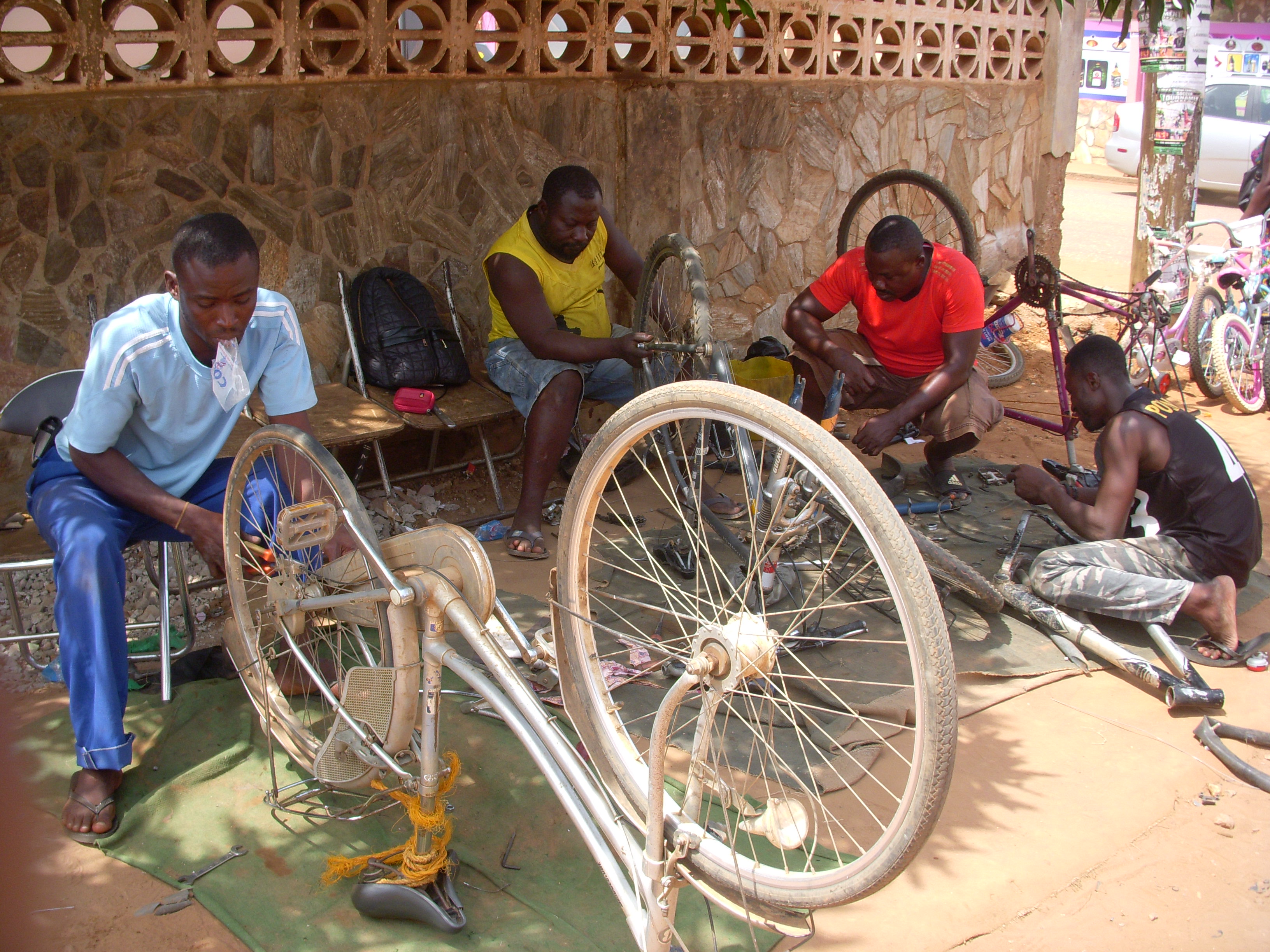
Adongo is a young energetic man who resides in the Northern Region of Ghana.

Life after secondary school was very vexatious. There were not enough funds for Adongo to continue school. Since time obviously waits for no man, he decided to use his time profitably. After much deliberation, he finally resolved to learn a trade.

Consequentially, he moved to the capital of the country, Accra, where he learned carpentry. Along the line, Adongo realized carpentry was not in his best interest. He resolved to find something else to do on the side; he met this man who was into bicycle repairs. Adongo then thought it wise to align himself with the bicycle repairer.

About a year and a half into bicycle repairs, he became a proficient bicycle mechanic. He handled both major and minor repairs with utmost case.

Adongo later decided to change his domicile. He went back to his roots.

He is now a big-time bicycle mechanic, with about five apprentices. He buys bicycles and gives those that are not in very good shape a decent overhaul.


Adongo is now a competent bike mechanic cum sales executive. He is able to cater for his family and other needs. Through this business has he put up a three-bedroom house in his home town. He is living comfortably with his wife and two children.

All thanks go to WEBike.

Albania Update, March, 2017

Dear David,

I wish you and your organization the best. We have been engaged in several important campaigns.

After four years, supported by money we earned by selling shopping bags we made with P4P sewing machines, we won an important battle against plastic garbage. YES! Now even people in Albania are paying a modest fee for plastic bags. This has created an even larger market for our bags. Another mission accomplished together: PASS & P4P!

Building bike frames in Albania

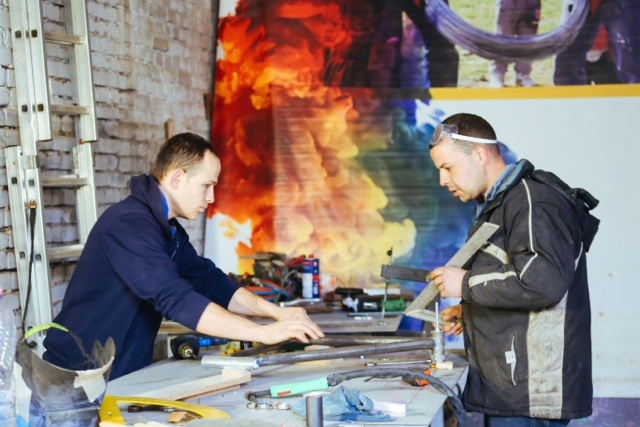
The project of the Albanian Bicycle is taking life. So far we have produced 50 bicycle frames, 100% Albanian.These bikes fill different roles than the excellent bicycles we get from P4P. The Albanian bikes we are building are cargo bikes, taxi bikes, coffee bikes, etc. For each bike sold we are still planting 10 trees. ☺

We are also very interested in solar panels. We are highly active in environmental issues and have implemented several projects involving solar energy. We would like to continue our mission to promote clean energies.

LibrAria

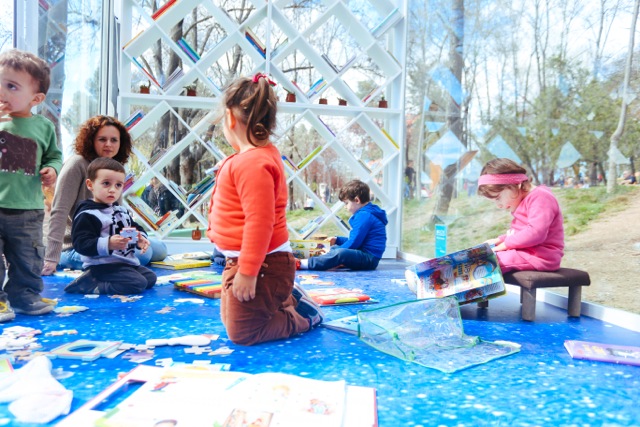
We opened a children’s library we call LibrAria in the Grand Park of Tirana. About 5000 children per month visit us there. With the generous help of a local publishing house, we offer children’s books for no charge. Besides books, we also offer musical instruments – guitars and percussion – that the kids can play in the park. On Mondays we have a flutist who gives free lessons.

albania2017aprKidsBookstoreIMG_1888We invented games that give the kids a better appreciation of nature. For example, on the Island of Little Robinson Crusoe we asked the children to think about how they would survive, how they could sustain themselves, if they had to live outside. Another time we started the Odyssey island project and the children helped build a small boat to get to the island. A third time we created the Island of Indian Tents. We always have colors and paints that the kids use in the projects.

On Saturday evenings we bring in a piano and invite adults to listen to the music and enjoy a glass of wine. We’ve also had some fantastic music from Trio Bonae, who play classical music for violin, cello, and contrabass.

So we’re outside in the park with the children, their parents, and the lake, books, trees, tents, and games. We feel so good about this project.

THANK YOU for your hard work and for everything P4P has done for Albania and for our organization. We wish you only the best in the future!

Sincerely,

Ened Mato

[Check out this one-minute video of a dance party with PASS making fabric bags using P4P sewing machines.]

Vietnam Update, Fall 2016

spring2013vietnamWomanOnBike
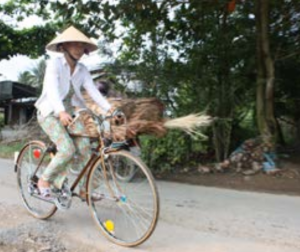
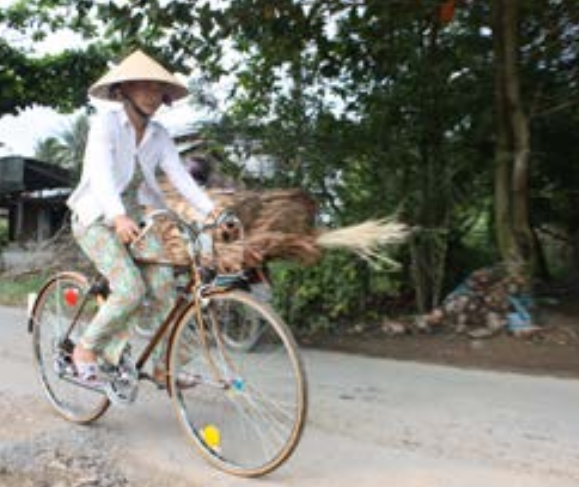
Working with the Dariu Foundation of Switzerland, Pedals for Progress shipped two containers to Vietnam in 2011 and 2012, totaling 1135 bicycles. The bicycles were distributed by the Vinh Long Union of Friendship Organization in the upper Mekong Delta. Vietnam has very strict import laws and we had not been able to get permission to bring in bikes since 2012.

We were recently contacted by the Dariu Foundation and were very happy to hear that the situation with the import of our bicycles has changed. The Dariu Foundation has been granted an import permit to bring four containers of bicycles into Vietnam in the next two years.

The Bike Academy in Tirana, Albania

Fall 2016 InGear

2016octalbania3bikers
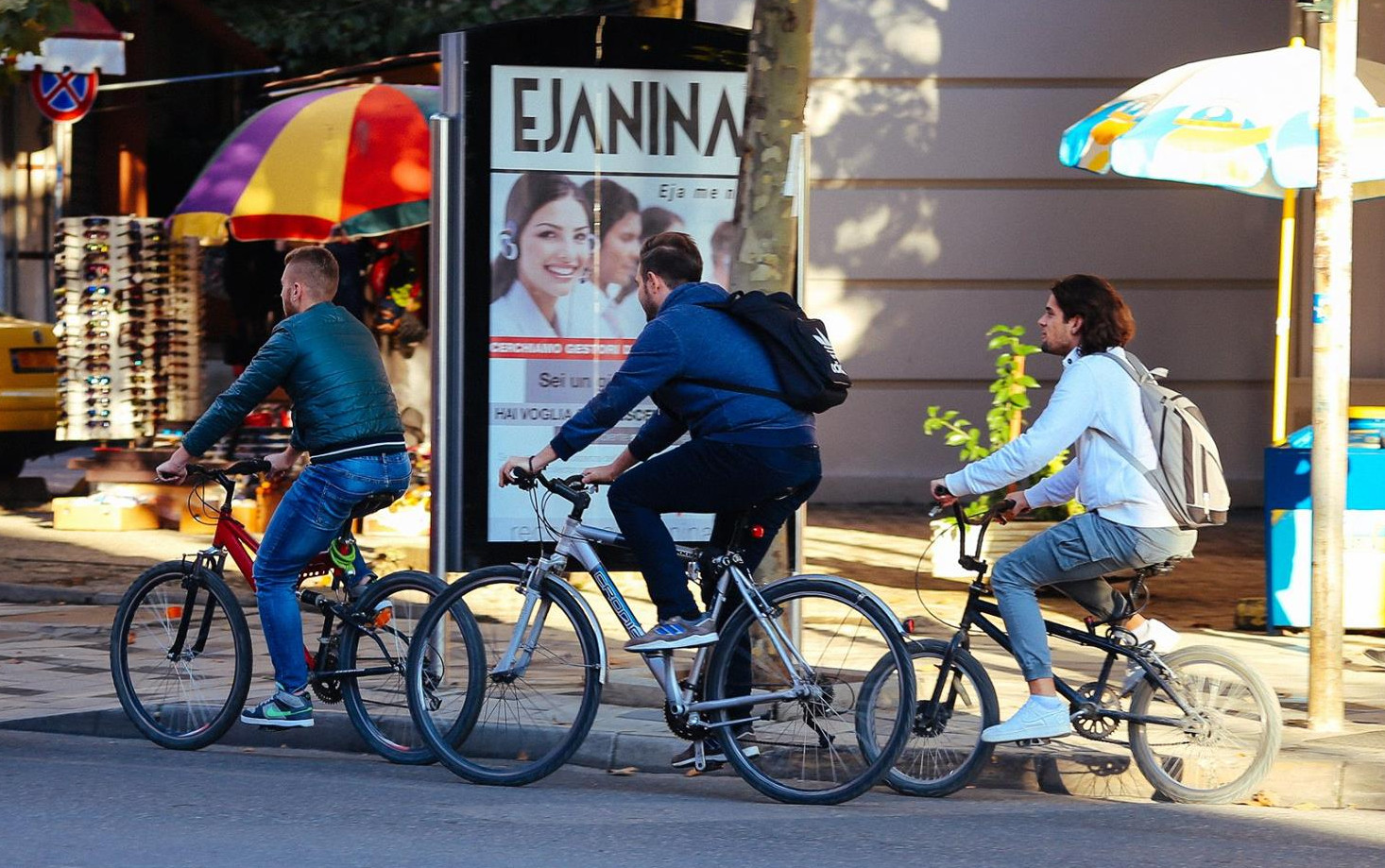
We’ve been providing free cycling classes for the past two years, where many young people come to learn how to ride a bike. We notice more and more young people come each week. And riders improve as the weeks go by. Each week we are inspired to persist in changing our daily lives and the traffic of Tirana. We’re glad to inform you that we’ve used several of the bikes for the activities we’ve organized, hence changing the lives of those who only dreamed of learning to ride a bike. We are pleased to see our former students riding on city streets. The number of bike riders has tripled and all this thanks to the “Bike Academy”.

Bike Tours

We travel by bikes every Saturday to various destinations, thus traveling several miles while discovering, cleaning, and promoting different attractions on the outskirts of Tirana. We are grateful for the bikes you’ve donated because it is through those bikes that the young people are provided the opportunity to become part of these travels since they don’t possess a bike of their own. The bike trips have brought us closer to the people who need us the most and more conscious of the distinctive issues the suburbs face.

Bicycle Essay Contest

We often organize a literary contest consisting of a bike essay and award the winner one of the bikes you have provided. The main purpose of this contest is to raise awareness of citizens, artists, and bike lovers through literary expression, with the main topic being the ecological two-wheeled vehicle. The aim of this competition is to assess everyone, be they young or old, be they writers or artists, who want or need to express themselves regarding the bikes.

15 Years of P4P Collections, An Appreciative Retrospective

by Jackie Johnson, Granby CT
Fall 2016 InStitch

I wrote an article for the Spring 2011 InGear that began as follows:

I was prompted to call Pedals for Progress in September of 2002 after I read a small article in Hope Magazine (long since out of business). The article told the story of Dave Schweidenback launching Pedals for Progress following his experience in the Peace Corps and referenced the 57,000 bicycles that had, at that point, been shipped to partners in sixteen countries.

So, to take you back in time a bit, it was a year beyond 9/11 and our nation was on the verge of war in the fall of 2002. I was feeling a burning need to do something positive and meaningful, ideally involving my husband and two children who were then ten and twelve. The article was so inspiring that I immediately called P4P and said I wanted to organize a collection. Despite my being further from High Bridge (in northwestern Connecticut) than any previous collection, the response was positive and I was encouraged to organize a spring collection. I ultimately spoke with Dave and explained that I really didn’t want to wait until spring. He was reluctantly convinced and our first Pedals for Progress collection was held at Holcomb Farm, an arts and environmental center, in Granby, CT, on December 7, 2002. A very chilly 42 bikes were collected and processed that day by an enthusiastic group of volunteers who have shown up every year since.

granbyctinstitchfall2016

Five years from the time of that first article, we just held our 15th collection, with a grand total of over 2,000 bikes and more than 100 sewing machines collected to date. While making a difference for individuals and communities in the developing world has always been at the heart of our 15 years of collecting, there has been an unexpected benefit in the community created here at home. Many donors are moved by the opportunity to build a bridge from our small Connecticut town and to touch lives abroad and offer to help spread the word about future collections. Our dedicated group of volunteers has grown to include a long list of folks who have shared email addresses and offer to post flyers and share through social media each year. Stories shared by donors, like that of the bike of a lost and beloved daughter, the sewing machine from a mother or grandmother, have created meaningful moments and stories that have fed and inspired our group of volunteers.

This year, we welcomed two new volunteers who took the lead in coordinating the Granby collection. Kate and Rachel are high school students and National Honor Society Members at the local high school. They eagerly publicized the event and brought in a new group of student volunteers. Kate and Rachel plan to use this year’s experience to mentor two students from the class behind theirs, continuing to grow a committed community of young people.

Being part of the P4P community for 15 years has been a privilege and great source of joy. We here in Granby look forward to gearing up for many more!

Turning Waste into Opportunities

by Liz Sweedy
Fall 2016 InGear

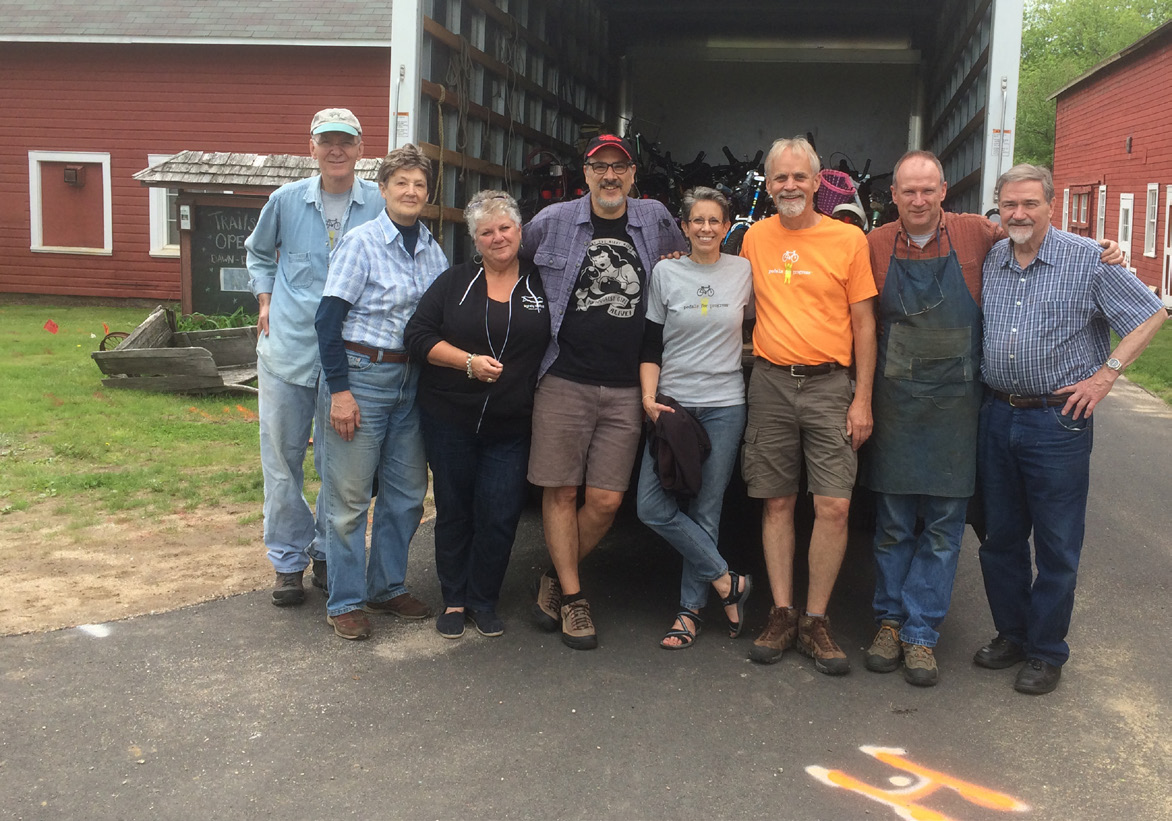
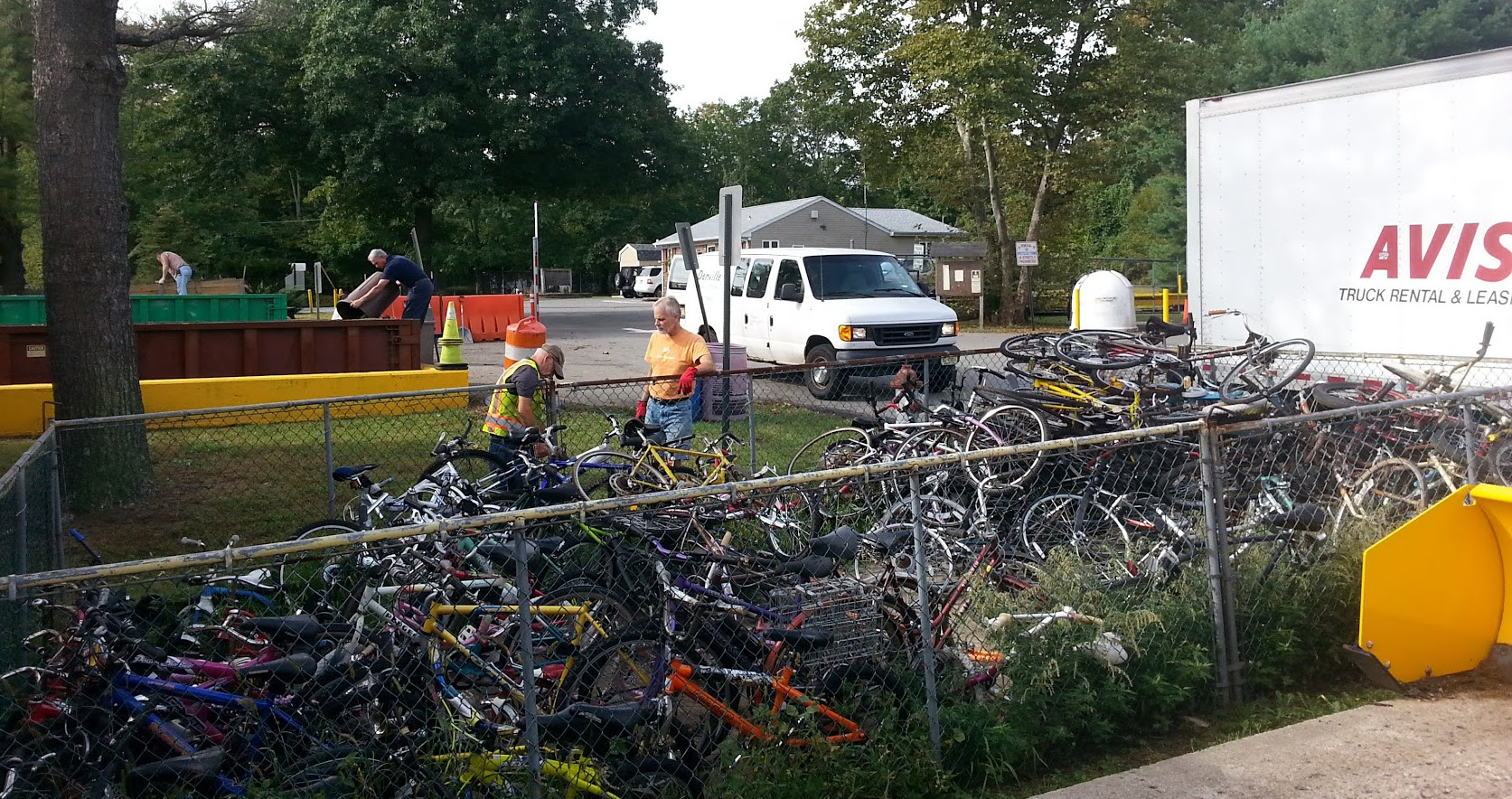
The Morris County Municipal Utilities Authority (MCMUA) has hosted a used bike and sewing machine collection for 14 consecutive years since 2003. The Pedals for Progress collection program aligns with the MCMUA’s overall vision to reduce waste, reuse items, and build a culture for sustainability. In those 14 years, the MCMUA has collected over 3,676 bikes and 26 sewing machines through the programs run in conjunction with Pedals for Progress and Sewing Peace.

Some people may be turned off by the idea of working in the solid waste field. Trash, you ask? Yes, trash, litter (which is different from trash), recyclables, hazardous waste, and vegetative waste. A world of waste that is so wildly interesting, there is never a dull moment! I have worked for the MCMUA for over 20 years in the recycling division and I have learned a lot about the behavior of people and our obsession with throwing things ‘away’. Most people do not think about where their waste ends up, or how much energy, natural resources, pollutants and fossil fuels were used or created in the process of making these items and what it takes to properly dispose of them.

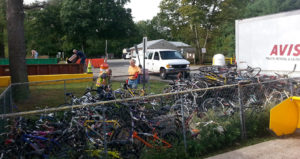
morriscountyrecyclingsep2016before

The solid waste hierarchy lists waste reduction at the very top. The federal Environmental Protection Agency (EPA) has created a hierarchy which ranks various waste management strategies from most to least environmentally preferred. The hierarchy places emphasis on reducing, reusing, and recycling as key to sustainable materials management. It is important to purchase only items we really need. The second listing is reuse! It means to use again or more than once, give something a new purpose. Because we are a throw-away society it is difficult to get some people to understand the concept of reuse. Most of us want instant gratification by purchasing the latest, the biggest, the shiniest, the absolute BEST there is to buy, and quickly get rid of items that no longer suit our needs, wants or whims.

Thismorriscountyrecyclingsep2016after brings me to the lowly used bike standing on the curb, out for trash collection. It has a flat tire and a few scratches on the rear fender. It is not the prized possession it used to be when it was brand new. To the untrained eye it is a meager shadow of its former glory. Don’t judge this discarded bike that is out for trash. With a little elbow grease and a new tire this gem will become the new transportation for a student who currently walks 6 miles in order to get to school! It will provide the liberty and luxury to ride to school in less time than walking, and perhaps provide a ride to a passenger so he or she can avoid the long walk as well. Pedals for Progress, with the assistance of their partner agencies, delivers the chance of a lifetime to those who need it most. Some people don’t have any means of transportation and this opportunity can make such a positive impact on their lives.

A Guatemala Success Story

Fall 2016 InGear

We regularly feature stories of our partners’ customers whose lives have been improved by a bicycle. Here’s a different kind of story: the story of a former employee of our good friends at FIDESMA, our partner in Guatemala, who hired a hard-working young man five years ago and supported him in a series of jobs of ever greater responsibility.

Byron Rodrigo Can Fernandez began working at FIDESMA at age 20. He rode a bike to work every day.

201601guatbyronworkingonbikes

He helped at the bike shop, starting with simple repairs and maintenance and learning more and more with time: assembling, disassembling, and refurbishing bikes – all aspects of bike mechanics.

Eventually he was appointed manager of the shop, in charge of accounts and billing as well as sales and repairs.

Byron promoted bicycles through the use of social media, posters, and advertising. He promoted bikes for reasons that P4P and its partners have emphasized since the beginning: bikes provide cheap, reliable, non-polluting, efficient transportation and exercise. On a bike, you can go farther and faster than on foot, to work or to school.

Byron201601guatbyronsellingbikeschimaltenango remembers how happy children were to be able to buy a bike with their own savings, how some of the riders became superb athletes in part because of their training on their bikes, how families were able to save money on transportation because they used bikes instead of taxis or buses.

Besides its bicycle operations, FIDESMA runs several other programs. In one of them, Byron taught computer skills to both students and teachers who had little or no previous experience with computers. He also helped with tech support for social projects, worked with rural communities, worked on medical outreach, and helped with job training for youth and the disabled.

Besides his work with FIDESMA, Byron continued his education in several different fields, earning credentials in industrial security, computer and industrial art, first aid, and natural and alternative medicine.

201601guatbyronstudentsusacx2

Finally, Byron attended the University of San Carlos of Guatemala, the state university of Guatemala, and in 2015 received his law degree, a most unusual and impressive accomplishment for someone from his modest circumstances. Among his areas of university study were criminal investigation, poll tax law, finance law, and protection of childhood and adolescence.

His current job is based on his law school education and is far removed from the world of bicycles. He now works for the municipality in the office of the mayor, conducting civil marriages, helping local residents negotiate government programs, and helping with municipal paperwork.

Thanks to FIDESMA for giving Byron a start in its bike shop and other programs, congratulations to Byron for his accomplishments so far, and good luck to him in a most promising future!