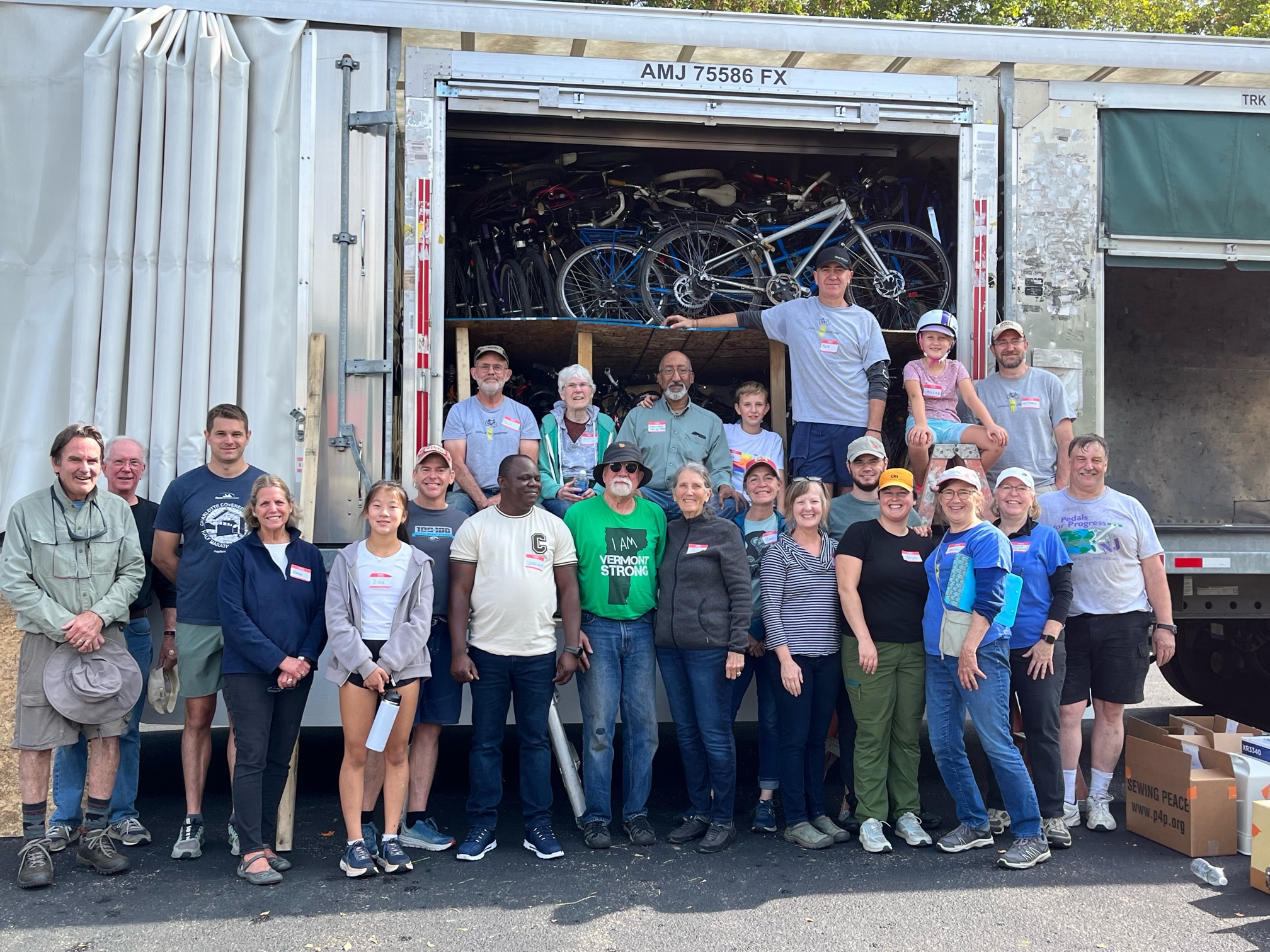
Shipping the volume of bicycles and sewing machines that we deal with requires a network of people and groups around the tri-state area to dig into all the tiny garages and sheds hiding these used items. We benefit greatly from the networks each group has within their towns as they rally their friends and neighbors together in search of bikes and sewing machines one weekend a year. Seeing the small-town interactions blossom in a new place every weekend has become a big reason why I love Pedals for Progress.
For over 30 years, hundreds of people around the tri-state area have encountered and worked with P4P. Some come and go, as evidenced by the 170,000 bikes donated—each representing at least one individual who contributed. But what has been amazing is seeing the long list of legacy groups we continue to work with. In some of the towns we serve, the collection events put on by our sponsors have turned into something of a yearly ritual, akin to a homecoming game, bringing support from all corners of the community.
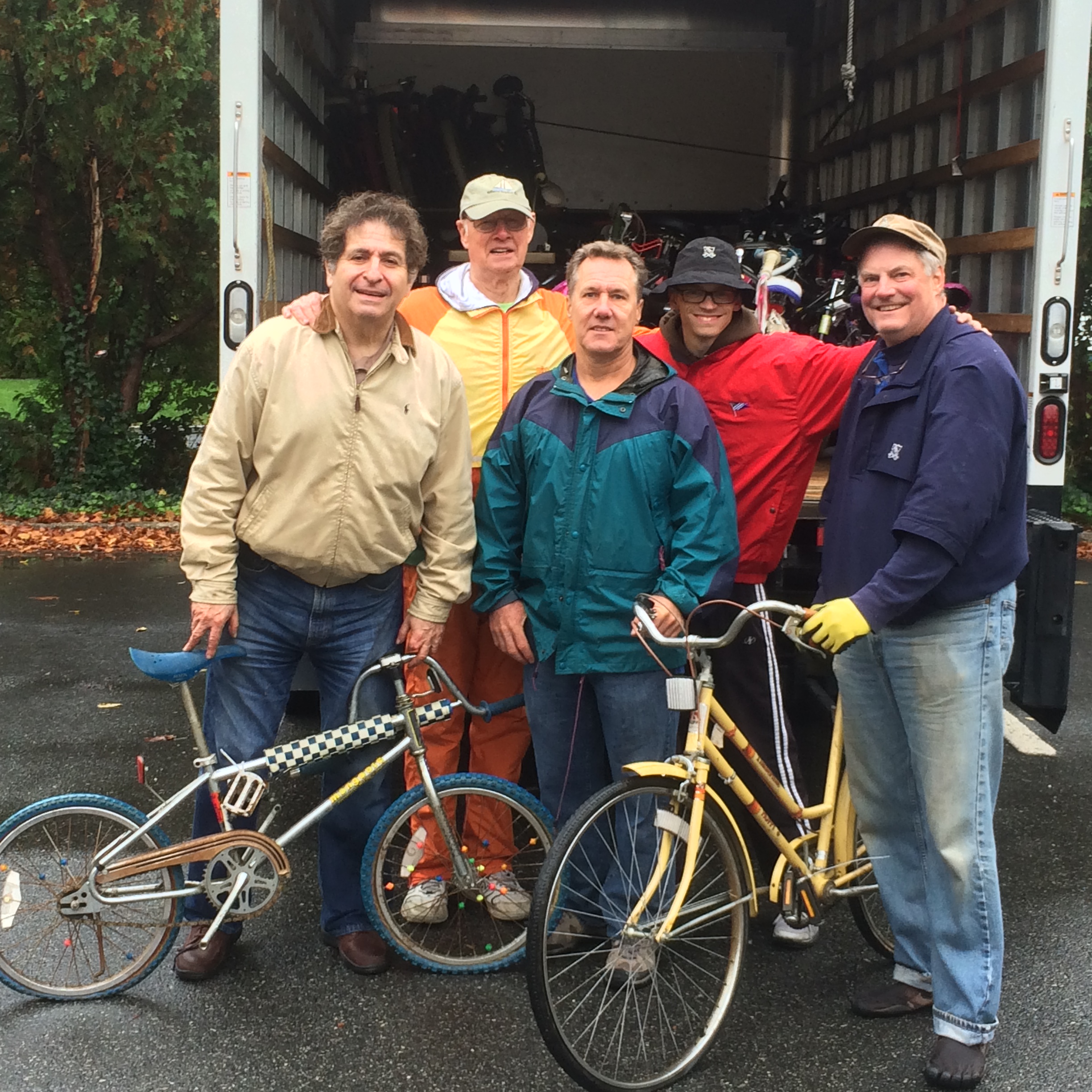
The Westfield Rotary Club is one of these legacy groups we have partnered with for decades. Since 1997, the Westfield Rotary Club has hosted collections with us every year, generally during the same month at the Westfield BOE building. The club is filled with many long-standing members who have rallied together in support of our cause. Each of their collections feels like a homecoming game of friends and neighbors coming together each fall for the big day.
As with many of our groups, there is usually one key person leading the charge. For the Westfield Rotary Club, that man is undoubtedly Warren Rorden. He has led this tradition since 1997, quietly rallying the club and the people of Westfield to lend a helping hand to people in the developing world.
This year, continuing their legacy, we’d like to extend a special congratulations to the Westfield Rotary Club for collecting their 3,000th bike! Through their tireless efforts, they have provided incredible service to thousands of people all over the world. The club has been an important part of the history of P4P, with their bikes finding new homes in countless countries.
We’d like to thank the club for their many years of support for our cause. A key part of our history books, the Westfield Rotary Club has even been featured in some of our past newsletters, such as when Dave discovered a Jay’s Cycle sticker all the way in Ghana in 2008.
“As we moved across the countryside down to Cape Coast and then back inland to Kumasi, the royal city of the Asanti Kings, we made many stops to visit our bicycles and their new owners. One such encounter was in the town of Asuman Kumansu. To get there, we drove through miles of oil palm groves and coco tree orchards—coco production for chocolate is a major cash crop—and arrived at three houses, where luckily, the owner of one of our bicycles was at home. His bike was an immaculate gray Schwinn. I knew it came through our system because there was a sticker on the seat tube advertising Jay’s Bike Shop in Westfield, New Jersey. As they do every year, the Westfield Rotary Club held a bike collection last September. Did the original owner of this bike ever imagine it would become the major means of transportation for a poor family in the middle of the Asanti highlands of Ghana?
For me this is what Pedals for Progress represents. We are the link between donors in the United States who want to help the poor of the developing world. Seeing the sticker for Jay’s Bike Shop brought that idea home to me loud and clear. Whoever donated that bike with the hope of changing someone’s life for the better did exactly that. And I was looking at the proof.”
Westfield Rotary, Oct 11, 2014
Building on that history, Jay’s Bike Shop continues to be a supporter of P4P, further demonstrating the town’s commitment to the Westfield Rotary Club’s efforts. Jay’s continues to donate bikes, adding another layer of what P4P is all about. The Westfield Rotary Club’s ambition to be a vital part of their community has made them a vital part of the world.
The Westfield Rotary Club’s impact extends far beyond their collections. They have also energized local businesses like Jay’s Bike Shop and raised critical funds to offset the costs of shipping these valuable tools overseas. Within their own community, the club supports numerous initiatives, including scholarships, polio eradication efforts, and YMCA programs.
We are deeply grateful to Warren Rorden and the Westfield Rotary Club for their unwavering support over the past 26 years. Their partnership exemplifies the power of community and the profound difference it can make in the world. As we celebrate their 3,000th bike collection, we look forward to many more years of collaboration and shared success.
“The bicycle is the most civilized conveyance known to man. Other forms of transport grow daily more nightmarish. Only the bicycle remains pure in heart.” – Iris Murdoch
At the Kola Nut Producers Association, we identify challenges within our communities and strive to address them. Initially, we recognized a significant issue: the lack of access to transportation for local farmers in Sierra Leone. The distances involved and the poor condition of the roads have made it nearly impossible for farmers to transport their goods. We realized that bicycles could provide a vital solution to this problem.
The Pedals for Progress journey began when we identified a substantial transportation void for local farmers living in Sierra Leone’s most rural areas. Thousands of farmers were situated in hard-to-reach locations. Our national coordinator, Patrick Abu Mansaray, who grew up in rural Dalu Village, Kenema District, has personal experience with these transportation problems.
Recognizing this need, we reached out to Pedals for Progress in the United States for assistance. Their support in providing bicycles to local farmers, children, women, and the community as a whole is helping to bridge the transportation gap and improve livelihoods.
Although 25% of the world’s most arable land is in Sub-Saharan Africa, it produces only 10% of the world’s agricultural outputs (International Fund for Agricultural Development). This gap presents an opportunity to address the needs of millions of people in Sierra Leone who are overlooked by conventional market solutions.
Here are stories about people who are using P4P bikes to improve productivity in their farming or to travel to school more efficiently.
Abi Turay
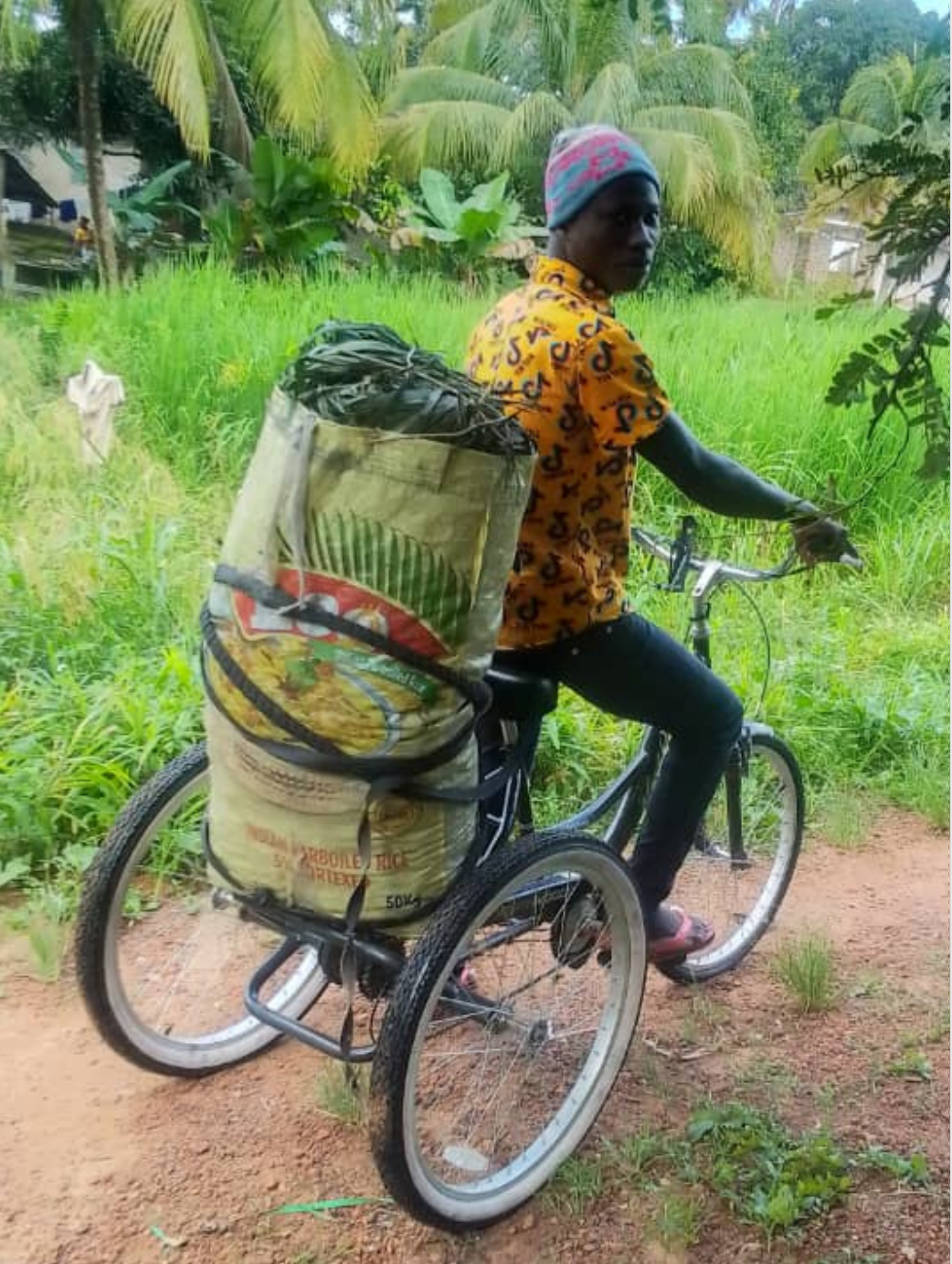
Abu Turay grows crops such as cassava, sweet potatoes, okra, palm oil, and rice. He has been an active member of the Slow Food 10,000 Gardens Project in Africa and has been involved with Slow Food Sierra Leone for over five years. Recently, he received a brand-new tricycle to transport his palm oil to the central market in Kono District.
Abu is thrilled with this new direction in his agricultural business and has expressed his gratitude to Duke Farm and Pedals for Progress for this wonderful gift, which uplifts both his business and family livelihood. “With this, I can now have more money to pay my children’s school fees,” he shared.
The challenges we face are vast, but they ultimately consist of millions of farmers like Abu, each with the potential to improve how they cultivate their land, plant their crops, harvest their goods, store them, and transport them to market.
With Pedals for Progress, a bicycle becomes a valuable asset for trade, employment, transportation, and community engagement. In countries like Sierra Leone, where P4P has established partner programs, the most successful entrepreneurs are those who use bicycles to reach work and deliver their agricultural goods and services where they are needed most. This empowers them to expand their businesses and increase their personal incomes and productivity.
Alieu Sesay
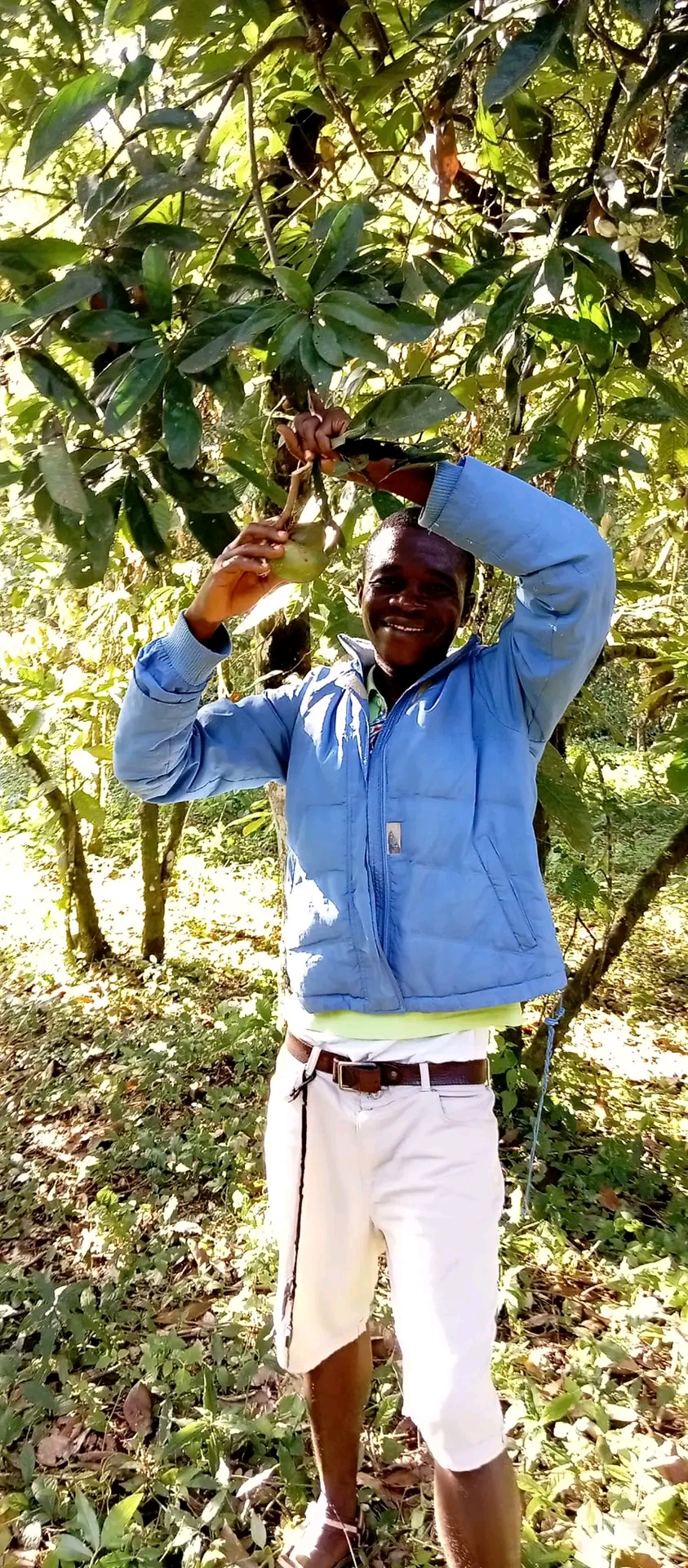
Alieu Sesay is a dedicated Kola Nut farmer and a proud member of the Kola Nut Producers Association. In addition to kola nuts, he also cultivates cocoa and stenophylla coffee, an indigenous species that is on the brink of extinction.
Alieu Sesay
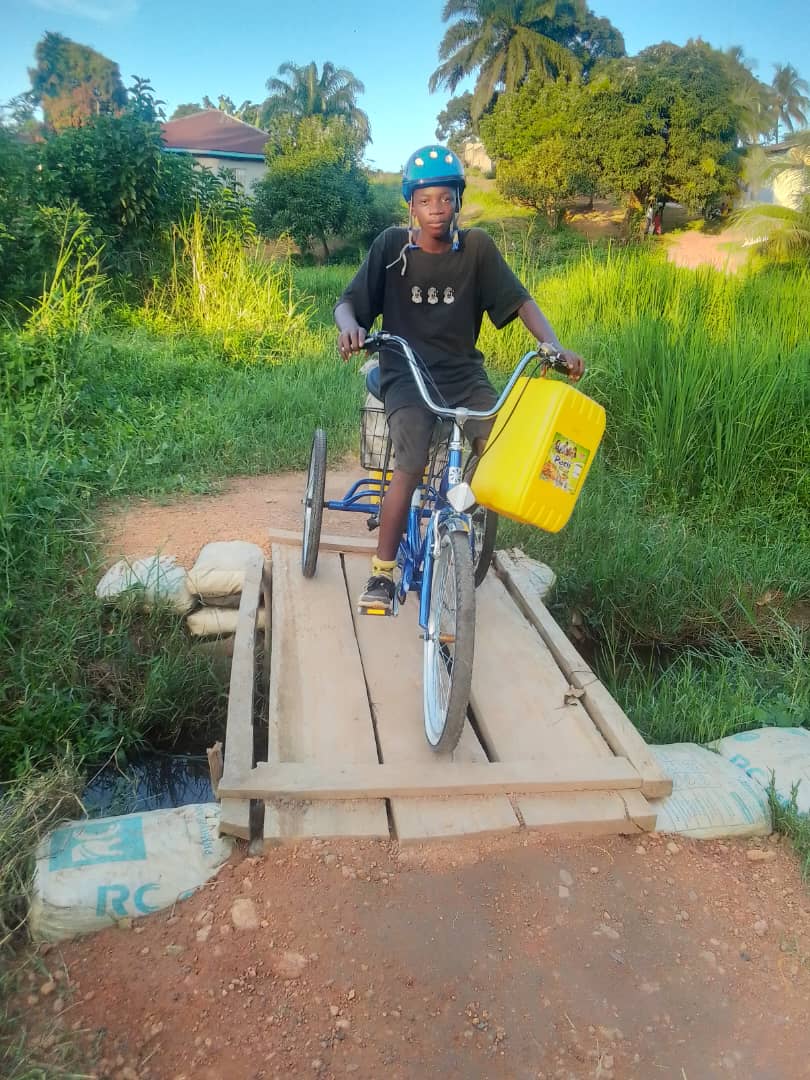
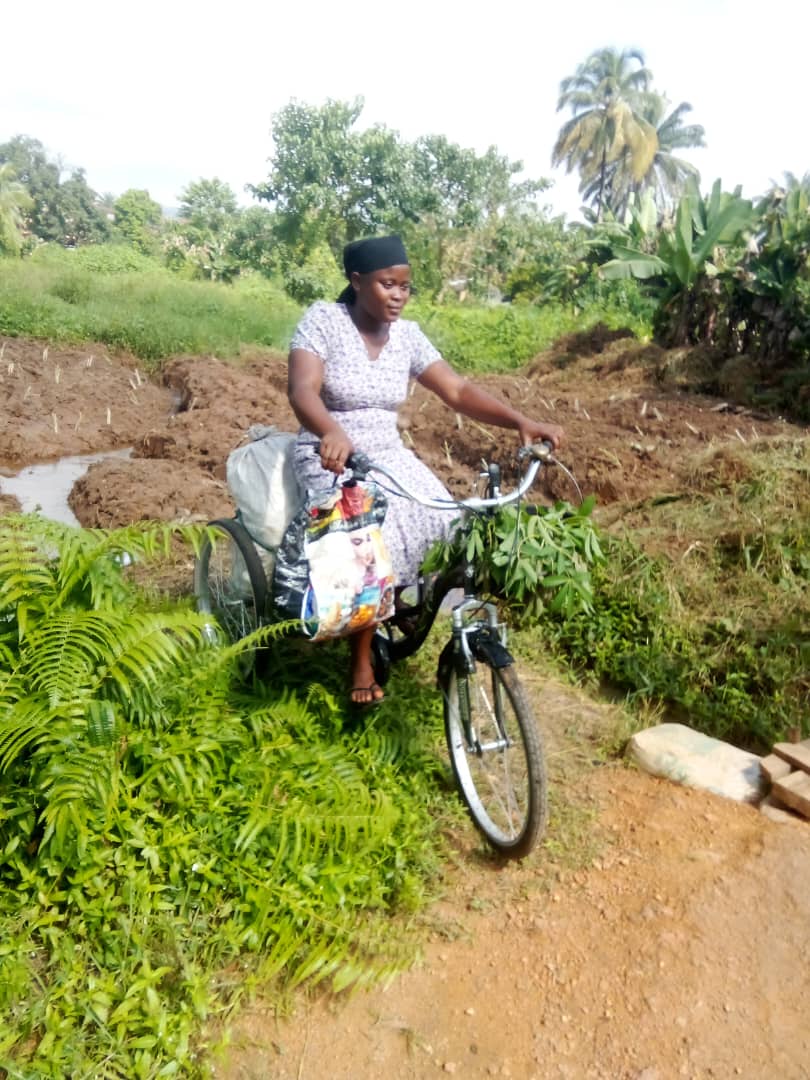
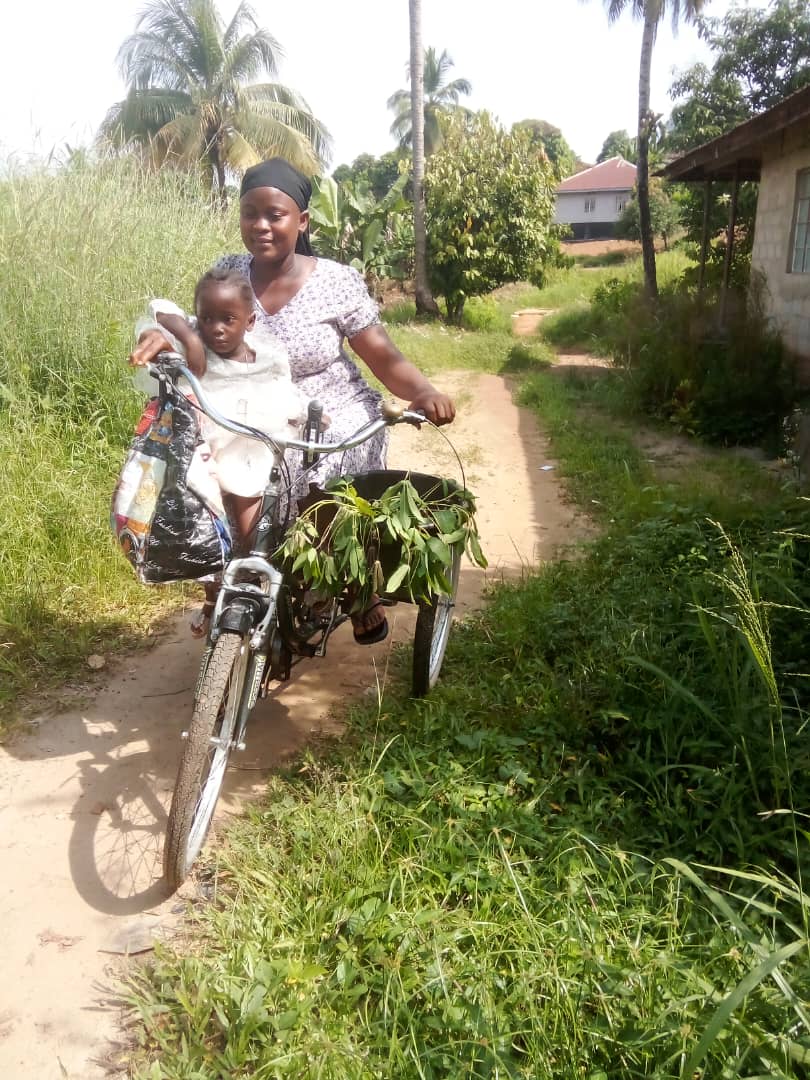
Recently, Alieu was fortunate to benefit from the Pedals for Progress bicycle donation program. He received one of the four cargo tricycles donated by Duke Farms in the United States. These trikes are specifically designed for African terrain, featuring puncture-proof tires and carrier frames that can hold up to 100 kg of goods. Before this, Alieu had to carry 60 kg of kola nuts on his head from his farm in Dalu Village to the market in Kenema, a grueling 12-mile journey that caused significant strain on his neck and back.
In Sierra Leone, many farmers face challenges accessing markets due to high transportation costs, leading to crop spoilage and financial losses. The COVID-19 lockdown in 2022 exacerbated these issues, as farmers like Alieu struggled to access markets for both inputs and selling their produce, severely impacting food security in their communities.
Today, Alieu is grateful for the tricycle, which has transformed his work. “I am very thankful to Duke Farms and Pedals for Progress for this bicycle. It will help me transport and sell my produce more efficiently, allowing me to support my family better.”
The donations from Pedals for Progress are empowering farmers to improve their lives and contribute to the well-being of their communities and the planet.
Mohamed Bockarie
In rural Sierra Leone, every student’s struggle to complete their education is unique. Financial difficulties, early parenthood, familial expectations, distance, and lack of transportation all challenge a student’s ability to attend classes regularly. However, with a reliable bicycle from Pedals for Progress in the United States, students can gain the time, energy, and confidence needed to overcome their individual obstacles and stay on their educational path.
Pedals for Progress is transforming lives in our communities by providing bicycles that help students reach schools and colleges across Sierra Leone. This initiative bridges the transportation gap, enabling pupils to achieve their educational goals.
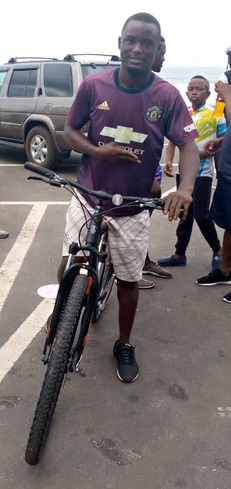
Seventeen-year-old Mohamed Bockarie is a high-achieving student with a passion for mathematics at the Holy Trinity Secondary School in Kenema. When his single mother had to choose between paying for food and school fees, Mohamed secured a scholarship and received a bicycle, allowing him to continue his education. Now, he dreams of achieving greatness in his academic pursuits.
Mohamed shared how the Pedals for Progress bicycle program has been a wonderful success for many, including himself. He emphasized the benefits of cycling, stating, “Bicycles are awesome for getting exercise, which is crucial, especially when it’s not easy to stay in shape during school. Riding a bike is excellent cardio that improves breathing and heart rate, boosts the immune system, and strengthens muscles. Plus, it even sharpens your brain! Riding helps take my mind off academic stress and anxiety.”
Thank you, Pedals for Progress, for this incredible gift of empowerment. You are making a difference in the lives of students like Mohamed, helping them pursue their dreams and build a brighter future.
Aminata Sesay
My name is Aminata Sesay. I am a member of Slow Food Sierra Leone. I have been a farmer for over eight years, growing cassava, sweet potatoes, okra, rice, and traditional herbs. As a mother of three, I have faced significant challenges, especially after losing my husband to the Ebola virus five years ago.
Many farmers like me face considerable challenges, including limited access to markets, insufficient credit, and poor infrastructure. These issues hinder our productivity and profitability, limiting our ability to contribute to the growth of the agricultural sector.
One promising solution to these challenges is the use of bicycles in farming. Bicycles are a sustainable and cheaper alternative to traditional fuel-powered vehicles. They facilitate transportation, reduce costs, and improve access to markets.
On July 23, 2024, I was approached by a team of Slow Food garden coordinators who asked me about the challenges I face in my work. A major problem was the transportation of my produce to the market.
On October 27, 2024, while working on my farm, I received a call from Fatmata Mansary, the head of Slow Food in the Kailahun District. She informed me that Pedals for Progress, a United States organization, had donated a bicycle to our network, and I was one of the beneficiaries. Before this, I had been walking five miles every day to sell my produce at the market. Now, I had received a new tricycle from Duke Farms.
“Thank you, Pedals for Progress, for this amazing gift and support!”
Riding Bikes to School
In the rural communities of Sierra Leone, school isn’t just around the corner; it’s often a considerable distance away for many students attending public schools.
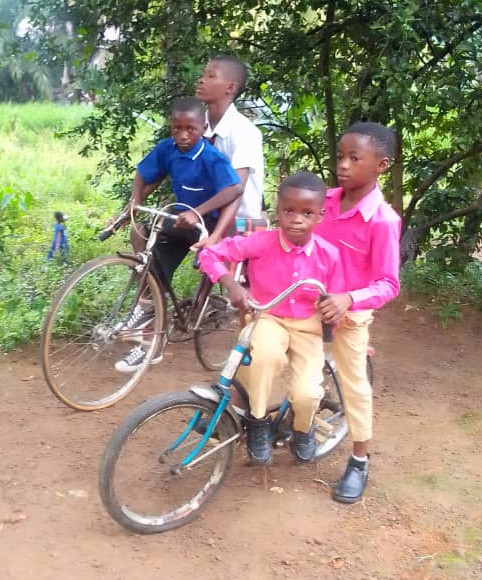
Before receiving a bicycle from Pedals for Progress, getting to school was a daily ordeal for Ibrahim Jajui, Abdul Bangura, David Sesay, and Keliven Dumbuya. Their journey involved long walks under the searing sun, squeezing into overcrowded public transport, or paying for expensive taxi rides. These transportation challenges made accessing education a struggle.
The relentless effort required merely to reach school often left students like Ibrahim, Abdul, David, and Keliven tired and drained before their day even began. However, with the donation of bicycles from Pedals for Progress, their strenuous marathon to class has transformed into a breezy ride.
Now, these students are no longer slaves to the uncertainties of public transport or the exhausting toll of long walks. Their daily commute has shifted from a puzzle of endless variables to a straightforward, manageable journey.
Not only are they saving precious time and energy, but they are also ensuring consistent attendance in school. With each turn of the pedal, each student is asserting their commitment to education and their future.
The bicycle has become more than just a mode of transport; it symbolizes consistency and empowerment. It reinforces a habit and creates an unbroken chain of learning that propels these young minds forward, both physically and academically.
This is why Pedals for Progress stands as a beacon of hope. Each day, as promising students make their way to school, they ride with gratitude. And every time they arrive on time and ready to learn, they carry a profound appreciation for something as simple as a bicycle.
Your contributions are making a world of difference—one bicycle at a time, one student at a time. Each morning, as students mount their bikes and set off for school to the sound of roosters, they ride with gratitude, knowing that their educational journey is made possible by your generous hearts.
Thank you for pedaling along with us. Together, let’s continue this incredible ride toward a brighter future.
In the rural communities of Sierra Leone, school isn’t just around the corner; it’s often a considerable distance away for many students attending public schools.
Before receiving a bicycle from Pedals for Progress, getting to school was a daily ordeal for Ibrahim Jajui, Abdul Bangura, David Sesay, and Keliven Dumbuya. Their journey involved long walks under the searing sun, squeezing into overcrowded public transport, or paying for expensive taxi rides. These transportation challenges made accessing education a struggle.
The relentless effort required merely to reach school often left students like Ibrahim, Abdul, David, and Keliven tired and drained before their day even began. However, with the donation of bicycles from Pedals for Progress, their strenuous marathon to class has transformed into a breezy ride.
Now, these students are no longer slaves to the uncertainties of public transport or the exhausting toll of long walks. Their daily commute has shifted from a puzzle of endless variables to a straightforward, manageable journey.
Not only are they saving precious time and energy, but they are also ensuring consistent attendance in school. With each turn of the pedal, each student is asserting their commitment to education and their future.
The bicycle has become more than just a mode of transport; it symbolizes consistency and empowerment. It reinforces a habit and creates an unbroken chain of learning that propels these young minds forward, both physically and academically.
This is why Pedals for Progress stands as a beacon of hope. Each day, as promising students make their way to school, they ride with gratitude. And every time they arrive on time and ready to learn, they carry a profound appreciation for something as simple as a bicycle.
Your contributions are making a world of difference—one bicycle at a time, one student at a time. Each morning, as students mount their bikes and set off for school to the sound of roosters, they ride with gratitude, knowing that their educational journey is made possible by your generous hearts.
Thank you for pedaling along with us. Together, let’s continue this incredible ride toward a brighter future.
I am very happy to announce that your support has allowed us to open a new program in Sierra Leone with the Kola Nut Producers Association in conjunction with Slow Food Sierra Leone. This fall they successfully unloaded our first shipment of bicycles and sewing machines after months at sea.
I’m excited to share this new program that has seem to have struck a chord with our donors and sponsors I have had the pleasure to connect with at our collection events and speaking engagements I’ve attended this summer and fall. How these bikes will be helping the community of Kenema, Sierra Leone is quite staggering taking into the context that many of these bikes will be going directly to rural farmers.
Farms are the reason we have modern civilization. World history has existed largely round the most fertile places in the world for a reason. Where there is food there are people. Where there are people there are communities. By aiding farmers, we are targeting the bedrock of the community to harvest more progress with our bicycles. This initiative will be empowering farmers to improve their lives and contribute to the well-being of their communities and the planet.
Alieu Sesay
Alieu Sesay is one of the first farmers of our new program that has received an adult sized tricycle that will greatly improve his productivity and health. Before this Alieu had to carry 60kg (132lbs) of Kola Nuts on his head from his farm in Dalu Village to the Market in Kenema, a grueling 12-mile journey that has caused significant strain on his neck and back. Thanks to his new tricycle to help transport his crop, he will live a less strenuous, more prosperous life.
A community with productive farmers means a full and thriving population of people ready to seize the day on their own bicycles. With more energized people paired with a means to get where they need to be, we are building thriving communities for years to come. Your support helps us continue to provide transportation that is putting food on the plates of people in Sierra Leone and everywhere we send out bicycles. Please consider making a donation today to help us put used bikes and sewing machines to good use.
While the “progress” of Pedals for Progress is best shown through our international programs, the success of these programs relies on our collection efforts in the United States. Pedals for Progress acquires 90 percent of our bicycles from our collection drives, which are generally self- sufficient with the suggested donation we request with each item. Our collection drives are our bread and butter, allowing us to collect the items we send overseas while simultaneously fundraising for their shipment.
Being the “bike guys,” we often get calls about random pockets or “piles” of bikes that appear due to various circumstances. These bikes often surface at universities, police departments, apartment complexes, municipal centers, and beyond, and often lack the additional monetary donation needed for their removal and shipment. While we try our best to answer these calls, it is an area of our organization that needs continued financial support. Despite the challenges, these opportunities often yield the best results in terms of bicycle procurement, both in quantity and quality.
I’d like to highlight a couple of calls we answered this spring from two great collaborations that helped us acquire particularly unique “piles” of bikes. These stories showcase the incredible people behind them and the importance of recycling bicycles. However, financial restrictions often slow these efforts. I hope to raise awareness of these large pockets of bikes, the abundant manpower and passion to handle them, and how additional financial support helps us manage these projects professionally and sustainably.
Duke Farms
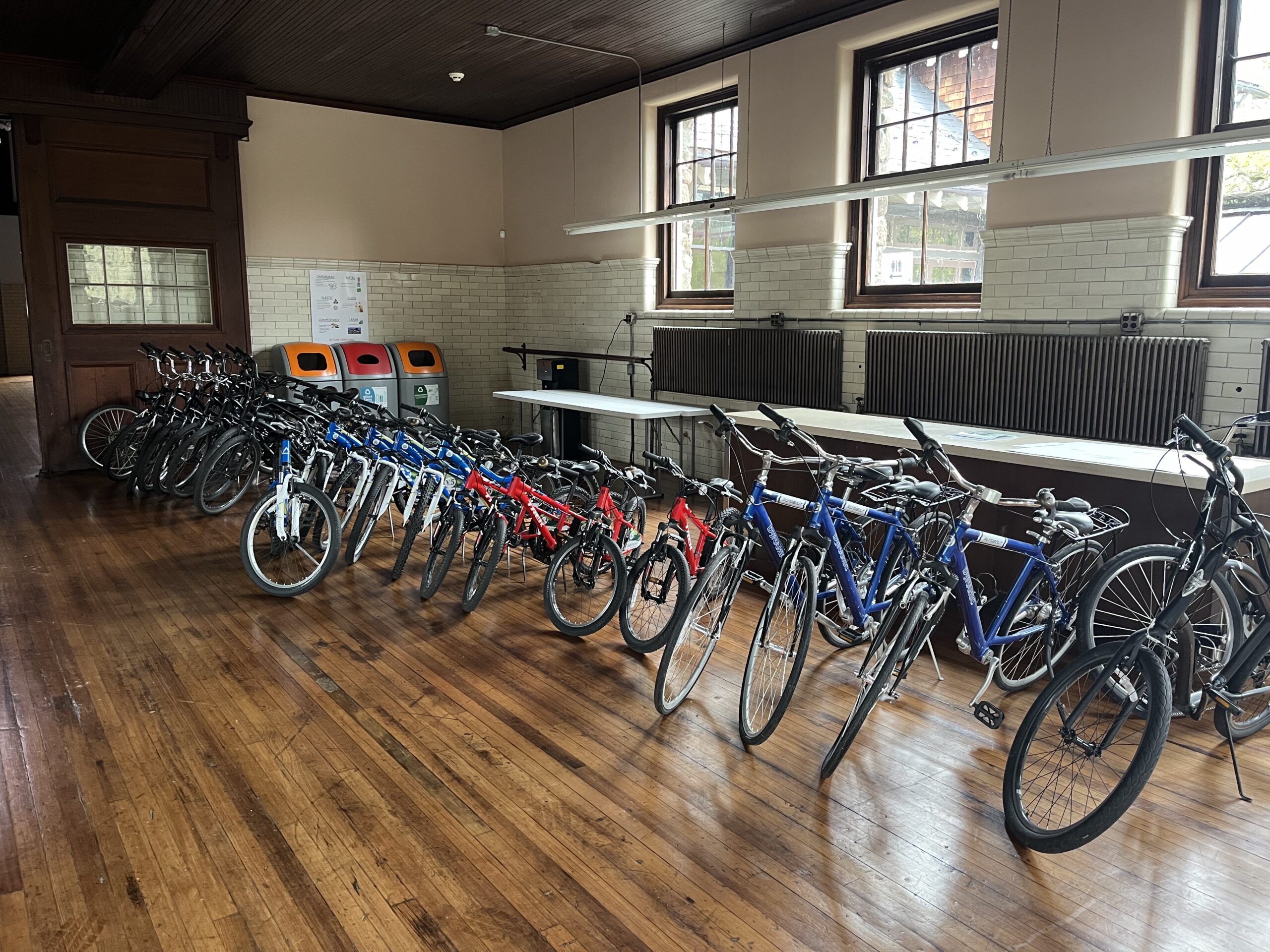
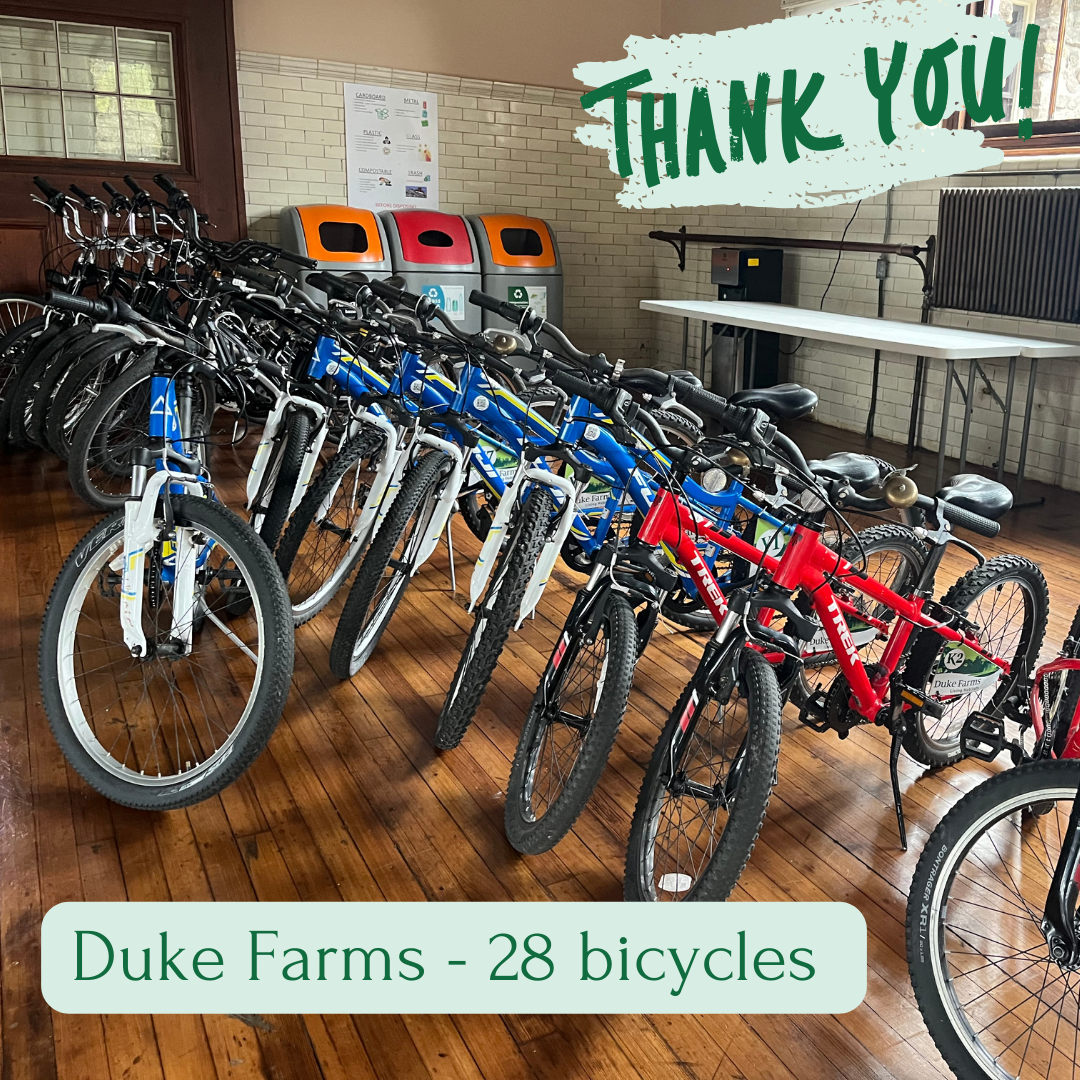
On April 18th, 2024, Pedals for Progress accepted an in-kind donation of 28 high-end bikes from Duke Farms in Hillsborough, NJ. The bicycles donated by Duke Farms were phased out of their rental fleet offered to the public visiting the conservation grounds. Bikes deemed unfit due to wear and tear need to be cycled out quickly by Duke Farms for liability reasons. Being high- quality, name-brand bicycles, these items were still very desirable and great for our partner programs overseas. Although the bikes did not come with a monetary donation for their removal, processing, and warehousing, this was offset by the generosity of our donors and a well-placed grant. These items have been shipped to our program in Belize, where they will continue to be used by 28 motivated individuals.
In addition to the 28 bicycles from Duke Farms, the charitable roots of the conservation program, in the image of Deloris Duke, continued with an additional 4 adult-sized tricycles also retired from their rental fleet. Only needing minor repairs, some air in the tires, and a few bolts adjusted, the trikes were in fantastic condition. These trikes, along with the 28 bicycles, were used frequently throughout the year by the thousands of tourists Duke Farms receives. The functionality of a well-made bicycle remains valuable even after heavy use.
With thousands of miles left on these bicycles, they will prove even more useful as they came at a perfect time, just ahead of our shipment of bicycles to Sierra Leone, for the Slow Food International Kola Nut Farm. Rural Kola Nut farmers, often held back by long walks to market, face time constraints as their nuts and other fruits spoil quickly. Providing these farmers with bicycles will help them transport their produce to market much faster, preventing waste. The tricycles, often rare at our typical collections, will be perfect food haulers with their wide base and large baskets on the rear.
From one farm to the next, we have repurposed and recycled these bicycles to save money, food, and time — all incredibly valuable factors in a farmer’s life. We’re fortunate to have worked with Duke Farms to remove these items and give these bicycles a new home. We’d like to thank Duke Farms for their donations and their interest in our cause. The conservation grounds are a must- see for anyone looking to spend a relaxing afternoon soaking in the sun and all that our great Garden State has to offer.
Vermont
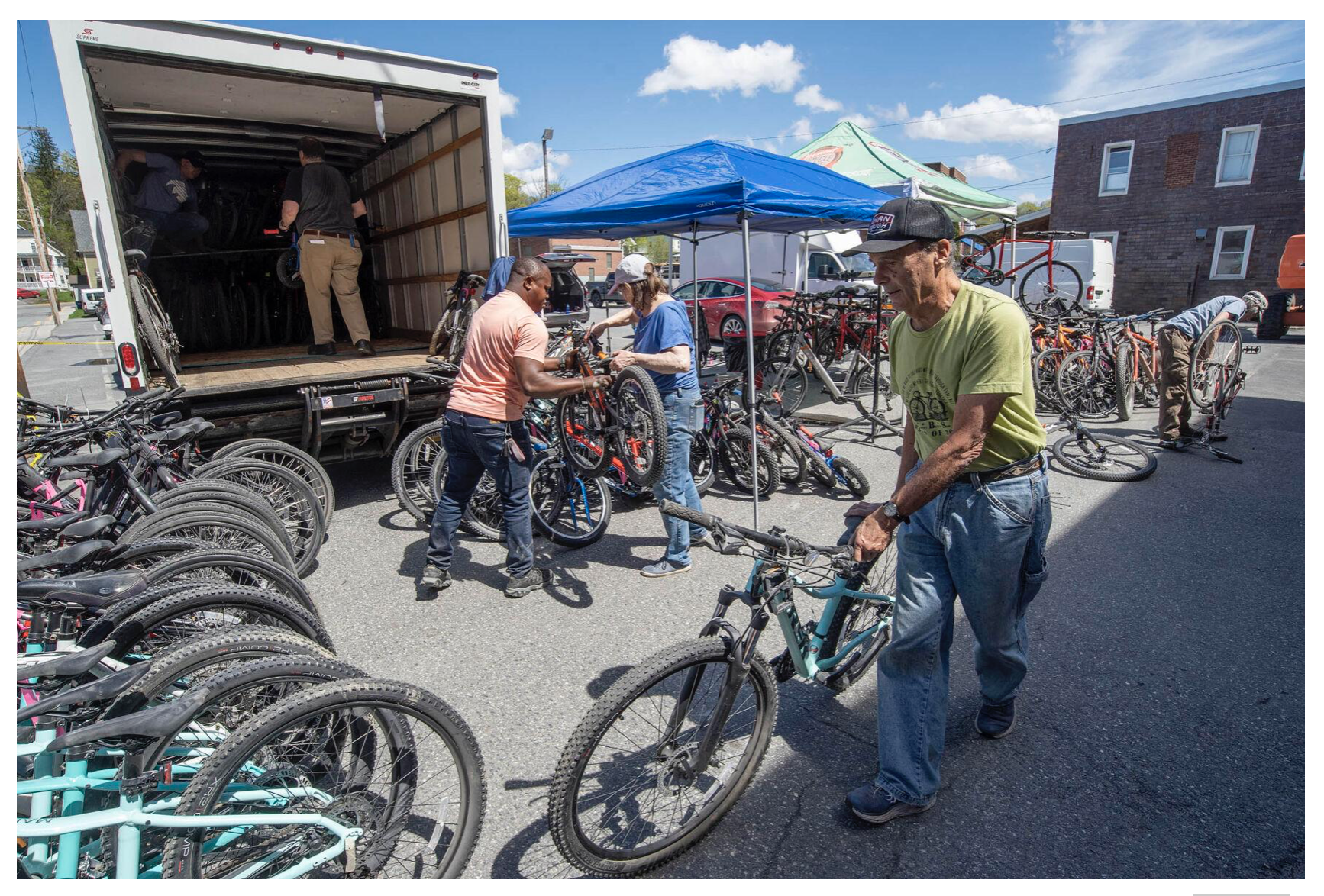
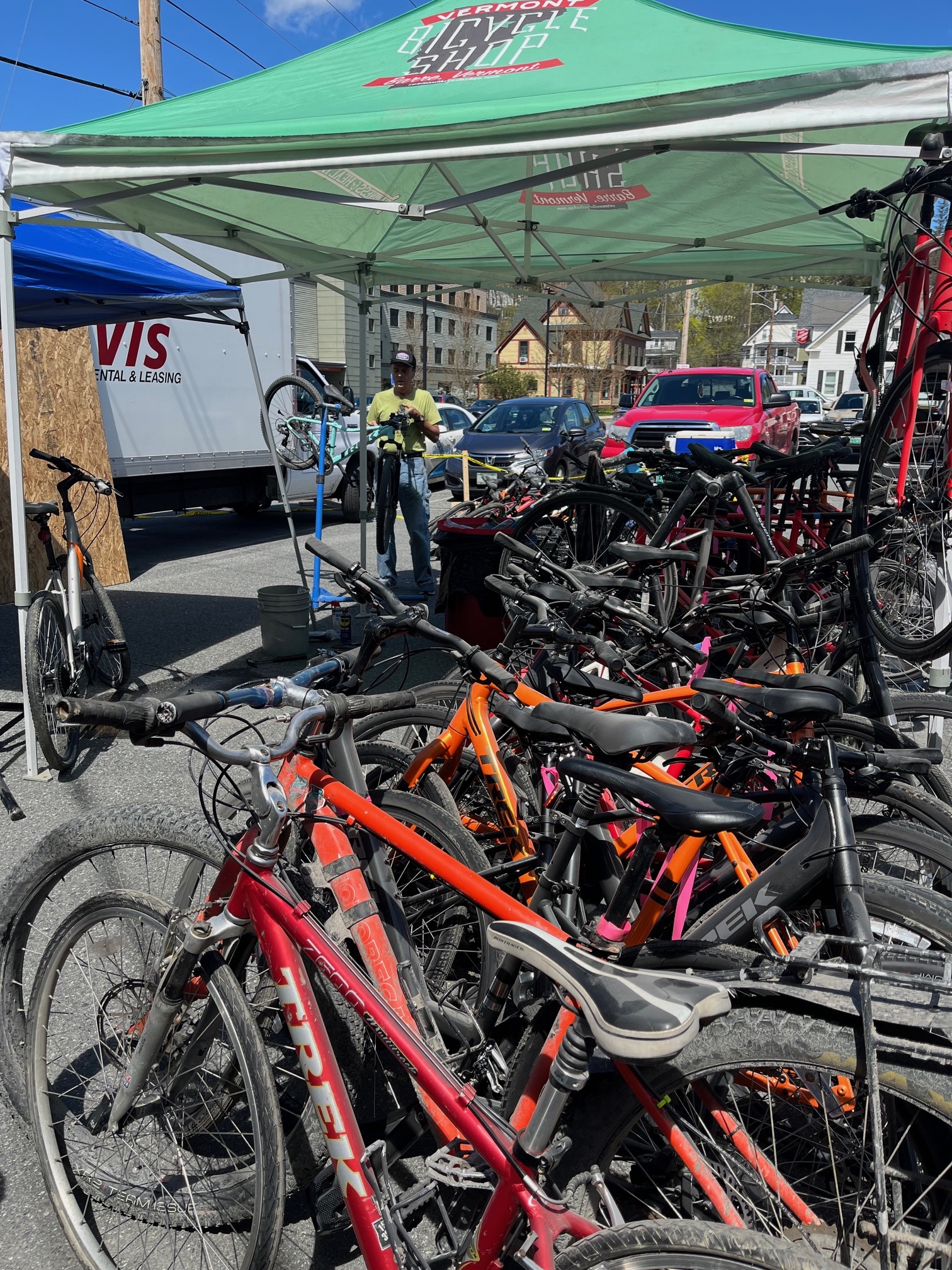
On May 6th, Pedals for Progress continued supporting our overseas partners by recycling 100 Trek bicycles from Vermont Bicycle Shop in Barre, Vermont. The bicycle shop unfortunately experienced an incredible loss of inventory and property damage due to intense flooding on July 11th, 2023, now known as one of “the great floods of Vermont.” The area was ravaged by the intense flooding, showcasing the dangers of climate change with increasingly frequent “ten-year” storms.
Thankfully, the bicycles were submerged in water for only a short time and incurred minimal damage. The bicycles, still in near-perfect condition, were deemed a liability by VT Bicycle Shop’s insurance and could not be sold as discounted items. Instead of scrapping the 100 Trek bicycles, Darren, the owner of the bicycle shop, contacted our Vermont satellite group to see if they were interested in the bikes.
Making their own name throughout Vermont from 25 years of collections, the Green Mountain Returned Peace Corps Volunteers (GMRPCV) answered the call to action immediately. Joanne and the GMRPCV group contacted me to discuss how to proceed with the unexpected donation. Transportation and funding were immediate hurdles as the VT group was still months away from their main collection event in September.
Our annual shipment of bicycles from our Vermont collection group to our headquarters in New Jersey is made possible by a once-a-year donation from FedEx, which delivers the items collected throughout the year, ending with their final collection and loading event in September. Darren needed the bicycles removed from his building to complete repairs to his shop damaged in the flood. With our Vermont group primarily based in Burlington, there were no resources available for storage, nor funding for a storage container until their September collection event.
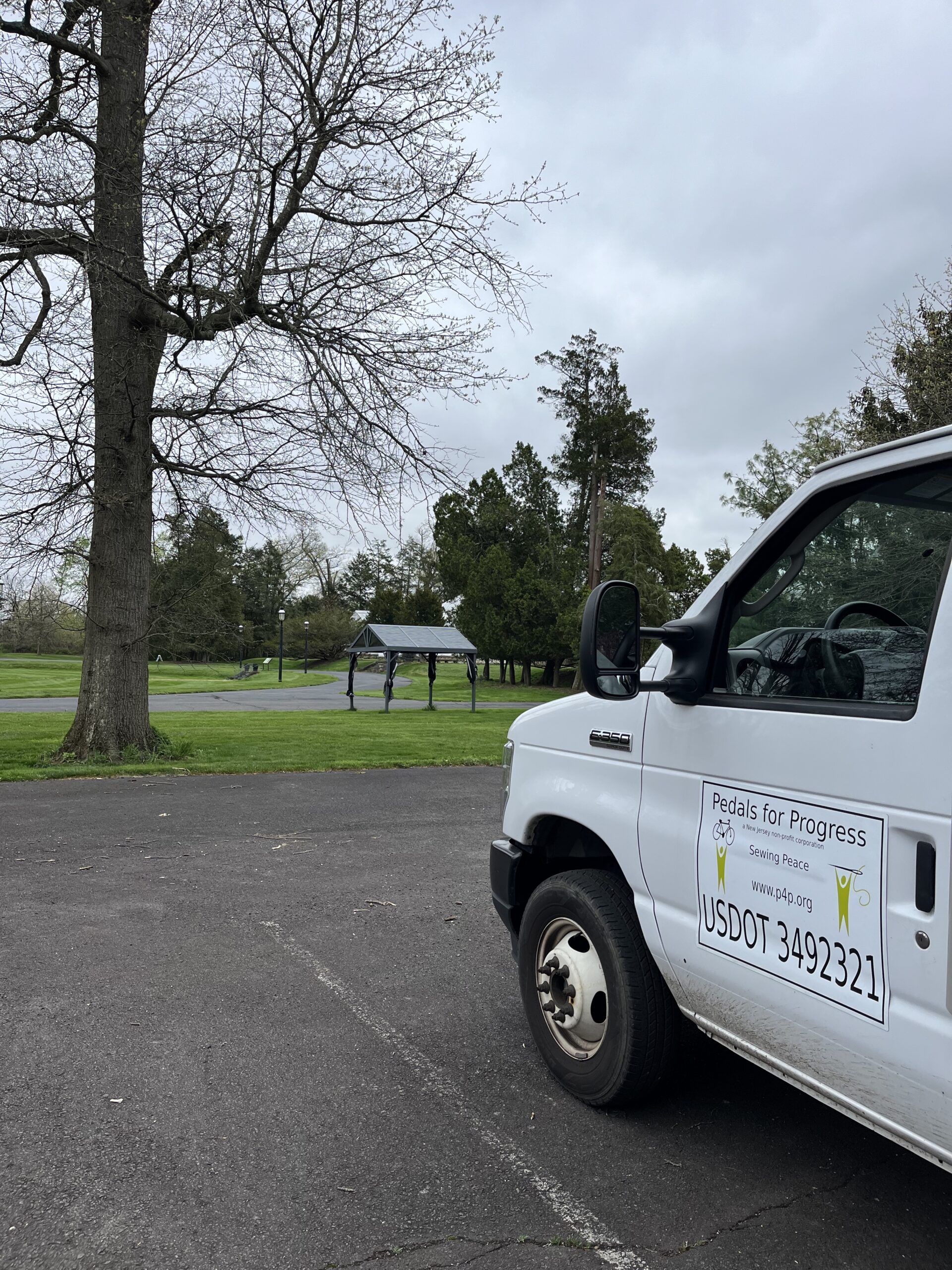
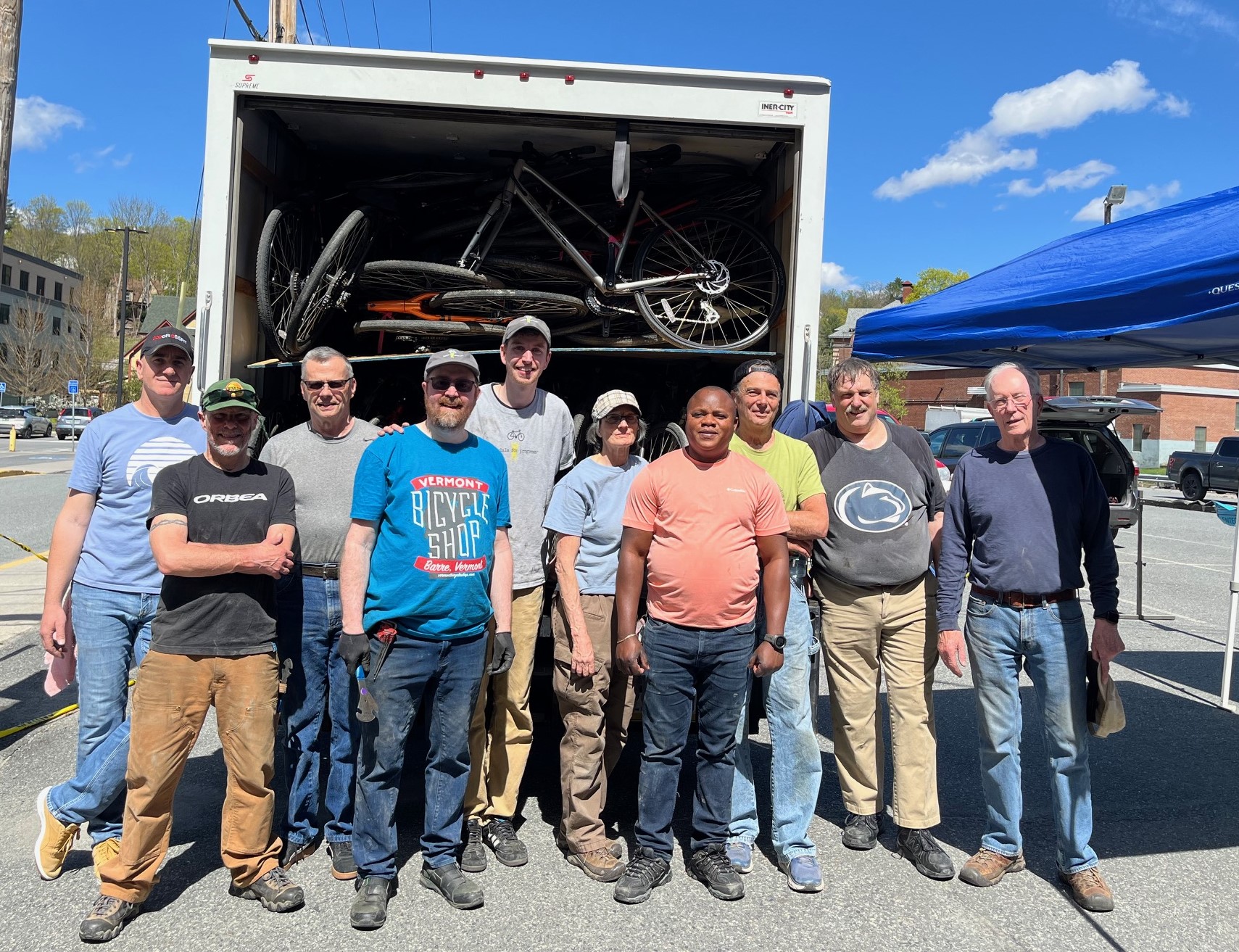
After discussing several solutions, we decided it was best for P4P to transport the 100 bikes from Vermont. With our rental truck ready for our collection season, we treated the pickup like any other of our normal collections, just a few hundred miles outside our typical circuit. With a “collection” date set a few weeks after the initial request, there was still the question of how to process the bikes for shipment and where the funding would come from. Both elements can slow a project, but they are key factors for a P4P collection to succeed.
The GMRPCV group was nothing short of fantastic, rounding up volunteers from Burlington, Barre, other parts of VT, and even one volunteer found through Reddit! The fundraising side was also a success as Joanne and her network of supporters raised $2,000 to offset shipping costs.
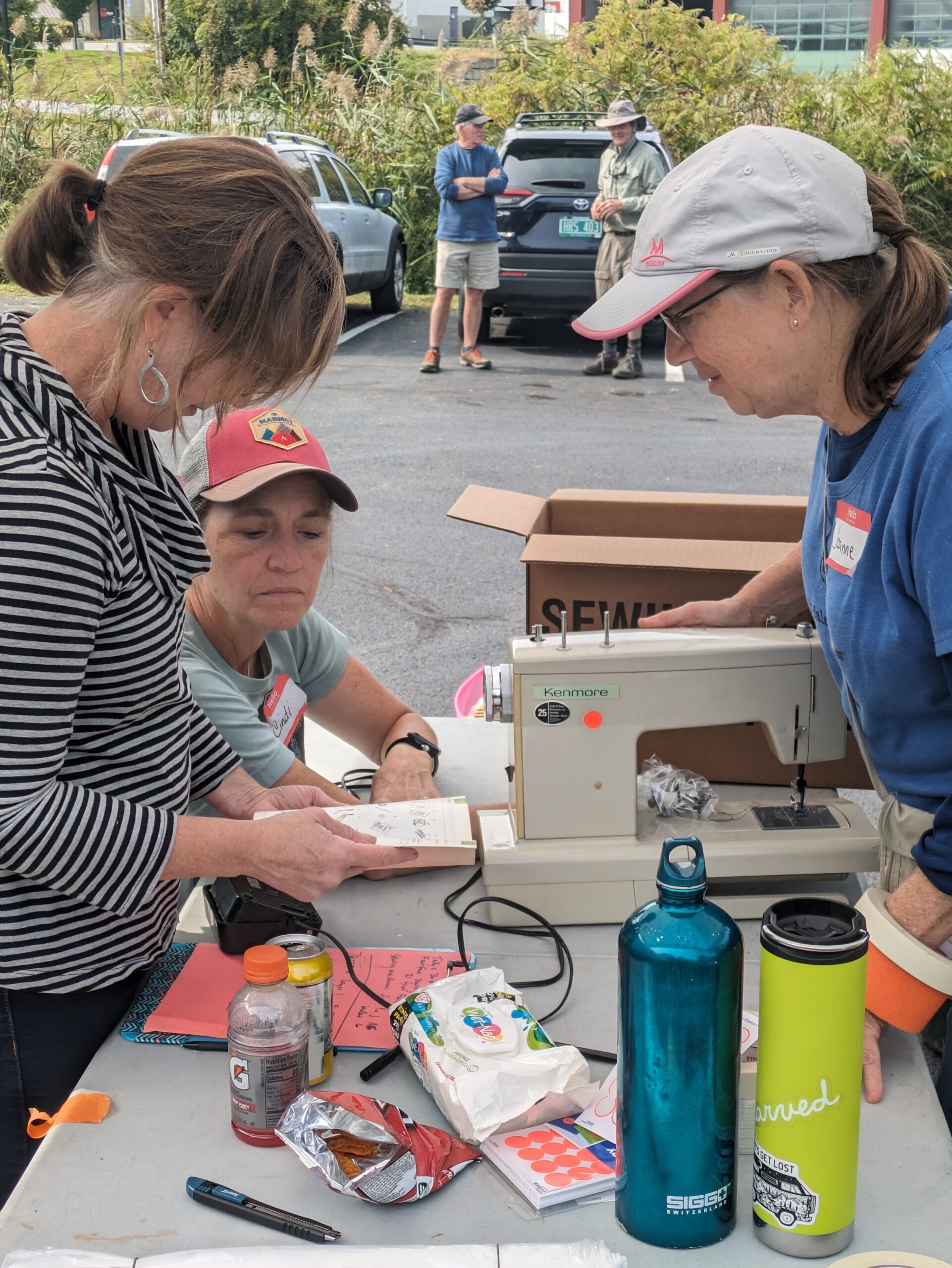
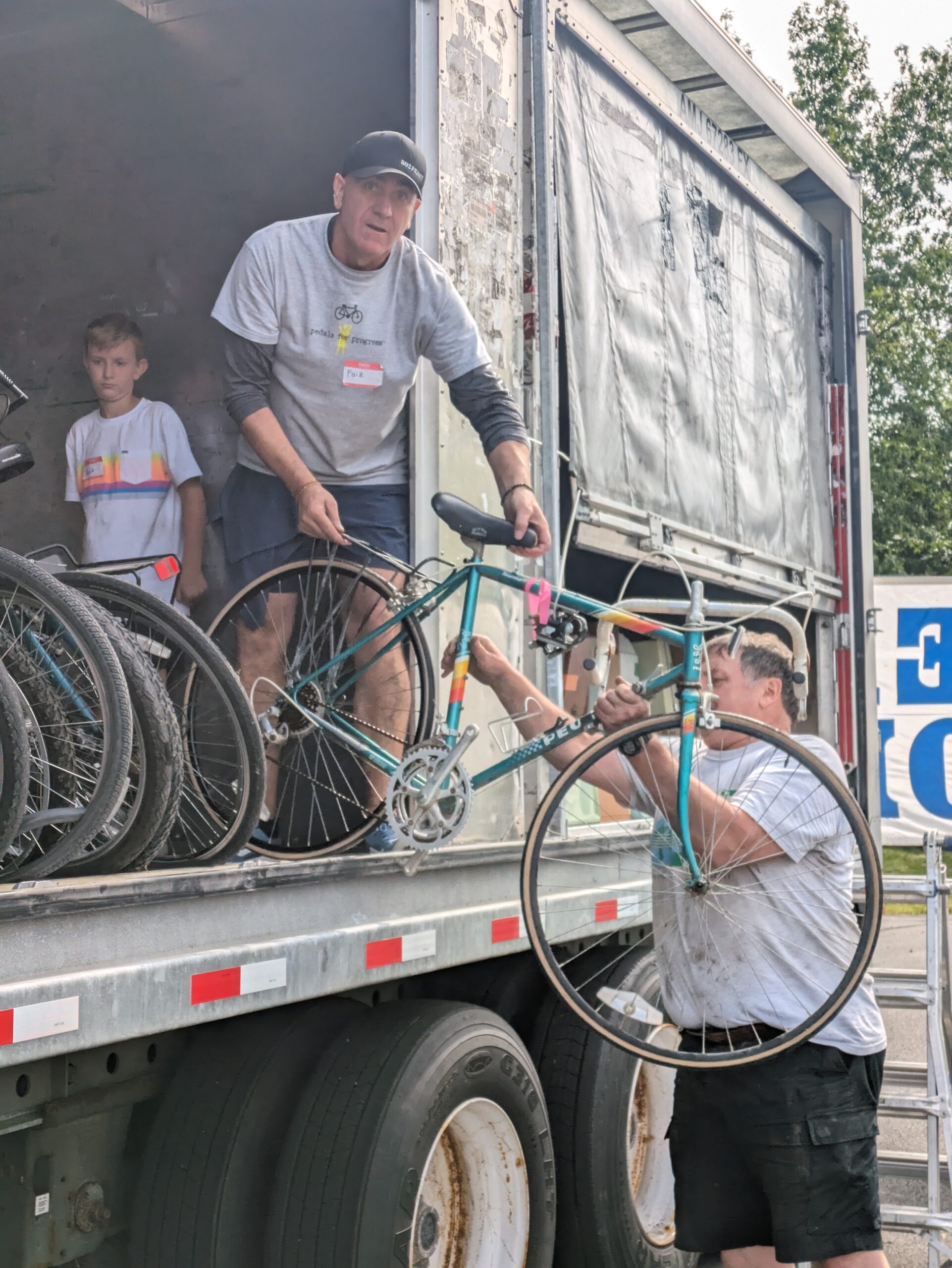
On May 6th, I left early in the morning and arrived around noon with an empty truck. With the team’s help, we processed all 100 bikes and loaded the truck in just under three hours. It was an incredibly productive afternoon as we powered through the heat processing the bicycles. Joanne went around marking most of the bikes with bright orange tape to mark the occasion and give us a way to track the bikes at the start of their journey.
Personally, it was a very special afternoon, seeing the passion and tenacity everyone had while processing the items. It felt like any one of our collections, getting our hands dirty, talking with volunteers, and getting a good workout loading bikes. The atmosphere was incredibly positive as we were all excited to be part of giving these high-quality bikes a second life. It is not often we get an allotment of nearly brand-new bicycles of this caliber, and it is a pleasure to send them to our partners overseas, where they will go to well-deserving people looking for a better shot at life.
The following day, I brought the bicycles back to New Jersey, where they are warehoused and eagerly waiting for shipment. Since this does not happen often, I am slowly distributing the 100 VT Treks among the next few shipments to spread these items around the world as evenly as possible.
Moments like this are truly special and worth sharing with our supporters. There are so many behind-the-scenes people involved in our organization who make what we do possible. Grassroots efforts like this show the passion and enthusiasm in our country, spreading across the globe. I can’t thank Darren and Vermont Bicycle Shop enough for their selflessness, immediately thinking of others and knowing that these bikes were extremely useful, doing everything to prevent them from being scrapped at the insurance company’s request. I’d also like to thank Joanne and the wonderful team with the GMRPCV, who constantly rise to the call for action at a moment’s notice.
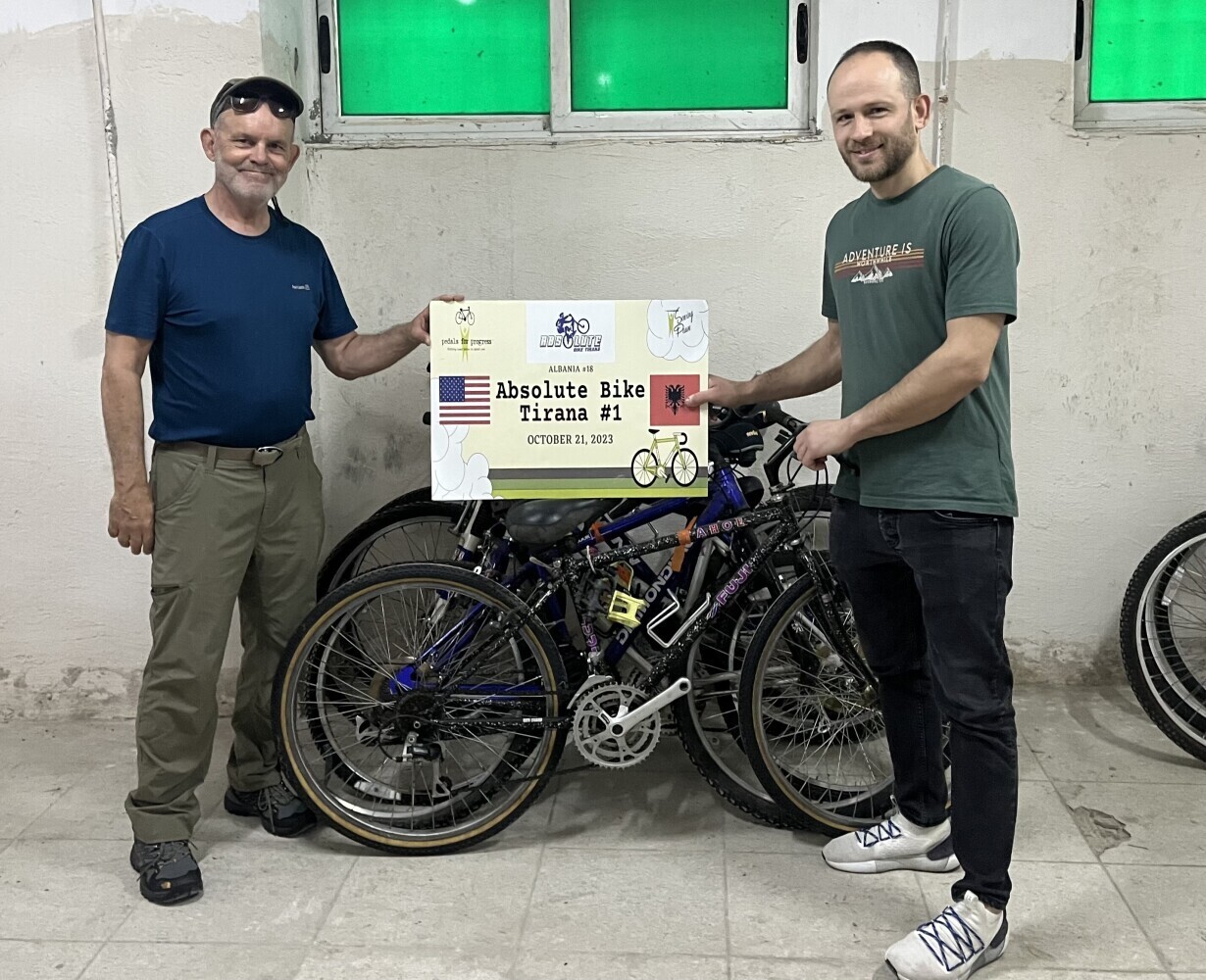
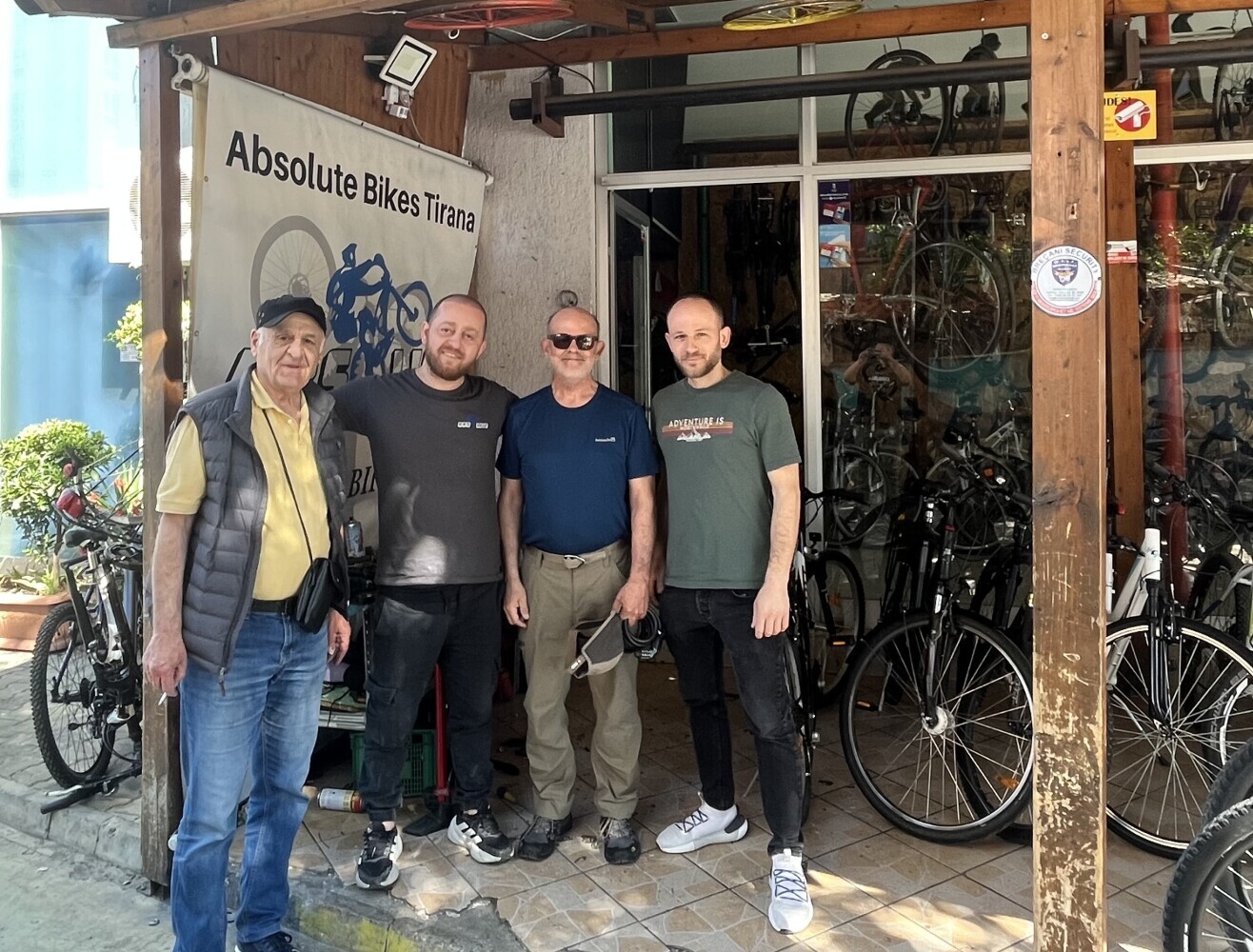
For 25 years Joanne (my spouse) and I have part of team of people collecting bikes and sewing machines for developing countries with Pedals for Progress. We have collected about 5,000 bikes and more than 1,000 sewing machines in that time. Today I got to visit where some of those bikes have been sent. Last year some bikes collected in Burlington went to Absolute Bikes in Tirana. We had marked the Vermont bikes with an orange ribbon, so I could tell where they came from. This certainly created a positive connection.
Tirana’s center displays an affluence that would be familiar in any capital city in Europe. Bright and modern storefronts, bike paths, spacious parks, and an attention to what attracts tourists. I walked perhaps a 3 mile radius near the center. There are not a lot of very old buildings, but there are some very modern, edgy architecture that has been constructed in recent years.
I spent the rest of the day walking in Tirana with my brother-in-law Thomas who will be joining me for an organized bike tour to UNESCO cities in Albania during the next 10 days.
Our main visit was to Bunk’Art, an underground bunker in central Tirana that was a very thorough history of police/security forces in Albania, with an emphasis on the security forces of the Hoxha era. The museum was chilling.
My writings in this blog have been very personal. I will try to maintain that tone in the coming days. I personally am not interested in reading about the dynamics between people on a tour.
Follow up email correspondence from second shorter visit:
Conversation with Nina
Nina and Valjon were concerned about the climate and environment. In 2003 they worked with a student group and the Tirana mayor (now prime minister) to do volunteer based clean up. Under communism, ‘volunteer’ work was mandatory, so much of her work was teaching people a new attitude.
They first started working with p4p in 2006. The thinking was that getting children on bikes would help change parents while creating conscious kids. Much of the work supports getting bikes to kids and the poor.
Recent efforts have been getting bikes to women to expand their mobility and view of the world.
The bikes they can use the most are children’s bikes, hybrids and mountain bikes. While there are bike lanes in Tirana, much of Albania still has some pretty rough roads. They liked seeing the bikes collected in Barre and hope they will receive some.
Nina does not work for Absolute Bikes, but has stayed connected. Valjon works here full time.
Twenty-five years ago, a young boy infatuated with mountain biking was reading Dirt Rag magazine and saw an article about how mountain bikes could help health care workers access remote villages in the developing world, enabling them to help more patients quickly and efficiently. His mother had lived in South Africa as a child and traveled to El Salvador throughout her life. He saw a common ground and showed her the piece. Joanne, the mother in question, sat with the thought for a year and found Pedals for Progress and reached out at just the right time.
As fate would have it, Dorsey Hogg, who had served in the Peace Corps in Botswana, had also reached out to Pedals for Progress after hearing about the organization through the Long Island Returned Peace Corps Volunteers. Dorsey wanted to take a shot at running a collection.
Joanne and Dorsey met and decided to join forces and take on the crazy idea of running a collection in their home state. The problem was that P4P could not afford to transport the bikes three hundred miles from Vermont to P4P-HQ in New Jersey.
The two seasoned travelers view time and distance differently than most people and saw this obstacle as a mere speedbump. Through friends, family, significant others, and neighbors they assembled a small team with the common bond of spending time outside of the United States and a desire to continue to help those less fortunate. Some of the first to join included Matt, who had also served in Botswana, Bob and Paula in Kenya, and Paul in rural Chile; the team tackled the distance between VT and NJ with ease.
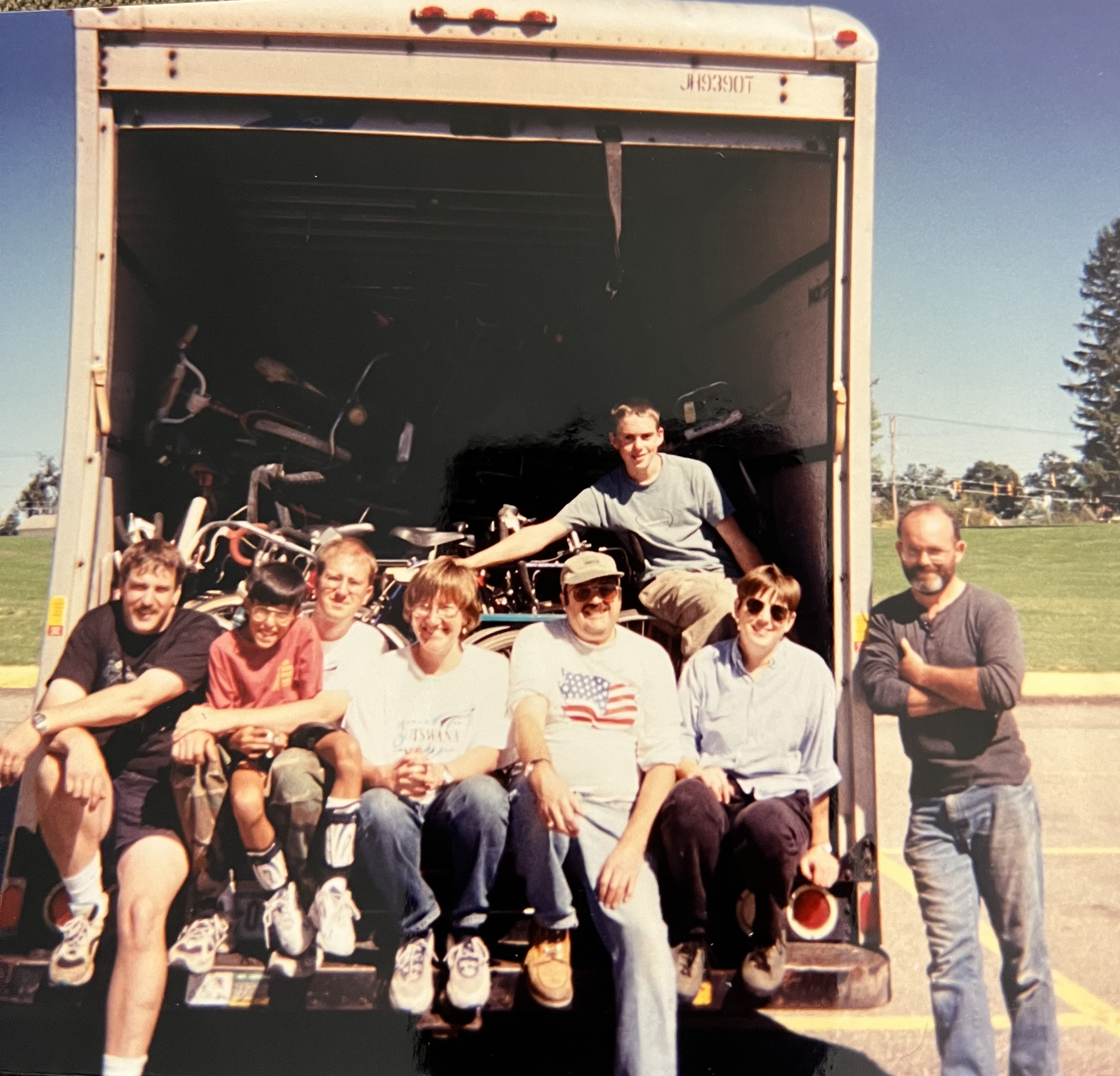
First VT collection at Burlington High School, September 1999. Left to right first row: Bob Thompson, Brian Thompson, Matt Hogg, Dorsey Hogg, Unknown, Joanne Headlamp, Paul Demers. Back row: Stephan Demers.
The group came together as the Green Mountain Returned Peace Corps Volunteers (GMRPCV) and held their first collection in 1999 at Burlington High School. The team collected a staggering 138 bikes for their very first collection! With a 26-foot U-Haul rented and ready to go, Matt drove the bicycles to New Jersey with Dorsey following in her car to give him a ride back to Vermont.
Satisfied with their efforts and a job well done, the team decided to do it again! The second year they collected 83 bikes, with Dorsey and Matt making the trip. Year three, after another 114 bikes, Paul took a shot at driving the truck down and then took a train back up to Vermont. Lightning striking three times in a row, they knew they were onto something grand, but the long drives became expensive and tiresome.
During year four, partnering with the Williston/Essex Rotary Club, the distance between VT and NJ suddenly closed. The Rotary Club had a member who handled shipping for IBM. Diligently working her magic, she found someone at FedEx to agree to ship containers at no cost on a space-available basis. The local FedEx office in Vermont has been stalwart in their support ever since, through numerous changes in branch managers and leadership. Just over twenty years later, it has developed into a tradition that has lifted the burden of logistics, while helping hundreds of people every year along the way.
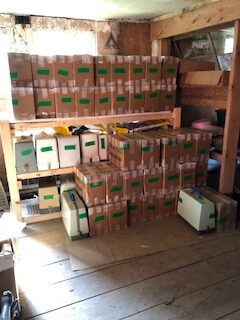
Inside Mary’s barn where refurbish machines are stored during the year
With this key factor in place that offered sustainability to the project, the GMRPCV in Vermont steadily picked up the pace and grew its collection efforts year after year. They have built partnerships with local bike shops participating in bike swaps, held auxiliary collections in smaller areas to maximize their collection efforts, recruited local recycling agencies that provide important financial support, local rotary clubs, student groups, and solid waste groups that all pitch in when they can. The core team has also donated their own time and efforts to fundraising, refurbishing machines, and getting the word out about their collections and our cause through televised news appearances. It goes without saying that the list of volunteers and time spent in 25 years of collections is LONG.
VT team September, 2023
We at Pedals for Progress simply want to say thank you. Thank you to Dorsey, Joanne, and the rest of the team in Vermont that have been helping with our mission for twenty-five years. Knocking it out of the park again, for their 25th Anniversary with P4P, they collected 225 bikes and 127 sewing machines on September 23rd! With this achievement, over the twenty five years of collections, they have collected a staggering 4,900 bikes and 1150 sewing machines that have been shipped around the world. From larger cities like Tirana, Albania, to small villages in rural Togo, these items have drastically changed the lives of thousands of individuals that now have the freedom and mobility to have fair shot at life.
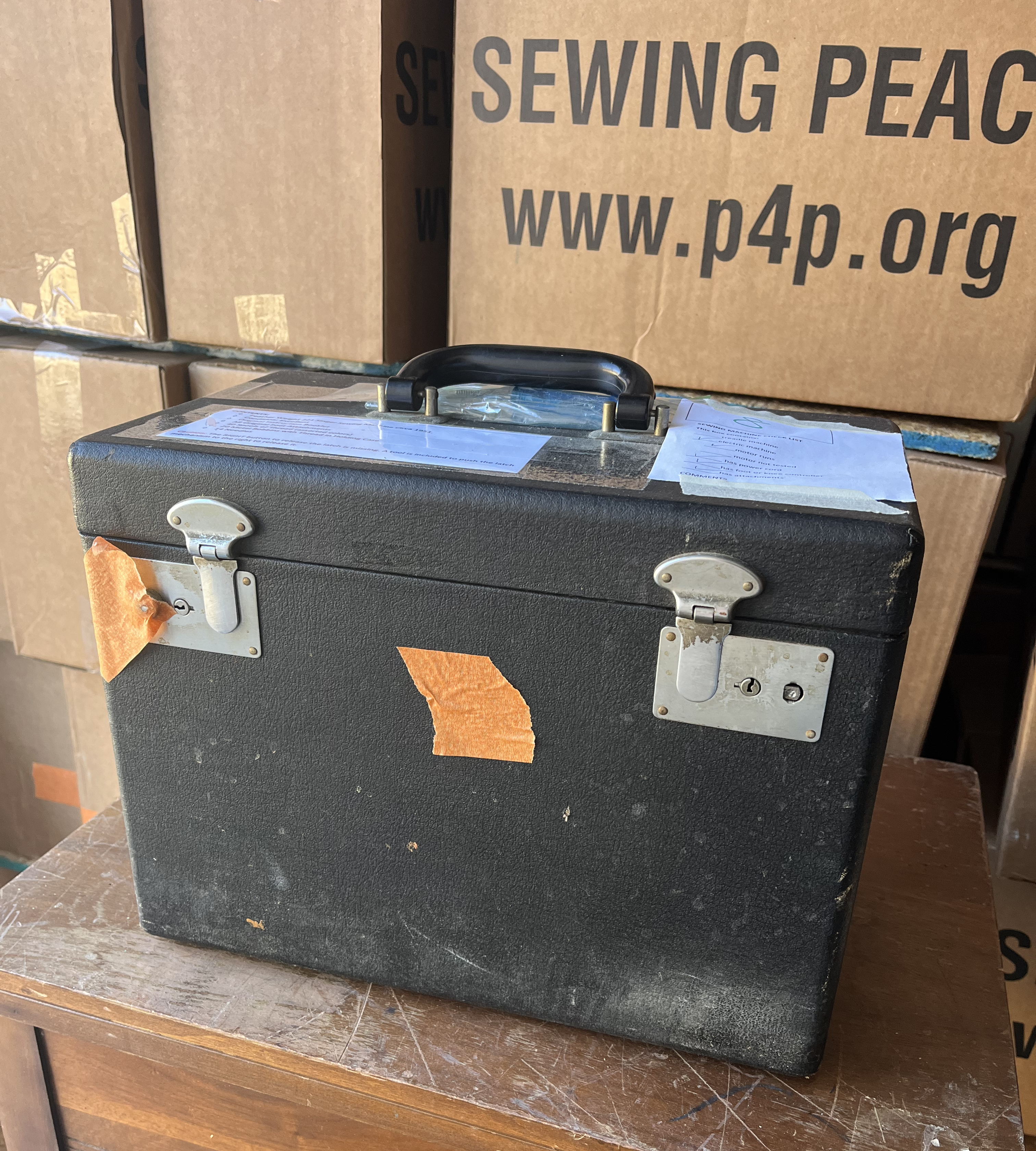
There are hundreds of stories to be told about the team in Vermont. Without fail, there are always a couple interesting stories that come out of each collection. Take for example this small time-capsule that was donated to them this year.
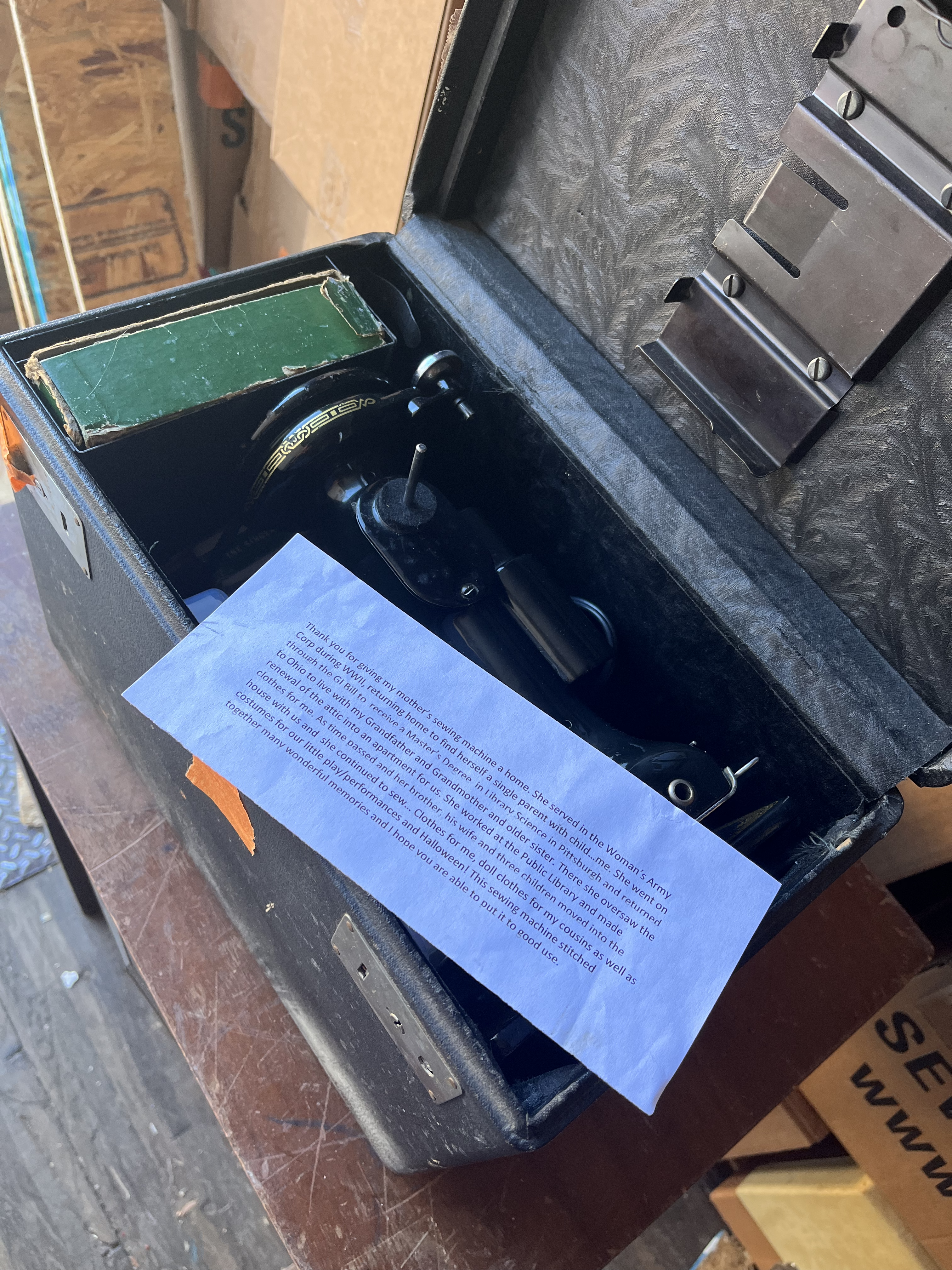
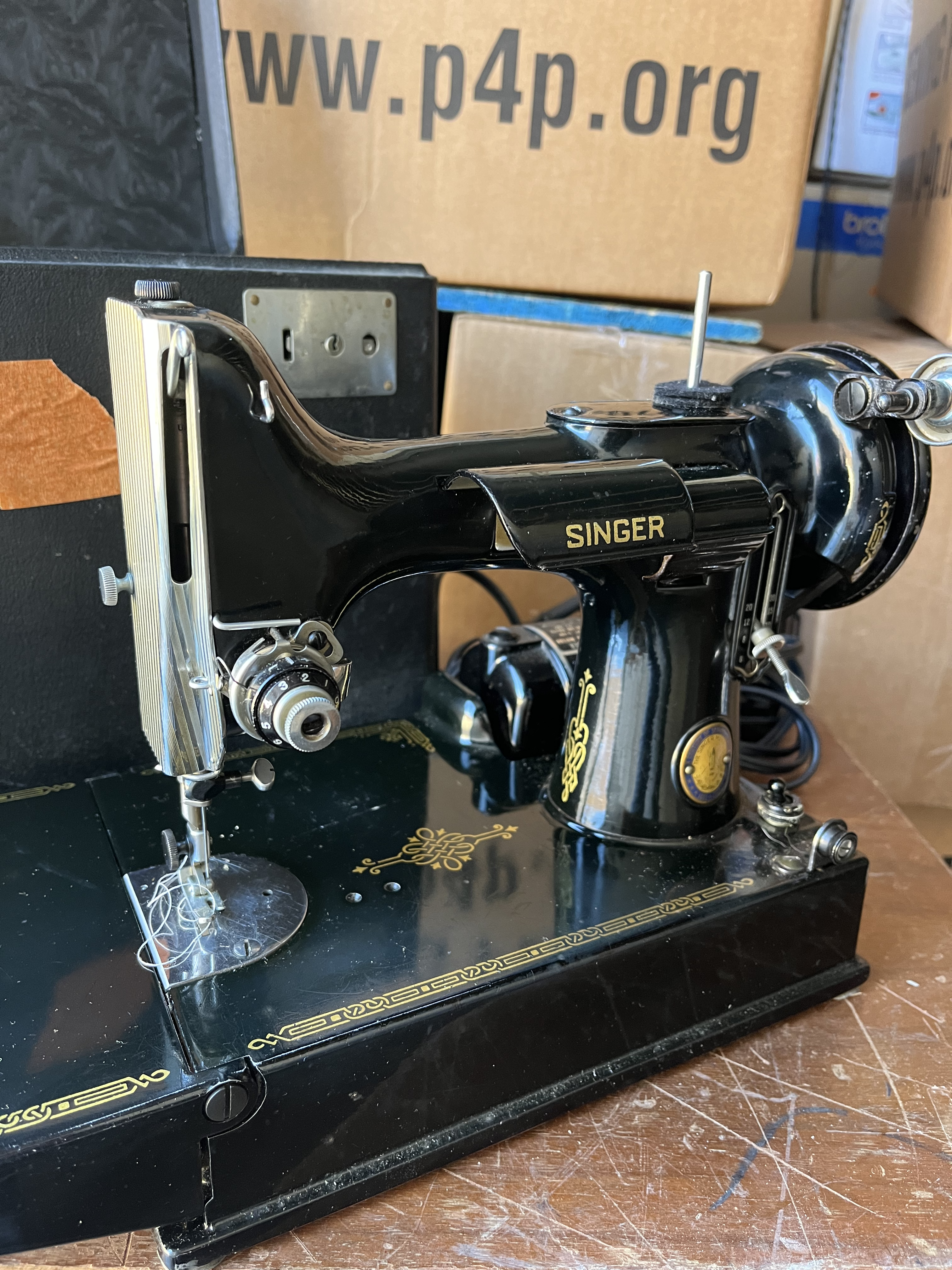
This Singer Featherweight was donated by an unknown individual at this year’s collection. The VT team checks each sewing machine and assesses its condition to help us identify machines that may need to be serviced once they get to New Jersey. Inside this inconspicuous black box there was this note.
Thank you for giving my mother’s sewing machine a new home. She served in the Woman’s Army Corp during WWII, returning home to find herself a single parent with child — me. She went on through the GI Bill to receive a master’s degree in library science in Pittsburgh and returned to Ohio to live with my grandfather and grandmother and older sister. There she oversaw the renewal of the attic into an apartment for us. She worked at the public library and made clothes for me. As time passed and her brother, his wife and three children moved in the house with us and she continued to sew — clothes for me, doll clothes for my cousins as well as costumes for our little play/performances and Halloween! This sewing machine stitched together many wonderful memories and I hope you are able to put it to good use.
We will be doing exactly that, putting this machine to good use by sending it to a partner program abroad. While this story of a sentimental machine that represents a lifetime of stories is specific to one person, the overall sentiment is still a very real theme today. We’ve reported on a multitude of women in situations like this. Whether to people displaced by war, bearing a child alone, or supporting a house full of family members, we aim to provide machines to create change. Machines like this small Singer can provide a financial bedrock through a business endeavor or simply brighten the day of a child wanting a costume. No matter what is being made, our aim is that the result is one of progress and peace.
The Pedals for Progress Mission: To empower sustainable economic development by recycling bicycles and sewing machines from the US and shipping them to motivated people in the developing world.
Our goal is to make bicycles available in areas of the world where they did not exist or are in very short supply. In order to accomplish this goal we have to find overseas partners capable of distributing our bicycles effectively. When you bring a commodity into a marketplace, capitalism is the most effective method of distribution. Yes, we sell or our partners sell every bike sent overseas. Just because you sell something doesn’t mean you have to charge a lot. But the act of selling brings order to the act of distribution. It also brings the funds that help pay to ship the bikes overseas and run the distribution facility. Lastly human nature: people take much better care of things that they pay for.
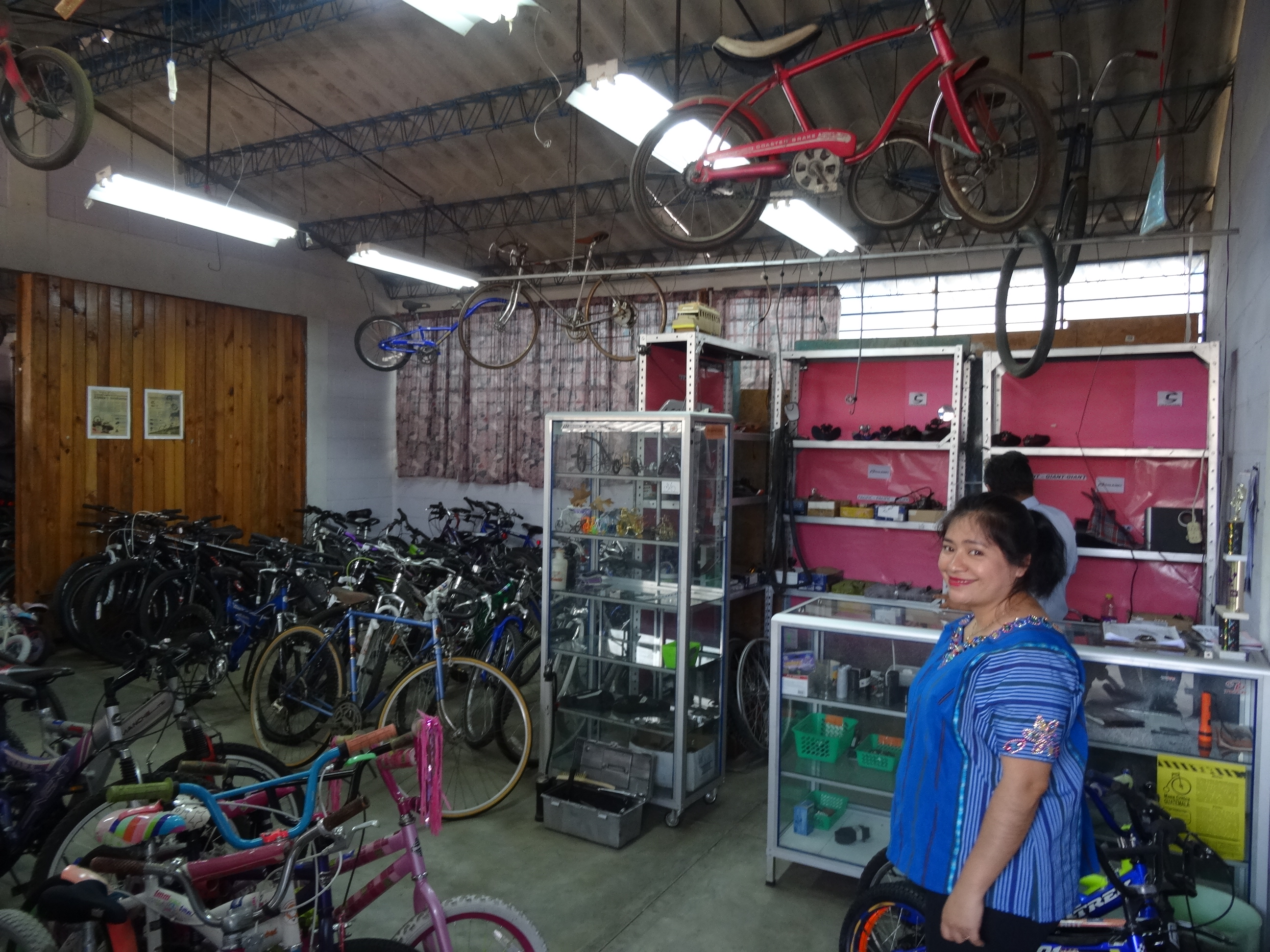
Our partner overseas needs a storefront, some mechanics, an accountant, sales people, and a manager. By selling our bikes at low cost they can still manage to employ those people and help pay shipping costs. Getting two shipments of bikes per year means that there is always work for the mechanics who need to be available for repairs down the road.
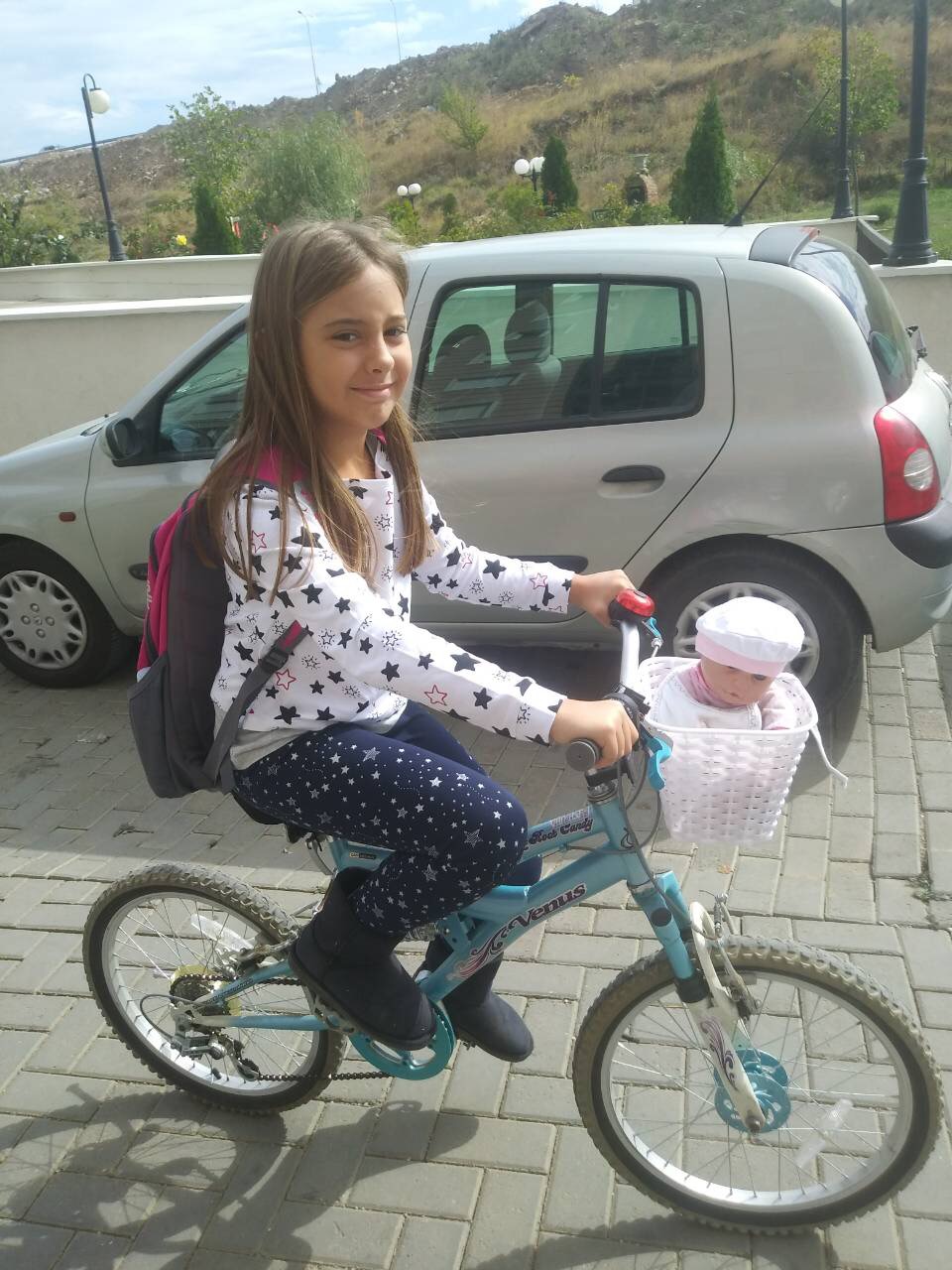
Jana on her way home from school. Photo by her mom, Kristina
There is no way to individually choose who should get a bike and who shouldn’t. That is accomplished through the marketplace. It could be that the poorest of the poor might not make the best use of a bicycle. My focus has always been on working adults and children needing to go to school. In a container of bikes there are usually no two bikes alike. Consumers want to choose among the bicycles because they need the right size, color, type of bike. There is also a great difference in the quality of the bicycles. The most expensive bikes we ship can be sold at higher cost to the working middle class so those funds can be used to subsidize the lesser quality bikes that the poor can afford. Every worker mobilized increases the productivity of society and a rising economic tide does raise all boats.
Pedals for Progress is cash poor, item rich. Unfortunately, we have never been excellent at raising funds, but we excel in raising in-kind value. We collect hundreds of thousands of dollars of sewing machines and bicycles every year and transfer that wealth to the poorest countries of the world. Bikes and sewing machines generate income. So not only have we enriched our customers with the value of the items but each of those items will go on to create more revenue.
Pedals for Progress will enter its 34th year in February. We have survived the economy going up and down, the great recession, the pandemic, and the retirement of the founder. With the brilliant energetic young new leadership of Alan Schultz as President, I am confident that the organization will continue to deliver hundreds of thousands of dollars of material aid overseas annually.
Donate bicycles and sewing machines to developing countries
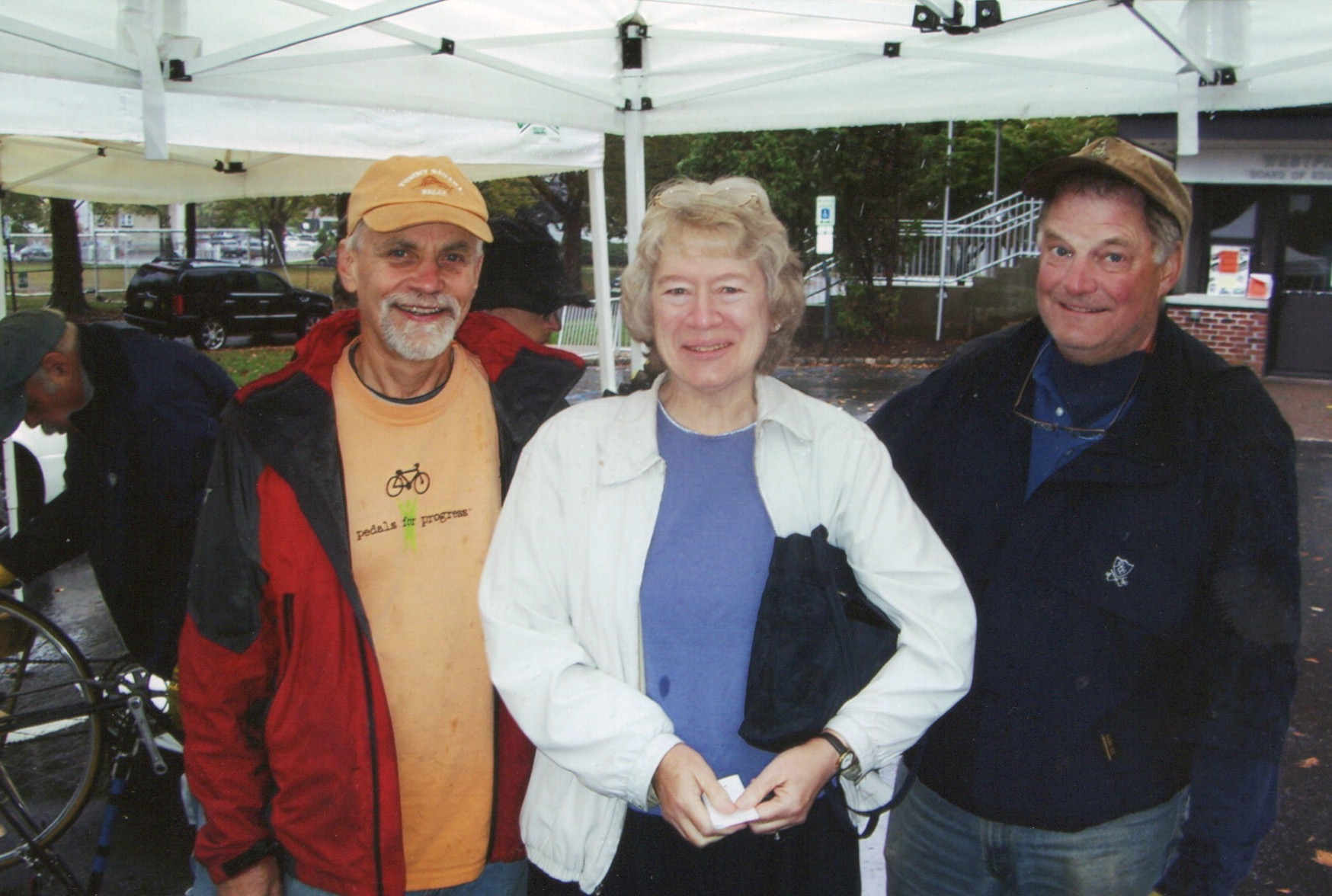 The Westfield Rotary Club is one of these legacy groups we have partnered with for decades. Since 1997, the Westfield Rotary Club has hosted collections with us every year, generally during the same month at the Westfield BOE building. The club is filled with many long-standing members who have rallied together in support of our cause. Each of their collections feels like a homecoming game of friends and neighbors coming together each fall for the big day.