Like most young men, Maximiliano Solorzano started out working in the coffee groves in San Miguel de Dueñas, 20 miles outside of San Andrés, Guatemala. Plantation work is a common occupation in this region that sits in the shadows of the volcano El Fuego and walking to these groves and traveling about this hilly region takes a physical toll on any strong individual. When Don Max was approaching his 20th birthday, an illness that almost took his life permanently took the strength from his legs. Climbing the steep slopes to work for the coffee growers was no longer an option. He still had his nimble hands and the desire to work and be productive so he began to take on basic repair jobs around the area even though these were not initially profitable or consistent.
A consignment of bicycles from FIDESMA transformed his small itinerant subsistence into a steady and relevant business. The bicycle sales and repair keep Don Max and his family quite busy. The bikes themselves are a lifeline for the many other people in the area who continue to work in the groves. These days, he buys one dozen or so at a time, coming in to San Andrés twice during each container sale, looking for the much-prized and quite necessary mountain bikes. During any given day, Don Max may see numbers of clients coming in for more bikes and equipment such as new chains, spokes, and patches for tires. It is no easy feat to climb these hills; they slope so dangerously that one would expect the groves and gardens planted on them to simply slide down into a heap at the bottom. The travel is time-consuming on foot and the roads are nothing more than wide paths lacking maintenance. The road bikes that initially came to Don’s shop almost 27 years ago were still better than no wheels, but the influx of mountain bikes and their all-terrain wheels is what really turned this area into a “bicycle city” and created a demand for more bikes and an opportunity for new businesses to develop.
Opening up a new program—the potential of making some substantial change for the good—is always very exciting. Last May we loaded our first container to the Vinh Long Union of Friendship. ViUFO has three branches in the rural delta and other rural areas of south west Vietnam, Vung Liem and Tra On which are in Vinh Long province and Tan Phu which is in Dong Nai province. The program met with great success.
While opening a new program in a new country is exciting, having been successful and now loading the 2nd container is exhilarating. On June 2, 2012, with the financial backing of the Dariu Foundation, based in Switzerland, we are loading our 2nd container for Vietnam. Although Vietnam is almost exactly on the other side of the world, it actually happens to have the least expensive shipping costs of any of our overseas programs.
The successful entry into Vietnam of our container of bicycles is the accomplishment of the dedicated work of Nguyen Van Hanh of the Dariu Foundation. Hanh waded through a myriad of red tape and regulation to secure the import permits. And now we are about to do it again!
A giant thank you to all of the donors of bicycles in late May, your bikes will soon make a long journey to their new home. A similar thank you to all of the collectors, who took the time to take off the pedals and turn the handle bars so that we have the bikes ready to go.
UNITY IN DIVERSITY FOUNDATION (UDF) is a Non-Governmental Organization and Non-Profit Making. Registered under Companies Ordinance (Cap 212) Companies Limited by Guarantee no having a share Capital. Registered on September 28th, 2004. Certificate of Incorporation No 50181. Also we have certificate of Compliance of Non Governmental Organization Registered under Vice President’s Office given at 13th March 2006. Our Registration No is 1597. Was founded for the following reasons. To unify, train and empower financially diverse expertise of idle expertise in different trades for the purpose of running their projects effectively.
OUR VISION. UDF envisages seeing that the idle expertise are unified and empowered.
OUR MISSION. To identify, unify, and offer training in their respective expertise for the purpose of running projects that will contribute towards the increase of the national economy and to procure and manage funds to be provided to the trained grantees for using them in running their projects.
OBJECTIVES. (a) To run educational institutes from grass-root level that is Nursery school, primary school, secondary school, vocational training school, secretarial, business/commercial, tourism etc. (b) To assist the marginalized sectors of the community by providing them with relevant education and information in order to assert their rights and seek improvement of their living conditions with particular emphasis on women, street children, orphans, disabled and HIV/AIDS victims.
THE PROJECT OF BICYCLES. The Bicycles project will help the idle expertise of Tanzania who were walking on foot, transporting goods on their heads, now will be using the bicycles for transportation of agricultural crops from their farms. The bicycles will be used by women and men in productive activities. Also the bicycles will be used by students who are walking 7 kms to 10 kms going to school every day. Also the bicycles will be used by women who are walking 6 kms to 10 km seeking water. The bikes will be doing a lot of activities such as carrying pregnant mothers from the village to town. Where there is no means of transportation the bikes will be carrying sick people and pregnant mothers.
THE PROJECT OF SEWING MACHINES. The sewing machines will be used to empower idle Girls in Tanzania, idle orphans, idle widows, idle women groups, idle youth group who are lacking employment and will be employed by this project. Due to the high movements of girls who are migrating from the villages to town the only solution is to provide them with sewing machines so that to lessen them from engaging into prostitution, drug abuse, unwanted pregnancies, theft, sexual abuses, etc. The sewing machines will provide them with employment for their self sustainability, self reliance and self employment. The sewing machines will help also the people living with HIV/AIDS and women groups who are idle. They will benefit from this project so that they may be encouraged into productive activities for improving the national economy by making different clothes like table cloths for decorating the tables and selling clothes to other nearby countries like Malawi, Zambia, and DRC. The sewing machines will bring a lot of changes soon because we have so many teachers who can teach them. It takes only three to six months for a young lady to master the sewing machine.
Through the Project of Bicycles and Sewing machines the vision of UDF which is to empower the idle expertise will be achieved. Also the vision of MATABE to Make Tanzania Better will be achieved effectively because everyone will busy working and our economy will be improving day after day and there will be no famine, no drug abusers, no prostitution, the kids will be attending the school well, at last everyone will be smiling in this world.
The night of April 20th, 2012, was an especially inspiring evening for P4P. Gathering in the intimate space of the Hunterdon Medical Center auditorium, we sponsored two wonderful presentations. The night was dedicated to a talk by Señora Maria Margarita Caté de Catú, founder of FIDESMA (Foundation for the Environment and Sustainable Development), whose organization runs economic-development programs in the rural highlands of her native country, Guatemala. Many of the programs that FIDESMA sponsors, including agricultural and technological development, are funded by the sales of bicycles and sewing machines that they receive from us.
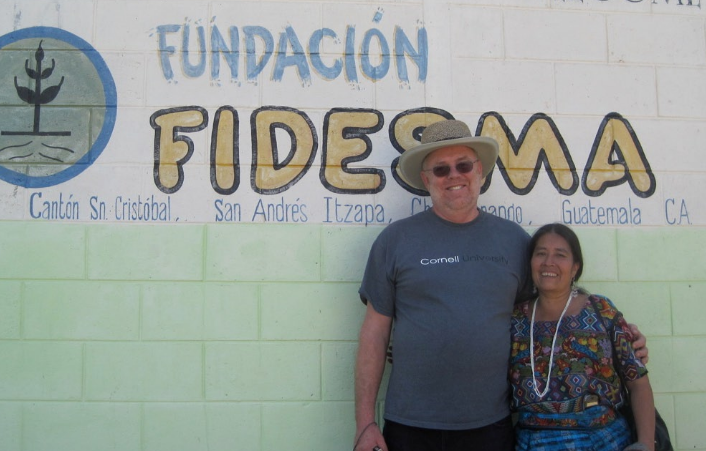
Dave and Margarita in front of the FIDESMA building
Opening for Señora Margarita, so to speak, was documentary film-maker Greg Sucharew who shared the trailer for his upcoming film, The Bicycle City. This is “the story of the struggle, determination, idealism, and hope that has brought about the transformation of an entire society.” Greg’s lens records the tangible changes occurring in Rivas, Nicaragua, thanks to organizations like Pedals for Progress who have energized the economy by making bicycles an accessible commodity for the local population. We all eagerly await the release of this important testament to the measurable success of how American citizens’ involvement in nonprofit goals affects economically limited regions and countries across the world.
On stage, Señora Margarita described the location and mission of FIDESMA before proceeding to highlight the ongoing programs, aided by a wonderful slide show of participants in the foundation’s programs. The audience witnessed students in groups or individually working at computers or attending lectures related to computer proficiency, nutrition, agriculture, and other such personally and professionally useful topics. Photos showed people of all ages and both genders using bikes to get to work or working on these bikes for a living. Multiple family members were shown proudly displaying their bikes and we were treated to the image of a mob of serious competitive cyclists at the starting line of a race. Ladies looked up from their sewing machines and large pots of agave leaves boiled on stoves in a large indoor workroom provided by FIDESMA.
A table sat nearby the stage laden with expertly woven and beautifully colored wraps, purses, scarves, and pouches made by women who have been affiliated with FIDESMA for quite some time. A number of us purchased multiple pieces and, with the aid of our trusty translators, CEO of P4P David Schweidenback and our hard-working web master Reykha Bonilla, Señora Margarita patiently explained the meaning and relevance of the colors and designs of each backstrap-woven textile. She made a point of likening a traditional motif—the partial physical connection of two passing snakes—to the relationship of FIDESMA and P4P. No, not tangled or poisonous, but interconnected and flowing and meeting together even though moving independently. It really was a pleasure to be able to spend such intimate time getting to understand both the work that was being purchased and knowing where the dollars spent were definitely going. There were lots of smiles and many laughs even with the slight delay of the language barrier.
Since a warm November day in 1991, we have shipped a whole lotta bikes to Rivas, Nicaragua. If there were a Rip van Winkle in Rivas, he would awake to a city he could not recognize. Old Rip would have never seen dedicated bicycle lanes along the Pan-American Highway with traffic lights for bicycles to cross the formerly dangerous highway. Bicycle cargo vehicles and bicycle taxis filling the streets with the vibrancy of a bustling economy. At the beginning and end of the school day, a giant torrent of students from all around the surrounding countryside streaming in to Rivas for their daily lessons at school.
Our partner, Ecobicicletas, proudly situated on the north side of the marketplace, is still supplying the community with a constant stream of newly arriving bicycles from New Jersey.
A lot has changed for the good in Rivas since 1991, and 21,000+ P4P bikes helped make that change happen. Check out the great trailer of this upcoming documentary, The Bicycle City (TheBicycleCityFilm.com).
Señora Margarita is the founder of the Guatemalan foundation FIDESMA (Foundation for the Environment and Sustainable Development). The mission of FIDESMA is to promote the sustainable development of families and communities by promoting programs and projects in the areas of education, with technical assistance and economic aid for conservation, and protection of the environment in the rural regions of Guatemala. P4P has sent over 6,000 bicycles and close to 200 sewing machines to FIDESMA since 1999 to help support these programs.
Señora Margarita will give the presentation explaining in detail their programs that they run from their foundation headquarters in the rural highlands of her native country. FIDESMA has established facilities in San Andres Ixtapa from which they implement their programs in all of the surrounding communities.
Joining us will be documentary filmmaker Greg Sucharew sharing his trailer for the upcoming The Bicycle City. Based in Rivas, Nicaragua, this is “the story of the struggle, determination, idealism, and hope that has brought about the transformation of an entire society.”
For all of the supporters of Pedals for Progress and for those interested in discussing the sustainable and measurable success of partnering with a nonprofit, this is a wonderful opportunity to hear first-hand how American bicycles and sewing machines have had a significant impact on many Guatemalan and Nicaraguan lives and how important it is that we are able to continue supporting FIDESMA and related endeavors.
by Rev. Chris Vande Bunte, Colts Neck Reformed Church, Colts Neck, NJ
Spring 2012 InGear
People begin asking about it usually a month or two after we’ve just done it. Calls come in from our town and surrounding towns, “Are you that church…?” Participants begin strategizing weeks and months ahead about how things could run more smoothly, how we could inform donors more easily and effectively compared to last year. For the Colts Neck Reformed Church, our Pedals for Progress Bicycle Collection has become an anticipated and rewarding annual event for our congregation and our community.
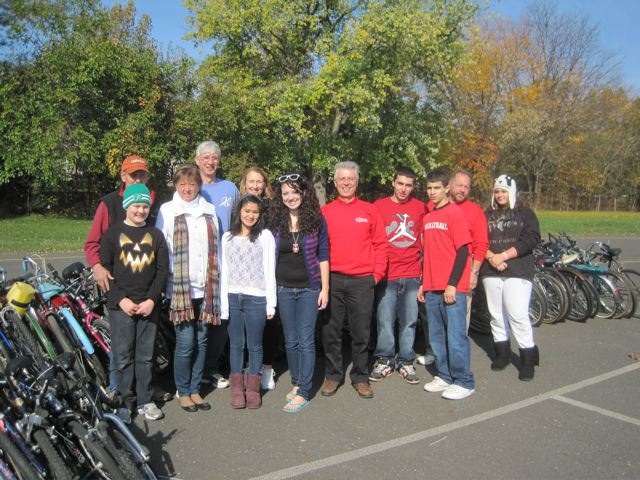
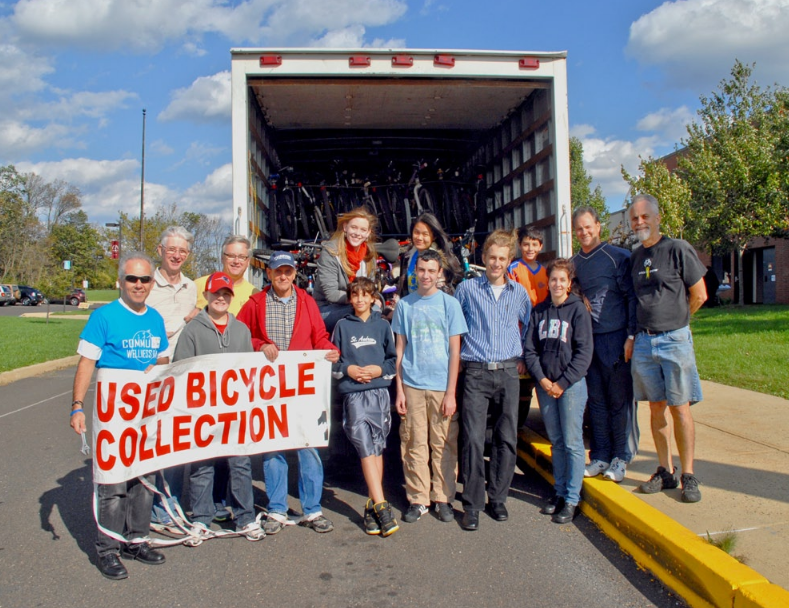
The 2011 Collection Crew in Colts Neck
For our congregation, the Pedals Collection is a chance for families, adults, and especially our teens to lend a hand and join together for a day of local hands-on volunteering that has far-reaching effects. It seems that each year more and more people want to help—who wouldn’t want to be involved with a successful program? Mechanically minded members who are collection veterans take the lead in showing others how to prep bikes and ready them for shipping. Those less mechanically inclined have signed up to be greeters and drop-off directors for people donating. They have been essential in getting the word out about Pedals to those who come to drop off a bike. Besides, it never hurts to give a friendly hello to a visitor!
We have seen those who’ve participated in our collection come back year after year to help. Our congregation is thrilled to have such a local experience have such a global impact. Through this single event each year, we join in a multi-generational mission endeavor, have the opportunity to welcome many new visitors to our church property and share our commitment to mission with our community.
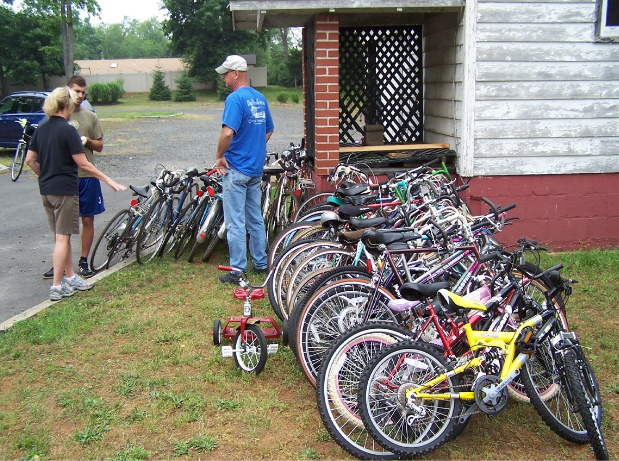
Bikes ready for the P4P truck in Colts Neck
Past years have seen sometimes two annual collections and up to 300 donations, but that changed a bit a few years ago when we saw our donations dip due in large part to the economy. We decided to get creative and worked to get the word out even more. We have found our local newspapers and magazines very receptive to print and online community event postings with a number coming to cover the collection each year. We have also contacted our town about the annual clean-up day they hold. Our public works department receives a number of bicycles in good condition each year during our clean-up day as people clear out their garages. A simple phone call saves them from the dump and instead gets them put aside for our collection a few weeks later. With repeat donors and increased publicity efforts, we’ve seen our collection numbers rise to some of our best efforts ever. In addition, we’ve found more bicycle donors willing not only to contribute a $10 donation, but even more to support Pedals. We’ve even begun to see sewing machines in our collection too!
As a church mission leader, I don’t think you can go wrong working with Pedals for Progress. Their staff can help you develop a first-time collection and instructs you along the way each year. By hosting a collection, the congregation is able to raise its profile in a positive way in the community. In addition, a Pedals collection allows a local mission project to have global reach. The Colts Neck Reformed Church is excited not only to host an annual collection, but also to make Pedals for Progress part of our annual benevolence-giving to help them continue their mission around the world.
By Dr Jerry Agasar, Committee Chair of the Newtown Rotary club
Spring 2012 InGear
The 2010 Newtown Rotary Club Collection
What a great marriage Pedals for Progress (P4P) and the Newtown Rotary Club has been. Our relationship started back in 2003 when the club was looking to do more service projects in the community, instead of just having fundraisers and donating the money to a particular group. We had become comfortable raising money and being generous with our allocations to various community organizations, but we wanted to become more active in service projects. Our president at the time received a flyer from a South Jersey club, which had run a successful bike collection and asked me to see what the club could do. Having been a 20-year veteran of Rotary, I had experience with other projects and knew that if I surrounded myself with a committed team and we created energy behind the project we should do okay. But I really had no idea what to expect.
For those who are not familiar with The Rotary Club, it is first an international service organization. Basically, we are local clubs that are connected globally. The motto of Rotary International is “Service Above Self.” It’s all about giving back to your community, locally and beyond.
The 2011 Newtown Rotary Club Collection
In our first collection, we received 128 bicycles, which was great for the people in Central America who received them. But it was also a really positive experience for the Rotarians, creating an energy and nice buzz with our members. The P4P project inspired both young and more mature members and brought them together. Our members also connected to the area students from the Interact Club, the high school version of Rotary, from Council Rock High School North. They assisted young and not-so-young Rotarians in breaking down the bicycles to prepare them for shipment overseas.
After our initial success, I didn’t understand how we could go back the very next year in the same community and ask for more bike donations. During the second collection, we received 170 bicycles. The third and fourth years we collected over 300 bikes. P4P had to make two trips. It was amazing. Our club members were brought together in service, connecting to each other and the Interact students. But more importantly we helped many people internationally.
As a middle-school teacher, helping twelve- and thirteen-year-olds understand the importance of giving back to their community and their world is just as important as teaching them how to infer meaning from a text, how to organize their writing, or how to solve for x. I am lucky enough to work in a building where community service opportunities are abundant and there seems to be constant flow of fundraising for different causes. When I started teaching here at Tohickon Middle School in Doylestown, PA, eight years ago, I, along with the team of teachers I worked with, wanted to create a community service activity that stood out from all of the other options already in place. We wanted something that would not only help others, but would give our particular team of students a chance to learn something new and important and provide a chance for them to work together to build a strong relationship. One of the teachers on our team had heard of Pedals for Progress and suggested that we hold a bike drive. After a little research into the organization, we decided to give it a try.
Since then, we have held eight bike drives—one each year—and have collected over 800 bicycles and approximately $9,800.
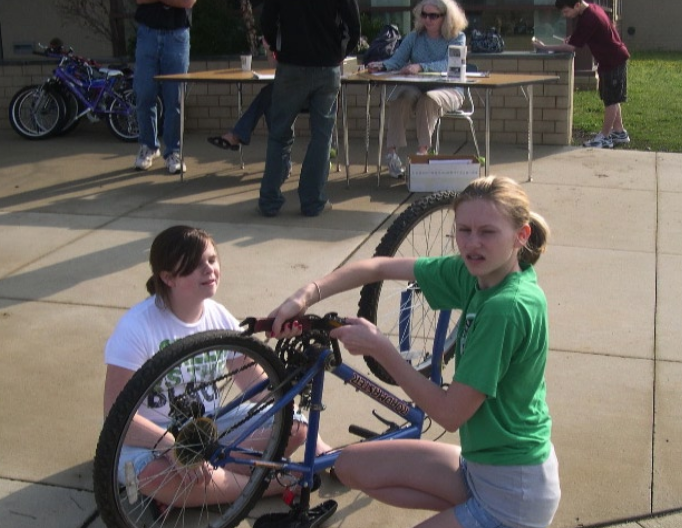
Students preparing a bicycle for the shipping container
Along with the knowledge that the lives of over 800 individuals have been improved, the students involved in the bike drive have a great learning experience. Each year, our new team of 7th graders is presented with the task of organizing the bike drive. To do this, the students learn many life skills that cannot be taught in a classroom. First, students must research the countries where the bikes might be sent and attempt to grasp the need present in those countries. In a time of cell phones and computers and iPods, it can be difficult for kids to understand that there are people in the world who consider running water and transportation by motor vehicle luxuries; so, having the students research the countries with which Pedals for Progress partners gives the students a glimpse into how people in other, less fortunate parts of world live. This not only helps the students realize how the bikes will improve the lives of those receiving them, but also helps them understand how fortunate they are.
After researching the countries, the students work together in groups to develop an advertising plan, which includes designing a flyer that they can distribute in their neighborhoods and communities. It would seem that getting people to come to our bike drive each year would get harder and harder, being that it is held in the same town and advertised to the same community each time. One would expect that the flow of used bikes would run dry sooner rather than later. However, with our new crop of seventh graders each year come new ideas and new motivation and they always seem to get the word out about the drive to people who have not been reached before. This has led to our successful run of bike drives. Working in their groups to advertise the bike drive, the students learn the benefits of teamwork. This makes the relationships among our students stronger. Throughout this process the students also gain some insight into how to market an idea, which is a very important and relevant skill to have in today’s world.
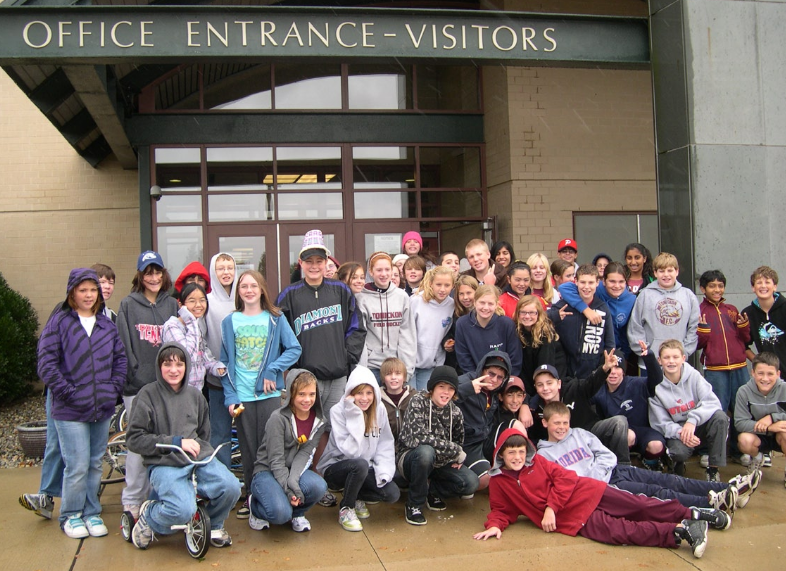
Students in front of the Tohickon Middle School Building
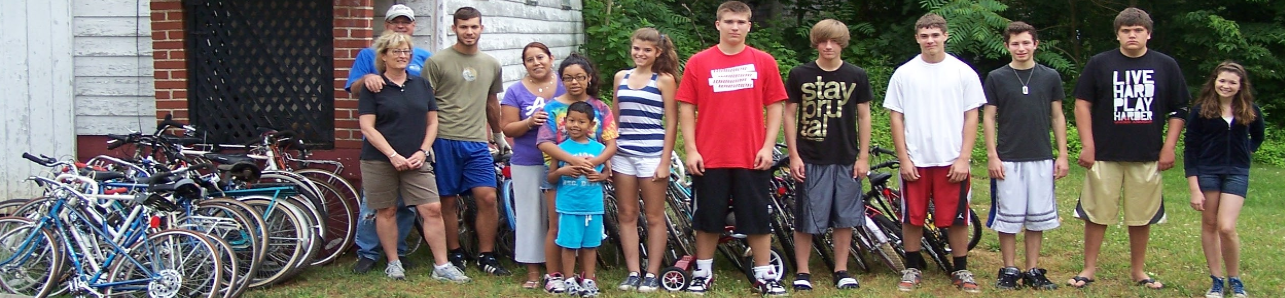
after their collection
Finally, after researching and planning and advertising, comes the day of the bike drive—the day when all of the hard work and effort put forth by the students pays off. Over our eight years holding a drive, we have collected bikes in wind, sun, rain and even a rare October snowstorm. Each time, no matter what the weather, it is a day of teamwork, fun, and memories. The kids enjoy working together to “break down” the bikes to prepare them for shipping and assist the donors with the bikes they are coming to deliver. The people who come to donate are always so grateful to get rid of the bikes that were clogging their garages and that they didn’t know what to do with. This aspect of hosting a Pedals for Progress Bike Drive is such a perfect model for a community service activity.
Everyone wins. The students gain invaluable life lessons and teamwork skills. The people who donate are happy to have found a home for their unwanted, but not unusable, bikes that were taking up much needed space and gathering cobwebs. Most of all, the lives of the individuals who receive the bikes in different parts of the world are forever changed. Getting to work or school, reaching needed medical attention, and accessing water and food sources all become easier for those that the bikes reach. Hosting a Pedals for Progress Bike Drive is the ultimate win-win and we look forward to doing year after year.
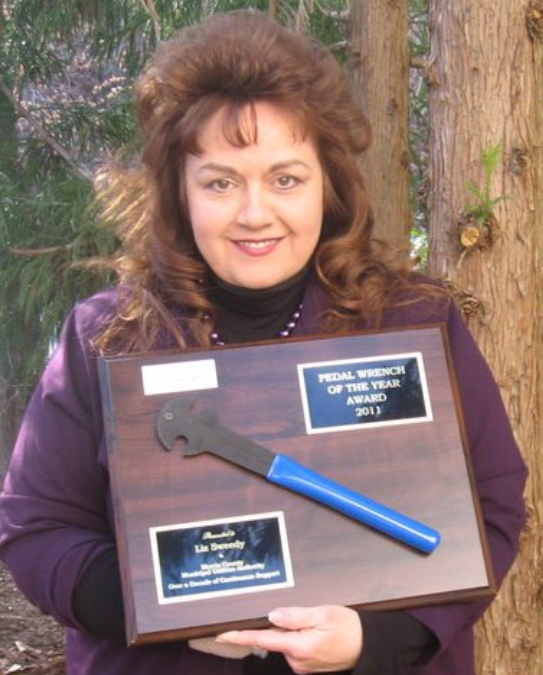
The philanthropic spirit descends upon most of us in various ways and at differing frequencies throughout the year. We may tire of the interruptions of our favorite radio programs and figure our $5 will get the fund drive chatter to end sooner or we may be unable to resist the angelic face of the child at the door shaking the collection jar. But what truly differentiates the sporadically involved donor from the civic minded, community service for the community’s sake organizer? The tireless and ongoing dedication to and enthusiasm for a cause. Liz Sweedy is one of those enthusiastic people. Since 2003, she has been in charge of coordinating the annual Pedals for Progress bicycle collection events for the Morris County Municipal Utilities Authority (MCMUA) in New Jersey.
According to P4P’s 2011 Pedal Wrench of the Year award winner, “My passion for P4P has been in full gear ever since our first bicycle collection event occurred, and that’s for two reasons. First, I’m very happy that unwanted, used bicycles have been spared from spending an eternity in landfills. Second, I’m delighted that these bicycles, which I fondly call ‘precious gems,’ provide assistance and joy to folks whose lives are virtually transformed as a result of having them.”
To date, this municipality has coordinated the collection of literally thousands of bicycles. The members of the MCMUA are not the sole participants in this collection process. The County College of Morris in Randolph donates the use of one of its parking lots for the County’s June collection day. Members of a local Boy Scout troop volunteer by unloading bikes from vehicles and doing some mechanical preparation so the bikes can be shipped. Local newspapers, cable TV programs referencing P4P, or signs advertising the event are what draw bicycle donors who happily include $10.00 along with each bike, understanding that this helps alleviate transportation costs.
This is only one example of groups of people from disparate organizations coming together and coordinating an ongoing, efficiently run bicycle donation event that repeatedly draws enthusiastic participants. The Boy Scouts of America and some Rotary clubs have offered financial assistance for events similar to the one sponsored by the MCMUA and some municipalities receive the $10.00-per-bicycle fee from local service organizations. This makes it possible for people to donate bikes that are occasionally collected from roadsides or illegal dumping sites without having to reach into their own pockets for the accompanying $10. Another option is to apply to a local municipality for a New Jersey Clean Communities Mini-Grant Clean UP Program. These grants tend to be awarded to non-profit organizations that conduct litter cleanups. The non-profits apply the funds from the mini-grant toward the fee for the bicycles that are found and donated.
One would think that it is not so easy to interest people in participating in a cause, much less year after year; but, when local businesses, organizations, and schools cooperate and dedicate their efforts, the results are often staggering. As Sweedy puts it, “In a nutshell, my organizing and executing P4P collection events causes me to experience all sorts of good feelings. Hurrah for P4P—may its wheels continue to turn!” No matter how near or far the recipients of your philanthropy reside, active and continuing participation in your community has long-reaching and lasting benefits for everyone involved.
Donate bicycles and sewing machines to developing countries
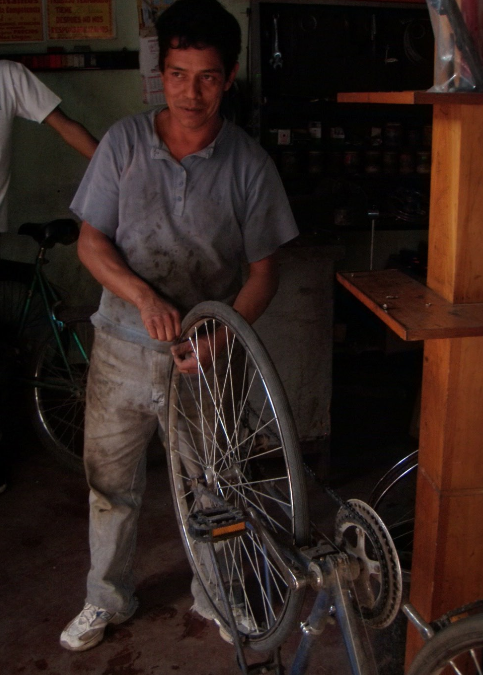 A consignment of bicycles from FIDESMA transformed his small itinerant subsistence into a steady and relevant business. The bicycle sales and repair keep Don Max and his family quite busy. The bikes themselves are a lifeline for the many other people in the area who continue to work in the groves. These days, he buys one dozen or so at a time, coming in to San Andrés twice during each container sale, looking for the much-prized and quite necessary mountain bikes. During any given day, Don Max may see numbers of clients coming in for more bikes and equipment such as new chains, spokes, and patches for tires. It is no easy feat to climb these hills; they slope so dangerously that one would expect the groves and gardens planted on them to simply slide down into a heap at the bottom. The travel is time-consuming on foot and the roads are nothing more than wide paths lacking maintenance. The road bikes that initially came to Don’s shop almost 27 years ago were still better than no wheels, but the influx of mountain bikes and their all-terrain wheels is what really turned this area into a “bicycle city” and created a demand for more bikes and an opportunity for new businesses to develop.