
Category Archives: InGear – The Newsletter of P4P

fall 2021 newsletter

Fall 2021


SUMMER CAMP IN ALBANIA

By Alan Schultz
Fall 2021 Newsletter

On August 19, 2021, on behalf of Pedals for Progress, I had the great privilege to be sent to Albania to visit our partners at Ecovolis, to meet with Ened Mato and the rest of his extraordinary team to get to know them and discuss their operations.

For the past eight months I have been working closely with Dave, Gary, and the rest of the team at P4P, as the newly elected Vice President of Operations. Working for Pedals for Progress since high school has always been a joy for me. The work we do here is truly inspirational and makes any day of hard work loading a container well worth it. I was offered the full-time position and instantly knew it was something I wanted to take on. I was extremely excited to accept the position to dedicate more of my time and skills to our cause of shipping bikes and sewing machines to motivated people in the developing world.

Dave was very aware of the biggest flaw in my resume (and life experience) when hiring me for a larger role in an international organization like P4P. My lack of travel. I had never left the country. The furthest north I had been was Boston, furthest south was the Outer Banks, furthest west was Central Pennsylvania and furthest east was swimming at the Jersey Shore. Lewis and Clark would be ashamed of my lack of westward expansion. Dave knew I needed to learn from the world, to get a better understanding of our mission and what we’re up against.

I woke up one morning at the end of June to an email with the Subject line: Crazy Idea. I opened it and read a thread of messages between Dave and Ened, asking if he’d be interested in hosting me at his summer camp in Jale for a week to give me the opportunity to learn about the world by seeing it on my own. Ened was instantly on board with the idea and more than happy to host me. I was in shock, filled with excitement, anxiety, and joy.
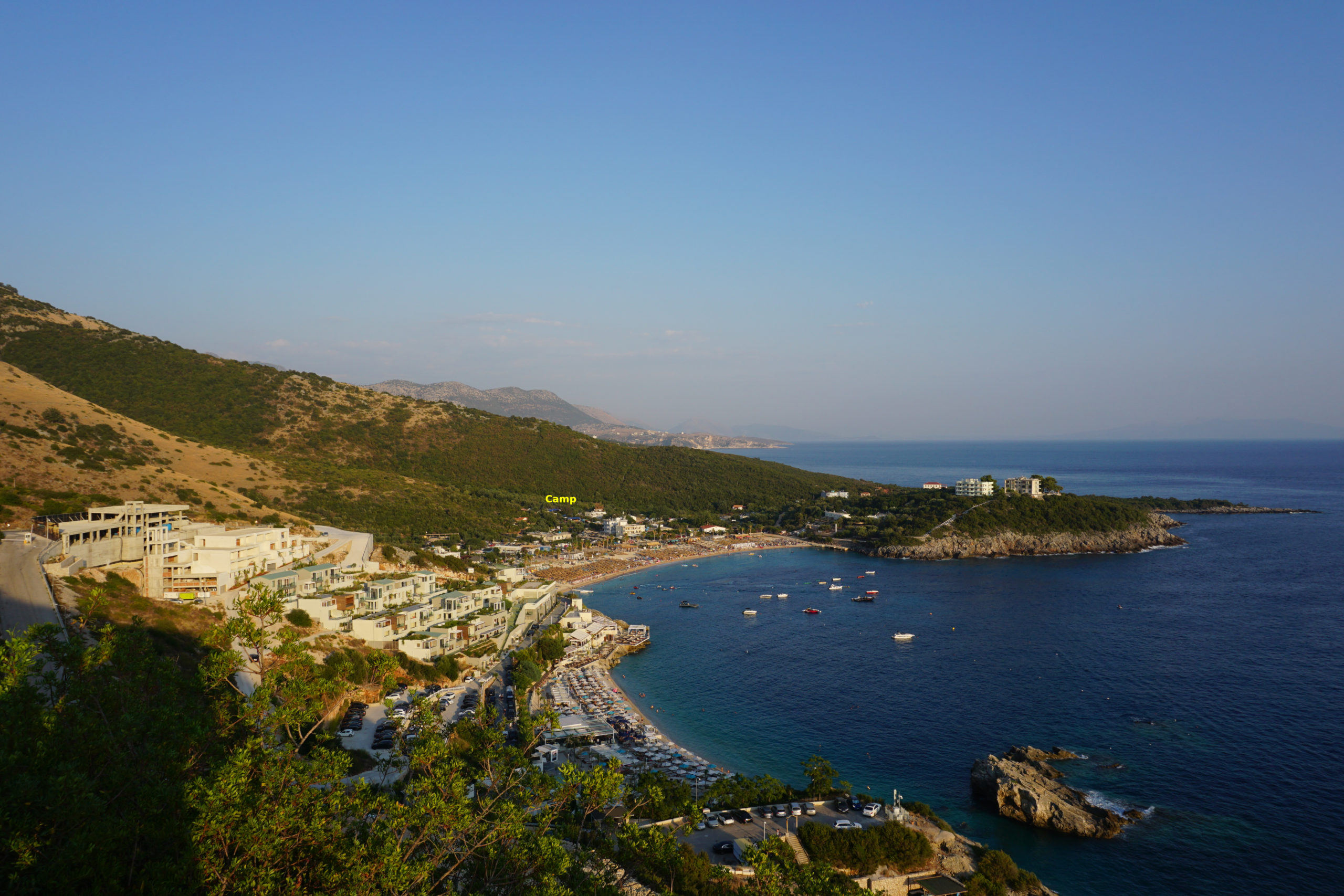
Jale, Albania

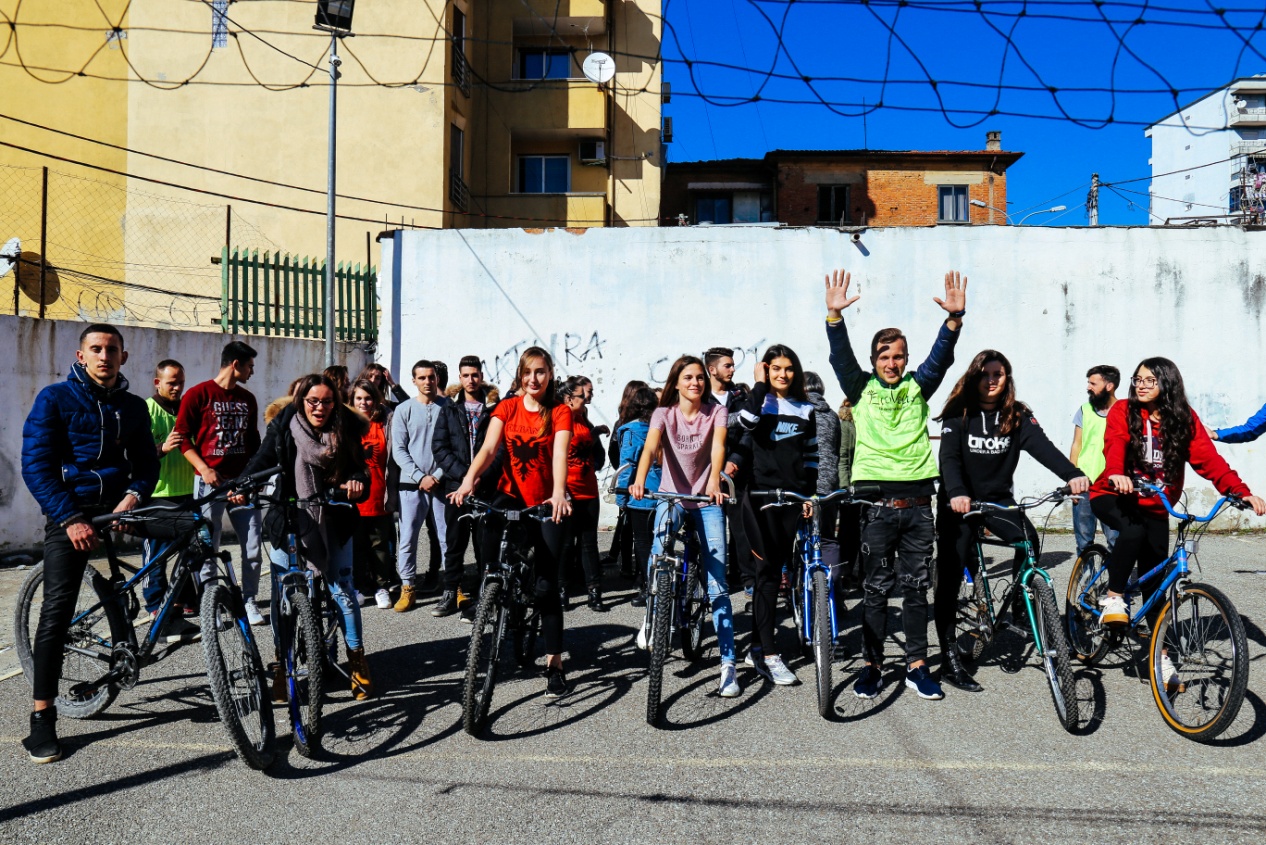
Fast forward to mid-august, I was boarding a plane to Albania alone with a backpack and newly acquired passport on my first journey out of the country thinking “what did I get myself into.” I had often dreamt of going abroad. The experience didn’t feel real stepping outside onto the tarmac at Tirana International Airport. I was picked up by Ervin, a long-time employee for Ecovolis. The four-hour trip from Tirana to Jale was spent getting to know Ervin and the work Ecovolis has done for the capital city of Tirana. Their biggest program is a bike sharing initiative where residents can rent bikes for a very small fee to navigate the city. This greatly helps people commute while alleviating some of the traffic of the small but bustling city. To better accommodate cyclists, Ecovolis also has been pushing the city to create, grow, and maintain bike lanes and other infrastructure that will make it much safer to travel throughout the city. Ervin expressed the great need for bicycle safety and advocacy to draw the public’s trust to this method of transportation. This is something that is essential for any city that wants to successfully reduce traffic and emissions made by cars and buses. Ecovolis does not simply distribute bikes, but is making a difference by having bicycle transportation not just reliable and available, but sustainable and appealing to the public.

Ecovolis in Albania is a fascinating organization as they have a true passion for environmentalism on several fronts. As we made our way to Jale, we traversed breathtaking mountain views overlooking wonderfully blue seafront. Ervin was describing the eco-tourist campground that we would be staying at for the week, one of the many programs Ecovolis is involved with. He had been there for two months prior, and came to Tirana to pick me up and collect more tents and other supplies for the camp. It was one of the many initiatives they take part in to return to nature and help strengthen people’s connection to the natural world. In the off season while not at the camp, they return to Tirana for their bike initiative while also working on other projects like planting trees with local volunteers to revitalize the diminished forest in Lurë.
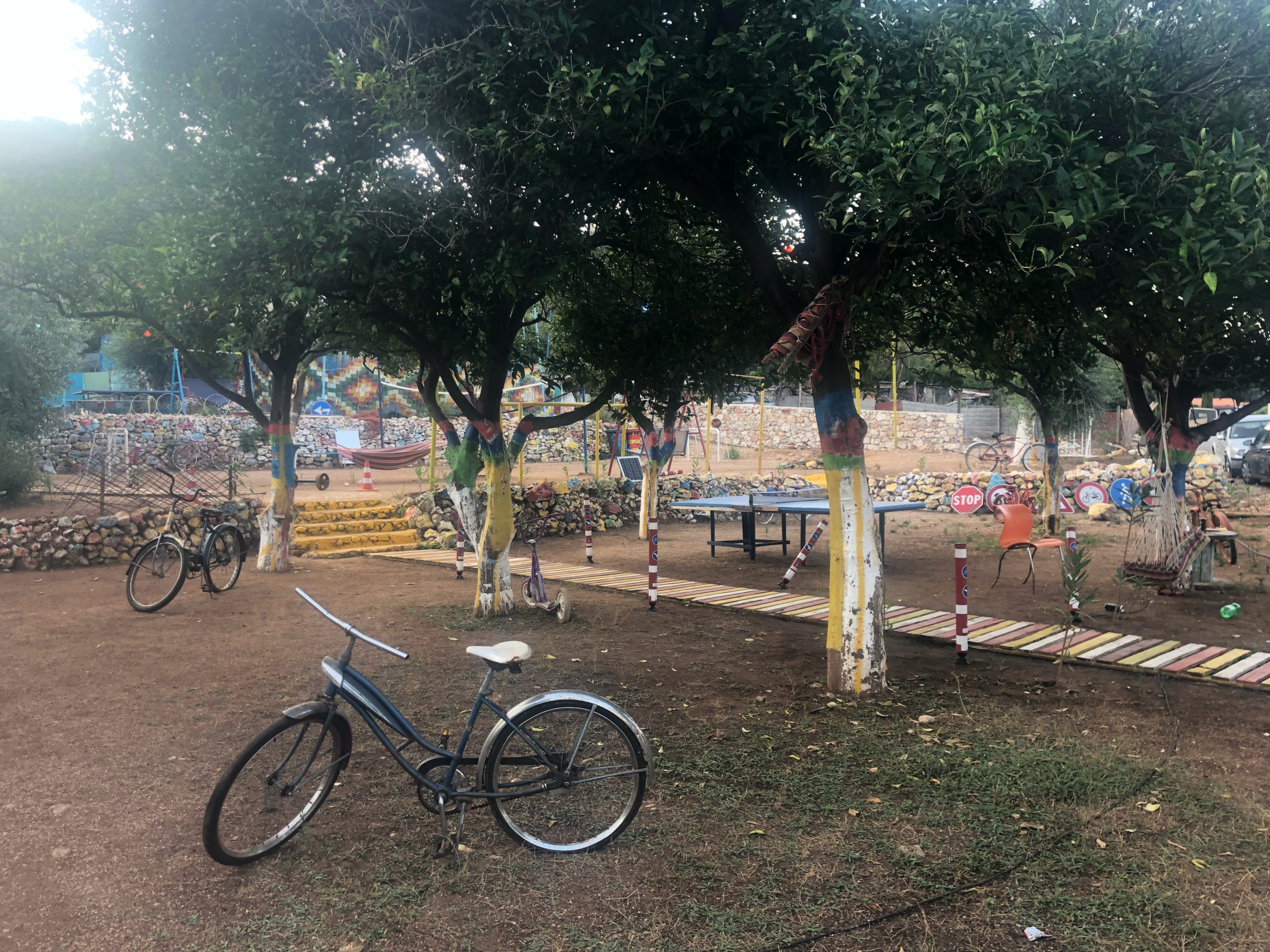
When we arrived at camp, I was blown away at what they have created. Two blocks away from the beautiful beachfront was the entrance to the camp that scaled the steep mountain. It was broken up into several levels. Entering camp at the bottom-most level there was a volleyball and soccer court where young people can play games and relax. A handful of bikes were positioned here and available to anyone at camp, allowing them to ride around the small town and get to the beach. Climbing the stairs that led up to the various levels there were some RV-campers and other common areas. On the third level there was an open-air kitchen and a large area with plenty of tables and chairs for people to gather and eat meals. Further up the mountain, following the rocky steps, I approached the several levels of campground with 150 or so tents placed beautifully under the abundance of olive trees. Ping pong tables, common areas, a bar with drinks, and fire pits were also sprinkled about the area. Painted wooden paths and fences brought an elevated level of color to the already vibrant camp. It was an intimate community with plenty of friendly faces with welcoming smiles.
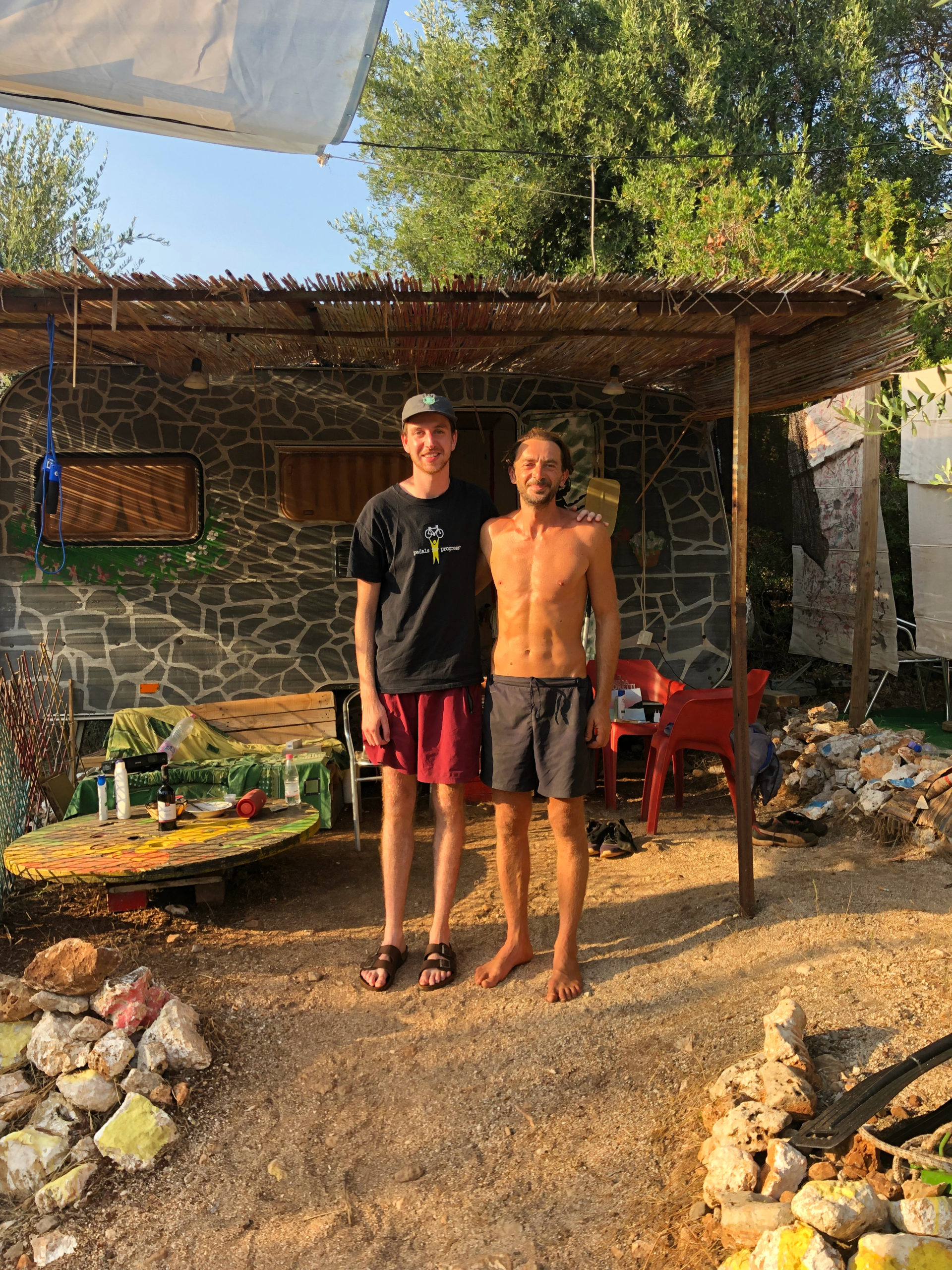
Alan and Ened
Alan and Ened

Settling in, I was finally able to meet Ened, the lead organizer of Ecovolis. He instantly made me feel at home and was extremely hospitable. He told me more about the camp and the many things him and his team are involved with throughout Albania. The camp was set up in the early 2000s with the idea of bringing eco-tourism to Albania to build the country’s economy in an honest, fair, and sustainable manner. Ened is a true trailblazer, inspiring several other camps up and down the coast for others with like-minded ideas of providing people with peaceful eco-tourism opportunities. Ened’s camp has the capacity to hold up to two-hundred people with full amenities. He hosts various youth programs and students throughout the summer. Travelers and other youth from several different parts of Albania and Kosovo are also welcomed and bused to and from the camp. For a small fee of US $7 a day, each tenant has access to a tent, showers and running water, bathrooms, and breakfast and dinner. There is access to an on-site bar with espresso, water, and flavored drinks that cost less than they would at the beach. These funds supplement the camp allowing them to continue to buy necessary food and supplies.
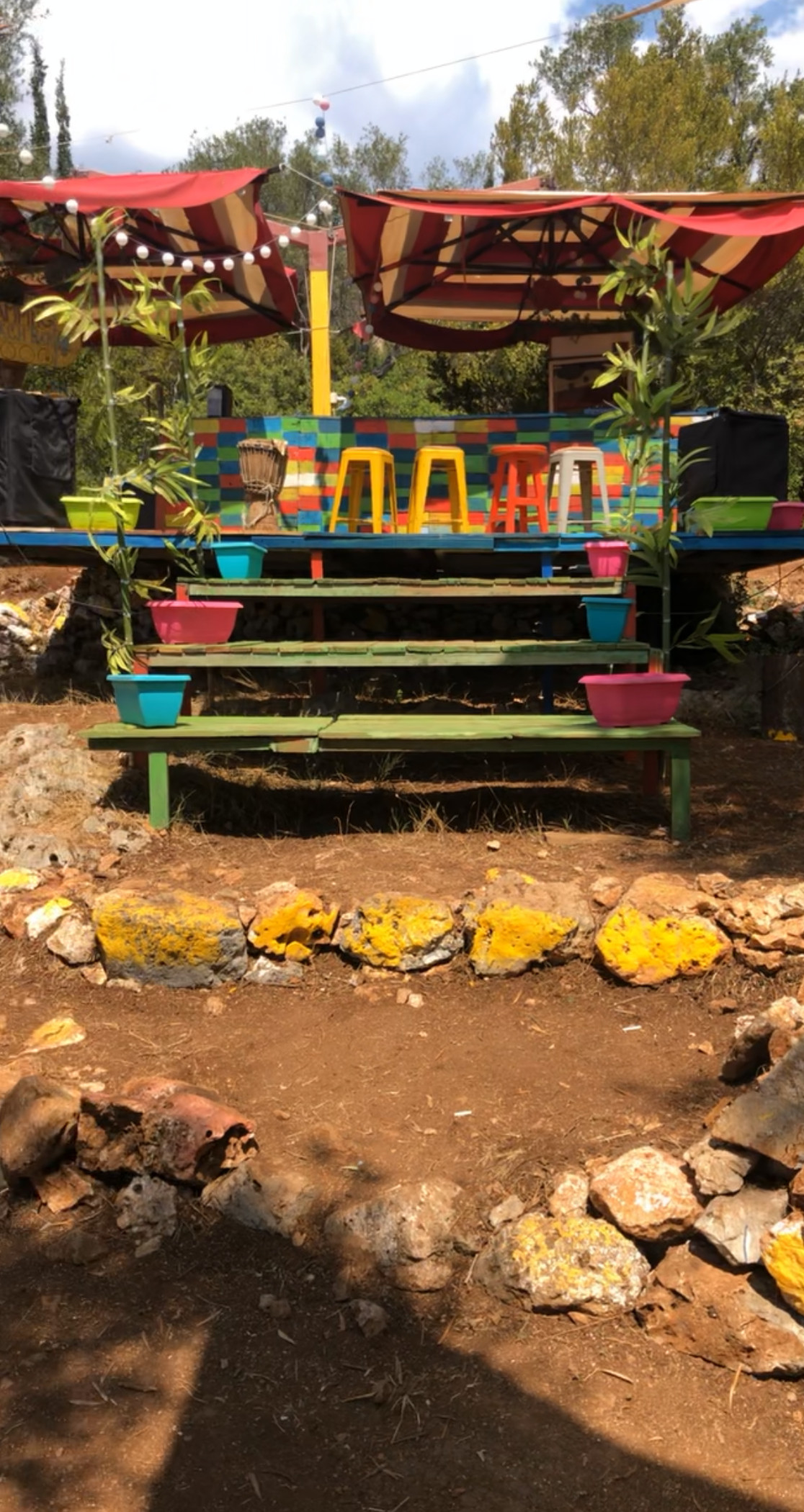
Camp Bar
Camp Bar

Ened explained that the growth of the camp, in its 20th year, has been very promising and stronger than ever. The entire experience is a great way to remove oneself from the typical consumerist vacation that many people grapple with. Cell phones and social media use are frowned upon to the extent of one sign encouraging people to have conversation eye to eye. The culture at camp revolved heavily around companionship and camaraderie. Camp felt tight knit, as if everyone knew everyone.
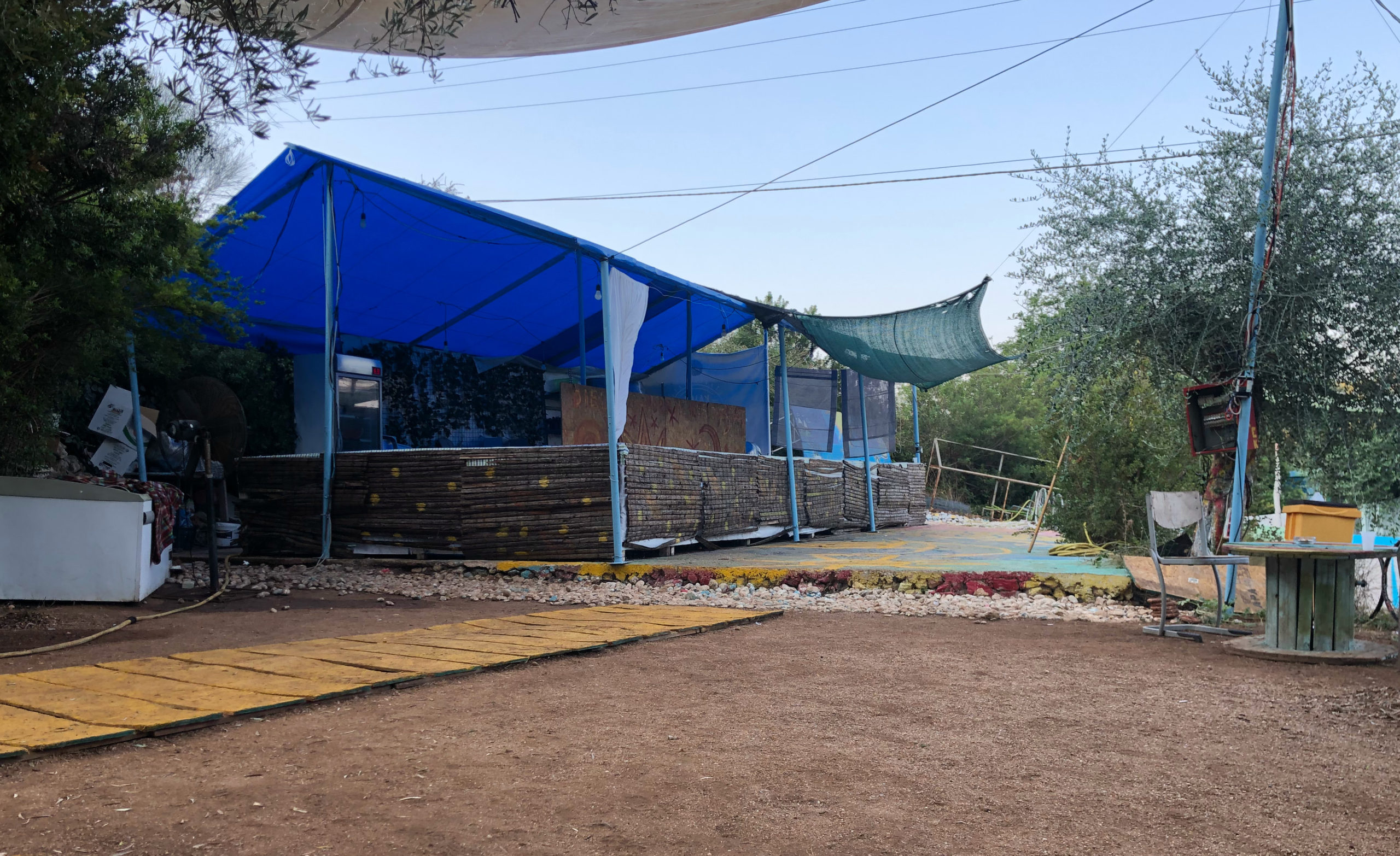
Camp Kitchen
Camp Kitchen

One night, Ened and I were sitting a bit removed from the campfire as many of the other campers surrounded it while listening to a performer sing songs playing an acoustic guitar. We were talking about the mission of Ecovolis and the reason behind the camp. Albania’s history is very dense, especially in the last 50 years as they have grappled with corruption, civil war and reconstruction. Ened has a deep desire to be able to create and maintain a community – his country – of people dedicated to peace and environmentalism. He is proud of what he has created as the camp reflects these desires to create a community of people that are self-sufficient and making efforts to remove themselves from the rat-race of the 21st century. Paraphrasing, Ened said “take for example these kids, what they are doing is so anti-system, they are young and can go down to the bars down below, but instead choose to be here singing around the campfire under the stars.” He continued to explain his greater mission of using the bikes we send him as “soldiers in a bigger fight” against the various forms of corruption within the country. They are used as tools to mobilize the community, to allow them to get to where they need to be, to build something from the ground up that they can all call home.

The people at camp certainly follow Ened’s vision. Among the people at camp I came across a group of friends close in age to myself that stand out most in my mind. They were bused down from Kosovo and invited me to have espresso with them down at the beach one morning. Like any new group of friends, we talked about our backgrounds, hobbies, interests and what we do for a living. I told them about Pedals for Progress and while they did not work for Ecovolis, and were in Jale for a short vacation, they instantly gravitated to and understood our mission. It was a moment of clarity for me, and a sobering reminder of what we do. They didn’t have the same kind of interest in our organization that people my age have here in the United States have for P4P. It was through a different lens I saw how important our work is. They instantly recognized how useful a bicycle can be for someone. They thought of how important a tool like a bicycle can be for the people back home in Kosovo. When my friends from the United States see a bicycle, they do so as a product of leisure or exercise. Abroad, in a developing country, it is much more. I was blown away seeing the agency this group of guys had when they heard more of our program. They explained how Kosovo and Albania, like many countries in the Balkans, are struggling to build themselves, many being newly formed governments. They know that the bicycle is a way to achieve a fulfilling, successful life with long-term security. They saw the tool and thought of their homes and the people they care about, people who can use that tool to greatly change their lives.
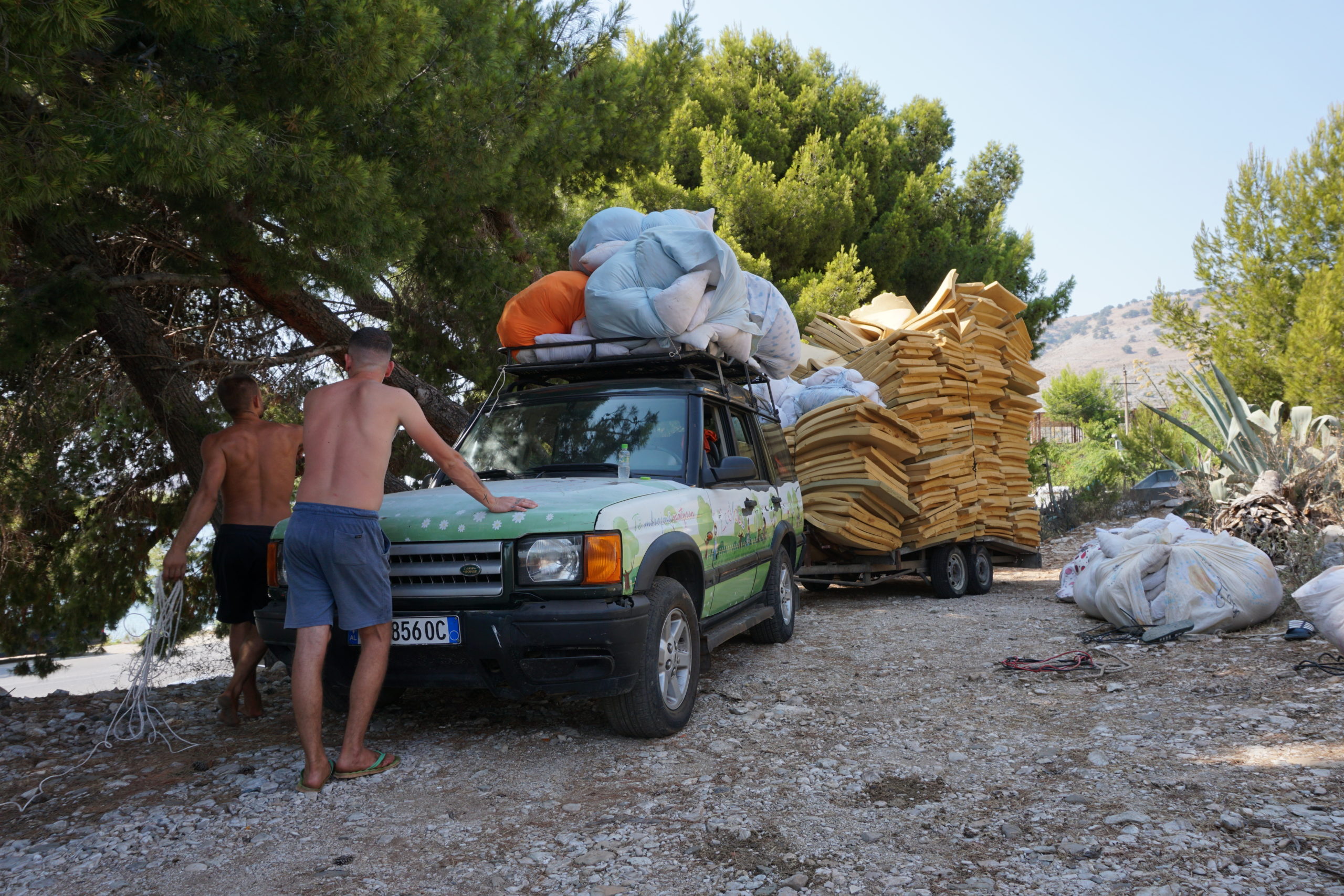
Throughout the week, staying and working at the camp, I was constantly surrounded by hard-working people dedicated to a greater cause. Ervin, who I spent the great majority of the trip with, was a well of knowledge and inspiration. One day, Ervin, the chef at the camp Ari, and I went a few towns over to pick up mattress pads to bring back to camp. They were in storage located behind a group of bungalows accessible only by a tight winding path that went up the mountain. We loaded over 200 foam pads onto a flatbed parked at the bottom of the road. Relentlessly hauling ten mattresses at a time, Ervin and Ari showed an energy that never flagged. Ervin’s mindset is captured by this image and another moment when we were paddling a canoe in the sea. We were paddling against the wind to access a small private beach. The closer we got the harder it was to paddle, yelling to me in the back he said “Do you see the beach? We must keep going! We can see the beach, so we can go touch the beach!” It is that mentality that stuck with me the most. Ervin and the rest of the people at Ecovolis can see the beach – they see a community that can be better, that can serve a purpose and be peaceful. They are pushing to touch that beach and make it a reality.

One of my main jobs here at P4P is loading our containers. Before my trip to Albania, closing the doors and putting a seal on the container, with the bikes officially on their journey to a new country, the destination always seemed vague and distant. Being able to interact with people who receive our bikes has closed that gap and has given me a better understanding of the extent of our mission. It was an amazing experience to be thrown headfirst into the world, beyond the two square miles of High Bridge, New Jersey, to face a previously unseen part of myself and the world. It’s motivating to know the groups we work with have a deep desire to change the communities they love. Traveling to Albania, the concept of mobility was hard to escape. It’s intrinsic to what we do, as the bicycle gives people the opportunity to be mobile, to go beyond what they are capable of on foot. When you have mobility, you have the opportunity to create change. This change is multifaceted and goes beyond simple transportation to work and school. It includes personal and private change. Cycling gives personal freedom to expand your reach within your community, to be active with your friends and family. To be able to connect with the people in your life, to see them eye to eye and live comfortably beside them, gives a community greater strength to push forward and grow on so many different levels. While this has always been a core tenet of Pedals for Progress, it resonated at a much deeper level to me after this trip. It was truly an honor to see the camaraderie, companionship, hard work, and passion I came across during my time in Albania, generated from people who simply want to improve the world.


PEDALS FOR PROGRESS IN RWANDA, FALL 2021
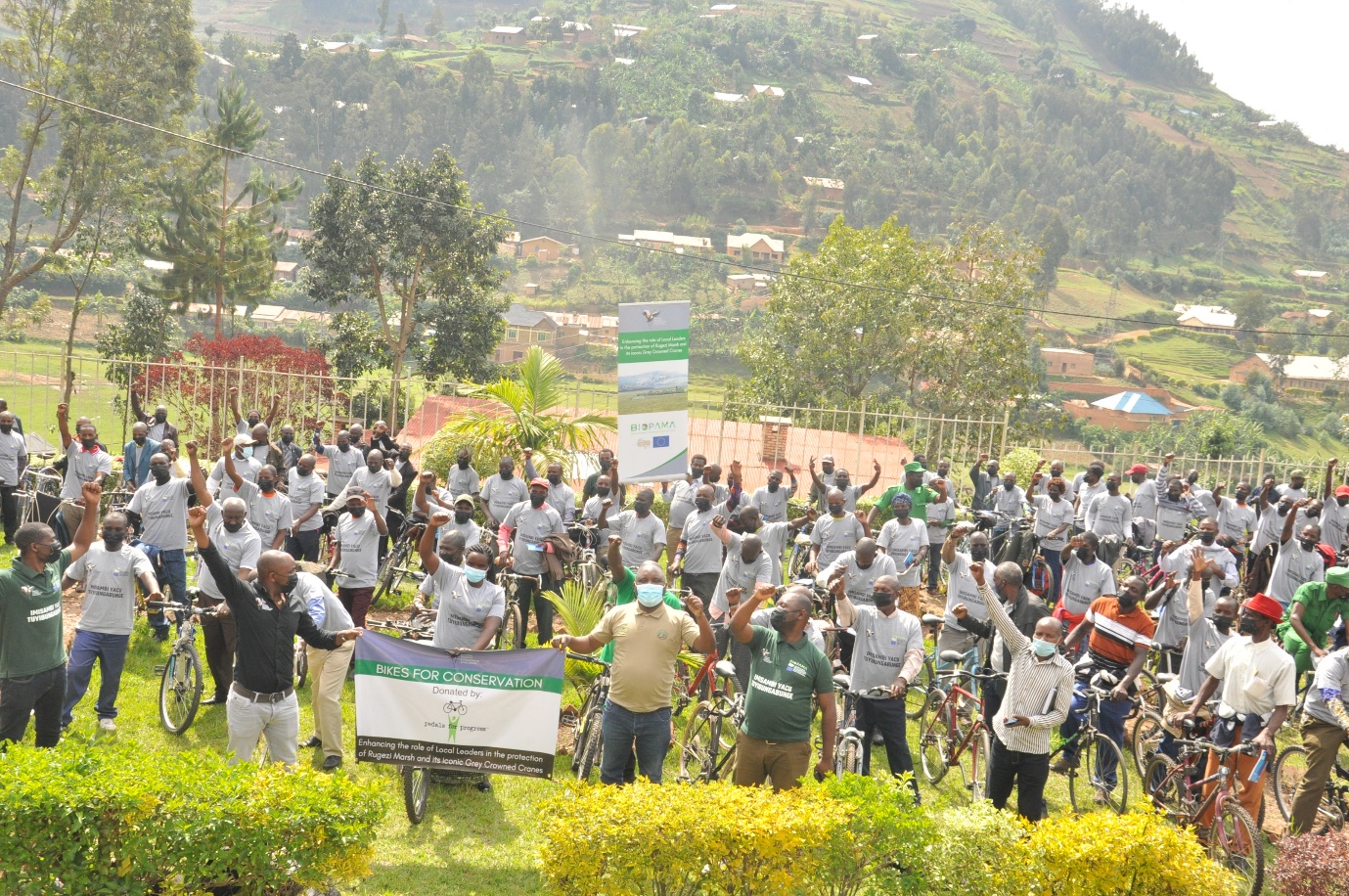
Rwanda Bikes for Conservation 2021Rwanda Wildlife Conservation Association uses bikes to help protect and manage important wetland areas. Rugezi Marsh is a 6,735 hectare wetland protected by RAMSAR. We have a team of 50 community Marsh Rangers patrolling the wetland and watching out for activities that are not allowed and will destroy the marsh habitat, such as grazing livestock, cutting down trees in the buffer zone, hunting wildlife or cutting grass.

To improve the management and law enforcement of this important wetland, we also work in close partnership with local leaders around the marsh.

With the bikes from Pedals for Progress we were recently able to distribute bikes to all local leaders working near Rugezi Marsh – a total of 187! They were so happy to receive these bikes. The bikes will make a big difference in their communities and will increase collaboration with the Rangers.
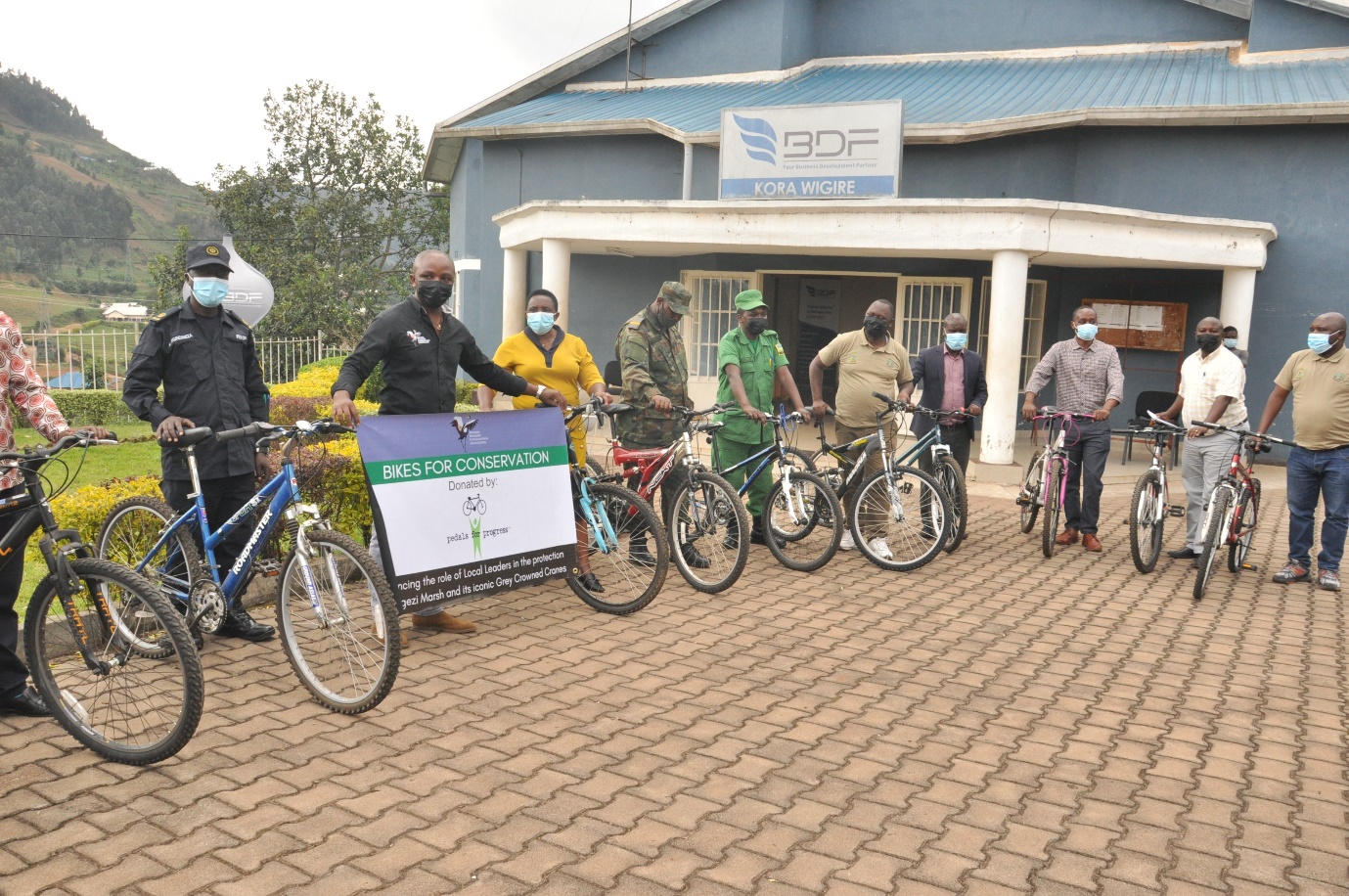
Rwanda Bikes for Conservation 2021During the event, one leader made a speech about the significance of the bikes and how much they were appreciated by him and his colleagues. He described how the projects at Rugezi are life changing. He believes that the bike will help him respond quickly when Rangers call, especially during their patrols when they need support in resolving illegal activities. The bikes will also help in daily life, providing transportation to the market or to church. Having a bike will also save money that they might spend on public transport and save time getting where they need to go.

Once the local leaders have started using their new bikes, we will check in with them to better understand the impact they have had on their job roles and family life. Thank you to Pedals for Progress for helping support conservation at Rugezi Marsh in Rwanda.


REPORT FROM UGANDA, FALL 2021

On behalf of the Mityana Open Troop Foundation, I have compiled a progressive report for May to October 2021.
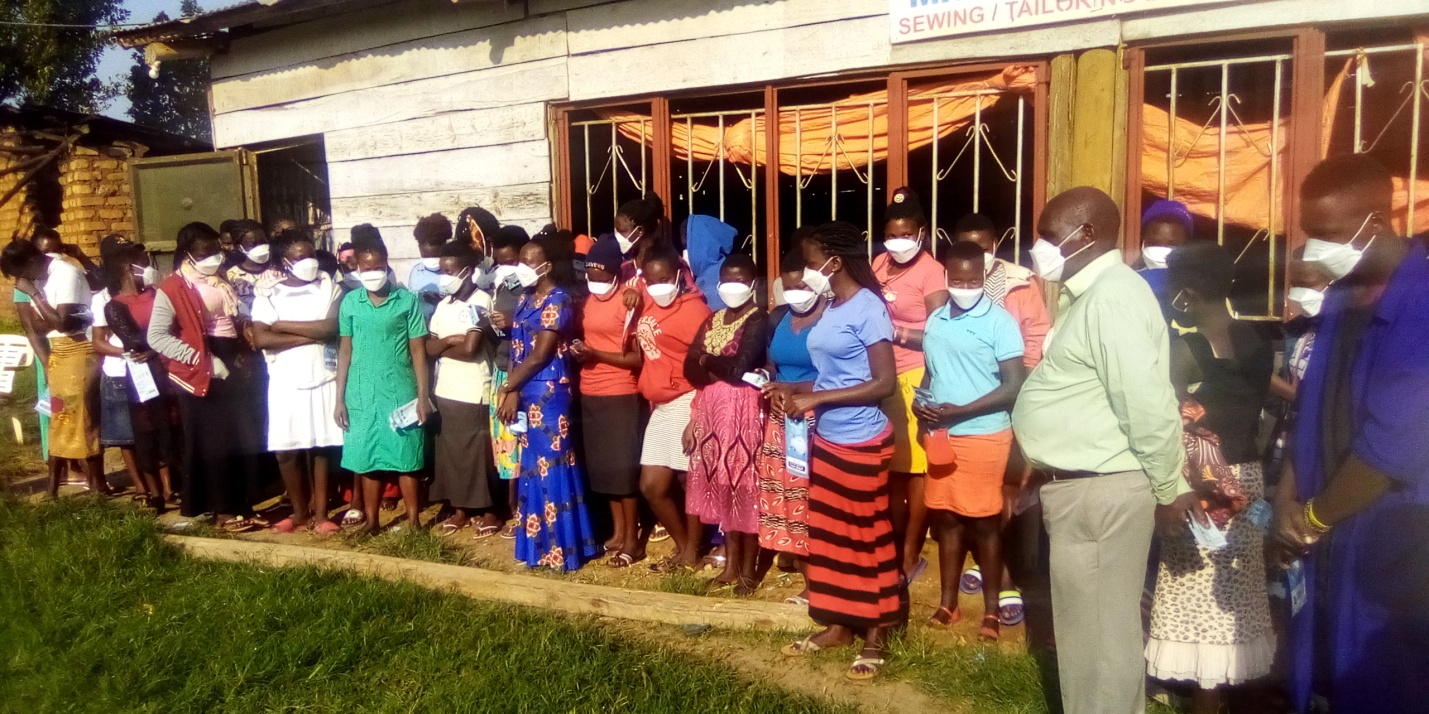
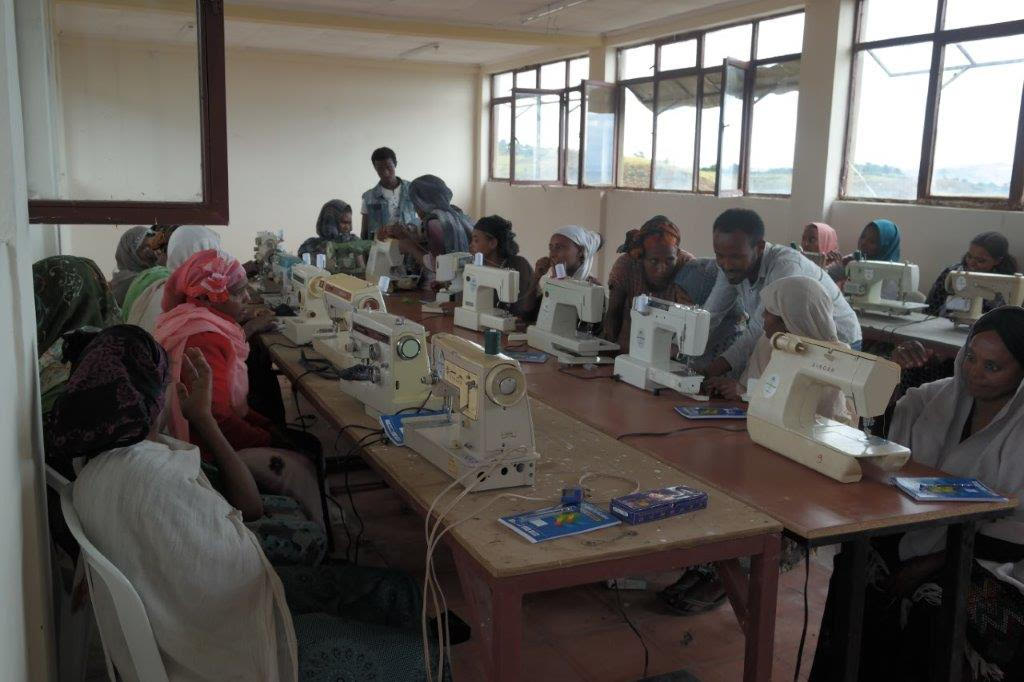
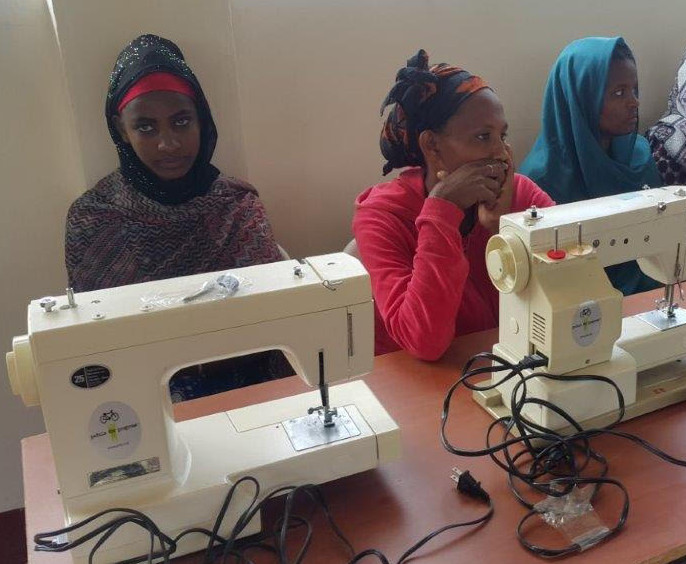
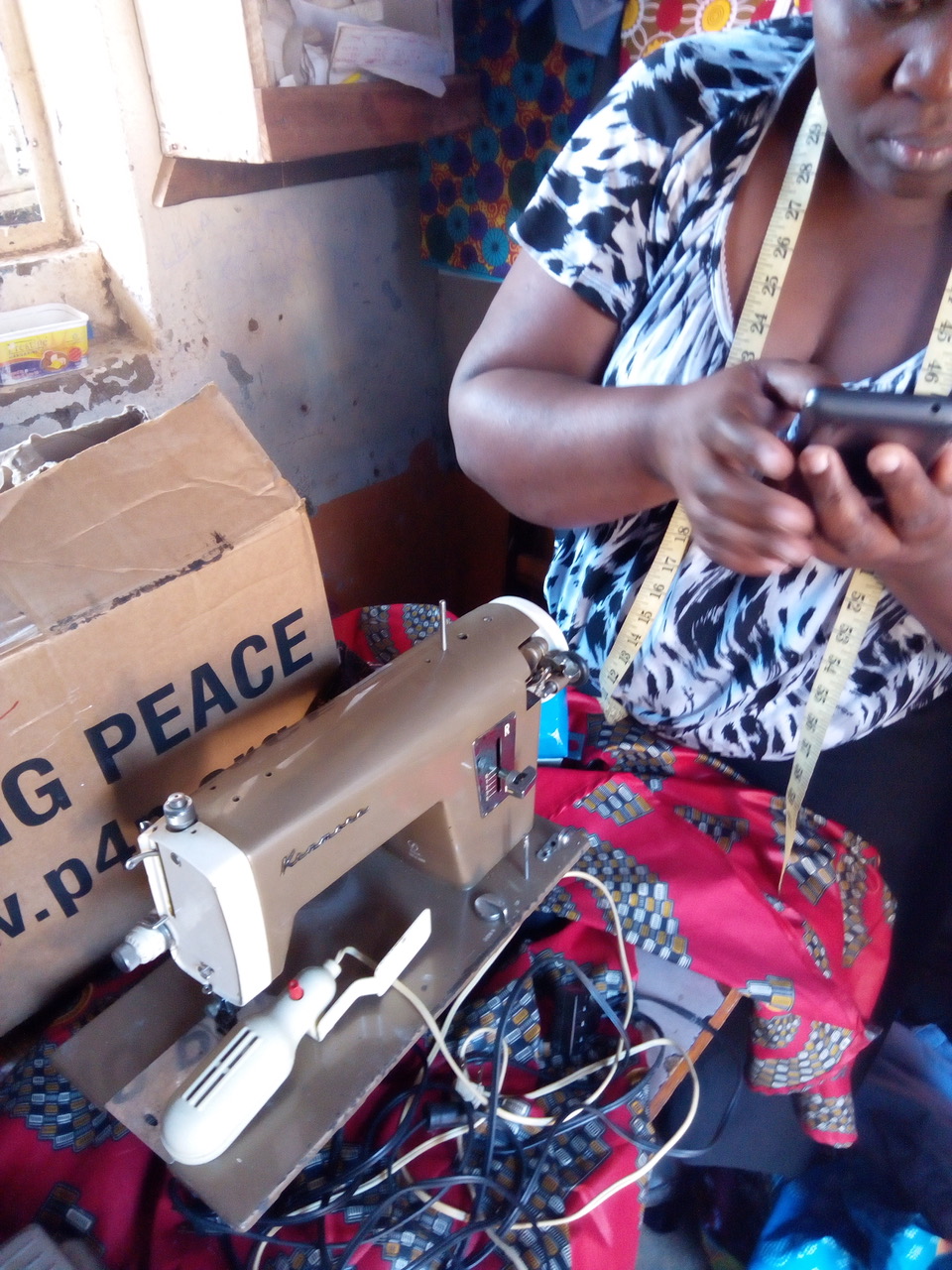
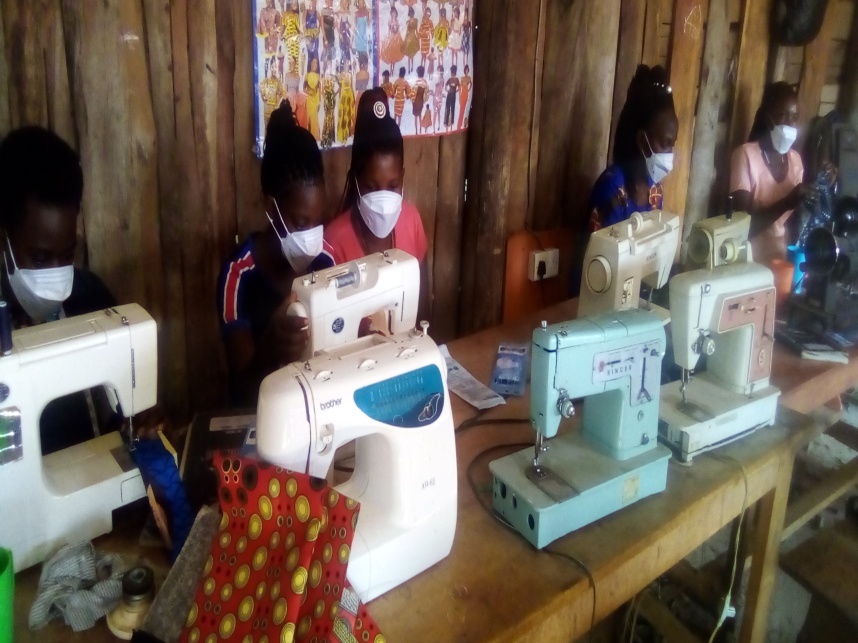
Mityana Open Troop Foundation is a registered Community Based Organization, with a Vocational Skills Training Centre, which recruits and trains vulnerable youths, mostly young girls formerly selling sex for survival and girls expelled from schools due to teenage pregnancies. We teach our students sustainable vocational skills. Before the closure of all institutions due to Covid-19, the school had a total enrollment of 92. Since the inception of vocational skills training at our centre in 2007, a total of over 800 have graduated. Some got employed while others set up their own workshops. Every graduate of our program is given a sewing machine from Sewing Peace, USA. Without equipment, the graduation certificate is no help, as 90% of graduates can’t afford tools.

Students are trained for 2 years in Sewing & Fashion Designing, Hair Dressing & Weaving, Motor Vehicle & Cycle Mechanics, Carpentry & Joinery, or Metal Fabrication.

Every year, there are 3 training terms of 3 months each; for each term the centre recruits whoever wishes to join.

Achievements

  • Madison Sewing Workshop
    Madison Sewing Workshop

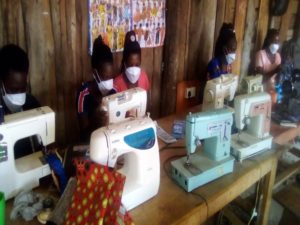
    The Sewing Workshop floor has been renovated and we installed 2 cutting tables with a micro loan from M/s Ivonne Reilly Sencebe of the USA. The workshop floor had been dusty, not conducive to learners and damaging sewing machines. This Madison Sewing workshop was constructed with support from Madison Ardizzi of Canada.

  • The project sewing shop has been producing face masks and selling them at a price lower than our competitors’.
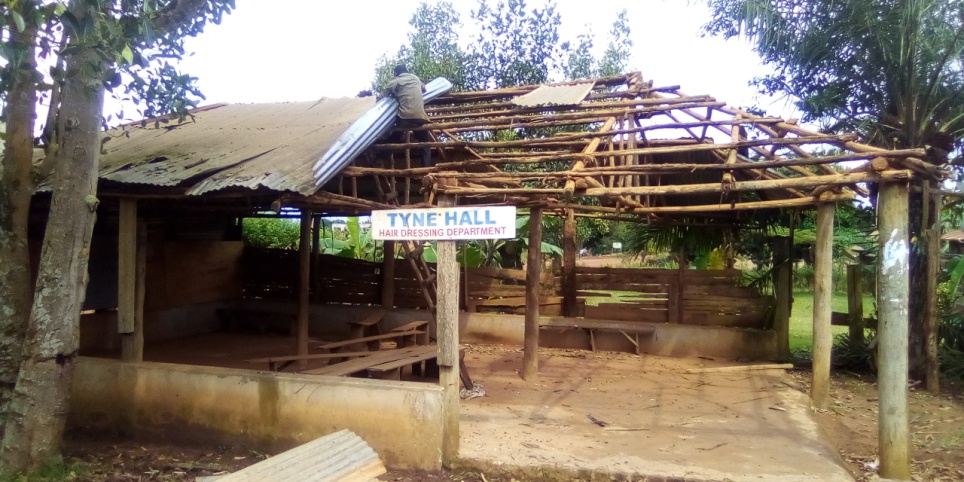
  • Tyne Hall renovation
    Tyne Hall Renovation

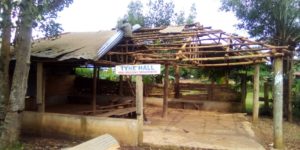
    The Tyne Hall hair dressing workshop roof has been renovated with support from Mr. & Mrs. Jane Louise Colin Neil Dippie, of the UK. The roof has been leaking for a long time. The construction of Tyne Hall workshop floor and boundaries was sponsored by Mr. Chris James Eldridge of the UK.
Challenges and Limitations

  • By the second lockdown and school closure in mid-June 2021 due to Covid-19, a number of students had not fully paid their school fees. All training institutions in Uganda had been under lockdown since March 2020. This has caused serious loss of income for our project!
  • The Organization still encounters challenges in raising funds for shipping Sewing Machines from Sewing Peace USA.
  • The Organization lacks a computer, printer, and photocopier, which we need to print end-of-term exams and other office documents. Currently all computer work is taken to town.
  • The project needs a computer lab with internet access, to enable students to find dress fashions, learn computer skills, and get Health information. In addition, this computer lab would be used by our community volunteers to access the Ministry of Health for health-related issues.
  • The project requires a new embroidery machine that can use a USB drive and that can run faster. The current machine is slow and often needs routine maintenance and servicing.
  • The Organization requires office furniture and a staff room, as instructors don’t have a place to sit and keep their kits.
  • The Training Centre lacks clean water. There is a very small (2000-liter) water tank, which lasts 2 days. Then students have to go on foot 1 km in search of water from unprotected water sources. This has resulted in many cases of Typhoid.
  • We have many cases of malaria among project trainees, as they lack mosquito nets.
  • Our project lacks a toilet for boys. Currently boys and girls share one pit latrine, which is not recommended by the Ministry of Education.
  • The project lacks an incinerator, where sanitary pads and other wastes can be burnt easily.

Community Impact

  • The Mityana Open Troop Vocational Skilling Project offers affordable training to school dropouts from our communities, including unemployed youths. The project trainees come from the 6 surrounding districts: Mityana, Mubende, Kiboga, Kasanda, Kyankwanzi, and Hoima. The non-formal skills training we offer has very much benefited parents whose children have dropped out of school, as most institutions in the area offer only formal education only.
  • Over 800 trainees have graduated since our inception in 2007. These graduates go back to their communities and set up their own workshops, passing along their acquired skills to fellow youths who didn’t join our project.
  • The community can also buy inexpensive goods and services from trainees in the carpentry workshop and the sewing project, where we make uniforms and offer sewing repair services.
  • Our sewing shop also offers embroidery services to schools formerly traveling to Kampala.
  • The Mityana Open Troop Foundation is the only shop in the area delivering high quality used sewing machines at inexpensive prices. The machines are from Sewing Peace USA. Many schools and tailors in the area have been supplied with these machines.

Way Forward and Recommendations

  • We are fundraising for a new 2-classroom block, to enable us to create a conducive training environment and have room for more students.
  • We need a new toilet for boys, who currently share facilities with girls.
  • We need embroidery machines with USB input, as the one we have is very slow and requires mechanical servicing all the time!
  • We need an incinerator for burning sanitary pads and other wastes.
  • We welcome volunteers who can teach sustainable skills to our youths. We would like to partner with similar vocational training institutions elsewhere in the world. This will help us learn how they operate. Plus it will help our Ugandan youths create friendships with fellow youths and learn about their cultures.
  • We are organizing a Christmas children’s party for December 27th, with guest speakers, drinks, cakes, biscuits, music, and gifts.

Conclusion

In conclusion, on behalf of the Mityana Open Troop Foundation, I extends our sincere thanks to the following great friends and partners: Mr. Chris Eldridge, Mr. Colin Dippie & Mrs. Jane Louise Dippie, Mr.Nino Ardizz, M/s. Madison Ardizzi, Holly Williams, M/s. Ivonne Reilly Sencebey. You have all been so supportive to our organization, during this pandemic lockdown and before. This has been and still is a very challenging season of limited funds and people losing their jobs.

I also extend our thanks to Mr. David Schweidenback, President of Sewing Peace, and the generous communities of the USA, who have been donating high-quality refurbished sewing machines to our needy Ugandan communities. Please, the used sewing machines which seem unimportant in the USA have uplifted our communities, changing peoples’ lives by creating a daily source of income. Thanks to all the volunteers involved in the collection of sewing machines and bicycles.

Please Continue Giving a Hand Up, Not a Hand out.

Stay safe from the Covid-19 Pandemic.

God Bless You.

Merry Christmas & Happy New Year 2022

Yours,
Mathew Yawe, Executive Director, Mityana Open Troop Foundation


REPORT FROM VERMONT, FALL 2021

By Alan Schultz
Fall 2021 Newsletter
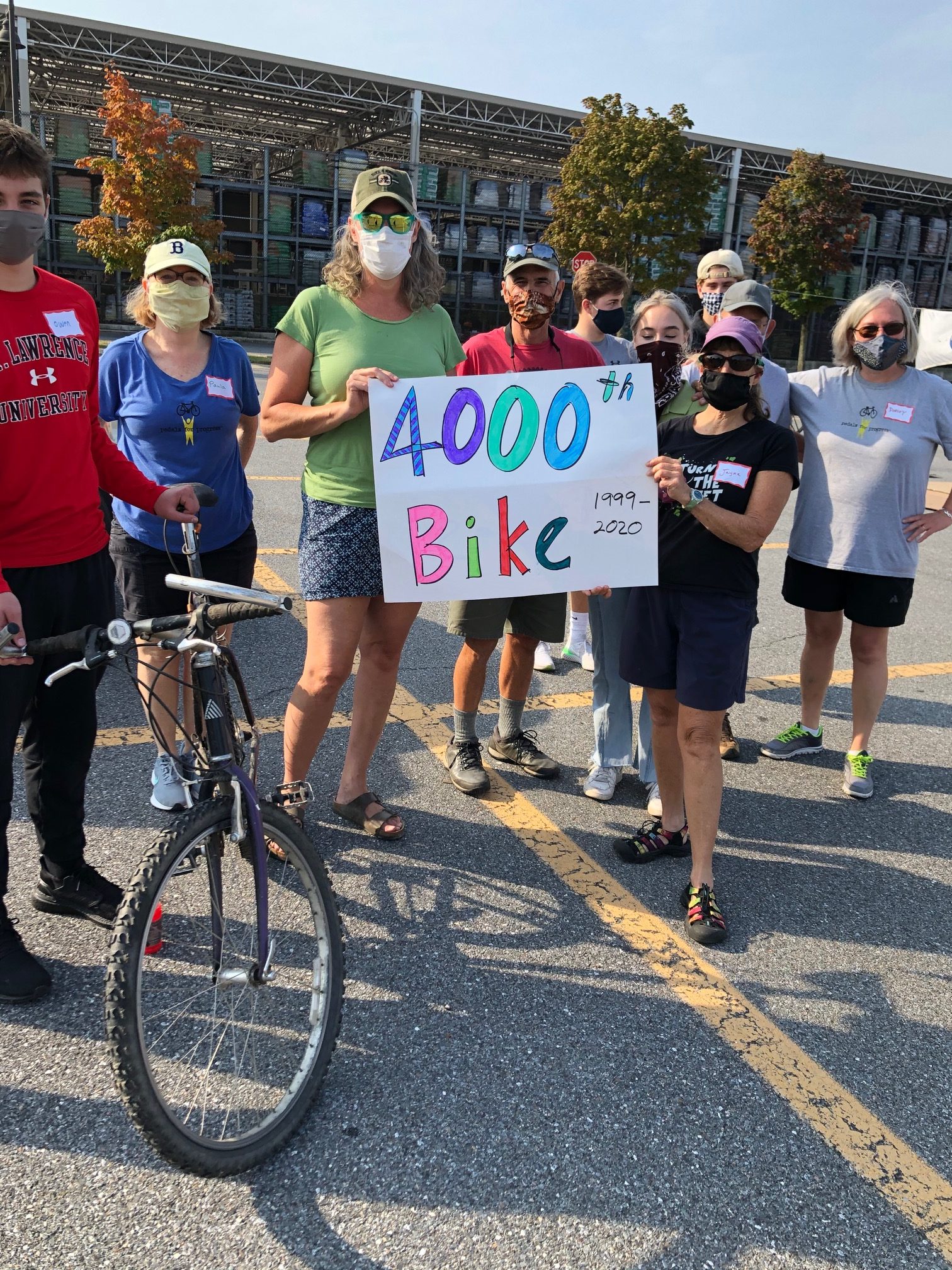
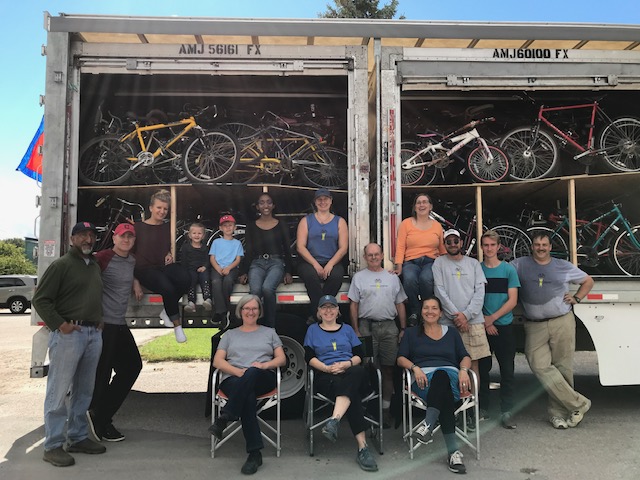
GMRPCVs' 4000th bike“Freedom and Unity” is the motto of the great State of Vermont. Much of what we do at Pedals for Progress is based on this exact principle. Our goal is to send used bicycles and sewing machines to motivated people in the developing world in the hopes that they can have the freedom to get to where they need to be, creating a better life for themselves. This goal requires a great amount of unity here in the United States. We cannot do what we do without the help from hundreds of dedicated people throughout the country. The Green Mountain Returned Peace Corps Volunteers (GMRPCVs) of Vermont are some of our most productive domestic partners. Every year for 22 years they’ve sent bikes and sewing machines from 300 miles away.

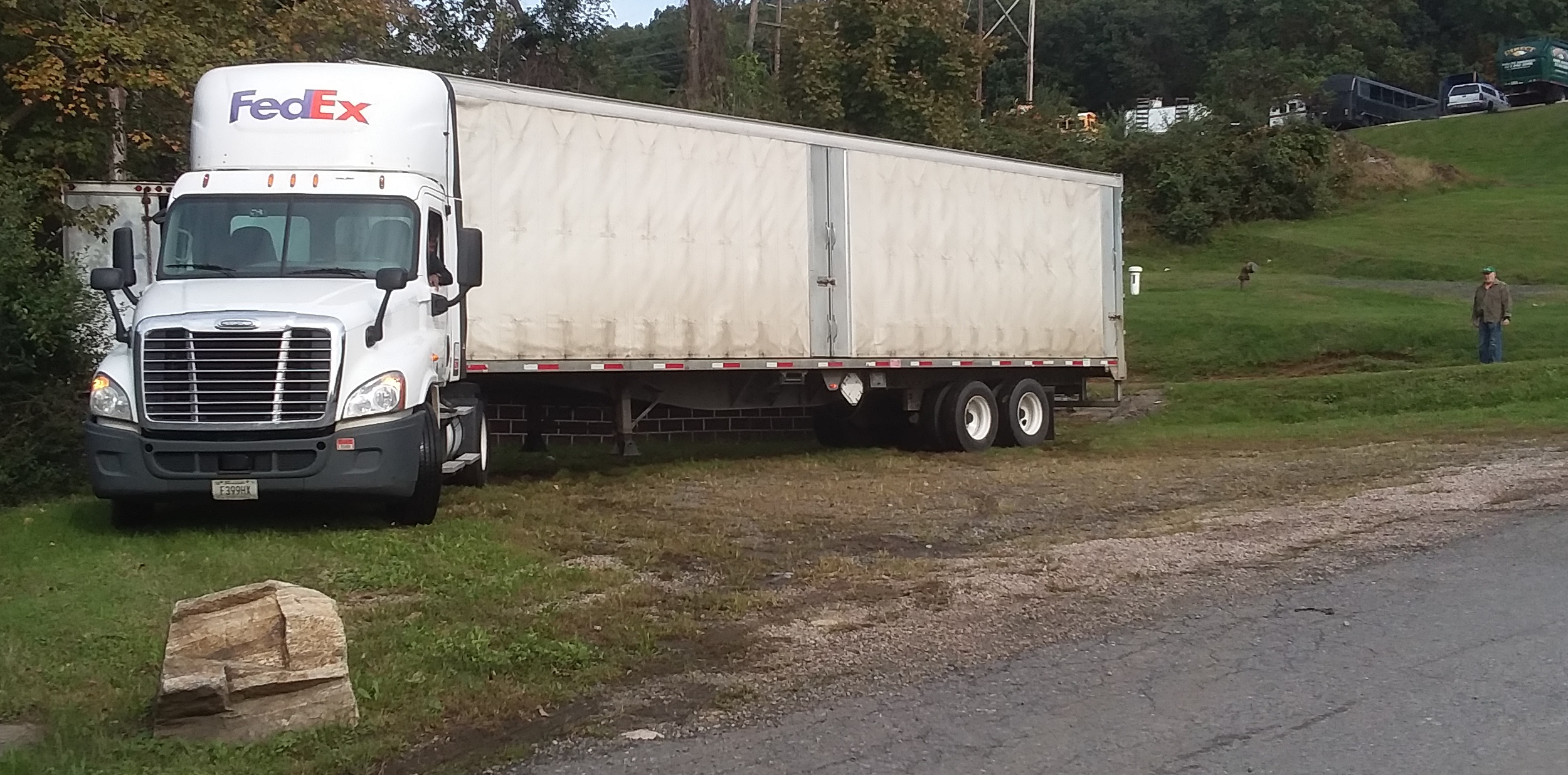
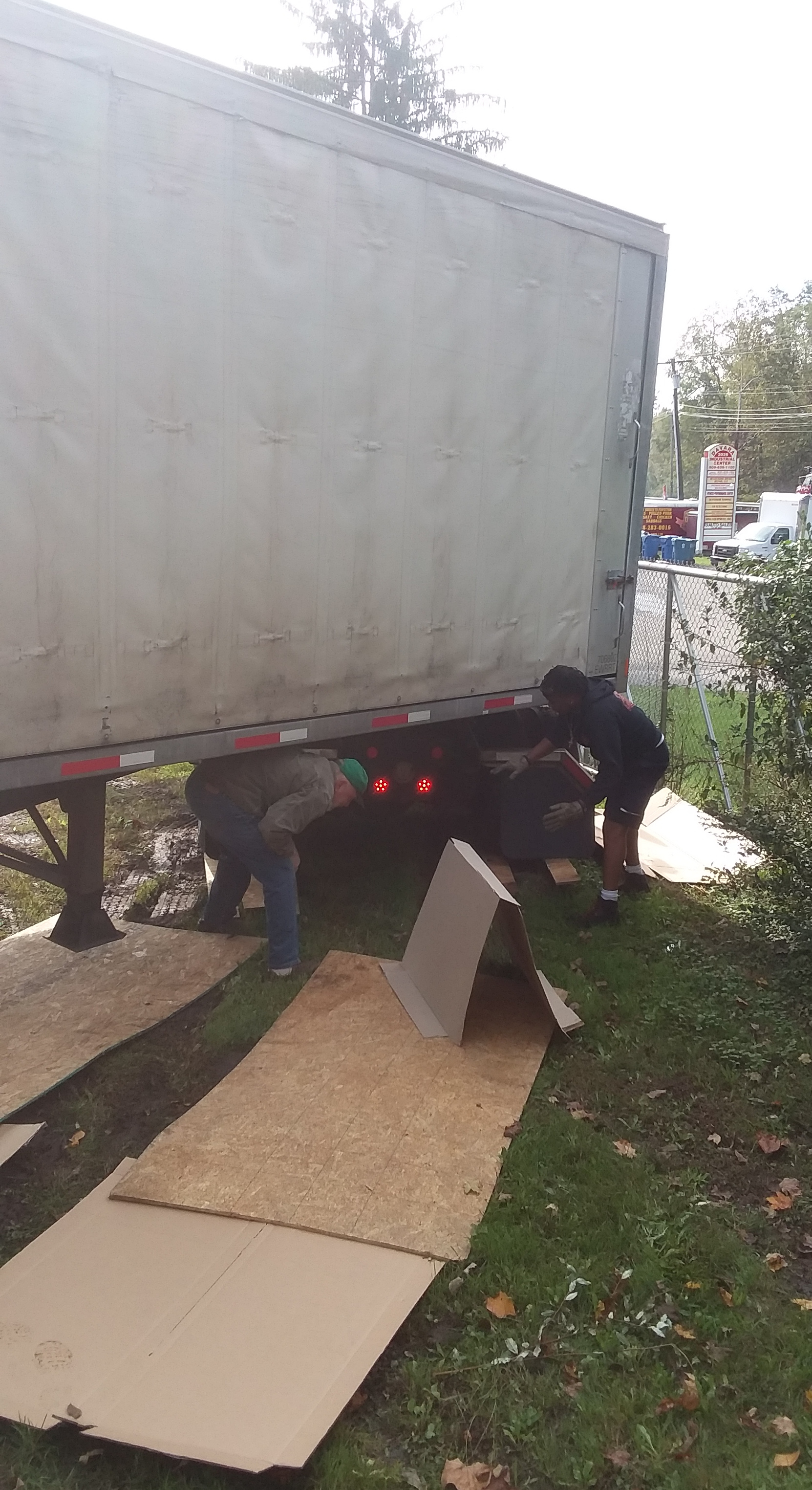
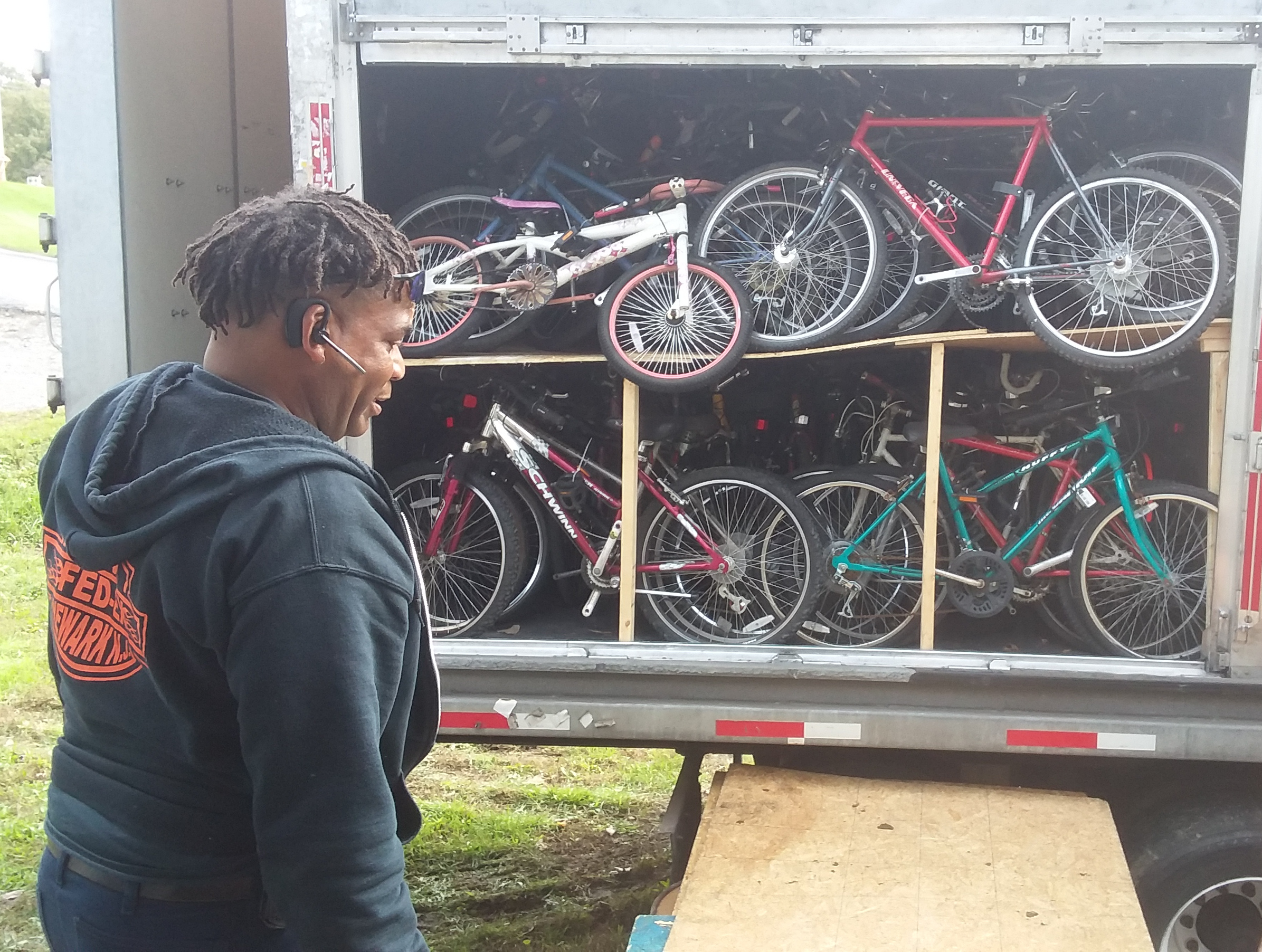
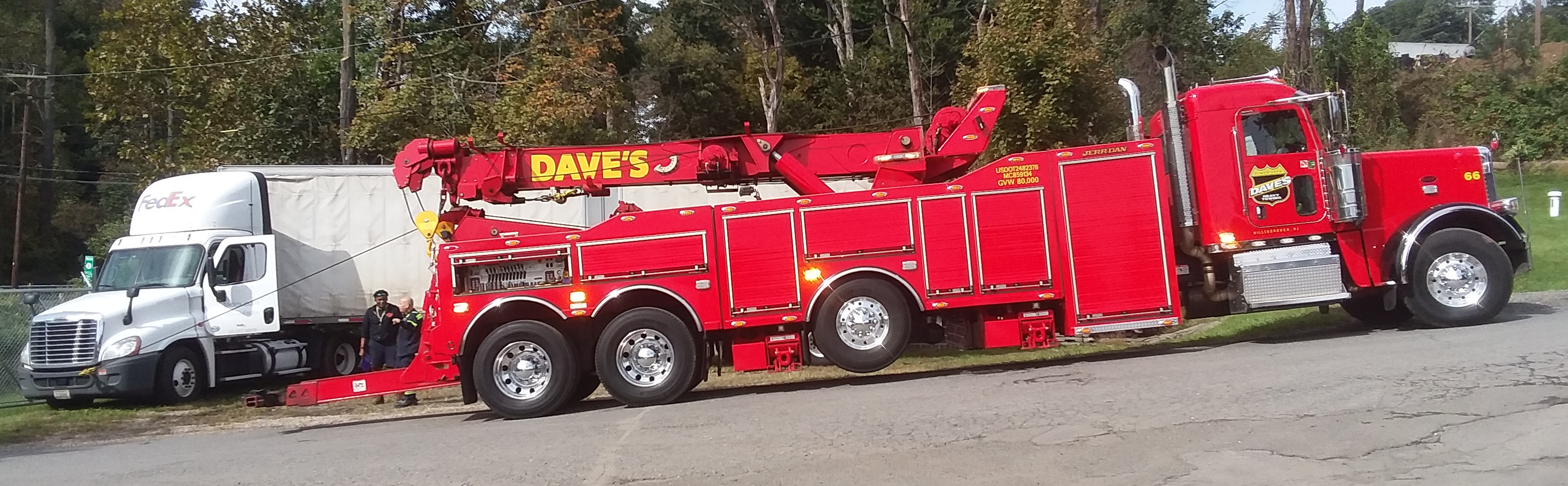
FedEx, another generous domestic partner, ships the bikes at no charge from Vermont to our warehouse in New Jersey. In 2020, FedEx delivered the 4000th bike from Vermont.
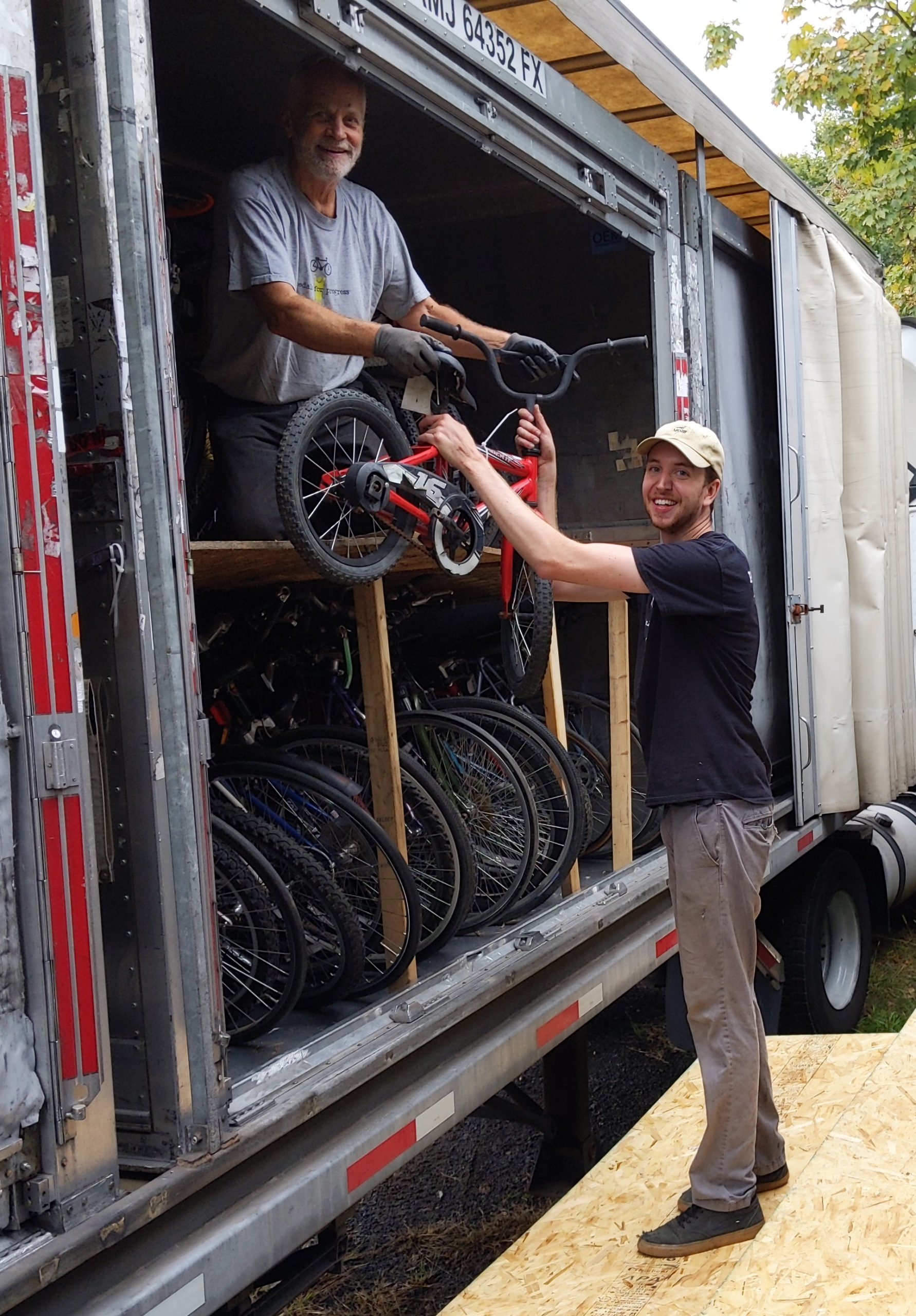
The GMRPCV operation, led by Joanne Heidkamp, Paul Demers, and Bob Thompson, along with the rest of the volunteers, requires a great deal of hard work and dedication. We are happy to report that, this year alone, the members of the Green Mountain Returned Peace Corps Volunteers collected 312 bikes and 204 sewing machines from hundreds of Vermonters throughout the state. They held collections on Friday 9/24 in Montpelier and on Saturday 9/25 in Burlington. We here at Pedals for Progress would like to share a little bit about what they have done over the years and give thanks to the many people and groups involved with this difficult endeavor.

Getting the word out about our collections is always the biggest hurdle when organizing an event. What makes a successful collection is not simply stating that there will be a bike collection, but communicating to the public exactly what the collection is for. The GMRPCVs have been able to nail it year after year. MyNBC5, the local NBC station, ran a fantastic news piece that does exactly that. It perfectly showcases what they aim to do and where the bikes will be going and the lasting impact the bikes will have on the communities they are being sent to. Press releases like this not only spread the word, but convey infectious motivation that encourages people to come out to the collections. Here is the two-minute video from MyNBC5.
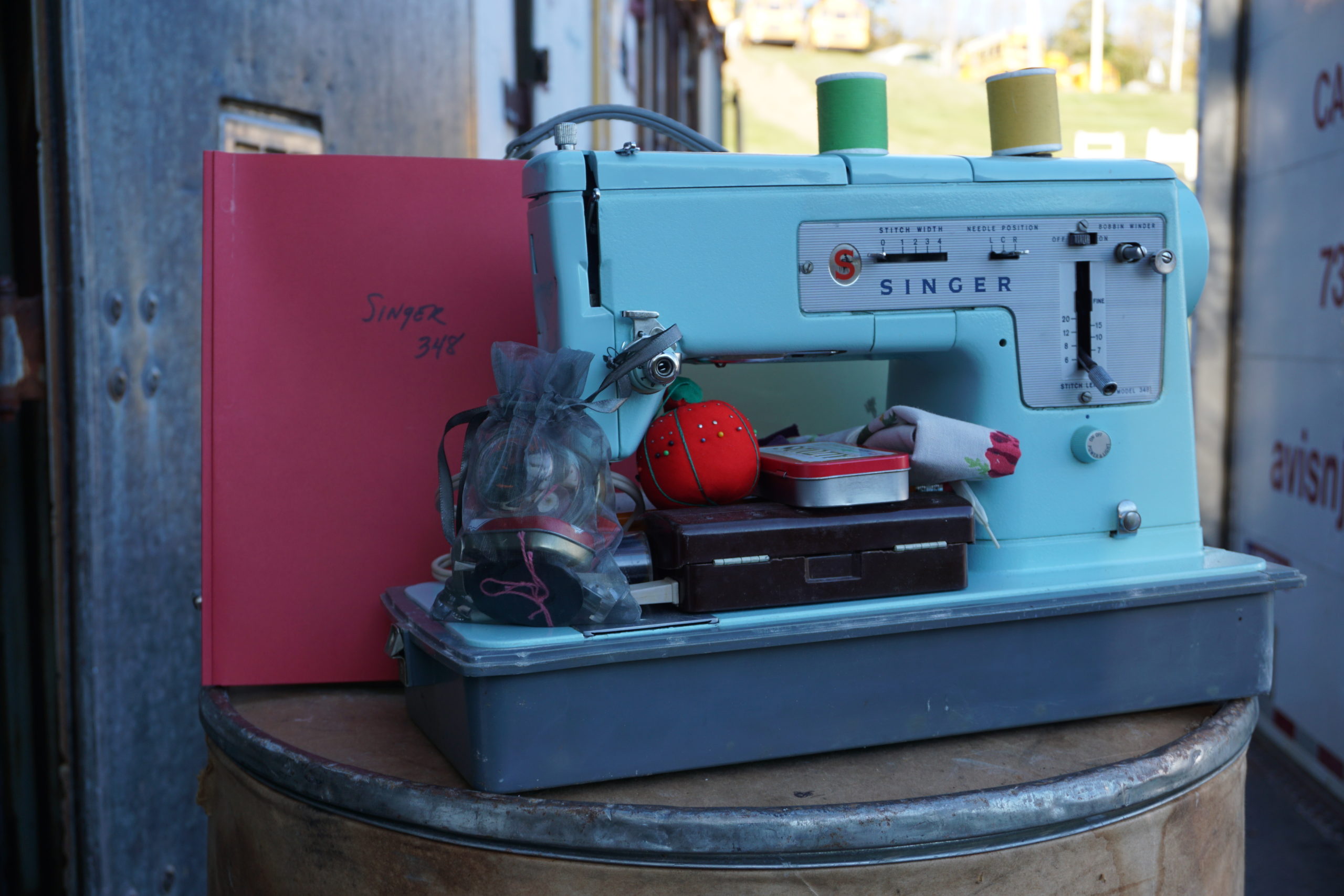
Vermont’s collections are particularly impressive because of the large number of sewing machines collected. Most of the machines are collected by Mary O’Brien, who works in the solid waste management department of Windsor County. She collects machines all year round, cleans, oils, and tests them. She uses pretty cloth, sometimes handkerchiefs or napkins, to hold sewing notions, a pin cushion, and reading glasses, and puts it all together in a kit for each machine. She also includes user manuals for the machines. The machines and their accessories must be astonishing to our overseas partners who get them.
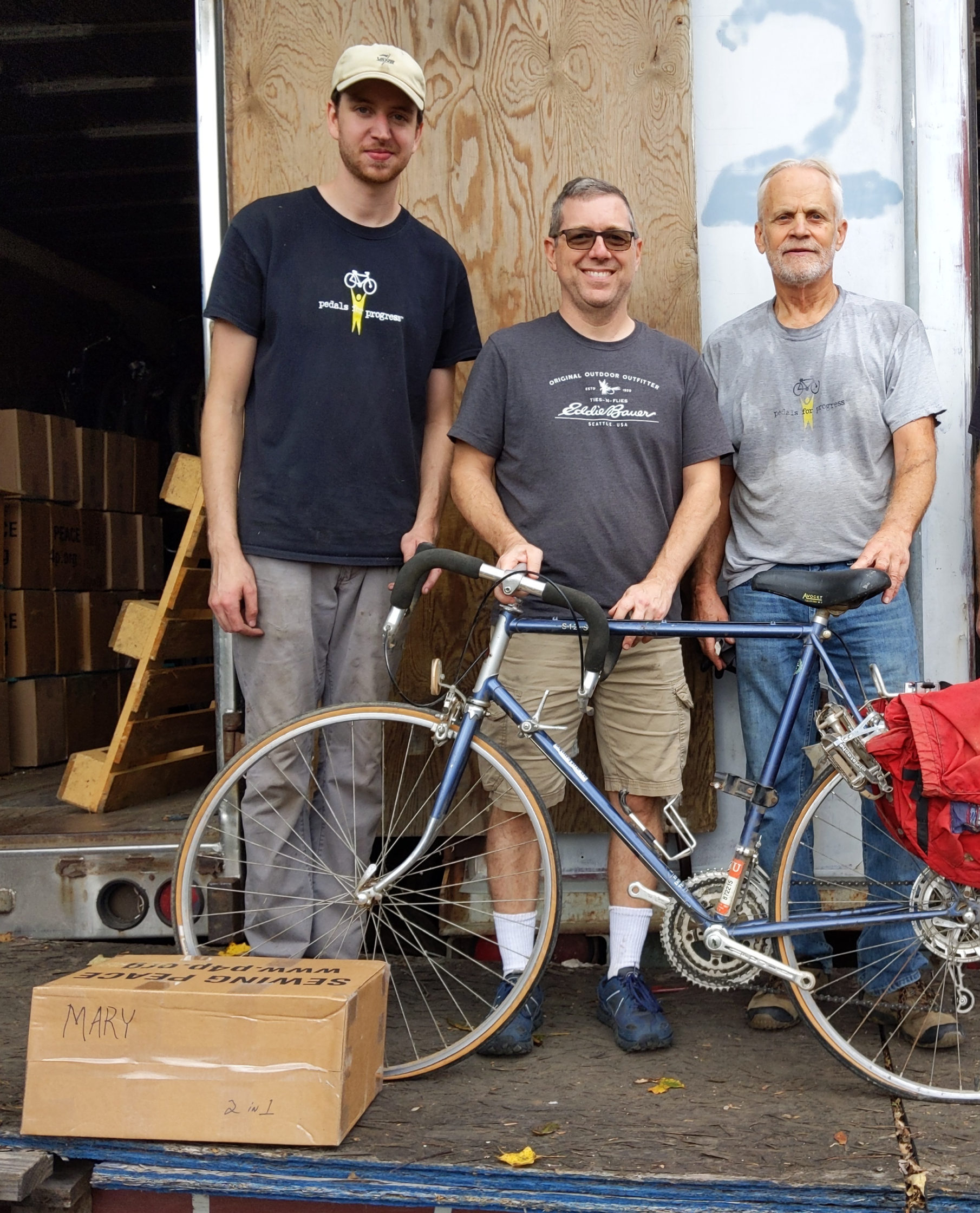
This year, Mary also donated her classic, dearly loved road bike, which she had owned for most of her life and which she rode across the US in 1981. The bike has a personality of its own, reflecting the life-long activist and humanitarian that rode it. The bike is equipped with red panniers and an “anti-nuke bicyclist” sticker. The well-loved bike that has seen a lifetime adventure will continue its journey in its new home in Guatemala. It will double its life as a bicycle and see even more of the world while providing someone with a valuable means of transportation.

It is truly inspiring to see the great work that The Green Mountain Returned Peace Corps Volunteers have done for Pedals for Progress and the countless people and families associated with our international partners. We would again like to thank everyone involved. This year’s collection was certainly one worth celebrating. We greatly look forward to continuing this fantastic relationship and we are filled with excitement for next year’s collection.


NOTES FROM TANZANIA, FALL 2021

We just got four short notes from our partner in Tanzania, The Norbert and Friends Missions.
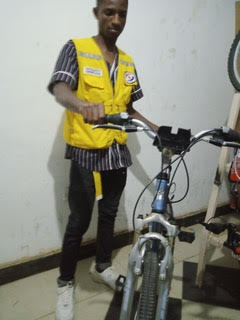
From David:

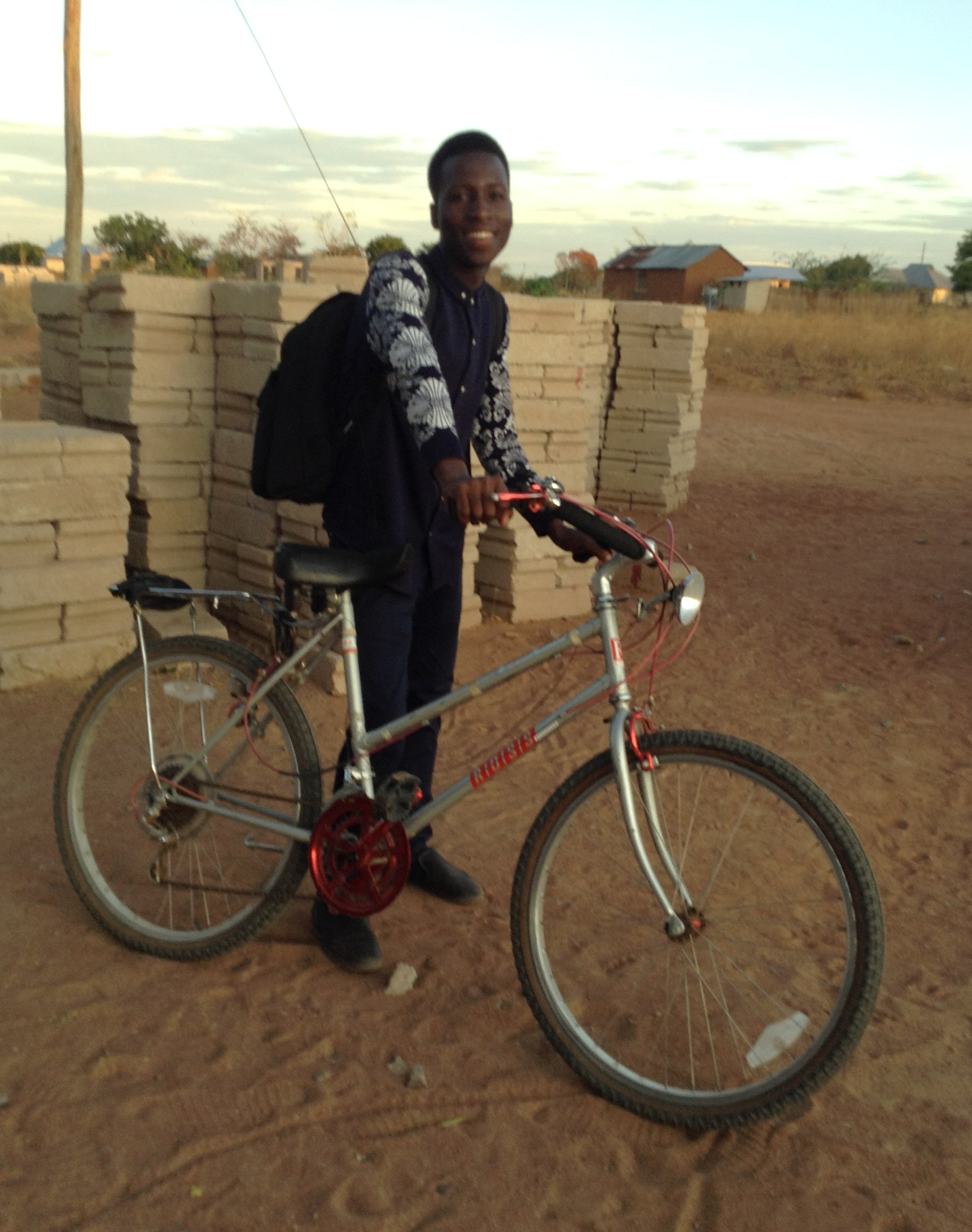
My name is David. I am from Njiro Arusha Tanzania. I am so thankful to God for getting a bicycle for exercise and also as a tool to enable me to ever be in my workplace. Congratulations to the P4P Project under The Norbert and Friends Missions for the excellent work you are doing to help us young people by providing work tools such as bicycles so that we can build a body and use a bicycle as a means of transportation.
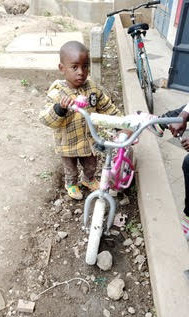

Mrs. Johari's son with bikeFrom Mrs Johari:

My son loves cycling and has now been crying for P4P bikes for him to exercise. I wish I could continue to pay a little more so that my son can exercise using this bike, which is his size.
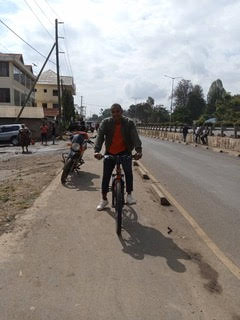

From Raphael:

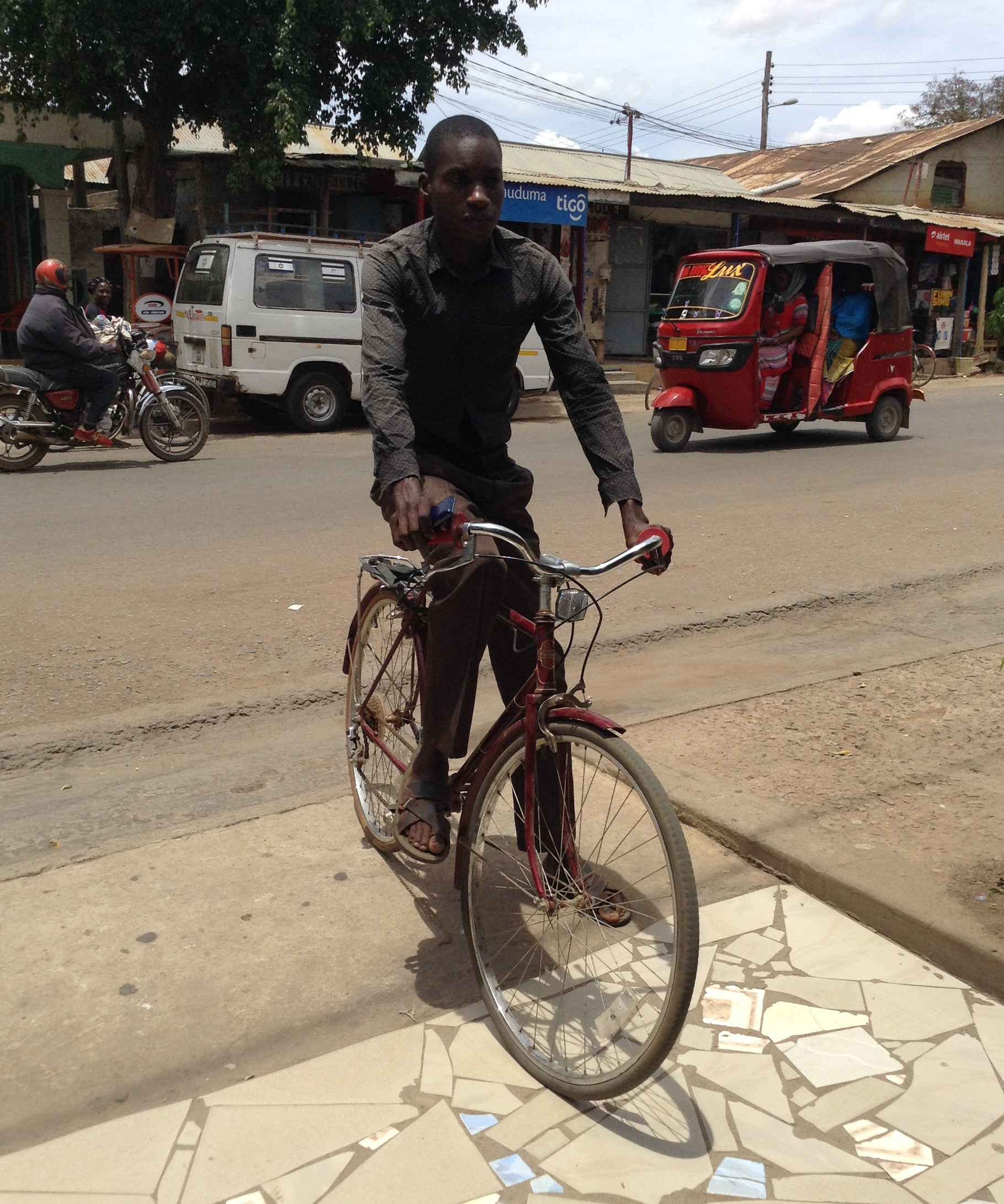
My name is Rafael. During this corona period I was lucky enough to get a bicycle from the P4P Center under The Norbert and Friends Missions in Arusha. The bike has helped me get to work on time but most of all my health has improved and I am currently not having trouble breathing. My chest feels strong.
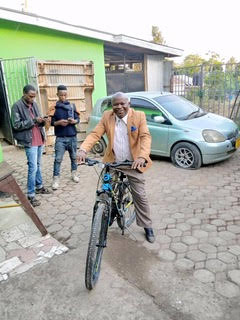

From Norbert:

My name is Dr Norbert Mbwiliza. I am the founder of The Norbert and Friends Missions. I have been fortunate to be among the project beneficiaries who have received a practice bike from the P4P Project. Fortunately I have found a bicycle with which we are encouraged to exercise in Tanzania as part of the fight against Covid-19. As you can see, my health is improving thanks to the exercise I get by cycling. I thank my friend David and the entire P4P team for your great support, which has helped us earn an income by selling bicycles and sewing machines. Through your support the incomes of Tanzanians are strengthened.
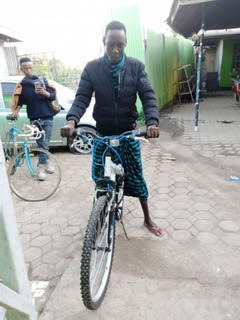

Maasai on a P4P Bike

P4P/SP BOARD OF TRUSTEES

Jamie Acosta
Jerry Agasar
John Alexander, Treasurer
Daryl Detrick
Ann Fitzgerald
Sarah Jannsch
Richard Millhiser, Chair
David Schweidenback, President & CEO
Casey Walsh
Andrew Williams
Bob Zeh, Secretary

ACTIVE PARTNERS AS OF NOVEMBER 2021
(🌐 Map)

ALBANIA, Tirana, PASS/EcoVolis, community development: 8,300 bikes (2010 – 2021), 464 sewing machines (2010 – 2021)

CAMEROON, Limbe, Rising Hope for Change, community development: 462 bikes, 259 sewing machines (2013 –2021)

GUATEMALA, Chimaltenango, Fundacion Integral de Desarrollo Sostenible y Medio Ambiente (FIDESMA), small-business promotion: 12,034 bikes (1999 – 2022), 406 sewing machines (2003 – 2022)

RWANDA, Kigali, Rwanda Wildlife Conservation Association, community development: 503 bikes (2021), 43 sewing machines (2021)

SIERRA LEONE, Kenema, Village Care Initiatives, community development: 959 bikes (2003 –2008), 102 sewing machines (2008 – 2021)

TANZANIA, Arusha, The Norbert and Friends Foundation, community development: 1352 bikes (2019 – 2021), 537 sewing machines (2019 – 2021)

TOGO, Vogan, Association Défi et Révolution de la Vie Rurale, economic development: 1,439 bikes (2020 – 2021), 334 sewing machines (2019 – 2022)

UGANDA, Mityana, Mityana Open Troop Foundation, community development: 556 sewing machines (2005 – 2022)

Shipment totals for a country include shipments to previous partners as well as to active partners in that country.

Shipments of bicycles since 1991 have gone to other partners in Appalachia, Cameroon, Colombia, the Dominican Republic, Ecuador, El Salvador, Eritrea, Ethiopia, Fiji, Ghana, Haiti, Honduras, India, Kenya, Madagascar, Malawi, Mexico, Moldova, Mozambique, Namibia, New Guinea, Nicaragua, Pakistan, Panama, Peru, Senegal, Sierra Leone, the Solomon Islands, South Africa, Sri Lanka, Uganda, Vietnam, and Venezuela.

Shipments of sewing machines since 1999 have gone to other partners in Cameroon, Costa Rica, the Dominican Republic, El Salvador, Ethiopia, Georgia, Ghana, Guatemala, Honduras, Jamaica, Kenya, Kyrgyzstan, Moldova, Nicaragua, Panama, Perú, Senegal, St. Vincent/Grenadines, Sierra Leone, South Africa, Tanzania, Uganda, and Yemen.

The P4P fiscal year runs from October 1st through September 30th.

2015: 3,179 bikes, 310 sewing machines
2016: 2,760 bikes, 285 sewing machines
2017: 3,644 bikes, 469 sewing machines
2018: 2,935 bikes, 456 sewing machines
2019: 2,806 bikes, 565 sewing machines
2020: 1,827 bikes, 356 sewing machines
2021: 2,814 bikes, 408 sewing machines

2022 (YTD): 934 bikes, 221 sewing machines

Bicycle Grand Total since 1991:   163,333
Sewing Machine Grand Total since 1999:   5,463

Countries that have received P4P/SP shipments since 1991 ( 🌐 Map)

  1. Albania
  2. Cameroon
  3. Colombia
  4. Costa Rica
  5. Dominican Republic
  6. Ecuador
  7. El Salvador
  8. Eritrea
  9. Ethiopia
  10. Fiji
  11. Georgia
  12. Ghana
  13. Guatemala
  14. Haiti
  15. Honduras
  16. India
  17. Jamaica
  18. Kenya
  19. Kosovo
  20. Kyrgyzstan
  21. Madagascar
  22. Malawi
  23. Mexico
  24. Moldova
  25. Mozambique
  26. Namibia
  27. New Guinea
  28. Nicaragua
  29. Pakistan
  30. Panama
  31. Peru
  32. Philippines
  33. Rwanda
  34. Senegal
  35. Sierra Leone
  36. Solomon Islands
  37. South Africa
  38. Sri Lanka
  39. St. Vincent
  40. Tanzania
  41. Thailand
  42. Togo
  43. Uganda
  44. Venezuela
  45. Vietnam
  46. Yemen

2021 FINANCIAL SPONSORS

A SPECIAL THANKS TO OUR SPONSORS AND MAJOR CONTRIBUTORS:
Susan Alden
Andrew Aprill
AXA Foundation
Chad & Cecilia Bardone
Biovid
Blessed Sacrament Catholic Church
Ernest & Marilyn Businelli
Sherman Carll & Jane Tant
The Jos Claerbout Fund
Clif Bar Family Foundation
The Alexander Divinski Family Trust
ExxonMobil Foundation
FedEx
John & Jane Fisher
Anne Fitzgerald
John & Scarlet Gorton
Jack & Donna Haughn
Robert & Laura Hockett
Leo & Helen Hollein
Sarah Jannsch
Johnson & Johnson Foundation
K & E Jones Family Trust
Gary & Mary Kamplain
Barbra A Kelly Charitable Gift Fund
Susan Ritchie-Ahrens
Margreet Ryan
David Schweidenback & Geraldine Taiani
Theres & Eric Shick
Joseph Brooks Smith
Ronald W. Subber & Martha C. Wood Charitable Fund
Warren County Habitat for Humanity
Carol Weismann
Mark Wheeler III
Andrew & Emily Williams


2021 COLLECTION SPONSORS

Chester County PA Solid Waste Authority
Congregation Beth El – Ner Tamid, Broomall, PA
Emmanuel Bible Church, Schooley’s Mountain, NJ
Green Mountain Returned Peace Corps Volunteers, VT
Memorial United Methodist Church, Avon, CT
Newtown, NJ, Rotary Club
Raritan Valley NJ Habitat for Humanity
Rotary Club of Branchburg, NJ
Saint Andrew’s Presbyterian Church Youth Group, Lebanon, PA
Saint John’s Memorial Episcopal Church, Ramsey, NJ
Saint Joseph Church, Bogota, NJ
Saint Stephen’s United Church of Christ, Perkasie, PA
Westfield, NJ, Rotary Club


P4P/SP STAFF
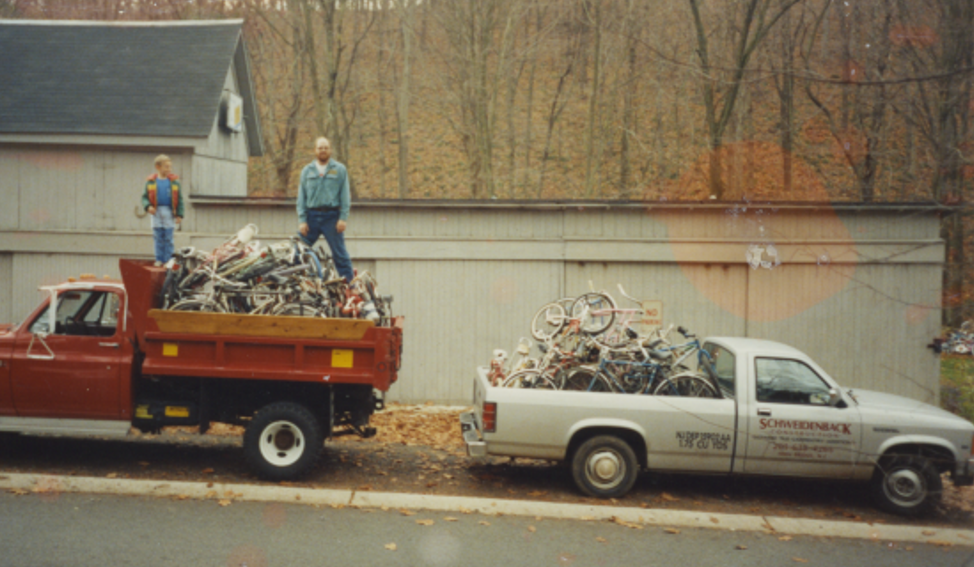
Dave Schweidenback

Dave Schweidenback – Founder and CEO


Gary Michel

Gary Michel – VP, In-kind Operations


Alan Schultz

Alan Schultz – VP, Operations


Lori Smith

Lori Smith  – Office Manager


Michael Sabrio

Michael Sabrio – Webmaster


Dennis Smyth, Tinkerer

Dennis Smyth – Tinkerer


Wed 10 Nov 2021 03:02:19 PM EST

PRESIDENT’S MESSAGE, FALL 2020

By Dave Schweidenback
Fall 2020 Newsletter

This summer the Rolex Corporation collaborated with the Washington Post to interview Rolex Laureates and to put their stories on the Washington Post website. I was a Rolex Laureate in 2000, and was lucky enough to be selected for the new Rolex collaboration. This is the first major article about P4P for probably over a decade. Here is the article. I was ecstatic to hear the news.

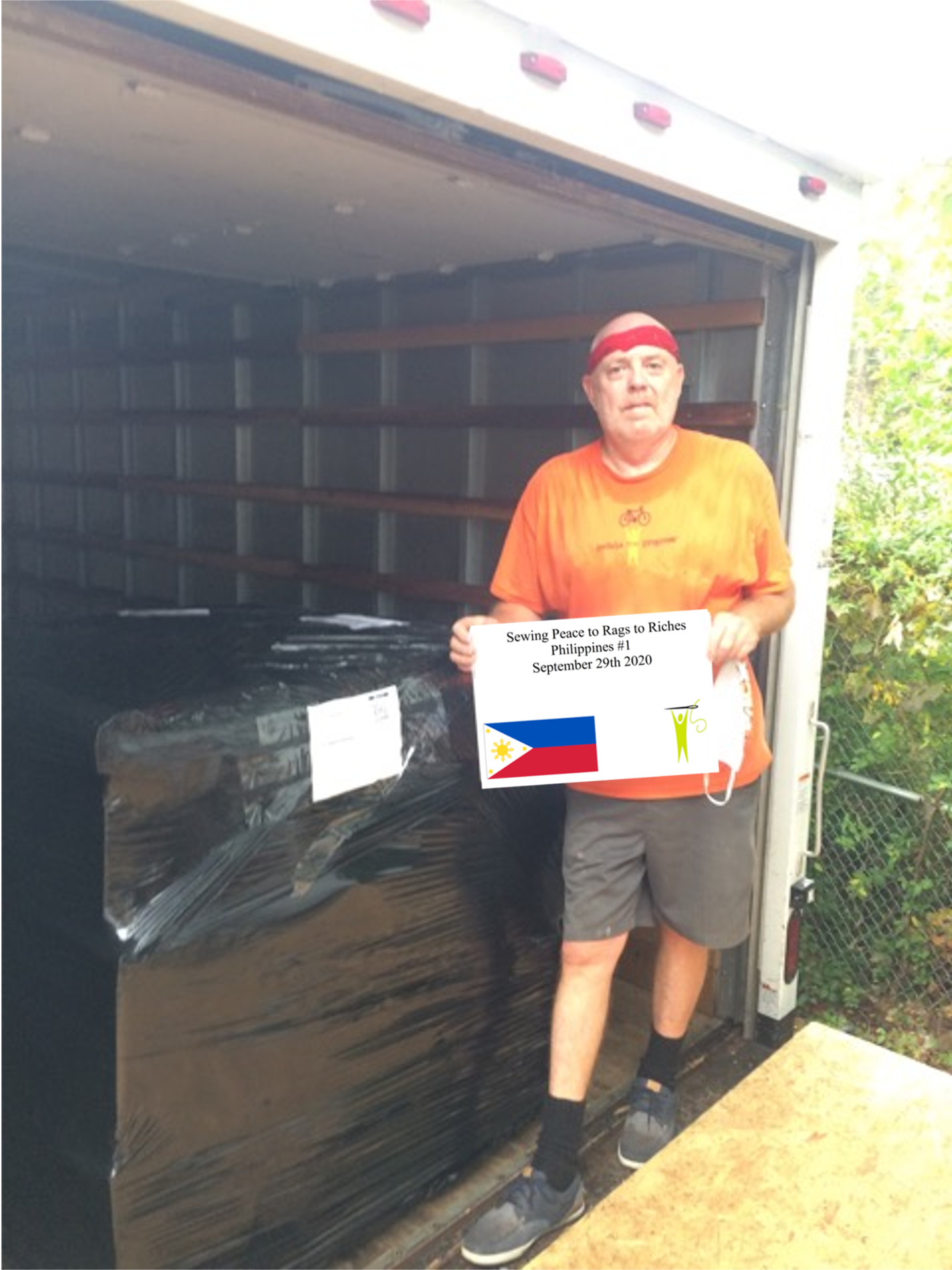
I am featured with Reese Fernandez–Ruiz of Rags2Riches from the Philippines about waste recycling. The discussion was moderated by Jeff Kirschner from Litterati. We did a tremendous amount of preplanning over several weeks getting ready for interview. Jeff turned out to be an incredible moderator. The taped interview took place with Reese in the Philippines joining us at 8pm and Jeff and I in the United States at 8am. It was a great experience and I now have a friend and new P4P partner in the Philippines. We shipped 35 sewing machines to the Philippines on September 29th.

But the reason I am bringing all this up is that for the first time someone dragged out of me the answer to the question, Why do you do this? It’s amazing after 29 years I had never discovered the answer; it was buried very deep. I believe I had it on the tip of my tongue, banging around inside my head. When Jeff dragged it out of me, I was shocked. I have been stewing on my answer for about a week. I had no idea but now I know.

In 1959, when I was five years old, I watched my father die suddenly. He was an electrical engineer unifying all of the various small electrical generating stations on Cape Cod, Massachusetts, into one electrical grid. The life insurance was enough to pay off the mortgage on the house; and my mother, sister, brother, and I started living on Social Security and Veterans benefits. We basically went from an upper middle class family with a bright future to paupers. A great austerity came over the family. It was hard and continued so throughout my childhood.

So Jeff asked me, Why did you do this? From way down deep inside, ripped from my guts and my eyes tearing up, the answer was dragged from my mouth and I was shocked by it. Still today, a week or two after the event, I am shedding tears remembering my answer. It was the simplicity of the answer that shocked me along with the ferociousness of my belief in the answer.

So now I know why I changed the course of my life, created this organization, and have helped over 158,000 families in 43 different countries, countries north and south, east and west. Our mission is not about bikes; it’s about economic development: helping people to help themselves have a better life. I’ve not done it alone; many many people have come to my aid, including all you loyal supporters. So I’ll leave you here with my answer.

No kid should go hungry! That’s why. I never knew that that was my deep base reason. Now that I’ve figured that out, if I could just solve climate change!

SUMMER 2017 NEWSLETTERS: PRESIDENT’S LETTER

Pedals for Progress
Sewing Peace
Post Office Box 312
High Bridge, NJ 08829
908-638-4811
pd4ls@comcast.net
www.p4p.org

June 15, 2017

Dear Donors,

Winter finally ended—I thought it never would—and we are back to collecting bicycles and sewing machines. This spring we have already made three shipments of sewing machines to new partners in Ethiopia, Uganda, and Liberia. And we have made two shipments of bicycles: we shipped a container of bikes to WeBikes in Ghana, their 20th container, and we made our 19th shipment to our long-term partner FIDESMA in Guatemala. This shipment to Guatemala was very special indeed because within that 40-foot container was our 150,000th bicycle shipped!

Traditionally we have sent our newsletters InGear and InStitch, both full of great stories, prior to sending a solicitation letter such as this. The world is changing and P4P/SP needs to change with it. Printing and mailing a hardcopy newsletter costs several thousand dollars. To save money, we are not going to print our summer newsletter; for the first time we are going to have this summer’s newsletters online only. Being old school, I like to have a physical newsletter that I can hold in my hand and read and we will probably print such a newsletter in November for the end of the year. But for now our summer newsletters are going digital. They are available with all our newsletters on our website . The newsletters have exciting success stories from Central America, Africa, and Central Asia that I am sure will inspire you.

Our crew does the hard work of collecting, preparing, and shipping the thousands of bicycles and hundreds of sewing machines we ship every year. P4P/SP gives thousands the opportunity to lift themselves from poverty but we are basically a logistics company. We transfer opportunity by taking recycled goods and moving them to where they can do the most good. We need your continuing financial support to accommodate the domestic trucking, warehousing, and international shipping of our growing production.

Please make a donation today. Your donations guarantee many individuals the opportunity to be successful.

Sincerely,


Dave Schweidenback
Founder and President
Pedals for Progress

President’s Message, Spring 2020: Coronavirus

By Dave Schweidenback
Spring 2020 Newsletter

I was really excited coming into this spring as we had a great collection schedule. Over the last year and a half we have created many new exciting partnerships overseas: Nigeria, South Africa, Thailand, Togo, Tanzania. We had demand from our current partners in Albania, Kosovo, Guatemala, Sierra Leone, and Uganda. And we had a constant stream of solicitations from potential new partners. It was such a nice plan: a great collection schedule and lots of potential shipments. Then the coronavirus struck.

We run public gatherings with over 100 people attending. We run work crews of five or six men who load containers for shipment. On March 16th I made the decision to shutter all operations until April 20th. On March 29th I extended the shutdown until May 31st. It is just necessary. [On May 14th, we canceled the last of our spring 2020 collections because of the closure of South Brunswick High School, where the collection was scheduled for June 7th.]

Shutting down our spring operations means shutting down half of our annual production. A significant piece of our finances is the actual collecting and shipping of bicycles. That $10 donation with each bicycle or sewing machine adds up. It is what we use not only to pay for the truck, but also to pay our rent and for essential services. Is it possible we could run collections in June? I just don’t know.

Assuming we receive no assistance during this crisis, Pedals for Progress is in a position to maintain paying our employees through September. One would hope that in September we will renew our operations and then restart the cash flow. There is going to be a lot of pent-up demand from our partners overseas that were really expecting shipments this spring. We have 500+ bikes that were scheduled to be loaded for shipment to Thailand on March 28th. We cannot safely put five men in a 40-foot metal box for five hours to load the container. Like our collections, shipments also need to be put on hold.

The newsletter we can alter right up to the day we launch it on the website. But the solicitation that we sent to you needs to go to the printer then get labeled and mailed. It was written a month before you see it, and a lot can happen in a month these days. Since I wrote the solicitation, I have applied for a grant from the Small Business Association, a grant from the New Jersey Economic Development Association and the Paycheck Protection Program through our bank. We have not yet received any of these funds; however I do think there will be help coming from the government and that should help with our overhead for a minimum of two months.

Usually in the spring we are really busy with collections and then we produce our newsletter as time frees up near the end of the collection season in June. This year I hope to have some early summer collections, but at the moment we have lots of free time. So we decided to produce our spring newsletter now during this lockdown so we will have more time to run collections when this situation is behind us.

As always, we send a prepaid remit envelope in case you wish to make a donation. In this time of social distancing and limiting contact, consider making your donation online at our website www.p4p.org. It is a little more expensive than the prepaid envelope but might be safer.

Stay safe. Stay home. Pedals for Progress and Sewing Peace will be back as soon as it is safe.

Sincerely,

Fall 2019 Newsletter

Fall 2019


Delivering a Sewing Machine in Albania

By Ambra Leka, PASS/EcoVolis
Fall 2019 Newsletter

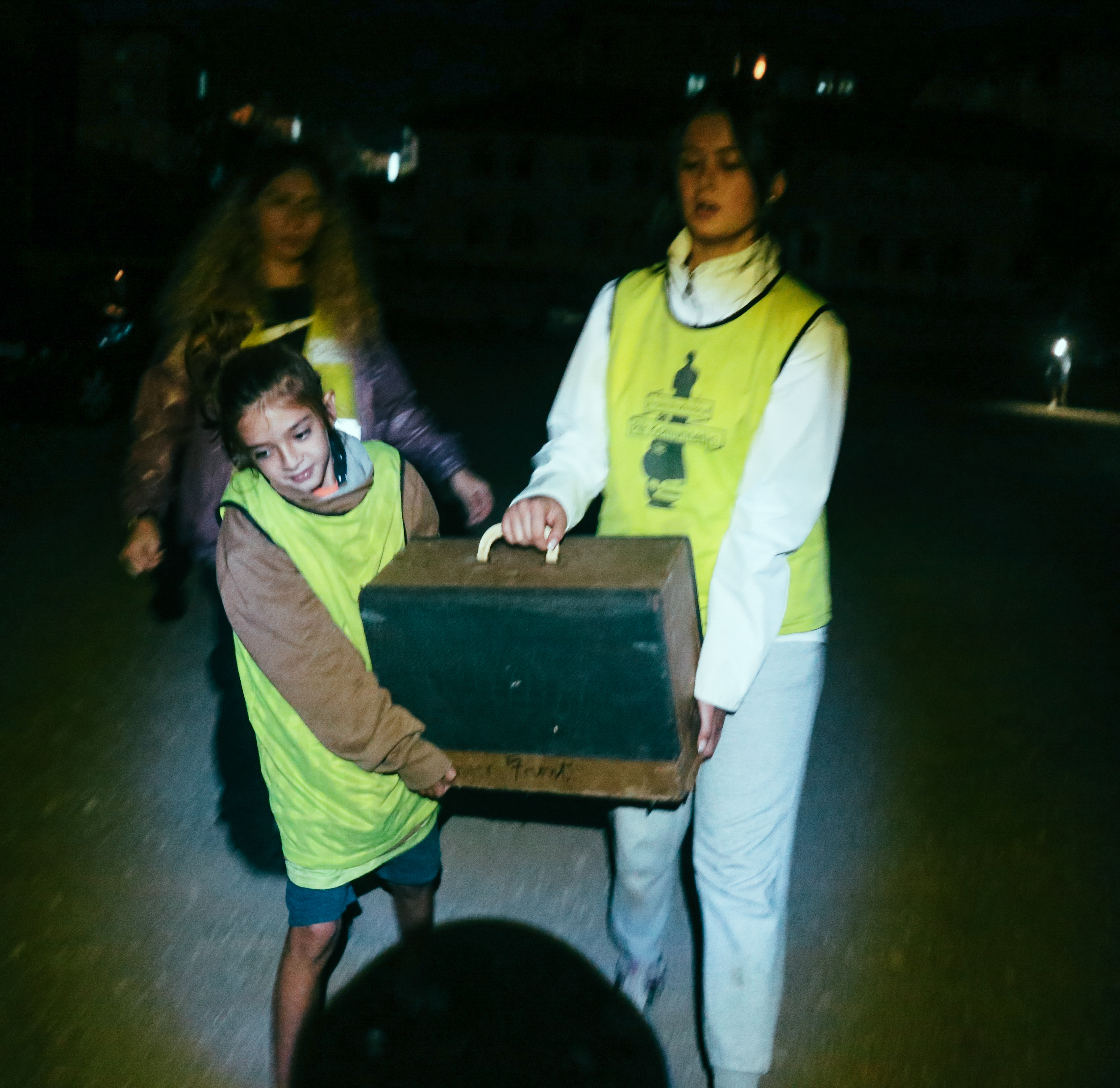
One family, unlike any other family we’ve visited, made us realize that despite the difficulties in their lives, they still have great heart, welcoming smiles, and a lot of love to give. On a cold autumn night in 2019 we visited a social house in the north city of Tropojë. We knocked and the lady of the house opened the door with a full blown smile, her eyes glowing, and welcomed us openly. But her husband — why didn’t he listen to what we were saying?
The couple were born without the ability to speak or hear. After some time as friends, they fell in love and started living together, desperate as any couple to raise a family and become parents.

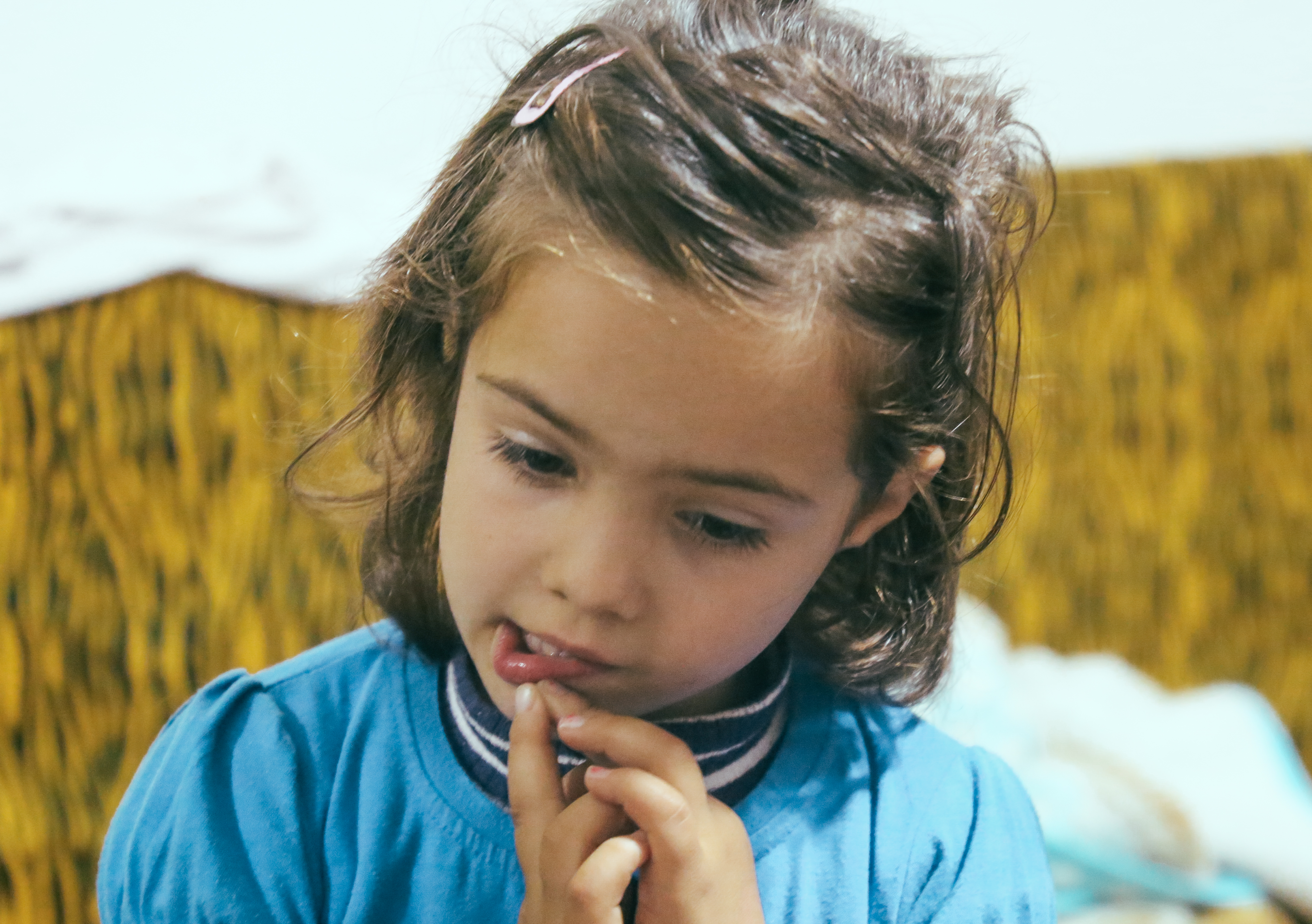
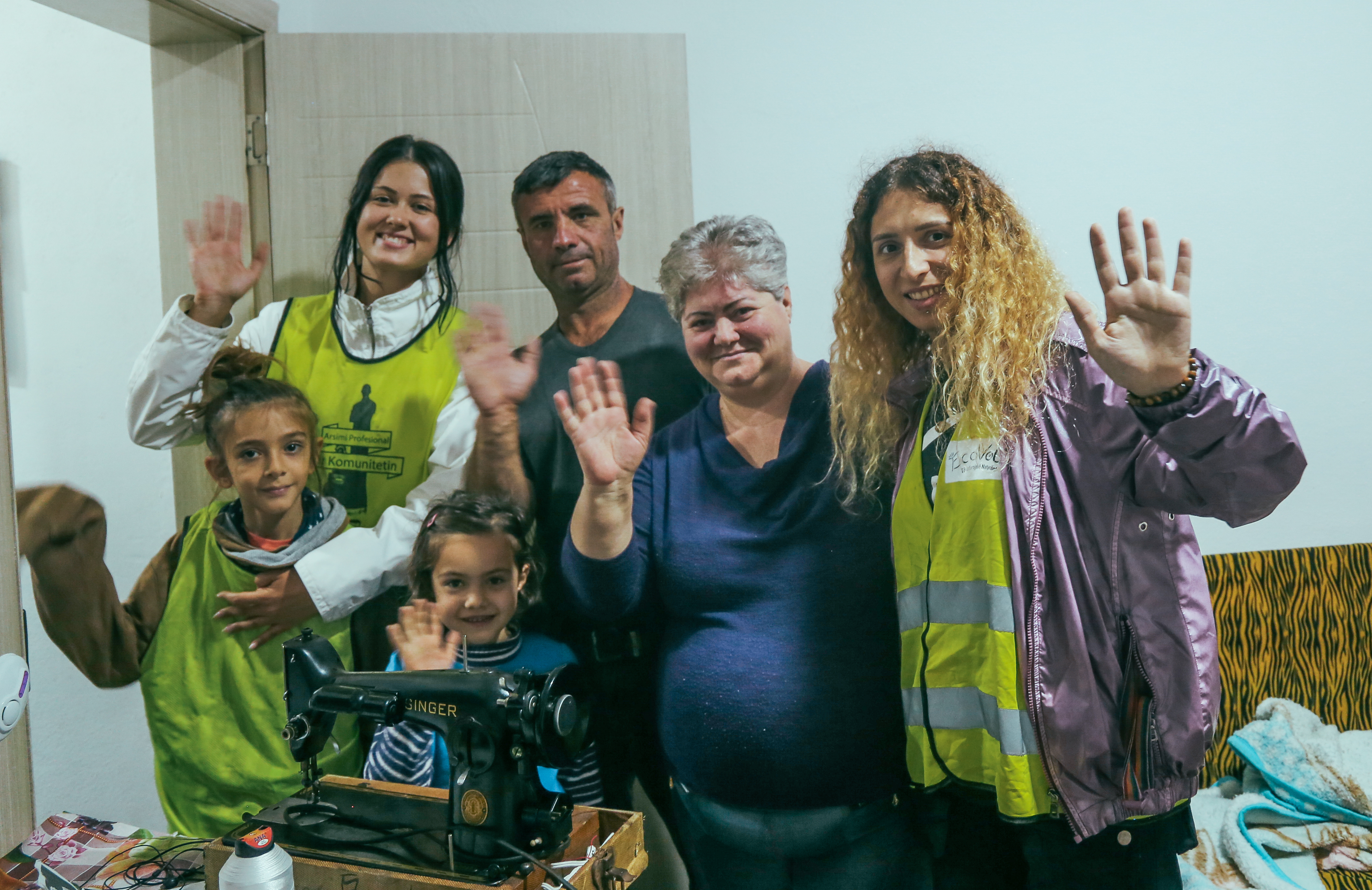
What can we say? We only had one sewing machine to donate. It seemed symbolic to us, but to their family it seemed like we were donating a treasure. We went inside, put the sewing machine on the table, and met their little girl, who greeted us with her sweet voice and an angel face. It was so nice to see a family where mom and dad couldn’t even talk or hear, but their daughter somehow could understand and communicate with them. And why was she so small?

We explained how they could use the sewing machine. The lady with a longing and patience watched us as were trying to explain how she could use it. We didn’t know how to feel, what to say or how to act. Her husband left us for a moment and went into the next room. He returned with another sewing machine that the lady had used before it was broken. He had been working on it but had never been able to fix it, much less buy a new one.

It’s hard to describe what I experienced: my happiness and the happiness that the family felt in those moments. They thanked us immensely for the sewing machine while I as a 20 year old girl and young activist want to thank you for the opportunity, the confidence, the cooperation and what I experienced when I knocked on their door, just with a sewing machine that was not mine. THANK YOU.

EcoVolis video (43 seconds) of the delivery of the sewing machine


2019: Hard Times in Guatemala

Fall 2019 Newsletter

FIDESMA, in San Andrés Itzapa, Guatemala, is our longest-running partner. Our first shipment there was in 1999. Since then we’ve shipped them 10,333 bikes and 314 sewing machines.

Crime rates in Guatemala are high. Our partners at FIDESMA say that crime has hurt the local economy. Partly as a result, we’ve partly subsidized a shipment there for the first time.

Still, FIDESMA remains one of our most active partners, with programs in agriculture, health, conservation, special education, and job training, as well as bicycle and sewing machine programs.

Here are a few recent photos from FIDESMA and the story of a man who may be our oldest customer.

Vincente Chun

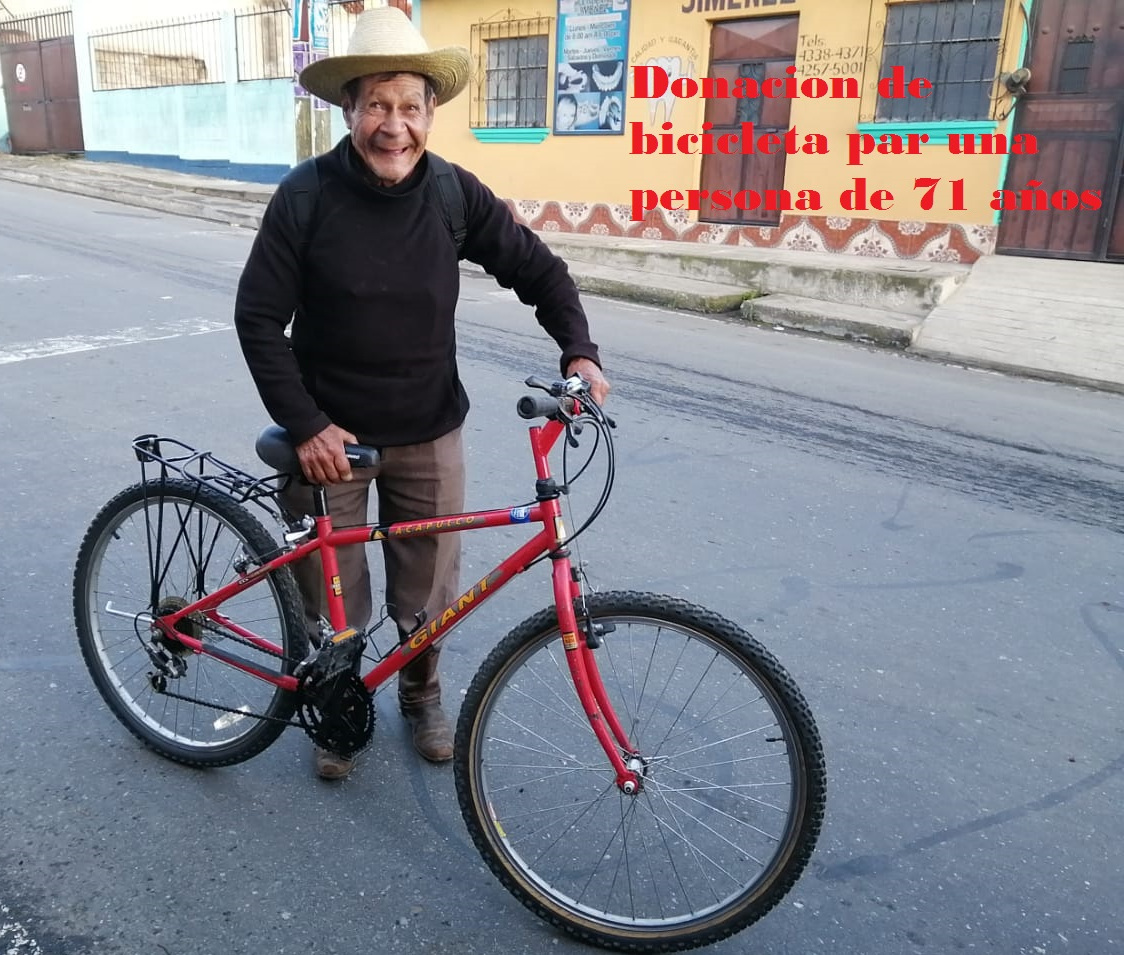
Vicente Chun is 71 years old. He travels by bicycle every day to the field where he plants and tends corn and beans. He also works as a night watchman. He gets his food and clothing at a senior center. On the weekend he attends church near his home.

Unloading a Container

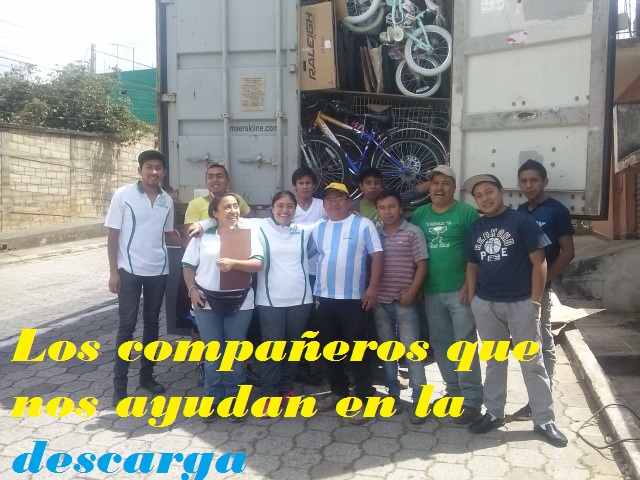
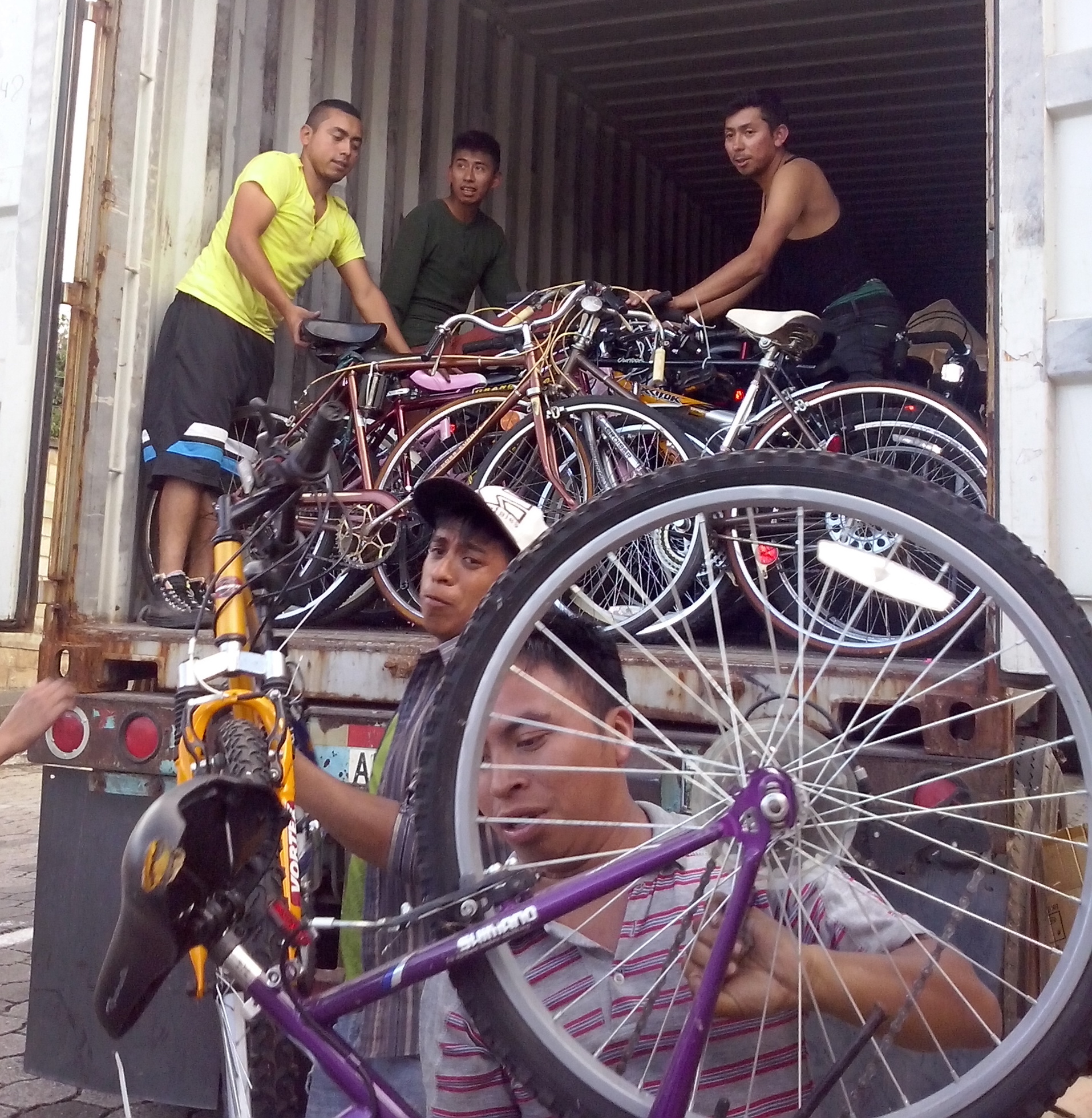
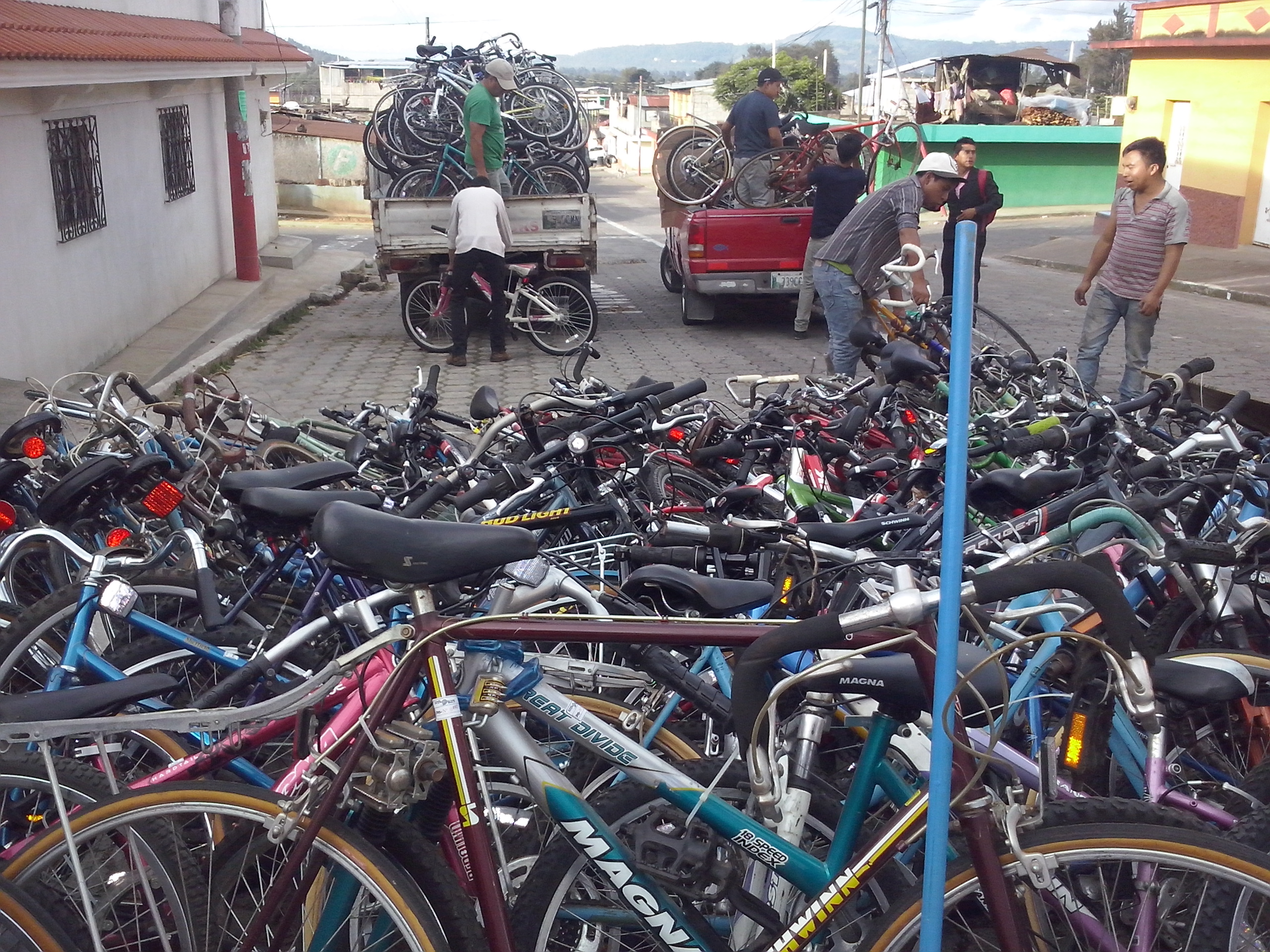
We regularly post photos of our U.S. crews loading containers at our Glen Gardner site. Here’s a photo of the loading of P4P’s 150,000th bike, which went to FIDESMA in April 2017. Here are some photos of what happens when a container gets to Guatemala.

The unloading team

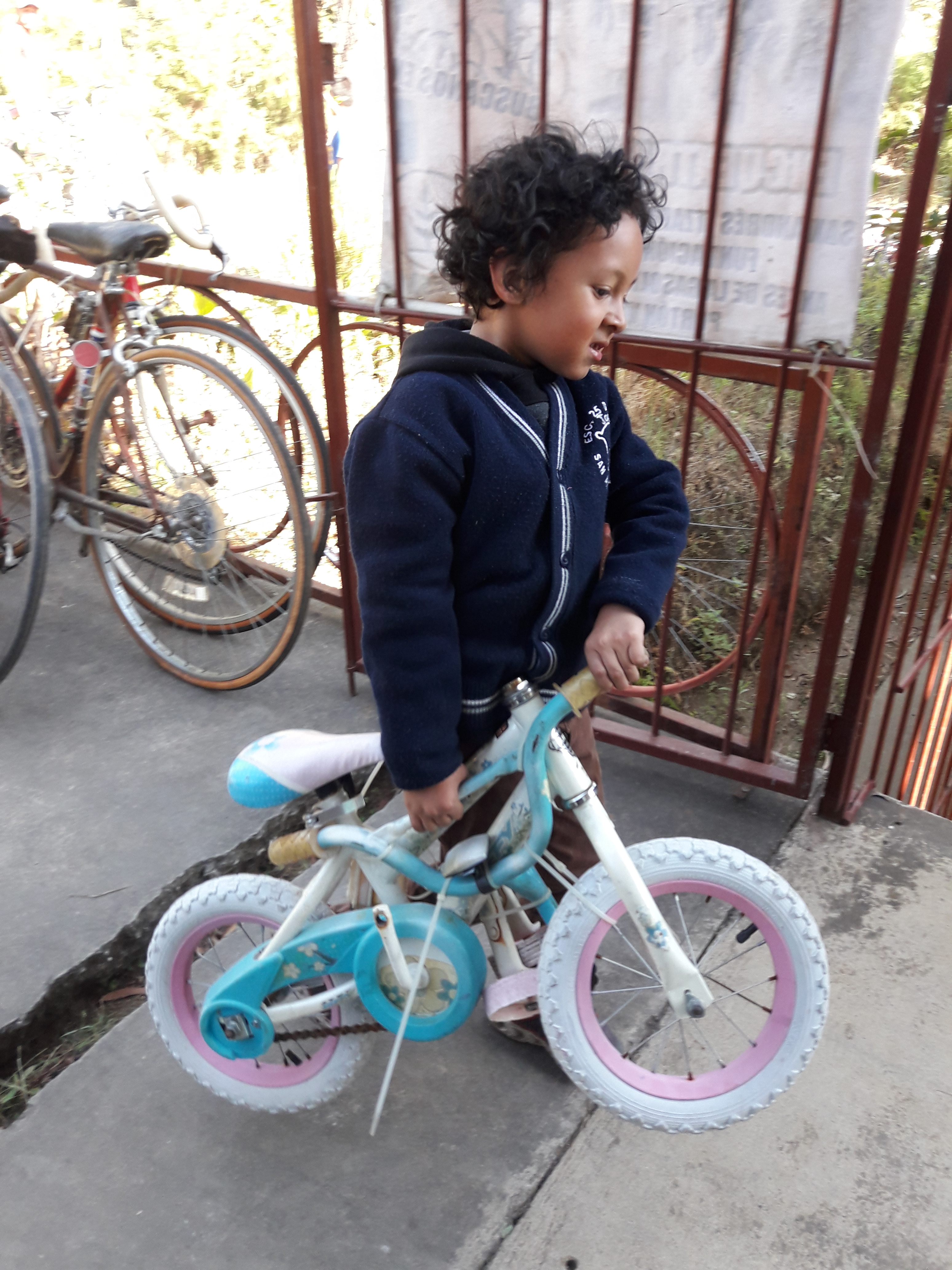
The youngest member of the team


Robert Musil’s Sewing Machine: from New York to Togo


Fall 2019 Newsletter

Robert Musil

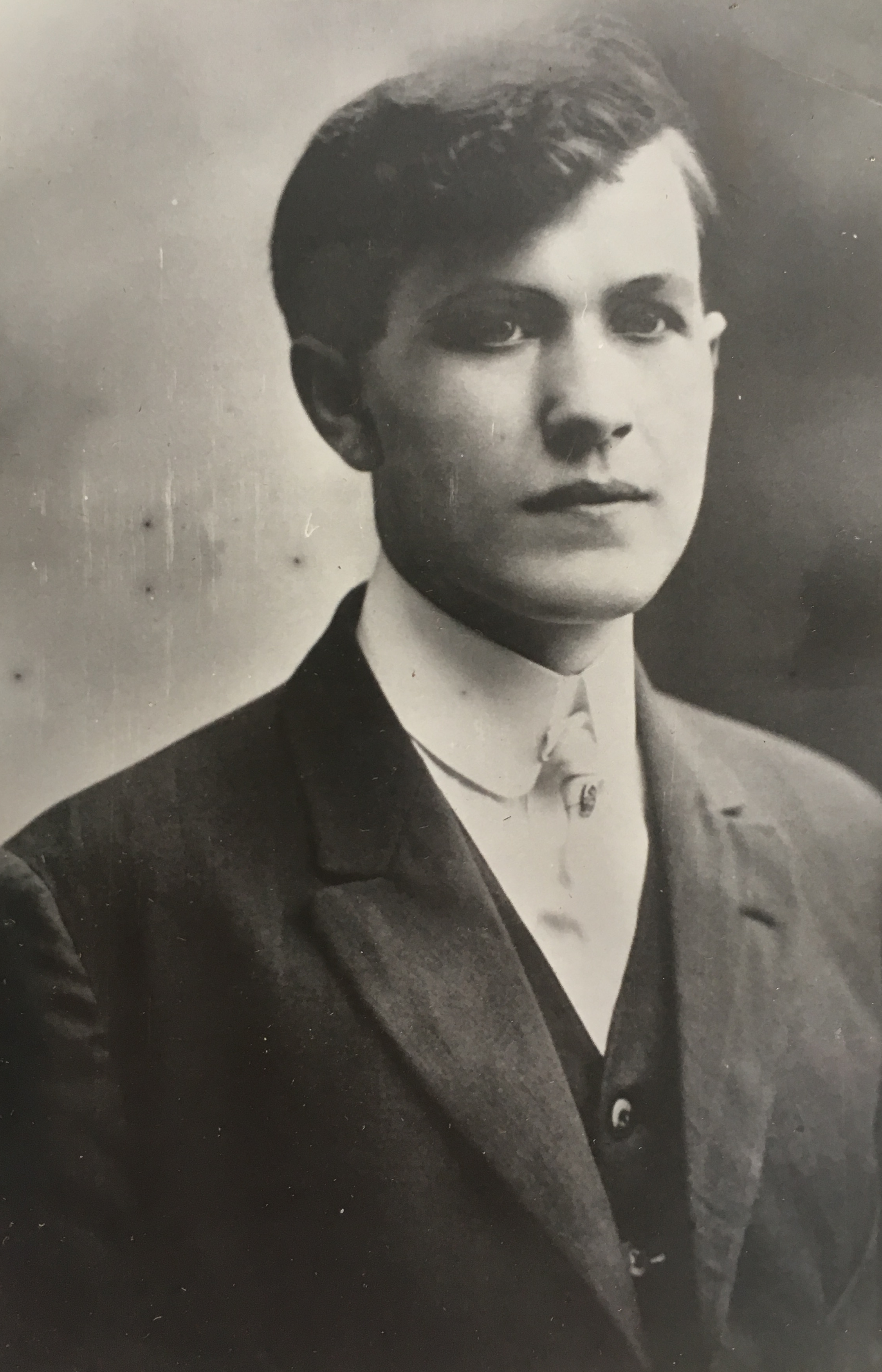
Robert Musil, 23 years old, left Krizanow, Moravia (now the Czech Republic), in October 1910. His sister Fanny Vogel had previously emigrated to the U.S. and she and her German husband sponsored Robert’s trip. He traveled north to Bremen in Germany and embarked for the U.S.

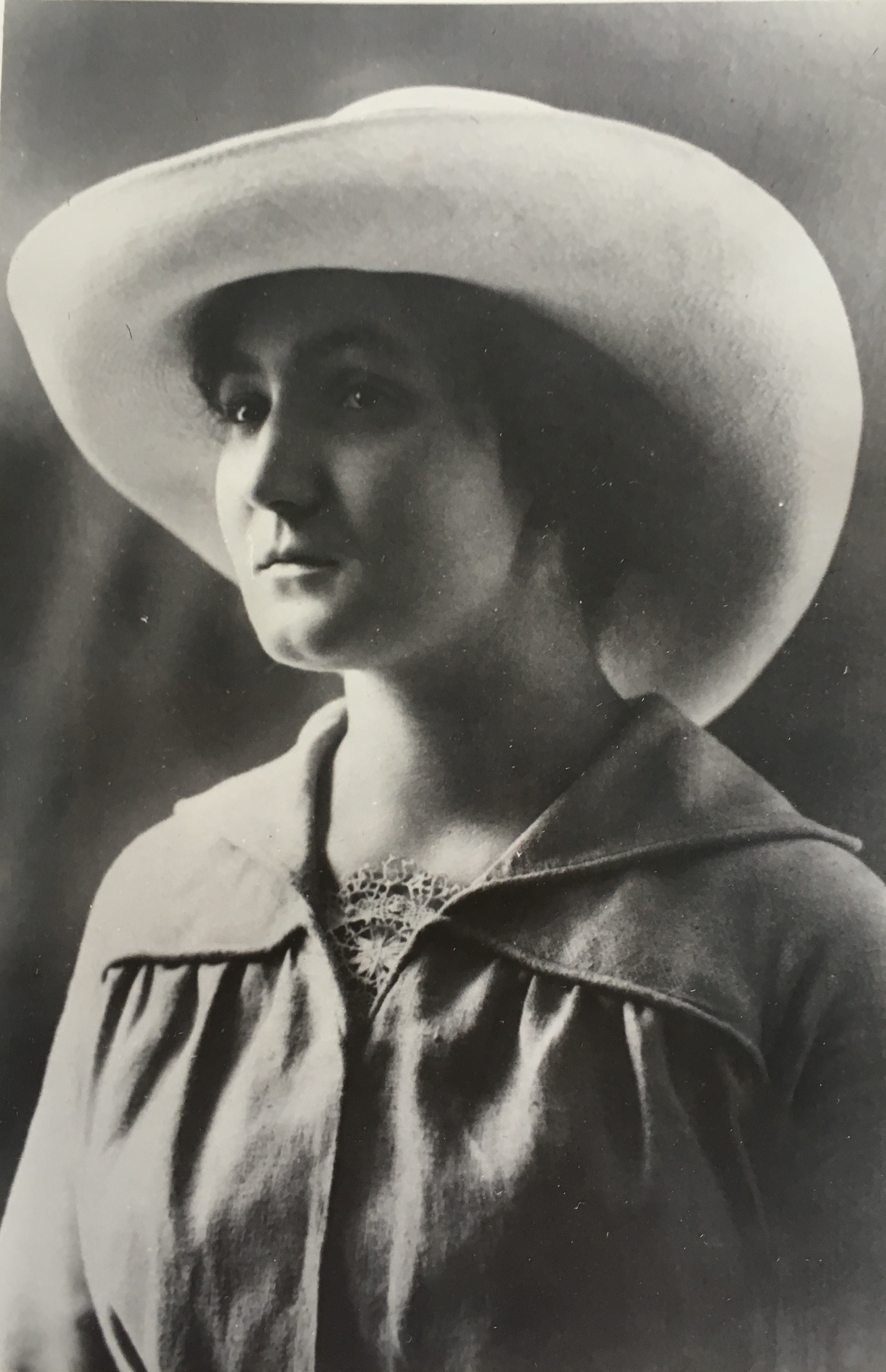
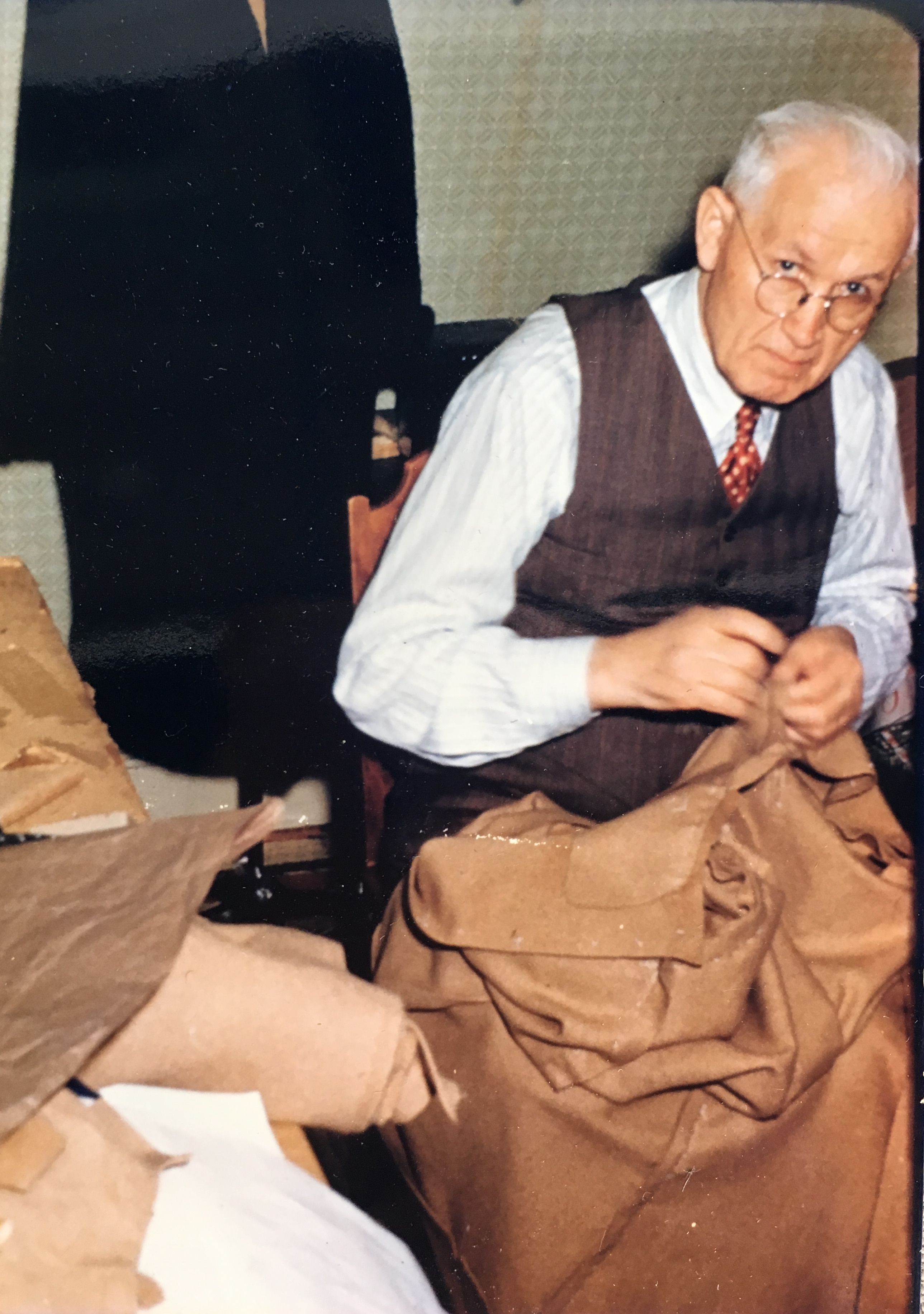
He arrived at Ellis Island November 17, 1910, looking for a new life and greater opportunity. Like most immigrants he was not looking for a handout but rather to become a creative part of his new country. He was ready to work. Robert was a tailor, made a living his whole life sewing. He is an American success story of how immigrants enrich America. In 1912, Robert married another Czech, Bozina Ourednik. They had two daughters, born in 1914 and 1917.

Bozina Ourednik

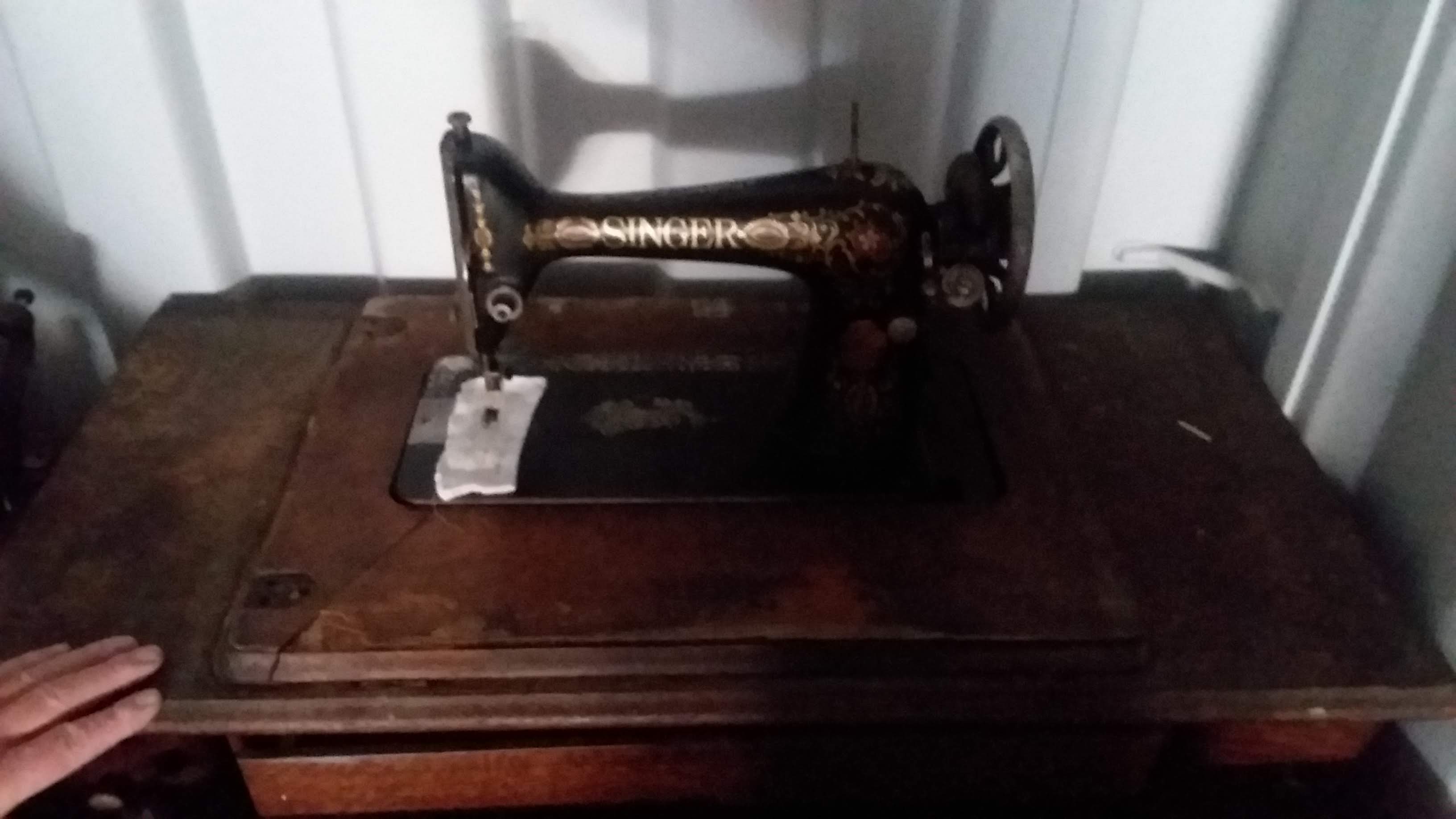
Robert was an entrepreneur who supported his family through hard work and great skill. He bought himself a new 1912 Singer manual sewing machine and went to work. In New Rochelle, New York, he worked out of the front parlor of his home where he had a large triple mirror so his clients could see themselves in the custom-made dresses and suits he made. He basically had only a half-dozen wealthy customers, for whom he made evening gowns, suits, and coats.

Robert passed away in 1960. His sewing machine stood idle, finally ending up in his granddaughter’s garage, a family heirloom but what to do with it? The 1912 Singer was waiting for a new life somewhere, ready to go back to work. All these years later his granddaughter, Betsy Richards, still had the sewing machine packed away in her garage. After learning of the mission of Sewing Peace, Betsy decided the best thing to do with it was to donate it so someone else could make a living with that high-quality machine made in the U.S.

Robert Musil’s 1912 Singer Treadle Machine

In comes Anne Fitzgerald, sewing machine collector extraordinaire. Betsey found Anne because the P4P/SP collection was announced in the local newspaper. On October 5th, 2019, Anne brought the sewing machine to the P4P/SP collection at the Asbury United Methodist Church in Croton-on-Hudson, New York. The collection was sponsored by the Croton Lay Interfaith Council.

Robert Musil

Gary, our V.P. and collection coordinator, went to that collection and brought that sewing machine back to the warehouse. Then Dennis our tinkerer did some minor maintenance on the machine. It is now working beautifully!

Robert Musil’s sewing machine shipped to DRVR, our partner in Togo, West Africa, on October 26, 2019. Previously, DRVR had received only one shipment of sewing machines. But with the generous support of the Clif Bar Family Foundation, DRVR is now a bicycle program as well as a sewing program. We hope to be able to trail along to the final destination of Robert’s machine and bring you the conclusion of the story in our 2020 spring newsletter.

Success Story from Togo

Fall 2019 Newsletter

Mrs. Afi Brigitte Ametowoyona

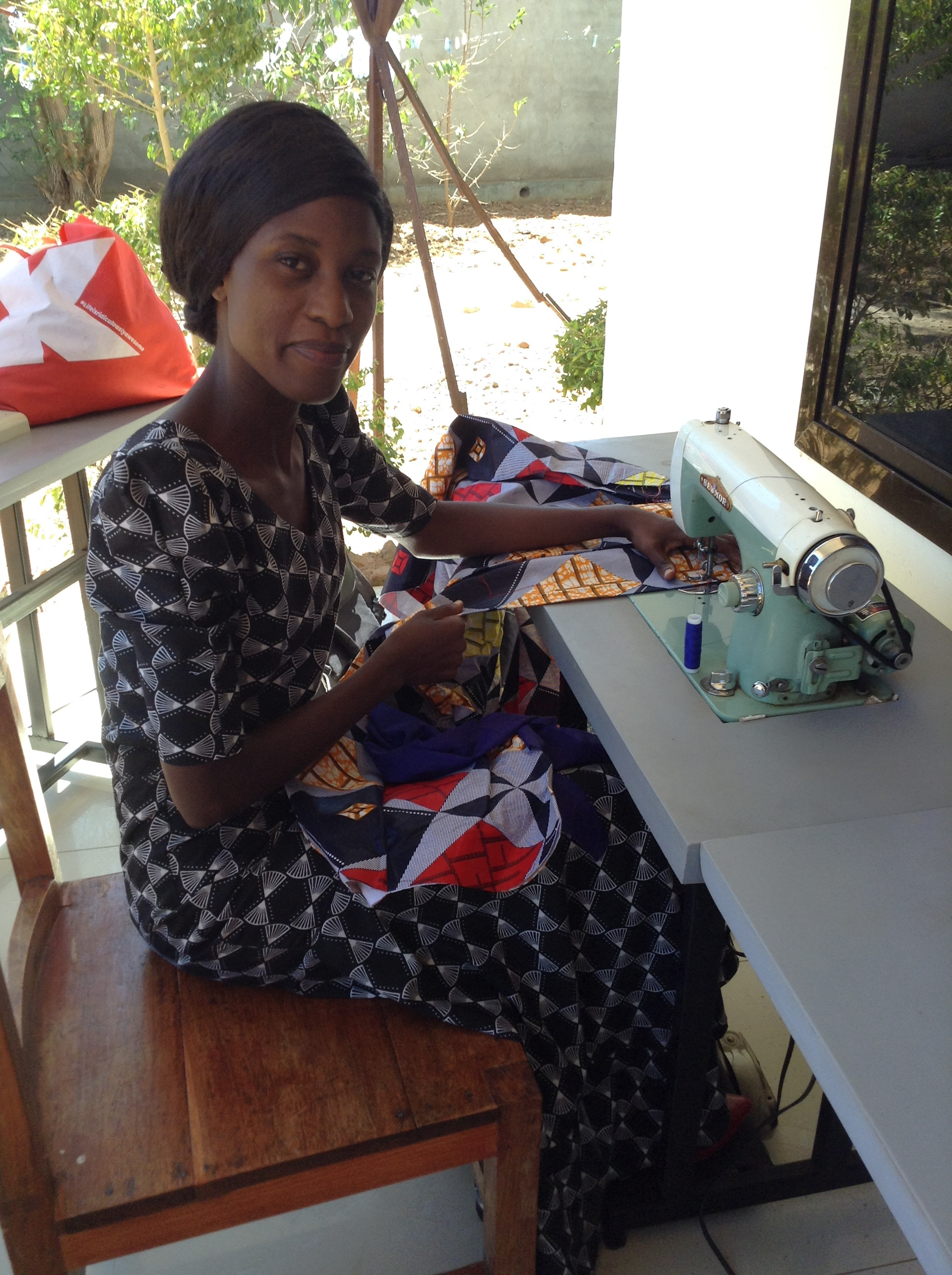
Mrs. Afi Brigitte Ametowoyona lives in Vogan village, Togo, and is the married mother of five children. Before she joined a DRVR sewing apprenticeship workshop she rented a sewing machine for U.S. $10 a month. But at the end of her apprenticeship she got a Sewing Peace machine at no charge as part of the program. She can now save money to feed her family and pay school fees for her children.


Field Report from Mityana, Uganda

By Mathew Yawe
Fall 2019 Newsletter

Mityana Open Troop Foundation is a community organization with a vocational skills training centre, recruiting and training disadvantaged youths. After a two-year program in vocational skills, graduates are awarded certificates along with a start-up sewing machine.

Sewing Peace U.S.A. has done a great job in supporting our organization, having shipped us more than 200 sewing machines starting in 2017.

Here are two of our success stories.

Sarah Nakiganda

Sarah Nakiganda

Sarah Nakiganda is 20-year-old project graduate of 2017 who was donated a Singer sewing machine.

She is a school drop-out of primary 4. Because she was not thriving in formal school, she was brought to our training centre to learn income-producing skills.

At our training centre she performed very well in practical hands-on work. Since she graduated in 2017, she has managed to rent a small room in the town of Mityana, where she earns money making and repairing dresses of all sorts.

She earns between $5 and $7 U.S. per day. With her earnings, she has managed to pay for her younger two sisters’ education, including their school fees and scholastic materials.

Joan Namiyingo

Joan Namiyingo is a 30-year-old single mother. She graduated from our centre in 2017, received a Singer machine, and now supports herself and her child.


New record for time in customs: Uganda, 2018 – 2019


Fall 2019 Newsletter

A successful development project has several requirements. We respond to all requests yet are able to fulfill only a small portion of them. Our best answer is that we work where the world allows us to work.

  1. Our first necessity is a seaport. Shipping by water is cost-effective. Countries without seaports, especially countries deep in the interior of a continent, are much more expensive to get to. The cost of the overland shipping is double that of ocean-going freight.
  2. Our second necessity is a reasonable government at the destination. The shipping only arrives at the front door. It is the government of the destination country that opens the door to let you in. There are many countries that do not accept any used goods.
  3. Third and most important is a partner. We seek financial partnerships with the distributors of our bicycles and sewing machines. You equitably distribute a product in an economy by selling it. Just because you sell something doesn’t mean you have to charge a high price; it’s just that you need a mechanism to make the transaction work.
  4. Fourth and also critical is the funding. We beg for donations for the first load to get a program started. After that we use our original funding scheme, our revolving fund system: our partners share the costs of running their program. Through the process of distributing bicycles and sewing machines, our partners earn enough money to pay for the shipping of the next container and pay their ongoing business expenses, with some profit left over for the tertiary programs they run. All of our overseas partners have multiple other programs to help their societies; it’s not all bikes. But the bikes produce a constant stream of income to help pay for those other programs.

And then there was David Balaba, the mayor of Iganga, Uganda. Great guy. He didn’t have the first necessity, a seaport. His shipment went from New York through the Panama Canal past Singapore to Sri Lanka, was then shipped overland to Mombasa, Kenya. The cost to bring that shipment overland from Mombasa to Kampala was exactly double the cost of the entire ocean voyage.

David, the mayor of Iganga, did not have a reasonable government. Gaining entry to Uganda has always been difficult and costly. More on this later.

What the mayor did have was number three and number four. He had a solid plan for helping his community in northeastern Uganda. Plus he was able to secure funding from the Live your Mission Foundation. Two out of four — what could go wrong?

Sewing Machines for Uganda, 2019On March 21, 2018, Sewing Peace loaded 69 sewing machines and sent them to Mayor David. They sailed away down the Atlantic, across the Caribbean, then across the Pacific into the Indian Ocean and made it to Mombasa on May 23, 2018. At some point during the next month they were probably transferred to the destination, Kampala, the capital of Uganda.

Remember that second necessity up at the top. Mayor David had all of his paperwork in order. He is tax-exempt and is the mayor of a fairly good size town. All the i’s were dotted in the t’s were crossed. Ahh, number 2!

The government finally released the cargo in mid-September 2019, over 15 months after it arrived in the country.


Vietnam 2019: the story of Chau Thi Huynh Huong

Fall 2019 Newsletter

Chau Thi Huynh Huong was born in 2008 into a poor family in a remote rural village in the Mekong Delta, 200 km west of Ho Chi Minh city, Vietnam. With no land and no high school education, her parents are day-workers with no stable jobs or income.  The two old coconut trees by their dilapidated house are the only charming sights nearby. Her parents go to work from dusk to dawn to make ends meet. But at low season they cannot afford to pay all the living expenses of the family. Understanding her family’s circumstances, Huong often told her parents that she wanted to leave school to help them to earn income and to save the cost of her education, but they never agreed. Her parents told her that they had not had enough money to afford higher education for themselves, and that’s why they are so poor today.

One day in 2017, when Huong was at school, she was told by her teacher that she needed to leave school immediately to go to the hospital because her mother had a serious motorcycle accident. After six months in the hospital, her mother was sent home but she needed a wheelchair to get around.

Recently, Huong has been doing all of the housework and taking care of her mother: changing her clothes, bathing her, and preparing her daily meals. Her father was offered a job as a security guard at a school nearby, earning a better income than before.

Huong was on Dariu’s waiting list for a bicycle. The Dariu Foundation is the P4P partner agency in Vietnam. When the container of bikes arrived from Pedals for Progress in 2017, she was among the first girls to get a bike. Since the day she got her bike she got to school faster, saving time to help her family and attending class with better spirit. Her teacher has seen obvious changes in her attitude and feels happy about it. Besides, with the new bike, she can also run errands, such as buying poultry-feed, without waiting for her father to get home.

The bicycle has played an important role in Huong’s and her family’s daily life, and also brought her more joy and motivation for going to school.


Report from Vermont, Fall 2019

Fall 2019 Newsletter

On 21 September 2019 the Vermont Green Mountain Returned Peace Corps Volunteers (GMRPCV) held their annual collection. Vermont Knights of Columbus groups also held a September collection. The combined shipment from Vermont contained 139 bikes and 95 sewing machines, including the 500th sewing machine from the GMRPCVs. Here are the reports.

Green Mountain Returned Peace Corps Volunteers

By Joanne Heidkamp

We packed a total of 245 items into 4 containers: 139 bikes and 95 sewing machines. We also shipped 25 new bike seats donated by Terry bicycles.

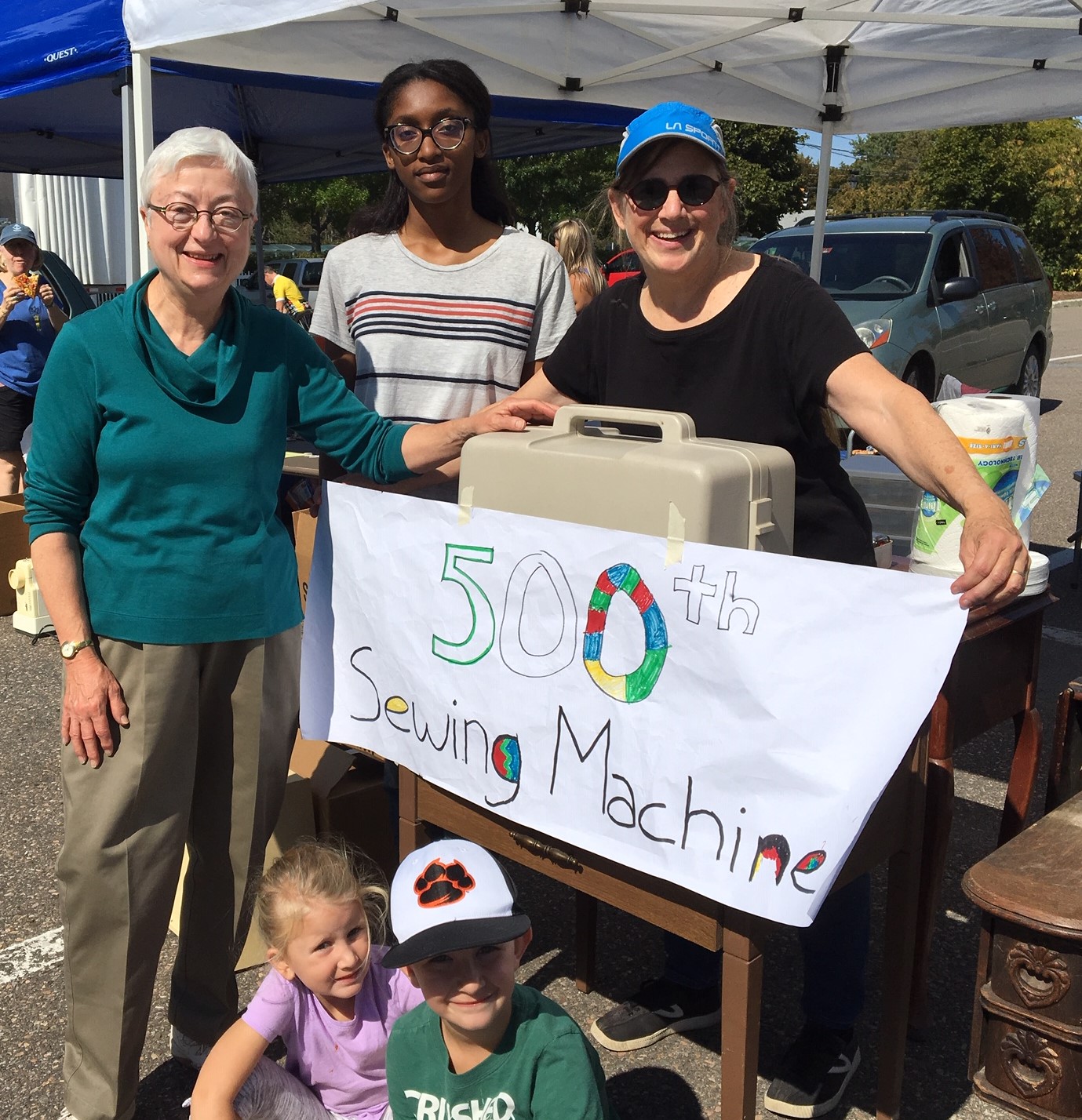
A highlight of the day was receiving our 500th sewing machine, a lovely Bernina donated by Lucy Beck, of Shelburne, Vermont.

We collected $1,795 in cash and checks. You’ll be receiving a separate check for $410 for Mary O’Brien’s 41 lovingly tended sewing machines. Several people did not donate items, but have emailed me asking about sending shipping money directly to P4P — including a woman who works for USAID in Albania! And I hope to get $150–$200 for the 7 sewing machine cabinets that I have listed on Craigslist. Individuals in the group absorbed several hundred dollars in costs, including pizza and snacks, postage for the reminder postcards, plywood, … We can confidently say P4P will have $10 per item in hand by Thanksgiving.

Quality of the bikes and sewing machines was great overall, with a few really nice, high value items.

Thanks to everyone for their help. Thank God it’s only once a year!

Knights of Columbus, District #1, Fairfax, Vermont

By Ed Nuttall

Ed Nuttall, Peter Fitzgerald, and Bob Thompson

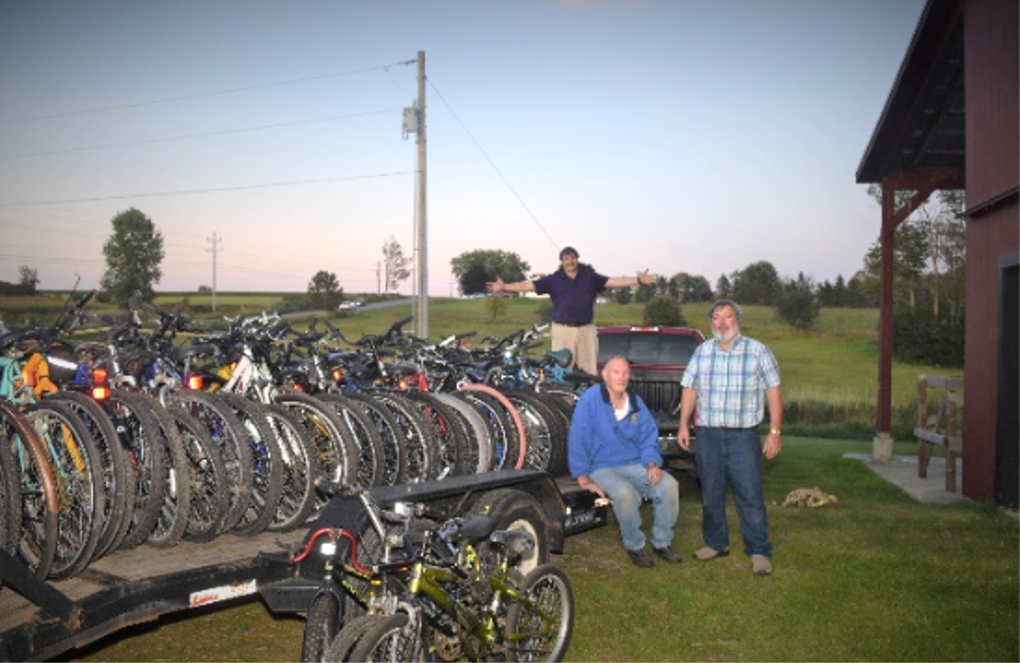
On 7 September 2019 members of Knights of Columbus Council 10830 held a bicycle collection at Langelier’s Car Wash. Fairfax Council 10830 and Milton Council 10417 (Police and Fire Department contribution) collected fifty bikes. The bikes were stored in Pete Fitzgerald’s barn. We also collected 5 sewing machines.

The following Knights participated: Bob Thompson, Doug Lantagne, Peter Fitzgerald, Keith Billado, Skyler Billado, Greg Hartmann, and Ed Nuttall.

On 20 September, we loaded 53 bikes onto a trailer and delivered them to Burlington, where, along with the bikes and sewing machines collected by the Green Mountain Returned Peace Corps Volunteers, they were loaded onto a FedEx truck for delivery to the P4P/SP trailers in Glen Gardner, New Jersey.


Report from Tanzania, Fall 2019

By Norbert E. Mbwiliza
Fall 2019 Newsletter

[The 2019 spring newsletter described the ordeal of getting a container through the import process in Tanzania after the original destination organization went missing. Norbert E. Mbwiliza, the head of our newest partner organization in Tanzania, The Norbert and Friends Foundation, battled tenaciously to get the container to his headquarters in Arusha.

Here are Norbert’s comments on their bicycle program and a few short notes from people who have gotten bikes or sewing machines.]

Our bicycle distribution was very successful and productive in Tanzania. In rural areas where low-quality bikes are the norm, P4P bicycles have earned a superior reputation. Healthcare groups, development organizations, farmers, and individuals sought to purchase our bicycles for their programs and personal use. This market demand led us to create P4P as a social enterprise subsidiary of The Norbert and Friends Foundation that sells directly to those in need of reliable transportation.

There are many benefits in combining our philanthropic endeavors with an innovative social enterprise strategy: it is scalable and multiplies our organizational impact; it diversifies our revenue stream and provides funding for programs; it improves the efficiencies and cost structure of our education, healthcare, and economic development initiatives; and it creates a sustainable quality bicycle infrastructure in Tanzania.

The Norbert and Friends Foundation has since built programs to provide specially designed, locally assembled bicycles for students, healthcare workers and entrepreneurs across Tanzania. While the bicycles themselves help individuals conquer distance and increase their carrying capacity, the Norbert and Friends Foundation through its special P4P Program has also created new economic opportunities by training field mechanics and employing bike assemblers to support our local programs.

The P4P Bicycle Program in Tanzania has had several positive effects:

  • Capacity, time, and distance: Riding a bicycle is faster and easier than walking. In fact, you transport 5x more and travel 4x faster. Also, you reach 4x further compared to walking.
  • Education: A bicycle helps children to reach school faster, be more punctual and arrive fresher. A bicycle also makes a long school journey safer, particularly for girls, increasing enrollment and attendance rates. At the end of the day, more time also means more free time for homework and leisure.
  • Women’s empowerment: The Norbert and Friends Foundation trains young girls to become bicycle mechanics. They serve as role models for other women to become independent entrepreneurs. Women and girls suffer disproportionately from poor transport and mobility opportunities. With a bicycle, women and girls can start their own business, perform better at school, and face a brighter future.
  • Business and income: Bicycles have the power to enable new business opportunities, increase business productivity, increase opportunities for trade or increase the delivery of extension services. This leads to new opportunities to generate regular income for households. People who use bikes can save money because there is no need to pay for gas or transportation.
  • Healthcare: Being a fast and reliable mode of transport, bicycles improve access by the community to healthcare centers and access by health workers to the community. Riding a bicycle of course also gives our peoples legs of steel, improves their wellbeing and keeps them fit!
  • Environment: A bicycle is quiet as a mouse and causes zero emissions.

Here are notes from some of the people who have benefited from our programs.

Agripina

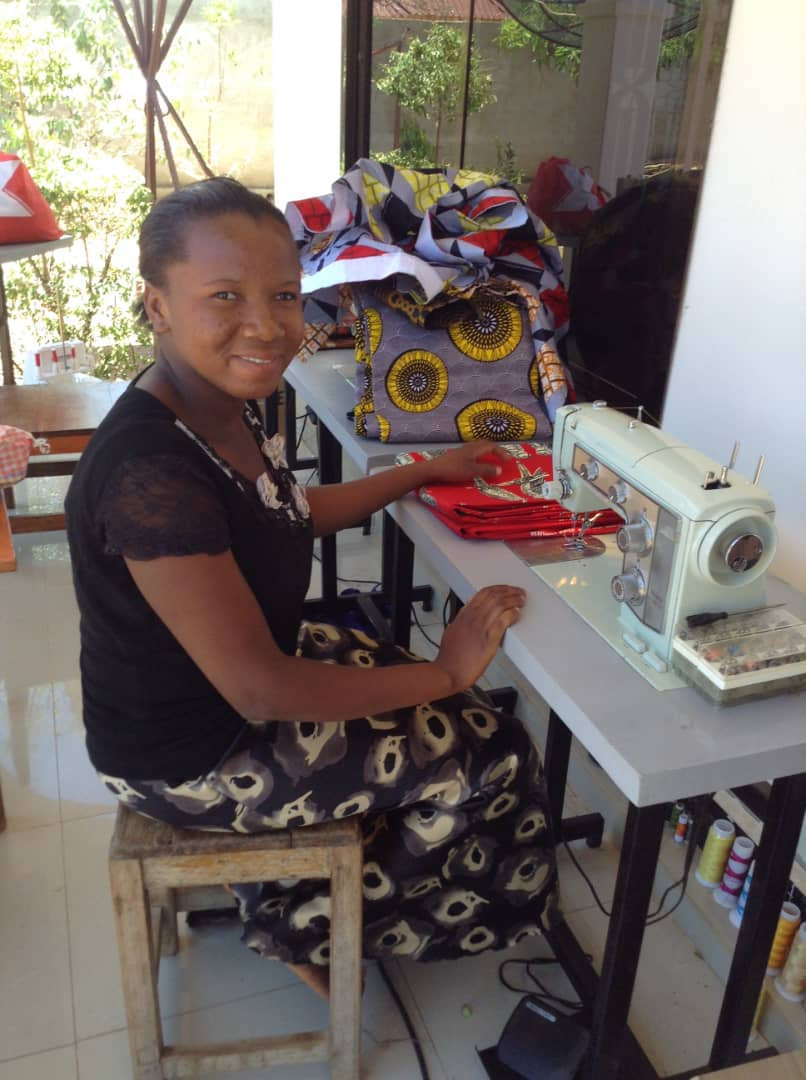
I always remember P4P because if not for them what do you think a girl like me would do??? Imagine that I — Miss Agripina — was very unemployed. P4P through The Norbert and Friends Missions has created employment for many young people and I am one of them. Now I find life a lot easier. I urge P4P donors to continue to fund this project in Tanzania through The Norbert and Friends Missions. For every P4P container, at least 400 people get support from a bicycle or sewing machine. In the youth group, most are girls who would have trouble finding safe and legal work without a sewing machine.

Benedeth

My name is Benadeth Hamisi. I am very grateful to the P4P project of The Norbert and Friends Missions for enabling me to get a sewing machine. Now I can support myself and earn my own income. Thank God. Because I work, I have avoided groups that can get me in trouble. God bless and protect you. I feel a cry of JOY.

Jackson

Hello my friends. My name is Jackson Nestory. You see me here laughing because since I got this bike I can be at my brick-masonry job and take part in various social activities fearlessly. The bike has become a great tool for me because I when I’m not using the bike I can rent it to someone who wants to pay me money. Life has been great for me. Thanks to P4P and The Norbert Friends Missions for your help.

Joseph

My name is Joseph Shija. I own a small business. As a businessman I see success because I arrive at work on time and I am not tired of traveling around many places. I enjoy my work and my community. I thank the servants of God for giving me this bike and for God’s blessing. The P4P project in Tanzania has become the voice of the voiceless. Thank you The Norbert and Friends Missions.

Suzana

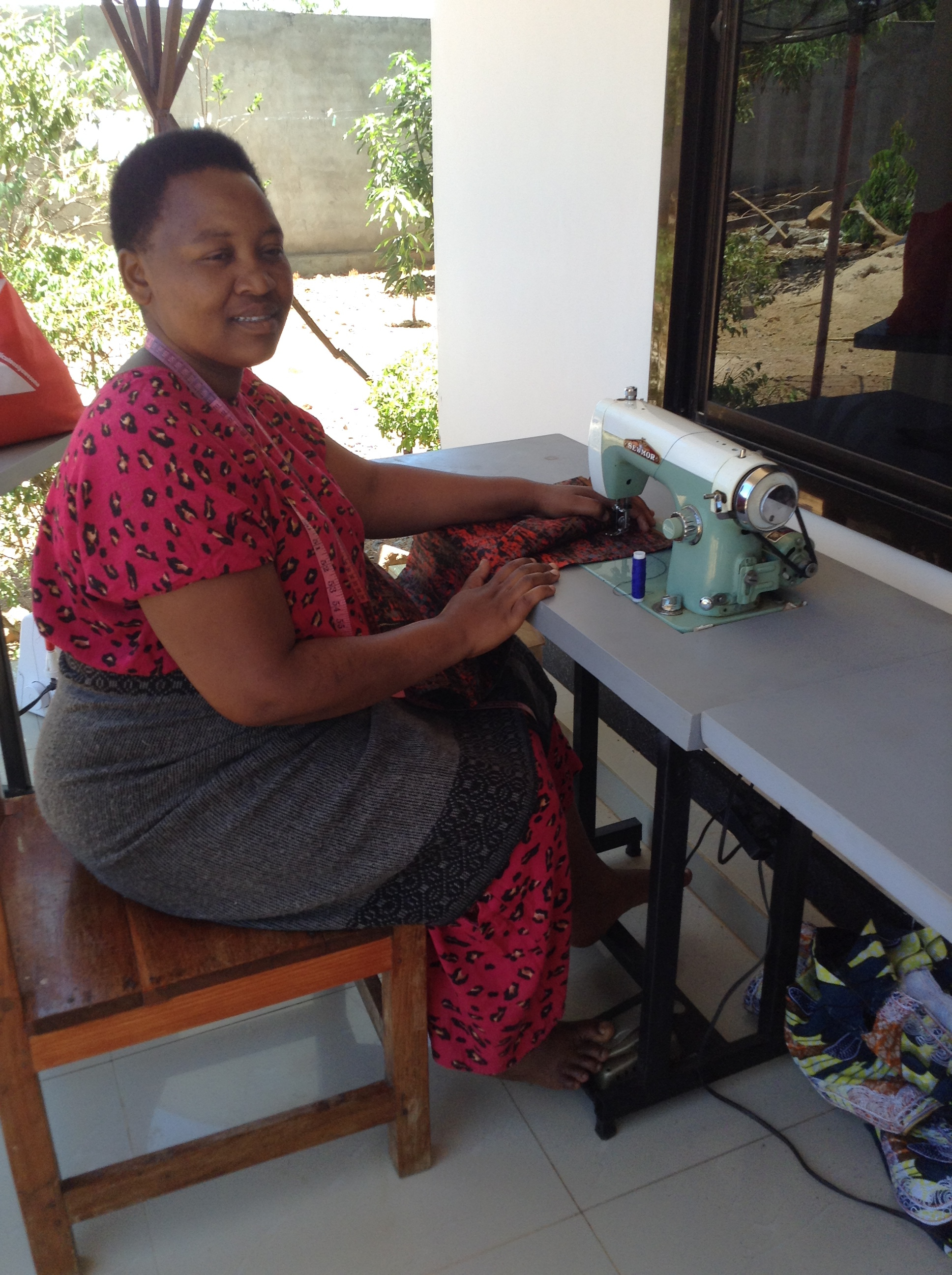
Hello. I’m called Susana. I’m a family mom. Do you know why I have a smile??? It is because P4P has changed my life. May I tell you something wonderful that has happened to me: I was unemployed, but after I got a sewing machine from The Norbert and Friends Missions I am self-employed and can take care of my family using my own income. The P4P project through The Norbert and Friends Missions has changed the lives of hundreds of people.

Wilson

My name is Wilson Metusera. I thank God for being given this bike. When I was told that I was offered a free bike I was very surprised and couldn’t believe it. I’ve been getting up early to attend school for long walks. By God’s grace a P4P project was launched here in Nzega and I got cycling support. Now I can attend school, my attendance has improved, and my performance has improved. I am so happy for P4P in the USA and The Norbert and Friends Missions for showing compassion to the poor like us.


First Container, Spring 2020: Trans Valley Asian Association, Thailand

Fall 2019 Newsletter

The Trans Valley Asian (TVA) Association in Thailand is scheduled to receive the first container of the spring in 2020.

The TVA Association, located in the heart of Bangkok, Thailand, is a non-profit division established under the Trans Valley Asian Community (TVA Community) which is based on an Eco-social Enterprise concept — profit, people, and planet.

Operating since 2018, the TVA Association has been working to deliver outreach activities with local and international affiliates, including:

  • The International Council of Management Consulting Institutes (ICMCI) is a global consultant organization with presence in 50 countries. ICMCI aims to promote qualified management consultants to support a wide range of businesses. We now have 50,000+ consultants around the world, including Thailand.
  • The Global Ecovillage Network supports sustainable communities, bridging among policy-makers, governments, NGOs, academics, entrepreneurs, activists, community networks and ecologically-minded individuals around the world. We are the official country members of the Global Ecovillage Network, which has 53 countries members. As of today, there are 10,000+ eco villages around the world that have already been developed as sustainable communities.
  • The Dariu Foundation (TDF) of Switzerland seeks to empower the poor, especially low-income women and disadvantaged children, using microfinance and education.  We work with with The Dariu Foundation to provide microfinance services to low income families, digital and computing skill training courses to children, and scholarships for the most disadvantaged children in rural areas. In Vietnam, more than 400,000 children have been included in TDF projects; we are now planning projects in Thailand, where we aim to benefit 10,000 children by the end of 2020.

Cycling for the future of Kosovo

By Kushtrim Gojani
Fall 2019 Newsletter

Getting there …

Since the beginning of the partnership with Pedals for Progress in early 2018, GoBike LLC from Kosovo has had a second successful summer of bike sales. The summer season opened in March 2019, and closed for the autumn/winter in October 2019 due to temperature drops. GoBike, as a young start-up, continues to work on building its image and reputation as the bike place in Kosovo’s capital, Prishtina.

As a country of around 2 million inhabitants, Kosovo has the youngest population in Europe. More than 65% of the population are younger than 30 years old, whilst internet penetration rate is 88.8%. Taking advantage of this fact, GoBike’s marketing strategy was entirely reliant on social media. The benefit of this approach is also that social media is free, a key factor for GoBike at its early stage of existence. GoBike now numbers 1200 followers on Facebook, and 3800 on Instagram, two platforms where most customers hear about GoBike.

Whilst in the first season in 2018 GoBike was concentrated on sales, this season, in 2019, GoBike worked hard to build bike-renting services, and put bikes to good use to people and to the environment.

Cycling Schools

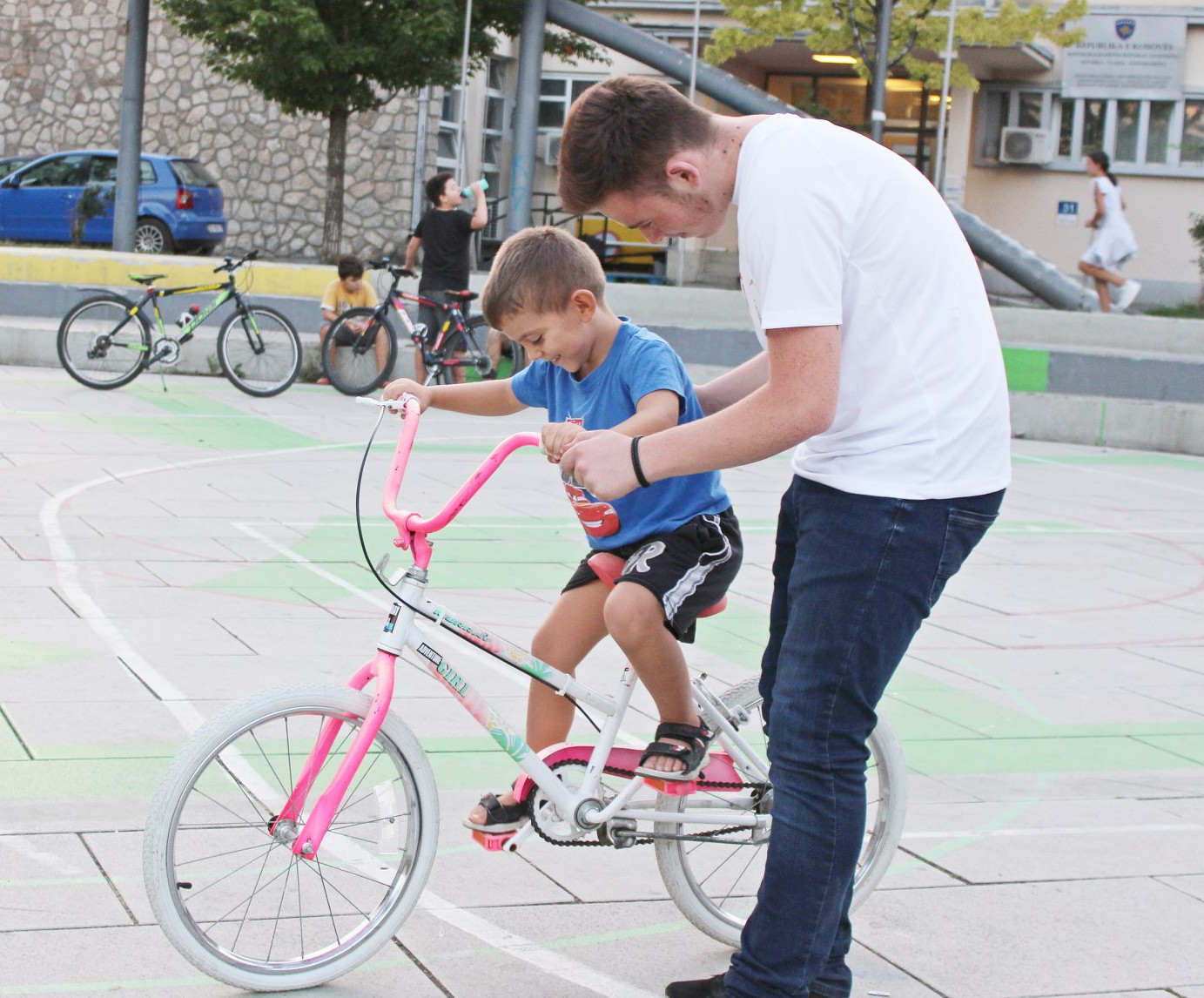
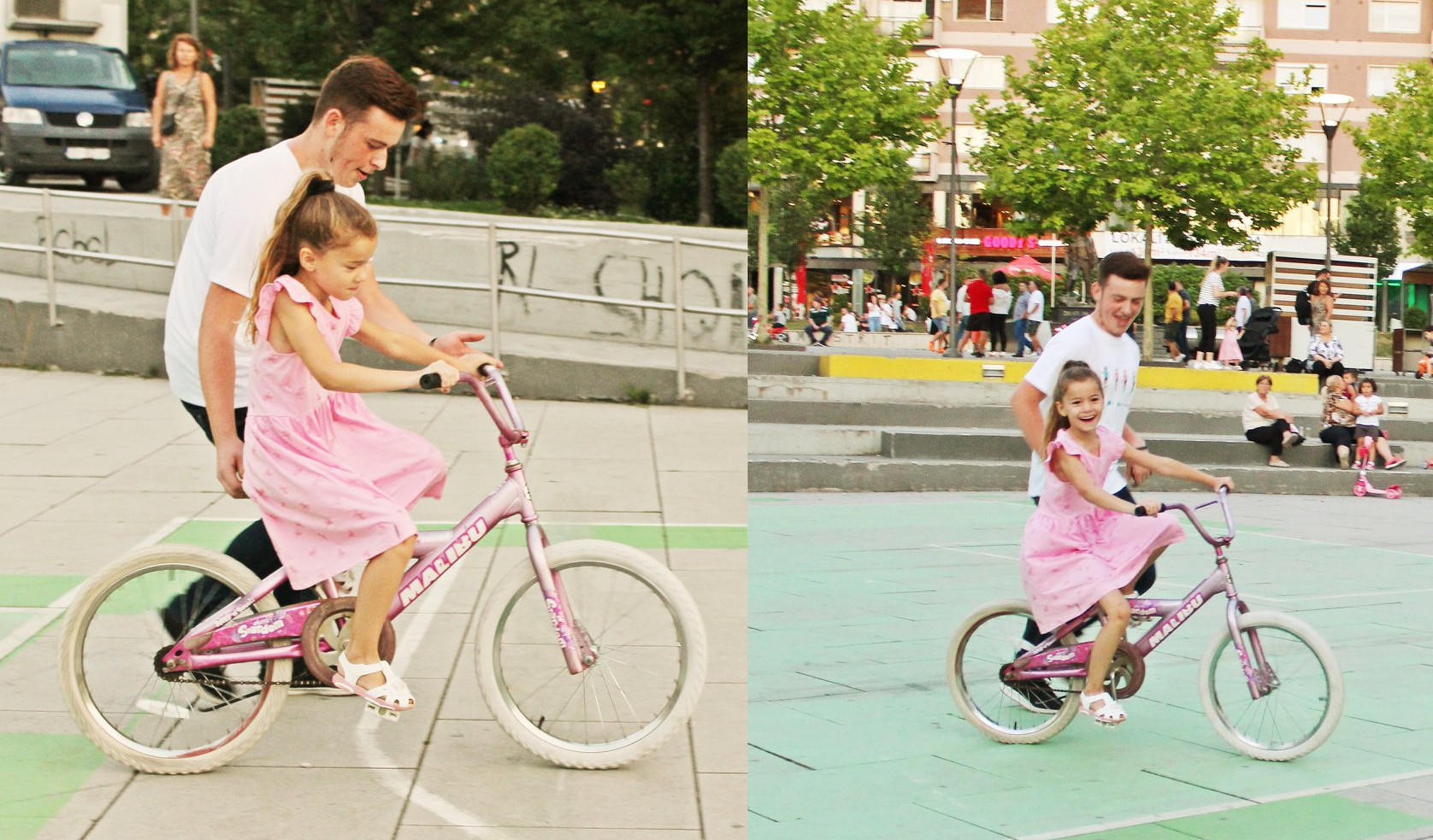
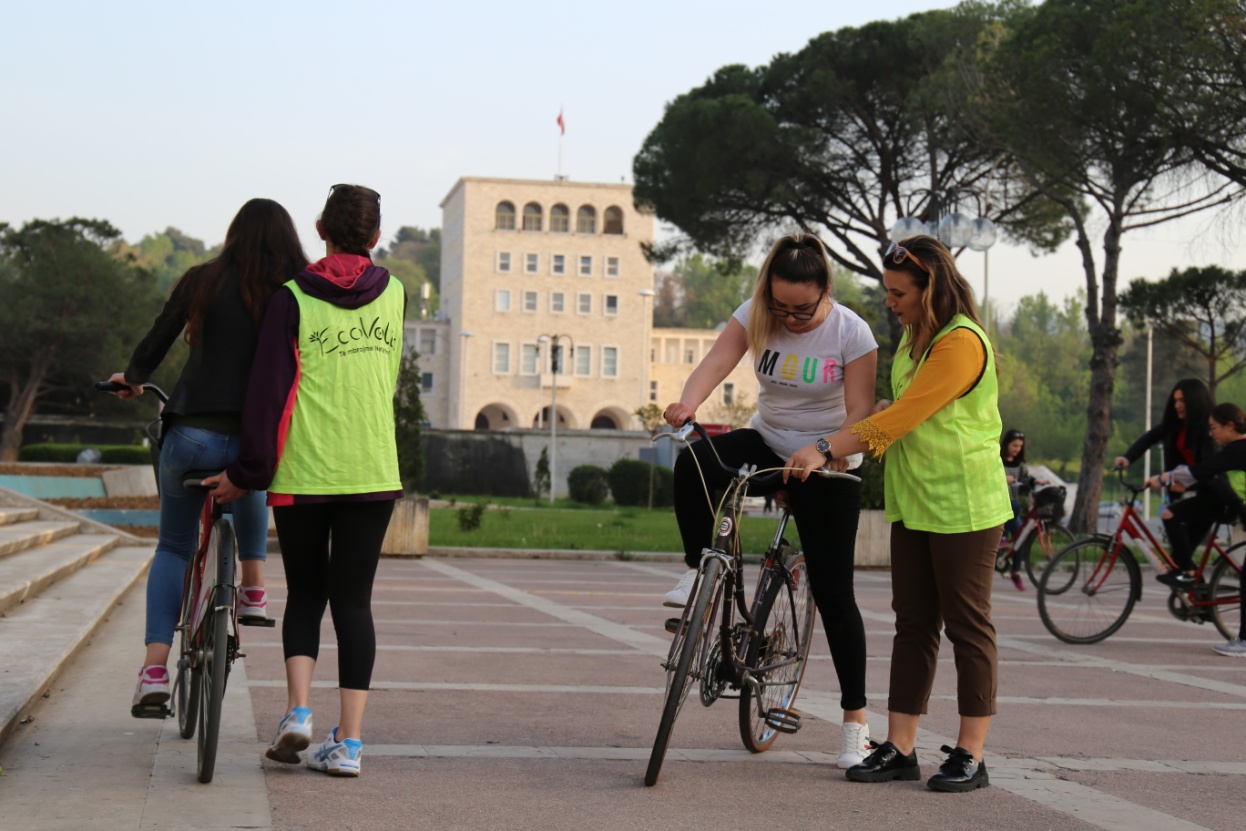
As Prishtina is often one of world’s most polluted cities — due to dense traffic and 100% reliance on coal-produced electricity — encouraging people to cycle is vital for the environment. To this end, since June 2019, GoBike teamed up with a local youth non-governmental organization AYA ‘Pjetër Bogdani’ to organize Cycling Schools and teach people how to ride a bike. Cycling Schools were quite popular. One can never have enough of such events, as the demand was high, particularly amongst children.

Cycling Schools operated in downtown Pristina and were free of charge. Whilst our teams helped every interested person balance and pedal, we gave particular attention to little girls, for whom parents often neglect this important milestone in their lives — learning to ride a bicycle, be free, and grow their independence. GoBike can only hope that through these activities we can contribute to growing the cycling community of Pristina; help young girls and boys grow independent; provide a cycling experience to the adults who have never experienced cycling before; and reduce carbon emissions by promoting cycling as a more sustainable way of transport.

Cycling Champion

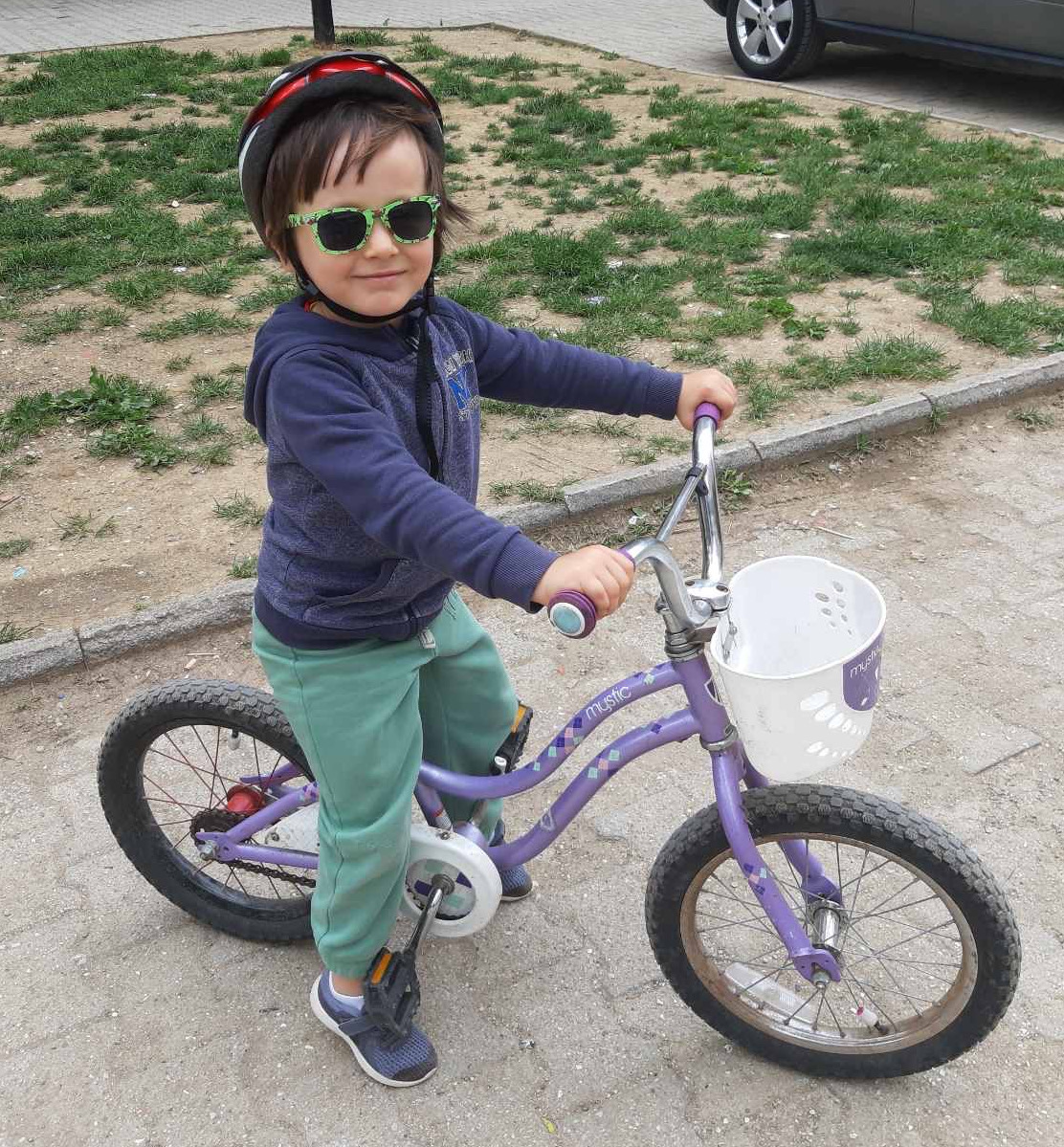
Anel is a customer GoBike will never forget. Indeed, he will never forget GoBike either, as GoBike is now firmly part of his life’s story.

Anel is 4 years old. When he walked into the GoBike shop with his father in late March 2019 to purchase a bike, he had never cycled without the aid of side wheels. However, with the grit and determination of a child, he chose a bike he liked that had no side wheels. He knew what he was doing. He hopped on it, started pedaling and wobbling, but feeling confident by the presence and help of his father. He did a few rounds with assistance, asked to be released, carried on pedaling, and did not stop cycling the whole summer. His happy face is the best reward for GoBike.


New Partner in South Africa, 2019

Fall 2019 Newsletter

Sewing Peace is proud to announce a new partnership with More Care International, based in Pretoria, South Africa, and operating in Winterveldt, a village 53 kilometers from Pretoria. We’ve agreed to help with their mission: “to establish effective social structures for the undertaking of income-generating projects for the vulnerable and marginalized in the community”.

On November 13, 2019, we shipped 71 sewing machines to start our collaboration.

The last time Pedals for Progress shipped to South Africa was August 2001. We shipped 8 containers of bikes there between 1998 and 2001. Until now, we’ve never shipped any sewing machines there.


P4P/SP Active Partnerships as of 16 November 2019 ( 🌐 Map)

ALBANIA, Tirana, PASS/EcoVolis, community development: 7,824 bikes (2010 – 2020), 409 sewing machines (2010 – 2020)

GUATEMALA, Chimaltenango, Fundacion Integral de Desarrollo Sostenible y Medio Ambiente (FIDESMA), small-business promotion: 10,333 bikes (1999 – 2019), 314 sewing machines (2003 – 2019)

KOSOVO, Kastriot, GoBike, community development: 450 bikes (2018), 50 sewing machines (2018)

NIGERIA, Lagos, Peacemakers Community Development Foundation, small-business promotion: 463 bikes (2019), 145 sewing machines (2019)

SOUTH AFRICA, Pretoria, More Care International, community development: 71 sewing machines (2020)

TANZANIA, Arusha, The Norbert and Friends Foundation, community development: 908 bikes (2020), 176 sewing machines (2019 – 2020)

TOGO, Vogan, Association Défi et Révolution de la Vie Rurale, economic development: 463 bikes (2020), 172 sewing machines (2019 – 2020)

UGANDA, Mityana, Mityana Open Troop Foundation, community development: 209 sewing machines (2017 – 2019)

UGANDA, Iganga, Office of the Mayor, community development: 69 sewing machines (2018)

The P4P fiscal year runs from October 1st through September 30th.

2015: 3,179 bikes, 310 sewing machines
2016: 2,760 bikes, 285 sewing machines
2017: 3,644 bikes, 533 sewing machines
2018: 2,935 bikes, 466 sewing machines
2019: 2,806 bikes, 565 sewing machines
2020 (YTD): 1,355 bikes, 321 Sewing machines

Twenty-Nine Year Bicycle Grand Total 159,593
Twenty Year Sewing Machine Grand Total 5,179


Financial Sponsors

A SPECIAL THANKS TO OUR SPONSORS AND MAJOR CONTRIBUTORS:

John Alexander & Jane Divinski
AXA Foundation
Chad & Cecilia Bardone
Biovid
Blessed Sacrament Catholic Church
Sherman Carll
CCG Facilities Integration, Inc.
Mrs. Diane Claerbout and Professor Jon Claerbout
Clif Bar Family Foundation
Dariu Foundation
Dewan Foundation
Uta Dreher
ExxonMobil Foundation
FedEx
Pamela Hanlon Charitable Fund
Jack & Donna Haughn
Robert & Laura Hockett
Leo & Helen Hollein
Gitta & Neil Hosenball
Elliott & Kathleen Jones
Gary & Mary Kamplain
Loughlin Family Foundation
Dorothy Magers
Helen & William Mazer Foundation
David Schweidenback & Geraldine Taiani
South Brunswick Education Association
Ronald Subber & Martha Wood
Thomas & Nancy Tarbutton
Wais Family Fund
Andrew & Emily Williams
Kermit Leslie Young, Jr.


P4P/SP Board of Trustees

John Alexander, Treasurer
1594 Frontero Avenue
Los Altos, CA 94024

David Schweidenback, President & CEO
86 E Main St
High Bridge, NJ 08829

John Strachan
95 Old York Rd
Hopewell, PA 18938

Andrew Williams
642 Jersey Av Apt 3
Jersey City, NJ 07303

Robert Zeh, Secretary
5 Woods Edge Ct
Clinton, NJ 08809


P4P/SP Staff Directory

Dave Schweidenback – Founder and CEO

Gary Michel – VP and Collection Coordinator

Lori Smith – Office Manager

Michael Sabrio – Webmaster

Fri Nov 22 17:36:27 EST 2019
Fri Dec 25 2020: removed references to Zambia. Program never materialized.

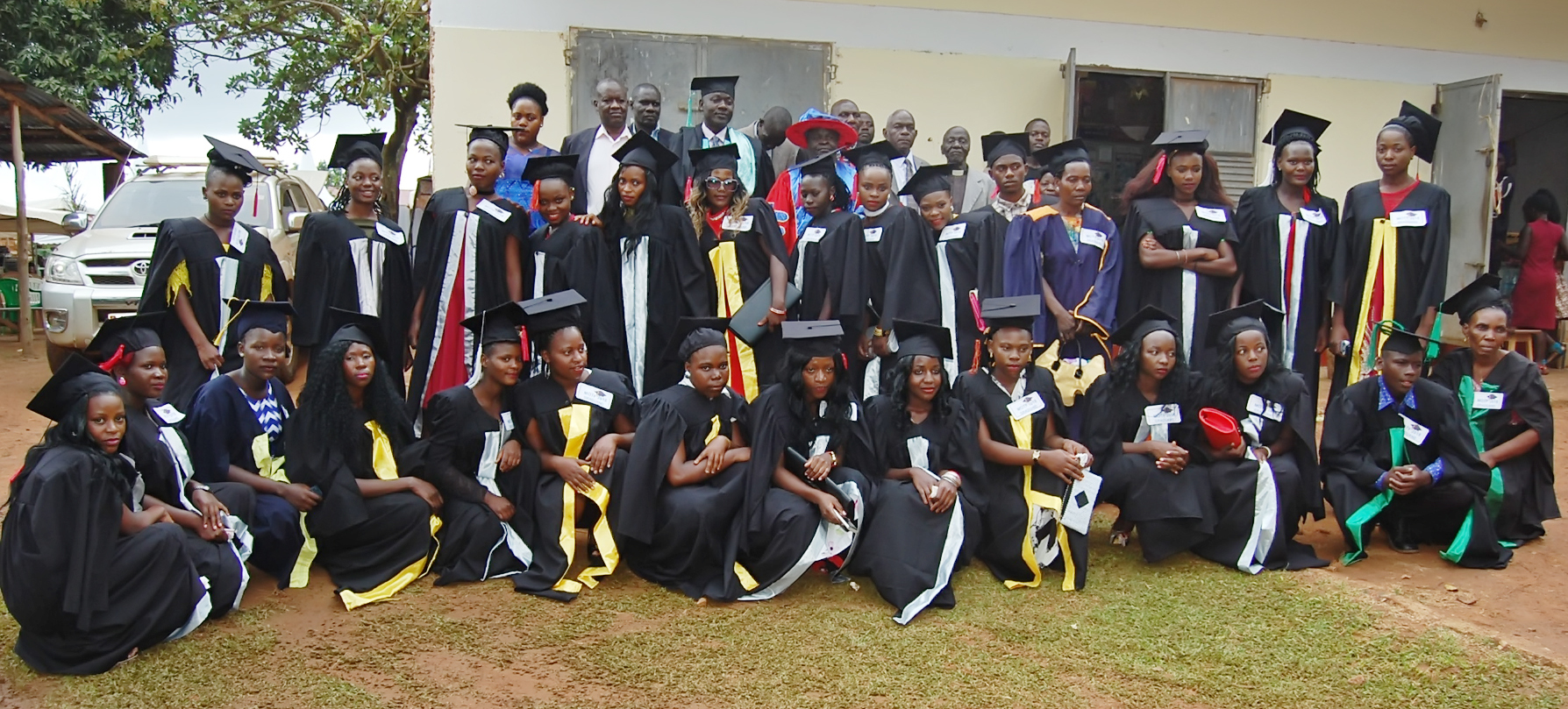
Uganda: Mityana Open Troop Foundation Graduation, 18 November 2018

By Mathew Yawe, Executive Director, Mityana Open Troop Foundation
Fall 2018 InStitch

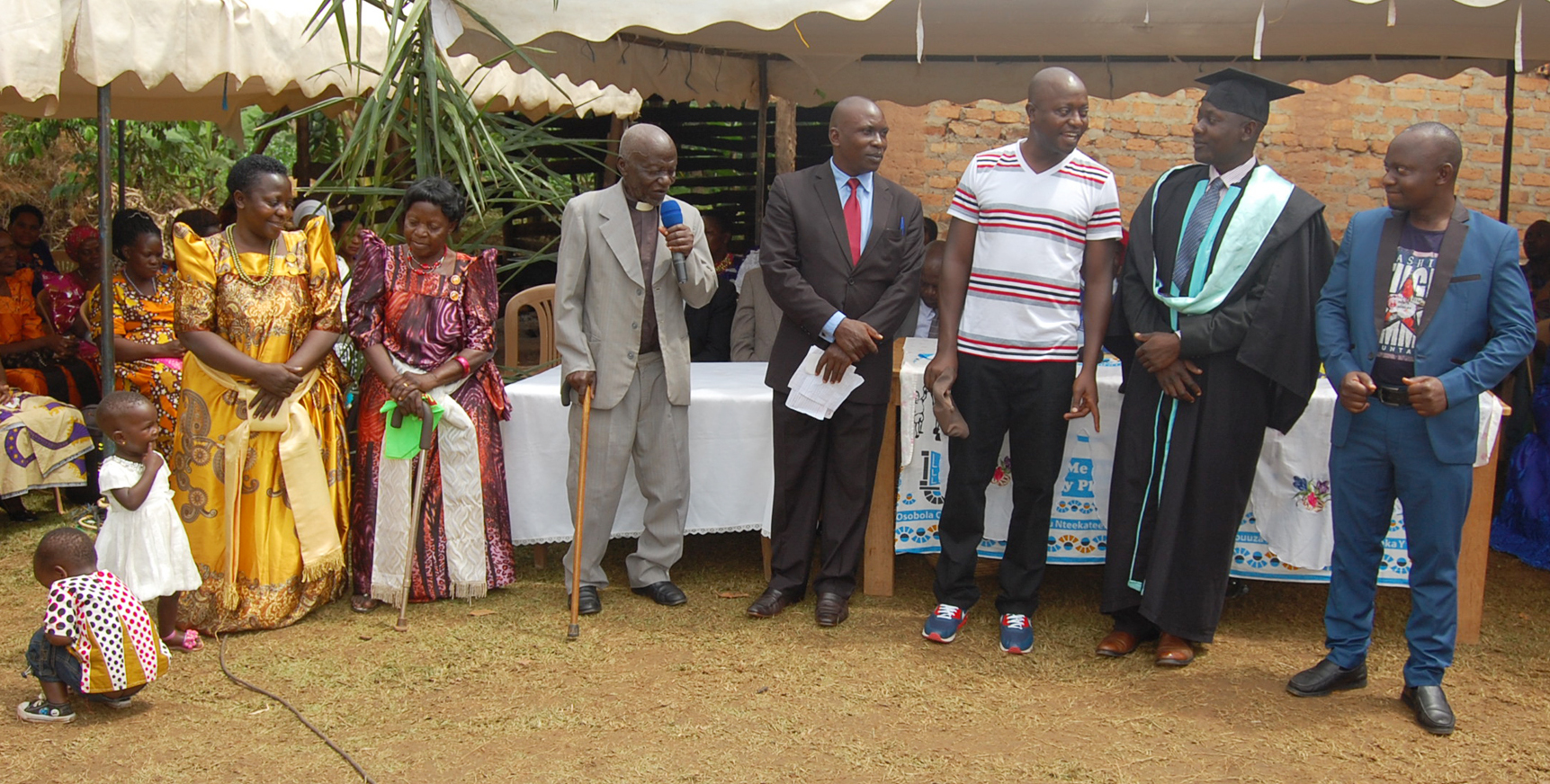
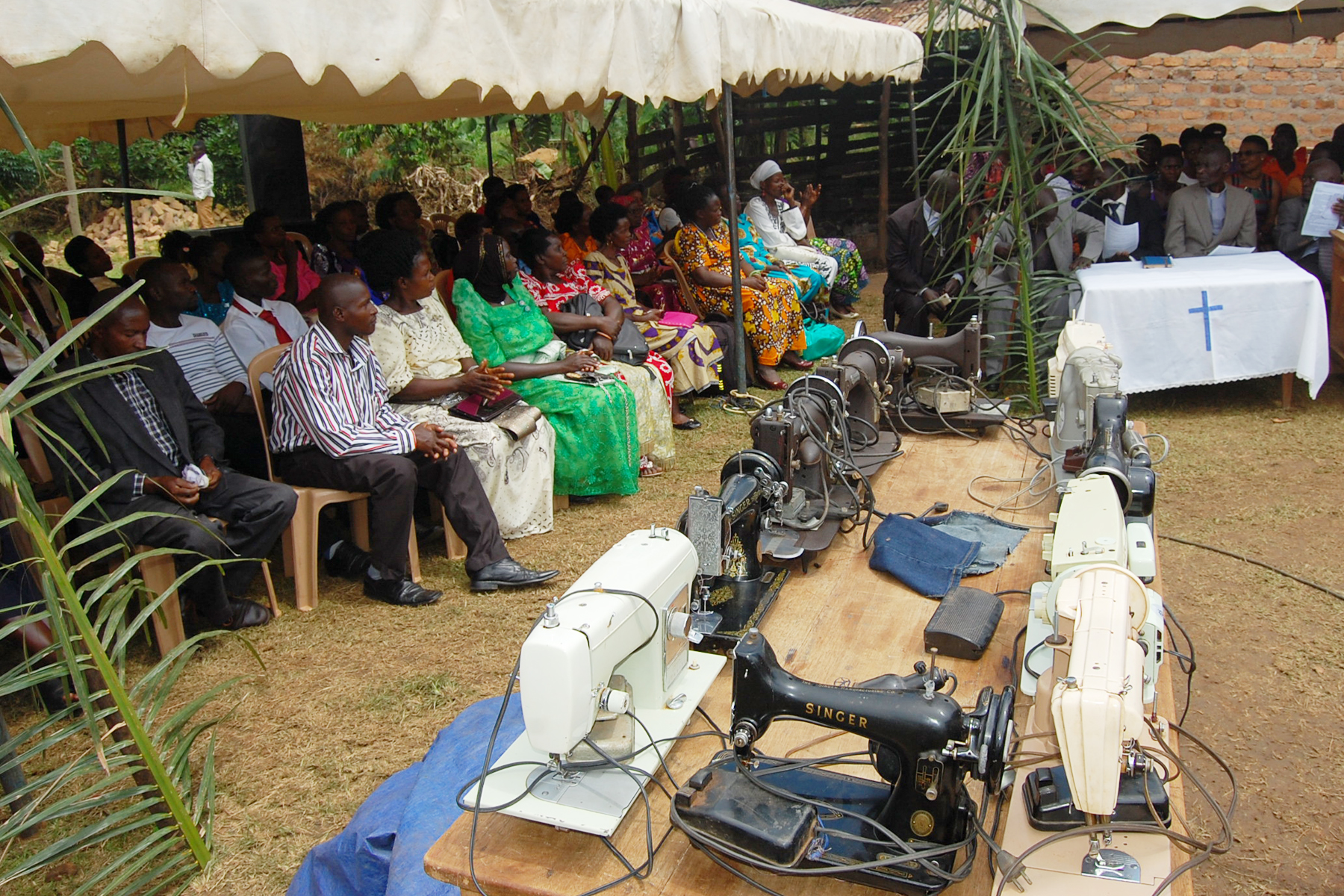
The Mityana Open Troop Foundation held this year’s graduation on 18 November 2018. Robinson Nsumba Lyazzi, the director of Basic Education, Uganda Ministry of Education, presided over the graduation and commissioned 71 graduates:

  • 28 in sewing/tailoring
  • 40 in hair dressing & weaving
  • 3 in motor vehicle mechanics


All graduates were awarded certificates and each sewing graduate was given a nice sewing machine from Sewing Peace U.S.A. The function was witnessed by over 600 guests, trainee parents, and government officials.

Achievements:

  • Conducted the 7th Project Graduation Ceremony and commissioned 71 trainees.
  • Completed the construction of the Girls dormitories / hostels, with funds from selling some of the sewing machines from Sewing Peace U.S.A.
  • Opened a shop in our town, where we are selling sewing machines and bikes from Pedals for Progress / Sewing Peace U.S.A.
  • Started this year training Agriculture lessons, at our project.
  • The Sewing department is well equipped with sewing machines from Sewing Peace. We experience mechanical problems every day, as learners operate the machines the other way round! But we call the servicing man to repair them, and we are trying to train our youths to fix them when problems arise.

Challenges:

  • Insufficient classrooms at the vocational project! The one existing room (10 ft by 20 ft) can’t accommodate the large number of trainees. Some trainees in the tailoring/sewing class study under tree shelters, while the hair dressers study in the outdoor shelter, where they get soaked when it rains, as there is nowhere to go!!!
  • It is still a challenge to raise shipping costs and pay customs charges for the sewing machines from Sewing Peace. That’s why we have to sell some of them to the communities to enable us cover the shipping costs and customs charges.
  • The project shop where we sell our sewing machines and other sewing services lacks an embroidery machine that can design school badges and name tags. In our district, including the surrounding 6 district, there is no embroidery machine, yet there are many schools that have to travel over 80km to Kampala in search of embroidering services.

Appreciations:

  • Many thanks goes to Mr. David Schweidenback, Pedals For Progress / Sewing Peace, and all its donors, for sending sewing machines of high quality. These machines have allowed us to have one machine per student for hands-on training in our sewing workshop, whereas previously we had one machine per 5 students. Furthermore, the donated sewing machines have supported project activities, such as paying some teachers, completing the construction of a girls’ hostel, and start-up tools for the project graduates. Please, Long Live Pedals For Progress / Sewing Peace.
  • We extend our thanks always to Mr. Christopher James Eldridge, who supports a number of activities at our project.
  • We thank the Government of Uganda, Ministry of Education & Sports, for having sponsored some disadvantaged youths in our programs.
  • Thanks go to Kolping Mityana Women’s project, Namutamba Child Development Program, and Fields of Life for sending orphans and vulnerable children to our vocational project.

Way Forward:

  • Constructing at least 2 classroom block, to accommodate more trainees, and to store tools.
  • Acquiring an embroidering machine, which can help generate income towards sustaining project activities.
  • Starting poultry farming, as chickens are rare and expensive in Uganda, yet need little space and produce profits quickly. We are also looking forward to introducing a chick hatchery machine to supply the 7 surrounding districts.

In conclusion, I especially thank very much Pedals For Progress, who made this year’s Vocational Graduation Ceremony colorful, by having donated many nice sewing machines, which we gave to the graduates. We extend thanks to all U.S. donors and volunteers involved in donating and refurbishing the sewing machines. Our trainees use the machines to generate income for food, housing, and medical care. These machines offer a new life and a better future for our trainees and their families.

Finally, I thank all those who have supported the Mityana Open Troop activities this year, especially Mr. Christopher James Eldridge, the Government of Uganda, and charities sponsoring orphans at our project.

God Bless You All.


Fall 2018 Newsletters

Fall 2018


Nicaragua 2018: a Pause in Our Longest-running Program

Fall 2018 InGear

1. A 27-Year Partnership

In the 1970s and 1980s there was a civil war in Nicaragua. Violence and destruction were widespread. The warring sides would burn the crops of their enemies, so hunger was also widespread. Many bridges and roads were impassable.

U.S. religious groups were sending humanitarian aid such as food and medical supplies to Nicaragua. A couple of these groups were in New Jersey, including a group at the United Methodist Church in Plainfield. I asked if I could put some of my bikes into the containers they were shipping to Nicaragua. That’s how our first bikes went to Nicaragua in 1991.

After a few of these containers had been shipped, the church groups invited their Nicaraguan partners to a meeting in New Jersey to talk about our projects. One of the Nicaraguans was Wilfredo Santana, head of the Association for the Community Development of Rivas, a town in southwestern Nicaragua. Wilfredo was talking to the group about his programs and the shipments from the U.S. and he said, “Forget all that other stuff, just send us bikes.” Gasps all around. The roads and bridges were in such bad shape, and gasoline was so scarce, that a bike was an incredible advantage in Nicaragua at that time.


The group had a picnic where I had a chance to talk with Wilfredo. He said that he didn’t have any money for the first shipment, but that if I could ship him a container of bikes at no charge, he could make enough money on the bikes to pay for the next shipment. Each shipment would pay for the next, and this could go on indefinitely. This was the origin of what we call the revolving fund idea, which we have used ever since.

To ramp up my production and to have more control over where I sent bikes, I was determined to make P4P-only shipments, independent of the other groups that were sending aid to Nicaragua. I went to the SeaLand shipping company and told them that if they would donate the cost of the first shipment, I would become a long-term customer. They made the shipment at no charge and I became a long-term customer. Since then, it has sometimes been a struggle to fund the first shipment to a new partner. But we’re still in business, we’ve shipped more than 155,000 bikes, and we’re still using our revolving funds to pay most of our international shipping costs.

End of an Era

There are several reasons a program might end: the local market for bikes can become saturated; the business might not be well run or might lose key people; the government might impose prohibitive import rules or fees; the local economy might collapse. Despite all these unhappy possibilities, our P4P program in Nicaragua has had an amazing run.

Between 1992 and 2016, we sent more than 40,000 bicycles to Nicaragua, including more than 20,000 to Rivas. Now seems like a good time to pause the program. Demand for our bikes is down because we’ve shipped so many and because of the terrible political and economic times in Nicaragua in 2018.

Given the right circumstances, we may revive the EcoBici program down the road. For now, though, we’re making the Rivas program inactive. Goodbye for now and good luck to our good friends in Nicaragua.


Gary with EcoBici Staff, February 2014

2. ECOBICI, Rivas, Nicaragua

By Wilfredo Santana


In the 1990s, after the war in Nicaragua, the impact on Rivas of the arrival of bicycles was very great. The country was economically destroyed, public transport was insufficient, and the unemployment rate was high. So for people with scarce resources it was extraordinarily helpful when we started selling bikes at modest prices. We call our bike business EcoBicicletas, EcoBici for short.

Our organization, the Association for the Community Development of Rivas, developed several programs in Rivas and the nearby communities of Veracruz, Buenos Aires, La Chocolata, and Tola. Our programs benefited single mothers, mothers who lost their children or husbands in the war, teachers, and workers. We had programs to build rope pumps for water wells, transport drinking water, build latrines, and build roofs for houses.

We established bike shops where we sold and repaired bikes and bike parts, and we trained bike mechanics to work in the shops.

Rivas has become somewhat more prosperous over the last couple of decades, so the use of motorcycles and autos has increased. We do not have the same demand for bikes that we had years ago, but we still sell many bikes, mostly to young people, women, and some elderly people. And the bicycle is still an economical means of transport for many.

Besides providing affordable transportation to thousands of adults and children in Nicaragua, EcoBicicletas has, for almost three decades, offered steady jobs for the three women who run the organization.

Now, in late 2018, Nicaragua is in the middle of a socio-economic crisis, including violence in the streets. The deterioration of the economy has impacted the sales of bicycles to such a degree that we fear for the survival of our business. We hope that the situation will normalize and the pace of product sales will resume.


Fall 2018: Bike School and Bike Jobs in Tirana, Albania

By the Ecovolis Team
Fall 2018 InGear


It was a Saturday afternoon when the activists of EcoVolis went out as usual to patrol the new bicycle lanes here in Tirana, Albania. In one lane there was a motorcycle driving fast, in another a car that had completely blocked the bike lane. A total of 12 miles of lanes built in a very short time by the head of PASS/Ecovolis, now titled the “Bike Mayor”. PASS and Pedals for Progress are the right combination to turn Tirana into the City of Bikes.

In just a moment we counted over ten bikers using the lanes. It was a rare emotion for the activists who have fought for ten years for protected lanes. Now these lanes are flowing rivers of bikers. Just like boats on true rivers, these bikers go about their days on these lanes.

We take a look back in time: How did we get here? The collaboration with Pedals for Progress gave the opportunity to PASS, the mother organization of EcoVolis, to undertake tens and hundreds of activities with the mission to return bikes to Tirana. It was the start of this partnership in 2000 that decided how things were going to be for the bikers of Tirana today. And how beautiful things are!

There are daily bikers for the Day Care, Two-wheels Academy, Free the Lanes, weekend biking, tour guides for guests, bikes for kids who cannot afford them, bikes for the elderly and the communities that need them. One great example is the transformation of 30 bikes from P4P into cargo bikes for the Romani community to work in the recycling field (a total of 60 new jobs).


The number of bikers in Tirana has grown tenfold. At the EcoVolis Service shop a lot of bikers come to repair or exchange their bikes for better ones from the U.S.A. This led us to start to train young girls and boys to repair bikes in order to open more EcoVolis Service points and also to create new jobs for more people.

Now that there are more than 7000 bikes from P4P, EcoVolis has another ambitious mission: to open a bike school. Taking as examples other countries where bikes are ubiquitous—the Netherlands and Denmark, for example—Tirana is also at the point in which it is opening the first schools for bikes, with the full support of P4P. This school, now in the planning stages, is expected to add 3000–4000 bikers to the lanes per year.

To change movement in a city with over 1 million inhabitants is the story of the success of a strong partnership like the one between U.S.A./P4P and Albania/PASS. When we look back we cannot believe that fate and time approached us with such a virtuous organization, whose support and energy helped us to create so many jobs for the community and to make a two-wheel revolution for our city. Thank you, Pedals For Progress. You are already a Nobel Prize organization.


Report from Ethiopia, Fall 2018

By Samson Tsegaye
Fall 2018 InStitch

[In July 2017 we shipped 72 sewing machines to our partner in Ethiopia, Stiftung Solarenergie—Solar Energy Foundation. Political and logistical problems slowed the program. But we just got this report from Country Director Samson Tsegaye; the training has begun.]


Finally I managed to start the sewing machine training for 25 women. I am so happy to inform you of this. It was so challenging to get this far.

They will have 21 days of training on sewing technique and then they will receive one sewing machine to start their own business.

Thank you so much again for your great help.

Best Regards

Samson Tsegaye, Ethiopia Country Director
Stiftung Solarenergie—Solar Energy Foundation


Report from Kenya, Fall 2018

By Tom Ademba
Fall 2018 InStitch

[In March 2018 Sewing Peace made its first shipment to Aid the Needy in Homa Bay, located on the eastern shore of Lake Victoria in Western Kenya. The shipment of 72 sewing machines arrived in June. It was funded in part by the William and Helen Mazer Foundation of New Jersey.]


One of the beneficiaries of our first SP project in Kenya is a group called the Maseno Deaf Project. This is an organization of deaf people in Western Kenya running small businesses. They requested Aid The Needy to support them with a few sewing machines. They are making school uniforms, and designing various household garments that they sell to support their families. The group has 36 members working towards economic development.

Another Aid the Needy project is at the Atela Secondary School, where they use sewing machines in their Home Science classes. Atela Secondary School is a rural institution supporting education of young people from the smallholder farming communities in Rachuonyo District, Homa Bay County, Kenya. The school has a Home Science curriculum where sewing machines are a critical part of the syllabus. They now have good machines that support their classes.

Mother Teresia Van Miert, in Oyugis town, is a school run by the Franciscan Sisters supporting education of young children. The School has more than 300 children. By regulation, the school children must have uniforms. With SP sewing machines they are able to produce the uniforms within the school and make them affordable to the parents.

Luke is a cobbler who repairs shoes and bags, including lots of school bags. He also designs footwear from car tires. He does it so well that with only a few tools he earns good money. He purchased one machine that can run both manually and electrically. He operates under a shade tree in Oyugis Town, Homa Bay County, Kenya.


Report from Kosovo, Fall 2018

By Kushtrim Gojani
Fall 2018 InGear


Kujtim Mehmeti is one of the co-owners of an auto-repair shop called “D-Max”. The service is located near Vushtrri, a town about 10 miles from the capital, Prishtina. Owing to his profession, Kujtim inevitably loves wheels and speed. He is very fond of bicycles, too, to the point that he still cannot part with his very first BMX bike—on which he learned to cycle and which he still keeps in the attic of his house.

However, when Kujtim (whose name means souvenir, or a memory) bought a big black and green P4P Huffy bike from the GoBike store on July 16th, he didn’t just buy it for himself. He primarily bought it for the employees of his auto shop, Altin Istrefi and Muhamed Shabani. Up until then, they used to hop in the car for everything. As the shop is located by the main road from Pristina to Vushtrri, they had to use the car whenever they needed to go into town or to a store for supplies or food. They have now replaced the car with the bicycle—and they are loving it! Kujtim hasn’t really crunched the numbers to know how much he is saving on fuel costs by using the bike instead of the car. But the benefits to the environment and to their health are invaluable.

On Sundays, when the shop is closed, Kujtim and his friend Alban Kasumi (who also bought his bike from GoBike) go cycling for 10 miles just to keep fit. Kujtim was the first to buy his bike. Alban bought his the very next day, after spending a sleepless night from the fear that his favorite Kent 700 Roadtech bike might be sold. Both love the effect the bicycles are having on their fitness and general well-being. They can’t wait for Kosovo’s infrastructure to recover to enable people to change—where possible—from cars to bicycles.

Marjana Neziraj, whom her family and friends call Jana, is 9 years old. She lives in Pristina with her mom Kristina, dad Bruno, and her brother Daniel. Jana loves being outdoors. She thought she liked only swimming during the hot summer months, but after her father bought her the Venus Rock Candy bike on August 1st, from the GoBike store, she discovered how much she misses cycling too. Whilst she was off school during the summer break, she used her bike almost every day. The bike was a tool for Jana and her favorite doll of more than 7 years, Beba Trashe, to go for a ride around the neighborhood, or to go to visit her grandfather, aunts, and uncles. Now that school has started, her father often takes the bike to school when he goes to collect her. Jana then rides home, under the guidance of her father, as Pristina is not yet a cycling friendly city for adults, let alone children. Jana’s one regret is that her father works very hard and does not have time to go riding bicycles with her in Germia Park, just on the outskirts of the capital city. However, she is determined to carry on cycling, on her own if needs be. She is a very determined girl, and the bike is not only helping her with mobility, but also to learn to be independent.


Fall 2018: New Partner in Tanzania: the Matabaiki Olere Organization

By Giza Mdoe
Fall 2018 InGear/InStitch

[In October 2018, P4P shipped a container with 469 bikes and 119 sewing machines to our new partner in Tanzania, the Matabaiki Olere Organization. Giza Mdoe is our contact there. Here he introduces himself, his region, and his plans for two projects: one with sewing machines and one with bikes.]


The Matabaiki Olere Organization is based in the town of Arusha, Tanzania. Arusha is a tourist hub, 60 miles from Kilimanjaro, the highest mountain in Africa, and 100 miles from the Serengeti Plains and the Ngorongoro Crater, the world’s largest caldera, home to the world’s only tree-climbing lions. The Ngorongoro Conservation Area also contains the Olduvai Gorge, one of the most important paleoanthropological sites in the world.

I grew up in Kenya, where I was raised by a foster family. They live in Boston now.

Sewing-machine Project: Fabrics of Society (FOST)

Fabrics of Society (FOST) is a project for training single mothers in sewing, tailoring, design, and marketing.


The sewing machines will all go into a production line for various items to be sold in country and exported, including to the U.S. At the moment I enroll school drop-outs who are single mothers. We have five sewing machines and the women make sandals as well as clothes. In this country when a girl gets pregnant in school she is expelled and is not allowed back into school even after her child is born, worsening the cycle of poverty.

The girls learn to use the machines free of charge. They take a percentage of the sales. We donate books and supplies to local schools where our girls give testimonials to help with awareness.

Depending on availability of sewing machines and trainers, FOST aims to enroll 180 women in the training program and 20 tailors (who have previous experience). We will hire 2 teachers and 3 training assistants.
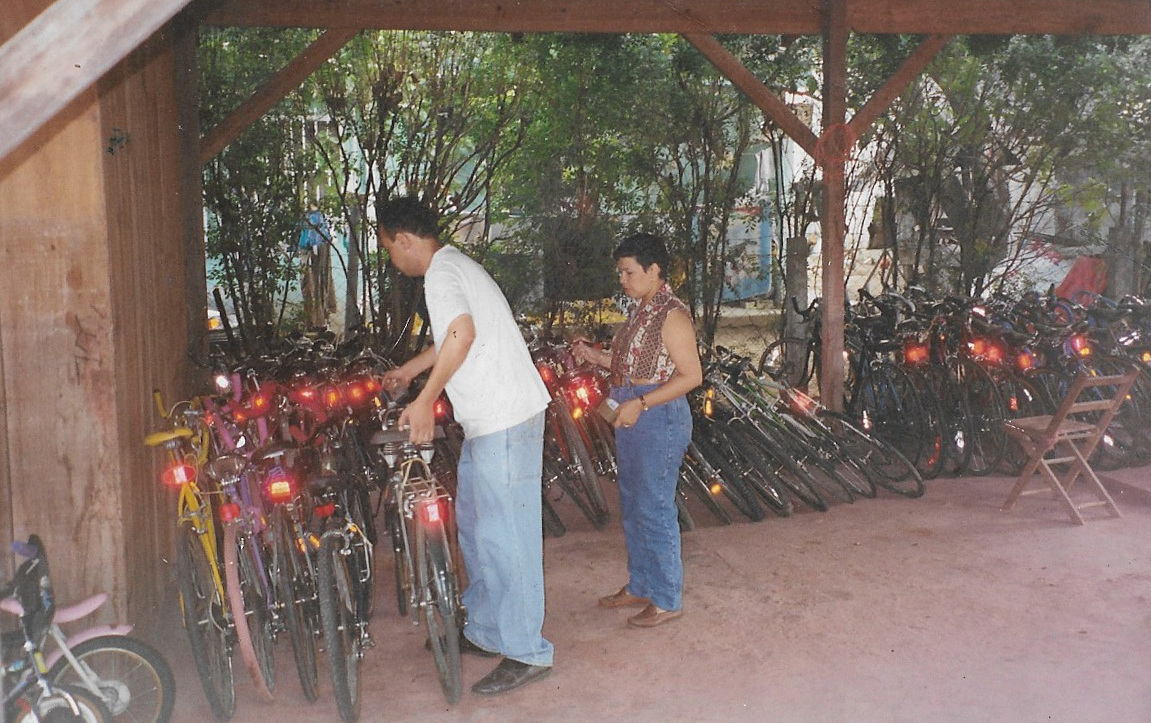
The trainees will attend 3-hour classes 3 times a week. The training is done in 4 stages, each lasting 3 months with each stage marking a specific level of proficiency. A small enrolment fee is charged to give the members a sense of responsibility and ownership.

The initiative is done in partnership with VETA, the Tanzanian Vocational Education and Training Authority, who will issue certificates of achievements to the graduates. The project will start in Dar es Salaam and then move to other regions.

Besides technical training in tailoring, the initiative provides basic life skills in health, nutrition and sanitation. Focus is family planning as well as the importance of pre- and post-natal clinics, breastfeeding, balanced diets and personal hygiene.

Bicycle Project: Watu wa Delivery (WWD)

Watu wa Delivery (WWD) is Swahili for “delivery people”. It is designed to create employment for impoverished youth in urban areas. Employees will use bicycles to deliver food to urban residential areas and mail to commercial centers.

I expect to put at least 200 bikes into the delivery business project and sell the rest to raise the U.S. $6000 for our next shipment. Since I have never done such a project before I don’t know how long it will take but am assuming a couple of months.

The program will begin in Mbeya, which has a large population of urban unemployed youth.

The initiative will hire a delivery crew of 1500 and a dispatch and maintenance crew of 500. We will establish 50 Dispatch Centres. Each Dispatch Centre will have 10 bikes and each bike will be assigned between 2 and 3 delivery persons to work half- and full-day shifts according to their availability.

WWD will also establish telecom, internet, and networking services. Examples of these services are low-cost mobile calls and texts, marketing for sellers, a mobile app and a WWD website for buying, selling, and customer rating of sellers.

Besides job-specific activities, WWD will conduct monthly outreach programs for youth providing education on sexual health, drug abuse, youth rights, hygiene, health and nutrition, environment, vocational training and accelerated learning options.


2018 Success Story from Uganda: Agnes Nakabuye

By Mathew Yawe
Fall 2018 InStitch


Agnes Nakabuye is a 38-year-old widow and single mother of 4. Our vocational project sponsored her 2 years of training in sewing, tailoring, and fashion design. At the end of her 2-year course, the project gave her at no cost a manual Singer sewing machine from Sewing Peace.

For her business, Agnes hired a space on the veranda in our town of Mityana for U.S. $5.40 per month. She earns daily U.S. $2 to $4 selling second-hand clothes, fitting and repairing clothes, and making school uniforms.

Agnes has managed to save money for renting the room where her family lives, for buying food and medication, and for paying school fees for three of her children. Her first-born is 18 years old in senior six; her second-born is 15 years old in senior four; her third-born is 13 years old in senior one; and the last born, 9 years old, dropped out of school in primary six because Agnes could not afford the school fees.

Agnes has several challenges, and several hopes and dreams for the future.

  • She would like to expand her business, so she would like to be able to afford more material for her tailoring.
  • She would like to be able to afford a better sewing machine: one that can work on tougher fabrics and that has overlocking capability.
  • She would like to be able to rent a shop where she can safely store her customers’ clothes and her sewing machine. As of now, every day she must carry the machine and her materials between her room and her space on the veranda!
  • Ideally, she would like to be able to afford her own property, where she could build a house, grow food, and start a poultry-farming project.

Besides running our training programs, the Mityana Open Troop Foundation has also set up a sewing-machine shop in Mityana Town where schools and tailors can buy high-quality sewing machines at reasonable prices. The profits from the shop help pay our instructors and shipping costs.

We extend our sincere thanks to Sewing Peace for providing the machines that we use in our training programs, that we provide to our graduates in starting their own businesses, and that we sell in our shop to make our organization successful.


Uganda: Mityana Open Troop Foundation Graduation, 18 November 2018

By Mathew Yawe, Executive Director, Mityana Open Troop Foundation
Fall 2018 InStitch

The Mityana Open Troop Foundation held this year’s graduation on 18 November 2018. Robinson Nsumba Lyazzi, the director of Basic Education, Uganda Ministry of Education, presided over the graduation and commissioned 71 graduates:

  • 28 in sewing/tailoring
  • 40 in hair dressing & weaving
  • 3 in motor vehicle mechanics


All graduates were awarded certificates and each sewing graduate was given a nice sewing machine from Sewing Peace U.S.A. The function was witnessed by over 600 guests, trainee parents, and government officials.

Achievements:

  • Conducted the 7th Project Graduation Ceremony and commissioned 71 trainees.
  • Completed the construction of the Girls dormitories / hostels, with funds from selling some of the sewing machines from Sewing Peace U.S.A.
  • Opened a shop in our town, where we are selling sewing machines and bikes from Pedals for Progress / Sewing Peace U.S.A.
  • Started this year training Agriculture lessons, at our project.
  • The Sewing department is well equipped with sewing machines from Sewing Peace. We experience mechanical problems every day, as learners operate the machines the other way round! But we call the servicing man to repair them, and we are trying to train our youths to fix them when problems arise.

Challenges:

  • Insufficient classrooms at the vocational project! The one existing room (10 ft by 20 ft) can’t accommodate the large number of trainees. Some trainees in the tailoring/sewing class study under tree shelters, while the hair dressers study in the outdoor shelter, where they get soaked when it rains, as there is nowhere to go!!!
  • It is still a challenge to raise shipping costs and pay customs charges for the sewing machines from Sewing Peace. That’s why we have to sell some of them to the communities to enable us cover the shipping costs and customs charges.
  • The project shop where we sell our sewing machines and other sewing services lacks an embroidery machine that can design school badges and name tags. In our district, including the surrounding 6 district, there is no embroidery machine, yet there are many schools that have to travel over 80km to Kampala in search of embroidering services.

Appreciations:

  • Many thanks goes to Mr. David Schweidenback, Pedals For Progress / Sewing Peace, and all its donors, for sending sewing machines of high quality. These machines have allowed us to have one machine per student for hands-on training in our sewing workshop, whereas previously we had one machine per 5 students. Furthermore, the donated sewing machines have supported project activities, such as paying some teachers, completing the construction of a girls’ hostel, and start-up tools for the project graduates. Please, Long Live Pedals For Progress / Sewing Peace.
  • We extend our thanks always to Mr. Christopher James Eldridge, who supports a number of activities at our project.
  • We thank the Government of Uganda, Ministry of Education & Sports, for having sponsored some disadvantaged youths in our programs.
  • Thanks go to Kolping Mityana Women’s project, Namutamba Child Development Program, and Fields of Life for sending orphans and vulnerable children to our vocational project.

Way Forward:

  • Constructing at least 2 classroom block, to accommodate more trainees, and to store tools.
  • Acquiring an embroidering machine, which can help generate income towards sustaining project activities.
  • Starting poultry farming, as chickens are rare and expensive in Uganda, yet need little space and produce profits quickly. We are also looking forward to introducing a chick hatchery machine to supply the 7 surrounding districts.

In conclusion, I especially thank very much Pedals For Progress, who made this year’s Vocational Graduation Ceremony colorful, by having donated many nice sewing machines, which we gave to the graduates. We extend thanks to all U.S. donors and volunteers involved in donating and refurbishing the sewing machines. Our trainees use the machines to generate income for food, housing, and medical care. These machines offer a new life and a better future for our trainees and their families.

Finally, I thank all those who have supported the Mityana Open Troop activities this year, especially Mr. Christopher James Eldridge, the Government of Uganda, and charities sponsoring orphans at our project.

God Bless You All.


Report from Vietnam, Fall 2018

By Nguyen Hanh
Fall 2018 InGear


Nhi Cao, 10 years old, was born into a poor family with five children in a village in the Mekong Delta of Vietnam. The family lives in a dilapidated house that was built in 2008 with the help of generous donors. Her father, 48 years old, has been working in construction for more than ten years, and can make only irregular visits home from his far-away construction sites. Her mother, 42 years old, earns income for the family with all kinds of work, including selling lottery tickets. Though she is the youngest child, Nhi helps her mother with the house work, and earns a little income by knitting, feeding chickens, and harvesting vegetables after school.

Two of Nhi’s sisters are already out of school after they completed their secondary education, but are still struggling with finding vocational training programs. Most of the time, Nhi and her sister and brother walked more than 2 miles to school while her mother also walked around 25 miles per day selling lottery tickets, earning $10–$15. Nhi’s mom usually works from dawn to dusk but is still unable to meet the family’s expenses. In early 2018 the mother was provided with a micro-loan from The Dariu Foundation (TDF) to invest in raising 100 chickens with the hope of earning some profit and enabling her to afford a new bike by the end of the year.

In June 2018, The Dariu Foundation received a container of bikes from Pedals for Progress (P4P) and Nhi was among the eligible recipients. After TDF refurbished the bike, they sold it to Nhi in June 2018. TDF also used some spare parts from the P4P container to fix Nhi’s old bike.

Nhi and her brother share the P4P bike to ride to school in the morning. The third child uses the repaired bike to ride to school in the afternoon. Nhi’s mother uses the old bike in the morning and the P4P bike in the afternoon, and as a result has nearly doubled her income from her lottery ticket sales.

At the end of August, her mother got a second loan of $400 from Dariu, which, together with the profit of $230 from selling the chickens, she invested in raising a cow. She expects that she could earn $800 from this business by end of 2019, along with an annual profit of around $2,400 from selling lottery tickets. This money should help her repair the house and invest in her children’s education.

In July 2018, Nhi joined Dariu’s coding skill training program (Scratch) for secondary students. She completed a project at the end of the training course, and entered her project in Dariu’s competition among primary students. Unexpectedly, Nhi was among the top ten project winners of Dariu Scratch Summer Camp 2018.

Nhi studies hard and is one of the best students in the class. “Thank you Dariu for giving me such a beautiful and good bicycle. It not only helps me to ride to school but also my mom in her business,” said Nhi. Her mother explained, “I don’t have to use the broken old bike all the time. I am very grateful. I hope in the future my children can continue their education and that Nhi can achieve her dream of becoming a doctor”.


Report from Vermont, Fall 2018

By Joanne Heidkamp
Fall 2018 InGear/InStitch

[The partnership between the Green Mountain Returned Peace Corps Volunteers and P4P goes waaaaay back. They started their P4P collections in 1999. Twelve years later, they wrote this Recipe for Collecting Bikes. In 2014, they collected their 3000th bike. Now, in fall 2018, they sent us another truckload of bikes and sewing machines. Here’s the report.]

Our 2018 collection on Saturday September 29th was successful. We loaded 193 bikes and 75 sewing machines into 4 FedEx containers.

The two miniature bike mechanics Noah (age 5) and Melek (age 3) arrived at 8:30 a.m. to donate Noah’s outgrown bike. They stayed on, with their parents, until we closed up the truck at 1:30. They never stopped working. They strapped pedals to the frames, they greeted people bringing bikes and sewing machines, and they looked everyone straight in the eye and said, “Will you be donating $10 for shipping by check or with cash?” Quite a few people ended up donating extra.

Unfortunately, the quality of bikes is down this year. About 100 of the bikes came from some rural churches that held mini-collections—even after we eliminated the bikes with obvious rust, there are still quite a few marginal bikes in the load.

We are also feeling the impact of Old Spokes Home, a local bike shop plus non-profit that has expanded considerably in the past couple of years. They hold several big collections a year. At this point they are probably skimming 500–800 high-quality bikes a year from the local donation pool. It’s hard for us to compete with their impressive local accomplishments in providing transportation and skills to local teens, refugees, people who can’t drive or don’t have cars, guys on parole, etc. It’s an excellent project. They have donated bikes to P4P when they have a surplus. They get bikes from college campuses in the spring, and from local police departments—both are sources we can not tap into because we don’t have storage, and we don’t want to have to fundraise the $10 per bike.

We also loaded 4 cases of brand new bicycle seats donated by Terry Bicycles, a women-focused bike clothing and accessories company located in Burlington. Our contact at Terry is Colin Sturgess, the operations manager. Colin was the manager at FedEx who first provided us free shipping to New Jersey, back around 2000. He saw our truck in the KMart parking lot last year and left a note sending good wishes. We followed up, and this year he invited us to do outreach at Terry’s annual tent sale in August, and made the offer of donated bike seats as well.

The quality of the sewing machines is up. Half of the machines were collected by Mary O’Brien in Springfield, who checks each one carefully before turning them over to us. The other half came in on Saturday—a lot of nice 1980s portables in their own cases, as well as several Bernina overlock sergers, which are fantastic for sewing knits. We also loaded a 1930s Singer with a knee controller.

Mary O’Brien works in solid waste management for the Southern Windsor County Regional Planning Commission, southeast of Burlington. She has been collecting sewing machines for us since 2014. This year she collected 36 machines that she had individually tested. The solid waste district covers the $10 per item. We are in awe of her!


Postscript to the 2018 GMRPCVs FedEx Shipment

On October 16, 2018, the FedEx truck from the Green Mountain Returned Peace Corps Volunteers got to the P4P trailers in Glen Gardner, New Jersey.


We had our regular driver and he is highly skilled. We were perfectly happy with his first try to park the truck next to our loading dock, but he was not. He wanted to be closer the dock to make the unloading easier.

When he tried to get closer, though, he got stuck in a hidden low muddy spot in front of the trailers—wheels spinning, mud flying, truck not moving. I was sure that getting the stuck tractor-trailer out would be a huge problem.


Unloading FedEx truckIn the meantime, we unloaded the 4 FedEx canisters: 193 bikes and 75 sewing machines.

The driver called a local towing company and the biggest tow truck I have ever seen showed up. The two drivers chatted amiably for a few minutes. Then the tow-truck driver hooked up a cable to the FedEx truck, flipped a lever on the tow track, and winched the FedEx truck to the asphalt in about 15 seconds. The tow truck never moved. What problem?


Our Partners

P4P/SP Active Partnerships as of November 2018 ( 🌐 Map)

ALBANIA, Tirana, PASS, community development: 6,902 bikes (2010 – 2019), 306 sewing machines (2010 – 2019)

CAMEROON, Buea, United Action for Children, youth development: 462 bicycles (2018), 100 sewing machines (2018)

GUATEMALA, Chimaltenango, Fundacion Integral de Desarrollo Sostenible y Medio Ambiente (FIDESMA), small-business promotion: 9,409 bikes (1999 – 2017), 274 sewing machines (2003 – 2017)

KENYA, Homa Bay, Aid the Needy, community development: 72 sewing machines (2018)

KOSOVO, Kastriot, GoBike, community development: 450 bikes (2018), 50 sewing machines (2018)

PERÚ, Ucayali region, Alianza Arkana, community development, 65 sewing machines (2018)

TANZANIA, Arusha, Matabaiki Loere Organization (MATOLO), community development, 469 bikes (2018), 119 sewing machines (2018)

UGANDA, Mityana, Mityana Open Troop Foundation, community development: 137 sewing machines (2017)

UGANDA, Iganga, Office of the Mayor, community development: 69 sewing machines (2018)

VIETNAM, Can Tho City, Dariu Foundation, community development, 528 bikes (2018)


Financial Sponsors

A SPECIAL THANKS TO OUR SPONSORS AND MAJOR CONTRIBUTORS:

John Alexander & Jane Divinski
AXA Foundation
Chad & Cecilia Bardone
Biovid
Blessed Sacrament Catholic Church
Sherman Carll
Uta Dreher
Mrs. Diane Claerbout and Professor Jon Claerbout
Clif Bar Family Foundation
Dariu Foundation
ExxonMobil Foundation
FedEx
Pamela Hanlon Charitable Fund
Jack & Donna Haughn
Robert & Laura Hockett
Leo & Helen Hollein
Gitta & Neil Hosenball
Elliott & Kathleen Jones
Gary & Mary Kamplain
Loughlin Family Foundation
Dorothy Magers
Helen & William Mazer Foundation
David Schweidenback & Geraldine Taiani
South Brunswick Education Association
Ronald Subber & Martha Wood
Thomas & Nancy Tarbutton
Wais Family Fund
Andrew & Emily Williams
Kermit Leslie Young, Jr.


P4P Board of Trustees

John Alexander, Treasurer
Unit 3230, Box 470
DPO, AA 34031 – 0470

David Schweidenback, President & CEO
86 E Main St
High Bridge, NJ 08829

John Strachan
95 Old York Rd
Hopewell, PA 18938

Andrew Williams
642 Jersey Av Apt 3
Jersey City, NJ 07303

Robert Zeh, Secretary
5 Woods Edge Ct
Clinton, NJ 08809


P4P Staff Directory

Dave Schweidenback – Founder and CEO

Gary Michel – VP and Collection Co-ordinator

Lori Smith  – Office Manager

Michael Sabrio – Webmaster

Nicaragua 2018: a Pause in Our Longest-running Program

Fall 2018 InGear

1. A 27-Year Partnership

 
By Dave Schweidenback

In the 1970s and 1980s there was a civil war in Nicaragua. Violence and destruction were widespread. The warring sides would burn the crops of their enemies, so hunger was also widespread. Many bridges and roads were impassable.


U.S. religious groups were sending humanitarian aid such as food and medical supplies to Nicaragua. A couple of these groups were in New Jersey, including a group at the United Methodist Church in Plainfield. I asked if I could put some of my bikes into the containers they were shipping to Nicaragua. That’s how our first bikes went to Nicaragua in 1991.

After a few of these containers had been shipped, the church groups invited their Nicaraguan partners to a meeting in New Jersey to talk about our projects. One of the Nicaraguans was Wilfredo Santana, head of the Association for the Community Development of Rivas, a town in southwestern Nicaragua. Wilfredo was talking to the group about his programs and the shipments from the U.S. and he said, “Forget all that other stuff, just send us bikes.” Gasps all around. The roads and bridges were in such bad shape, and gasoline was so scarce, that a bike was an incredible advantage in Nicaragua at that time.

The group had a picnic where I had a chance to talk with Wilfredo. He said that he didn’t have any money for the first shipment, but that if I could ship him a container of bikes at no charge, he could make enough money on the bikes to pay for the next shipment. Each shipment would pay for the next, and this could go on indefinitely. This was the origin of what we call the revolving fund idea, which we have used ever since.

To ramp up my production and to have more control over where I sent bikes, I was determined to make P4P-only shipments, independent of the other groups that were sending aid to Nicaragua. I went to the SeaLand shipping company and told them that if they would donate the cost of the first shipment, I would become a long-term customer. They made the shipment at no charge and I became a long-term customer. Since then, it has sometimes been a struggle to fund the first shipment to a new partner. But we’re still in business, we’ve shipped more than 155,000 bikes, and we’re still using our revolving funds to pay most of our international shipping costs.

End of an Era

There are several reasons a program might end: the local market for bikes can become saturated; the business might not be well run or might lose key people; the government might impose prohibitive import rules or fees; the local economy might collapse. Despite all these unhappy possibilities, our P4P program in Nicaragua has had an amazing run.

Between 1992 and 2016, we sent more than 40,000 bicycles to Nicaragua, including more than 20,000 to Rivas. Now seems like a good time to pause the program. Demand for our bikes is down because we’ve shipped so many and because of the terrible political and economic times in Nicaragua in 2018.

Given the right circumstances, we may revive the EcoBici program down the road. For now, though, we’re making the Rivas program inactive. Goodbye for now and good luck to our good friends in Nicaragua.


Gary with EcoBici Staff, February 2014

2. ECOBICI, Rivas, Nicaragua

 
By Wilfredo Santana


In the 1990s, after the war in Nicaragua, the impact on Rivas of the arrival of bicycles was very great. The country was economically destroyed, public transport was insufficient, and the unemployment rate was high. So for people with scarce resources it was extraordinarily helpful when we started selling bikes at modest prices. We call our bike business EcoBicicletas, EcoBici for short.

Our organization, the Association for the Community Development of Rivas, developed several programs in Rivas and the nearby communities of Veracruz, Buenos Aires, La Chocolata, and Tola. Our programs benefited single mothers, mothers who lost their children or husbands in the war, teachers, and workers. We had programs to build rope pumps for water wells, transport drinking water, build latrines, and build roofs for houses.

We established bike shops where we sold and repaired bikes and bike parts, and we trained bike mechanics to work in the shops.

Rivas has become somewhat more prosperous over the last couple of decades, so the use of motorcycles and autos has increased. We do not have the same demand for bikes that we had years ago, but we still sell many bikes, mostly to young people, women, and some elderly people. And the bicycle is still an economical means of transport for many.

Besides providing affordable transportation to thousands of adults and children in Nicaragua, EcoBicicletas has, for almost three decades, offered steady jobs for the three women who run the organization.

Now, in late 2018, Nicaragua is in the middle of a socio-economic crisis, including violence in the streets. The deterioration of the economy has impacted the sales of bicycles to such a degree that we fear for the survival of our business. We hope that the situation will normalize and the pace of product sales will resume.

Report from Vermont, Fall 2018

By Joanne Heidkamp
Fall 2018 InGear/InStitch

[The partnership between the Green Mountain Returned Peace Corps Volunteers and P4P goes waaaaay back. They started their P4P collections in 1999. Twelve years later, they wrote this Recipe for Collecting Bikes. In 2014, they collected their 3000th bike. Now, in fall 2018, they sent us another truckload of bikes and sewing machines. Here’s the report.]


Our 2018 collection on Saturday September 29th was successful. We loaded 193 bikes and 75 sewing machines into 4 FedEx containers.

The two miniature bike mechanics Noah (age 5) and Melek (age 3) arrived at 8:30 a.m. to donate Noah’s outgrown bike. They stayed on, with their parents, until we closed up the truck at 1:30. They never stopped working. They strapped pedals to the frames, they greeted people bringing bikes and sewing machines, and they looked everyone straight in the eye and said, “Will you be donating $10 for shipping by check or with cash?” Quite a few people ended up donating extra.

Unfortunately, the quality of bikes is down this year. About 100 of the bikes came from some rural churches that held mini-collections—even after we eliminated the bikes with obvious rust, there are still quite a few marginal bikes in the load.

We are also feeling the impact of Old Spokes Home, a local bike shop plus non-profit that has expanded considerably in the past couple of years. They hold several big collections a year. At this point they are probably skimming 500–800 high-quality bikes a year from the local donation pool. It’s hard for us to compete with their impressive local accomplishments in providing transportation and skills to local teens, refugees, people who can’t drive or don’t have cars, guys on parole, etc. It’s an excellent project. They have donated bikes to P4P when they have a surplus. They get bikes from college campuses in the spring, and from local police departments—both are sources we can not tap into because we don’t have storage, and we don’t want to have to fundraise the $10 per bike.

We also loaded 4 cases of brand new bicycle seats donated by Terry Bicycles, a women-focused bike clothing and accessories company located in Burlington. Our contact at Terry is Colin Sturgess, the operations manager. Colin was the manager at FedEx who first provided us free shipping to New Jersey, back around 2000. He saw our truck in the KMart parking lot last year and left a note sending good wishes. We followed up, and this year he invited us to do outreach at Terry’s annual tent sale in August, and made the offer of donated bike seats as well.

The quality of the sewing machines is up. Half of the machines were collected by Mary O’Brien in Springfield, who checks each one carefully before turning them over to us. The other half came in on Saturday—a lot of nice 1980s portables in their own cases, as well as several Bernina overlock sergers, which are fantastic for sewing knits. We also loaded a 1930s Singer with a knee controller.

Mary O’Brien works in solid waste management for the Southern Windsor County Regional Planning Commission, southeast of Burlington. She has been collecting sewing machines for us since 2014. This year she collected 36 machines that she had individually tested. The solid waste district covers the $10 per item. We are in awe of her!