
Category Archives: InGear – The Newsletter of P4P

Fall 2017 Newsletters

New Jersey DEP 2017 Recycling Award

By Michael Sabrio
Fall 2017

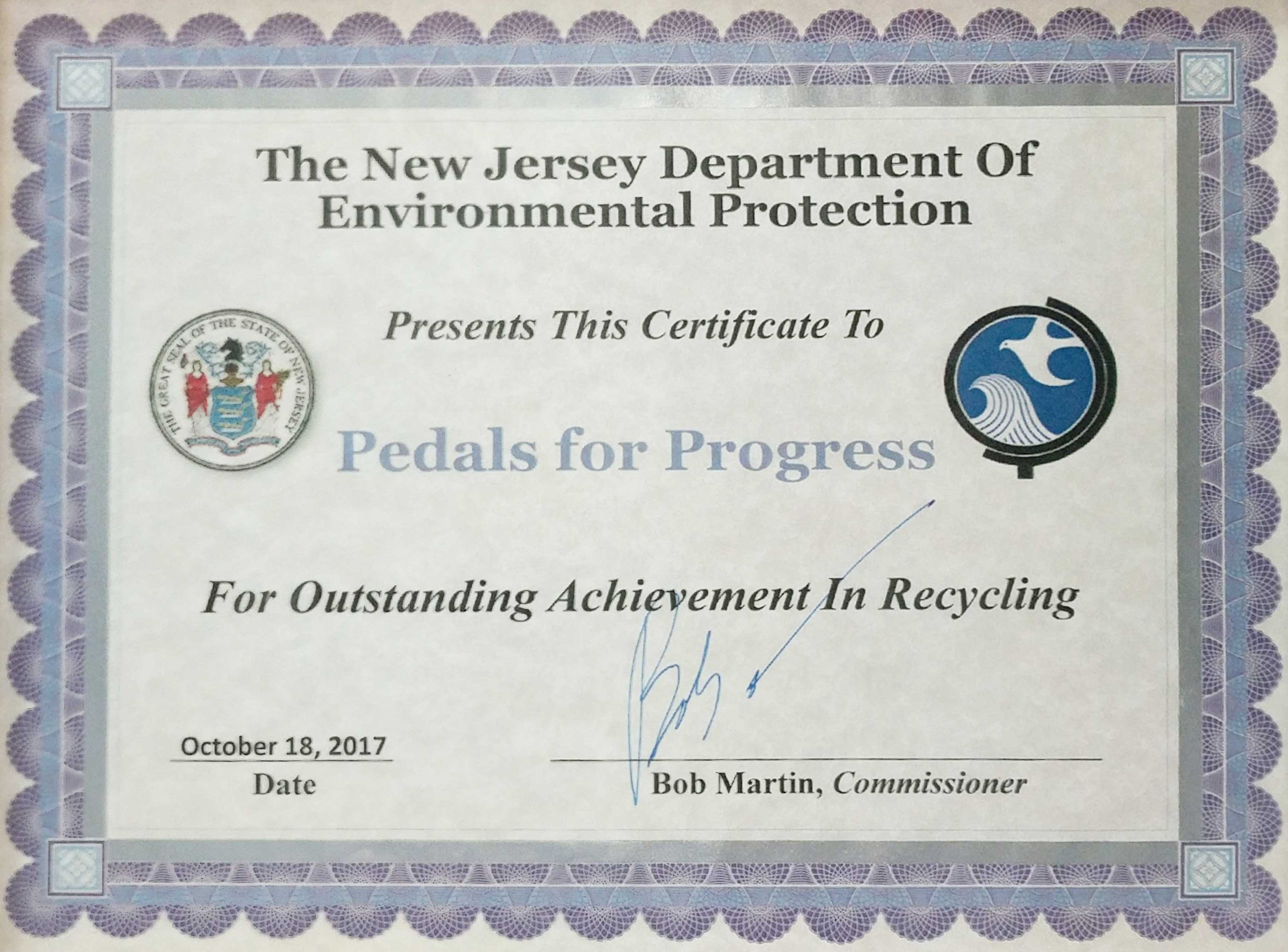
In October 2017, Pedals for Progress won a New Jersey Department of Environmental Protection (NJDEP) Recycling Award.

The award was for recycling activities in 2015 and 2016, but the application for the award was a chance to give the NJDEP an overall impression of P4P:

  • The 4-page Program Narrative has information on our goals, history, business model, overseas partners, and domestic collectors and collection activities.
  • The 14-page Supporting Documentation has lots of specifics:

    • what we shipped in 2015 and 2016
    • our financial statements from 2016
    • some info on collections
    • some documents from the red-tape nightmare that Dave deals with for every shipment: bills of lading, letters to foreign customs departments, declarations of contents for the shipping companies, …
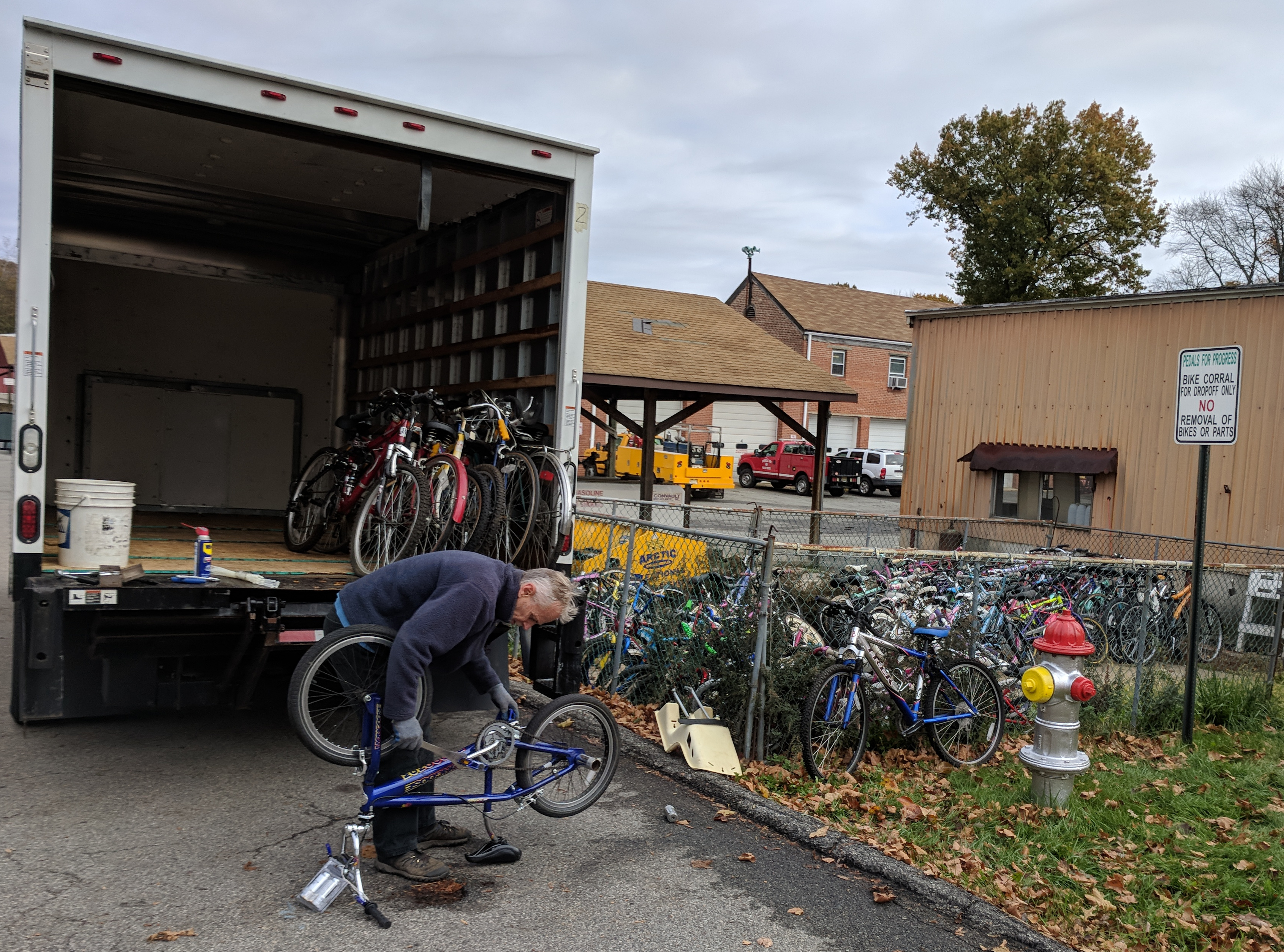


The supporting docs also contain a much appreciated letter of support from Liz Sweedy, our contact at the Morris County Municipal Utilities Authority. Besides running one of our most successful regular collections, Liz arranges for us to pick up bikes from the Denville recycling center, where Gary and I just picked up 59 more bikes on November 8th. In the photo Gary is doing what he’s done many thousands of times: processing a bike. He’s removing the pedals, one of the steps we take to make the bike as small as possible so we can fit as many bikes as possible into a container. The photo also shows our very own sign at the recycling center: “Pedals for Progress Bike Corral. NO removal of bikes or parts.”

NJ DEP 2017 Recycling Award
We’re not primarily a recycling organization, but when I did the math, I estimated that since 1991 we’ve shipped more than 4 million pounds of bikes and 74,000 pounds of sewing machines out of the U.S. Not all of this would have been dumped in landfills in the short term, but that’s where it would be sooner or later. And let’s not underestimate the encouragement we provide for cleaning out basements and garages!

Of course recycling is just a happy secondary consequence of our primary mission: to provide economic opportunity to people in developing countries.

Congratulations to P4P for this 2017 NJDEP Recycling Award. Now let’s get back to work.


Treasurer’s Message, Fall 2017

Hi.

I’m Johnny Alexander, Treasurer of Pedals for Progress. Dave and I were Peace Corps volunteers and roommates in Sucua, Ecuador, for all of 1979. He often tells the story of our Peace Corps landlord who put to productive advantage one of the few bicycles in Ecuador. Sr. Peña was part of the inspiration for the founding of P4P.

Several years ago I joined the Board of Trustees and was elected treasurer. My wife Jane Divinski and I are long-time donors. I am starting this column to offer more financial insight and transparency to P4P.

You donors, volunteers, and stakeholders are the core of P4P. It is your time and treasure that sustain and power P4P. Because P4P operates as an IRS-qualified 501(c)(3) nonprofit, your donations may be used to reduce your tax payments.

I want to lead off my first column with an innovative and tax-saving way for retirees to donate to P4P. If you have an IRA or a 401k plan, this should be of interest to you. At age 70.5, you must begin to take Required Minimum Distributions (RMDs). You of course may begin your distributions earlier if you need or wish to. All IRA/401k distributions, except those in Roth accounts, increase your taxable income. The IRS will permit you to direct your IRA/401k administrator to make directed donations to 501(c)(3) nonprofits like P4P. The benefit is that if the money goes directly from your IRA/401k to a nonprofit, you avoid including it in your taxable income. Many wealthier seniors dislike the RMD because it can push them into a higher tax bracket and raise their taxes. The direct donation approach prevents this tax bracket creep. The outcome is that your total tax is lowered by a greater amount than if you report the income and take the deduction for your donation. If you wish to read more, here is a really good article, with examples, from the Wall Street Journal: The Benefit of Donating Your Required IRA Distributions to Charity.

I am sure that your tax advisor and financial institution can help you understand how advantageous this can be for you, given your financial situation.

In peace,

Pedals for Progress Bike 150,000

Fall 2017 InGear

The Summer 2017 InGear newsletter has a partial report on bike number 150,000. The report was partial because at publication time we had collected, packed, and shipped the bike, but it did not yet have an owner. Now that it does, we want to tell the whole story in one place.

Collected on Long Island
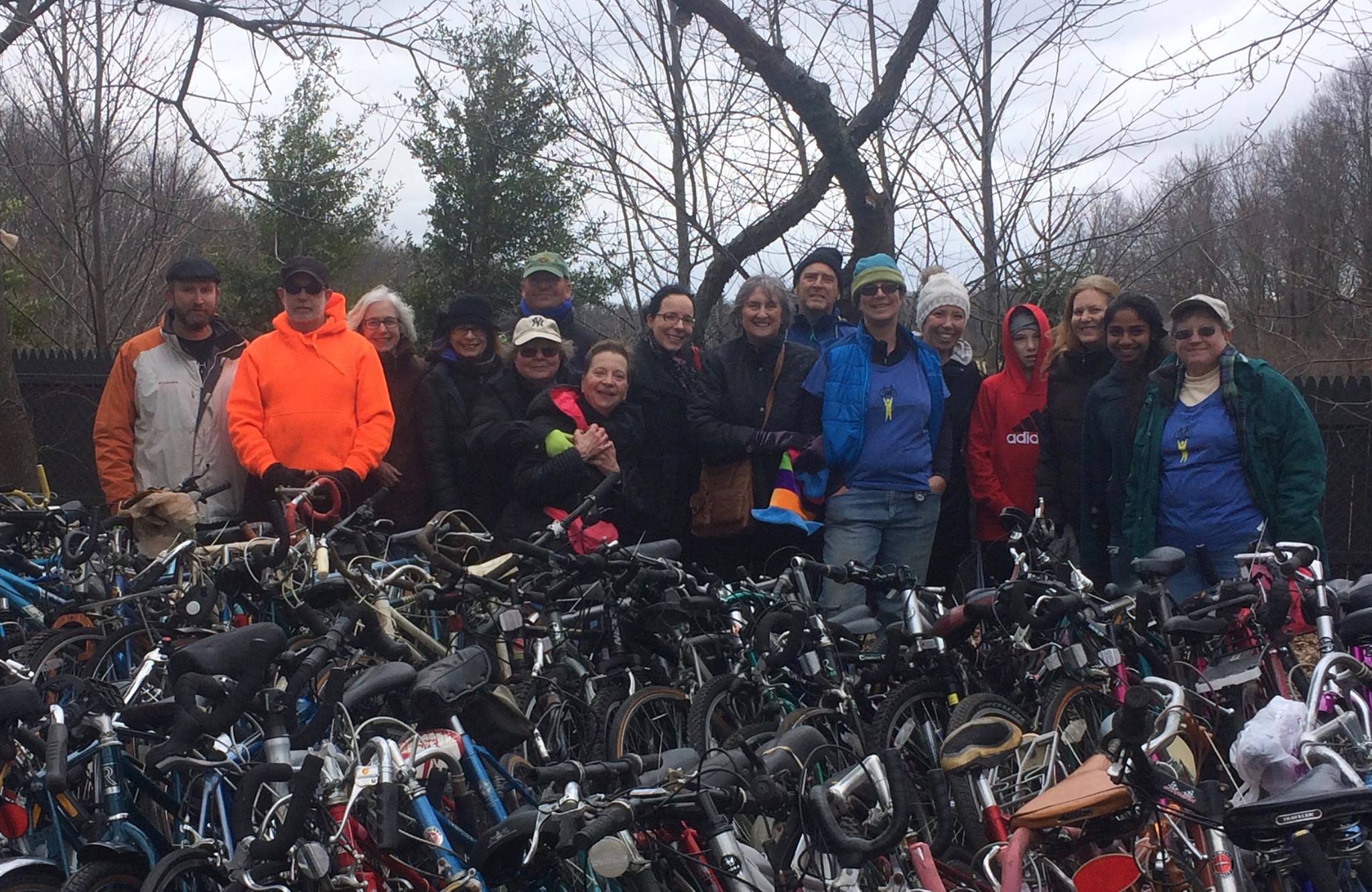

On April 1, 2017, the Long Island Returned Peace Corps Volunteers collected P4P bike number 150,000. The Long Island RPCVs have been one of our most successful collection partners. They rotate collections around Long Island to maximize their reach. Their first P4P collection was in 2003, their second in 2005, and they’ve held collections every year since. The Long Island RPCVs are featured in this article from Summer 2011.

Shipped from New Jersey
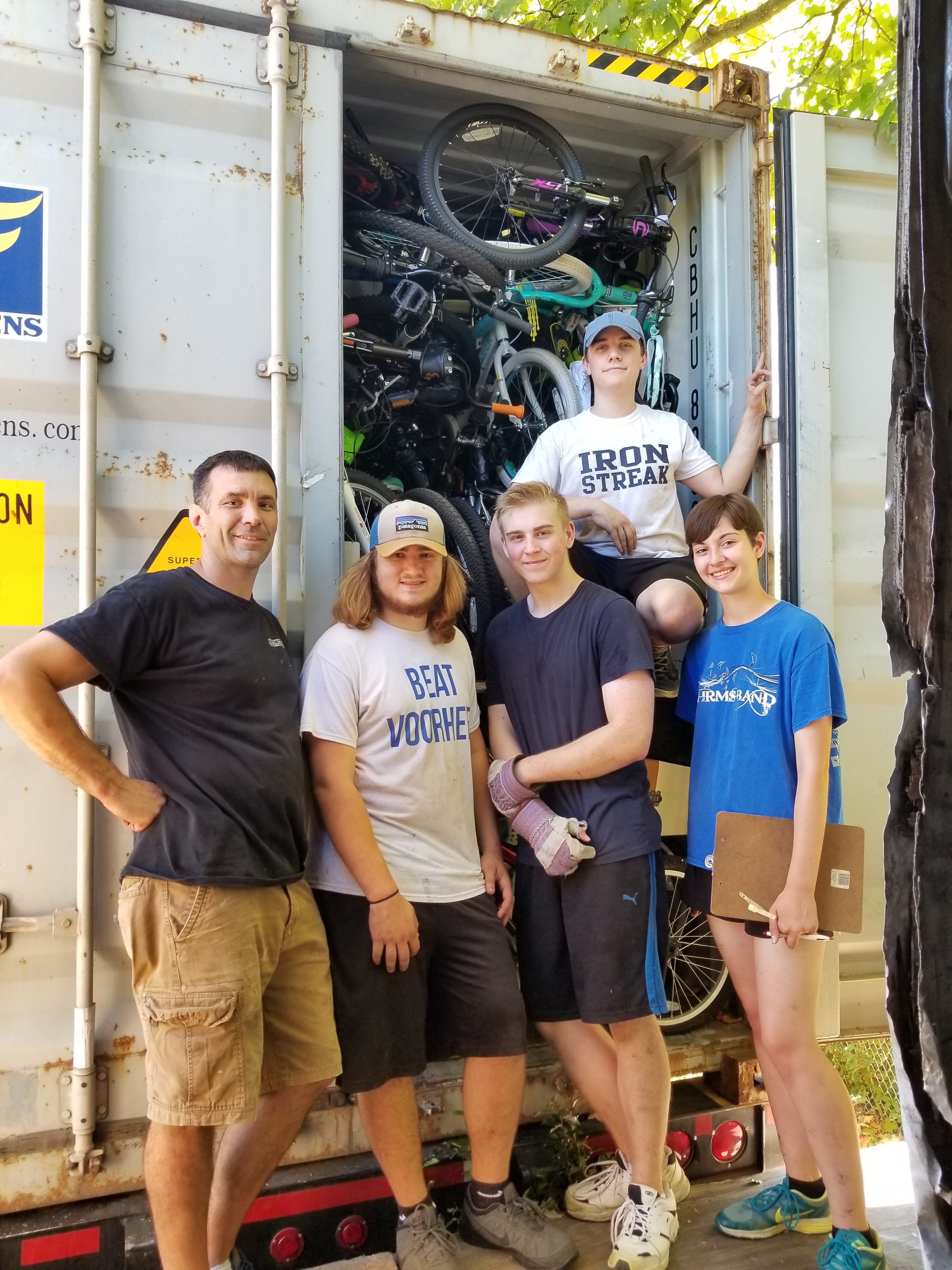

On April 22nd, volunteers from the Warren Hills High School Chess Club helped us load 575 bicycles into a 40-foot container bound for Chimaltenango, Guatemala. The Chess Club and their faculty advisor, Daryl Detrick, are no strangers to P4P. Along with the Computer Science Club, they have run 8 collections and packed 4 containers.

This was our 18th shipment to our partners at FIDESMA, for a total of 9,460 bicycles.

Arrived in Guatemala
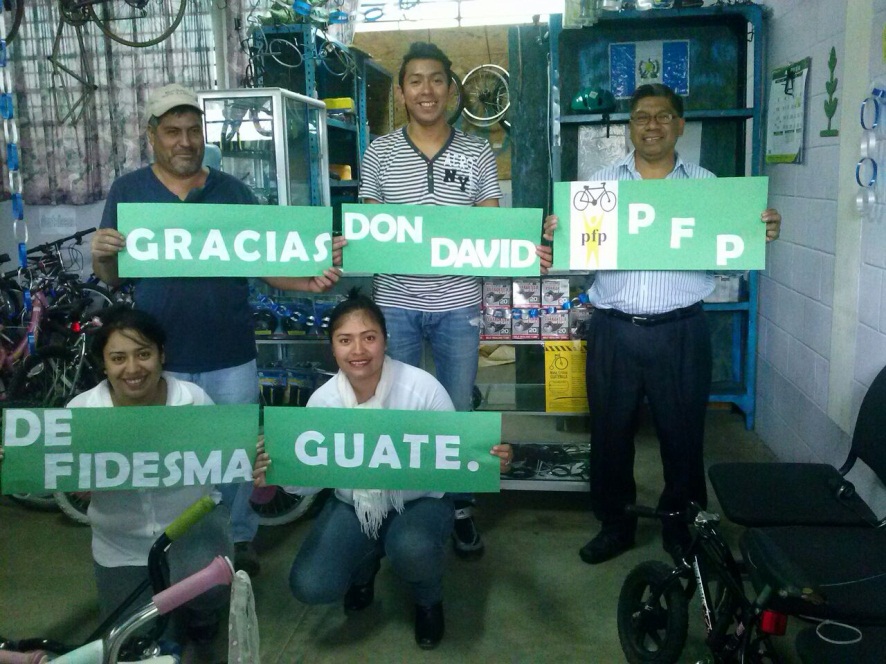

Our partners at FIDESMA report that bike 150,000 arrived in San Andrés Itzapa, Guatemala, at midday, June 6th.

FIDESMA, our Guatemala partner, got our 100,000th bike in 2006. FIDESMA has been our partner since 1999. Besides their bike program, FIDESMA runs programs in health and special ed, job skills and training, and environmental conservation.

We are good friends as well as professional partners with the staff at FIDESMA. The summer 2012 InGear newsletter has an article about a visit to New Jersey from Señora Maria Margarita Caté de Catú, founder of FIDESMA.

Here is the note and the inventory report from FIDESMA about Guatemala container #18 with the famous bike:


Greetings. We hope you are well.

Thanks for thinking of us when you were ready to ship bike number 150,000. On behalf of our team and our community leaders, many thanks for your support.

Sincerely,
Margarita Cate
Arnulfo Catu
Isabel Luna
Pedro Catu
Roxana Cate
Paty Luna
Sebastian Quina
Jose David Catu
and all of us here at FIDESMA


Bicycles

Mountain bikes 179
BMX bikes 253
Road bikes 31
Touring bikes 58
Tricycles 1
Tandem bikes 1
Choppers 1

Total 524


Accessories and Parts

Water bottles 7
Baskets 10
Pumps 2
Bike bags 2
Helmets 6
Plywood sheets 8

P4P keeps track only of adult versus kids’ bikes. FIDESMA categorizes bikes in much more detail than we do! Also, we sometimes forget that plywood, which we use in the containers to separate rows of bikes, can also be useful to our partners. We translate the FIDESMA reports from the Spanish. In case you’re wondering, the Spanish word for chopper is ‘chopper’.

Delivered to Its New Owner
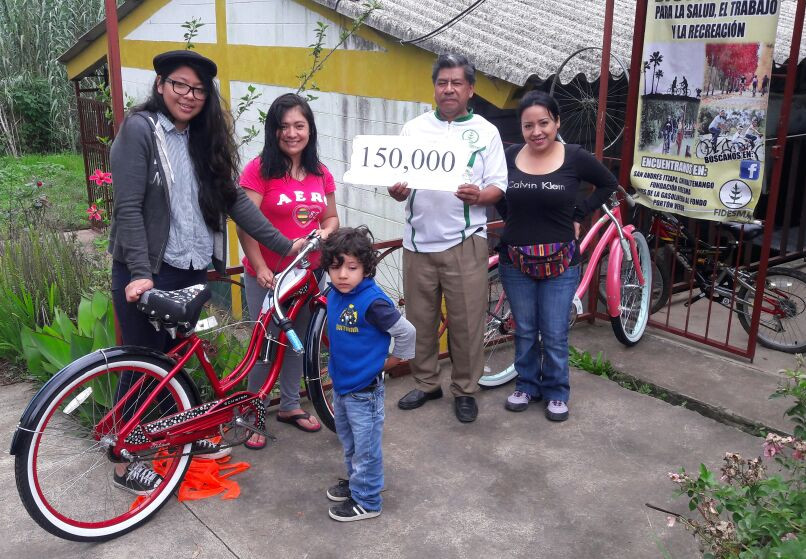

The owner of P4P bike number 150,000 is Noelia Chiquitá, a 17-year-old in her third year of high school. Noelia lives in Chimaltenango, Guatemala.

She plans to use her bike every afternoon to buy supplies for the family store, where she helps her mother in the afternoon after school.

The bike will also help her stay in shape and stay healthy.

Onward!

Recent collections have made a good start on our next 150,000 bicycles. Our trailers are full and we are waiting for the next opportunity to make a shipment.


Report from Albania, Fall 2017

Fall 2017 InGear

Albania has one of our most active partners, PASS/Ecovolis, which runs a wide variety of social and environmental programs. An Update from March 2017 mentions two of their programs. One uses P4P/SP sewing machines to make reusable shopping bags and the the other operates a children’s library, LibrAria.

Ened Mato, the PASS director, recently reported on two other PASS projects.
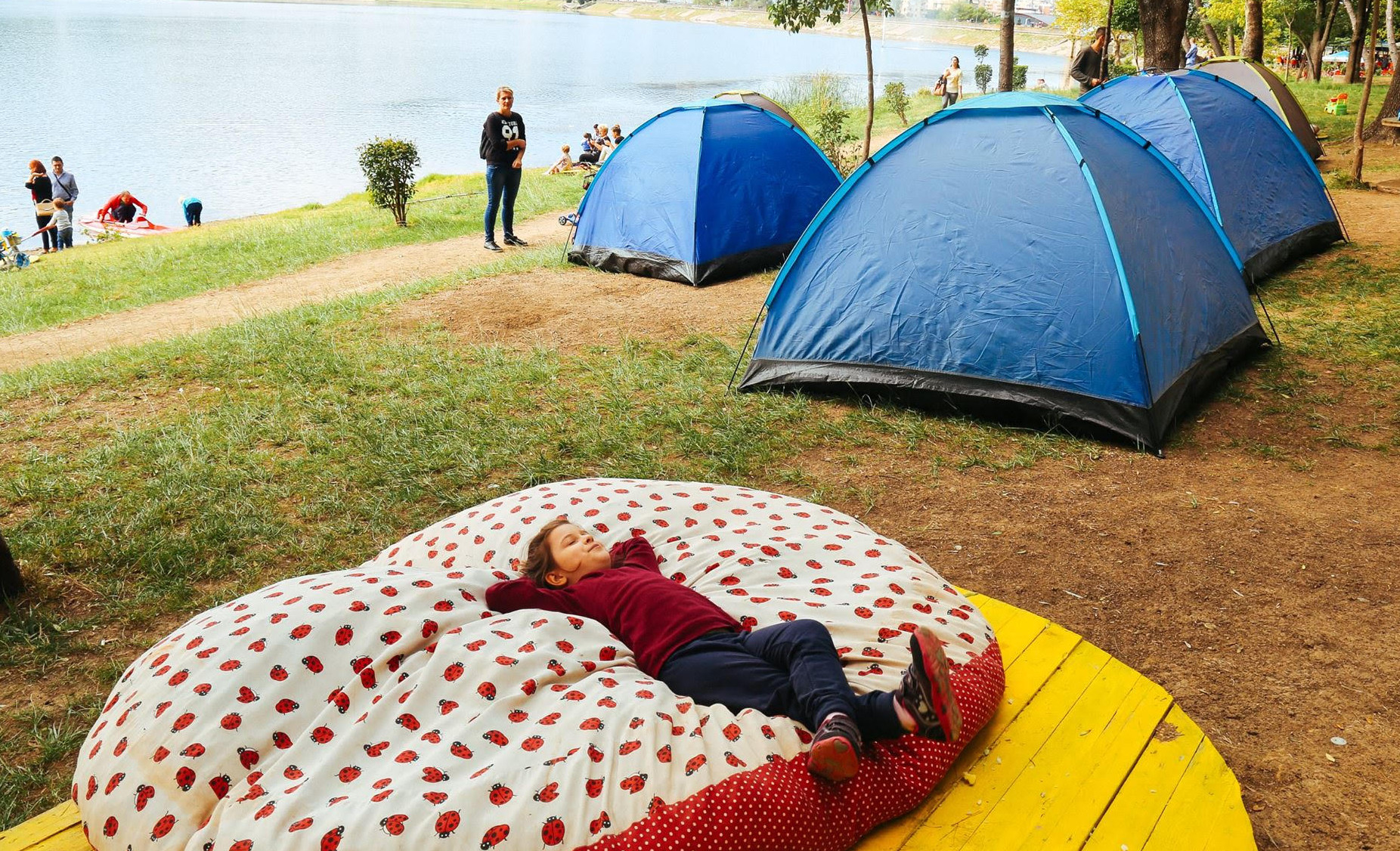

The School of Nature is a children’s program in the Albanian capital, Tirana. The goal of the program is to give urban kids some experience in nature while having fun and learning. Here are some examples of School of Nature activities:

  • raise a tent camp
  • plant different kinds of flowers
  • read books
  • paint
  • take canoe trips on the artificial lake in Tirana
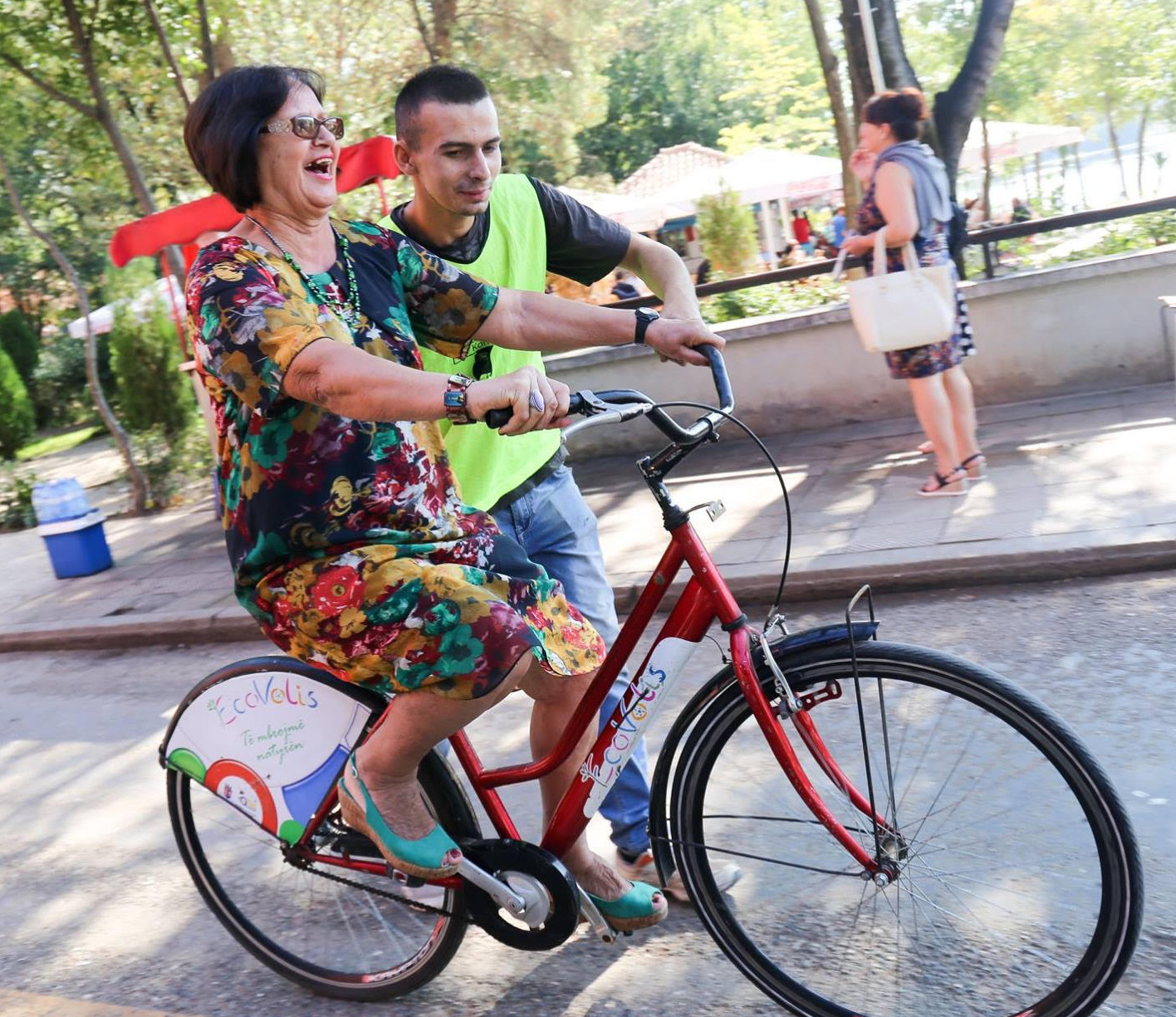

The Elders’ Academy is a program to teach older adults to ride bicycles. Some of the riders have not ridden a bike for many years and some have never learned to ride. I don’t know about you, but the thought of learning to ride a bike at age 50 or 60 sounds a little scary, especially in a busy city like Tirana. But in the photos we’ve seen, these “elders” look like they’re having a blast.


Ghana: Values of the Bicycle

By Ohemaa Sarfoa
Fall 2017 InGear

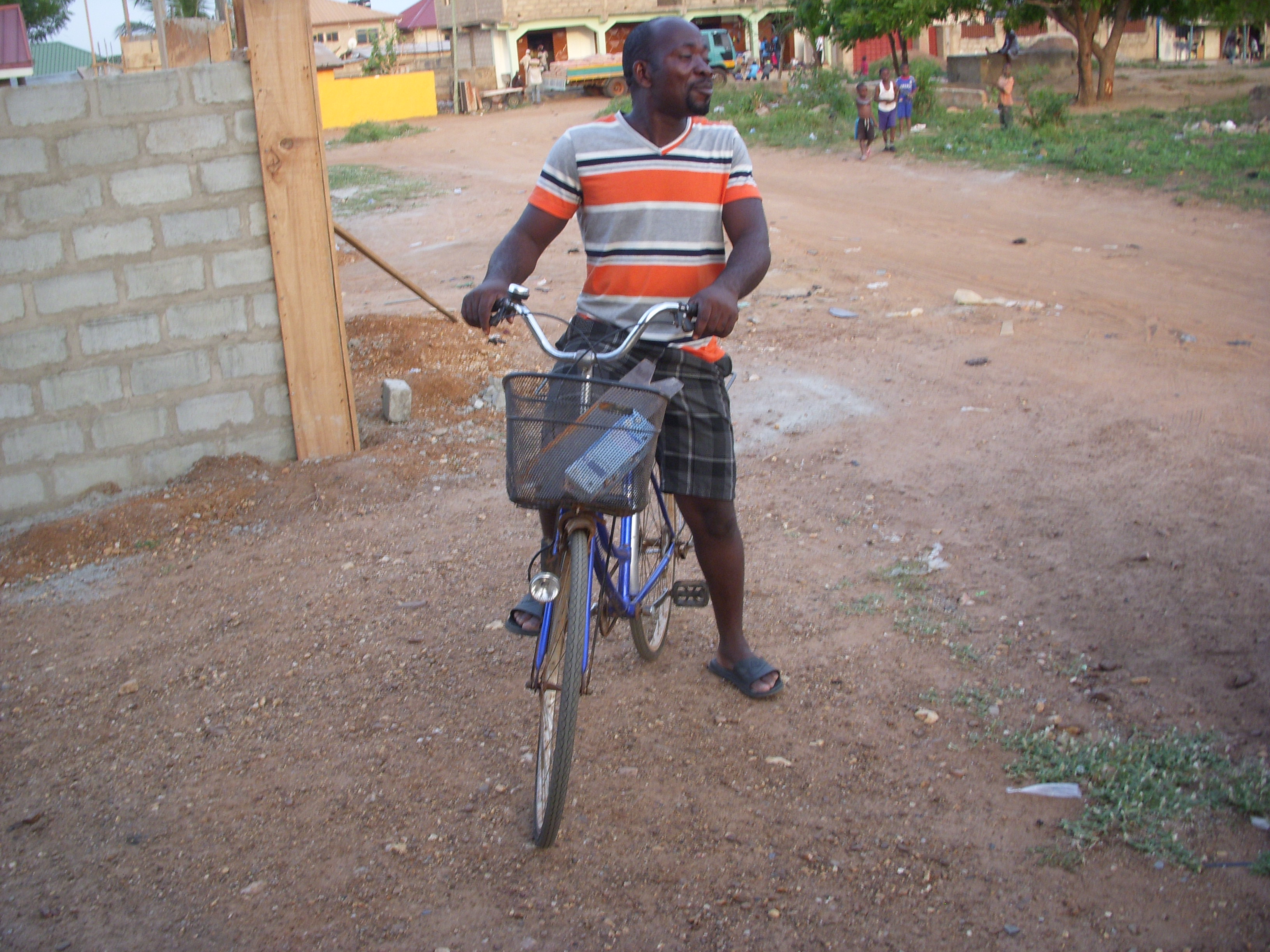
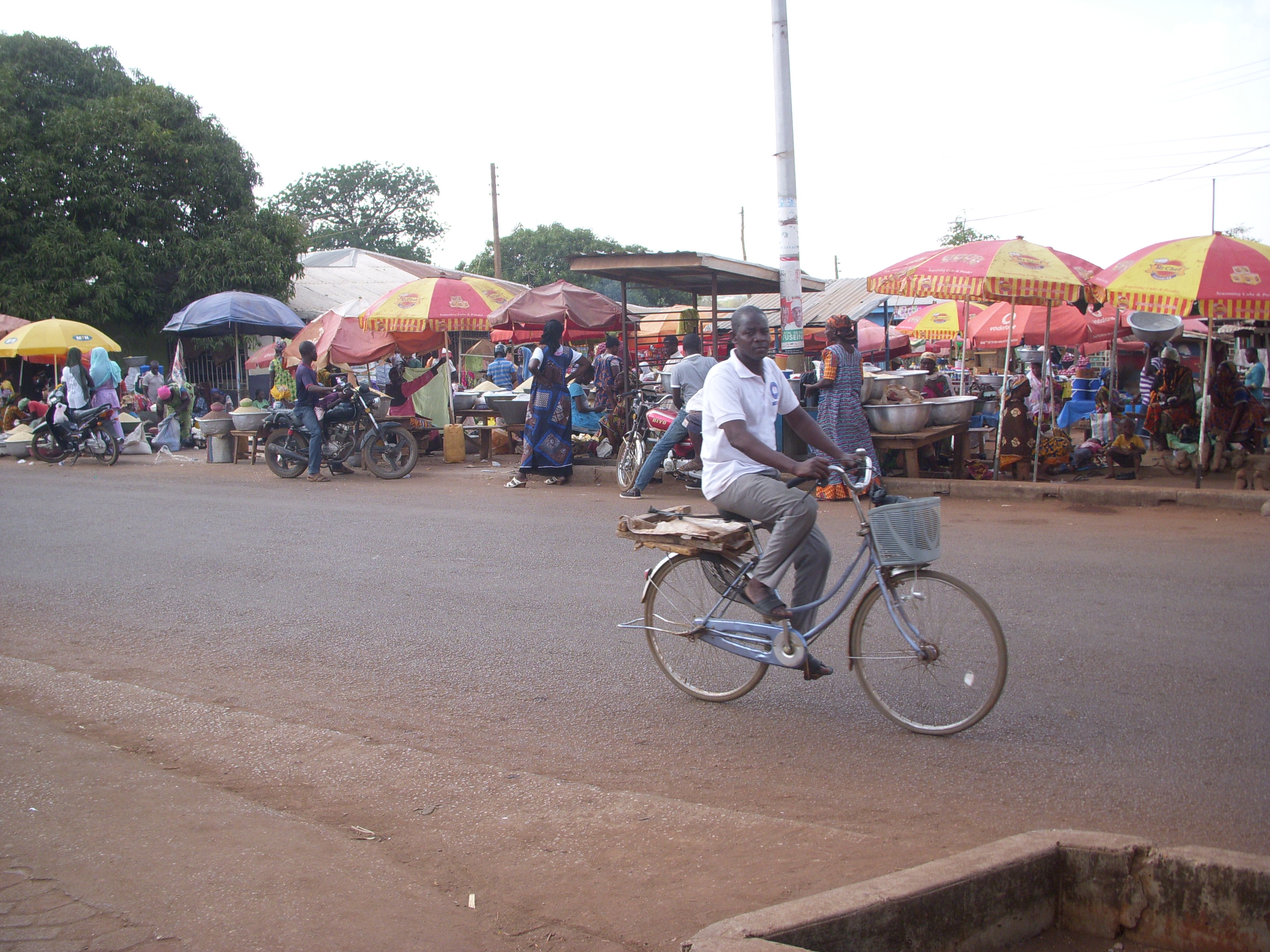
Because of its numerous uses, a bicycle could be a very cherished vehicle for its possessor. Forty-year-old Mr. Sapaku is a tailor. He has been using a bicycle in his daily dealings for the past ten years. Aside from the thrifty significance of the bicycle, it unknowingly gets rid of some health-related deficits in his body, as biking is a form of exercise.

As part of his schedule, he rides his bicycle to Winneba and back and so is able to keep fit. With his bicycle, he is able to procure all his sewing materials. Further, he distributes his finished garments on his bike. Owing to his work ethic, he never runs out of customers and this is so because of the bicycle. It has contributed a significant increment to his income.

However, recent years have not been so favourable for Mr. Sapaku. His bicycle broke down and efforts to repair it have been futile. Despite his efficiency in his work, his productivity saw a drastic decline. Without his bike, he was not able to deliver finished garments on time. Neither could he save money, now that he had to spend so much on public transportation.

Getting a new bicycle from WEBike caused a remarkable change for Mr. Sapaku. He is now able to save money he used to spend on transportation. In addition, he no longer has to deal with heavy traffic jams.

In summation, the bicycle is a frugal, time-efficient, and health-improving vehicle.


Ghana: Water as a Necessity

By Ohemaa Sarfoa
Fall 2017 InGear

One of the most important commodities in the lives of all living things is water: the body is made up of 70% water, and plants as well as animals need water for growth. Water is an undeniably substantive commodity in the livelihood of humans.
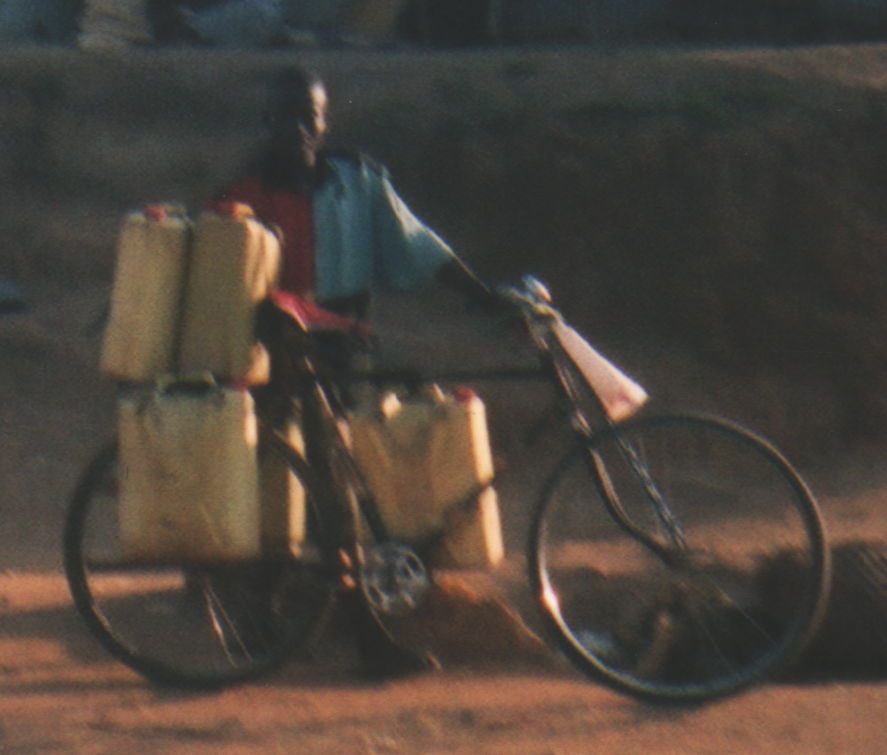

In spite of the importance of water, access to potable water is a great hurdle in some parts of West Africa, specifically Ghana. In some parts of the northern region of Ghana, human beings share the same water with animals. Animals also need water, but in these areas cattle drink and release their droppings in the same lakes and streams humans use.

Sabulugu is a village in the northern region of Ghana where there is little or no access to clean water. Inhabitants have to walk 3.5km to get drinkable water.

This has been the situation in Sabulugu for many years. Thanks to WEBike, though, there has been a change. The need to walk long hours for clean water has now been eliminated. Residents simply tie their water containers to their bicycles and bike to the stream and back in 30 to 40 minutes.

WE EXPRESS OUR PROFOUND GRATITUDE TO WEBIKE!


[Editor’s note: Although we have not been able to get a picture of the water carriers in Ghana, we have seen bicycle water-carriers before. In rural areas, the average Ugandan lives 4 miles from the nearest well. The photograph in this post is of a water carrier from Koytera Uganda. Water carriers put a 10-gallon jerrycan on each side of the back wheel, suspended from a piece of 1” x 3” wood, and then place two more 10-gallon jerrycans on top. That is almost 350 pounds of water! Then they push the bicycle to someone’s house where they dump the water into that person’s cistern for a few shillings and then ride back to the well with the empty plastic containers on the bicycle. They repeat this process dozens of times per day to earn a living and to supply people with the water they need.]


The Path to Financial Stability and Better Health in Uganda, One Stitch at a Time

By Patricia Hamill
Fall 2017 InStitch

Unemployment is not an unfamiliar topic these days. Reports on the economy and job growth are broadcast daily with the intention to give us a sense of momentum and hope. What many realize of course is that there is still a dearth of jobs with adequate compensation. Are the openings that are listed truly available or are they only posted because of policy or legalities and already filled internally? As frustrating as this is, people in developing countries don’t often have the opportunity to even question if a job is open, or to whom. There may not be any, filled or otherwise. This is the ongoing struggle we’ve been trying to have an impact on with our bikes and sewing machines, and our partners remind us how much our efforts change lives and futures.

We recently received a letter from Mathew Yawe, Director of the Mityana Open Troop Foundation (MOTF) in Mityana, Uganda, highlighting the success our program Sewing Peace has had in enabling young people and families to combat the devastation that the HIV/AIDS crisis has wreaked in the region. The loss of life to this epidemic has been reduced over the years, but the long-term effects on families and the economy are still quite apparent. That is why this Non-Government Organization (NGO) Mityana Open Troop Foundation has focused on aiding people in creating financial opportunities for themselves. The resulting income allows children to go to school and graduate, and thus be more likely to qualify for steady employment or business ownership.
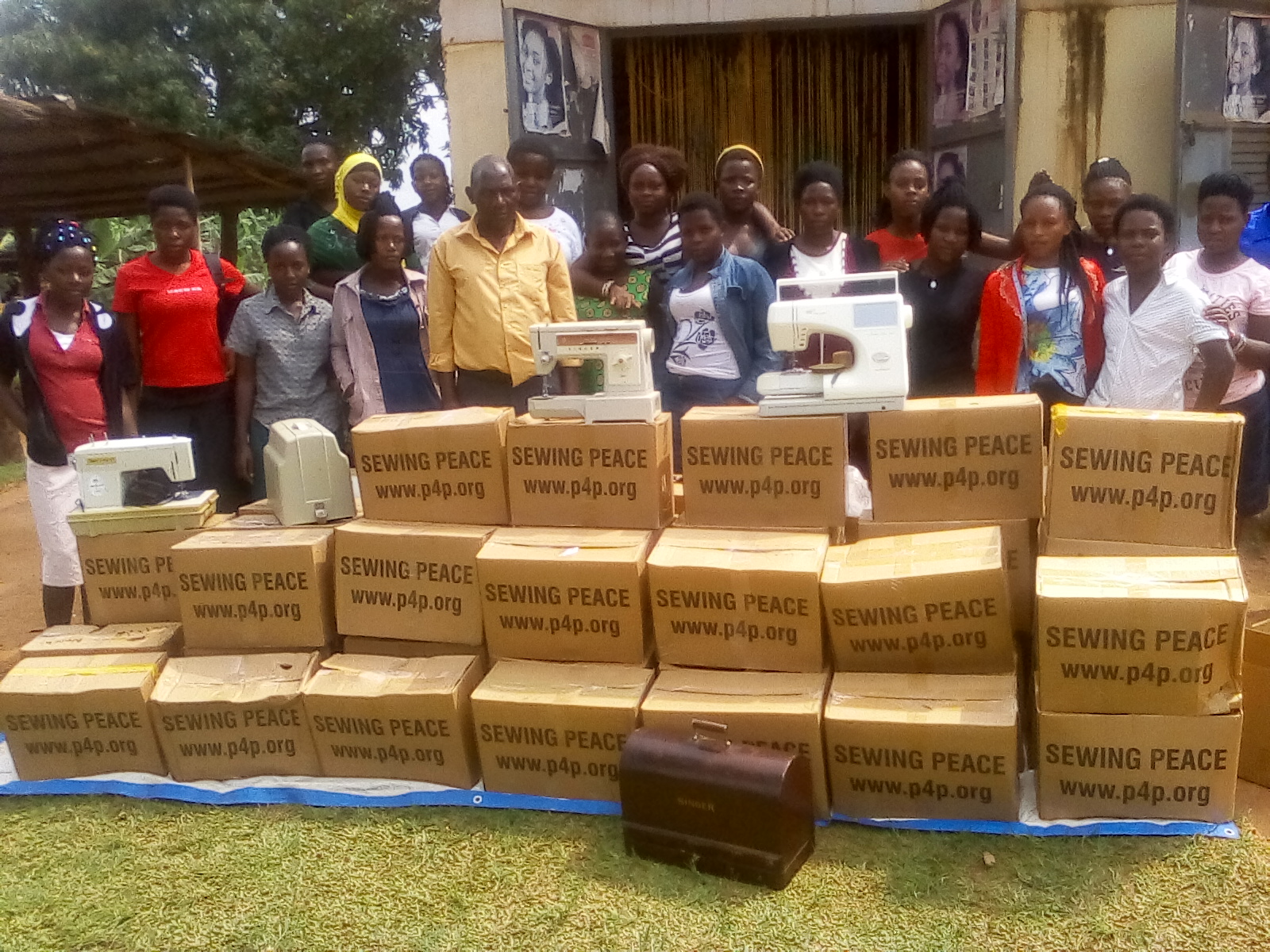

The direct correlation between education and employment and a lowered rate of disease and unplanned pregnancy is evident in much current research. So, of course, access to and use of doctors’ services and preventative healthcare is more likely only when one is able to afford the services. As a partner in the cause to fight poverty and its consequences, Sewing Peace shipped 73 refurbished sewing machines to MOTF in July for their vocational workshop in tailoring and design. The project recruits and trains the most vulnerable of the local population in many skills, including tailoring and garment production. The ratio was 1 machine to 4 people. Some of the machines were also made available for program graduates as start-up machines so they could create their own businesses.

In August, MOTF met with 51 residents in the village of Semukombe Mpigi to donate 2 of the sewing machines. The need here is palpable. So often, parents cannot afford the fees involved in sending their children to school. The cost of uniforms, books, and even transportation is prohibitive. The lack of access to proper health education adds to young women being expelled from school because of unplanned pregnancies. There is also the issue of families that lack an adult because one or both parents have succumbed to HIV/AIDS and the children cannot begin to consider any option other than survival.
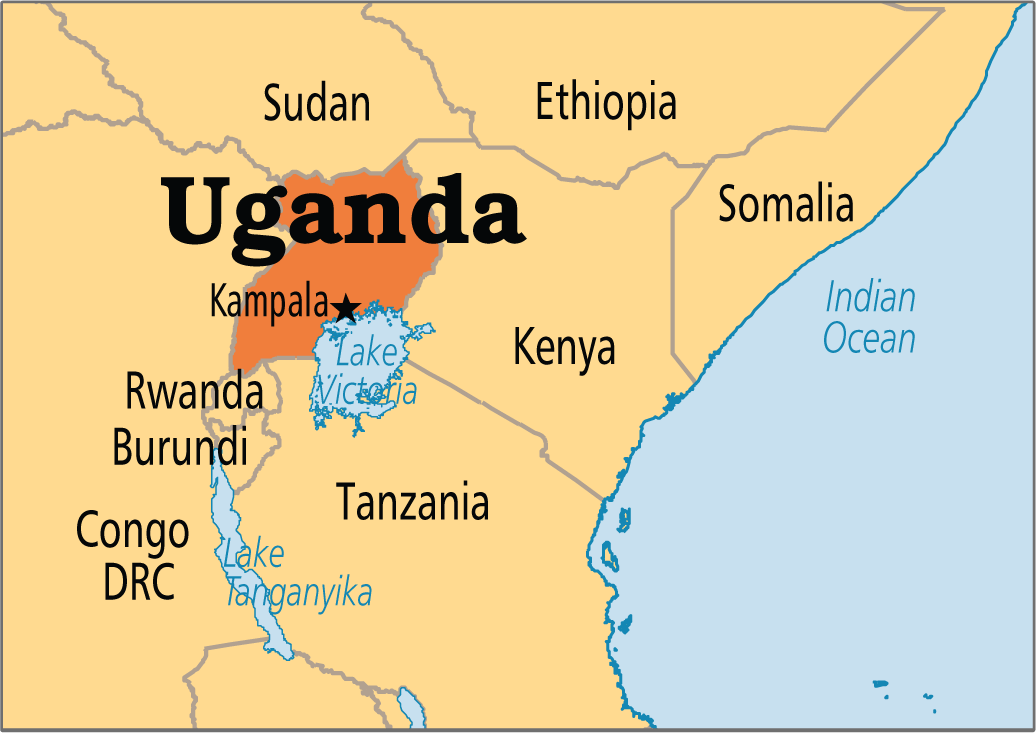
Here, the death of one particular man had greatly affected his two wives. One widow had 6 children. One had 5. The children had all dropped out of school because there was absolutely no income for fees. Access to medication, clothing, and food was all but eliminated. The donated machines would be the only tools these women have to reverse their circumstances and provide a stable future for the 11 youngsters. With care and maintenance, the sewing machines can also become the tools that some of the children can make use of to start their own businesses in the village or in areas like the capital city Kampala, about 22 miles away, where the population is much larger and the demand for school uniforms and other clothing promises a steady income. Ultimately, this kind of program can assist women in avoiding total dependence on their spouses or sons. Husbands and sons can rely on their whole family to participate in maintaining their wellbeing.

As our readers well know, project sustainability is always at the root of the success of an endeavor and MOTF must also consider the longevity of their vocational programs. Thus, some of the machines were sold to local tailors, offered at a fair and more affordable price than one could find in Kampala. These donations from P4P and the reasonable selling prices offered by MOTF are not easy to provide because the cost of shipping to inland locations like Uganda is substantial. Transporting the containers from the port in the coastal city of Mombasa, Kenya, over the approximately 700 miles of road to Kampala, Uganda, is not a simple task. The logistics of viable routes and reliable trucking becomes quite complicated causing the endeavor to cost half again as much money as it would to ship from New York City, through the Panama Canal, past Singapore, to Sri Lanka, and then to Kampala. This extra expense cannot be transferred to those in need, so it is our supporters and volunteers who ensure that no obstacle prevents the machines from getting to their destination.

As always, the effort continues. The private vocational institution MOTF is now looking to expand its program to include embroidery once a reliable machine can be located so they can also provide logos and names of the local schools whose uniforms they sew. With a continued flow of funding and sewing machines for training and sale, the reality of healthy, long lives and income stability in this region of Africa is attainable.


Reports from Uganda, 2017

By Mathew Yawe
Fall 2017 InStitch

[Our new partner in Uganda is the Mityana Open Troop Foundation, started as a Boy Scout group but now admitting girls. Their director Mathew Yawe has sent us several reports on their activites in 2017. For more perspective on Uganda in 2017, see the post in this newsletter by Patricia Hamill.]

Report of 29 July 2017
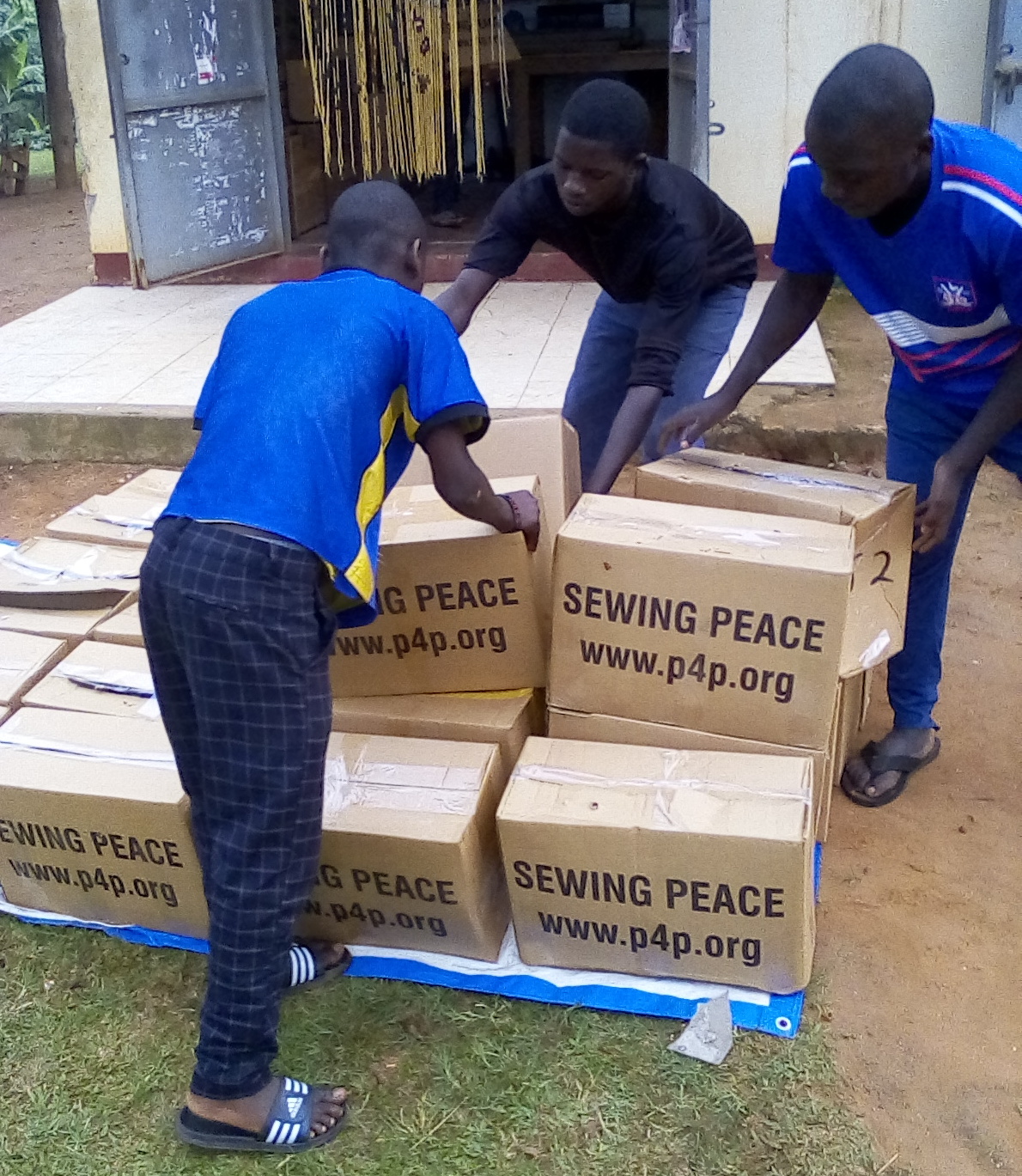

On 24 July 2017 Mityana Open Troop Foundation received 73 sewing machines from Sewing Peace USA. There were manual and electric machines all in good condition and looking so attractive.

Currently we have been lacking sewing machines to be given to our vocational project graduates as start-up tools to enable them to start their own workshops.

Here are our plans for the machines:

  • 23 Machines will be installed in our vocational workshop.
  • 10 Machines will be sold to graduates of November 2017, each for 200,000 Uganda Shillings (UGX): US $55. This money will be used to cater for shipping costs, custom taxes, ECU charges, handling charges, and transport to Mityana. The profits will be used to pay for the next shipment, which we hope to request this year.
  • 40 machines will be sold to the artisans who need them at UGX 250,000 (US $69). Currently a sewing machine in Uganda costs US $83 or more.


Proposed Sewing Machine Workshop In Our Town

We have planed to set up a sewing shop and workshop in our Town of Mityana, where we shall be selling the sewing machines at a cheaper price, carrying out machine maintenance, knitting, making school uniforms, school badges, and embroidery work, as there is no any Embroidery machine in Mityana.

However, at our workshop, we shall be selling and repairing mountain bikes. And our trainees will be trained in how to repair sewing machines and bikes at our town workshop.

The generated funds, will help paying our vocational instructors / teachers.

Expenditures on the Shipped Sewing Machines

  • Shipping from Sri Lanka: UGX 2,880,000 ($800)
  • Uganda customs charges: UGX 1,520,700 ($422)
  • ECU charges: UGX 2,261,000 ($604)
  • Handling fees by Bolore Co: UGX 470,000 ($130)
  • Transport from Kampala to Mityana: UGX 140,000 ($39)

  • Total expenditure: UGX 7,271,700 ($1995)

I once again extend sincere thanks to Mr. David Schweidenback of the Pedals for Progress / Sewing Peace project. All volunteers worked so tirelessly in collecting and refurbishing and packing our donated sewing machines. They look so good and attractive. Thank you so much.

I finally thank Mr. Chris Eldridge, our project partner in the UK, who paid all the shipping costs and gave us much support in getting the machines to Mityana, Uganda.

Report of 27 October 2017

Dear fellow scouters,

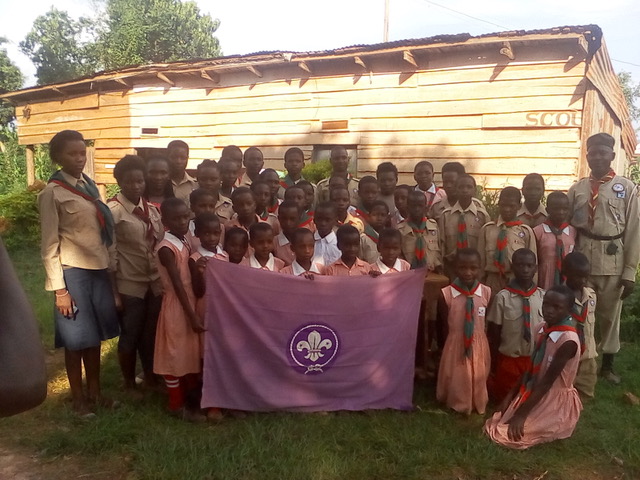
Today, 27 October 2017, I have conducted an Investiture Ceremony where 12 cubs, 15 junior scouts, and 8 rover scouts (totaling to 35 scouts) were investitured into the World Wide Scout Movement.

The function took place at the Trio Primary school. The scouts demonstrated marching, performed a flag ceremony, recited the scout promise and scout law, sang, etc.

Long live scouting.

Report of 4 November 2017

Hi fellow scouters & friends,

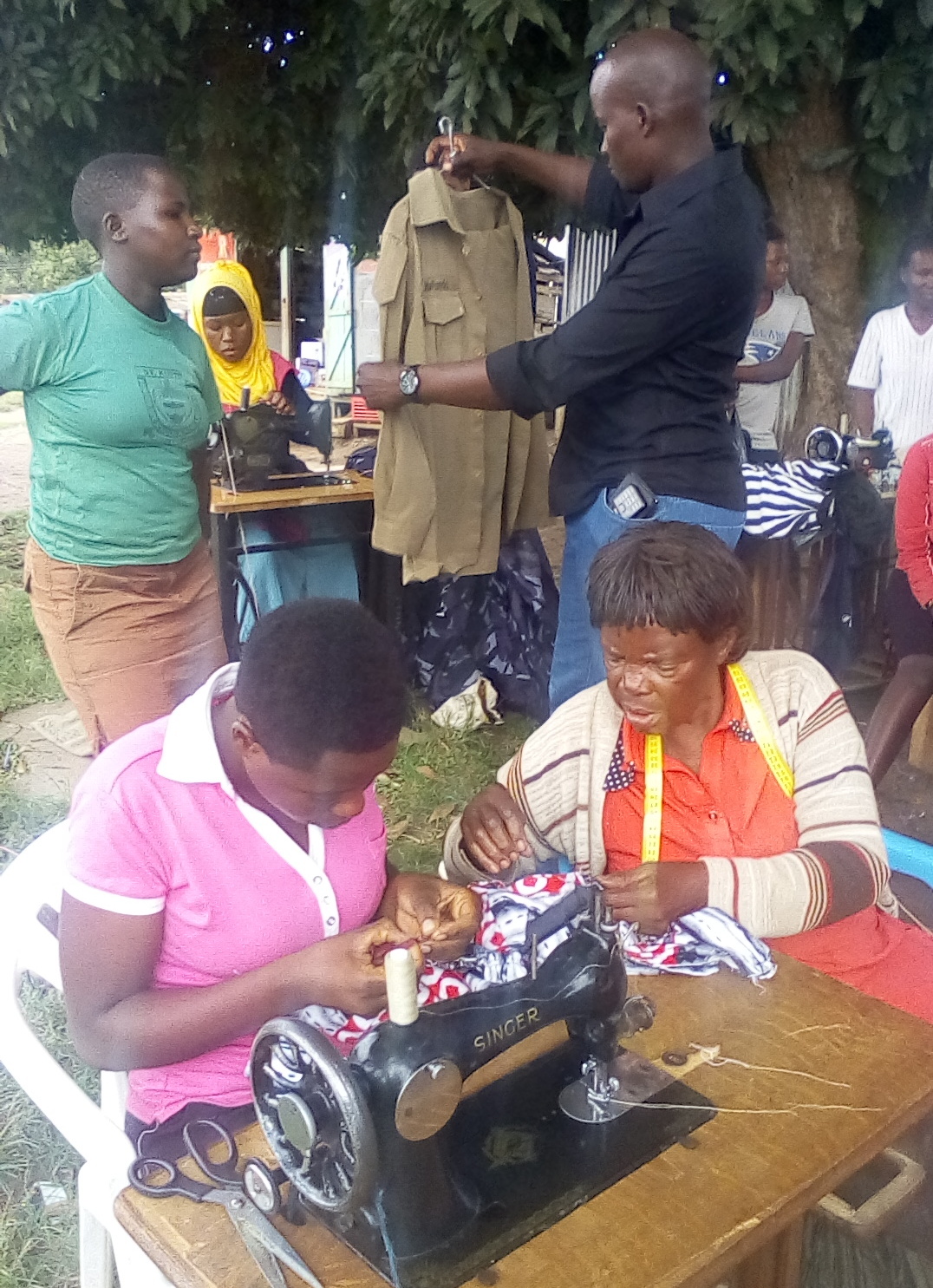
Today on Saturday, 4 November 2017, Mityana Open Troop foundation vocational trainees and scouts have volunteered at the Mityana District Police Station: hair dressing, weaving, hair washing, hair styling, hair braiding, and sewing. All the services were free of charge, done towards our vocational project trainee commissioning, due to take place on 18 November 2017.

For that event, we would like to cater for food for 600 guests and for the purchase of start-up tools for the graduating trainees, to enable them to start their own jobs right away.

Report of 18 November 2017 Graduation Ceremony
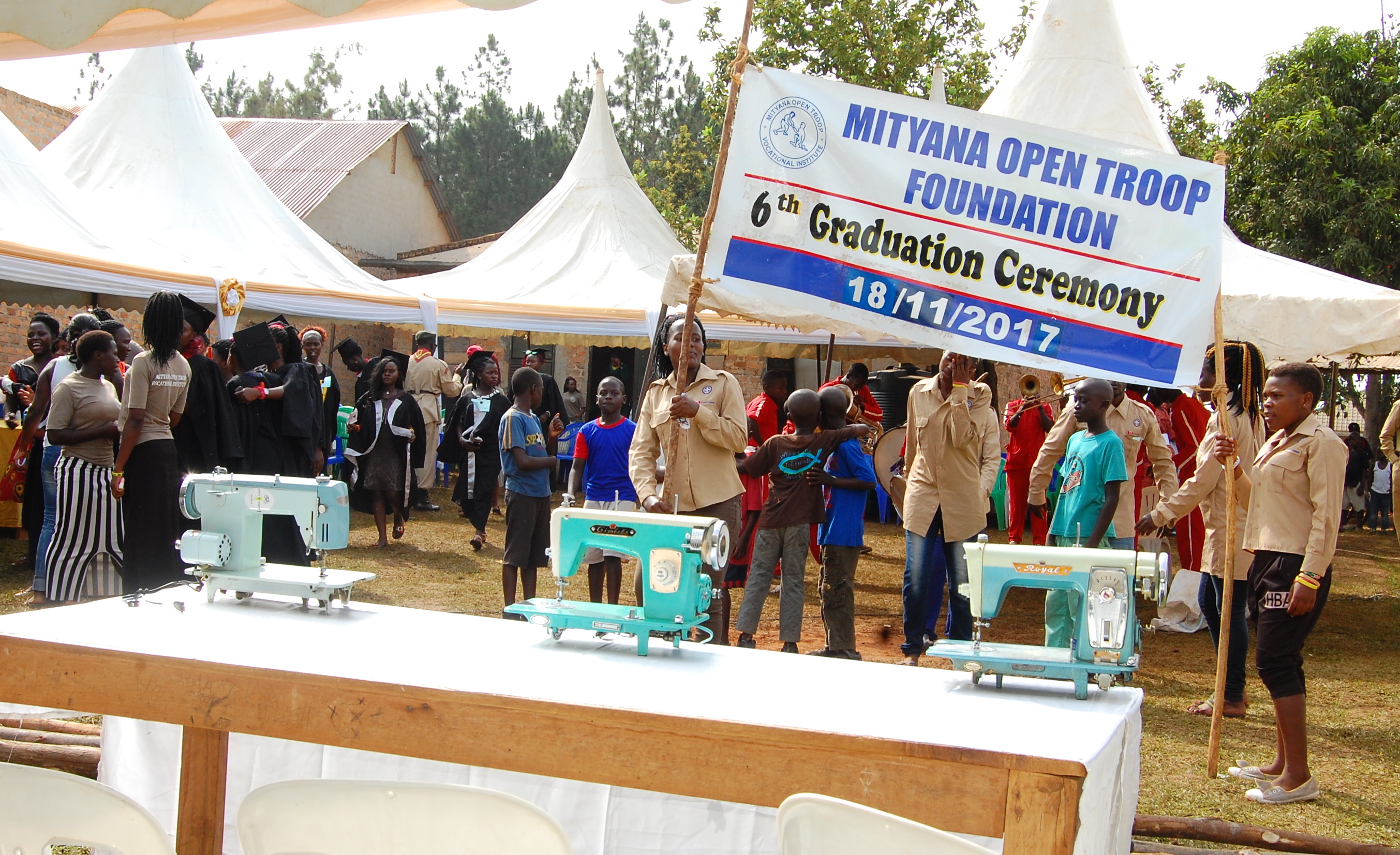

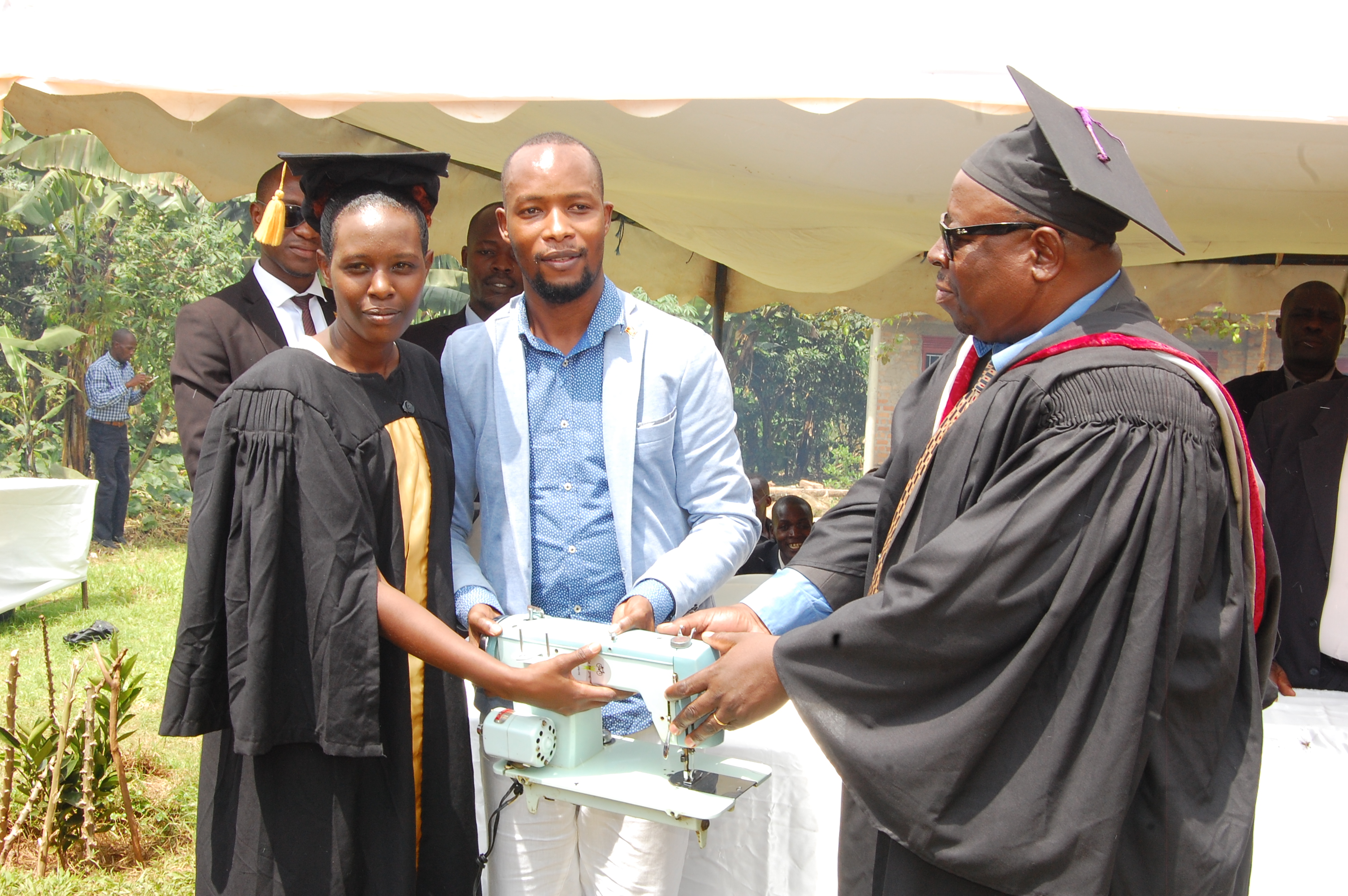
[We got another report from Uganda on the Mityana Open Troop graduation ceremony of November 18th. That report arrived too late for the original publication of the newsletter, but here are some excerpts. Click here for the complete report.]

Achievements
  • This is our sixth graduation ceremony.
  • The government of Uganda, through its Ministry of Education, supports our vocational project by giving funds for the instructors. The small fee we charge trainees caters for electricity, maintenance, and feeding, which is expensive.
  • We registered the vocational project under the Uganda Ministry of Education.
  • Kolping Mityana Womens project supports our project by sponsoring 10 orphans.
  • Three Charity organizations — Fields of Life, Africa Renewal Ministries, and Unbound — sponsor some vulnerable children at our project.
  • With support from profits got from the sold sewing machines from Pedals For  Progress / Sewing Peace Project USA, plus some funds donated from Dr. Knight Anthony of Tools With a  Mission UK, enable us  construct the Girls dormitory which is to accommodate 50 students.
  • We have been provided with educational seminars by hair beauty companies such as Movit and Darling.
  • Pedals for Progress donates sewing machines and bicycles to our project, which have up-lifted and supported many of our activities.
  • Carried out voluntary community work by cleaning and sweeping Mityana Central market, Taxi park, and surrounding streets.
  • Volunteered in making hair dressing & weaving , sewing clothes for police ladies and police men Of Mityana Police station, at free cost. However, we carry out good turn in communities, as scouts.

Cameroon 2017: New Partner, United Action for Children

By Orock Eyong
Fall 2017 InStitch


United Action for Children (UAC), based in Buea, in southwest Cameroon, is proud to be one of the newest partners of Pedals for Progress and Sewing Peace. UAC was founded in 1996 and registered as a non-profit community-based child- and youth-centered organization engaged in Grooming Small Minds for a Big Future and developing a caring society for children and young people through innovative programs.
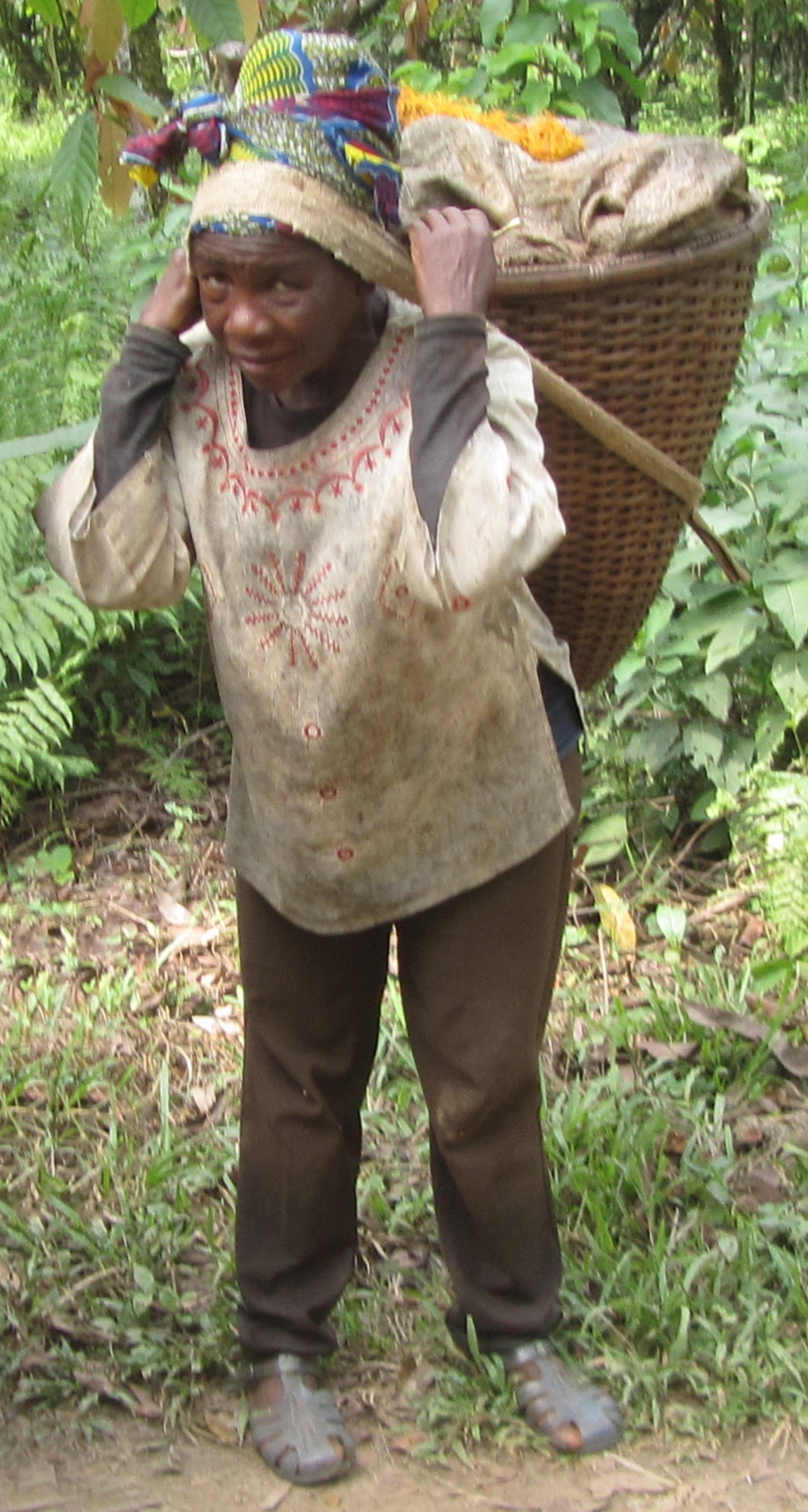


The overall goal of UAC is to contribute to the improvement of living conditions of affected populations such as rural families, children, and women. In line with its mission, UAC is involved in the following projects to meet the ever increasing needs of the affected populations:

  • Basic Education to orphans and vulnerable children
  • Entrepreneurship Education to out-of-school youths and low-income women
  • School on Wheels programme to assist rural children and women
  • Primary Health Care to cater for basic health needs of the rural communities
  • Vocational Training to equip youths and low income women with employable skills and to make them job creators

The partnership with Pedals for Progress is very timely and important in helping UAC with its mission of strengthening rural children, women, and families. The job of equipping low income women, children, and young people with employable skills and making them job creators will be made easy as a result of strategic support from Sewing Peace through the donation of sewing machines. Indeed, 72 sewing machines are in transit now.


Ethiopia 2017: New Partner, Solar Energy Foundation

A Solar Energy Foundation (SEF) group based in Addis Ababa, Ethiopia, is one of our new 2017 Sewing Peace partners. Their new program is entitled “Marginalized Women’s Training on Sewing and Tailoring”. This Solar Energy Foundation project has the following goals:

  • To train marginalized women in sewing and tailoring to help them become economically self-sustaining.
  • To rehabilitate marginalized women by creating an enabling environment for self-employment using their sewing and tailoring skills.
  • To help and support women economically, socially, and morally.
  • To contribute to the development of marginalized women and support their dreams for a better future.


With the generous help of the Clif Bar Family Foundation and the Jack & Pauline Freeman Foundation, we shipped the sewing machines in March, 2017. At that time we published this post on Ethiopia #1. We were then in a bewildering bureaucratic nightmare with the Ethiopian Revenues and Customs Authority concerning what information they needed on each machine. The nightmare is over and we are happy to report that the machines have been delivered to our partner. (We’ve just gotten a report from Samson Tsegaye, the program director.)

The sewing and tailoring training will be held in Rema, one of the SEF training centers, located in the Mida Woremo district of North Shewa Zone, about 230km from Addis Ababa. The training is held in three three-month cycles starting in June 2017. Each session will include 20–25 trainees.

The trainees will be nominated from the North Shewa zone in partnership with the zonal education and women affairs office. Approximately seventy women will be the beneficiaries of this program. Those who successfully complete the training will be supplied with one sewing machine whereby they can begin their own business.

The training program covers the women’s travel cost as well as providing a daily allowance for basic needs such as food while they are in the training program.

We will report back when we have some results from the program.

Here is the full proposal for the program.


Ethiopia Report, November 2017

By Samson Tsegaye
Fall 2017 InStitch

Ethiopia has a population of more than 100 million. More than 85% live in rural areas. Women have most of the household responsibilities. Women and girls in Ethiopia are strongly disadvantaged compared to boys and men in several respects, including literacy, health, livelihood, and basic human rights. They also suffer from low status in their society and lack social support networks.

Since 2005, we at Stiftung Solarenergie-Solar Energy Foundation are trying to solve some of these problems in Ethiopia by providing solar technologies.

When I met Mr. David and he explained what Sewing Peace (SP) is doing, I was very impressed and asked him to support our disadvantaged women in Ethiopia. He agreed and we started the procedure.

Sewing Peace promised to donate 72 sewing machines and we at the foundation promised to provide training and disbursement of the machines. We will select disadvantaged women to train and give them one sewing machine to generate income and improve their lives. Here is our complete proposal.
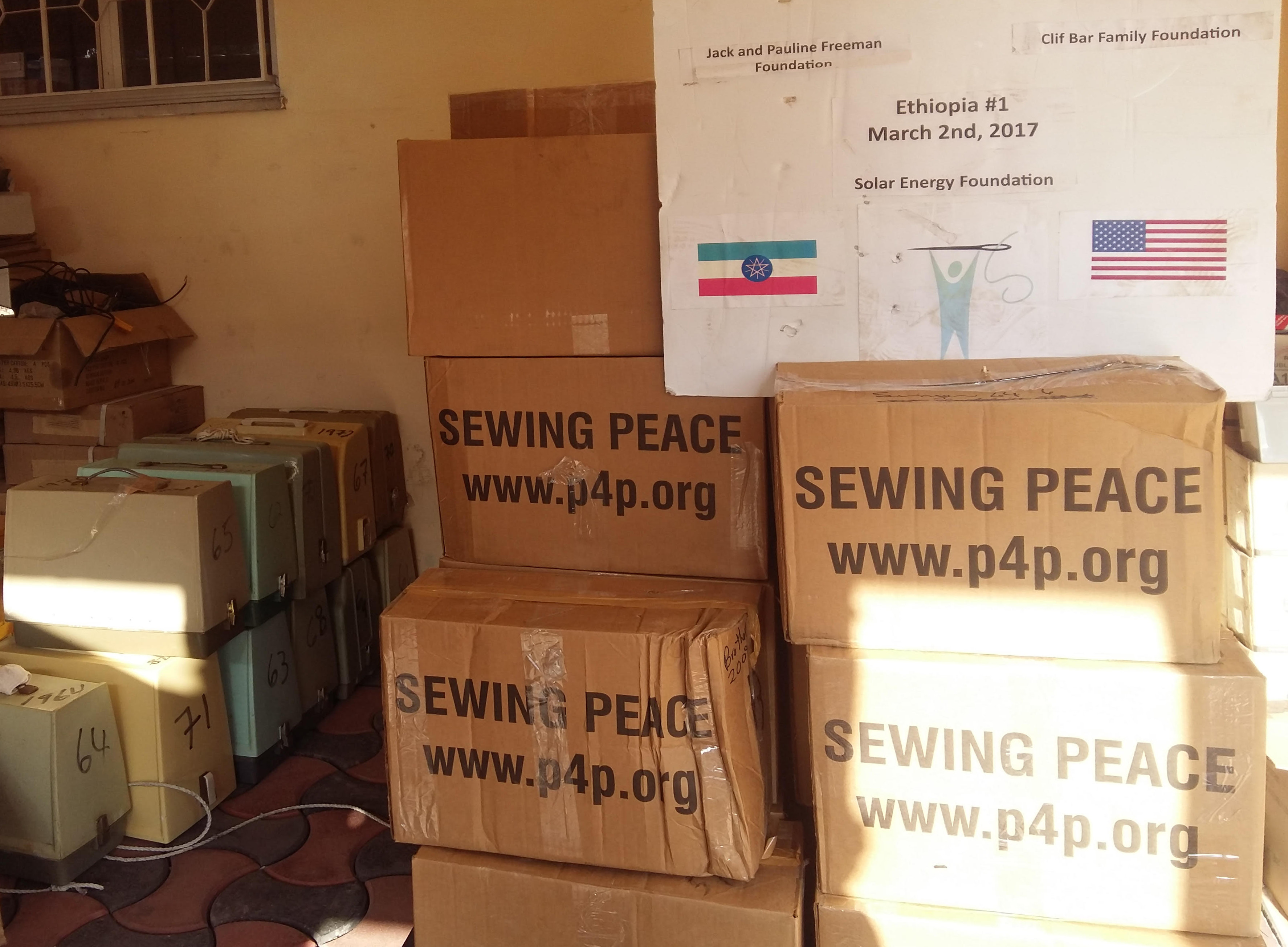

The process of importing the sewing machines to Ethiopia was very tiresome. Several times our customs and government offices requested new, authenticated documents from SP and required getting these documents from New Jersey to the Ethiopian embassy in Washington, D.C., to Ethiopia. For each machine, first they requested serial numbers, and then they requested date and place of manufacture. The process was complicated and expensive, but Mr. David made it happen — we received 72 sewing machines in Ethiopia on 24 July 2017. I would like to appreciate and thank Mr. David for his patience with the long, complicated import process.

We are now waiting for the training of the women and disbursement of sewing machines. But, due to the current political problems in the country, we couldn’t proceed according to our plans. Travelling out of town is difficult. We hope that this situation will be better soon and we will proceed with our programs.

We will soon finalize our project and will report in detail to Sewing Peace.

Best Regards,
Samson Tsegaye, Stiftung Solarenergie-Solar Energy Foundation Country Director
17-Nov-2017
Addis Ababa,Ethiopia


Report from Tanzania, Fall 2017

Fall 2017 InStitch

The Honorable Sophia Mwakagenda is a Member of the Parliament of Tanzania and the founder of the P4P/SP partner in Tanzania, the She Can Foundation. Starting in April 2016 she visited different constituencies in order to listen to the people and implement some of her She Can programs. A report from the Summer 2017 InStitch newsletter described the first part of that trip. We now have this new report on the next part of the trip: to the Chunya and Temeke regions of Tanzania.

Chunya Constituency Visit
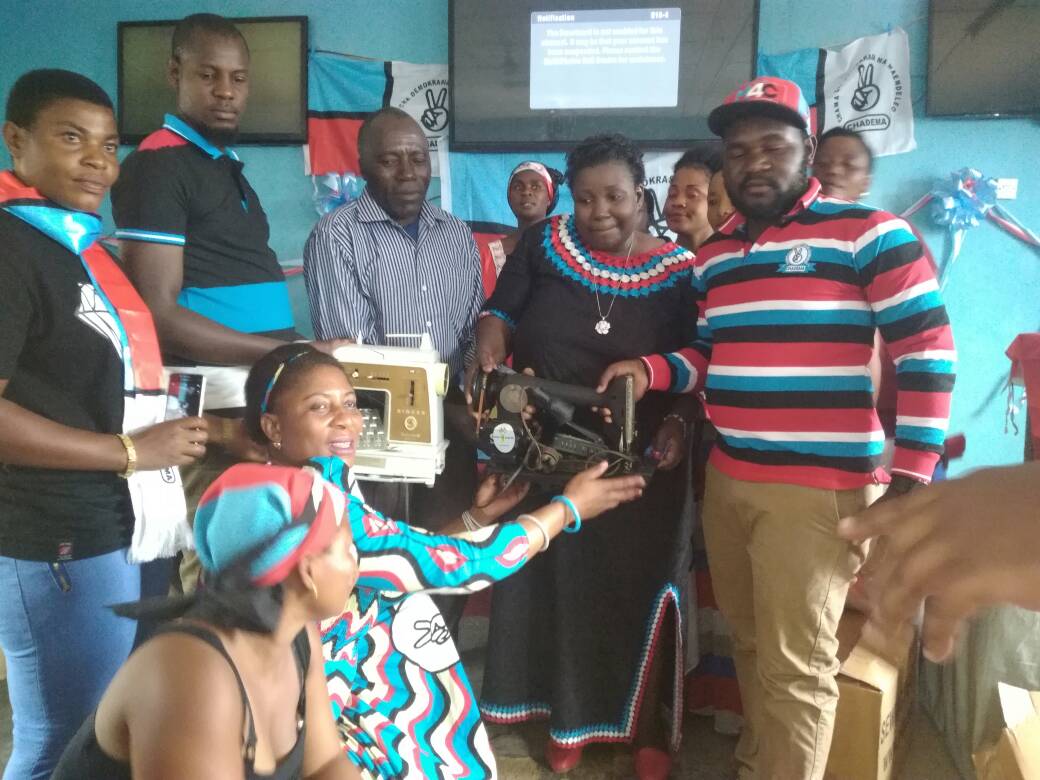

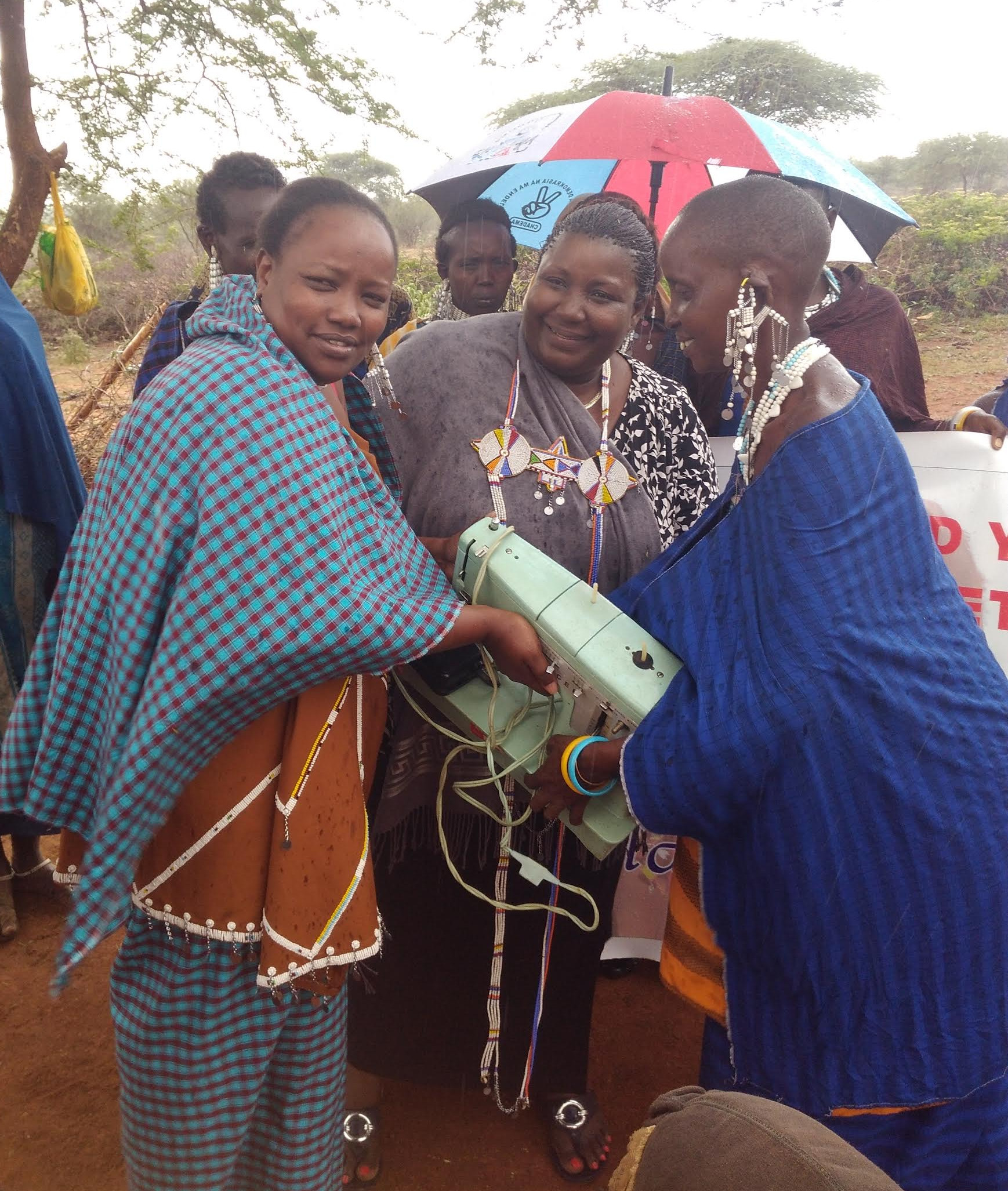
MP Mwakagenda presented two sewing machines to the Chunya Tailoring group, which is mix of women and men in Chunya constituency. They are in a joyous mood. This group started in 2007. They have about 12 sewing machines and now with the two new machines they are starting a tailoring school for girls and boys. It has 10 Members who are John Joseph, Ande Mwimba, Martina Kibali, Ndongolela Matembo, Twalangete Mwendemseke, Rehema Ambindwile, Julia Mwabenga, Mulyambate Mtagete, Jane Jansi and Asia Syabakeke. The group is an economic empowerment group for both men and women.
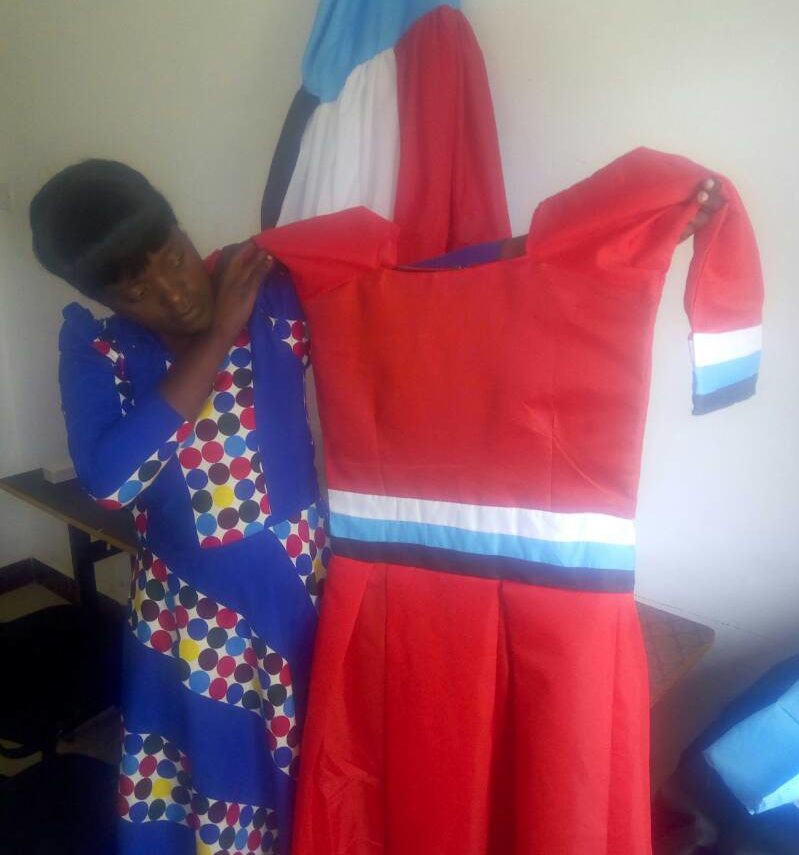

Ms. Martina Kipesile is Chairperson of the Msichana Girls Group. Ms. Kipesile, along with Christina Kalenga and other members of the group, use the five Sewing Peace machines that were distributed in the Chunya Constituency to make products that they sell. The Group also trains young women in the use of the machines.

Temeke Constituency Visit
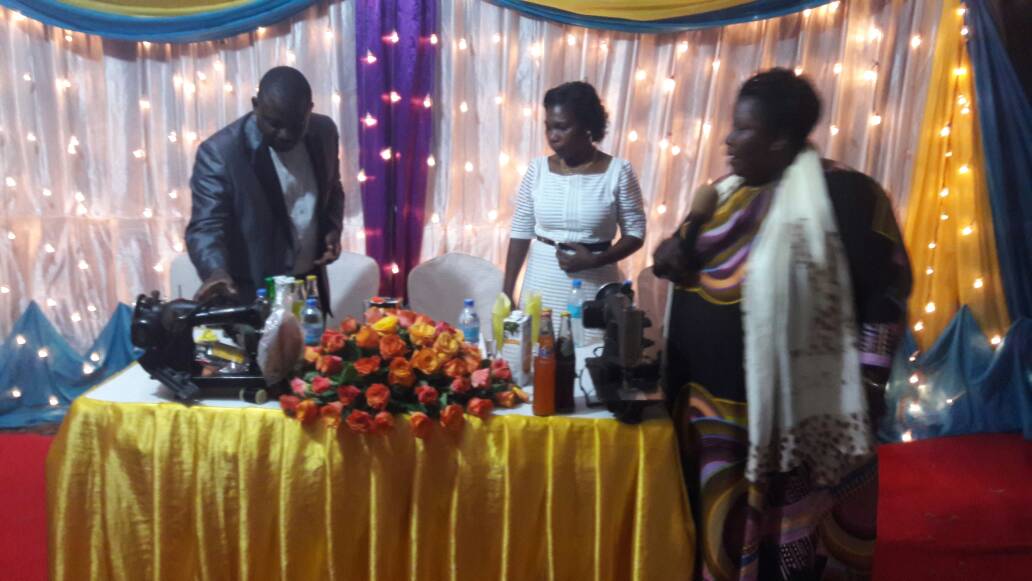

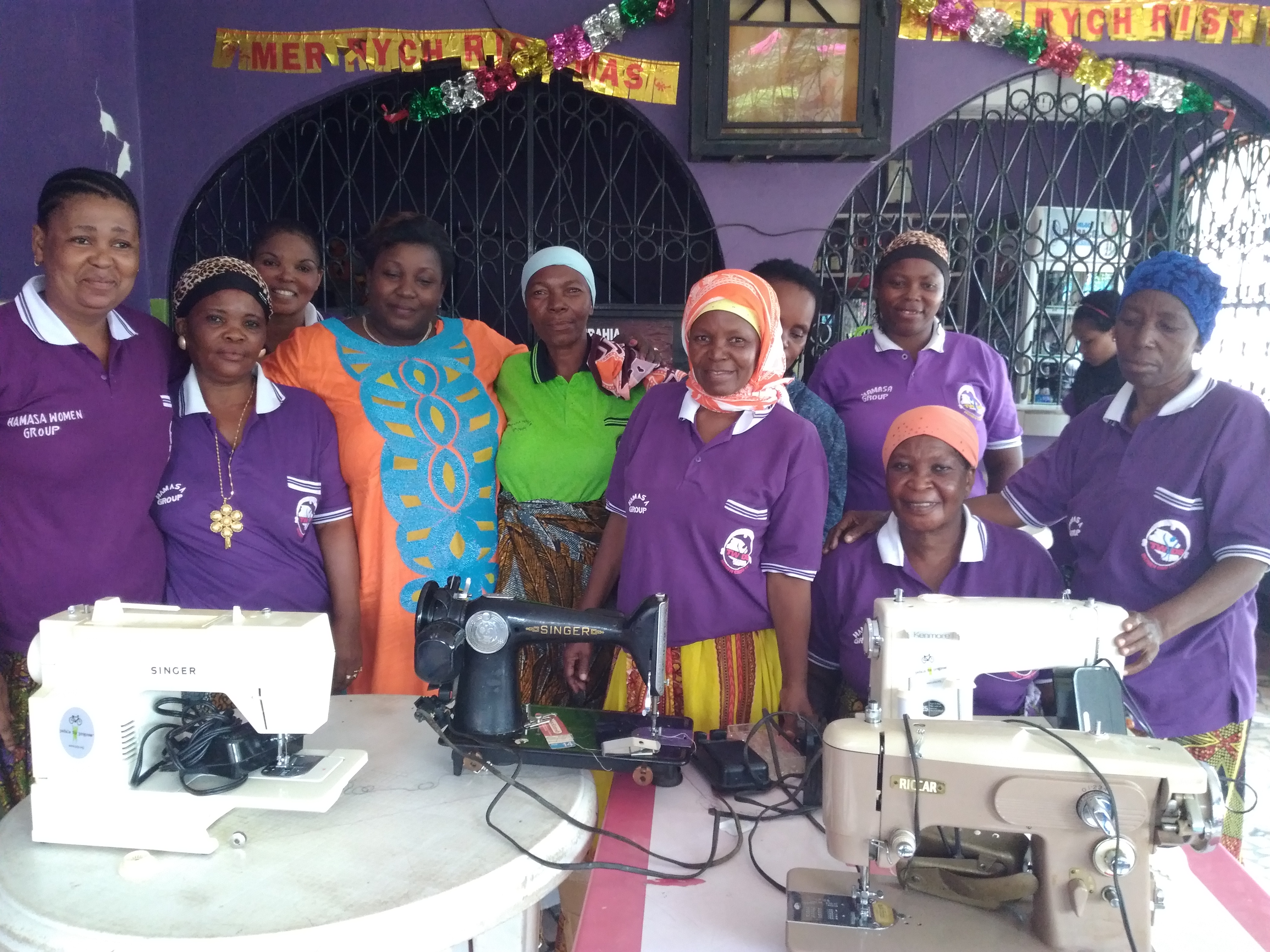
MP Mwakagenda gave a sewing machine to the women’s group of the Temeke Moravian Church in Temeke Constituency. Also in the photo are the Reverend Timothy Mwankenja and Ms. Stella Sematela, Chairperson of the Women’s Wing of the Church. The women’s group gives food and clothes to needy people around the church. The sewing machines will increase the church income for that purpose.

Conclusion

She Can Foundation staff will follow up during November and December 2017 on the different women’s groups which were given the sewing machines to see how they progress in terms of uplifting the living standards of women in the two locations. The technical staff will give the women support services to improve on their projects.


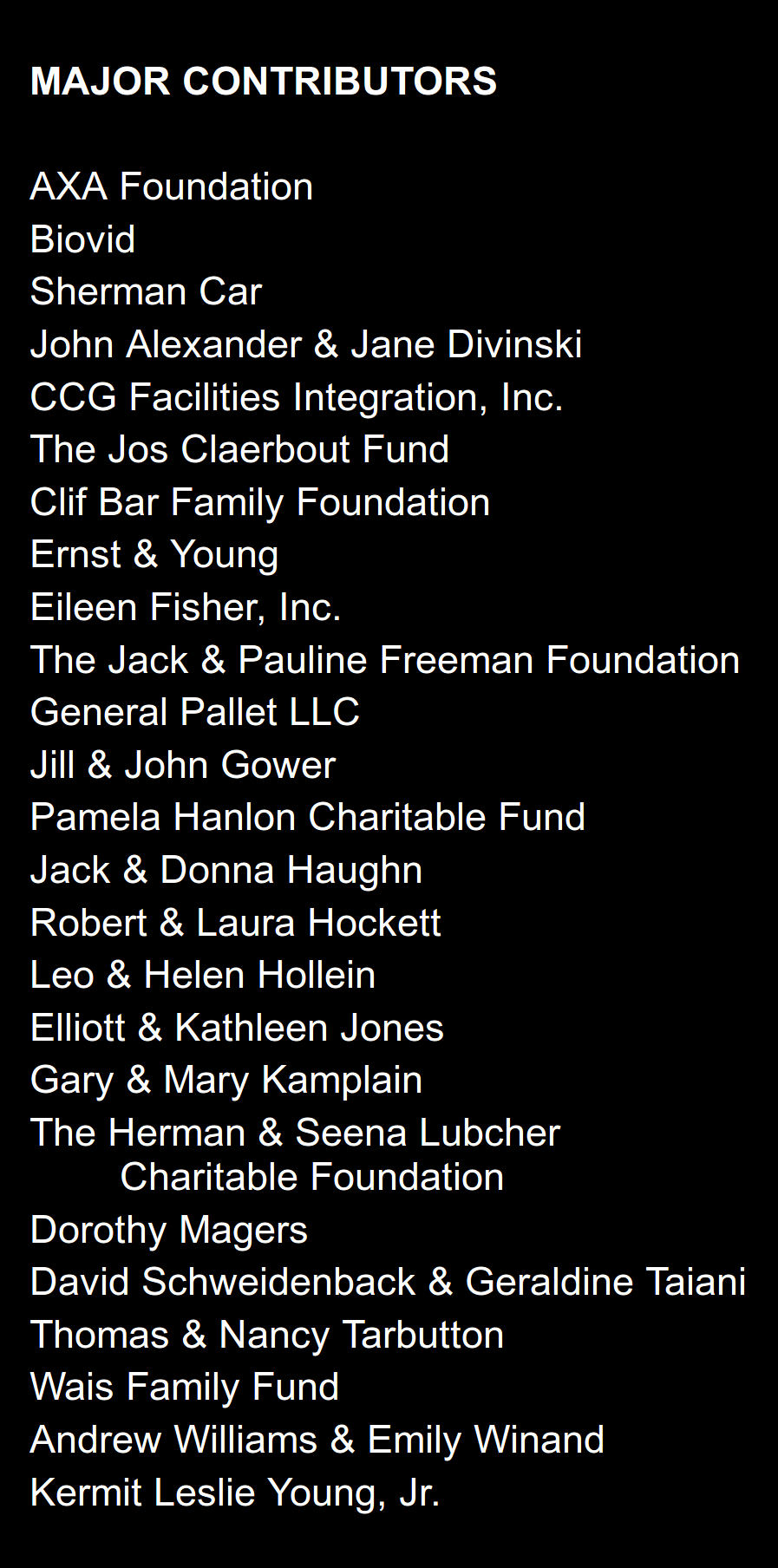
P4P Major Donors

 
Major Donors
 
John Alexander & Jane Divinski
Biovid
Sherman Carll 
CCG Facilities Integration, Inc.
Jon and Diane Claerbout
Clif Bar Family Foundation
Eileen Fisher, Inc.
The Jack & Pauline Freeman Foundation
Jill & John Gower
Pamela Hanlon Charitable Fund
Jack & Donna Haughn
Robert & Laura Hockett
Leo & Helen Hollein
Elliott & Kathleen Jones
Gary & Mary Kamplain
The Herman & Seena Lubcher
    Charitable Foundation, Inc.
Dorothy Magers
David Schweidenback & Geraldine Taiani
Thomas & Nancy Tarbutton
Wais Family Fund
Andrew Williams & Emily Winand
XA Foundation
Kermit Leslie Young, Jr.
 

Pedals for Progress 2017 Board of Directors & Trustees

John Alexander, Treasurer
UNIT 3230, BOX 470
DPO, AA 34031 – 0470

David Schweidenback, President & CEO, pd4ls@comcast.net
86 E MAIN ST
HIGH BRIDGE, NJ 08829

John Strachan
95 OLD YORK RD
HOPEWELL, PA 18938

Andrew Williams
210 PAVONIA STREET
JERSEY CITY, NJ 07303

Robert Zeh, Secretary
5 WOODS EDGE CT
CLINTON, NJ 08809


Staff

Gary Michel, Vice President, gary@p4p.org

Lori Smith, Office Manager, lori@p4p.org (908) 638-4811

Michael Sabrio, Webmaster, michael.sabrio@gmail.com


Our Partners

P4P/SP Active Partnerships as of November 19, 2017 ( 🌐 Map)


ALBANIA, Tirana, PASS, community development: 5,902 bikes (2010 – 2018), 230 sewing machines (2010 – 2018)

CAMEROON, Buea, United Action for Children, youth development: 72 sewing machines (2018)

ETHIOPIA, Solar Energy Foundation, small-business training and development: 72 sewing machines (2017)

GHANA, Accra, WEBikes, transport/small business/community development: 9,578 bikes (2006 – 2017), 556 sewing machines (2006 – 2017)

GUATEMALA, Chimaltenango, Fundacion Integral de Desarrollo Sostenible y Medio Ambiente (FIDESMA) small-business promotion: 9,409 bikes (1999 – 2017), 274 sewing machines (2003 – 2017)

KYRGYZSTAN, Cholpon-Ata, S.O.S, Kinderhoff, small-business promotion: 55 sewing machines (2008 – 2016)

LIBERIA, Monrova, Education Care Africa, Primary School children in Africa, 70 sewing machines (2017)

NICARAGUA, Rivas, EcoBici, community development: 25,569 bikes (1992 – 2017), 194 sewing machines (2003 – 2017)

TANZANIA, Dar es Salaam, She Can Foundation, community development: 217 sewing machines (2016 – 2017)

UGANDA, Mityana, Mityana Open Troop Foundation, community development: 137 sewing machines (2017)

Other shipments of bicycles between 1991 and 2017 have gone to non-profit agencies in Appalachia, Colombia, the Dominican Republic, Ecuador, El Salvador, Eritrea, Fiji, Ghana, Haiti, Honduras, India, Kenya, Madagascar, Malawi, Mexico, Moldova, Mozambique, Namibia, New Guinea, Pakistan, Panama, Peru, Senegal, Sierra Leone, the Solomon Islands, South Africa, Sri Lanka, Uganda, Vietnam, and Venezuela as well as other unlisted groups in Nicaragua.

Other shipments of sewing machines between 1999 and 2017 have gone to non-profit agencies in Cameroon, Costa Rica, the Dominican Republic, El Salvador, Georgia, Honduras, Jamaica, Moldova, Panama, St. Vincent/Grenadines, Sierra Leone, Uganda, and Yemen as well as other unlisted groups in Guatemala, Nicaragua, and Tanzania.

1997 total: 5,468
1998 total: 6,287
1999 total: 7,001
2000 total: 8,970
2001 total: 9,174
2002 total: 11,576
2003 total: 11,808
2004 total: 11,879
2005 total: 8,536
2006 total: 8,961
2007 total: 7,622
2008 total: 6,628
2009 total: .6,652
2010 total: 4,823
2011 total: 4,157
2012 total: 3,769
2013 total: 3,598
2014 total: 1,047
2015: 3,179 bikes, 310 sewing machines
2016: 2,760 bikes, 285 sewing machines
2017: 3,664 bikes, 533 sewing machines
2018 YTD: 973 bikes, 102 sewing machines

Twenty-Seven Year Bicycle Grand Total 153,467
Eighteen Year Sewing Machine Grand Total 3,939


Total Shipped

Bikes shipped since 1991
(Countries with two or more shipments)

Country Shipped


Nicaragua 42,879
El Salvador 24,457
Ghana 15,458
Guatemala 9,409
Barbados 7,876
Honduras 7,376
Panama 6,520
Albania 5,982
Uganda 4,140
Moldova 3,684
Dominican Republic 3,560
Eritrea 2,761
South Africa 2,180
Colombia 1,699
Ecuador 1,555
Fiji 1,452
Vietnam 1,135
Costa Rica 1,027
Sierra Leone 938
Senegal 890
Namibia 824
Mozambique 800
Solomon Islands 623
Madagascar 72


Sewing Machines shipped since 1999

Country Shipped


Ghana 758
El Salvador 609
Uganda 441
Tanzania 406
Nicaragua 349
Guatemala 338
Albania 230
Moldova 165
Costa Rica 137
Cameroon 87
Georgia 82
Ethiopia 72
Liberia 70
Fiji 68
Yemen 60
Kyrgyzstan 55
Honduras 46
Kenya 34
Dominican Republic 30
Sierra Leone 30
St. Vincent 20
Panama 14
Jamaica 6
Domestic USA 3


Pedals for Progress Bike 150,000

Fall 2017 InGear

The Summer 2017 InGear newsletter has a partial report on bike number 150,000. The report was partial because at publication time we had collected, packed, and shipped the bike, but it did not yet have an owner. Now that it does, we want to tell the whole story in one place.

Collected on Long Island


On April 1, 2017, the Long Island Returned Peace Corps Volunteers collected P4P bike number 150,000. The Long Island RPCVs have been one of our most successful collection partners. They rotate collections around Long Island to maximize their reach. Their first P4P collection was in 2003, their second in 2005, and they’ve held collections every year since. The Long Island RPCVs are featured in this article from Summer 2011.

Shipped from New Jersey


On April 22nd, volunteers from the Warren Hills High School Chess Club helped us load 575 bicycles into a 40-foot container bound for Chimaltenango, Guatemala. The Chess Club and their faculty advisor, Daryl Detrick, are no strangers to P4P. Along with the Computer Science Club, they have run 8 collections and packed 4 containers.

This was our 18th shipment to our partners at FIDESMA, for a total of 9,460 bicycles.

Arrived in Guatemala


Our partners at FIDESMA report that bike 150,000 arrived in San Andrés Itzapa, Guatemala, at midday, June 6th.

FIDESMA, our Guatemala partner, got our 100,000th bike in 2006. FIDESMA has been our partner since 1999. Besides their bike program, FIDESMA runs programs in health and special ed, job skills and training, and environmental conservation.

We are good friends as well as professional partners with the staff at FIDESMA. The summer 2012 InGear newsletter has an article about a visit to New Jersey from Señora Maria Margarita Caté de Catú, founder of FIDESMA.

Here is the note and the inventory report from FIDESMA about Guatemala container #18 with the famous bike:

Good day David,

Thanks for thinking of us when you were ready to ship bike number 150,000. On behalf of our team and our community leaders, many thanks for your support.

Sincerely,
Margarita Cate
Arnulfo Catu
Isabel Luna
Pedro Catu
Roxana Cate
Paty Luna
Sebastian Quina
Jose David Catu
and all of us here at FIDESMA


Bicycles

Mountain bikes 179
BMX bikes 253
Road bikes 31
Touring bikes 58
Tricycles 1
Tandem bikes 1
Choppers 1

Total 524


Accessories and Parts

Water bottles 7
Baskets 10
Pumps 2
Bike bags 2
Helmets 6
Plywood sheets 8

P4P keeps track only of adult versus kids’ bikes. FIDESMA categorizes bikes in much more detail than we do! Also, we sometimes forget that plywood, which we use in the containers to separate rows of bikes, can also be useful to our partners. We translate the FIDESMA reports from the Spanish. In case you’re wondering, the Spanish word for chopper is ‘chopper’.

Delivered to Its New Owner


The owner of P4P bike number 150,000 is Noelia Chiquitá, a 17-year-old in her third year of high school. Noelia lives in Chimaltenango, Guatemala.

She plans to use her bike every afternoon to buy supplies for the family store, where she helps her mother in the afternoon after school.

The bike will also help her stay in shape and stay healthy.

Onward!

Recent collections have made a good start on our next 150,000 bicycles. Our trailers are full and we are waiting for the next opportunity to make a shipment.

President’s Message, Fall 2017

By Dave Schweidenback

Due to a confluence of events, both bicycle production and sewing machine production were sharply higher in 2017. An improving economy certainly means more bicycle sales and therefore more bicycles to recycle. P4P had a 12% increase in the production of bicycles; that means we were able to reach 12% more people.

Pedals for Progress is such a wonderful name. It explains in three words the total emphasis of our bicycle program. The name fits us. It never fit sewing machines. We had hit a ceiling of around 300 sewing machines per year, just couldn’t get the momentum to get much above 300. I determined that the problem was the name: Pedals for Progress did not explain collecting sewing machines.


We coined the name Sewing Peace and registered it with the states and commonwealths, the federal government and the bank. It is hard to have peace when you do not have prosperity. A sewing machine is a job in a box. Sewing Peace does explain what we do in two words. Each sewing machine gives someone the ability to earn a living or at least to get by. Just that one change — a name that explains what we do when we are collecting sewing machines — resulted in a 56% increase in sewing machine production! Sewing Peace went from 327 machines collected in 2016 to 511 collected in 2017. And all indications are that we will have a similar rise in production in 2018.

To manage this rise in production we have added a number of new sewing machine partners, and in early 2018 we will be adding the first new bicycle partnerships since 2010. It’s so nice when a plan works.

But it is hard work: over 40 tons of bicycles and sewing machines we went out and processed, loaded into an Avis truck, brought back to our warehouse, unpacked, sorted, packed away and then unpacked and repacked into international shipping containers. Phew! Just saying it makes me feel old. Each bicycle and sewing machine gets picked up six to eight times before it is loaded. That means our staff and volunteers lifted 240 tons of metal in 2017. Yes it is very hard work, but it is very worthwhile.


P.S. For fall 2017, we are trying yet another publishing method. Instead of producing separate newsletters — InGear for bikes and InStitch for sewing machines — we are combining all the articles into a single newsletter. Let us know what you think.

InStitch Summer 2017


Report from Tanzania

Summer 2017 InStitch

Introduction

The Honorable Sophia Mwakagenda is a Member of the Parliament of Tanzania. From 1 April 2016 to 20 March 2017 the Honorable Mwakagenda visited different constituencies of the Longido and Ngorongoro districts in the Arusha region, and the districts of Rungwe, Kyela, Mbarali, and Mbeya in the Mbeya region. This visit was a continuation of visits countrywide in order to listen to the people and implement some of her programs through her NGO She Can Foundation.

The visits in Mbeya and Arusha regions were coordinated by the Office of Members of Parliament located in Mbeya city.

Honorable Mwakagenda was accompanied by a team of 4 researchers and assistants: Edwin Mwaitebele, Emmanuel Ngwetta, Mpegwa Mwakang’ata, and Frank Kayumba.

The Purpose of the Visit

The purpose of the visit was to help women’s entrepreneur groups by giving them means of production, like sewing machines, to improve their productivity in their local settings.

Specific Objectives

  • To meet women’s social and economic groups in different areas to hand over support and equipment including sewing machines
  • To provide some knowledge and skills to these groups


Activities

The team met six women’s social and economic groups from seven constituencies of Arusha and Mbeya regions with the aim of sharing with them knowledge and skills on entrepreneurship for them to improve their work. The MPs handed over sewing machines during this visit. In Mbeya region and Arusha region, which is Masaai, the MPs handed over a total of 61 sewing machines.

The Honorable Mwakagenda gave four sewing machines to women’s entrepreneur groups in Mbeya urban constituencies.

In her visit of 17 and 18 March to the Longido district of Arusha region, Honorable Mwakagenda gave a sewing machine to a 21-year-old woman known as Grace from the Ngarenaibo village. The machine gives Grace employment and should improve her family’s economic situation.

Numbers of Sewing Machines Given

From 1 April 2016 to 23 March 2017, Honorable Sophia Mwakagenda gave 73 sewing machines as follows in Mbeya and Arusha regions.

REGION (District) NUMBER OF MACHINES

MBEYA (Kyela, Rungwe, Mbarali, and Mbeya) 36
ARUSHA (Longido and Ngorongoro) 37

TOTAL 73

Other Activities

Honorable Sophia Mwakagenda had an opportunity to visit Ngorongoro Crater, which is an international tourist attraction in Ngorongoro district and talked with the leadership concerning their challenges in their day to day work.

Honorable Mwakagenda also visited her fellow MP Honorable Cecilia Pareso in Karatu district to console her on her brother’s death, which happened few days ago.

Reflections on the Visits

Honorable Mwakagenda and her team got a good reception from the leadership and citizenry in general.

The level of awareness of the people, particularly women, in attending, listening and participating to the Member of Parliament meetings was very high.

These visits give people hope: the visits show love and togetherness in society regardless of location, tribe, background, status, and colour.


Sewing in Kenya

Summer 2017 InStitch

Cherehani Africa provides sewing machines to women in rural Kenya to enable them to start and run their own independent tailoring businesses.  Lillian Onyango lives and works in Madiany market, Siaya County. Lillian has four children, three of whom go to school. Lillian learned dress-making skills at Ruma Training Institute in 2010 but has been unable to afford to purchase her own sewing machine to enable her to start her own tailoring business. For the last seven years Lilian has been leasing a sewing machine to enable her to generate income and provide for her children.

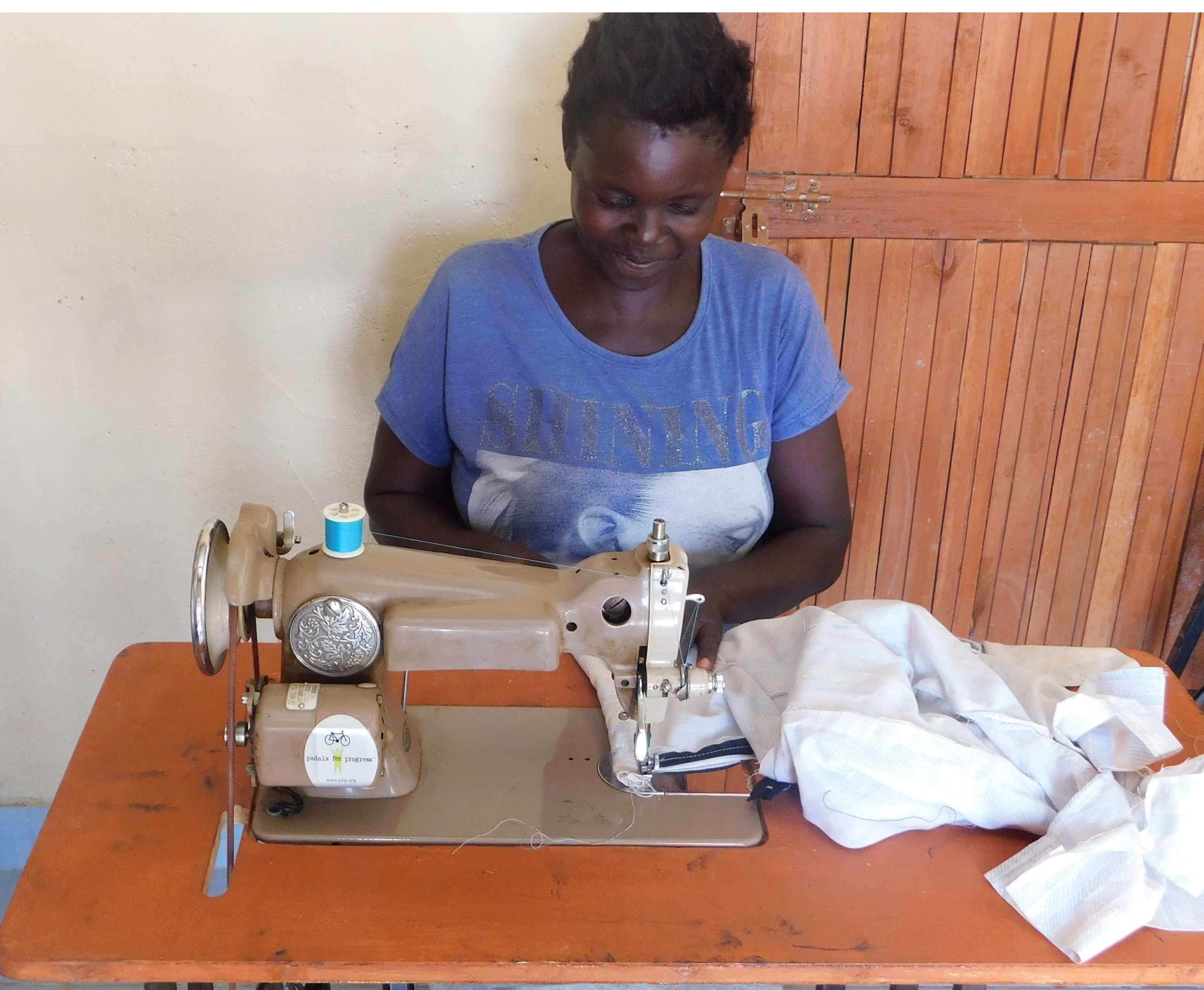
She pays a monthly leasing fee of $5, and this fee reduced her profits and chances of ever owning her own machine. When Cherehani Africa met Lilian and told her about our partnership with Sewing Peace that will enable her and many more women in rural Siaya to acquire sewing machines, she was overwhelmed with joy. For her, the sewing machine she has received from Sewing Peace is the first production tool she owns in her own name. Lilian made a down payment of $40 for the sewing machine and committed to completing the deficit of $20 in two months. Lilian no longer has to lease a sewing machine and is able to take home more money to support her family. Through the partnership of Cherehani Africa and Sewing Peace, Lillian no longer has to worry about leasing a tool she depends on for her survival. All her energy and savings are now directed at completing the payment for the sewing machine. “Thank you Sewing Peace for enabling me own a sewing machine. I will work very hard to ensure that you can extend your support to many more women like me in Kenya,” says Lilian.

The total cost for the machine is $60, which most beneficiaries pay off in six monthly installments of $10. All the machines that we received were in merchantable condition and we have not had to repair any before issuing. We broadly put the machines into two categories: those that could be converted to manual ($60) and those that are strictly electrical ($80). The ones that could be converted to manual have been widely issued as most beneficiaries work in stations without electricity. The electric ones have moved slower because they are more suitable for urban centers.

Best Regards,

Robert Mboya


Kyrgyzstan Sewing Update

Summer 2017 InStitch

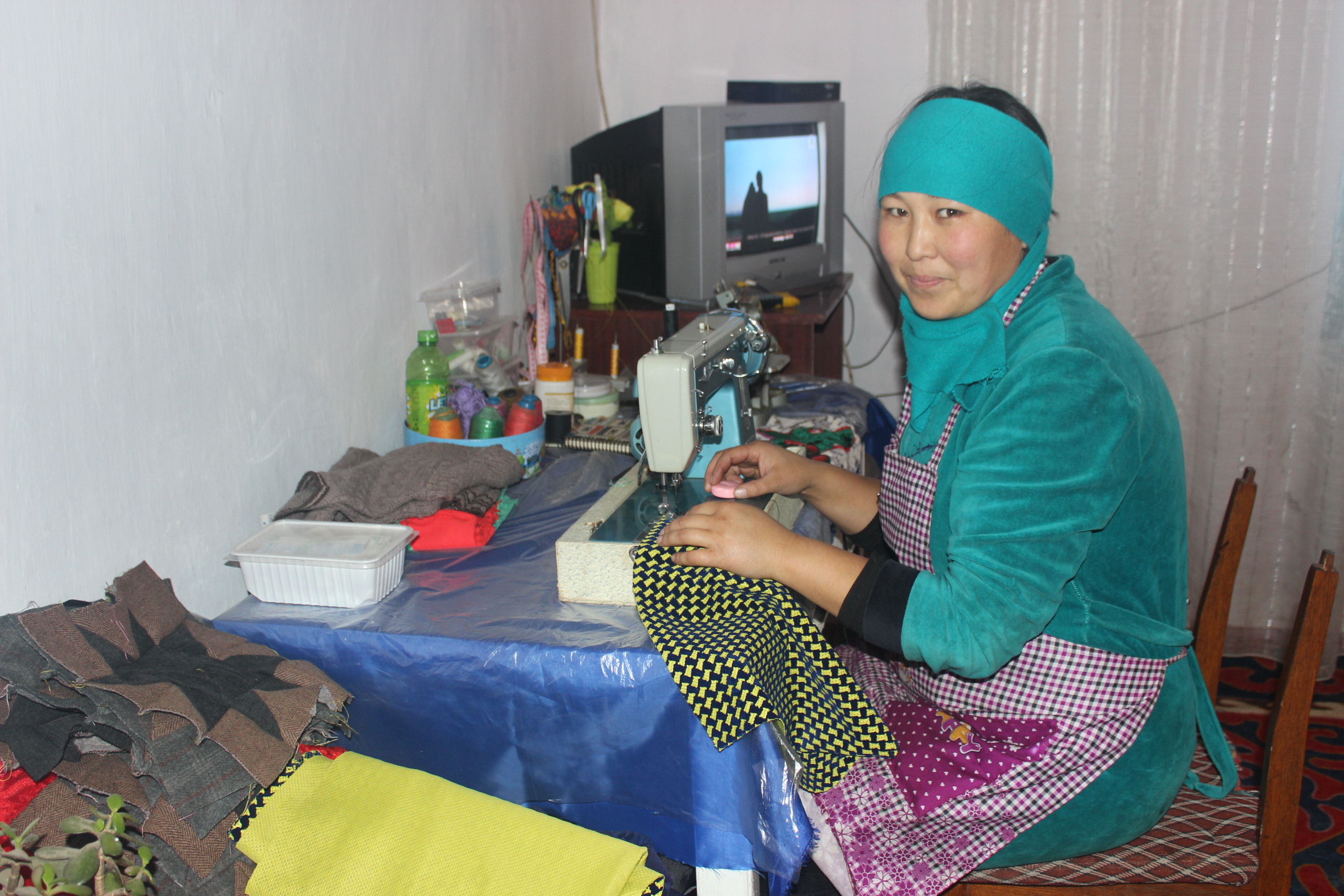
Of the 30 sewing machines received, 23 have been repaired. These machines have greatly improved the lives of our beneficiaries, helping give low-income families in our region a way to earn valuable income for their families. Because many of our beneficiaries are single parents, our beneficiaries use them to run businesses out of their homes, allowing them to care for their children while working. In order to make our work sustainable, we are always looking for ways to support our beneficiaries in finding long-term solutions to issues that they are experiencing. Your donation of sewing machines has helped us do just that. Thanks for your support!

Family Narratives

“When we first applied for assistance from the Family Strengthening Project (FSP) my family was in a very difficult situation. Our family had practically no income, and we had extreme difficulty feeding our children. Thanks to FSP and their partnership with Sewing Peace, I had the opportunity to take sewing courses and receive state certification and started a sewing business with three other families in January 2017. Our business has received two sewing machines, and we are already taking orders and sewing products for an upcoming wedding.
We are very thankful for the generous donation life-changing support from Sewing Peace.”


“I am the mother of five children, and did not have enough income to care for them well. I have been an FSP beneficiary for a year, and they have provided me with necessary material and psychological support. But I was still in need of a job to provide long-term, steady income for my family. Because of the donation from Sewing Peace, I was given a sewing machine to start a business from my home. Already, I have received and fulfilled many orders using this machine.

Aside from providing work for me, this sewing machine has allowed me to sew necessary items for my family. Because of this donation, I am better able to care for my family. Thank you for your donation and for how you supported my family through a very difficult time.”


The Sewing Machine

Summer 2017 InStitch


Sewing may generally be described as an art whereby stitches and seams are used to join two or more fabrics together.  Depending on their creativity and imagination, seamstresses and tailors design and sew clothing so that people will look extremely beautiful in it when they wear it.

Since sewing machines seem expensive to young people from relatively needy families, they find it difficult to get one on their own when they want to engage or enroll into such a vocation or profession. Fortunately, this problem has been curbed in some areas in Ghana due to help from WEBike.

The machine is bought at a rather cheap price. This enables young people to learn the vocation and establish their own businesses easily, and then to train other people in that field and engage the employment of other younger generations who are interested in sewing and designing. This has helped to reduce marginally the unemployment rate.

A sewing job also keeps young and energetic people away from dangerous and sometimes criminal behavior. They prefer the vocation to such negative vices.

Economically, it has also helped them to take care of themselves and families as well, especially in the area of education from basic to tertiary.

We are so grateful to the WEBike organization for their help and support.


InGear Summer 2017


P4P Bike Number 150,000

Summer 2017 InGear

In April of 2017 Pedals for Progress collected and shipped its 150,000th bicycle.

P4P’s initial goal in 1991: ship 12 bicycles to Ecuador. This initial estimate is short, so far, by a factor of 12,500.

Our Partners

P4P has shipped to 36 countries, from Albania to Vietnam. We’ve shipped 2 bikes to Papua New Guinea and 42,672 bikes to Nicaragua. We’ve made one shipment each to India, Jamaica, Kenya, Malawi, Pakistan, Papua New Guinea, Sri Lanka, and Venezuela. We’ve made 82 shipments to Nicaragua, 40 to El Salvador, 32 to Ghana, 19 to Guatemala, and 18 to Barbados. As of June, 2017, we’ve made 378 bicycle shipments and 24 independent sewing machine shipments.

Programs end because of changes in our partner organizations, import laws and fees, bureaucracy, and sometimes outright corruption. But most countries are eager for the programs we support—the economics make sense for our partners and the bikes clearly improve the lives of the people in their communities. We always have more demand than we can fill.

As of June, 2017, our active partners with both a bicycle program and a sewing program are Albania, Ghana, Guatemala, and Nicaragua. Our active partners with sewing programs only are Ethiopia, Kenya, Kyrgyzstan, Liberia, Tanzania, and Uganda.

Choosing partners is not an exact science. Groups from around the world find us in several different ways, including the internet, magazine articles and other publications, and word of mouth. P4P has a formal procedure that potential partners use to request a shipment. They make a proposal that gives us basic information about their location, size, history, and business plan. In some cases P4P can find a way to fund a first shipment, but our business model is that the partner must pay for shipping; that payment is more evidence of their good faith.

Some of our partners we know only at a distance. Other partners we have met personally, in the U.S. and in their home countries. We have seen their kids grow up and join P4P partner businesses. We have taken terrifying auto rides with insane drivers, hiked and biked through spectacular countryside, visited their bike shops and their business, educational, and health programs. We are continuously impressed by the generosity, resourcefulness, and hard work of our partners and their communities around the world.

Bike Number 1: 1991

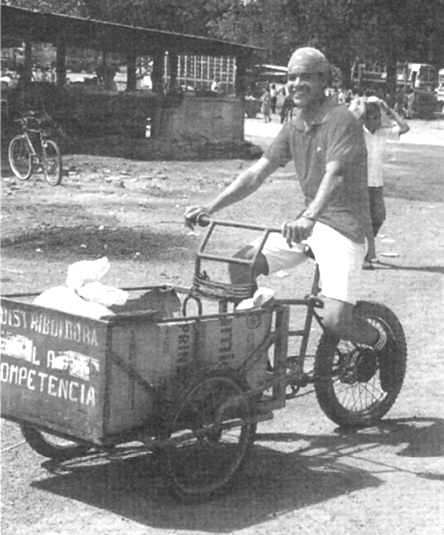
Nicaragua Produce Bike

For its first couple of years, P4P shipped bikes as part of shipments from other groups. We sent our very first bikes to Nicaragua, though to a partner we no longer have.

In 1992 we made our first shipment to Rivas, Nicaragua, where Wilfredo Santana had the business that became EcoBici, which is still our partner today. In 1993 P4P started filling its own containers, and Wilfredo and Dave worked out the revolving fund idea: P4P would pay for the collection of bikes in the U.S., our partner would pay shipping costs, and the partner would make enough profit selling the bikes to pay for the next shipment.

Bike Number 50,000: 2001

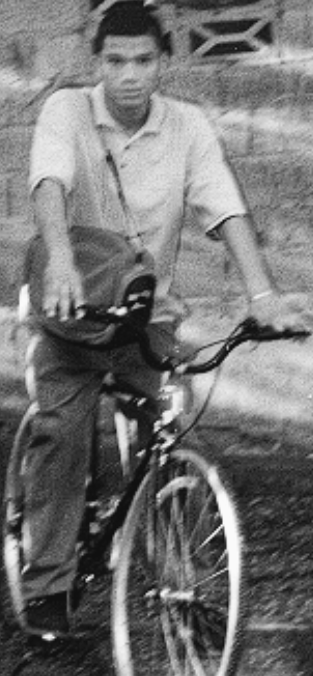
2001fallPanama

We can’t find any specific information about the 50,000th bike we shipped. Our records show that it must have been 2001. We shipped 20 containers that year, and we were nearing our peak production. In 2001 we shipped to South Africa, Honduras, Nicaragua, Barbados, Panama, El Salvador, Ecuador, and Ghana. Perhaps we were too busy collecting, prepping, and shipping bikes to notice the 50,000-bike milestone.

Let’s just pick one of our 2001 bikes and pretend that it is number 50,000. Here’s a typical happy story about how bikes improve lives: A note from Panama in our Fall 2001 InGear newsletter tells the story of seventeen-year-old Jose Luis Bethancourt, who was ready to drop out of school because of family finances. His commute to school by bus not only cost money, but took hours because of traffic, so Jose had no time for a job that would raise income for the family. He got his first-ever bike from P4P, which eliminated the bus fare and dramatically reduced his commute time. As a result, Jose had time for a job as well as for school.

Bike Number 100,000: 2006

fall2006mateoFamily

We got our 100,000th bike at a collection sponsored by the Somerset Hills Kiwanis on June 24th, 2006, at the Sunset Inn in Clinton, New Jersey. Leonard Lance, then a New Jersey State Senator, was on hand to thank the surprised donor. Now in 2017 Leonard Lance is the U.S. Congressional Representative of the New Jersey 7th District. So P4P can improve the lives of U.S. politicians as well as people in our partner countries!

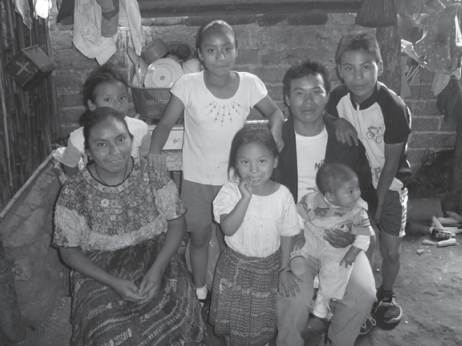
We shipped the 100,000th bike to FIDESMA in Guatemala, one of our most long-standing partners. P4P’s Reykha Bonilla followed the bike to Guatemala, met our good friends and partners at FIDESMA, and met the owner of P4P bike 100,000, Mateo Patzan, a working father of 5 and amateur bike racer. The Fall 2006 InGear newsletter has the whole story of bike number 100,000.

Bike Number 150,000: 2017

Fast forward to 2017. On April 1, the Long Island Returned Peace Corps Volunteers collected P4P bike number 150,000. On April 22 we loaded the bike into a container bound for FIDESMA, the same destination as bike number 100,000. At midday, June 6th, the bike arrived at FIDESMA in San Andrés Itzapa, Guatemala. It’s fitting that these are the groups that collected and received our 150,000th bike.

The Long Island RPCVs have been one of our most successful collection partners. They rotate collections around Long Island to maximize their reach. Their first P4P collection was in 2003, their second in 2005, and they’ve held collections every year since. The Long Island RPCVs are featured in this article from Summer 2011.

We’ve already mentioned FIDESMA, our Guatemala partner, because they got our 100,000th bike in 2006. FIDESMA has been our partner since 1999. We are good friends as well as professional partners with the principals. For example, the summer 2012 InGear newsletter has this article about a visit to New Jersey from Señora Maria Margarita Caté de Catú, founder of FIDESMA.

What’s Next

In 2016 P4P had the first uptick in bicycle collections since 2001. Let’s hope bike collections continue to improve.

Even though we are celebrating a bicycle milestone, we should mention sewing machines. Since 1999, P4P has shipped sewing machines along with bikes. Like bikes, sewing machines give people a way to improve their economic circumstances. A sewing machine can be a job in a box. In 2015 we created the Sewing Peace brand as an option for carrying on our sewing machine activities separately from our bicycle activities. If only sewing machines are involved, we have multiple advantages: with collections, with shipping, and with partnering. For collections, we can target groups more likely to have sewing machines to donate. For shipping, we can send much smaller loads, loads that do not take a full container, and so are much cheaper to ship. And for partnering, we can find groups abroad that may not have the capacity or expertise to deal with 500 bikes at a time, or that may not even have a bicycle program.

So we are now the same single organization, but doing business both as Pedals for Progress and as Sewing Peace. It’s been a rewarding 26 years. We look forward to many more.


Nicaragua Success Story, 2017

Summer 2017 InGear

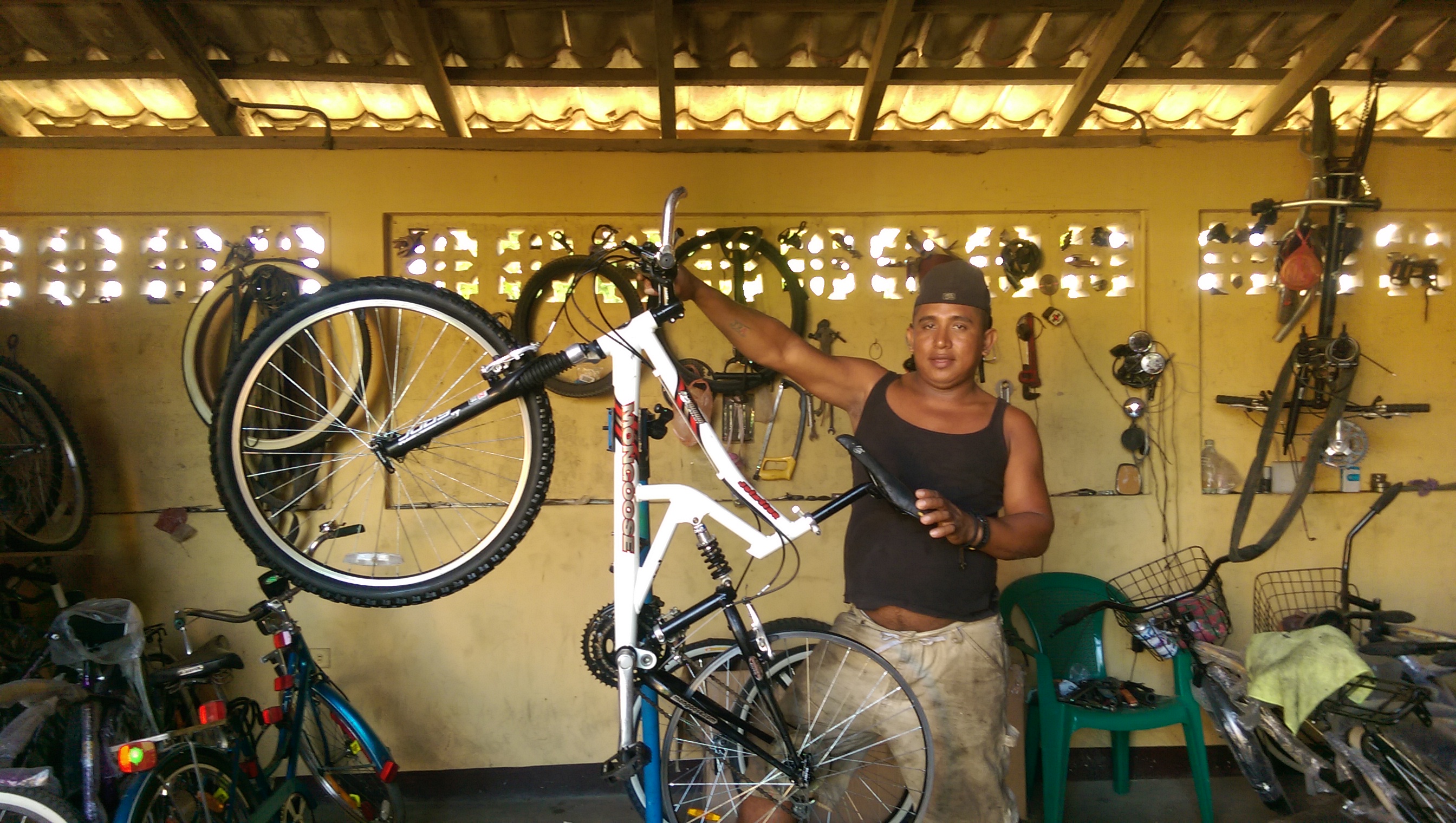
Alexander Mora was born in Tola, Nicaragua, eight miles west of the town of Rivas, home of our P4P partner EcoBici.

Alexander has been interested in bikes since he was 10. From a very young age he learned bike repair from Guadalupe, the former lead mechanic at the Ensembladora de Bicicletas, the EcoBici bike shop. Guadalupe taught Alexander everything about repair and maintenance of bicycles: lubrication, wheel alignment, cable replacement, …

When Alexander got his first 20-inch bike he became even more interested in bike repair.

When he was 23 an Atlas bicycle came into the shop from a Señor Miguel Ríos. Señor Rios used to deliver newspapers in Rivas on his Atlas. Señor Ríos passed away but his son gave the Atlas to Alexander. Alexander still has this bike.

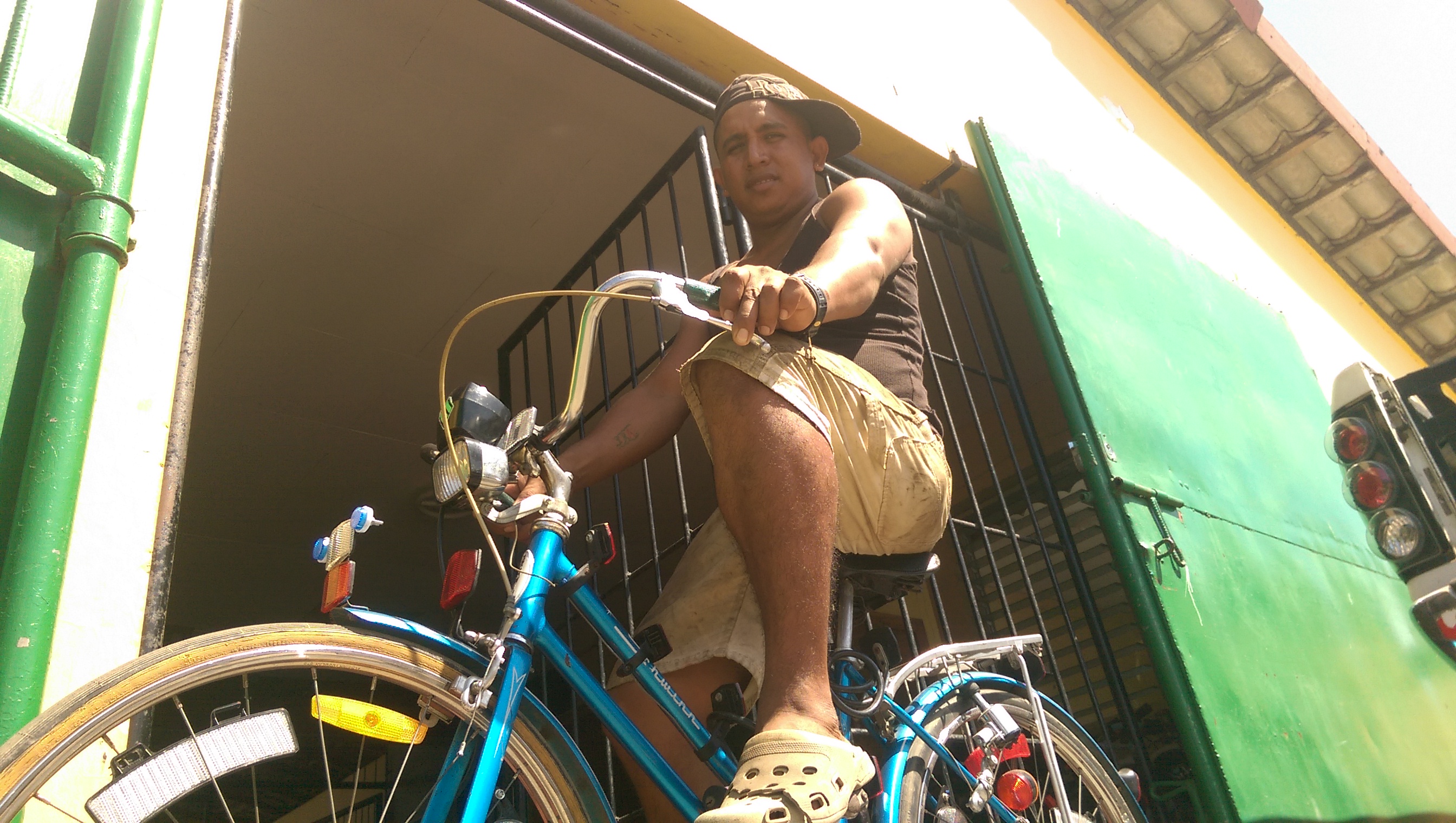
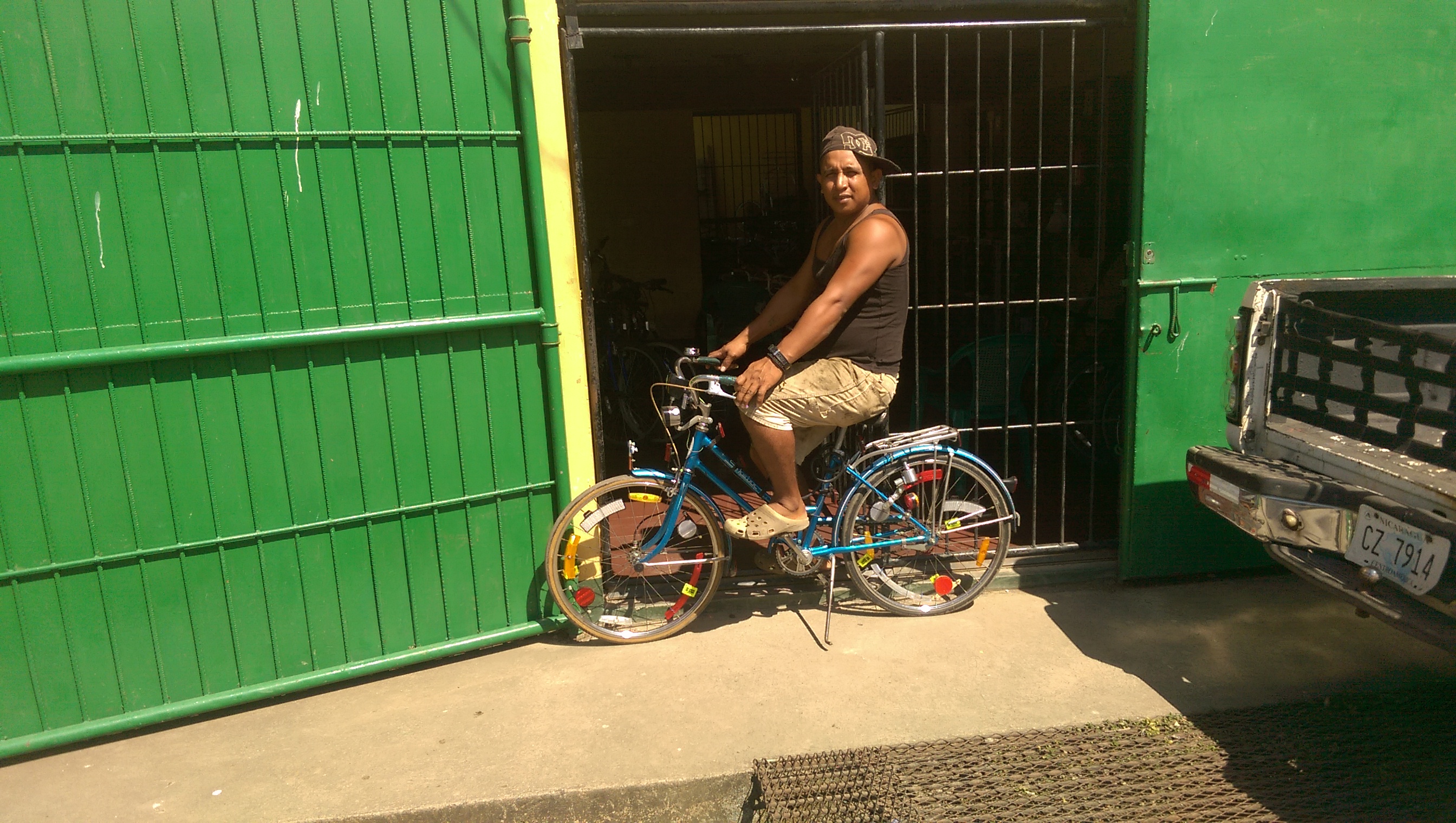
After he got the Atlas, Alexander would ride it from Rivas to Tola. From Tola he would ride another five miles to the village of Gasper García to repair taxi trikes. Overall, Alexander maintains about 100 of these bike taxis.

After work he would ride a few more miles to the Pacific coast for fish and whatever else he could find. To survive he would carry a machete, a liter container of water, and a pump and patches for tire-repair.

In 2011, Alexander met Joaquino Bando and they met Carlos Santana at EcoBici. They began to assemble beach cruiser bikes.

Alexander seemed different from other workers. He worked closely with Carlos. Then when head mechanic Don Lorenzo retired, Alexander joined the EcoBici permanent staff, earning a fixed salary. He works on new and used bikes, and has become one of the best bike mechanics in the country.

Alexander now restores badly damaged used bikes, making them almost like new. Besides the Atlas, he has restored a classic 24-inch bike that he uses to run errands for EcoBici: making bank deposits or doing anything else we need him to do. Alexander has great skill as a bike mechanic and has been an excellent addition to the staff at EcoBici.


The Vendor

Summer 2017 InGear

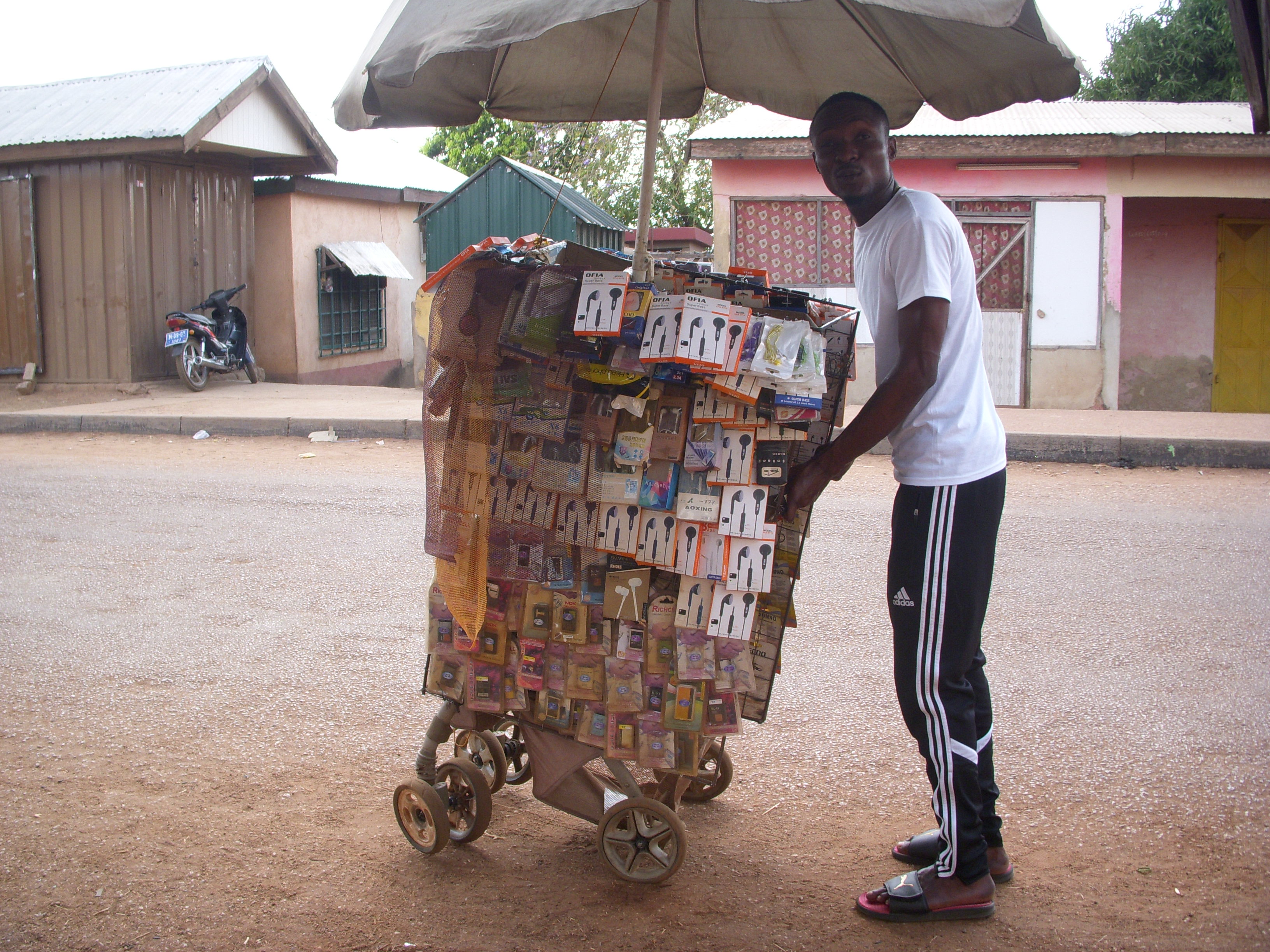
Kwame is a young man around 22 years old and a student at Cape Coast Polytechnic in Ghana. Kwame is into the business of selling Phone Cards at wholesale prices. He does this when he has no lectures to attend. Considering the tough nature of this business, he sells them by either hiring a car or walking. This mode of selling makes the work somehow cumbersome and tedious.

Fortunately for Kwame, he came into contact with WEBike and he purchased one of the bikes at an affordable price. He uses the bicycle for his phone-card business and sometimes to go to lectures as well because he is a non-resident student. The use of the bicycle has made his business very efficient and his customer base has increased. This is how he is able to buy more books and other personal needs. Kwame also loves to use the bicycle because of the exercise he gets riding between the campus and town.


The Significance of the Bicycle to the Rural Teacher

Summer 2017 InGear

The teacher, as would be widely agreed, plays an invigorating role in the nurture of a human being. It is for this reason that teachers ought to be given apt remuneration and motivation for their services.

Teachers in rural areas like the Northern Region of Ghana have particular needs, and bicycles play a vital role in their lives.

A teacher who teaches up north and does not possess a bicycle is like a farmer going to the farm without a machete. Not to make a storm in a tea cup, but anyone who has lived in the rural northern part of Ghana could attest to the fact that living there can be very cumbersome.

In some places a teacher can get to school on time only by commercial bus. But in some areas the bus operates only once a day. Having a bicycle is a much more reliable means of transportation.

The bicycle is therefore invaluable in the life of the rural teacher.


Adongo the Bicycle Mechanic

Summer 2017 InGear


Adongo is a young energetic man who resides in the Northern Region of Ghana.

Life after secondary school was very vexatious. There were not enough funds for Adongo to continue school. Since time obviously waits for no man, he decided to use his time profitably. After much deliberation, he finally resolved to learn a trade.

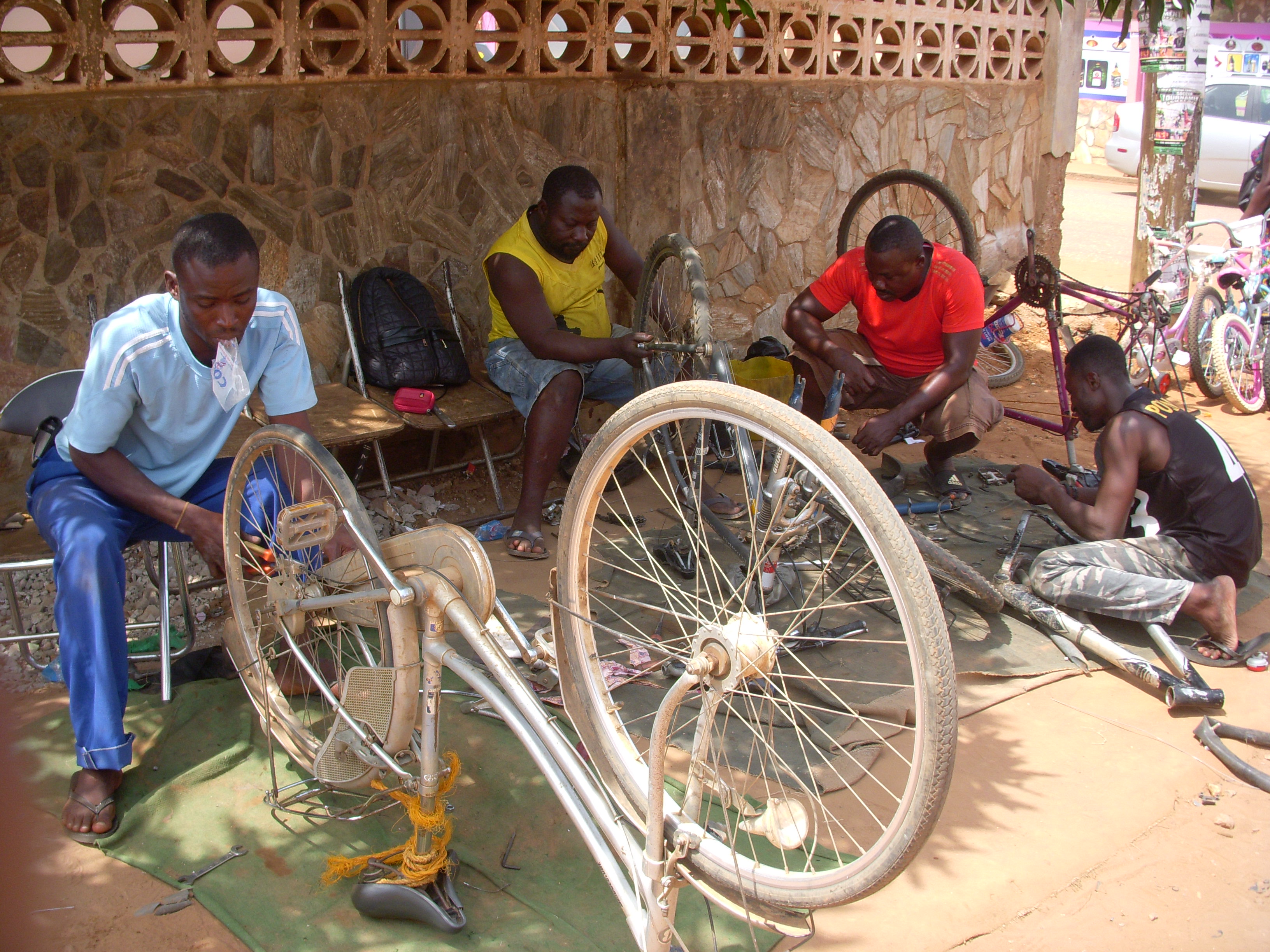
Consequentially, he moved to the capital of the country, Accra, where he learned carpentry. Along the line, Adongo realized carpentry was not in his best interest. He resolved to find something else to do on the side; he met this man who was into bicycle repairs. Adongo then thought it wise to align himself with the bicycle repairer.

About a year and a half into bicycle repairs, he became a proficient bicycle mechanic. He handled both major and minor repairs with utmost case.

Adongo later decided to change his domicile. He went back to his roots.

He is now a big-time bicycle mechanic, with about five apprentices. He buys bicycles and gives those that are not in very good shape a decent overhaul.


Adongo is now a competent bike mechanic cum sales executive. He is able to cater for his family and other needs. Through this business has he put up a three-bedroom house in his home town. He is living comfortably with his wife and two children.

All thanks go to WEBike.


The Vendor

Summer 2017 InGear

Kwame is a young man around 22 years old and a student at Cape Coast Polytechnic in Ghana. Kwame is into the business of selling Phone Cards at wholesale prices. He does this when he has no lectures to attend. Considering the tough nature of this business, he sells them by either hiring a car or walking. This mode of selling makes the work somehow cumbersome and tedious.

Fortunately for Kwame, he came into contact with WEBike and he purchased one of the bikes at an affordable price. He uses the bicycle for his phone-card business and sometimes to go to lectures as well because he is a non-resident student. The use of the bicycle has made his business very efficient and his customer base has increased. This is how he is able to buy more books and other personal needs. Kwame also loves to use the bicycle because of the exercise he gets riding between the campus and town.

The Farmer

Summer 2017 InGear

One of the most prominent occupations that the world could ever think of is farming. Unfortunately in our part of the world here in Africa, especially Ghana, most young people prefer white collar jobs to farming.

This is not in the case of Mr. Seidu, a 40-year-old peasant farmer in Western Ghana. He is married to his wife Abiba and they have three children ranging from 6 to 13 years old. He grows peanuts and corn to cater for his family. Considering where he is staying he has to wake up very early in the morning and set out for the farm. It takes him about one and half hours to walk to the farm; so before he gets there, he is already tired. Fortunately Mr. Seidu managed to purchase a bicycle from WEBike. The bicycle helps him to get to the farm on time with less effort. He ties his machete, hoe, and a gallon of water to his bike, and within 30 minutes he is at his farm. Now he is able to work longer when he goes to the farm and he goes almost every day. Aside from the economic benefit, he is also healthier, due to the exercise he gets riding the bicycle.

President’s Message, Summer 2017

Dear Friends of P4P & SP,

Welcome to our first digital newsletter! With this format we can bring you much more information because we’re not constrained to a set number of pages. We will also save the significant cost of postage, which we can then use for our core mission of collecting and shipping income-generating potential around the world.

150,000 bikes shipped! That sure is a lot of opportunity for a heck of a lot of people, and let’s not forget the 3,700+ sewing machines we have distributed worldwide. We remain true to our original mission of proper recycling here in the U.S. for the benefit of motivated people worldwide who want a better life and are willing to work for it.

We should also give a shout out to our most amazing partners overseas, for it is those overseas partners who are responsible for the distribution. They are also responsible for finding and writing these incredible success stories that we bring you in our newsletters. We have always felt that it is important that we supply firsthand accurate stories to you the supporters of P4P so you can judge the effectiveness of our programs.

Now 26 years old, P4P has survived many turns up and down in the economy, but we have managed to stay in business because of your support. We have also managed to stay in business because of the incredible staff, some of whom right now as I write this on a Saturday in May, are standing out in the pouring rain processing bicycles. And next weekend they will be in a steel container packing those bicycles in 100º heat! P4P puts an incredible amount of sweat equity into every shipment. From Granby, Connecticut, to Gettysburg, Pennsylvania, and from Westchester, New York, down to Middletown, Delaware, our staff covers a very large domestic footprint on a shoestring budget. It is always hard physical work moving tons of bicycles but Gary always seems to do it with a smile.

I hope you enjoy both InGear (PDF, HTML) and InStitch (PDF, HTML). These stories certainly inspire us to work a little harder pushing production higher so that we can offer opportunity to an increasing number of people every year.

Sincerely,

David Schweidenback

Nicaragua Success Story, 2017

Summer 2017 InGear

Alexander Mora was born in Tola, Nicaragua, eight miles west of the town of Rivas, home of our P4P partner EcoBici.

Alexander has been interested in bikes since he was 10. From a very young age he learned bike repair from Guadalupe, the former lead mechanic at the Ensembladora de Bicicletas, the EcoBici bike shop. Guadalupe taught Alexander everything about repair and maintenance of bicycles: lubrication, wheel alignment, cable replacement, …

When Alexander got his first 20-inch bike he became even more interested in bike repair.

When he was 23 an Atlas bicycle came into the shop from a Señor Miguel Ríos. Señor Rios used to deliver newspapers in Rivas on his Atlas. Señor Ríos passed away but his son gave the Atlas to Alexander. Alexander still has this bike.

After he got the Atlas, Alexander would ride it from Rivas to Tola. From Tola he would ride another five miles to the village of Gasper García to repair taxi trikes. Overall, Alexander maintains about 100 of these bike taxis.

After work he would ride a few more miles to the Pacific coast for fish and whatever else he could find. To survive he would carry a machete, a liter container of water, and a pump and patches for tire-repair.

In 2011, Alexander met Joaquino Bando and they met Carlos Santana at EcoBici. They began to assemble beach cruiser bikes.

Alexander seemed different from other workers. He worked closely with Carlos. Then when head mechanic Don Lorenzo retired, Alexander joined the EcoBici permanent staff, earning a fixed salary. He works on new and used bikes, and has become one of the best bike mechanics in the country.

Alexander now restores badly damaged used bikes, making them almost like new. Besides the Atlas, he has restored a classic 24-inch bike that he uses to run errands for EcoBici: making bank deposits or doing anything else we need him to do. Alexander has great skill as a bike mechanic and has been an excellent addition to the staff at EcoBici.

P4P Bike Number 150,000

Summer 2017 InGear

In April of 2017 Pedals for Progress collected and shipped its 150,000th bicycle.

P4P’s initial goal in 1991: ship 12 bicycles to Ecuador. This initial estimate is short, so far, by a factor of 12,500.

Our Partners

P4P has shipped to 36 countries, from Albania to Vietnam. We’ve shipped 2 bikes to Papua New Guinea and 42,672 bikes to Nicaragua. We’ve made one shipment each to India, Jamaica, Kenya, Malawi, Pakistan, Papua New Guinea, Sri Lanka, and Venezuela. We’ve made 82 shipments to Nicaragua, 40 to El Salvador, 32 to Ghana, 19 to Guatemala, and 18 to Barbados. As of June, 2017, we’ve made 378 bicycle shipments and 24 independent sewing machine shipments.

Programs end because of changes in our partner organizations, import laws and fees, bureaucracy, and sometimes outright corruption. But most countries are eager for the programs we support—the economics make sense for our partners and the bikes clearly improve the lives of the people in their communities. We always have more demand than we can fill.

As of June, 2017, our active partners with both a bicycle program and a sewing program are Albania, Ghana, Guatemala, and Nicaragua. Our active partners with sewing programs only are Ethiopia, Kenya, Kyrgyzstan, Liberia, Tanzania, and Uganda.

Choosing partners is not an exact science. Groups from around the world find us in several different ways, including the internet, magazine articles and other publications, and word of mouth. P4P has a formal procedure that potential partners use to request a shipment. They make a proposal that gives us basic information about their location, size, history, and business plan. In some cases P4P can find a way to fund a first shipment, but our business model is that the partner must pay for shipping; that payment is more evidence of their good faith.

Some of our partners we know only at a distance. Other partners we have met personally, in the U.S. and in their home countries. We have seen their kids grow up and join P4P partner businesses. We have taken terrifying auto rides with insane drivers, hiked and biked through spectacular countryside, visited their bike shops and their business, educational, and health programs. We are continuously impressed by the generosity, resourcefulness, and hard work of our partners and their communities around the world.

Bike Number 1: 1991

Nicaragua Produce Bike

For its first couple of years, P4P shipped bikes as part of shipments from other groups. We sent our very first bikes to Nicaragua, though to a partner we no longer have.

In 1992 we made our first shipment to Rivas, Nicaragua, where Wilfredo Santana had the business that became EcoBici, which is still our partner today. In 1993 P4P started filling its own containers, and Wilfredo and Dave worked out the revolving fund idea: P4P would pay for the collection of bikes in the U.S., our partner would pay shipping costs, and the partner would make enough profit selling, maintaining, and repairing the bikes to pay for the next shipment.

Bike Number 50,000: 2001

2001fallPanama

We can’t find any specific information about the 50,000th bike we shipped. Our records show that it must have been 2001. We shipped 20 containers that year, and we were nearing our peak production. In 2001 we shipped to South Africa, Honduras, Nicaragua, Barbados, Panama, El Salvador, Ecuador, and Ghana. Perhaps we were too busy collecting, prepping, and shipping bikes to notice the 50,000-bike milestone.

Let’s just pick one of our 2001 bikes and pretend that it is number 50,000. Here’s a typical happy story about how bikes improve lives: A note from Panama in our Fall 2001 InGear newsletter tells the story of seventeen-year-old Jose Luis Bethancourt, who was ready to drop out of school because of family finances. His commute to school by bus not only cost money, but took hours because of traffic, so Jose had no time for a job that would raise income for the family. He got his first-ever bike from P4P, which eliminated the bus fare and dramatically reduced his commute time. As a result, Jose had time for a job as well as for school.

Bike Number 100,000: 2006

fall2006mateoFamily

We got our 100,000th bike at a collection sponsored by the Somerset Hills Kiwanis on June 24th, 2006, at the Sunset Inn in Clinton, New Jersey. Leonard Lance, then a New Jersey State Senator, was on hand to thank the surprised donor. Now in 2017 Leonard Lance is the U.S. Congressional Representative of the New Jersey 7th District. So P4P can improve the lives of U.S. politicians as well as people in our partner countries!

We shipped the 100,000th bike to FIDESMA in Guatemala, one of our most long-standing partners. P4P’s Reykha Bonilla followed the bike to Guatemala, met our good friends and partners at FIDESMA, and met the owner of P4P bike 100,000, Mateo Patzan, a working father of 5 and amateur bike racer. The Fall 2006 InGear newsletter has the whole story of bike number 100,000.

Bike Number 150,000: 2017

Fast forward to 2017. On April 1, the Long Island Returned Peace Corps Volunteers collected P4P bike number 150,000. On April 22 we loaded the bike into a container bound for FIDESMA, the same destination as bike number 100,000. At midday, June 6th, the bike arrived at FIDESMA in San Andrés Itzapa, Guatemala. It’s fitting that these are the groups that collected and received our 150,000th bike.

The Long Island RPCVs have been one of our most successful collection partners. They rotate collections around Long Island to maximize their reach. Their first P4P collection was in 2003, their second in 2005, and they’ve held collections every year since. The Long Island RPCVs are featured in this article from Summer 2011.

We’ve already mentioned FIDESMA, our Guatemala partner, because they got our 100,000th bike in 2006. FIDESMA has been our partner since 1999. We are good friends as well as professional partners with the principals. For example, the summer 2012 InGear newsletter has this article about a visit to New Jersey from Señora Maria Margarita Caté de Catú, founder of FIDESMA.

[At publication time for this Summer 2017 newsletter, bike 150,000 did not have an owner. Now that it does we can tell the whole story.]

What’s Next

In 2016 P4P had the first uptick in bicycle collections since 2001. Let’s hope bike collections continue to improve.

Even though we are celebrating a bicycle milestone, we should mention sewing machines. Since 1999, P4P has shipped sewing machines along with bikes. Like bikes, sewing machines give people a way to improve their economic circumstances. A sewing machine can be a job in a box. In 2015 we created the Sewing Peace brand as an option for carrying on our sewing machine activities separately from our bicycle activities. If only sewing machines are involved, we have multiple advantages: with collections, with shipping, and with partnering. For collections, we can target groups more likely to have sewing machines to donate. For shipping, we can send much smaller loads, loads that do not take a full container, and so are much cheaper to ship. And for partnering, we can find groups abroad that may not have the capacity or expertise to deal with 500 bikes at a time, or that may not even have a bicycle program.

So we are now the same single organization, but doing business both as Pedals for Progress and as Sewing Peace. It’s been a rewarding 26 years. We look forward to many more.