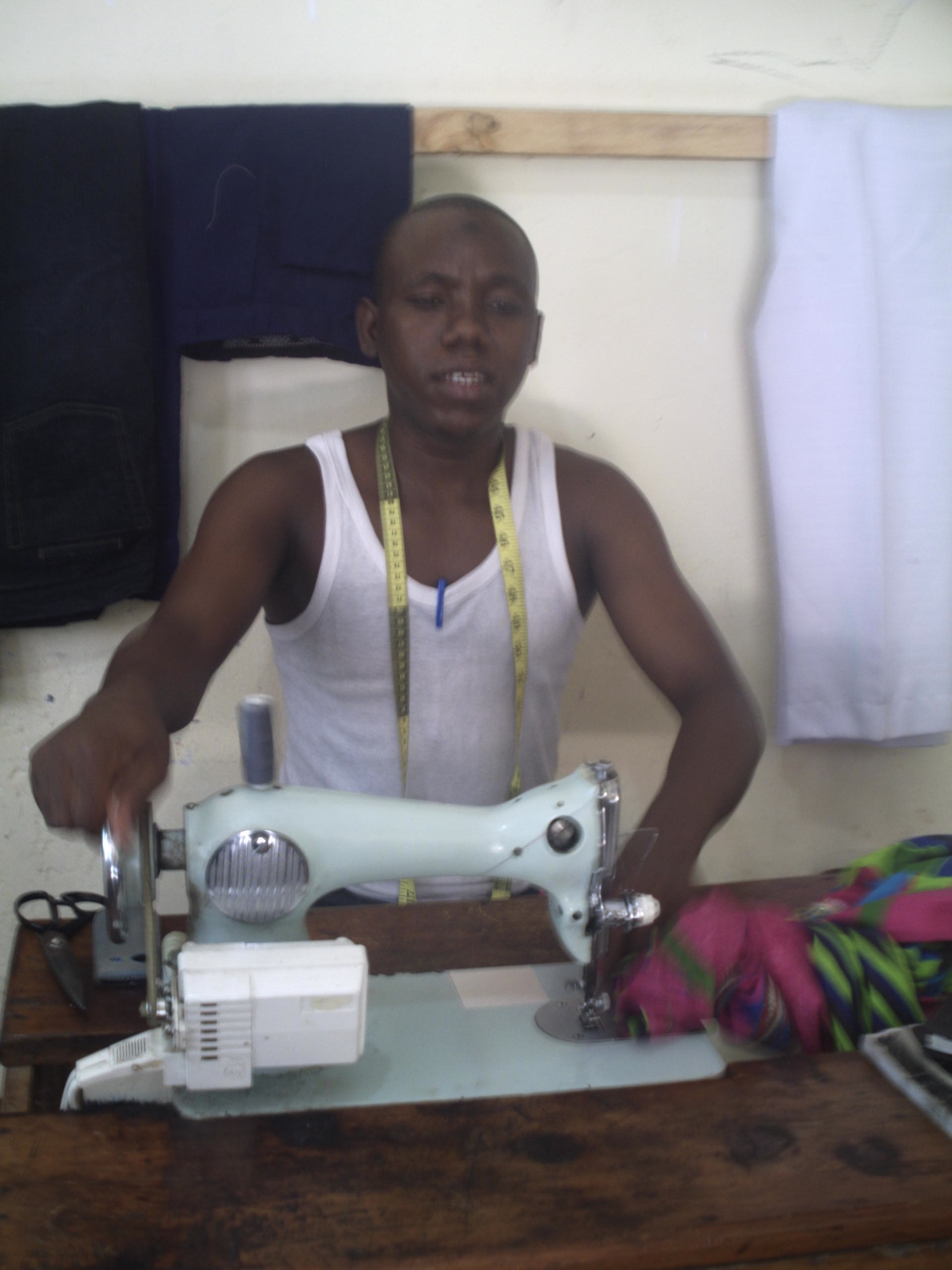
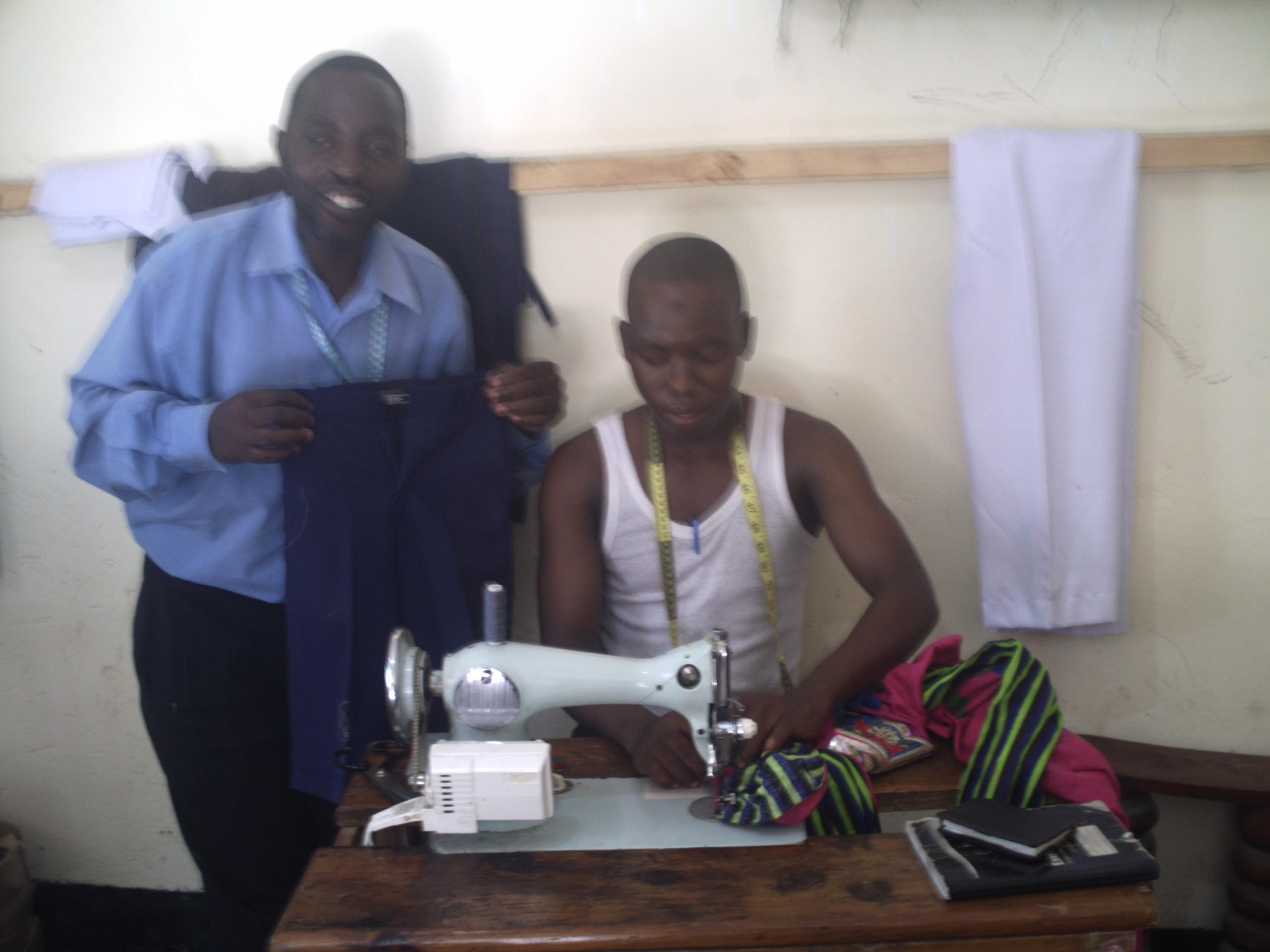
In October of 2013, with the generous support of grant money from one of our valued supporters, Clif Bar Family Foundation, P4P shipped 41 sewing machines to the region of Dar es Salaam (DSM) in Tanzania. Our partner there, Community Support Mission (CSM), works closely with those in poverty to help them earn their own living and create a healthy and sustainable lifestyle.
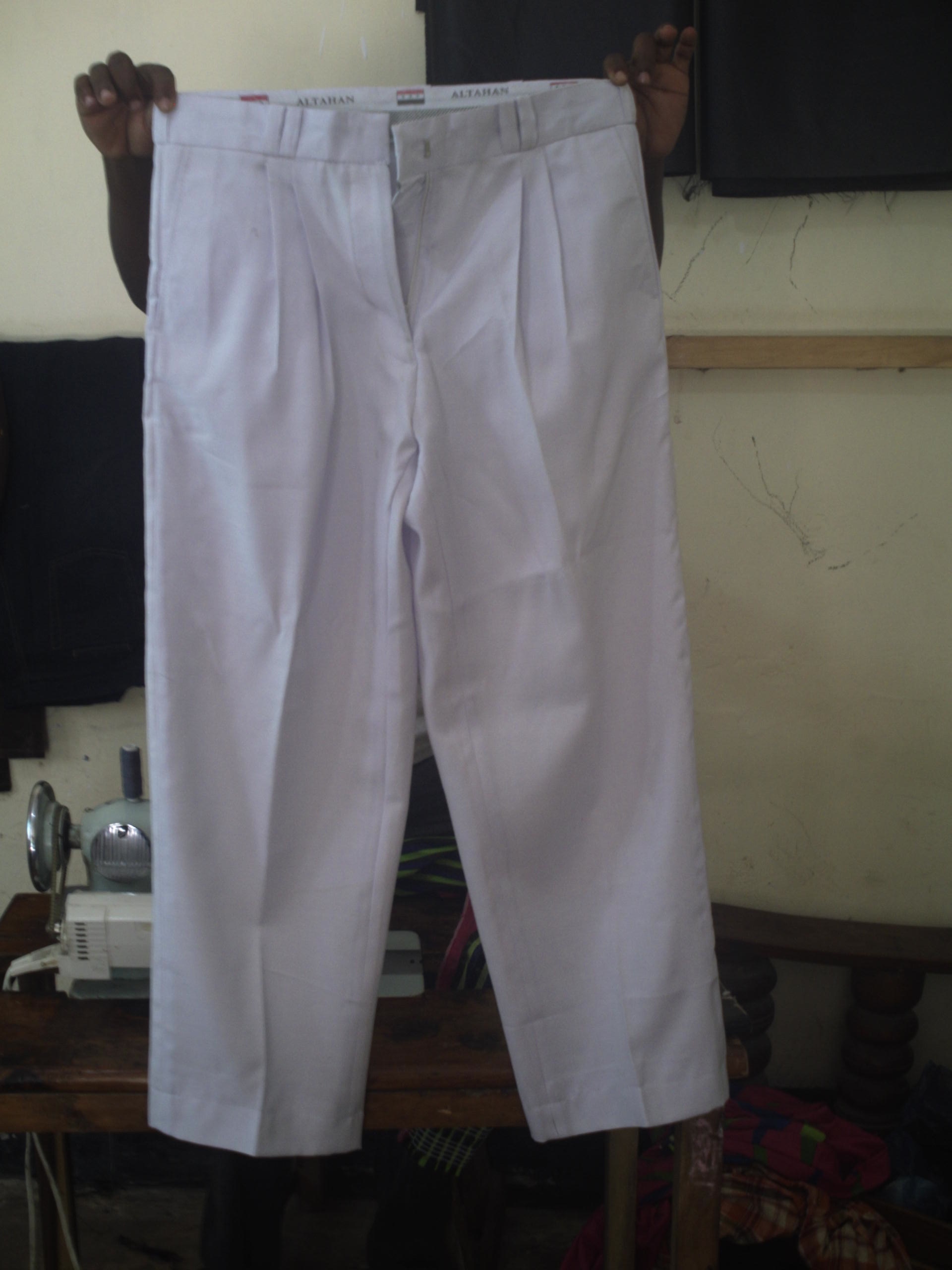
According to CSM’s director, Jonathan Mulokozi, four of the machines went to the Messack Secondary School, located in Kivule, in the District of Ilala. Of the 350 students, 60 are orphans and 42 are from very poor families. The machines’ primary use to date has been to sew uniforms for schools. The income earned from the production of this clothing has covered school fees among other difficult costs these children must meet if they are to have an independent and economically viable adulthood.
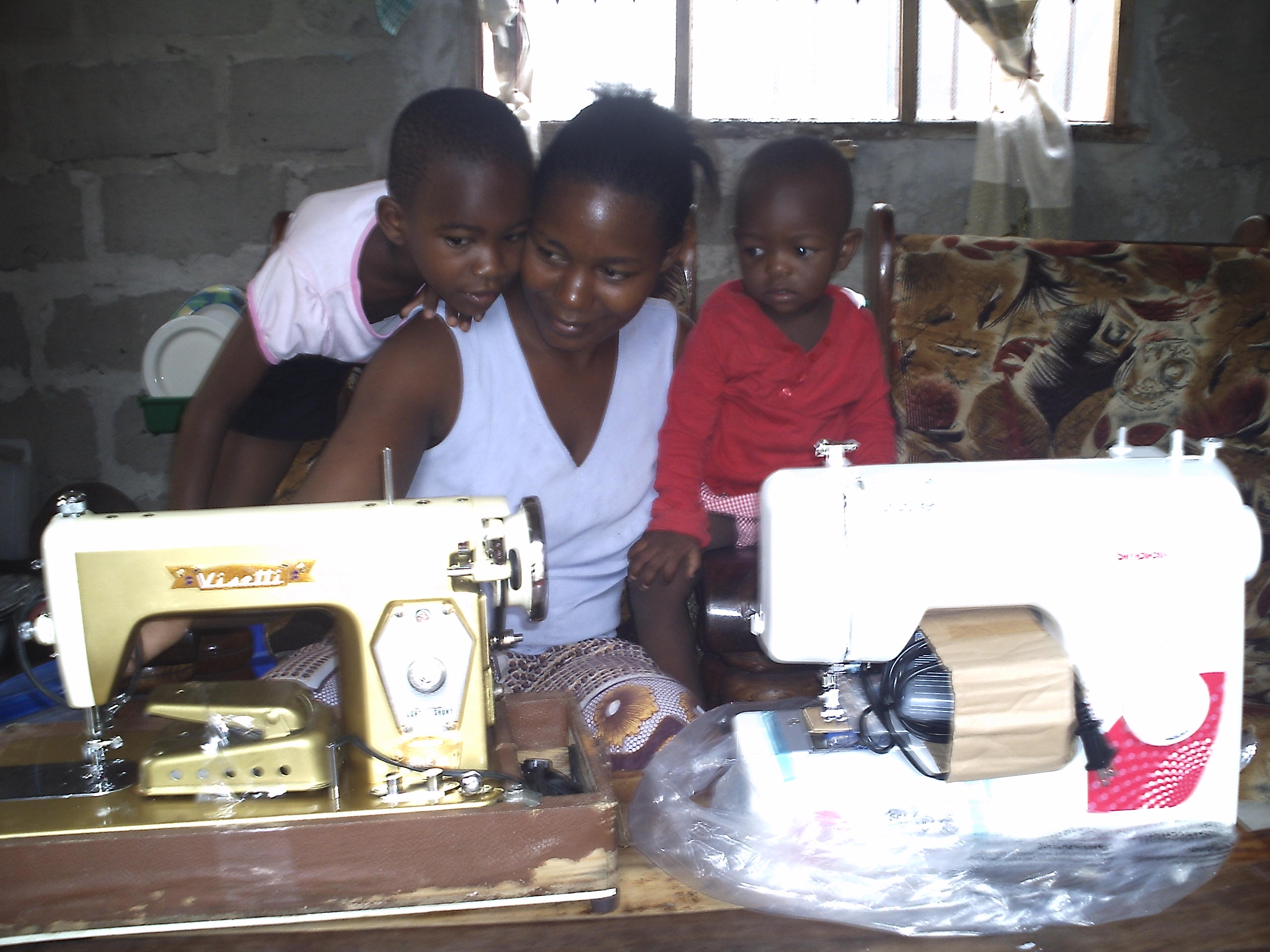
CSM also works with families or groups in need. They donated 3 machines to women whose families were struggling to maintain decent living conditions and hoping to stay together instead of dispersing for work in far-away districts or regions. One particular woman, Anna Ntimba, was fortunate in that she already knew how to sew; however, she did not have the income to afford her own machine. Her husband was recently diagnosed with a heart disease and could not easily support the family, much less pay the hospital bills. With the machine in hand, Anna was able to earn the income she needed to keep her family together and enable her husband to begin healing.
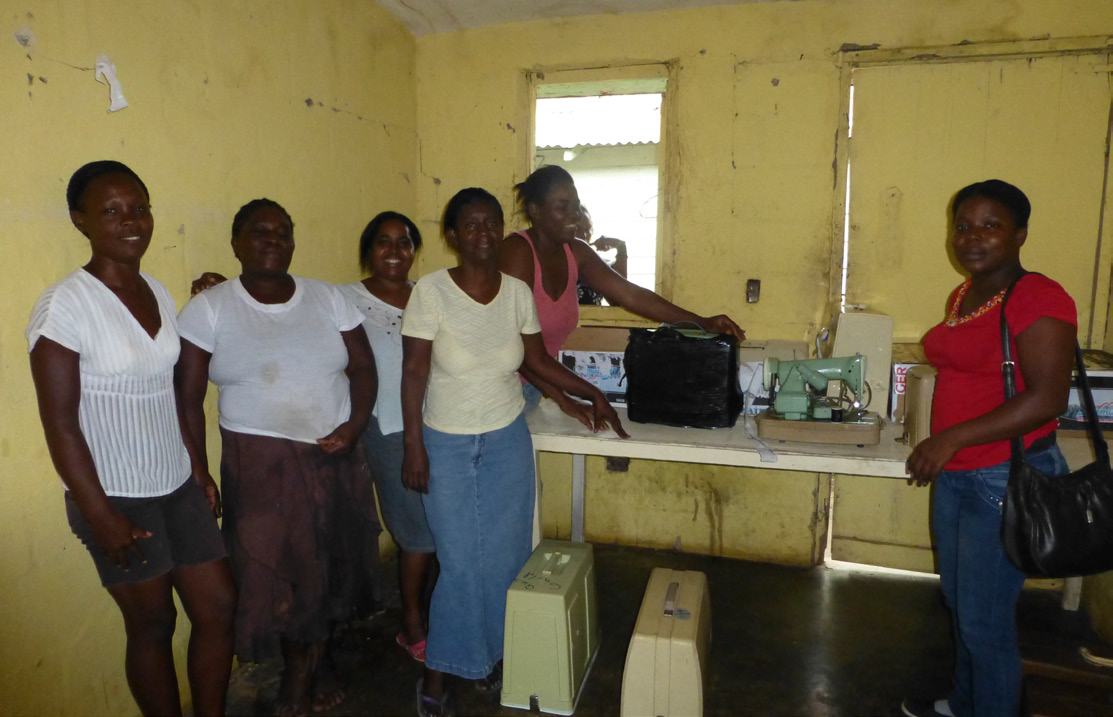
In January of this year, CSM donated sewing machines to 4 women whose families are in poverty and cannot afford to send their children to school. CSM has also pledged to provide 2 machines to each group of 3 people who wish to form their own business. As well, 2 secondary schools in Kagera are slotted to receive sewing machines so they can continue to earn income to cover basic school needs for local orphans.
Not all the partners we work with request both sewing machines and bicycles. When this combination does come into play, there are double the opportunities opened up to people in a region, thus increasing the odds that we can create a lasting positive impact. We are looking forward to receiving news and photos of the students and their families as more machines and bicycles become available to them.
Majuto Yasini & Juma Selemani sew and sell clothes in small towns and markets in Dar Es Salaam City. “Up to now we have been raising profit income from 20 US$ per month up to 40 US$ per month. This is a great project for us, and soon we are targeting projects in different towns: Arusha, Dodoma and Mwanza.”
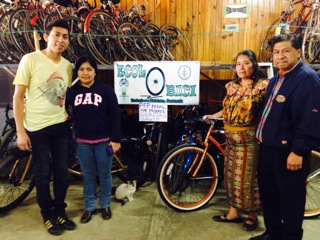
We recently received a great holiday email from our Guatemalan Partners ECOLOBICI:
Hi David,
We have just finished the inventory of our last container. The shipment looks great with the sewing machines that will go to a women’s group in a community outside of San Andrés Itzapa. The shipment of parts and soccer equipment will also go to great use. Everyone is excited for the upcoming World Cup in Brazil this summer.
Please see some photos below and wishing you and your family a happy new year.
When I won the Rolex award in 2000, I convinced the Board to start a Capital Campaign for building a permanent facility. While we raised significant funds, we never met our goal. Furthermore it has since been decided our resources are better off helping people, than owning a facility and we have excellent rental space. When the banks collapsed in 2007 we had approximately $110,000 in the capital campaign. I wrote to all the donors and requested that they release that money so that we could use it for general expenses. Most donors released their donation. Those funds helped us stay operational through the entire recession.
There is however $10,411 that has never been officially released by the donors. In part because of how long ago these funds were donated, the addresses we had on file the mail was returned. Further complicated by Hurricane Sandy and multiple computer meltdowns, we no longer even have these bad addresses. It is my belief that these funds were donated by well-intentioned people who wanted their money to go to making a substantive long-term change in society. These funds were dedicated specifically to the Pedals for Progress Capital Campaign. The residual restricted funds could languish on the books of P4P providing no value to anyone. The Board feels that this is specifically contrary to what the donors intended. Furthermore since this money was dedicated specifically for “a” Capital Campaign, it should be used for such.
Pedals for Progress, a New Jersey nonprofit corporation, is hereby posting official notice to all of the original Capital Campaign contributors. If you are one of these original donors, we no longer have your address. Please write or email P4P with your name, address, amount of your donation, and instructions on what to do with your donation. You may instruct that P4P return of the donation to you, or that the donation may be used by P4P to fund ongoing operations without restriction. If we do not hear from you, the remaining Capital Campaign monies will be donated to the Hunterdon Medical Center (HMC) Cardiopulmanary Capital Campaign three months after the posting of this notice. HMC is the local hospital that most of our employees use when necessary. The Board feels that we are fulfilling our duty to the donors by giving this money, first to a capital campaign and, secondly to something that will make a long-term substantive change that we believe remains the intent of the original Capital Campaign donors.
Pedals for Progress seeks to stimulate the economy of developing countries through its work. This would be impossible without the cooperation and tireless efforts of its partners throughout the world. One such partner is Wright Enterprises, a company that imports consumer goods to Ghana. Working in conjunction with P4P, Wright Enterprises founded WEBike, an organization that, for little to no profit, distributes bikes and sewing machines to those in need of them. Here is a selection of stories of Ghanaians whose lives have benefited from the work of P4P and WEBike.
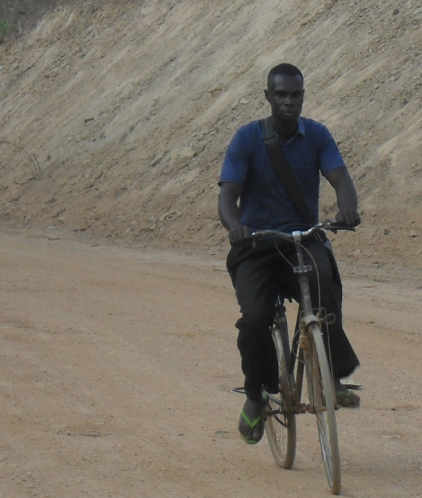
1. Usifu is a student teacher in the small town of Walewale in the Northern Region of Ghana. A limited staff at his school means that Usifu must perform multiple duties. First and foremost, he teaches a fourth grade class. Additionally, before morning lessons begin, the students sweep the classrooms and school compound, a job Usifu must be present for to oversee and provide assistance with. There is a distance of 4 kilometers (about 2½ miles) between Usifu’s home and the school. Having to walk made it difficult for him to arrive before the start of classes to complete his duties in time. Furthermore, traveling by foot daily would leave him exhausted, not to mention would cut into the time Usifu, like any teacher, needed to prepare for upcoming lessons. Now, thanks to WEBike, Pedals for Progress’ partner in Ghana, Usifu rides a bicycle to and from school each day. This drastically decreases his travel time, giving him more of the time and energy he needs to do his job. He can now get to school on the dot and is prepared and focused every day when he enters the classroom.
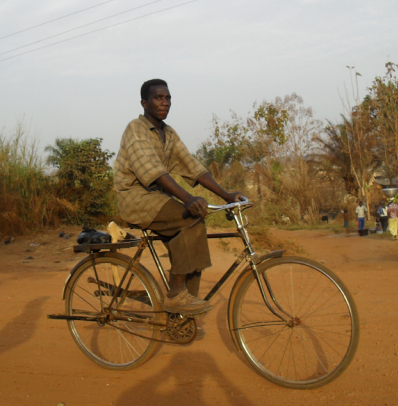
2. In some Ghanaian villages, it is common practice for citizens to pursue auto mechanic apprenticeships. It is a worthwhile career track for many people as, once they have become proficient in the field, they can bring their talents to the bigger cities where the need for mechanics can translate into a lucrative job. Paa Joe is a young man hoping to procure such a position. An apprentice in the Suhum/Kraboa/Coaltar District in the Eastern Region of Ghana, Paa Joe must traverse a distance of 5 kilometers (or over 3 miles) to get from his residence to where he is learning his future trade. Formerly, his only transportation option was one very early bus that would get him to his apprenticeship before the workday proper began. If he missed this bus, he was forced to walk. Either approach left him exhausted. After receiving a bicycle from WEBike, Paa Joe became able to bike to and from his auto mechanic apprenticeship every day. Functioning on his own schedule, he is now energized in his work and much more hopeful that he will one day be able to move to the city to begin a profitable career.
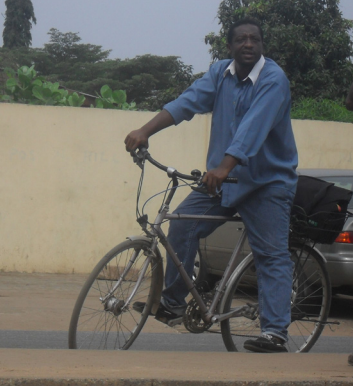
3. Yaw Aboah is a gristmill operator in Kasoa, a suburb in the Central Region. Long work hours and a distance of 3 kilometers (about 2 miles) between his house and his workplace meant that Yaw was often forced to sleep at the mill. Obviously, this was far from ideal as an industrial building hardly possesses conditions conducive to a good night’s rest. Worse, however, was that sleeping at work would mean Yaw would typically not see his family for days at a time and, further, often had to spend money on meals away from home. Thanks to the bike he’s received, staying overnight at the gristmill isn’t even something Yaw has to take into consideration. He is able to bike easily to and from work every day, providing him with a more economical lifestyle and, most important of all, giving him back his time with his family.
4. Nana Yaw teaches a sixth grade class at the LA Middle School in Nsawam, a town in Ghana’s Eastern Region. He lives quite far away in a small village called Ayakwah, on the outskirts of the Nsawam area. Covering this distance daily was a huge issue for Nana, but then he received the gift of a bike from WEBike. He can now go between school and home much faster and with much less effort. He is thankful to WEBike for this, as well as for providing him with the means to perform various errands and to travel around the area with ease.
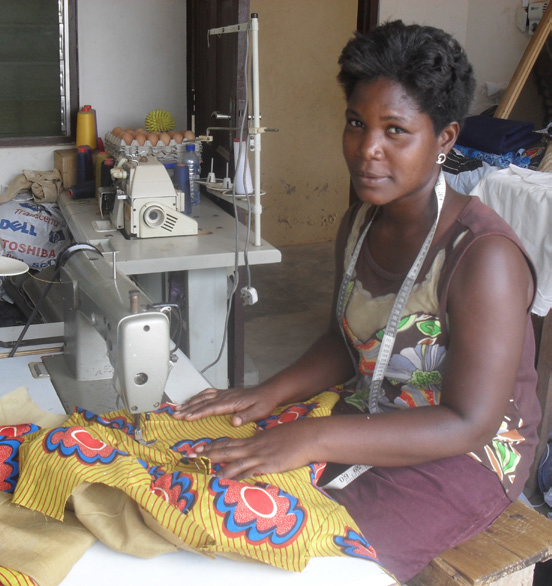
5. Coming from a poor background, Ama Attah became a seamstress’ apprentice, hoping to learn and eventually use the skill to improve her family’s financial standing. However, shortly after the completion of her apprenticeship, Ama’s sewing machine was one day accidentally knocked from a table to the ground, damaging it beyond repair. As a result of WEBike’s intervention, Ama received another, working sewing machine. She is overjoyed that she can now put the sewing skills she worked so hard to learn to use and can make money to support herself and her family.
6. Esi is a teenager who lives in a small village in the Nkwanta North District of the Volta Region. She is a student at Nkwanta Senior High School. The school is located so far away from where Esi lives that it would take her two hours to walk there. With the school day beginning at 7AM, Esi had no choice but to be up every morning well before 5 in order to be sure to get to class on time. Furthermore, the road she travels on is frequently a busy one, making her daily trek all the more arduous and slow-going. All of these factors contributed to Esi’s fatigue, which was obviously detrimental to her health, especially at a developmental age. It also made it difficult for her to be attentive during school and hard for her to dedicate energy to schoolwork in and out of class. After receiving her bicycle from WEBike, Esi found she was able to negotiate the distance between school and home within an hour, sometimes even managing it in 45 minutes. She is no longer unnecessarily exhausted and is sure to be on time, prepared, and fully alert in class each day.
7. Efoe Kojo lives in Nkwanta in the Volta Region and works as a harvester. Going to and from the field where he works, he had to walk a distance of 6 kilometers (over 3½ miles) in total daily. He also had to carry with him a canteen of water, his lunch, and the machete with which he does his work. This proved to be a serious problem for Efoe as he would repeatedly, upon reaching the field, find himself too tired to do any harvesting. Now that Efoe has his bicycle from Pedals for Progress and WEBike, he is no longer too exhausted to perform his duties. Not only does his bike transport him to work quickly and easily, but, rather than lug his supplies around himself, he can put everything in the bike’s basket.
8. The partnership with Pedals for Progress doesn’t just benefit those on the receiving end. Joe is an employee with WEBike, distributing bikes around the Kasoa area in the Central Region of Ghana. Thanks to his involvement with WEBike, the people of the Kasoa area now know to go to Joe for reasonably priced bicycles. The money he is making helps him support his family. He is able to afford his rent and pay for any fees that might arise from his children’s schooling.
9. In Accra, the capital city of Ghana, there are many boys and girls who, after finishing high school, wish to learn to sew. Maame Yaa is a seamstress who runs an apprenticeship program training young people to be seamstresses and tailors. She would not have been able to offer this education without all of the sewing machines she received from WEBike for the children to train on. With her program as a springboard, many of Maame Yaa’s students are able to become self-employed and Maame herself profits from her business, all thanks to the sewing machines from WEBike and Pedals for Progress.
Last year as I sat at the high school graduation in the rural community of Balgüe, Nicaragua, I counted that a third of the girls in my class were either pregnant at the time or already had a child. I know I am failing to count a few as I was unaware they were mothers and that many other girls failed to make it to graduation day, dropping out previously due to teen pregnancy. Aside from this obvious problem, many other young Nicaraguan women choose to drop out of high school due to the pressure to provide for family needs within the household. Many may feel a need to be at home to complete daily chores like patting tortillas and cooking beans, looking after the men’s needs in the household, or caring for young children. While many urban communities may see a different situation, this is still the reality of a Nicaraguan woman in a rural community.
The island of Ometepe, Nicaragua
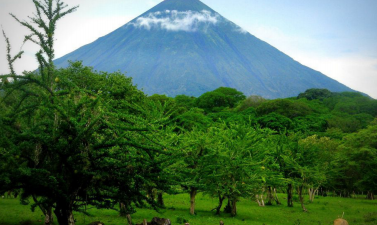
You see, this takes place on Ometepe, an idyllic island where at any point you look up to find two looming volcanoes within a freshwater lake. It’s considered the pearl of Nicaragua. Mark Twain has been known to write of it and a couple years ago it was shortlisted for the seven great wonders of the world. It is essentially a little slice of paradise. But, on the other hand, this paradise falls short of providing many opportunities for youth to plan their futures. Employment opportunities that allow islanders to stay on the island are hard to come by.
With the brightest students, you often see that a “brain drain” syndrome is ever present. Usually if youth come from families with resources they will study in the university in the capital, pick a career that makes it hard to find work on the island, and are forced to stay in the capital to find employment. I was proud to see many of my last year’s high school seniors go on to study advanced careers, but the reality is—how many dentists do you need on a rural island when dental care is still viewed as a luxury? For those that do not or cannot choose higher education, employment is still a challenge. Last year when I asked a young woman what she would do following high school, she told me that she would most likely emigrate to Costa Rica to find work. Many feel that more opportunities lie abroad than in Nicaragua.
Hopefully, as the economy shifts from agriculture to tourism, the diversity will bring more opportunity and islanders will realize the necessity to focus on the training of trades. With tourism, there is a need for some push from government and educational institutions for programs like business education and English training. With sustainable employment opportunities, more islanders will be able to stay closer to home while also allowing tourism to develop in a sustainable manner where the benefit is felt in more island communities. Girasol Members in Ometepe, Nicaragua
A recent donation of six sewing machines by Pedals for Progress has helped to improve the lives of one particular group of women, Girasol Sewing Cooperative. (A girasol is a sunflower in Spanish). This sewing cooperative on the Island of Ometepe was started to provide an opportunity to learn the trade of sewing to improve their personal economic situation as well as that of their families and community. Sewing provides an income-generating activity for the women of the community of Balgüe, where employment opportunities for women are virtually non-existent.
Creating a self-sustaining sewing cooperative on an island can be difficult, as resources like sewing machines and materials still have to be imported by boat. This in turn drives up the prices of basic goods like school uniforms. However, what is beautiful about the Nicaraguan entrepreneurial spirit is that these women can view opportunities when many others view challenges. For Girasol, these challenges bring opportunities as tourism grows, and there is opportunity to break into a market where the majority of souvenirs come from the off-island departments of Masaya or Granada.
In March of 2012, these women were sitting in a classroom as we reviewed what a basic fraction and decimal were, as none of them were able to finish high school due to circumstances beyond their control. At the same time, the women participated in sewing classes led by the designer Kim Farrugia and began laying the foundation for their very own sewing workshop. Currently, in a little over a year, they have begun selling in multiple locations on the island and preparing their first international orders.
Pedals for Progress has continued to lend a helping hand promoting economic development in Nicaragua as well as many other countries around the world. It is notable what a couple hundred cordobas extra a month can do for a women. However, less talked about and equally important is the role of this cooperative in the personal lives of these women. The majority of these women are single mothers and have also never had the opportunity in their lives to earn a peso for themselves. Many still have to ask permission from their spouses to buy basic household necessities like toilet paper. With learning the trade of sewing, these women are allowed to see the potential of their own two hands, develop their creativity in a society that does not always nourish it, and understand the pride that comes from being able to contribute a small income to their families.
With P4P’s donation, the current cooperative will be able to formalize. More importantly, these sunflowers will be able to grow. With the new machines, there are plans to hold a new sewing course and to allow new women to be incorporated into the group as it expands. This means more women within the community are given a reason to get out of the house to go to triweekly meetings reminding them that they are strong, creative, and smart women. This is women’s empowerment, and it would not have been possible without the help of P4P.
Pedals for Progress has improved the quality of life for many Nicaraguans in the department of Rivas, with currently over 22,500 bicycles donated. In addition, P4P’s new partnership with Girasol Sewing Cooperative and donation of sewing machines has helped to lay a foundation for sustainable economic development on the island of Ometepe. Girasol’s transition from a project to a sustainable, independent business would have been difficult without the help of David Schweidenback, his team, and the contributions from Pedals for Progress’s supporters.
Noelle London
Peace Corps Nicaragua
Small Business Development 56
London.noelle@gmail.com
Coming from a poor background, Ama Attah became a seamstress’ apprentice, hoping to learn and eventually use the skill to improve her family’s financial standing. However, shortly after the completion of her apprenticeship, Ama’s sewing machine was one day accidentally knocked from a table to the ground, damaging it beyond repair.
As a result of WEBike’s intervention, Ama received another, working sewing machine. She is overjoyed that she can now put the sewing skills she worked so hard to learn to use and can make money to support herself and her family.
High rates of unemployment, alcohol abuse, and teenage pregnancy. Little or no access to free or inexpensive transportation to good schools and employment opportunities. Our inner cities and rural areas are locations of potential concern for us, but, with multiple petitions, appeals to government officials, and perhaps celebrity involvement, communities may very well gain financial allotments for educational and environmental programs that enable at-risk youth to climb out of fiscal uncertainty and create financial independence. But what if the country is not large or powerful enough to compete for international attention of consequence or if the bedrock of the growing economy such as tourism and retail is not of benefit to those in remote locations? What if international celebrities have overlooked a place in need in their quest for the highest return on their sponsorship? The solution to the cycle of poverty must rest solely on a community’s ingenuity, savvy entrepreneurs, and established nonprofits who work in remote areas or small countries that don’t often rate primetime news coverage.
In the Monte Plata region of the Dominican Republic, the rural community of El Caño is in the process of developing its own sustainable niche in the economic development of this country. The financial divide here is not unfamiliar.
According to the 2013 Index of Economic Freedom, published by the Heritage Foundation with the Wall Street Journal, “Corruption, wasteful government spending, and unreliable electric service reduce investment returns, driving high unemployment.” Much of the country’s wealth is not trickling down.
The community of El Caño had, at one time, a functioning sewing project in place, but this ended when the partnership with the NGO dissolved. Then came the students of Boston’s Northeastern University who visited El Caño as part of their Social Enterprise Institute’s (SEI) Innovation Consulting Project. Students conducted an asset map and quickly learned about the community’s needs in order to increase their marketable skills and income.
As a result, the idea for the Cooperativa de Costura de El Caño (CCC) was born. The students then developed a partnership with the nonprofit MOSCTHA (Socio-Cultural Movement for Haitian Workers). Originally formed to focus on human rights, advocacy, and infrastructure services for oppressed Haitians, MOSCTHA has expanded it’s work in “improving and empowering underrepresented communities” to the Dominican Republic.
To replace the sewing machines that departed with the previous NGO, Pedals for Progress has stepped up to the plate and arranged delivery of 13 sewing machines for the approximately 28 sewers who range from younger to older men and women. All are welcome to join the co-operative. When the CCC reached out to P4P, they requested foot-operated manual machines. This would logically be in consideration of unreliable electric power and thus be another way to avoid pitfalls to production schedules and project development. Unfortunately, at the time of this writing, P4P could only find one to send them.
Once the sewing machines arrive, output of products like table cloths and school uniforms can resume and the members of the CCC will return to selling their goods to neighboring communities and even to people in Santo Domingo, the capital of the Dominican Republic. Catalogs of the co-operative’s products, created by participating Northeastern students, will enable the CCC to promote more goods to a wider segment of the population. This income will gradually empower their younger generation by providing access to higher education, gainful employment, and comfortable and safe living conditions.
This type of sponsored self-sufficiency looks to be a promising antidote to the socioeconomic pitfalls poor and uneducated people must overcome in order to enjoy the advantages many of their fellow countrymen already have. Thanks to the partnership and cooperation of the students of Northeastern University, MOSCTHA, and P4P, the men and women of El Caño have and maintain gainful employment and the dignity and respect that comes from participation in your present and control over your future.
May 18th, 2013, marked the shipment of the 52nd container of bicycles to EcoBici in Rivas, Nicaragua. Our relationship with this organization is the longest in our 23 years of partnership building. This current delivery contains 580 bikes that add to the 22,044 cycles already in circulation in the region and will contribute to the organization’s goal of community development and focus on enabling much-needed reforestation in the region.
P4P is also pleased to add 6 sewing machines to the container shipment. Our readers are of course already familiar with the Clif Bar Family Foundation’s steady and generous support of our programs and so it is not unexpected that the shipping and import taxes have been covered by them. What is new here is that the sewing machines are destined for a different locale in the region. In April, we were contacted by Noelle London, a Peace Corps volunteer who is involved in small business development in Nicaragua. London wrote that she lives on Ometepe, an island close to Rivas. This island, situated on Lake Nicaragua, is steadily becoming a tourist destination and she informed us that, currently, most of the souvenirs visitors purchase there tend to be made in Granada or Masaya.
London informed us that, with reliable and efficient tools, the local women could develop a thriving base of manufacture in their community of Balgüe: “They have begun to sell in a couple of locations on the island and even in a fair in Managua but are unable to keep up with the current demand as they only have 3 working machines.”
This region is ideal for building a tourist trade in local crafts as there are many attractions to draw steady crowds yearly. The beaches on the island of Ometepe are black volcanic sand, and the lake, long separated from the ocean by an earthquake, is an ideal location to observe the many species who have adapted to this environment. Lake Nicaragua is the only lake in the world with very large freshwater sharks. Tours of the island include trips to Altagracia and its Pre-Columbian stone statues and to Magdalena Farm in Balgüe where organic coffee is grown. It is a lush land with fertile soil fed from the Volcano Maderas.
London included this statement in her e-mail to us: “I have normally been the one to shy [local women] away from donations, as they have to eventually [establish] a fully sustainable business as opposed to a project. However, after working with them on productivity countless times, I have come to understand that they simply lack the sufficient resources to really take off.” What stands out to us at P4P is London’s very realistic take on the development of self sufficiency. Charity does not build business infrastructure. Long-term goals, reliable tools, and ongoing training programs are the only hope for people in places like Ometepe to foil the existence of questionably sourced “authentic” souvenirs of their own region and take control of the industry for themselves. This is a beneficial situation for visitors of the region as well, of course. Value is added to the experience of visiting a country where the textiles and other mementos are made by local people and cooperatives. Even better if a visit to the places of manufacture are part of a tour itinerary.
“It has been a pleasure to work with these motivated and talented women. They have dealt with countless obstacles and have continued to fight to keep their business afloat,” states London. P4P is very happy to see the contents of one container contribute to an old reliable partnership in Rivas and a new and promising one on Ometepe.
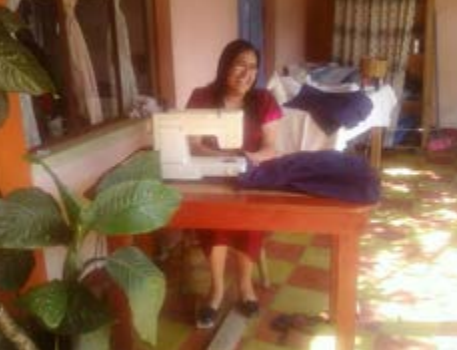
Doña Marina lives in the town of San Andrés Itzapa, Chimaltenango, Guatemala in the county of San Antonio. Growing up, Marina’s family was very poor. She was never given the opportunity to attend school as her father died in 1980, leaving her with the responsibility of taking care of both her mother and her handicapped sister.
To help provide for the family, Marina learned to sew. She started out making aprons and small cushions, each of which sold for the equivalent in American currency of one penny and one-and-a-half pennies respectively. Over time, Marina’s skill improved so that she was capable of sewing blouses, skirts, day dresses, wedding dresses, and women’s pants. For many years, she used the same sewing machine: an extremely old, foot-operated model. This made performing the work integral to her livelihood a laborious and protracted task.
However, in the year 2000, Marina received her first electric sewing machine from Pedals for Progress partner, FIDESMA. This greatly increased the ease with which she could produce garments. Furthermore, as a result of the added speed provided by an electric sewing machine, Marina was able to take on many more jobs. Eventually, in 2012, she made enough money to purchase herself a second sewing machine.
Doña Marina is extremely grateful to Pedals for Progress and FIDESMA for giving her the opportunity to own two electric sewing machines despite her low income. She is now able to work much more rapidly and can produce multiple items of clothing daily. Now, with the extra money she makes, Marina can better support her sister and her elderly mother.
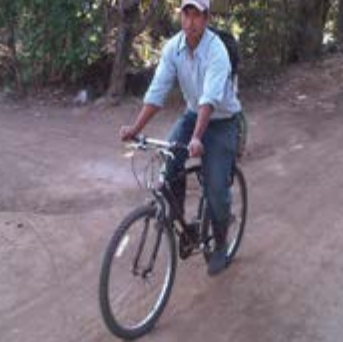
Héctor Rolando Sunuc Mututz is a 33-year old Guatemalan who has worked for the Catholic mission, The Apostles of Infinite Love, since he was a child. Born into a poor family, Rolando always needed to make money, forcing him to abandon his education after completing elementary school. With his family having so few resources, The Apostles of Infinite Love took care of and looked after Rolando throughout his childhood. Now, as an adult he is still with the mission and has become one of its key employees.
Rolando is married and has four children. He and his family live in the town of San Andrés Itzapa, 2km away from the mission. In need of transportation to and from work, Rolando’s only option initially was to hire a motorized tuk-tuk on a daily basis. However, considering his modest income, this was not a practical solution to his transportation problem. So, Rolando turned to FIDESMA, a Pedals for Progress partner that distributes bicycles, supports agricultural extension, and performs other services within the community of the San Andrés Itzapa area.
The bicycle Rolando received from FIDESMA and P4P provides him with his own method of transportation for his daily commute. Furthermore, with the goal of him and his family becoming fully self-sufficient, Rolando has acquired some land on which he grows corn, beans, and various other fruits and vegetables. However, the land is 10km away from his home. He is only able to tend to his garden and keep it flourishing thanks to his bicycle that allows him to make the 20km round trip once every week.
Rolando states that he is very thankful to FIDESMA and Pedals for Progress for their bicycle program. As affordable transportation options in his area are scarce, Rolando would have to walk for hours and hours to accomplish what he can instead do quite rapidly now that he has a bike. Above all, Rolando is just happy to have the ability to get to where he needs to go on his own terms.
Donate bicycles and sewing machines to developing countries
 In January of this year, CSM donated sewing machines to 4 women whose families are in poverty and cannot afford to send their children to school. CSM has also pledged to provide 2 machines to each group of 3 people who wish to form their own business. As well, 2 secondary schools in Kagera are slotted to receive sewing machines so they can continue to earn income to cover basic school needs for local orphans.