Category Archives: Sewing Partners

Ghana Says “Medaase”

Spring 2010 InGear

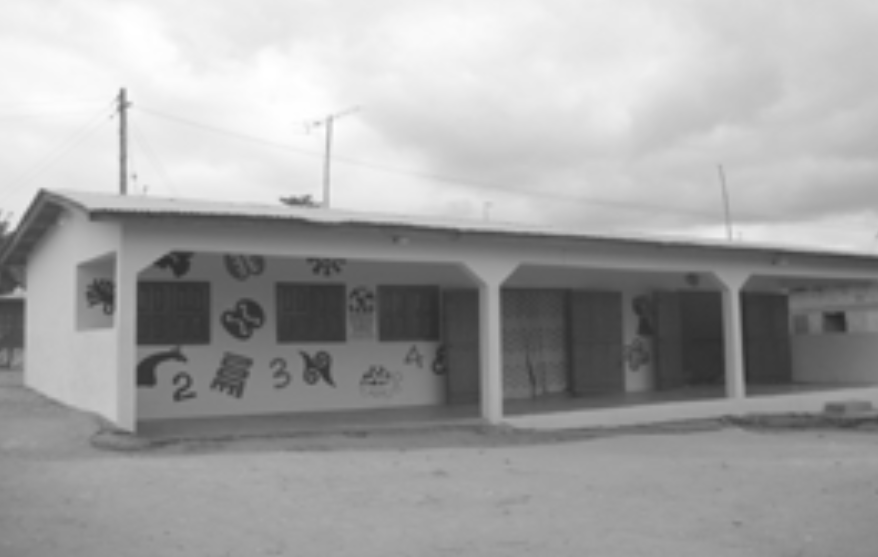
Project OKURASE building in Ghana

Project OKURASE, in Ghana, recently received their second container from Pedals for Progress, bringing the overall numbers shipped there to over 1,000 bicycles, 100 sewing machines, and even some soccer gear. These shipments have given a welcome boost to the Project’s mission to provide skills-training and formal education to vulnerable children and women, especially those affected by HIV/AIDS.

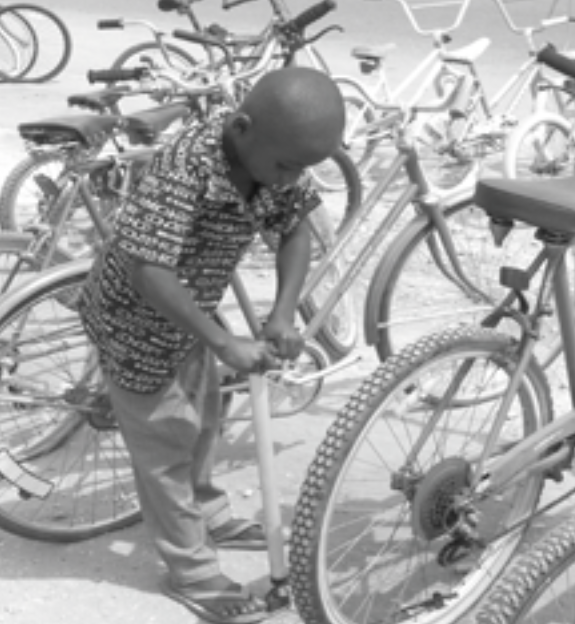
A number of undertakings and partnerships support the Project’s mission. Currently, one of the most dynamic initiatives is providing local women and children with a general education, vital job skills, and the opportunity for entrepreneurship. This is the area in which P4P has been able to most directly assist. With the bicycles received to date, the Project has been able to open two retail bike shops. The larger shop is located in the Dansoman district of Ghana’s capital, Accra, allowing the bikes to be distributed to the mass of people in the city. The second shop is located in the village of Okurase. Here, in addition to the main business of getting bicycles to those in need, interested villagers can learn bike repair and also the financial skills necessary to budget for a life-changing bicycle. The village has received the bicycle program very well.

But Project OKURASE’s name refers to more than just the village in which it is based. It is an acronym for the concepts its co-directors, Dr. Samuel Nkrumah Yeboah and Cynthia Cupit Swenson, PhD, see as the underpinnings of their mission: opportunity. For example, the distribution of bicycles supports this mission by helping farmers spend more time in their fields and less time in transit, by helping vendors bring more goods to market, and also by helping people from far-flung surrounding communities reach the Project’s educational programs.
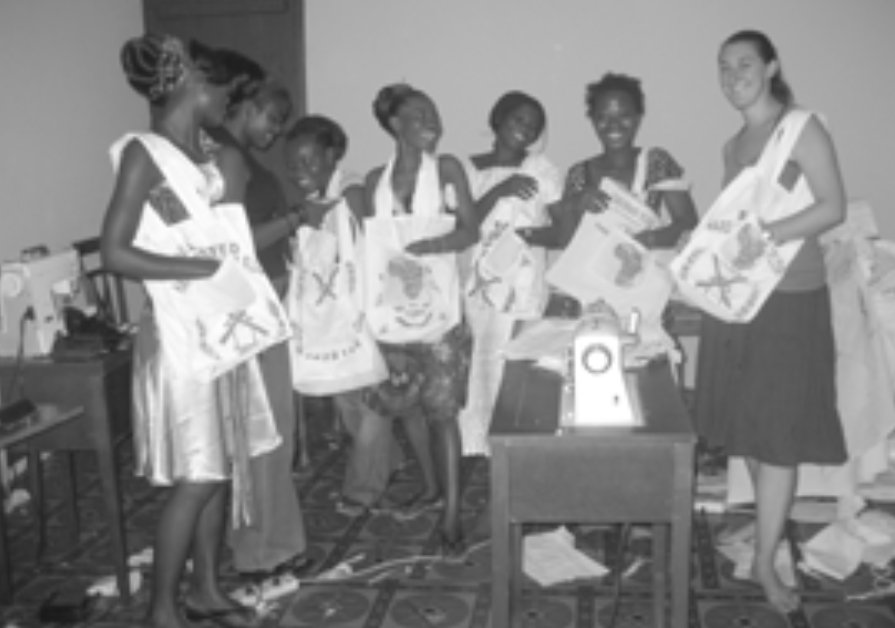
Students with their final products

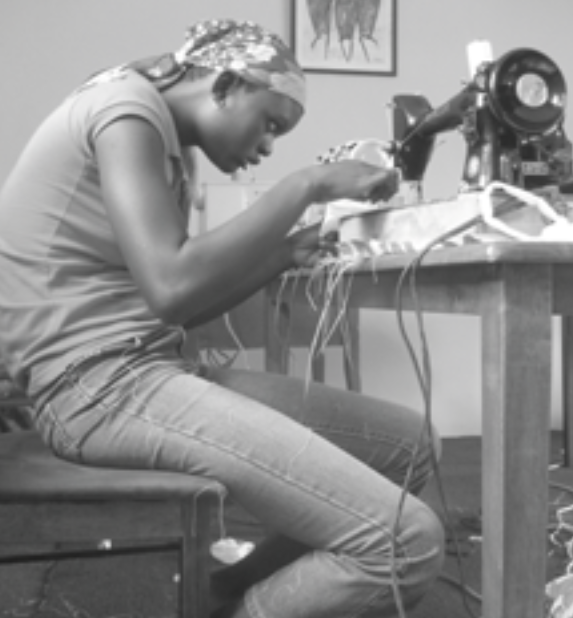
One of the most exciting of these educational programs is Rhion’s Sewing Centre. Established in Okurase upon the arrival of the first shipment of P4P sewing machines, it not only teaches young women needlecraft but also business skills. The Project’s U.S.-based volunteer creative director, Rhion Magee (who is also a creative director for DreamWorks Animation) has helped the Project design and develop marketable products handcrafted from readily-available recyclable materials. One example of what the women make and sell is an attractive and durable marketbag made of repurposed flour and rice bags. This and other products are available globally from the Project’s website.

The women of Rhion’s Sewing Center are also supporting one of Project OKURASE’s most inspiring efforts. In a partnership with a nonprofit group in Los Angeles, they are introducing an international line of children’s clothing. These clothes will be made from Ghanaian fabric, in Los Angeles, by women who are in recovery from difficult life situations. A portion of the proceeds will return to the women of Rhion’s Sewing Centre so they can produce more fabrics, and also make school uniforms for orphans and impoverished children in Ghana.
2010springGhanaSewing

Project OKURASE has also used P4P machines in their sewing outreach program. It is simply not possible for every interested woman or child to reach a place like Rhion’s Sewing Centre. So, the Project donates sewing machines to other local partner organizations. One such is the Street Children’s Academy in Accra, which serves hundreds of street children in its day programs. Until they received one of P4P’s sewing machines through Project OKURASE, they had not been able to offer sewing classes. Another donation was made to New Life Orphanage in the Central Region, one of Ghana’s poorest districts. Several of the residents there had expressed a strong interest in learning the seamstress trade, which had hitherto been closed to them for want of training and equipment.
2010springGhanaBike

It is strong partners such as Project OKURASE that make it possible for P4P to do its overseas work. The United States is rich in equipment and resources that developing countries are desperately lacking and, with our supporters’ donations, we are able to collect a considerable amount of it, new and used, for distribution overseas. But it takes local organizations in the destination countries to know how best to share out that equipment and those resources where they will do the most good. In supporting Pedals for Progress, our contributors also support the efforts of our partners, who live in those developing countries and have very real stakes in their economic development.

The people of Project OKURASE wish to give their thanks, or medaase, to Pedals for Progress and our supporters. We at P4P would like to say medaase to you as well. It would not be possible to operate without your continued assistance.
Project OKURASE, Ghana

Fall 2009 InGear

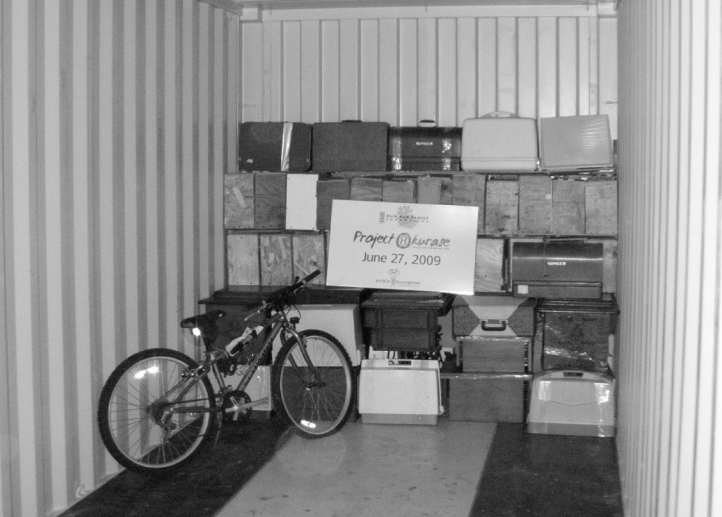
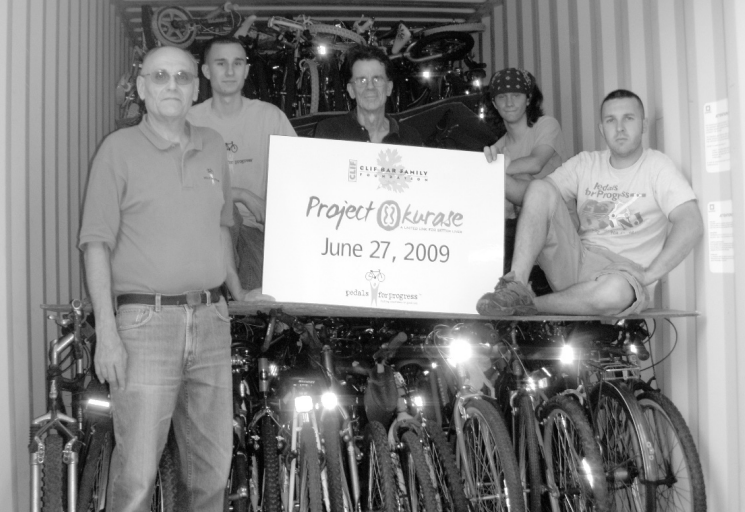
fall2009ghanaOkuraseContainerA member of the Board of Project OKURASE contacted P4P earlier this year specifically looking for the donation of sewing machines. P4P was very interested in the project and wished to be of assistance. Through the good graces of our Ghanaian partner, WEBikes, we were able to get twelve sewing machines delivered to Project OKURASE. While this first donation has initiated the sewing job skills training program, it quickly became evident that the need was much greater.

P4P had fifty sewing machines that we wished to ship to Okurase, which included 3 manual foot pedal machines donated by Furniture Assist, a New Jersey nonprofit which collects used furniture that is donated to disadvantaged families in New Jersey. The standard problem presented itself; the goods were available here, needed there, but how to pay for the transportation costs.

fall2009ghanaOkuraseLoadCrew

The cost to airfreight sewing machines is very prohibitive. In fact the cost to ship these fifty machines air freight is not that much less than the cost of shipping a full container of bicycles. This is where Joey Penman, a strong supporter of Project OKURASE, and the Clif Bar Family Foundation, a major supporter of Pedals for Progress, came in. Together they donated enough funding that added to existing Project OKURASE funds made it possible to ship not only the fifty sewing machines, but to allow P4P to place those machines in among a full container of bicycles. Certainly receiving an unexpected 480 bicycles in addition to the 50 sewing machines will greatly change the small village of Okurase, located in the West Akyem district of the eastern region of Ghana.

The four overarching goals of Project OKURASE are to develop:

  1. A family-based model of caring for orphans and vulnerable children.
  2. A model for job and skills training for youth, young adults, and women in the arts and building industry.
  3. A model for family and village-based formal education with special emphasis on female children.
  4. A model for a community of green design or sustainable architecture.

For more information: Project OKURASE Economic Self-Sufficiency

Nicaragua Sewing Machine Program

In the developing world, in the hands of someone who knows how to use one, a sewing machine means instant income. The following two profiles are fairly typical examples of how sewing machines help people in the developing world, whether in Latin America, Africa, or Eastern Europe.

s4Juan Carlos and Migdalia Dávila

For years, Juan Carlos Dávila worked by day as a receptionist at a private institution in Jinotepe. His wife, Migdalia, is a skilled seamstress. At night, he helped her with the sewing to earn extra money for their family.

His receptionist salary was barely enough for them and their 11-year-old son to get by on. As their tailoring business grew, it was their hope that one day they could come to depend on it as their sole income. But a second sewing machine, a new one, was far too costly.

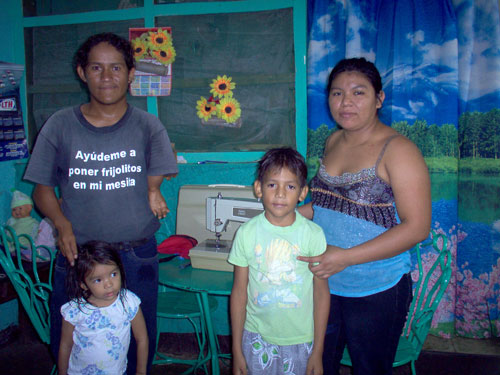
In November 2008, Juan Carlos was suddenly laid off from his receptionist job. Today, he and Migdalia survive because they can both sew, and because they were able to get a second sewing machine from Pedals for Progress through our partner organization Ecobicicletas Rivas. Today at their tailor shop, they make men’s suits, women’s dresses, curtains, table linens, and they are currently searching for an employee or two to expand their business.

nicaraguaElvis_panama016lgElvis Cruz

Elvis Cruz is 25 years old and from Managua, Nicaragua. He was born disabled; both of his arms are severely deformed. While this provided certain challenges, it hasn’t kept Elvis from working, playing baseball, or otherwise living a full life. Married with two young children, Elvis works as a flagman directing traffic in Managua. But his income wasn’t enough to adequately support his family. After making a public appeal on a local TV show for the opportunity to earn more money, his wife received a sewing machine from one of our partners. A talented seamstress, now she works from their home earning extra income for their family.

P4P and the EIT Take a Position in the Future of Uganda’s Economic Development

by Charles Mulamata, Founder and Co-Director of EIT

At the Entrepreneurship Institute of Technology (EIT), formerly known as the EIAAT, we believe that entrepreneurs are the key to the future and that there is an imperative need for young Ugandans to learn viable skills and to be able to earn a living using them. The spirit of entrepreneurship is that one identifies opportunities, builds a business based on these options and creates jobs that transform the community. EIT helps these entrepreneurs find ways to do so, by providing training and helping identify sources of start up funds.

Uganda is on target to meet its goal of halving poverty and hunger by 2015. Uganda’s, according to the U.S. government’s global hunger and food security initiative Feed the Future, “is one of the fastest growing economies in Africa, with sustained growth averaging 7.8% since 2000” and a “2.9% growth in agriculture.” Despite these recent gains, Uganda still suffers from the hardships of unemployment, poverty and food insecurity. The average Ugandan must live on less than $1.25 a day and thirty-eight percent of children who are under the age of 5 suffer from what is called stunting (chronic malnutrition). What is important to note is that the population of Uganda is growing at the second highest in the world (3.2%). This boom has led to 75% of the population being under 30 years old, with fifty percent under the age of 15. Imagine the societal ramifications if these young adults remain unemployed, hence, unproductive and idle.

In order to stimulate entrepreneurship and job creation in Uganda, we need to celebrate success stories more. We also need to re-orient the education system to make it relevant to the needs of today, which are enterprise, wealth creation and production. This will change the mindset of young people and make them understand that indeed the traits of a successful entrepreneur can be acquired.

Studies also show that when gains in income are controlled by women, they are more likely to be spent on food and children’s needs. When investment is in women’s businesses, benefits are amplified both within the family and across generations. At the Institute, we offer courses in tailoring and provide the individual’s first sewing machine. These machines are available because of our partnership with P4P and their continued dedication to making affordable, reliable equipment available to us. Students learn the value and importance of saving income by allowing them to pay a regular installment towards the permanent acquisition of these sewing machines so that when they graduate from the tailoring class, they already own the equipment and can immediately open a tailoring business and begin to earn income that will enable them to expand the business by investing in more machines. Applicants not only learn how to use these machines but also how to ensure productivity by keep a schedule of regular servicing and maintenance. This, we have found, makes the students learn to use the sewing machines carefully, creating a tradition of responsibility and focus, which they carry with them into their working lives.

There never seems to be sufficient capital to be an entrepreneur, especially on your first venture. The Institute’s students are also assisted in identifying sources of funding. The Ugandan government has set aside 44 billion shillings in the 2011–2012 budget for the Youth Entrepreneurship Venture Capital Fund. Startup businesses and very small-scale enterprises can be given 100,000 to 5 million shillings. With Uganda’s massive unemployment, 100,000 shillings (roughly the equivalent of $35 U.S. dollars) can make a huge difference in helping a jobless graduate get started. There is less emphasis in Uganda on coming up with a truly unique idea or a revolutionary product than there is on securing ways of delivering simple solutions to ordinary problems.

There is no need for a perfect business model, but there is demand for those who work hard, and are willing to stay the course and gain experience and expertise. Public opinion is often a detriment to Ugandan women venturing out on their own. With the skills they learn and the pride of having earned their first and subsequent sewing machines, “What will people say?” is replaced with “How much have I earned this week and how well fed is my family?” It is the end result that counts. P4P and EIT offer the starting point so that young Ugandans generally and women specifically may take the lead.

Thank you David & Pedals for Progress!

by Liz Deppe

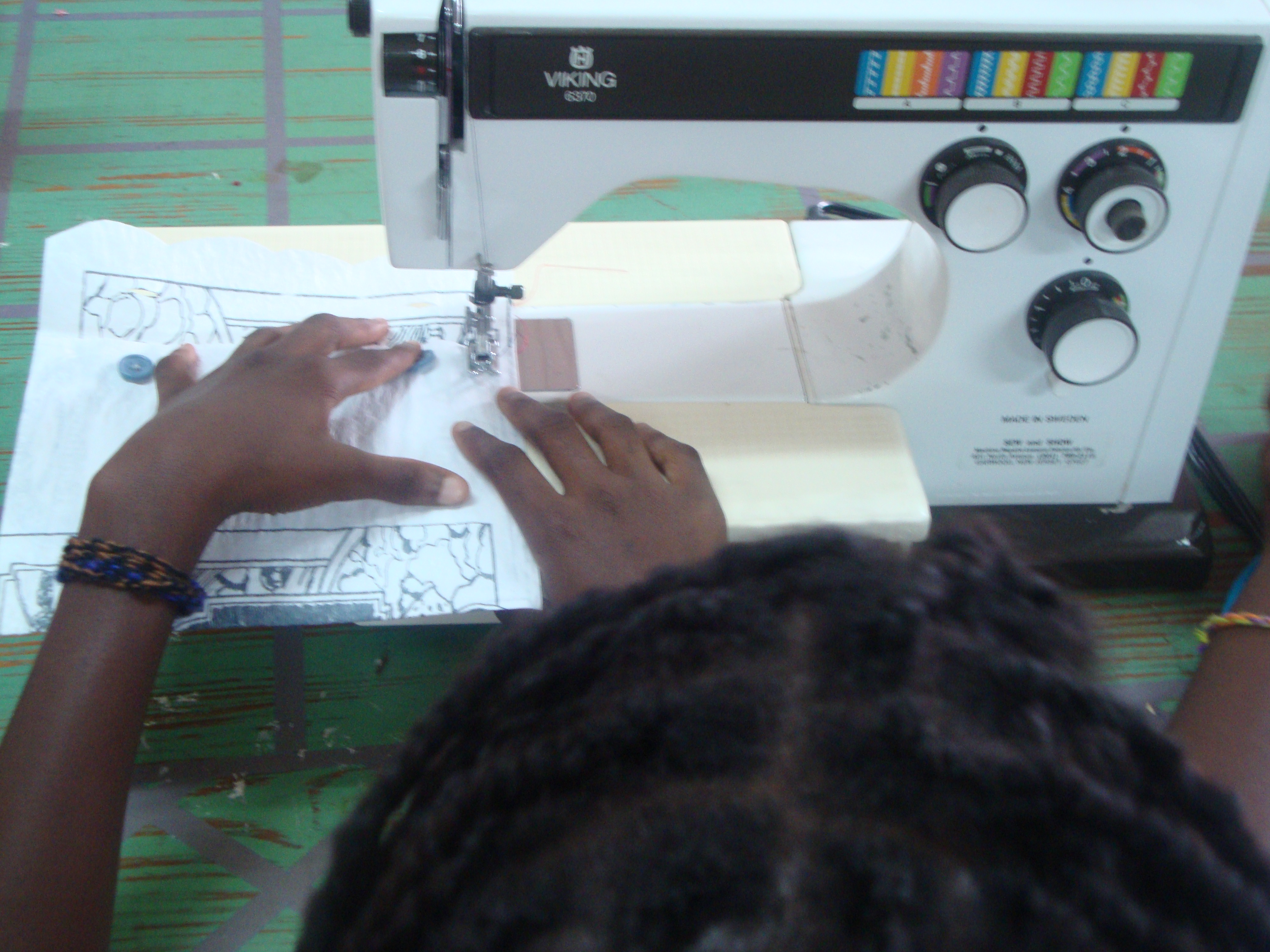
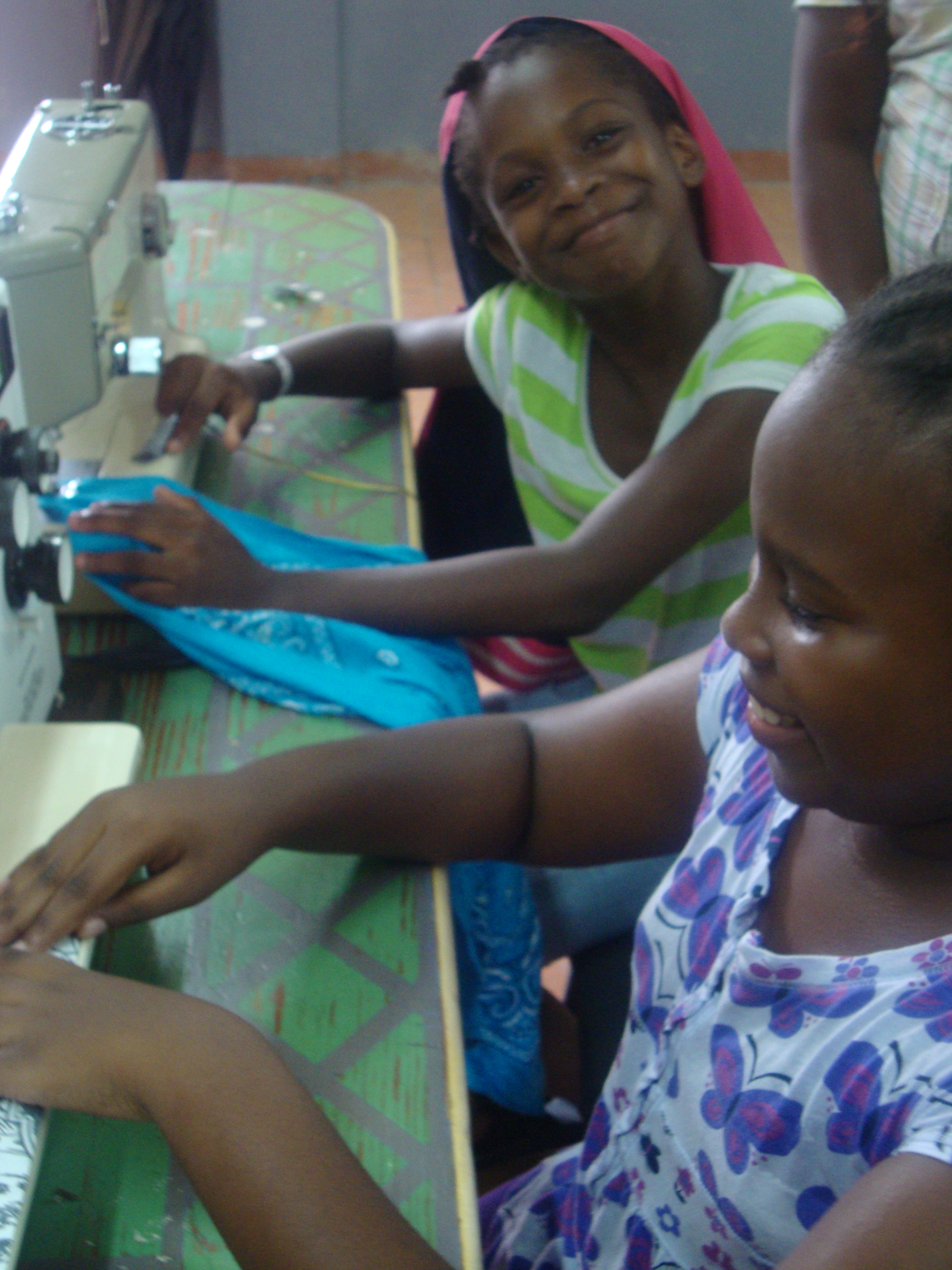
The gracious donation of 20 sewing machines from P4P to the Barrouallie Secondary School in St. Vincent has opened many doors for many students. We have been able to integrate sewing into the school art curriculum, which allows students to learn a new skill which they can carry through their entire lives. Although the program has just started, it is obvious that many students will use and grow their sewing skills as time goes on, it may even (hopefully!) open job opportunities for some.

We have also been able to use the sewing machines in extra curricular settings. The younger students have enjoyed making projects during 4H. They not only learned how to sew, but created various projects out of fused plastic bags, learning the value of recycling. This was the first project we did using the sewing machines with the younger students and it was a great success. The machines were also used at a summer camp, where the campers created bags out of old flour sacks once again learning sewing skills and the values of recycling.

I cannot begin to thank David and P4P for the kind generosity. The students’ excitement and eagerness has guided our program to a wonderful start. I cannot wait to see how it grows! Thank you David & Pedals for Progress!

Liz Deppe
U.S. Peace Corps Volunteer
St. Vincent and the Grenadines
2011-2013

P4P and EIAAT Aid in the Expansion of Vocational Training Courses in Uganda

by Patricia Hamill
Readers may recall from our spring newsletter the story of an ambitious and successful Ugandan woman, Jane Kigoye. She was able to save her family from poverty by expanding her small tailoring business with the purchase of sewing machines from one of our partner programs, the Entrepreneurship Institute of Applied and Appropriate Technology (EIAAT). Not long after the newsletter went to print, we received word from Charles Mulamata, Founder and Head of the EIAAT in Uganda, that a vocational school that he was influential in developing within the Sacred Heart Primary School has developed into a successful and continuing program for the students.

In 2005, Charles’ two daughters, Olivia and Vivian, were studying at Sacred Heart. The school, located in Kyamusansala, Masaka District, in southern Uganda, had a tailoring section run by a woman named Nalongo Christine Namugerwa. The school’s only sewing machine was used mainly to mend school uniforms and other clothes. During a parent meeting, it was requested that parents should come out with constructive ideas and support in kind to further develop the school’s vocational programs. Charles thought it would be advantageous to arrange the acquisition of more sewing machines for the school so that the young could be taught a skill at a young age. Since the EIAAT had been receiving sewing machines from Pedals for Progress, they had some machines available in stock.  In order to initiate the process, Charles offered the school 4 electric sewing machines. The EIAAT could not give away more; operating and shipping costs are such that they needed to earn income from the sale of the rest of their machines. The school headmistress, Sister Annet Nankusu, was very grateful for the initial donation of these machines but knew that there would have to be more if the program was going to be accessible to multiple students across grades.

There were stumbling blocks to furthering the development of the program and acquiring more machines. According to Sister Annet, most parents are “struggling low-income earners, who may not be able to pay a full cost of a sewing machine. A few parents who are middle class earners would be able to help but they are unable because of the many family dependents as a result of poverty and AIDS/HIV consequences (orphans and widows). The only way we sometimes get parents help us to get money for machines is during our school meetings when we beg them to contribute to this noble part of education of our children.” As a result of these pleas and the dedication of the parents to do what they could for their children and the school, Sacred Heart purchased a total of 6 machines from the EIAAT. With this generosity and motivation, the school was able to further its plans and the EIAAT was able to earn income to cover necessary expenses.

Because of EIAAT’s initiative, the school now has 18 sewing machines and gives formal tailoring lessons. Of the more than 500 students, at least 90 students attend these classes. They learn tailoring starting in the third grade and continue through to the sixth grade. Sister Annet emphasized that there is no tailoring class in grade 7 because this is a very busy year for finalizing primary school coursework.

The students who complete these courses adeptly design and tailor skirts, blouses, aprons, table cloths, pillow case covers, among other useful items. This combination of education and practical job training is essential for the country’s economic development. A perfect example of this direct connection is Sister Annet’s proposal to start selling the products of this section as a means of raising money for the school and the students whose products are sold. These tangible rewards help the students realize the advantages of enterprise and income earning at a young age. The pride and joy these kids have when they present the completed products is indisputable. While acquiring a certificate of academic achievement is very important, the concrete and immediate reward of earned wages offers more comprehendible representations of success. These successes also show the parents the advantages of teaching life skills alongside academics and encourage them to work together to include the school in their community-building enterprises.

Another economic benefit of this vocational program is that the school is able to retain a highly skilled staff to train the young and assist the original tailoring teacher Nalongo Christine. She is very happy because, with this division of the school and availability of machines, she is now allowed to earn extra income by tailoring activity such as making school uniforms. She can also take on other small jobs. These opportunities and the earning of a proper living wage give her satisfaction and incentive to stay on the job. In the children’s eyes, she is not only a teacher but an example of the successes that come from hard work, academic and practical knowledge, and a supportive community.

According to Mr. Mulamata, the EIAAT believes that vocational studies need to be recognized as major contributor to “industrialization, poverty abbreviation, and development of a nation.” This is quite true and more people and organizations like P4P are finding ways to ensure that their work is not exploited or neglected. Sister Annet states this point most succinctly: “I think today, it is very difficult to get honest people who will put in use each coin given to them to help the poor people. . . . It is most likely that small groups of people [or untried organizations] may fail to operate their services to the poor. My advice is that if our friends would like to join in the education of the . . . child, let them choose wisely the institutions they can channel their funds and help of any sort.”

20 Sewing Machines Sent to St. Vincent 5/12/11

My name is Elizabeth Deppe. I am an American, but am currently serving as a volunteer in St. Vincent for two years. I am volunteering at Barrouallie Secondary School. The school has students ranging from age 12 to 18 and serves over 500 students. Universal Education is fairly new to St. Vincent, so many students that may have not otherwise been accepted to a secondary school are now able to attend. Many students are the first in their family to attend a secondary school.

As a volunteer with the school, I am helping in the areas of literacy and art education. I feel extremely blessed to be working with the students, the principal and the faculty. They are incredibly hard working and as their motto states, Striving Ever Higher. A major problem facing students in St. Vincent is a lack of resources. Many students are dedicated and hard working, but cannot learn certain trades and skills simply because there is no access. For example, students must purchase their own supplies for art classes because there is not enough money to fund art supplies. As an art education volunteer, this can become extremely heart breaking and frustrating when only a small fraction of the class is able to purchase the recommended supplies for a certain project.

The Principal, current art teacher and I are working on creating an art program that teaches the students skills they can use, possibly to make some sort of income, in the future. We would love to introduce machine sewing to the students as it would be a great way for them to learn creative expression and a wonderful skill for them to have later in life. There is a lack of jobs in St. Vincent, and sewing would allow students to create their own small businesses. Students could create souvenir items that they could market to tourists. Students could also learn to create everyday items and clothing that they could sell to other Vincentians.

Sewing would also serve as a creative outlet for the students. Many students are faced with difficult family situations and learning an alternative way to share their feelings would be a great resource for them. Learning creativity through sewing will also teach the students problem solving skills and to look at situations in a new way.

A donation of sewing machines would be a great asset to the students and the community of Barrouallie. The students will not only have fun, they will also learn a new skill and stretch their creativity and imaginations. If you believe this project may be something that Pedals for Progress is interested in working with I would love to further discuss the school and the situation with you.

Thank you for your time and consideration.
Liz Deppe
U.S. Peace Corps (St. Vincent)