Category Archives: Sewing Partners

Teaching Sewing in Nicaragua

Spring 2005 InGear

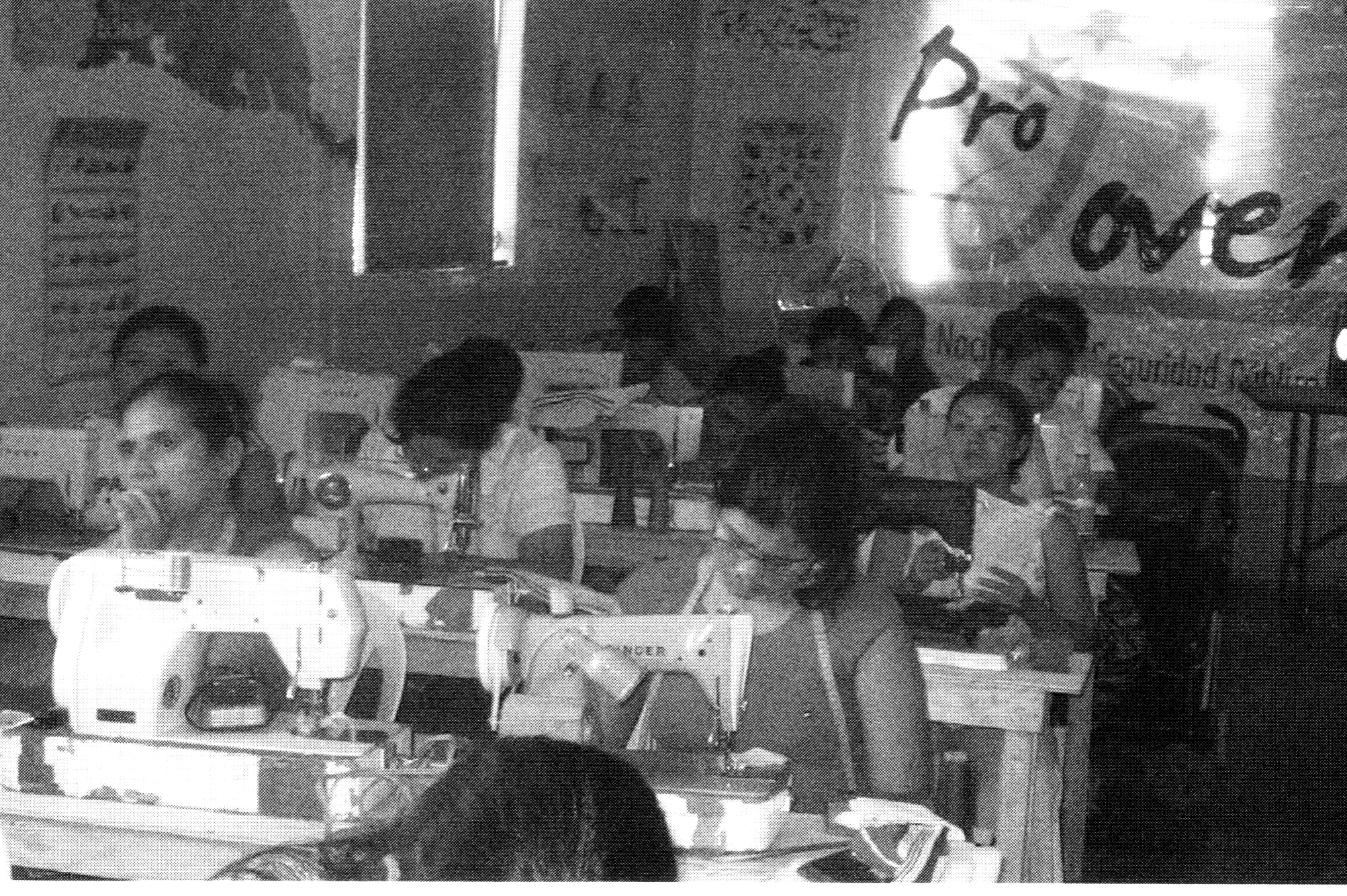
Pedals for Progress is a non-profit corporation devoted to global economic development. It has strived to improve economic prosperity in developing communities through a simple, yet challenging, bicycle collection, shipping, and distribution process. Our organization, however, is much more than biking enthusiasts trying to help others. Over the years we have supplemented our bicycle shipments with other products to help achieve the same economic development goals. And the single most significant item has been the portable sewing machine. Including sewing machines in our bicycle shipments has been a tremendous success and one true success story has involved Profesora Rosa Palacio Hernando.

spring2005RivasSewing
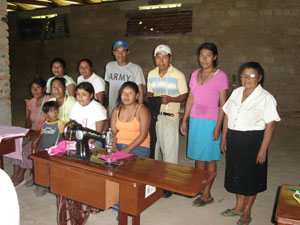
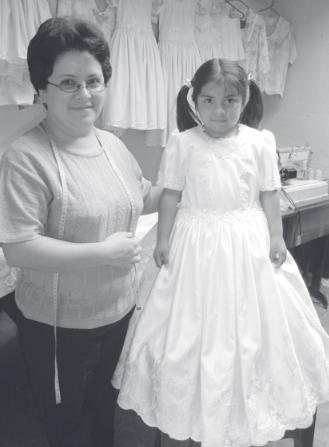
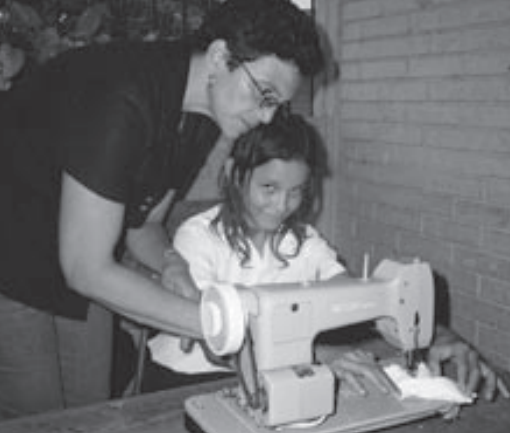
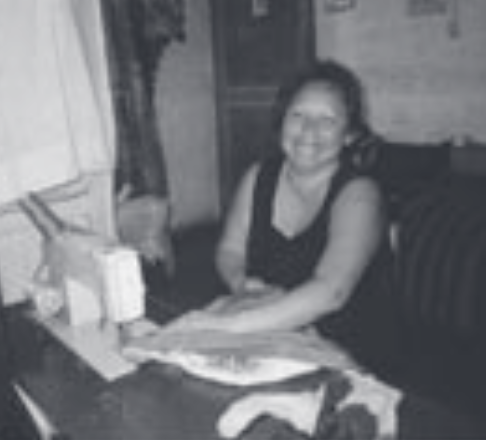
Rosa, a 5th and 6th grade elementary school teacher at the General José Maria Montaya School, in Rivas, Nicaragua, has been sewing all of her life. Rosa is taller than the average Nicaraguan woman, and, while growing up, “store-bought” clothing never quite fit her tall frame. At an early age Rosa’s mother taught her how she could alter “store-made” clothing to fit her better and Rosa soon discovered that she had a natural talent for sewing. Initially she took great pleasure in altering store-bought clothing and soon she began sewing her own clothing.

Rosa’s sewing activity was always a personal activity, her personal hobby, but that all changed one day when one of her student’s parents came to her elementary school and offered working sewing machines to the school if sewing classes would be included in the school’s curricula. When Rosa heard this news, she rushed to the administration office where she offered to teach the classes during the day and volunteered to teach community education sewing classes in the evenings.

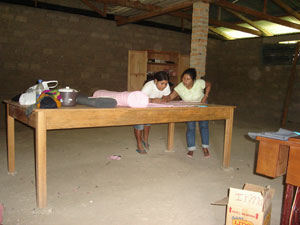
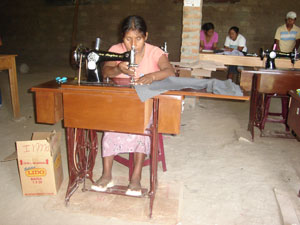
Rosa now teaches the basics of sewing to 11–12 year-old boys and girls during the day and to adults, as necessary, several evenings each week. The adults who come to the school typically know how to operate the machines, so they use the machines for their own family needs and to produce different items to sell in the marketplace.

For Rosa, this work has become a dream come true. She is able to combine her passion for teaching with her lifelong love of sewing. She originally ventured into teaching because she wanted an opportunity to help make a positive change in her community. She remains dedicated to being a 5th and 6th grade teacher because educating children is the future of her community. But now she gains “extra” satisfaction by teaching sewing to both children and adults, and volunteering her time to keep the donated Pedals for Progress sewing machines fully functioning. Her efforts are very clearly and positively impacting the lives of many people in Rivas, Nicaragua.

Guatemala Success Stories

2005springGuatemalaBrendaBrenda Griselda Carranza

30-year-old Brenda Griselda Carranza Pérez lives in a small village in Chimaltenango, Guatemala. Working as a seamstress sewing by hand, she was barely making enough to live. FIDESMA, our partner in Guatemala, imported 41 sewing machines from Pedals for Progress in the last three years. Brenda considers herself extremely lucky that she was one of the persons who received one of the sewing machines. She paid about $43 US for the machine and has in 7 months paid for the machine many times over. In fact, working five hours a day on the machine she now makes enough money to support herself and is putting money aside with the hopes of purchasing a second machine. This is just one machine of hundreds shipped by P4P that has allowed a person to help themselves.
2005springGuatemalaCarmenCarmen Castillo

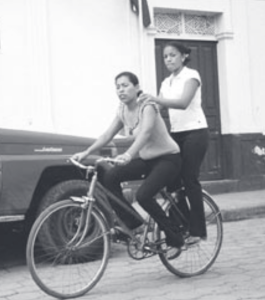
Carmen Castillo is a 37-year-old single mother of three young girls for whom she is the sole provider. She and her daughters live in Nandaime, Nicaragua, where Carmen’s job as a maid brings 1000 cordobas of income into their household each month. Recently, in order to pay for an urgent increase in living expenses, Carmen sold the bicycle she had been using for 2 years and acquired (from one of her employers) a replacement bicycle – a high-value mountain bike at the bargain price of 650 cordobas.

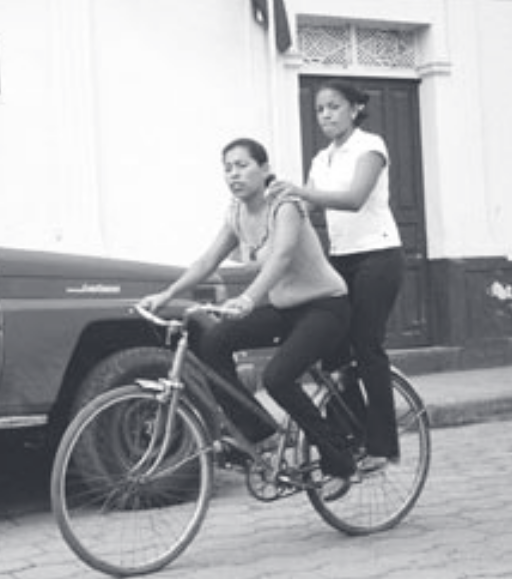
She rides this bicycle every day – minimally 4 miles round trip from her house in the “campo” (city-outskirts) to the center of town. Since the mountain bike is so strong, Carmen can carry a second person to see a nurse/doctor or to the marketplace; or she can transport firewood from the hillsides for cooking. While the physical effort Carmen exerts (the surtax of owning two wheels!) is significant, cycling gets her to work reliably, assures her the security of regular income, saves 6 cordobas daily bus fare, allows her to take things into the market to sell and makes her feel healthier. When her bike breaks down, occasionally, Carmen goes to a local mechanic – but not for a flat tire. She felt it necessary to learn how to patch inner tubes herself; thus, she can save additional bus fare!
2005springGuatemalaPaolaPaola Roxana Juárez

Getting her first professional job as an elementary school teacher was a great step forward for 22-year-old Paola Roxana Juárez Garcia. Her great joy became concern when she realized that the school to which she was assigned was 5 km away from her home and public transportation did not exist. She went to FIDESMA because she knew there were bicycles available and was able to purchase a sturdy mountain bike for $15. Monday through Friday she uses her bike to commute back and forth to work and on weekends uses the bike for shopping and meeting with friends.
2005springGuatemalaSandraSandra del Carmen Hernández

Sandra del Carmen Hernández has owned her bicycle since she was 10 years old. Her father bought it for her originally to go back and forth to school; however, during the last six years there is no member of her family who has not had the occasion to use it. In fact it is often the commuting vehicle of the whole family – dropping off and picking up people much as Americans do in a minivan. This minivan, though, is a mountain bike that someone pedals. CESTA, which obtained this bike from P4P, has imported over 13,000 of our bikes since 1995.
2005springGuatemalaRosendoRosendo Cuadrais

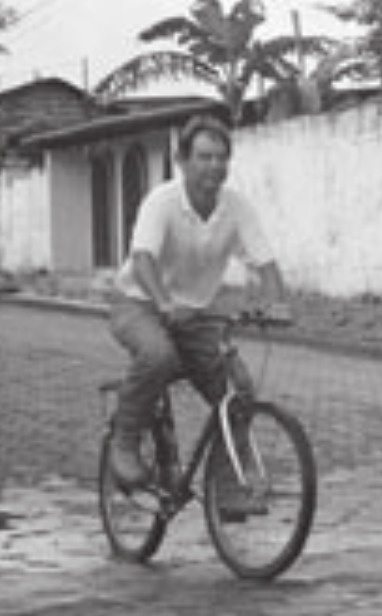
Rosendo Cuadrais is a 65-year-old security guard at the Villa Hermosa in Diramba, Nicaragua. For seven years he has used a mountain bike (purchased for 750 cordobas) to go from his house to his work – bicycling at least 7 miles daily. Fortunately, with the climate in Rivas, he can use the bike every day all year round.

While commuting efficiently to his job is important (he could feed himself on the cost of daily bus fare), Carmen says the most important reason for having a mountain bike is to use it for getting out into the countryside (where the roads are dirt) to visit his daughters, lend it to them when possible and to go shopping in the market without wasting money on the bus. Thus, Rosendo’s bike is in use constantly. He likes the mountain bike’s versatility and sturdiness. He uses it not only to bring back firewood from the hillsides for cooking, but also to transport him rapidly all around the city and countryside with minimal expense. Because he doesn’t have many tools (and wouldn’t know how to use them if he did), whenever maintenance of the bike becomes an issue, he brings it to a mechanic in one of the many small shops in the area.

CESTA: P4P Partner in El Salvador

24,457 bikes (1995–2012) and 536 sewing machines (2000–2012) shipped

CestaElSalvadorlogo2CESTA stands for the Salvadoran Center for Appropriate Technology. CESTA was founded in 1980 by a group of Professors from the University of El Salvador as a professional organization to promote forms of technology appropriate to the social and environmental conditions of El Salvador. Now the organization is a public foundation with the capacity to execute environmental projects.

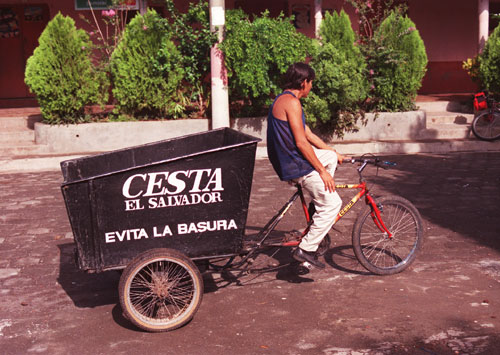
Bicycle converted to a garbage truck

The main objectives of CESTA are to:

  • Encourage Salvadorans to adopt lifestyles compatible with the sustainability of the country.
  • Protect humans, animals, and habitats from deterioration and destruction and to enhance their existence by recovering lost ecological balance.
  • Include different sectors of society in the fight for sustainability.

CESTA’s areas of interest include agriculture, forest biodiversity, climate change, and solid and toxic waste.

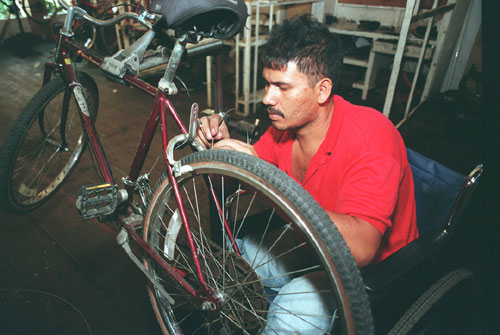
One of CESTA’s oldest programs is its bicycle workshop, EcoBici, which teaches bicycle repair and encourages bicycle use: for transportation, for its low cost, for its health benefits, and for its benign environmental impact.

Our Training Centers

CESTA training center

Thanks to the support of organizations like Pedals for Progress and Bikes not Bombs, every couple of months we receive containers of bicycles that are used as educational instruments for our students who are learning how to repair bicycles. The training period is no longer then 6 months; within this time they must learn everything from aligning a tire rim to general bicycle repairs.
 

Click here for an English language description of CESTA from Común Tierra.