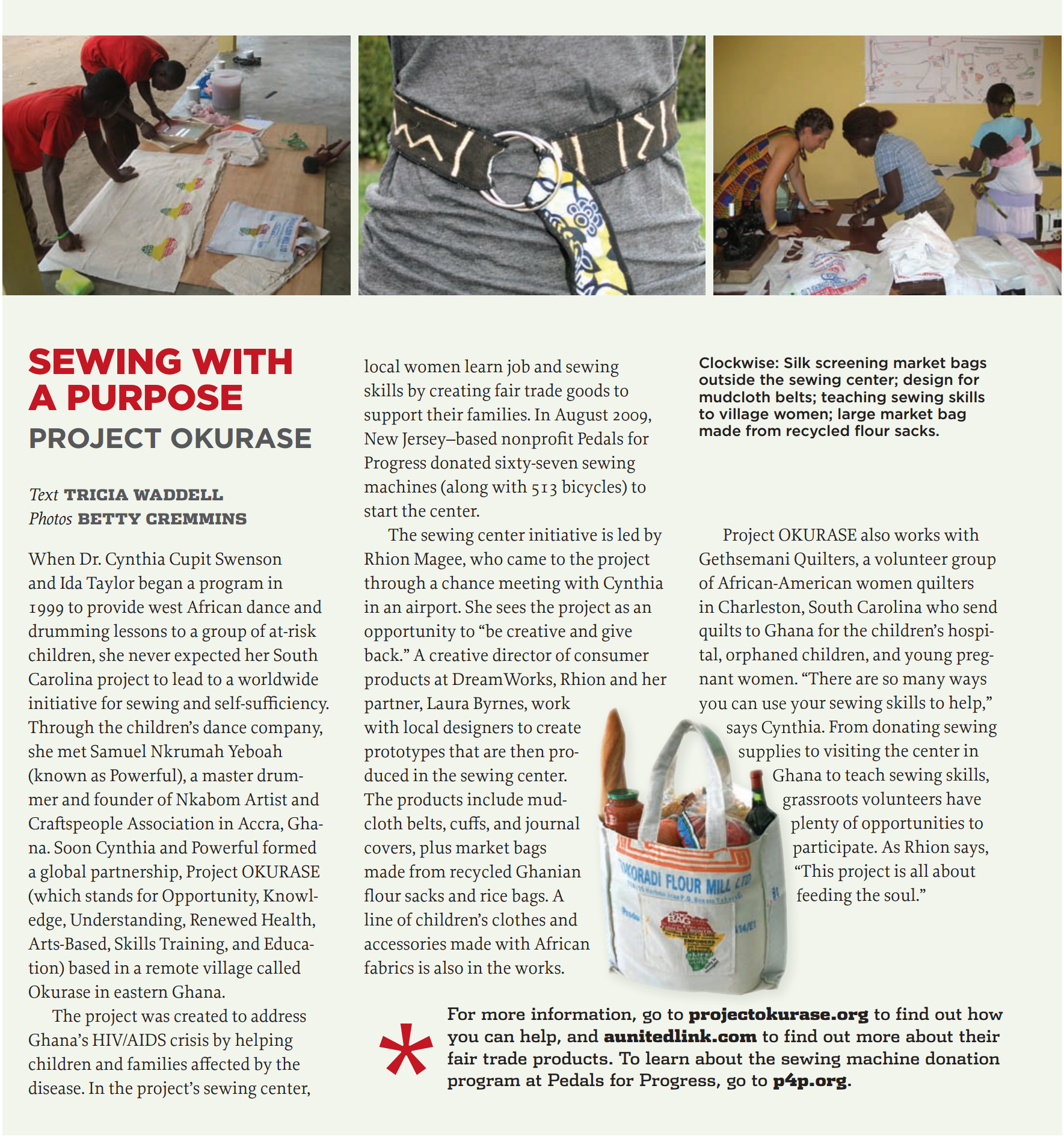
From Stitch Quilting Arts, Spring 2010, page 9
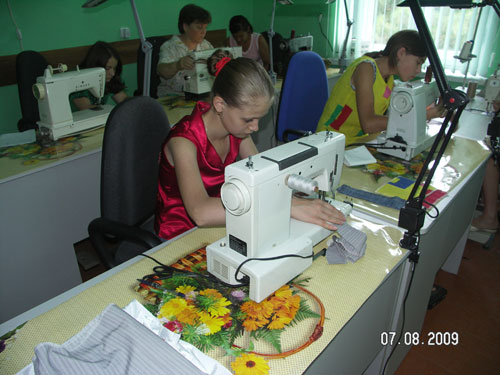
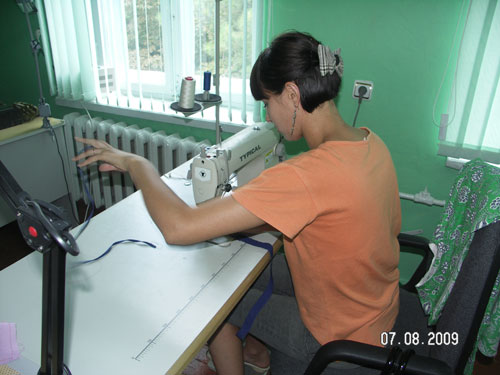
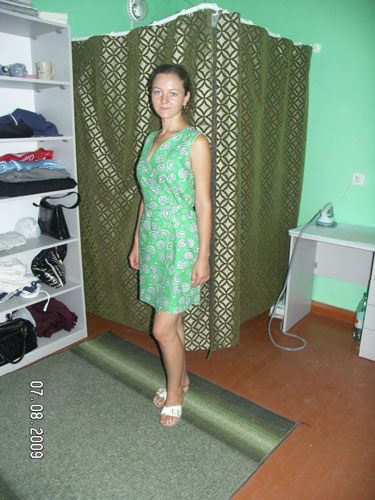
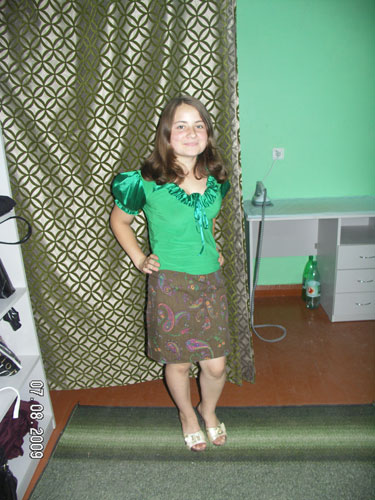
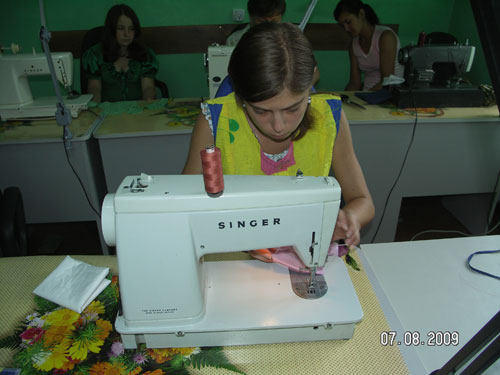 Consult-Nord, a local Moldovan NGO established to promote local economic development in Pelinia, saw the potential results that Pedals for Progress’s bicycles and sewing machines could provide and requested to become a partner. Consult-Nord started selling bicycles this winter after receiving a shipment in late December of 2008. The good quality, affordable bicycles are now available at a shop set up by Consult-Nord, offer numerous opportunities to villagers that otherwise would be inaccessible to them.
The photographs are from the sewing workshop at Consult-Nord from the first shipment.
Read more about Consult-Nord and Moldova in the Fall 2009 InGear.
 |
 |
 |
 |
Spring 2009 InGear
Over the years, word got around that, in addition to bicycles, we were recycling used sewing machines. This practice started somewhat by accident, and gradually became a regular part of our work. Initially, “Treadles for Progress” simply meant sending along several refurbished sewing machines with our bike shipments. Since sewing machines are encased and fit neatly in the remaining space in our shipping containers, essentially, they were stowaways with the bike shipments.
But requests from our overseas partners for sewing machines separate from bikes increased. Unfortunately, we couldn’t afford to do that. But we didn’t exactly give up on the idea either.
Shipping bikes is easier, and less costly per unit, than shipping sewing machines. First of all, bikes are light, sewing machines are heavy. Second, shipping containers come in two sizes, 20-foot and 40-foot. Forty-foot containers are the most cost effective for us, and we collect enough bikes to regularly fill them. Used sewing machines, on the other hand, are much less available than used bikes, so we can’t easily fill containers with them. In order for us to get sewing machines overseas, separate from bikes, air freight, which is very expensive, is our only option. This is why we usually send only six or seven machines at a time.
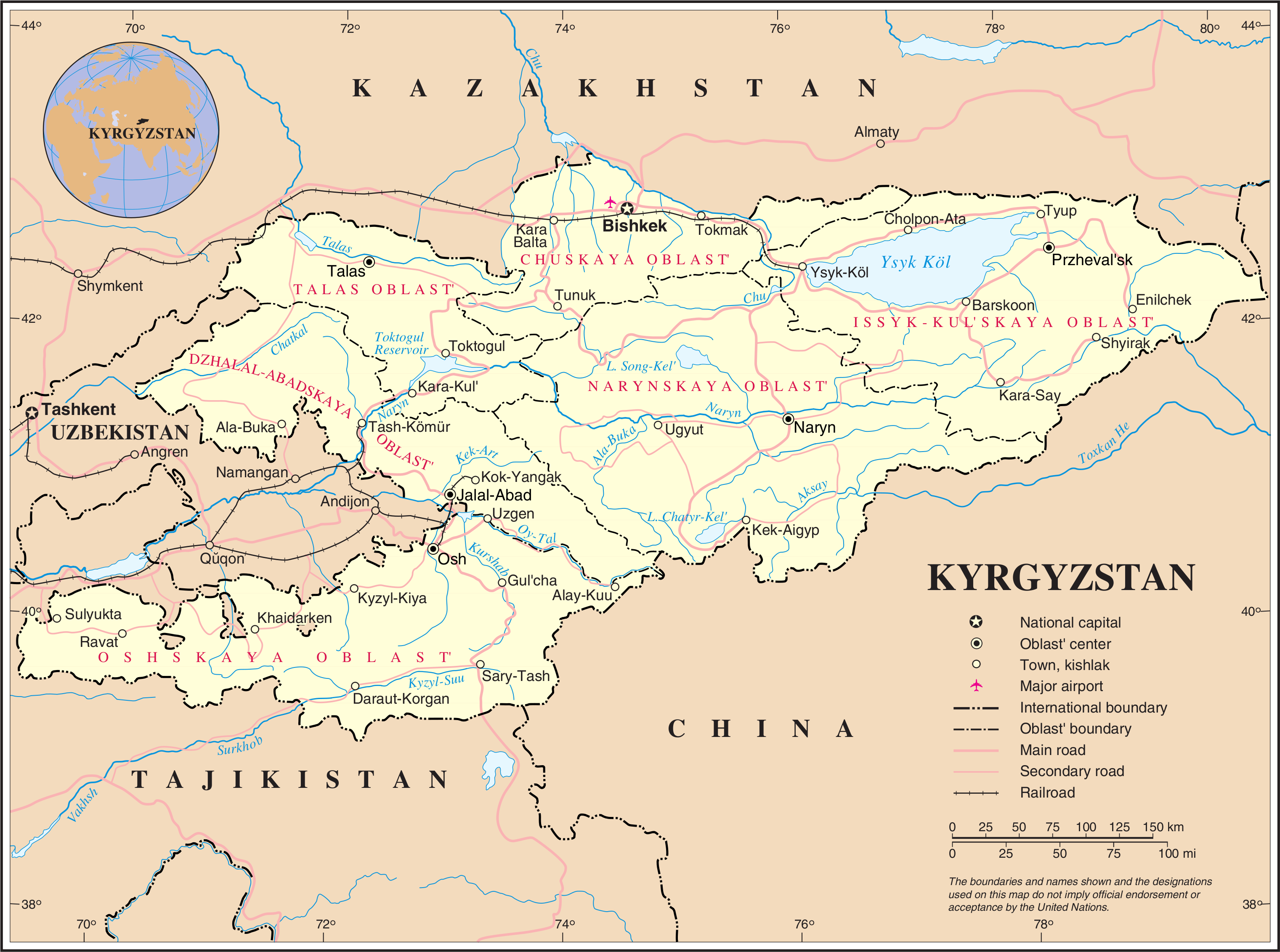
Last year we developed a partnership in Kyrgyzstan. Our partner there, a community organization, wanted sewing machines they would own and on which they could train locals who wanted to become tailors. By selling the products they made, they could help offset the shipping costs. This, along with a grant from the International Monetary Fund, enabled us to air freight 25 sewing machines to Kyrgyzstan.
The success of this program gave us the impetus to start other sewingmachine-only programs in a similar manner. We now have two more, one in Nicaragua, the other in Uganda.
In order to promote our sewing machine program more, we’ve invited several women’s groups in our region to collect sewing machines. Along with this, Vorhees High School in Vorhees, New Jersey, is enlisting their home economics club to do the same.
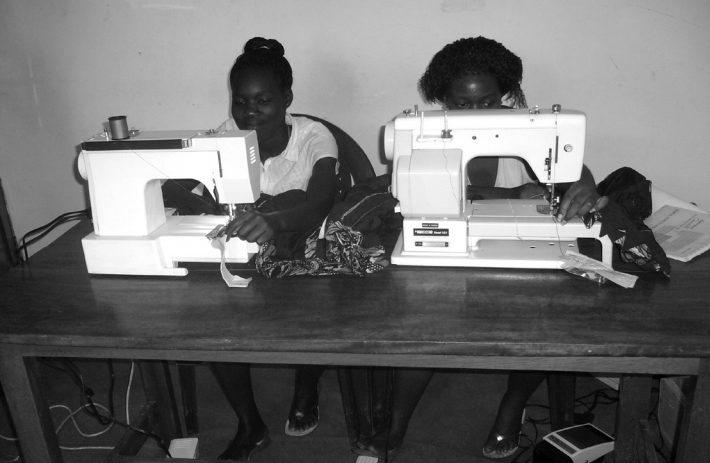 In Uganda, our partner organization is the Malaba Youth Center, which caters to both in- and out-of-school youth in this volatile region along the Uganda-Kenya border. Youth here are at especially high risk of contracting HIV/AIDS, particularly those who drop out of school. As one might expect, job opportunities in this region are few. And they are fewer still without a high school or vocational education. The sewing machines we send to the Malaba Youth Center are used specifically for vocational training. Students learn to become tailors, but they can also begin to earn an income as their skills develop. Along with this, they are also keeping themselves safe from the temptations that lure so many of their peers into troubled lives. And once they have a valuable skill, they can remain free from the poverty that would otherwise define them.
In the developing world, in the hands of someone who knows how to use one, a sewing machine means instant income. The following two profiles are fairly typical examples of how sewing machines help people in the developing world, whether in Latin America, Africa, or Eastern Europe.
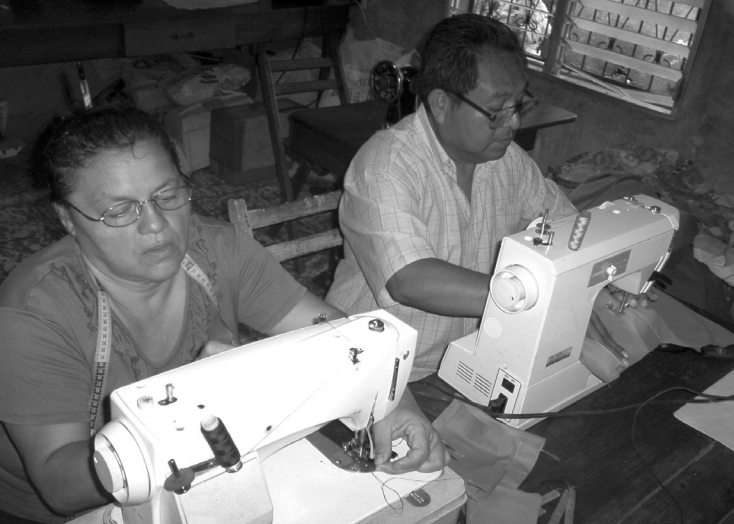 For years, Juan Carlos Davila worked by day as a receptionist at a private institution in Jinotepe. His wife, Migdalia, is a skilled seamstress. At night, he helped her with the sewing to earn extra money for their amily. His receptionist salary was barely enough for them and their 11-year-old son to get by on. As their tailoring business grew, it was their hope that one day they could come to depend on it as their sole income. But a second sewing machine, a new one, was far too costly.
In November 2008, Juan Carlos was suddenly laid off from his receptionist job. Today, he and Migdalia survive because they can both sew, and because they were able to get a second sewing machine from Pedals for Progress through our partner organization Ecobicicleta Rivas. Today at their tailor shop, they make men’s suits, women’s dresses, curtains, table linens, and they are currently searching for an employee or two to expand their business.
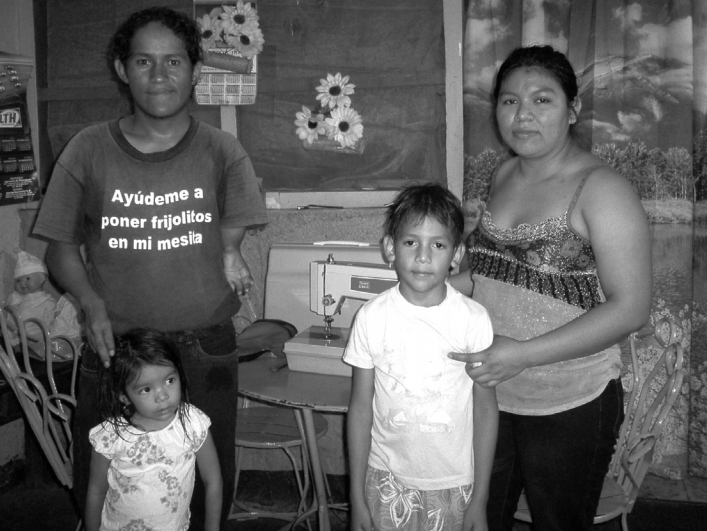 Elvis Cruz is 25 years old and from Managua, Nicaragua. He was born disabled, both of his arms are severely deformed. While this provided certain challenges, it hasn’t kept Elvis from working, playing baseball, or otherwise living a full life.
Married with two young children, Elvis works as a flagman directing traffic in Managua. But his income wasn’t enough to adequately support his family. After making a public appeal on a local TV show for the opportunity to earn more money, his wife received a sewing machine from one of our partners. A talented seamstress, now she works from their home earning extra income for their family.
Summer 2008 InGear
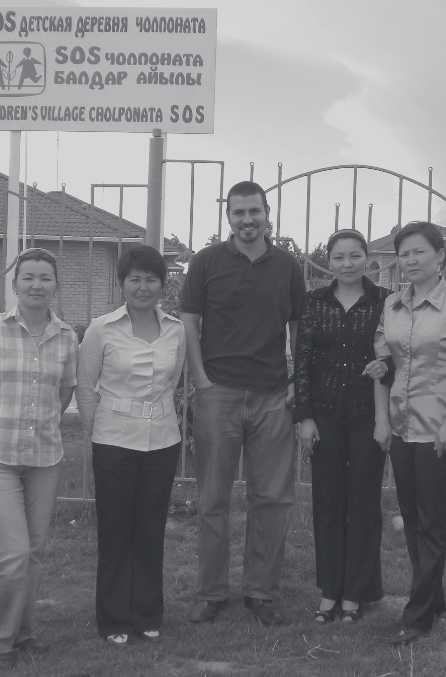
Most of our projects, and indeed our very first projects, are in Latin America. Nicaragua is where we got our start, and Pedals for Progress founder, Dave Schweidenback, got the initial idea for the organization while stationed as a Peace Corps volunteer in Ecuador. So, it’s fitting that our newest project in Kyrgyzstan, one of the most remote countries on the planet, has a Latin American connection—Roberto Hernandez, an American of Hispanic descent, who grew up in Los Angeles, California. Roberto was inspired to serve his country and fulfill his sense of patriotism by joining the Peace Corps, and he was stationed in Kyrgyzstan. A former Eagle Scout, he has always had a strong desire to help others. His Eagle Scout project saw him organize and lead a project that turned a neglected urban lot into a beautiful community garden in Los Angeles. His involvement with Pedals for Progress came about when he discovered our web site and learned about our sewing machine program.
Normally, we combine sewing machines with bike shipments, fitting them in the remaining space in overseas containers just before closing them up. Shipping them separately has been a challenge, one we overcame in working with Roberto and our new partners at SOS Children’s Villages in the Kyrgyzstan town of Cholpon-Ata. By creating products to sell with the machines they receive, the staff at SOS Kinderhof will generate funds for more sewing machines, as well as have those resources to make more sellable goods. More importantly, they’ll be able to set up a worker-owned co-op and gain ownership of their own business.
Their first shipment of 25 sewing machines arrived in Kyrgyzstan at the end of July, 2008. Hopefully this will be the start of many to follow. In the meantime, these machines will be put to immediate use at SOS Kinderhof. Now, this program will serve as a model for new sewing machine programs in other countries.
Fall 2007 InGear

In late spring, P4P was contacted by Airline Ambassadors. They were looking for sewing machines to send to their charity program in El Salvador. Airline Ambassadors International is a 501(c)3 nonprofit organization affiliated with the United Nations and recognized by the U.S. Congress. It began as a network of airline employees using their pass privileges to help others and expanded into a network of students, medical professionals, families and retirees who volunteer as “Ambassadors of Goodwill” in their home communities and abroad. Members share their skills and talents to care for others and bring compassion into action.
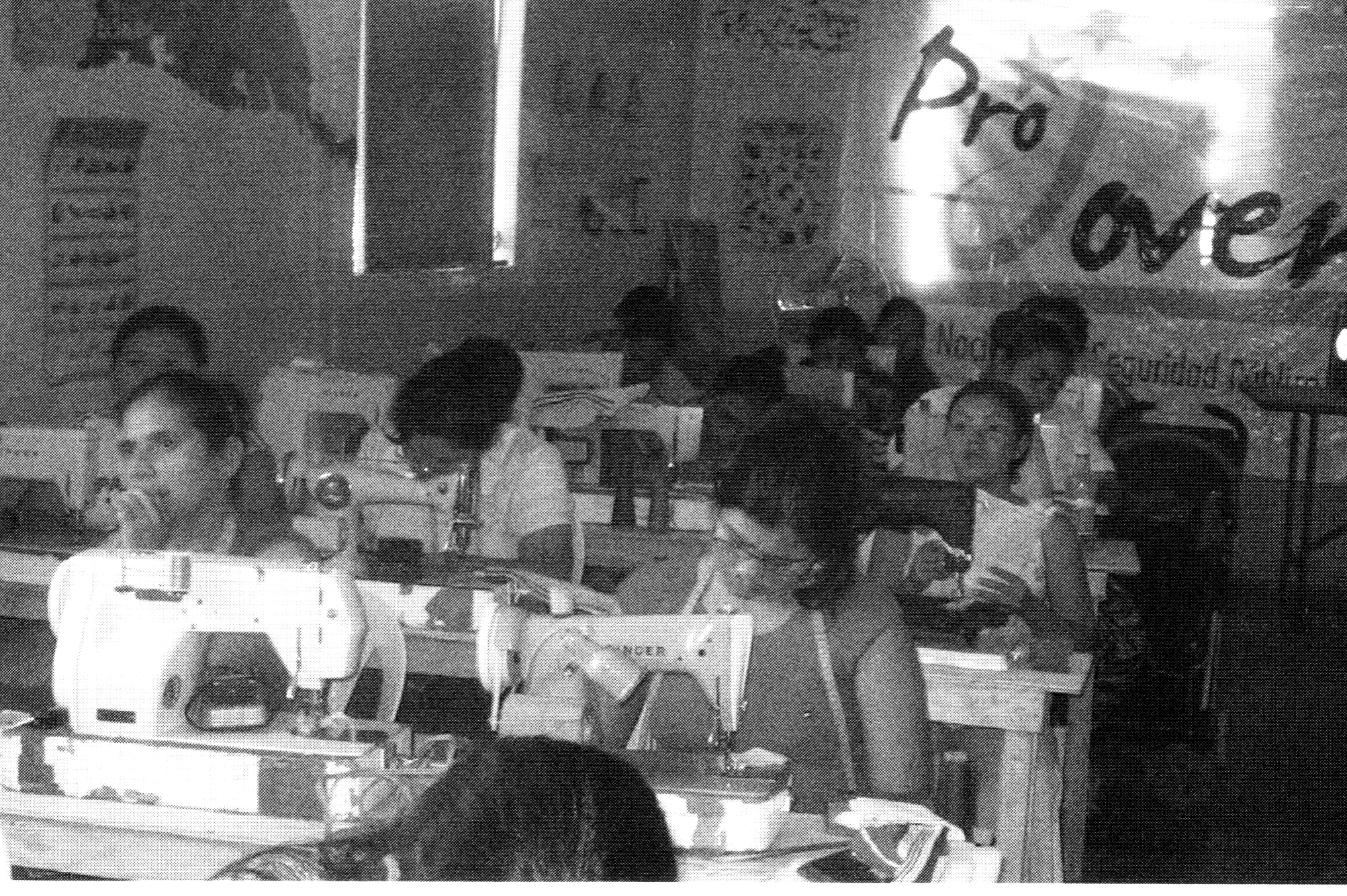
By mid-July, P4P delivered a pick-up truck full of sewing machines to the American Airlines Cargo Terminal at Newark Airport. They were delivered later that week to a Kiwanis Village in San Salvador, El Salvador, where 25 women will train as seamstresses, and upon completion of the course keep their machines.
This fall, we will deliver another 30 machines to El Salvador with Airline Ambassadors. This is an efficient and effective way for our sewing machines to get to the people that really need them. We were fortunate to find such a great synergy with a partner. To learn more about the Airline Ambassadors, visit them at airlineamb.org.
Summer 2007
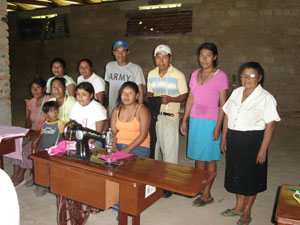
Abuelas in Action is a new non-profit looking to solve the problem of unemployment among women in Honduras. Our mission is to empower the low-income women in Honduras to break the cycle of unemployment by providing them access to skilled job training and materials in order to own and operate their own small businesses. Pilot Project: The School Uniform Project
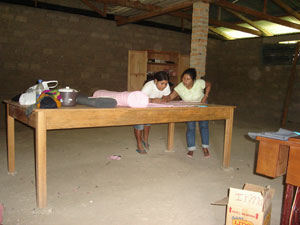
Working off of the Pedals for Progress model, Abuelas in Action will provide interested women’s groups in Honduras with all the materials and training necessary in order to start a small business making school uniforms and selling them in the local market. The women will be required to attend 2 training workshops and will be financially responsible for all subsequent shipments of materials from Abuelas in Action. This ensures that the women will take vested interest in their business.
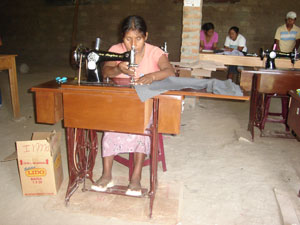
In order to attend seconday school in Honduras, the students are required to wear a uniform. Many students are unable to afford a new uniform and therefore cannot further their education. Women provided with low-cost fabric will be able to sell a better product at a lower price in the local market, thus enabling more children to attend secondary school.
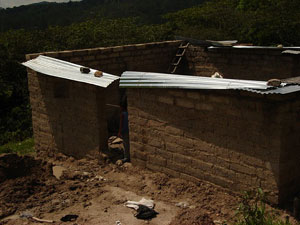
The pilot School Uniform Project began in July 2007 with the Mujeres de Delicias, a group of women from the village of Delicias, Opatoro, Honduras. Delicias is a remote village in the municipality of Opatoro that is home to 30 families and around 100 children. There are 23 women in the Mujeres de Delicias women’s group and they have been working hard since 2007 to supply uniforms and clothing to the surrounding villages. This summer the Mujeres de Delicias, with the money they raised selling their products, were able to construct their own workshop building as well as a small store.
Fall 2006 InGear
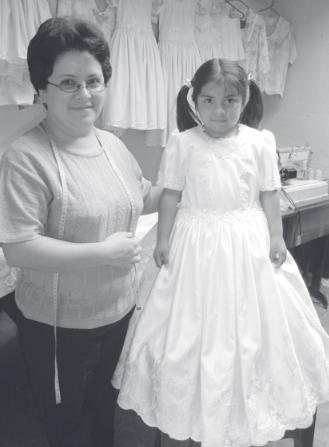
Lourdes Santiso Salizar took a sewing course at FIDESMA seven years ago. She took the year-long course due to lack of other employment opportunities. After she finished the course at FIDESMA, her parents helped her buy an industrial sewing machine and gave her a workshop space in their home. Today Lourdes runs a successful clothing business in San Andrés de Itzapa, where she custom tailors anything from shirts to wedding gowns. Lourdes now has so much work that she doesn’t even need to advertise her services.
Fall 2006 InGear
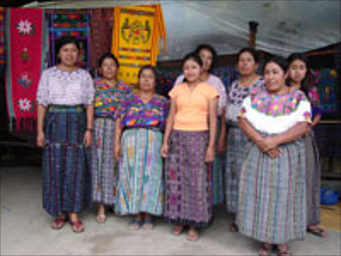
Meet the Mujeres Maya (Mayan Women) Kaqiqoel of Santa Caterina de Barahona, Guatemala. Five years ago they formed a cooperative of 10 women with the idea to sell their traditional weavings in the tourist markets. To start their business, they received a microloan from the proceeds of bicycle sales by our partner FIDESMA. Today they have a stall in the major tourist town of Antigua where they sell their goods daily. What makes their weaving so special is that it is done using the traditional Guatemalan hand loom. This type of weaving has been passed down by Guatemalan women for hundreds of years. Elva Perez (far left) is the main vendor for the group. She goes to the market every day and speaks with tourists from all over the world. With careful detail she explains what all the symbols on the weavings mean. The microloan from FIDESMA allowed them to start this small business and provide for their families while holding onto their traditions.
Fall 2005 InGear
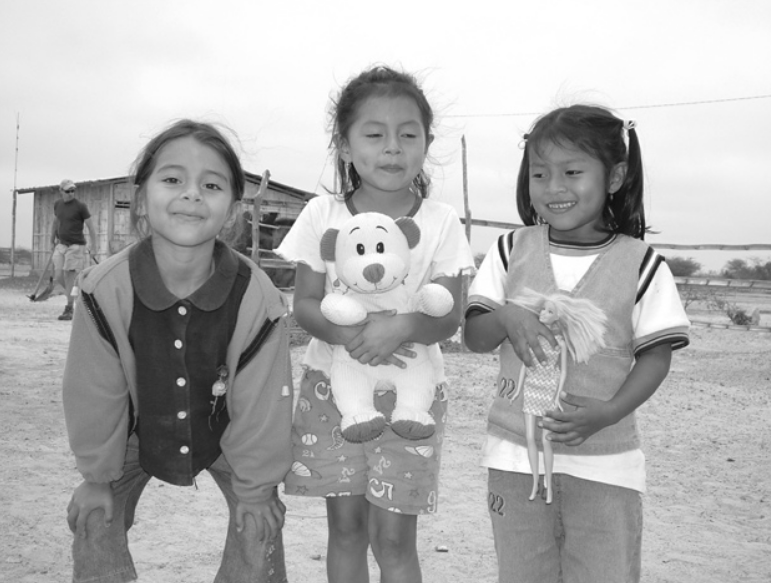 Among its latest efforts to assist some of those among the poorest in Ecuador, the Rotary Homes of Hope Project will ship a container of goods to the village of San Pablo, Ecuador. Included in the shipment will be 50 bicycles and 10 sewing machines supplied by Pedals for Progress. The District 7510 of Rotary International Homes of Hope Project began by building homes and expanded into building a village with a community infrastructure.
In the future, the Rotary hopes to provide the community with a regular safe supply of water, a breakfast program for the children, and education and training to help create employment opportunities.
Spring 2005 InGear
Pedals for Progress is a non-profit corporation devoted to global economic development. It has strived to improve economic prosperity in developing communities through a simple, yet challenging, bicycle collection, shipping, and distribution process. Our organization, however, is much more than biking enthusiasts trying to help others. Over the years we have supplemented our bicycle shipments with other products to help achieve the same economic development goals. And the single most significant item has been the portable sewing machine. Including sewing machines in our bicycle shipments has been a tremendous success and one true success story has involved Profesora Rosa Palacio Hernando.
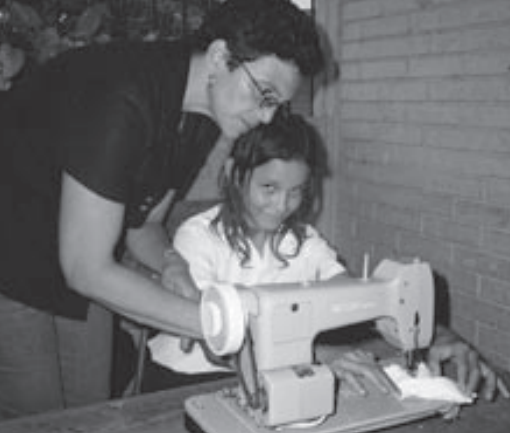
Rosa, a 5th and 6th grade elementary school teacher at the General José Maria Montaya School, in Rivas, Nicaragua, has been sewing all of her life. Rosa is taller than the average Nicaraguan woman, and, while growing up, “store-bought” clothing never quite fit her tall frame. At an early age Rosa’s mother taught her how she could alter “store-made” clothing to fit her better and Rosa soon discovered that she had a natural talent for sewing. Initially she took great pleasure in altering store-bought clothing and soon she began sewing her own clothing.
Rosa’s sewing activity was always a personal activity, her personal hobby, but that all changed one day when one of her student’s parents came to her elementary school and offered working sewing machines to the school if sewing classes would be included in the school’s curricula. When Rosa heard this news, she rushed to the administration office where she offered to teach the classes during the day and volunteered to teach community education sewing classes in the evenings.
Rosa now teaches the basics of sewing to 11–12 year-old boys and girls during the day and to adults, as necessary, several evenings each week. The adults who come to the school typically know how to operate the machines, so they use the machines for their own family needs and to produce different items to sell in the marketplace.
For Rosa, this work has become a dream come true. She is able to combine her passion for teaching with her lifelong love of sewing. She originally ventured into teaching because she wanted an opportunity to help make a positive change in her community. She remains dedicated to being a 5th and 6th grade teacher because educating children is the future of her community. But now she gains “extra” satisfaction by teaching sewing to both children and adults, and volunteering her time to keep the donated Pedals for Progress sewing machines fully functioning. Her efforts are very clearly and positively impacting the lives of many people in Rivas, Nicaragua.