Category Archives: Sewing Partners

Report from Guatemala, Spring 2025

Spring 2025 Newsletter
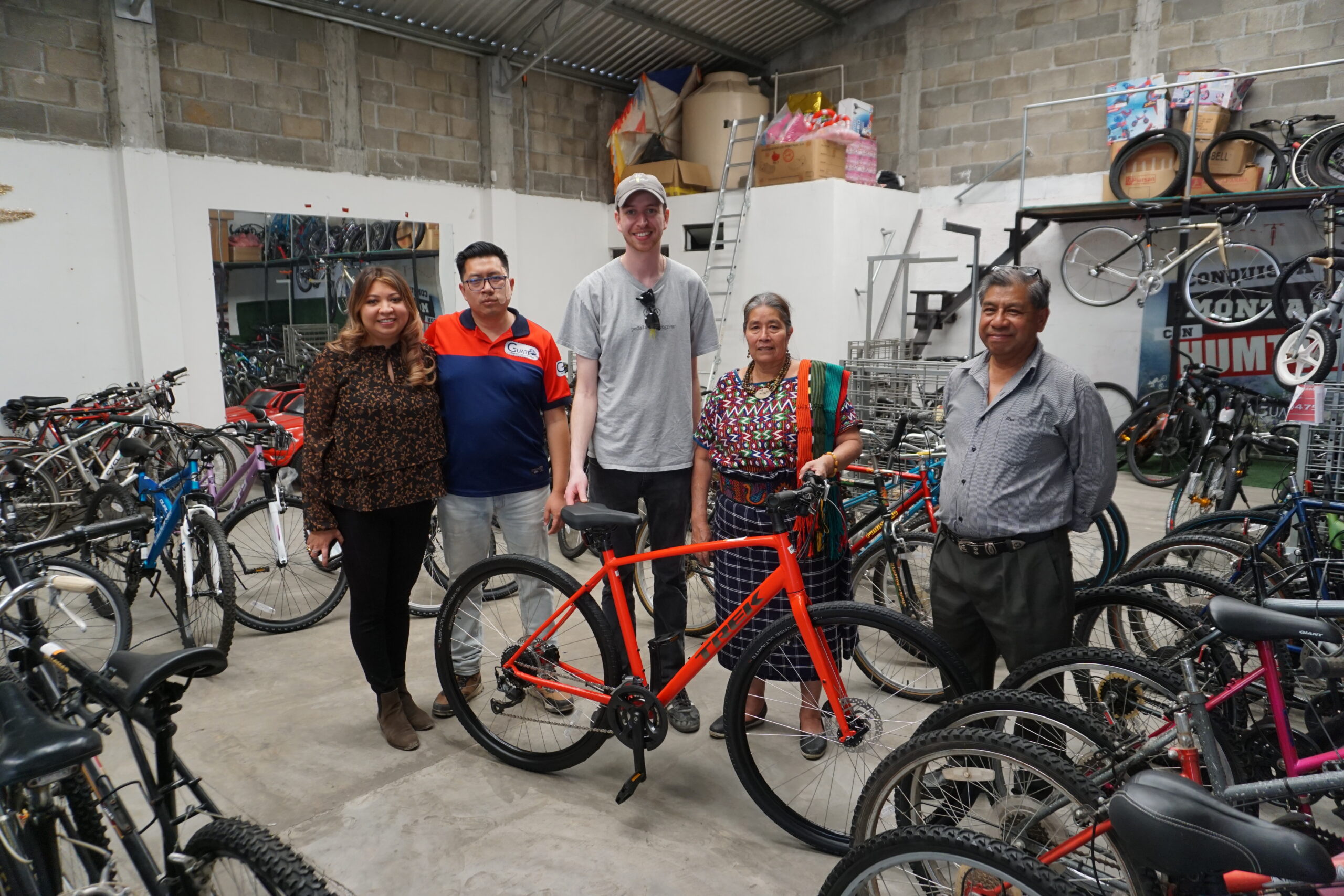
Fidesma staff and Alan For the last 25 years, Pedals for Progress has made annual shipments of bikes and sewing machines to FIDESMA, a community outreach program located just outside Chimaltenango, Guatemala. FIDESMA serves its community of San Andrés Itzapa through various programs focused on food security, educational support, and women’s empowerment in business.
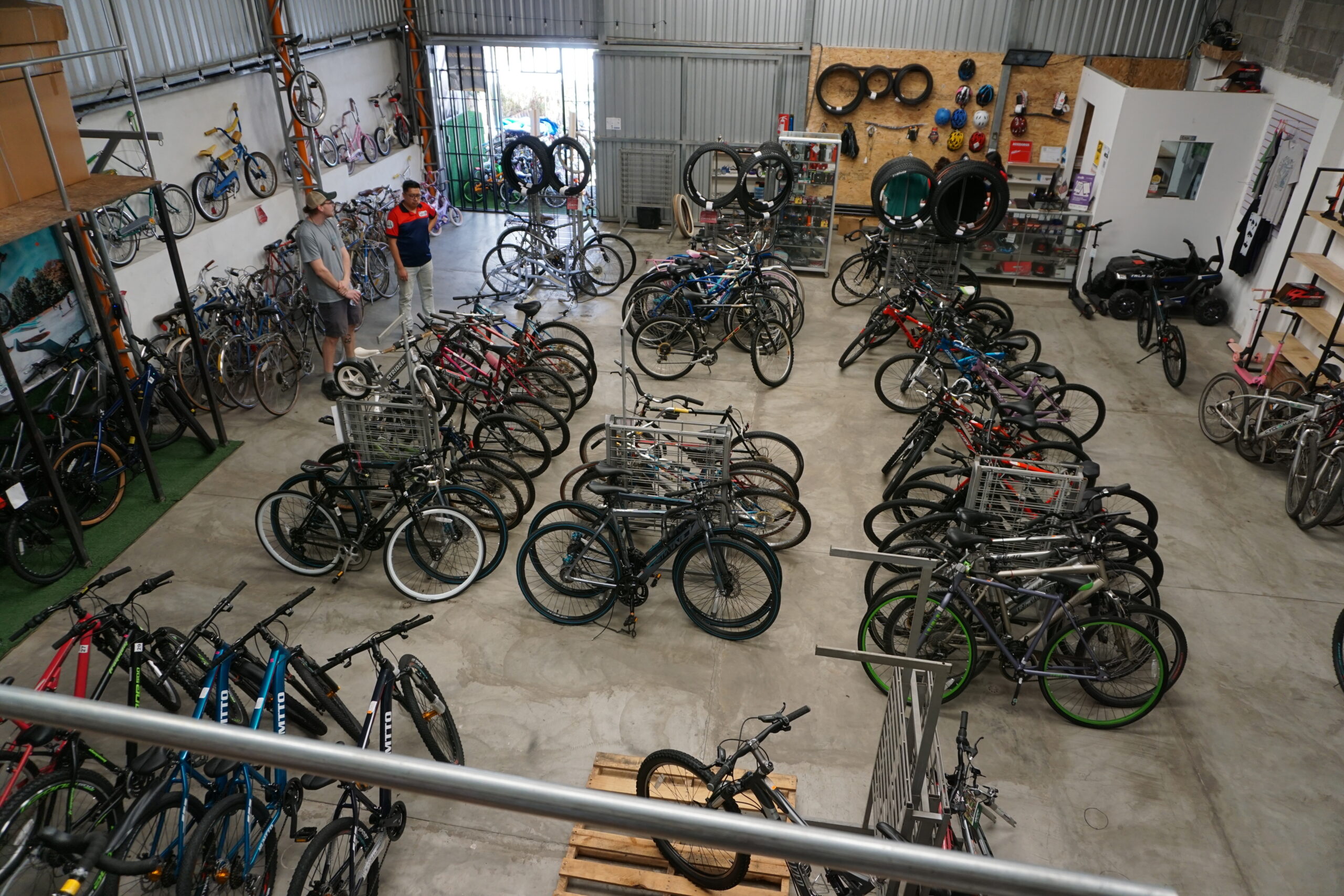
full view of fidesma shopUsing their EcoBici program, they extend their community impact through the distribution and sale of our donated bicycles. FIDESMA and its EcoBici bike shop have sustained themselves for 25 years and serve as a textbook example of what Pedals for Progress aims to achieve. By selling some of their bikes at low cost, our partners help generate revenue to maintain their operations and fund their community outreach.
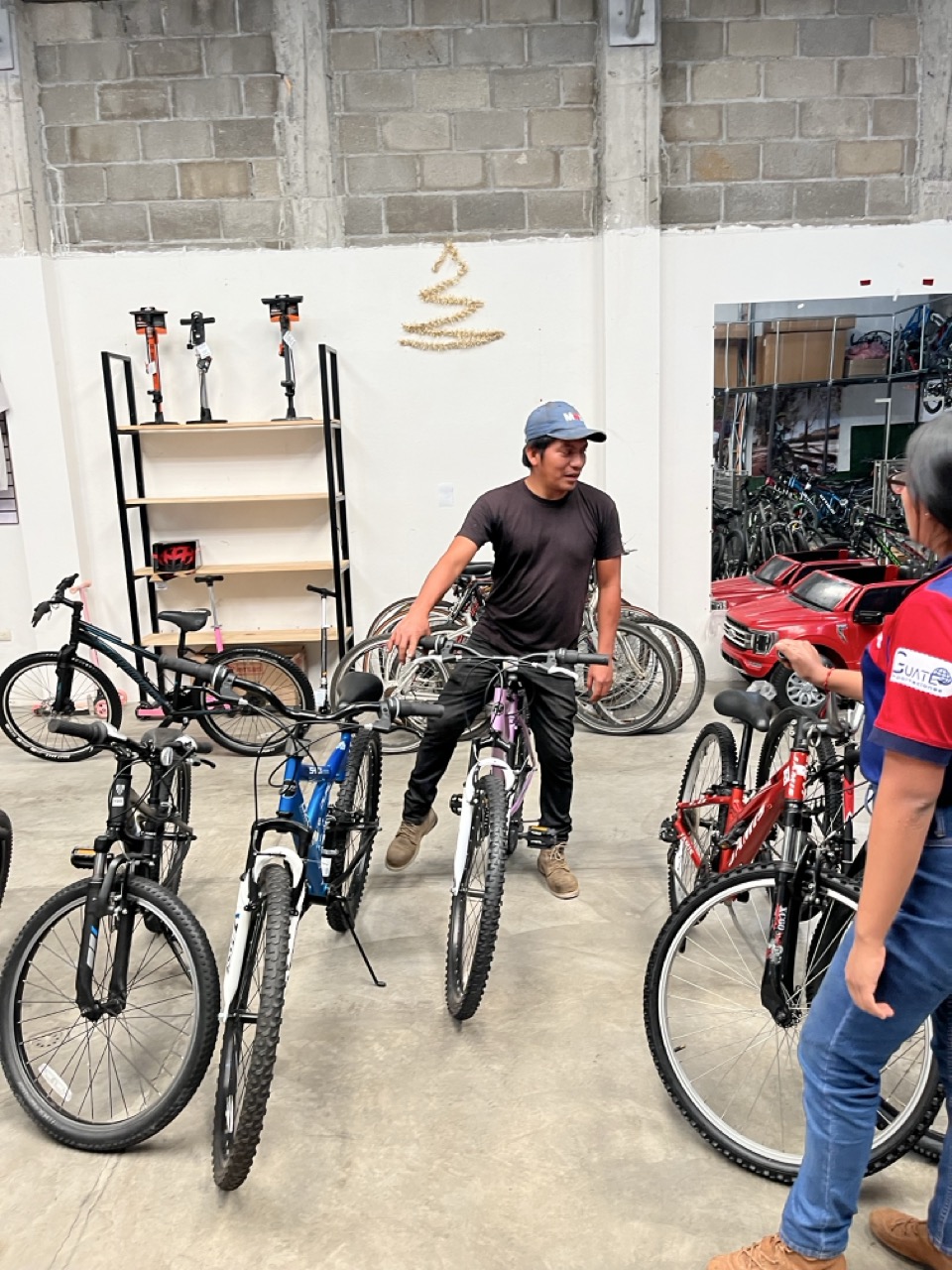
Working people who buy these bicycles have a vested interest in maintaining them. This not only promotes long-term use, but also feeds back into the success of the shop, which hires more people and helps develop specialized labor. The economic success of this small enterprise is how we’ve been able to contribute to the local economy of Chimaltenango while supporting FIDESMA’s broader mission.
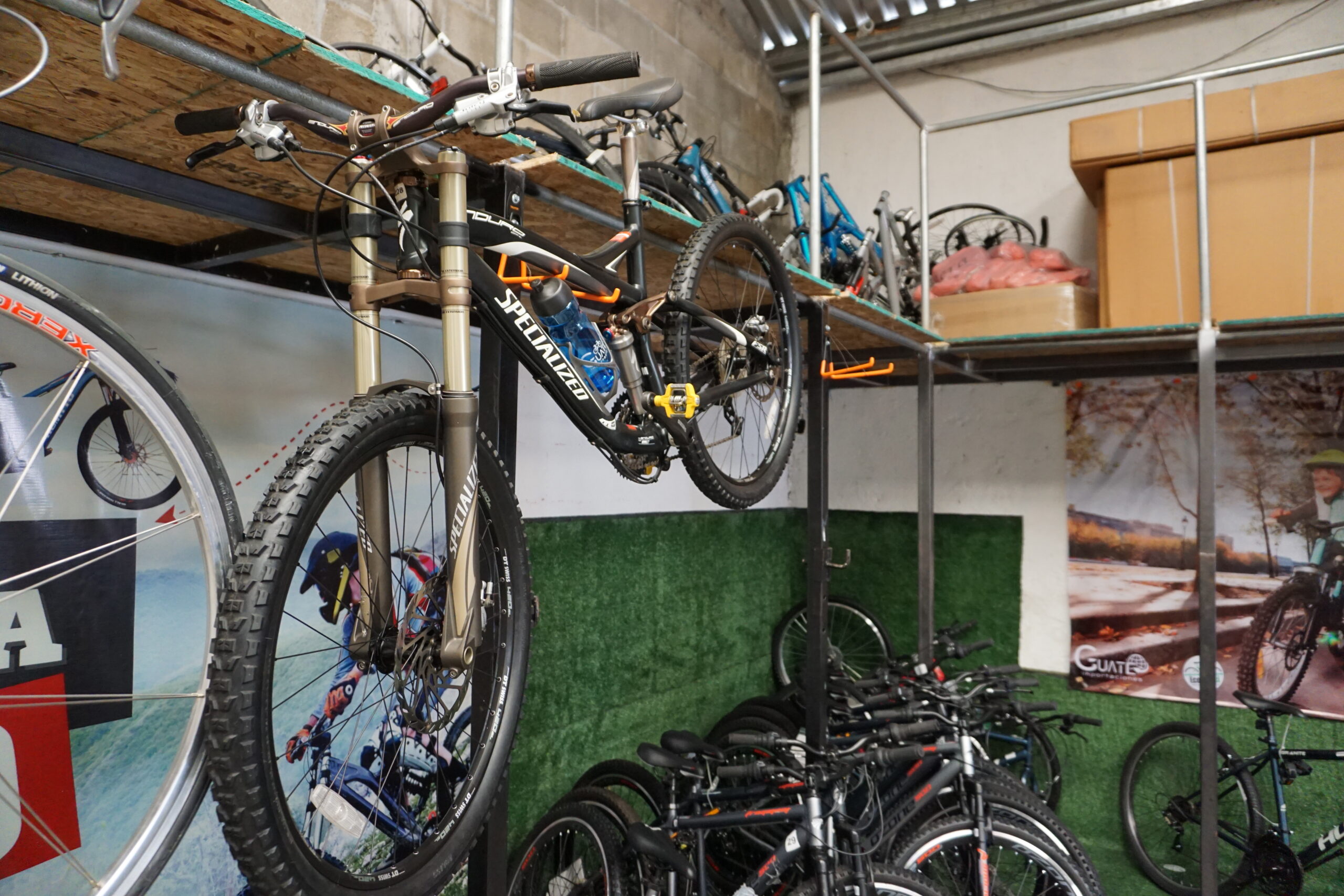
FIDESMA’s current inventory includes many bikes we shipped back in October. The range of bicycles we collect in the U.S. ends up being a major selling point once they reach our international partners. From vintage Schwinns from the ’70s and ’80s to modern Trek mountain bikes, the variety helps shops like EcoBici serve a diverse customer base. This range is on full display at EcoBici, where bikes are organized by price category: older Schwinns ranging from $30–$50, mid-level Mongooses and Treks priced between $50–$100+, and even a top-shelf Specialized model tagged at $800. It’s a great example of a healthy storefront offering a fair, tiered marketplace.
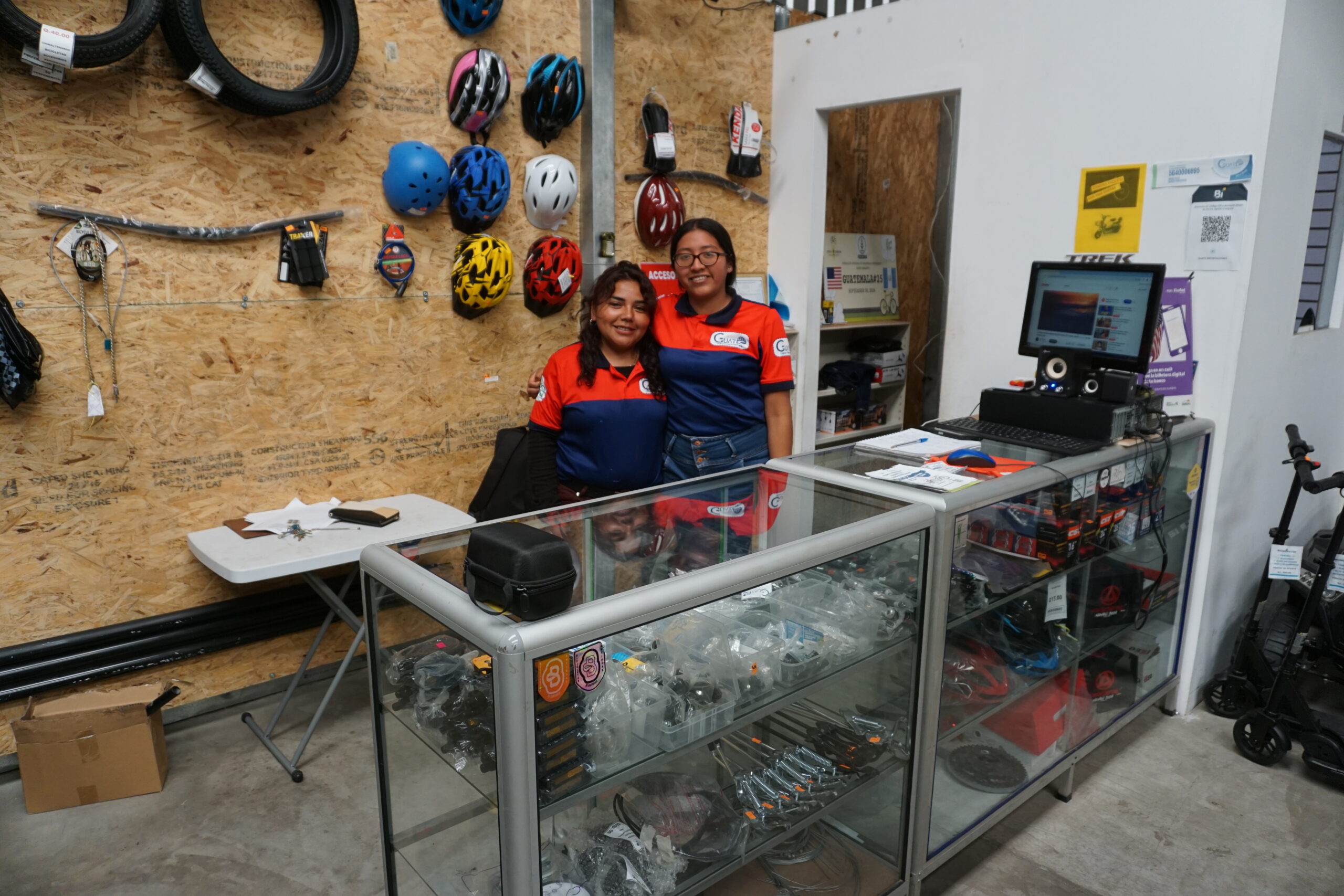
FIDESMA bike shop workersThis all ties back to the “theory” behind Pedals for Progress. We want our partners to succeed and earn a living through our donated bicycles. We are extending the life and value of products that hold real significance in smaller marketplaces like San Andrés Itzapa. Fanning the flame of a blossoming economy is how we can accelerate progress and stretch the impact of bicycles once headed for a landfill. We’re proud to stand beside partners like FIDESMA who take our mission to heart. Here’s to 25 years of impact—and many more to come.

Women’s Group and Bike Donation
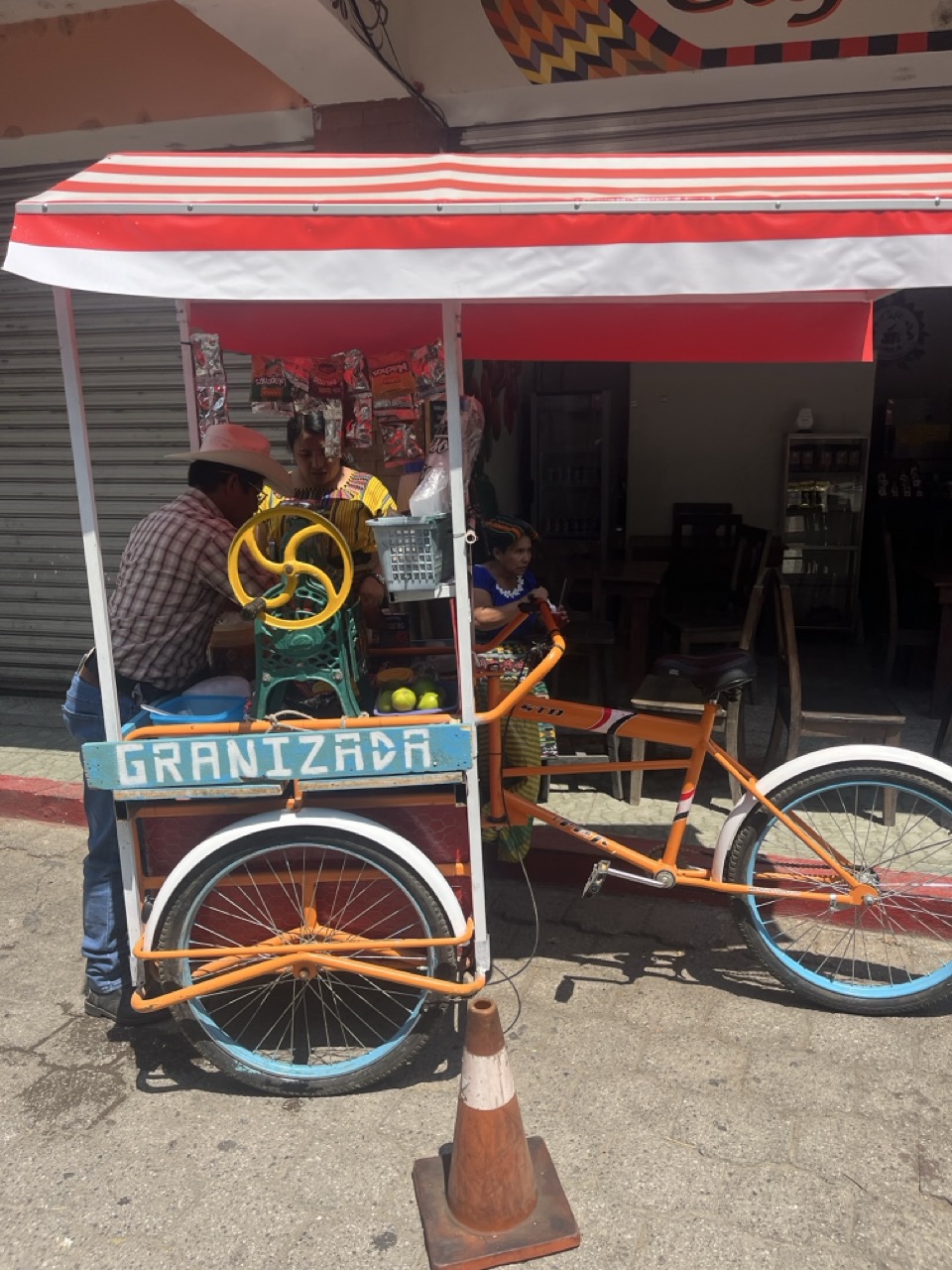
The auxiliary programs we support in the developing world are often funded through the sale of bicycles we ship. In many places here in the United States, other charities that collect used bicycles will sell a large portion domestically to help offset their operating costs. At Pedals for Progress, we pass that same opportunity on to our partners overseas. We want our partners to benefit from the sale of bikes in their local markets, using that income to fund community outreach and development work where it’s needed most. As a result, we’re proud to say that P4P donates 100% of the new and repairable bikes we collect.
For lack of a better term, a kind of “trickle-down” economy begins to take shape. While our partner bike shops generate revenue, they are also running a local business and using their extra funds to support their communities. FIDESMA in Guatemala continues to be an incredible example: several of their offshoot programs provide aid through feeding programs, bicycle donations, and support for indigenous women.
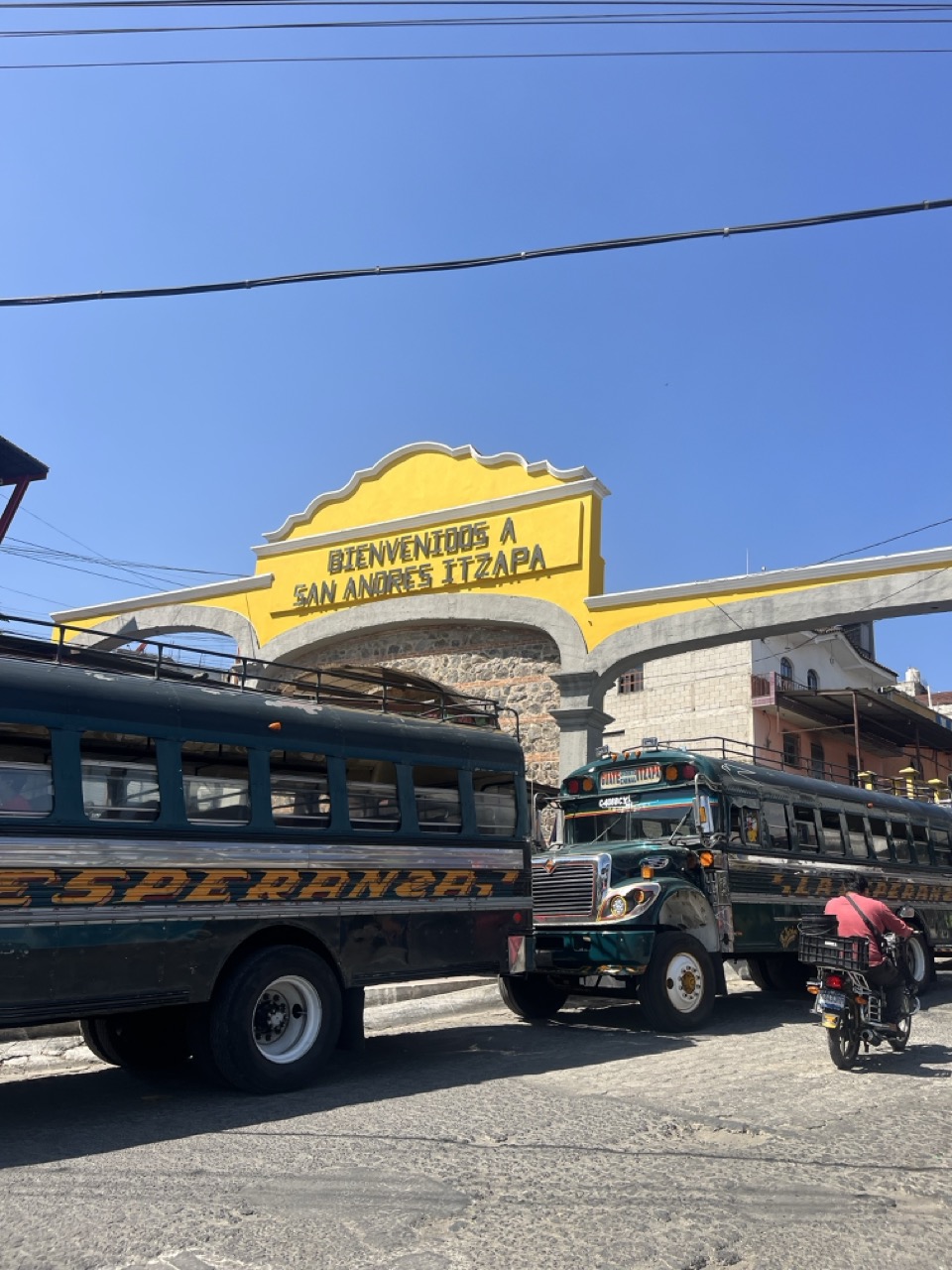
During my visit to FIDESMA, I spoke with some of the main people behind their work. It’s mostly a family-run operation, and they welcomed us like family. Pedro, the son of Margarita, FIDESMA’s founder, said very simply, “In San Andrés Itzapa, FIDESMA is famous for helping.” They’re the place people turn to when they’re in need.
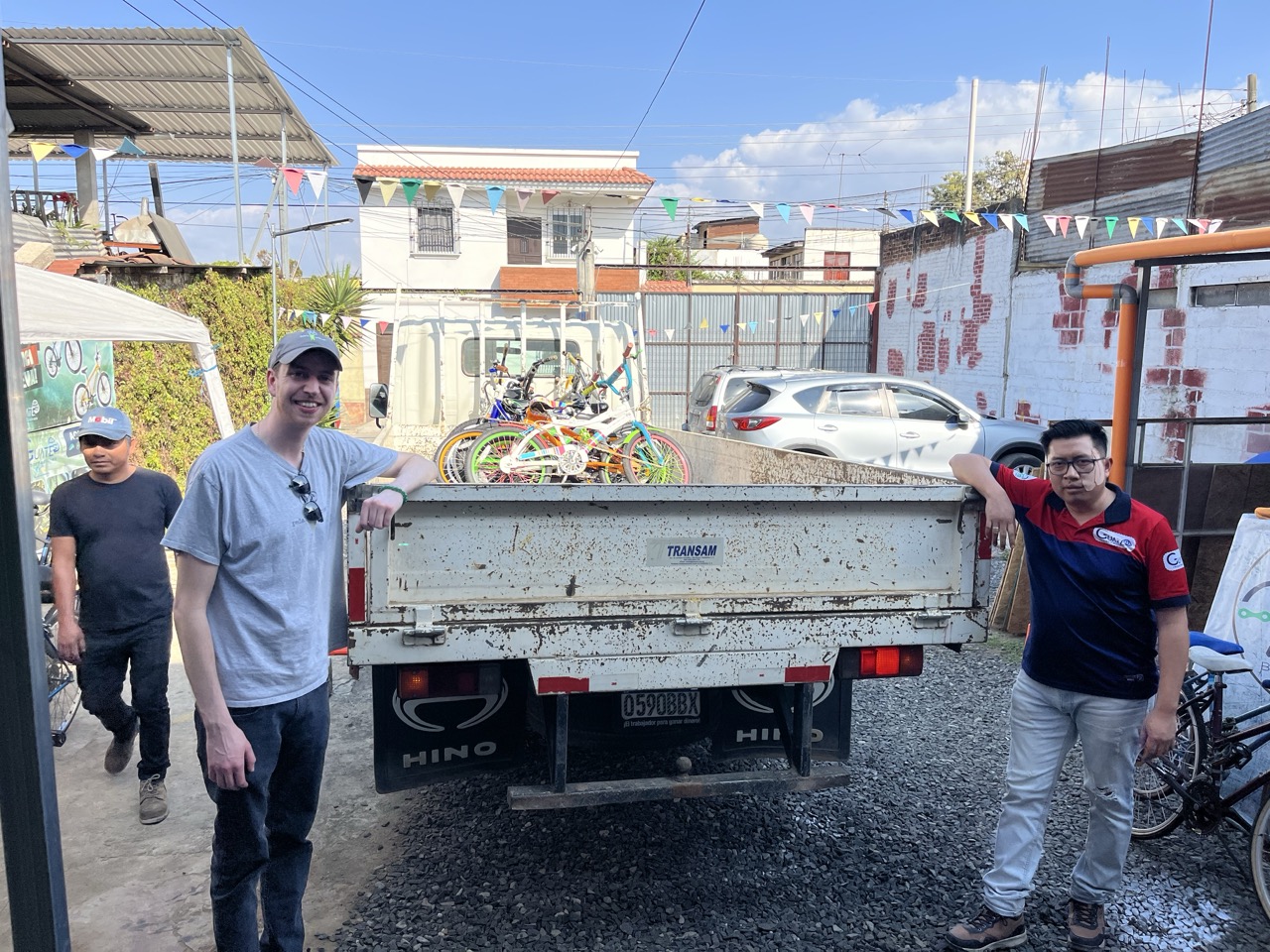
Alan and Pedro with truck of bikesThat sentiment rang especially true when we learned that the town had begun building a new public park and asked FIDESMA for bicycles for children to use inside the park. FIDESMA gladly donated 15 children’s bikes at no cost. We were fortunate enough to be there in person when the town came to pick them up. After years of loading bicycles onto trucks in the U.S., I had the incredible honor to help load on the receiving end.
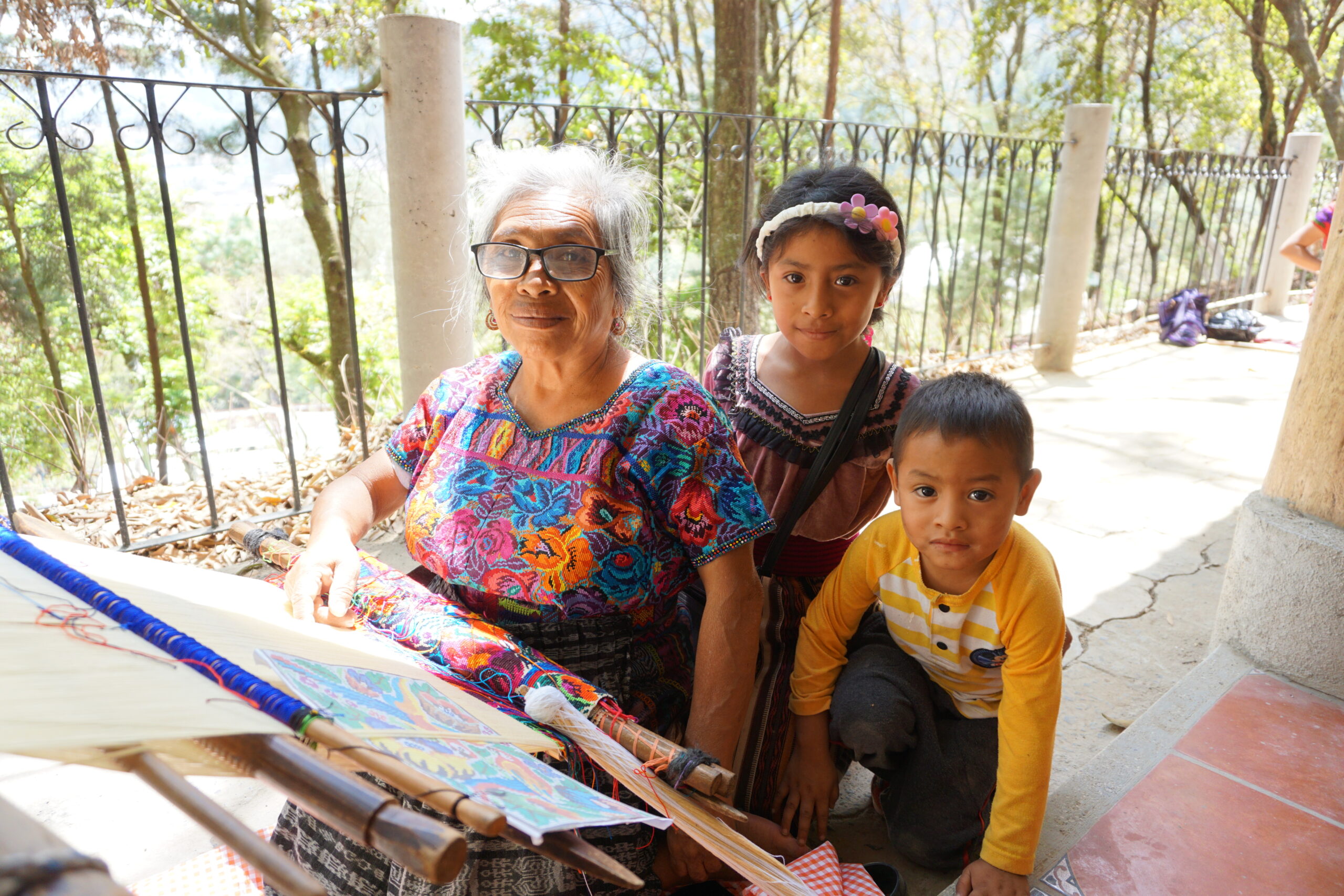
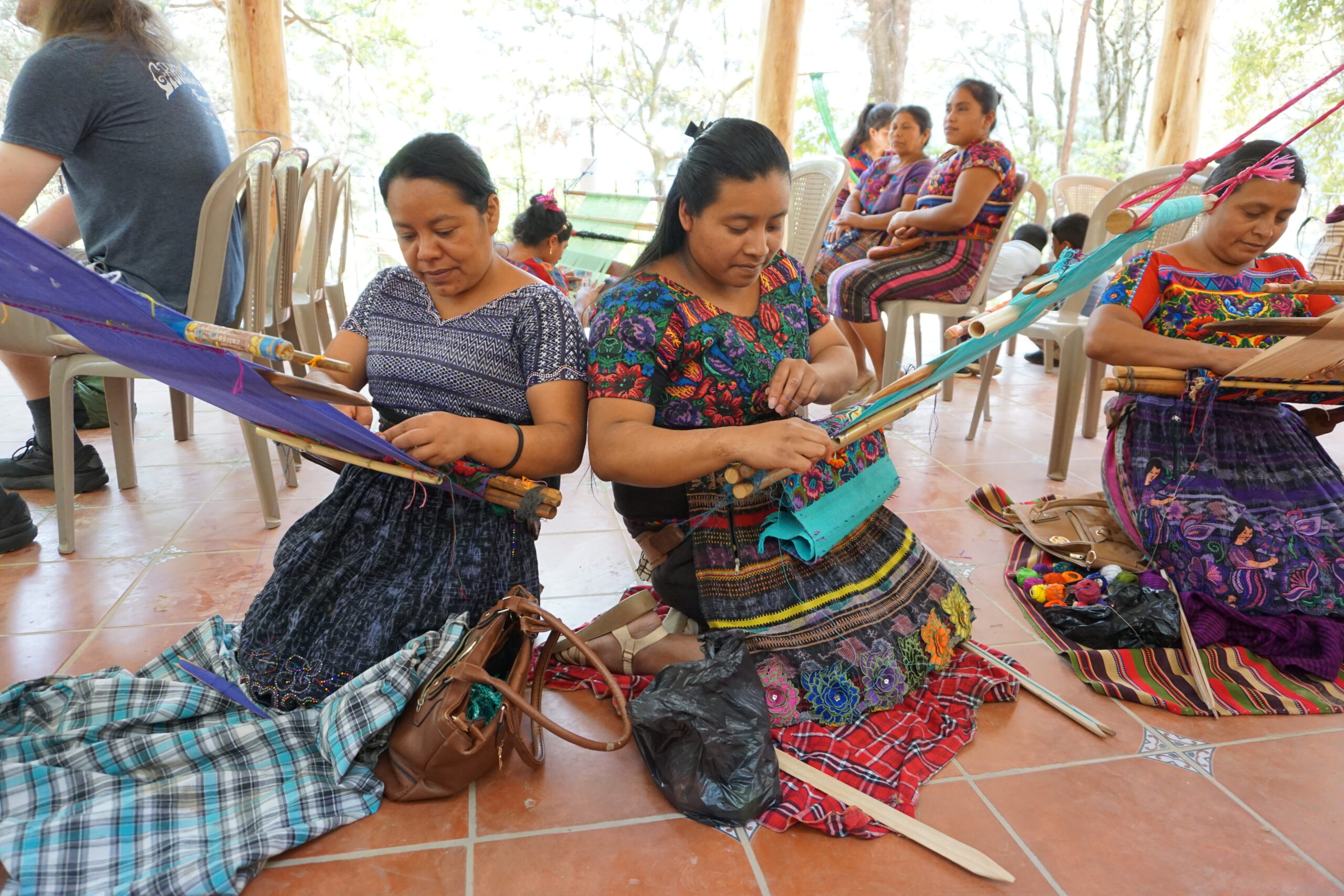
A few days later, we were invited to a ceremony at the new park to celebrate FIDESMA’s contributions to the town. The event also honored the indigenous women’s group that FIDESMA supports. Through this initiative, women create and sell handwoven tapestries and traditional clothing using long-established Mayan techniques. Margarita, an artist herself who makes jewelry, helps these rural women bring their handmade goods to larger markets, increasing both their reach and their profits.
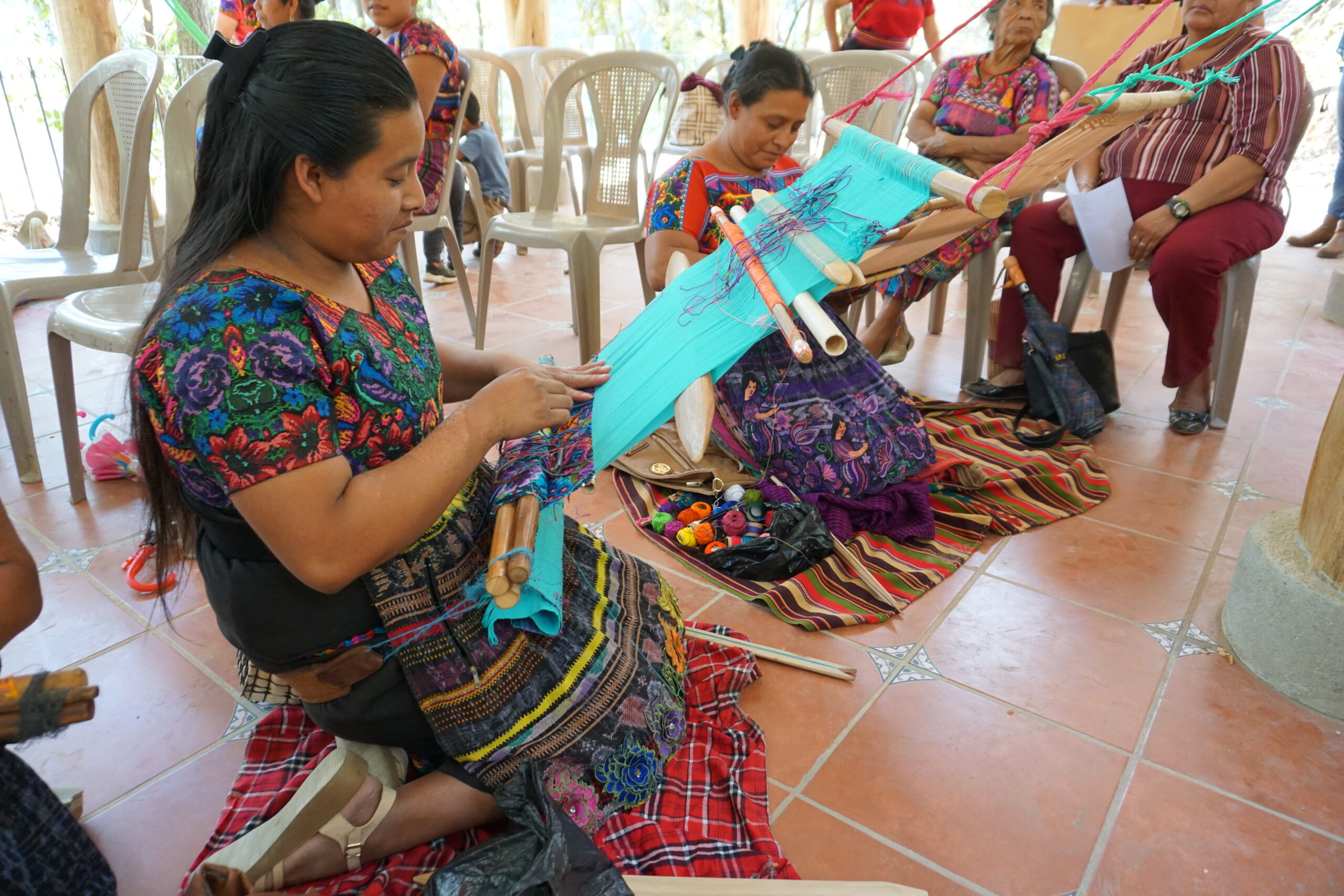
mayan artisansThese women also benefit directly from the sewing machines we ship alongside our bicycles. While they continue using traditional techniques, the machines supplement their work, allowing them to expand production and grow their income.
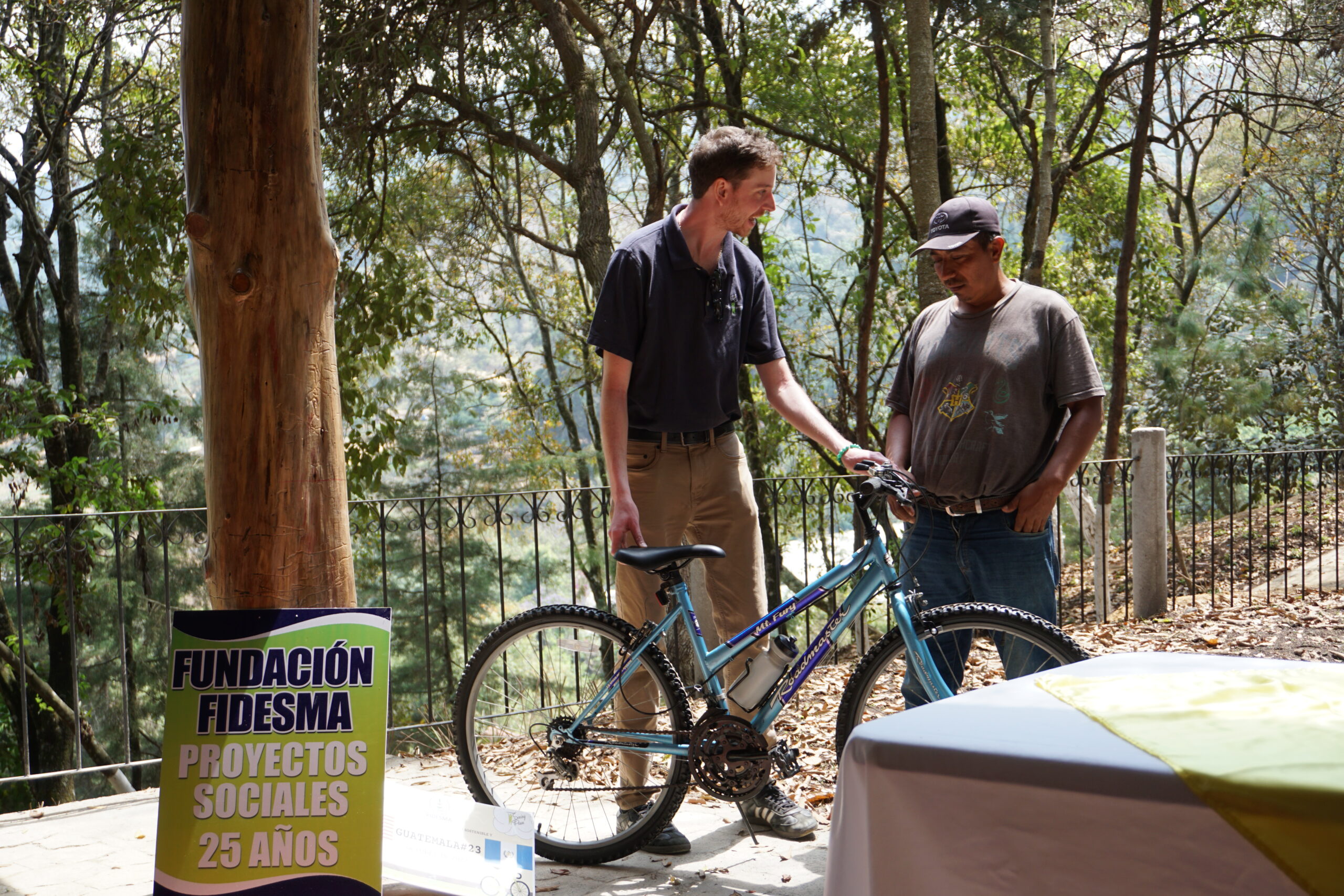
Alan donating bikeAt the ceremony, we also had the privilege of donating a bicycle to a local farmer who had been struggling to make ends meet. Identified by FIDESMA for his strong work ethic and long walks to work each day, he was selected to receive a donated bike. Having the opportunity to see him accept the gift and ride away was a deeply moving reminder of why we do what we do.
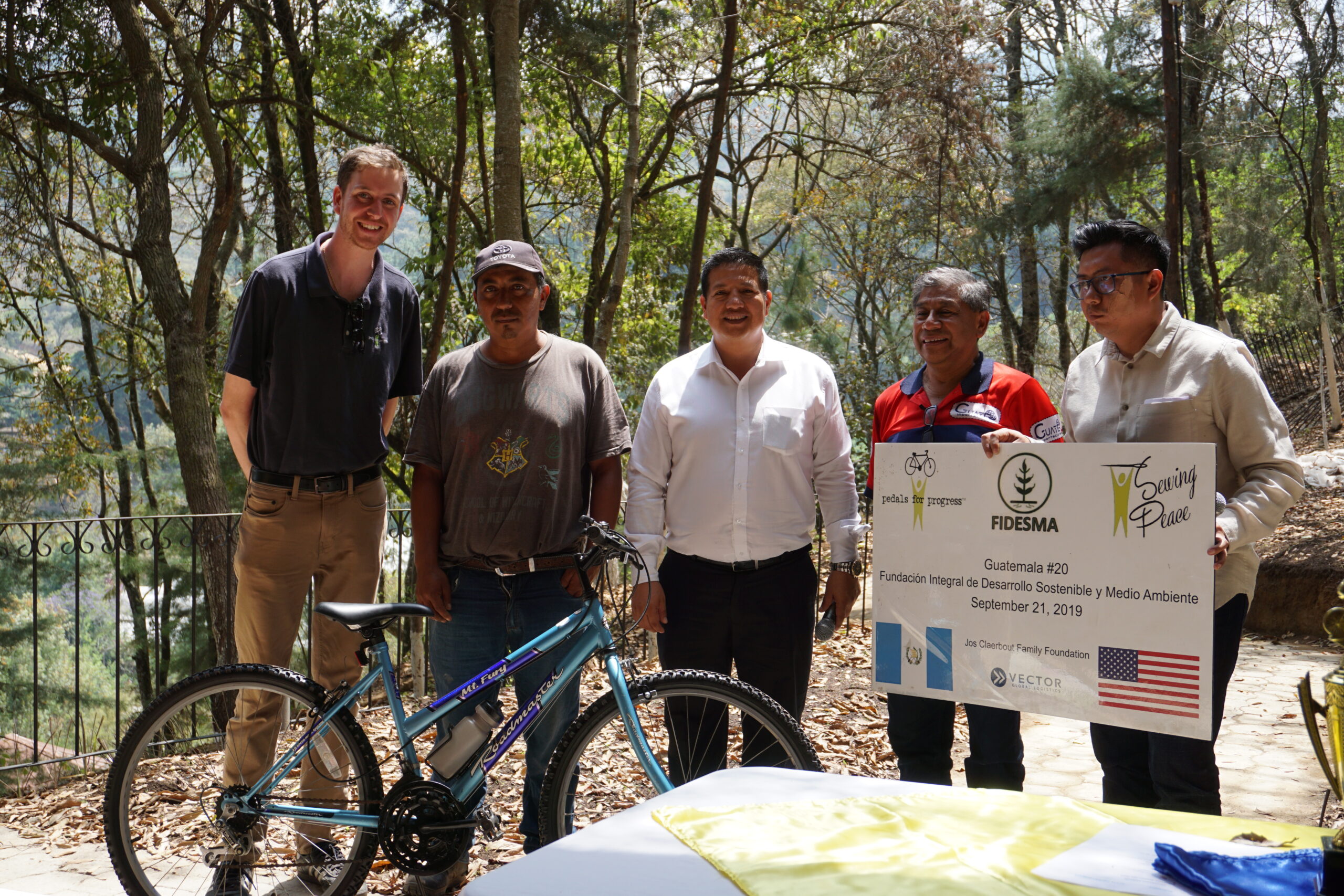
Stories like these remind us that a bicycle or sewing machine can be an important tool for a pathway to opportunity. With each shipment, we’re not just delivering aid; we’re supporting organizations like FIDESMA that are deeply rooted in their communities and building better lives. Thank you for your continued support.
Sierra Leone 2025: Village Care Initiatives

Spring 2025 Newsletter

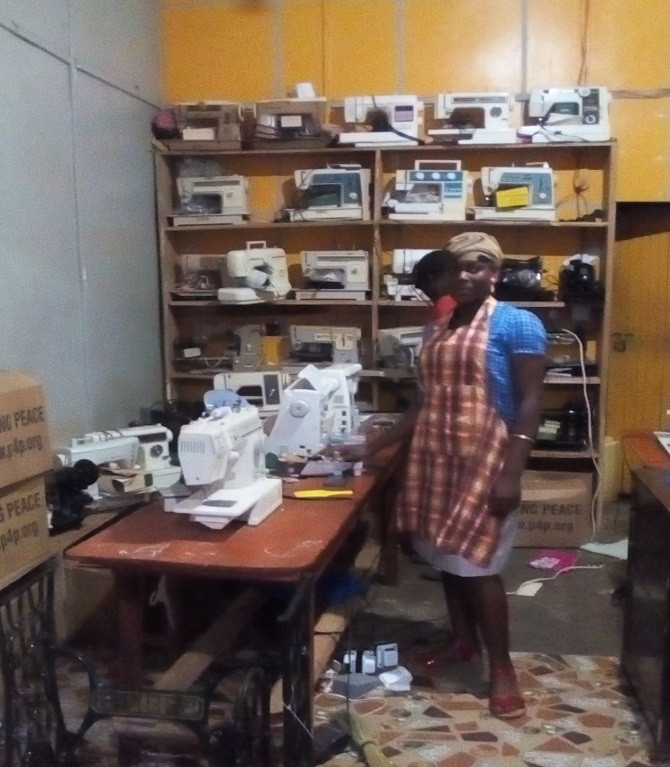
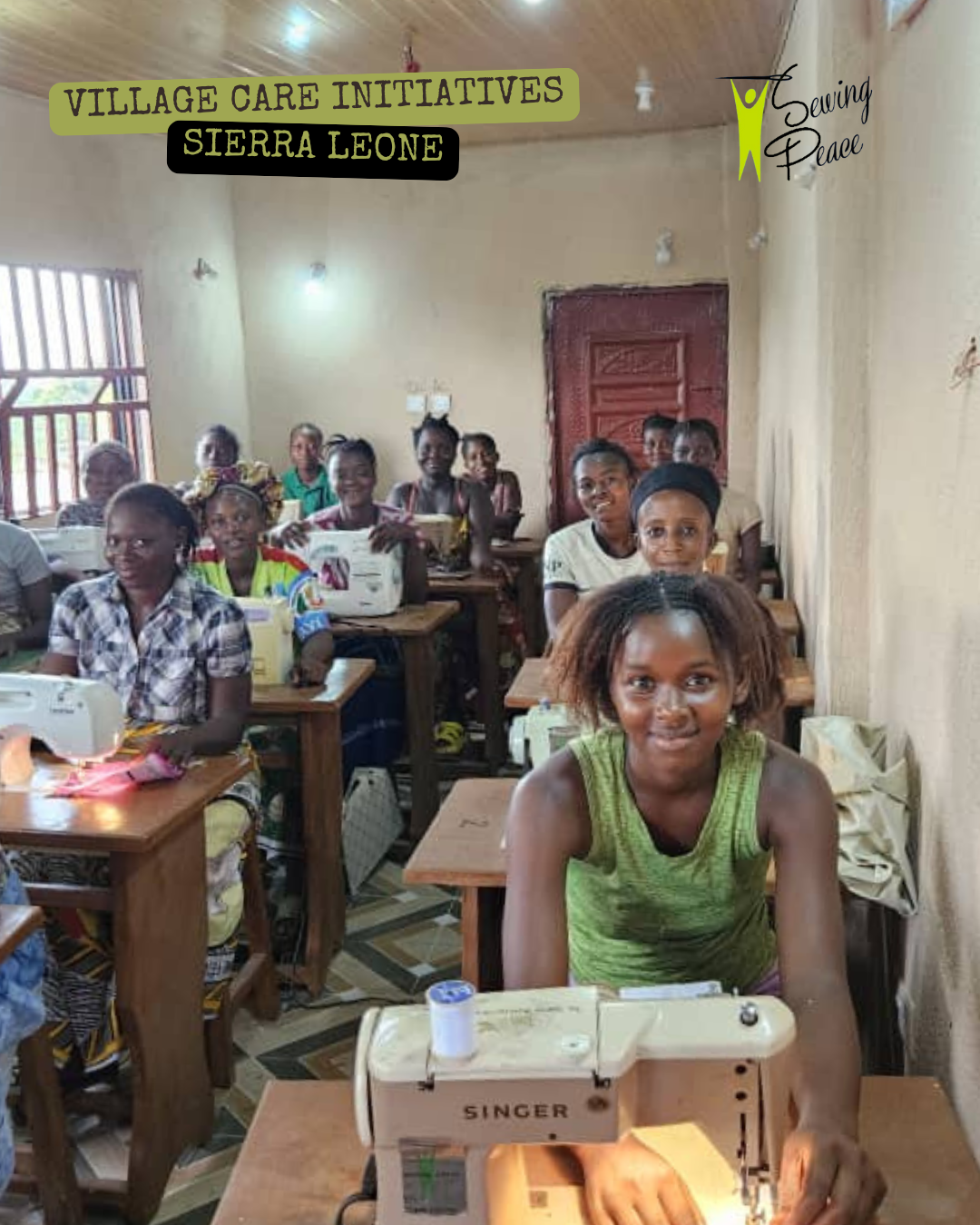
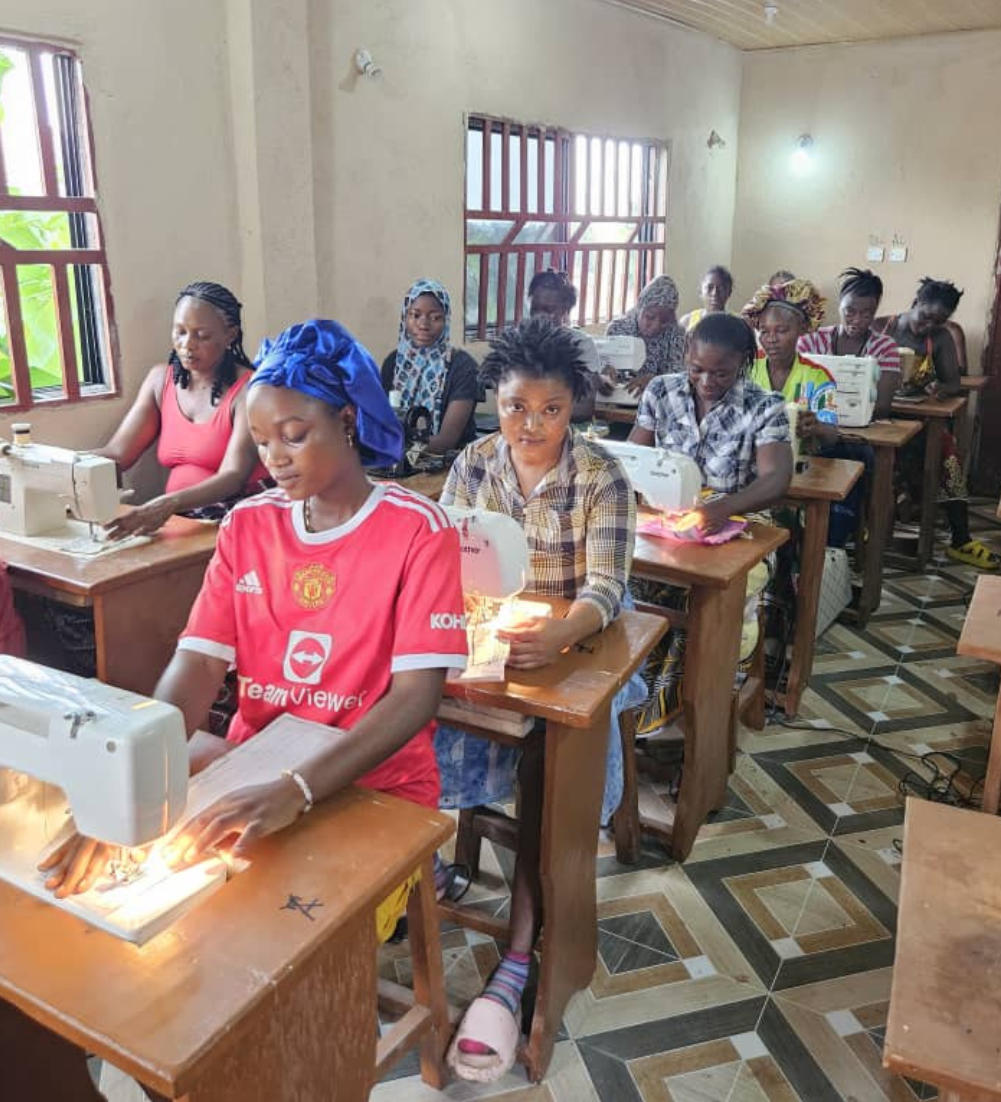
In Sierra Leone, our newest Sewing Peace partnership with Village Care Initiatives has officially launched, educating women on how to sew using donated machines from donors like you. By donating machines directly to community outreach centers like Village Care Initiatives, we can educate people while providing the tools necessary to put this education into action.

Village Care Initiative is spearheading basic sewing instruction bolstered by education in hygiene, sanitation, and self-care guided by WASH. WASH (Water, Sanitation, and Hygiene) is a comprehensive approach aimed at ensuring universal access to safe drinking water, adequate sanitation facilities, and proper hygiene practices.

Program director Shed Jah on how his program is tackling these issues: “We strive to provide comprehensive WASH programming in the communities we serve based on the unique needs of each community. Whether it is a project that provides all aspects of WASH – from improved water access, upgraded sanitation services, and hygiene education in schools and healthcare facilities to menstrual hygiene management – or simply one or two of these components, all our projects are sustainable, and the communities are able to independently support the resources and programs we provide.

Many of our community projects include an income-generation component around the small-scale manufacturing of WASH-related products such as eco-soap or reusable menstrual hygiene pads. Often, these products are difficult to find or people simply can’t afford them. By teaching community members how to produce these products, we not only ensure that hygiene materials are available to them, but that they can also be sold for household income and donated back into the community programs.”

Thank you to all our donors and supporters who are key in procuring these sewing machines that are changing the lives of women in Sierra Leone and their local communities.

Twenty-Five Years of Collections in Vermont

By Alan Schultz
Fall 2023 Newsletter

Twenty-five years ago, a young boy infatuated with mountain biking was reading Dirt Rag magazine and saw an article about how mountain bikes could help health care workers access remote villages in the developing world, enabling them to help more patients quickly and efficiently. His mother had lived in South Africa as a child and traveled to El Salvador throughout her life. He saw a common ground and showed her the piece. Joanne, the mother in question, sat with the thought for a year and found Pedals for Progress and reached out at just the right time.

As fate would have it, Dorsey Hogg, who had served in the Peace Corps in Botswana, had also reached out to Pedals for Progress after hearing about the organization through the Long Island Returned Peace Corps Volunteers. Dorsey wanted to take a shot at running a collection.

Joanne and Dorsey met and decided to join forces and take on the crazy idea of running a collection in their home state. The problem was that P4P could not afford to transport the bikes three hundred miles from Vermont to P4P-HQ in New Jersey.

The two seasoned travelers view time and distance differently than most people and saw this obstacle as a mere speedbump. Through friends, family, significant others, and neighbors they assembled a small team with the common bond of spending time outside of the United States and a desire to continue to help those less fortunate. Some of the first to join included Matt, who had also served in Botswana, Bob and Paula in Kenya, and Paul in rural Chile; the team tackled the distance between VT and NJ with ease.

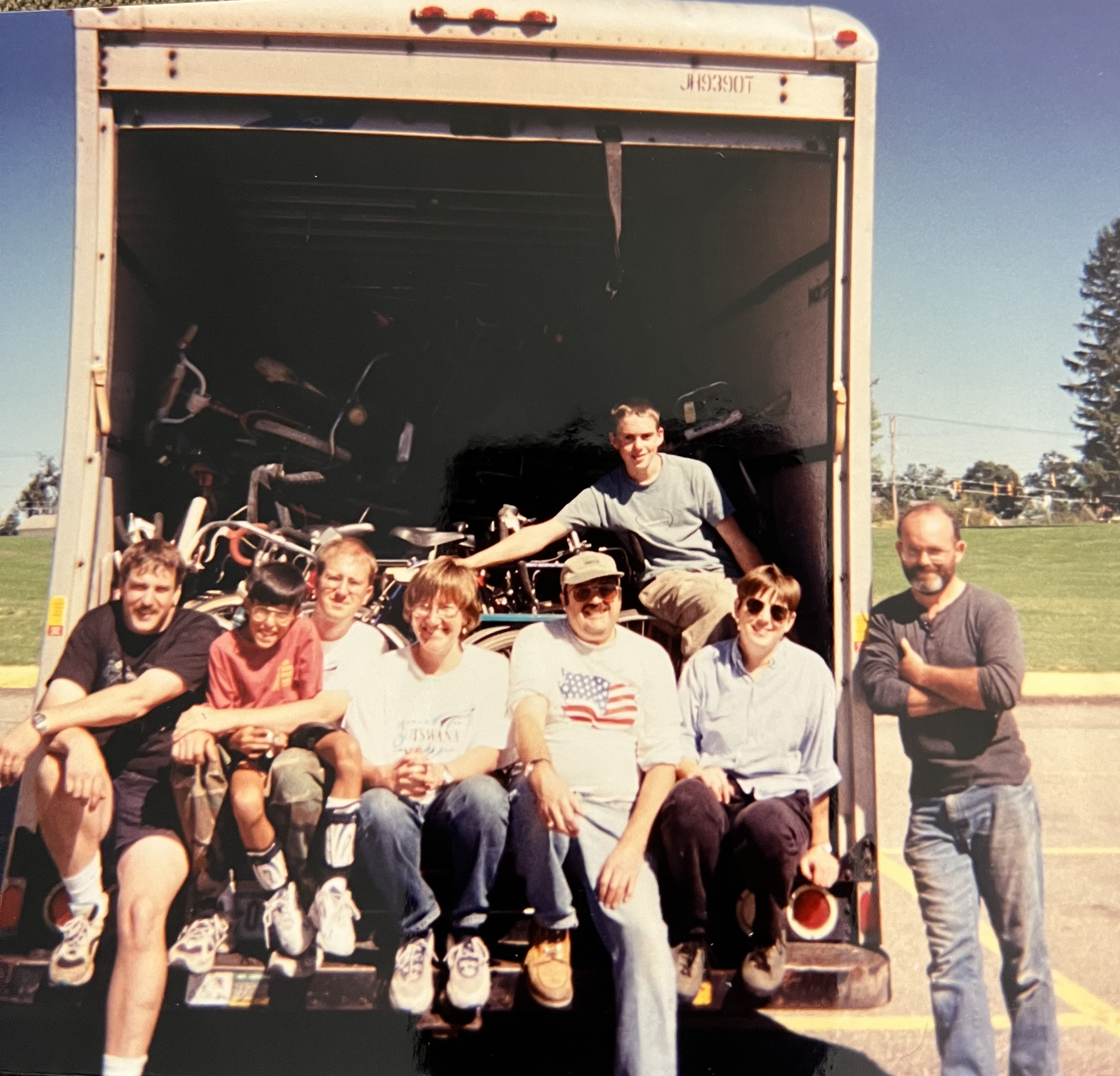
First VT collection at Burlington High School, September 1999. Left to right first row: Bob Thompson, Brian Thompson, Matt Hogg, Dorsey Hogg, Unknown, Joanne Headlamp, Paul Demers. Back row: Stephan Demers.

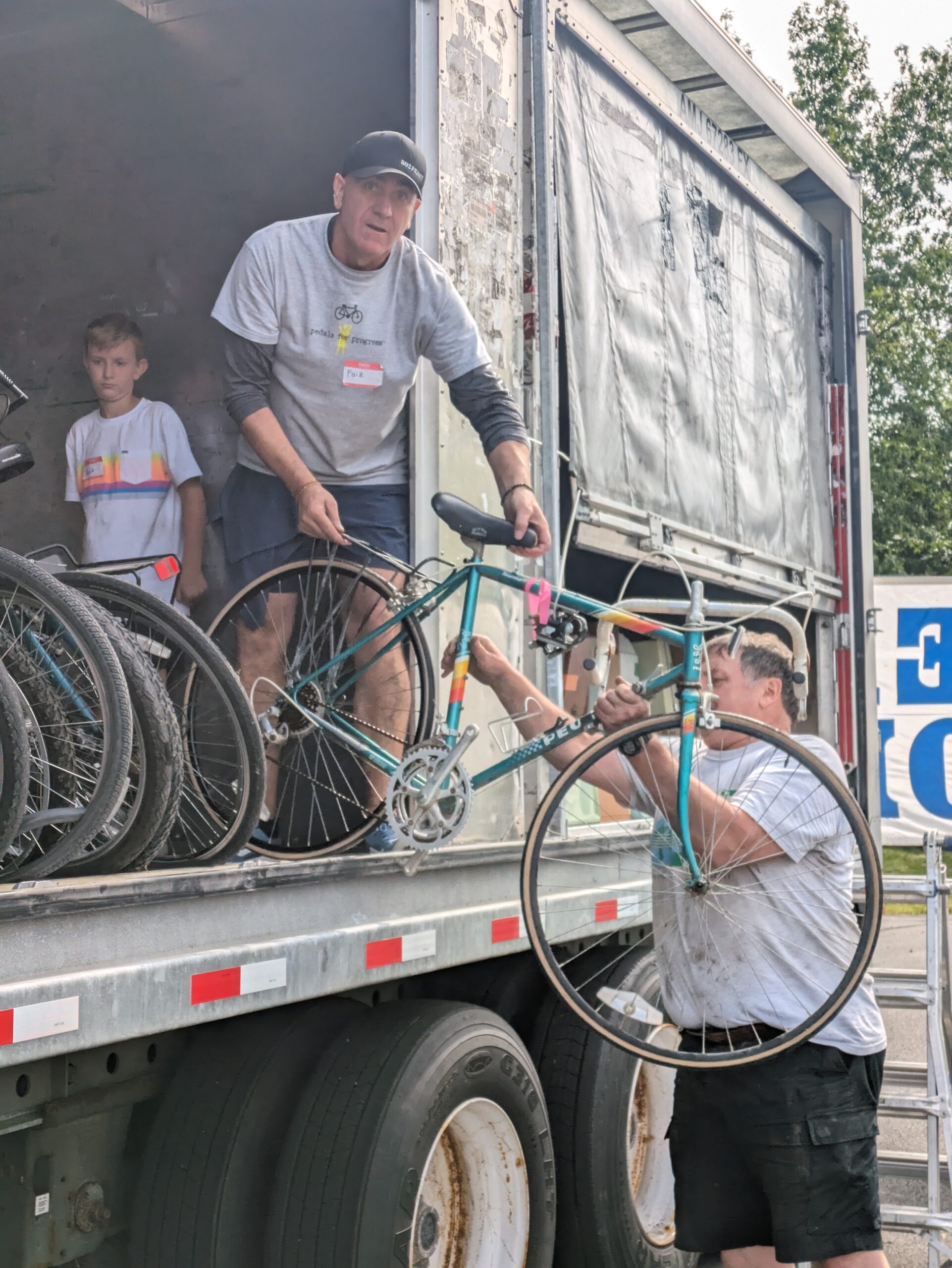
The group came together as the Green Mountain Returned Peace Corps Volunteers (GMRPCV) and held their first collection in 1999 at Burlington High School. The team collected a staggering 138 bikes for their very first collection! With a 26-foot U-Haul rented and ready to go, Matt drove the bicycles to New Jersey with Dorsey following in her car to give him a ride back to Vermont.

Satisfied with their efforts and a job well done, the team decided to do it again! The second year they collected 83 bikes, with Dorsey and Matt making the trip. Year three, after another 114 bikes, Paul took a shot at driving the truck down and then took a train back up to Vermont. Lightning striking three times in a row, they knew they were onto something grand, but the long drives became expensive and tiresome.

During year four, partnering with the Williston/Essex Rotary Club, the distance between VT and NJ suddenly closed. The Rotary Club had a member who handled shipping for IBM. Diligently working her magic, she found someone at FedEx to agree to ship containers at no cost on a space-available basis. The local FedEx office in Vermont has been stalwart in their support ever since, through numerous changes in branch managers and leadership. Just over twenty years later, it has developed into a tradition that has lifted the burden of logistics, while helping hundreds of people every year along the way.

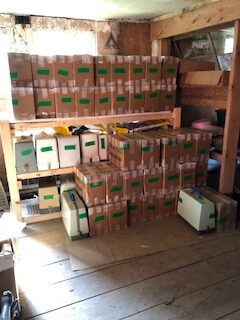
Inside Mary’s barn where refurbish machines are stored during the year

With this key factor in place that offered sustainability to the project, the GMRPCV in Vermont steadily picked up the pace and grew its collection efforts year after year. They have built partnerships with local bike shops participating in bike swaps, held auxiliary collections in smaller areas to maximize their collection efforts, recruited local recycling agencies that provide important financial support, local rotary clubs, student groups, and solid waste groups that all pitch in when they can. The core team has also donated their own time and efforts to fundraising, refurbishing machines, and getting the word out about their collections and our cause through televised news appearances. It goes without saying that the list of volunteers and time spent in 25 years of collections is LONG.

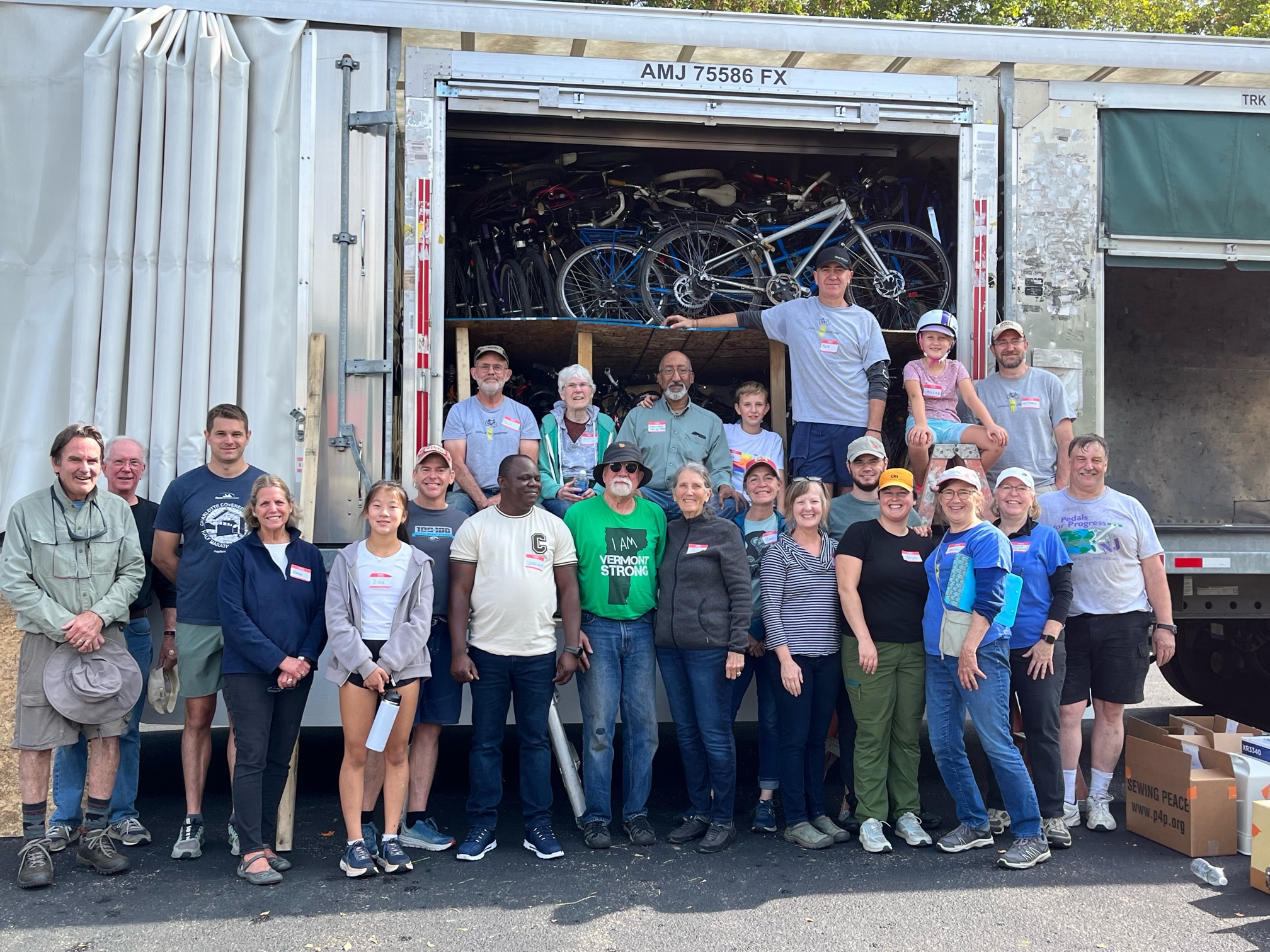
VT team September, 2023

We at Pedals for Progress simply want to say thank you. Thank you to Dorsey, Joanne, and the rest of the team in Vermont that have been helping with our mission for twenty-five years. Knocking it out of the park again, for their 25th Anniversary with P4P, they collected 225 bikes and 127 sewing machines on September 23rd! With this achievement, over the twenty five years of collections, they have collected a staggering 4,900 bikes and 1150 sewing machines that have been shipped around the world. From larger cities like Tirana, Albania, to small villages in rural Togo, these items have drastically changed the lives of thousands of individuals that now have the freedom and mobility to have fair shot at life.


There are hundreds of stories to be told about the team in Vermont. Without fail, there are always a couple interesting stories that come out of each collection. Take for example this small time-capsule that was donated to them this year.

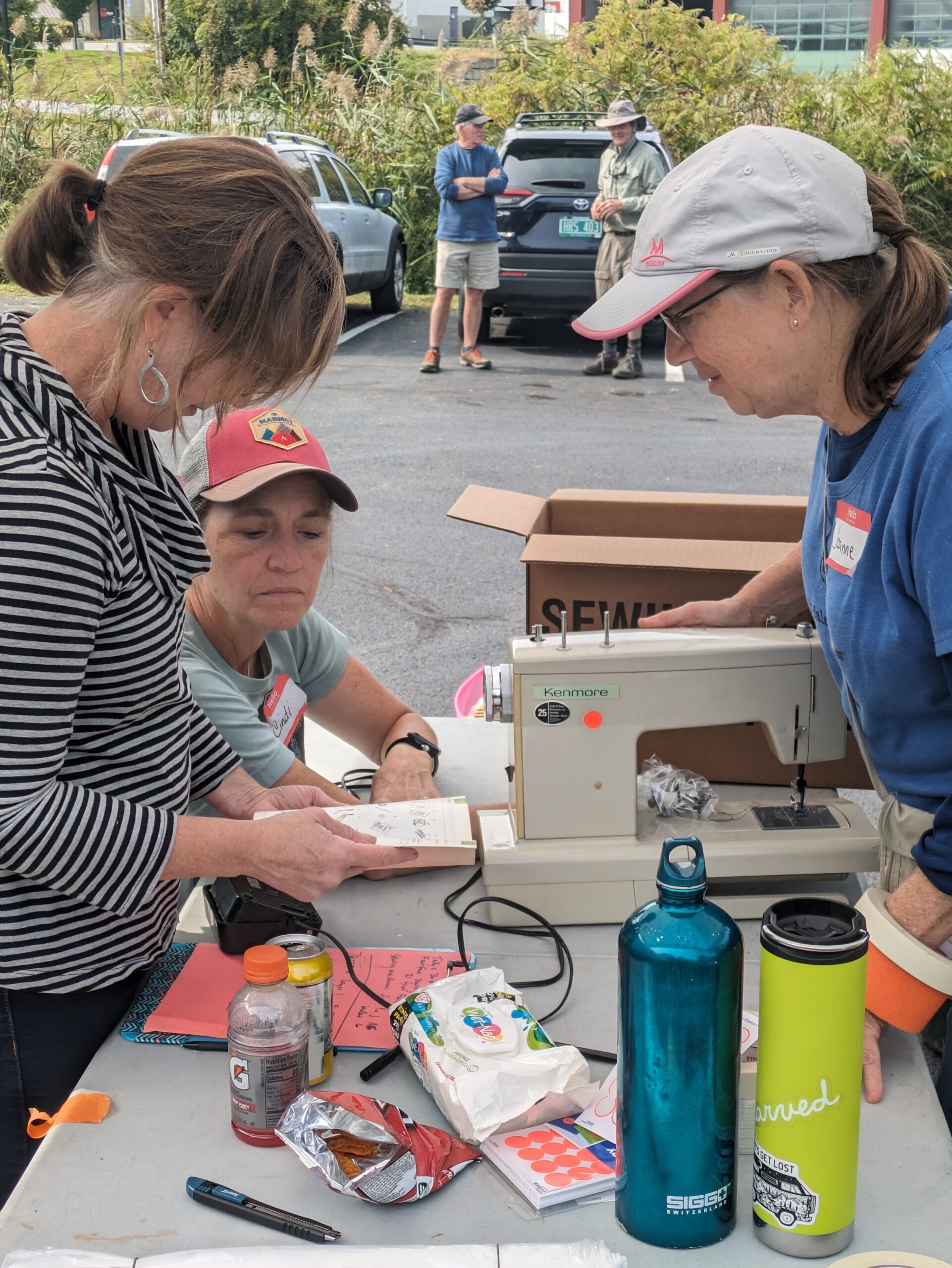
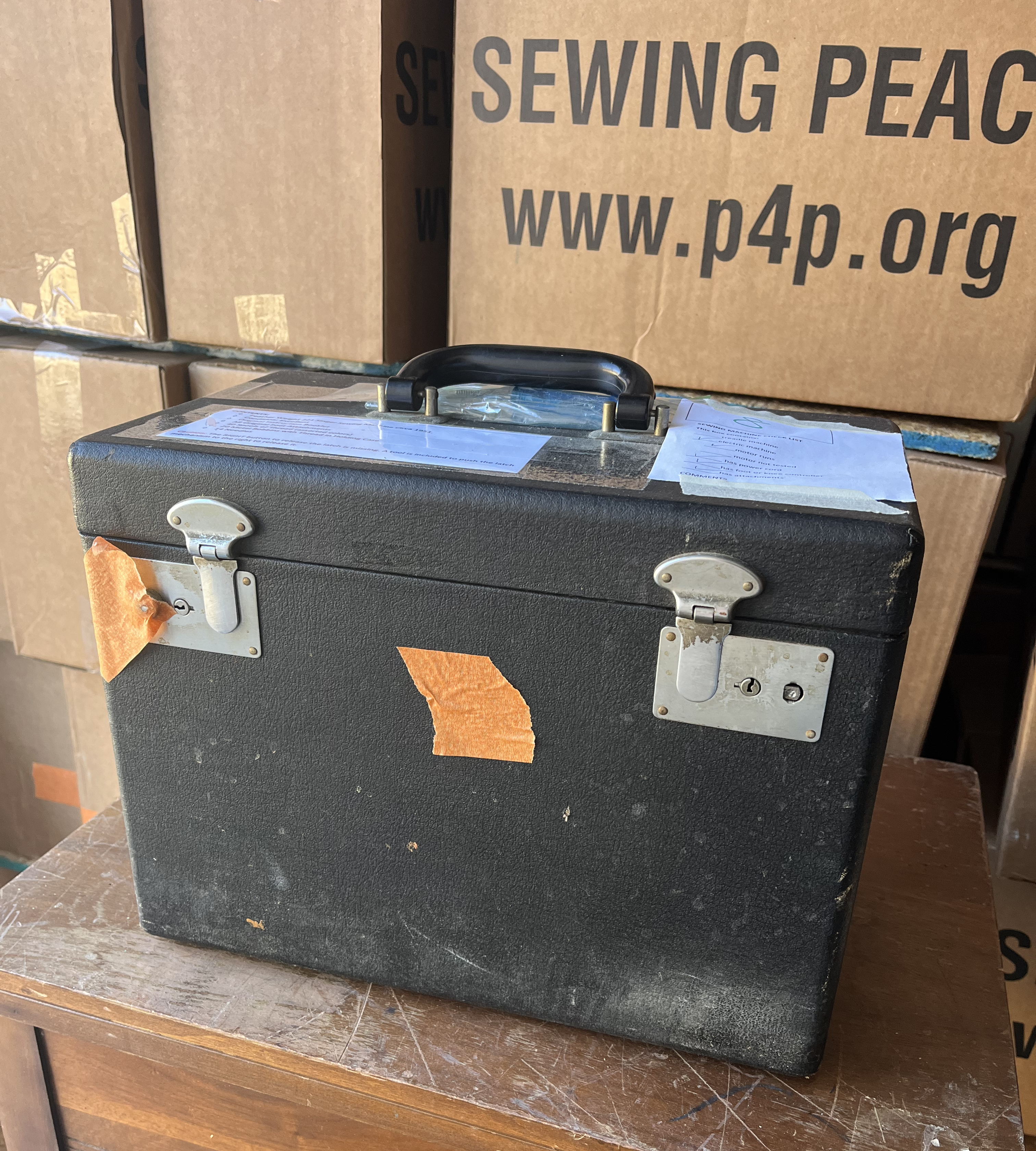
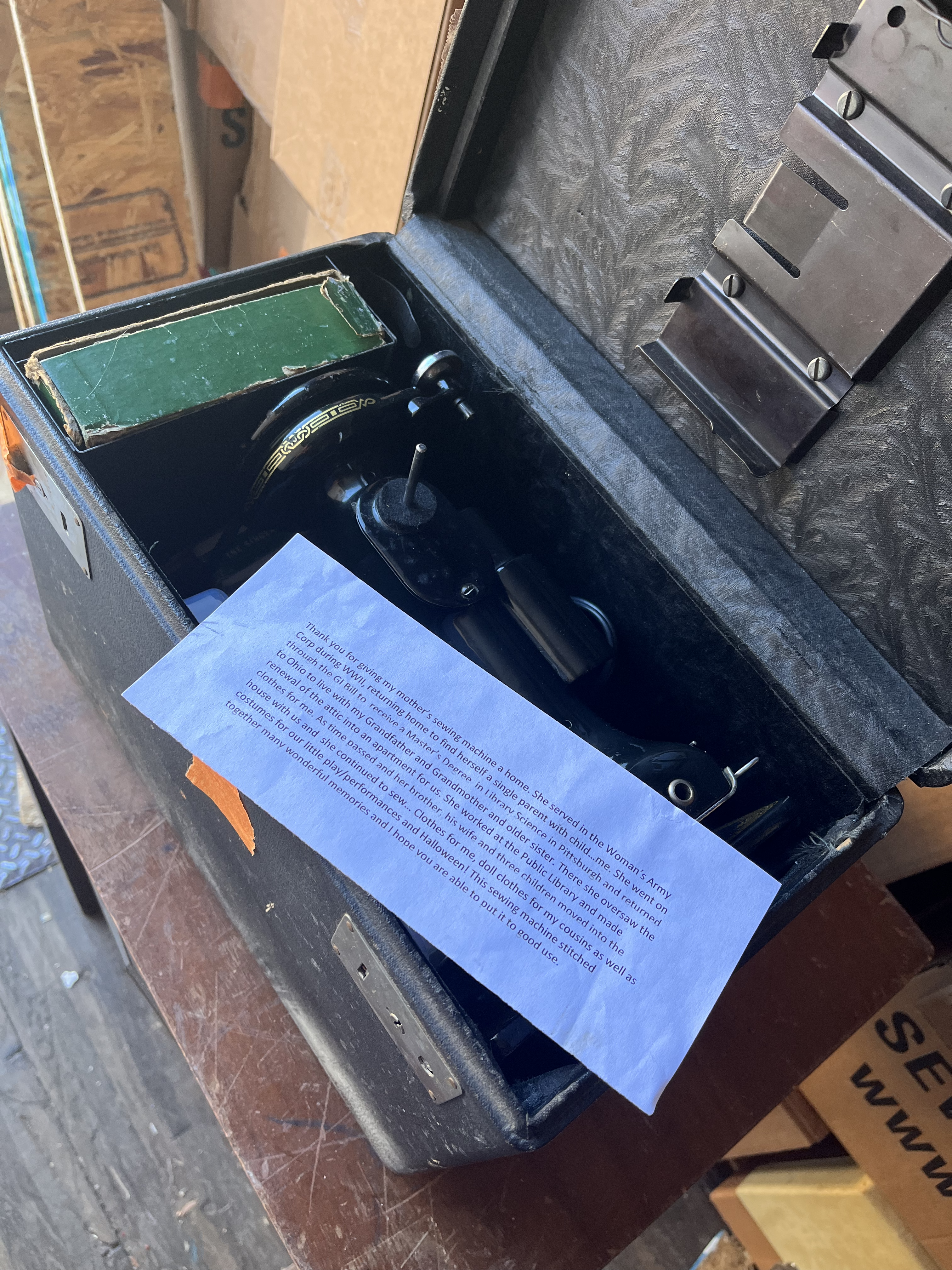
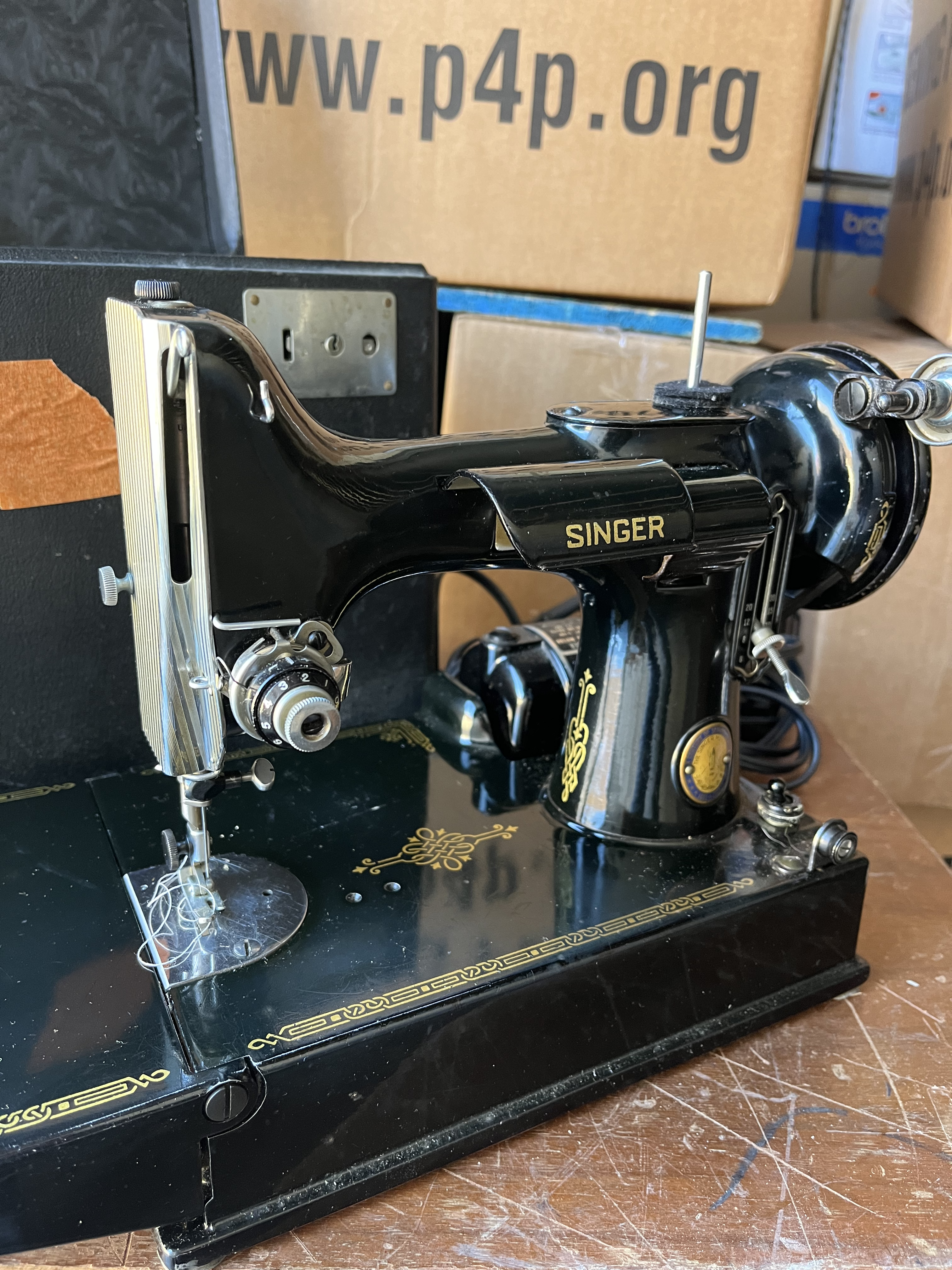
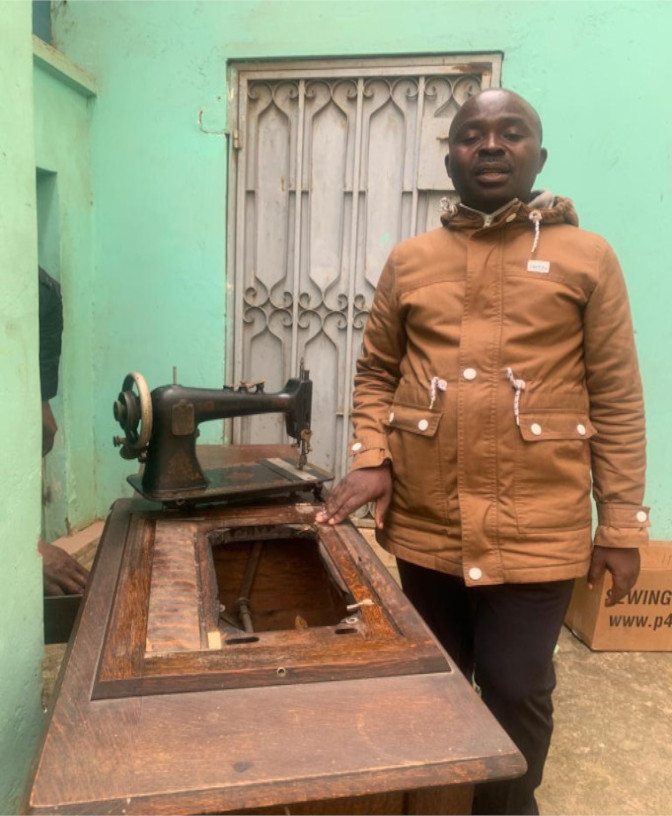
This Singer Featherweight was donated by an unknown individual at this year’s collection. The VT team checks each sewing machine and assesses its condition to help us identify machines that may need to be serviced once they get to New Jersey. Inside this inconspicuous black box there was this note.

Thank you for giving my mother’s sewing machine a new home. She served in the Woman’s Army Corp during WWII, returning home to find herself a single parent with child — me. She went on through the GI Bill to receive a master’s degree in library science in Pittsburgh and returned to Ohio to live with my grandfather and grandmother and older sister. There she oversaw the renewal of the attic into an apartment for us. She worked at the public library and made clothes for me. As time passed and her brother, his wife and three children moved in the house with us and she continued to sew — clothes for me, doll clothes for my cousins as well as costumes for our little play/performances and Halloween! This sewing machine stitched together many wonderful memories and I hope you are able to put it to good use.

We will be doing exactly that, putting this machine to good use by sending it to a partner program abroad. While this story of a sentimental machine that represents a lifetime of stories is specific to one person, the overall sentiment is still a very real theme today. We’ve reported on a multitude of women in situations like this. Whether to people displaced by war, bearing a child alone, or supporting a house full of family members, we aim to provide machines to create change. Machines like this small Singer can provide a financial bedrock through a business endeavor or simply brighten the day of a child wanting a costume. No matter what is being made, our aim is that the result is one of progress and peace.

Distribution of Sewing Machines in Arusha, Tanzania, Fall 2023

By Norbert Mbwiliza
Fall 2023 Newsletter

Date: July 7, 2023

Introduction: This development report provides an overview of the distribution process and impact assessment of sewing machines that were received from a donor for rural areas in Arusha, Tanzania.

The objective was to empower individuals in these communities, particularly women, with the means to start or expand their sewing businesses, thereby contributing to their economic and social development.

Distribution Process:

  1. Needs Assessment: Prior to the distribution, a comprehensive needs assessment was conducted in collaboration with local authorities, community leaders, and relevant stakeholders to identify the target beneficiaries and assess the demand for sewing machines.
  2. Selection Criteria: A set of selection criteria were established to ensure that the machines reached those who would benefit the most.
    The criteria included factors such as income level, sewing skills, and willingness to commit to using the machines for income-generating activities.
  3. Training Program: To maximize the impact of the sewing machines, a training program was developed to provide beneficiaries with basic sewing skills, machine operation, maintenance, and entrepreneurship training. Local trainers were engaged to conduct the training sessions.
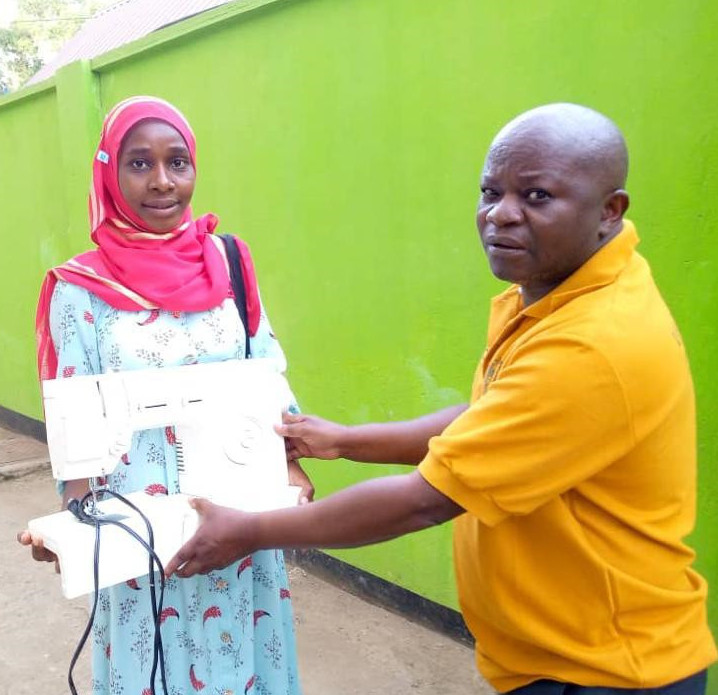
  4. Distribution: The sewing machines were distributed in a transparent and equitable manner, following the selection criteria. Distribution events were organized in collaboration with local community centers or village assemblies to ensure community participation and accountability.
Created with GIMP

Impact Assessment:

  1. Economic Empowerment: The distribution of sewing machines has had a significant economic impact on the beneficiaries. Many individuals, particularly women, have been able to start their own tailoring businesses, generate income, and improve their financial stability. The machines have enabled them to offer sewing services to the community, create employment opportunities, and contribute to the local economy.
  2. Skills Development: The training provided alongside the distribution of sewing machines has enhanced the beneficiaries’ sewing skills and knowledge. They have acquired technical expertise in operating and maintaining the machines, leading to increased efficiency and quality of their work. This has also fostered a sense of self-reliance and confidence among the beneficiaries.
  3. Social Impact: The distribution of sewing machines has had positive social implications in the rural areas of Arusha. Women, in particular, have gained increased recognition and respect within their communities as entrepreneurs and providers. The improved economic conditions have also contributed to a higher standard of living, allowing families to access better education, healthcare, and other essential services.
Created with GIMP

Challenges Faced:

  1. Limited Access to Electricity: In some rural areas, access to reliable electricity remains a challenge, affecting the operation of the sewing machines. Efforts were made to address this issue by exploring alternative power sources such as solar energy or setting up community charging stations.
  2. Sustainability: Ensuring the sustainability of the sewing businesses in the long term has been a challenge. Ongoing support and mentorship programs are crucial to help the beneficiaries overcome obstacles, adapt to market demands, and expand their businesses.

Conclusion: The distribution of sewing machines in rural areas of Arusha, Tanzania, has made a significant impact on the economic empowerment and social development of the beneficiaries.

Through increased access to sewing machines and relevant training, individuals, particularly women, have been able to start their own businesses, generate income, and improve their overall well-being. Ongoing support and sustainability efforts are necessary to further strengthen the impact and create a lasting change in these communities.


Report from Uganda, April 2023

By Mathew Yawe, Executive Director, Mityana Open Troop Foundation
Spring 2023 Newsletter

On behalf of the Mityana Open Troop Foundation, allow me to present to you a report of our activities from Janaury to April 2023.

Mityana Open Troop Foundation is a registered Community Based Organization, with a Vocational Skills Training Centre, which recruits and trains vulnerable youths, mostly young girls formerly selling sex for survival and girls expelled from schools due to teenage pregnancies. Currently the project has a total of 111 Trainees, girls and boys.

Learners are trained for two years in sustainable skills such as sewing and fashion design, hair dressing and weaving, motor vehicle mechanics, carpentry & joinery, or metal fabrication.

There are three 3-month training terms per year. For each term the centre recruits whoever wishes to join.

Since the inception of our Vocational Skills Training project in 2007, more than 1,200 have graduated. Some got employed while others set up their own workshops.

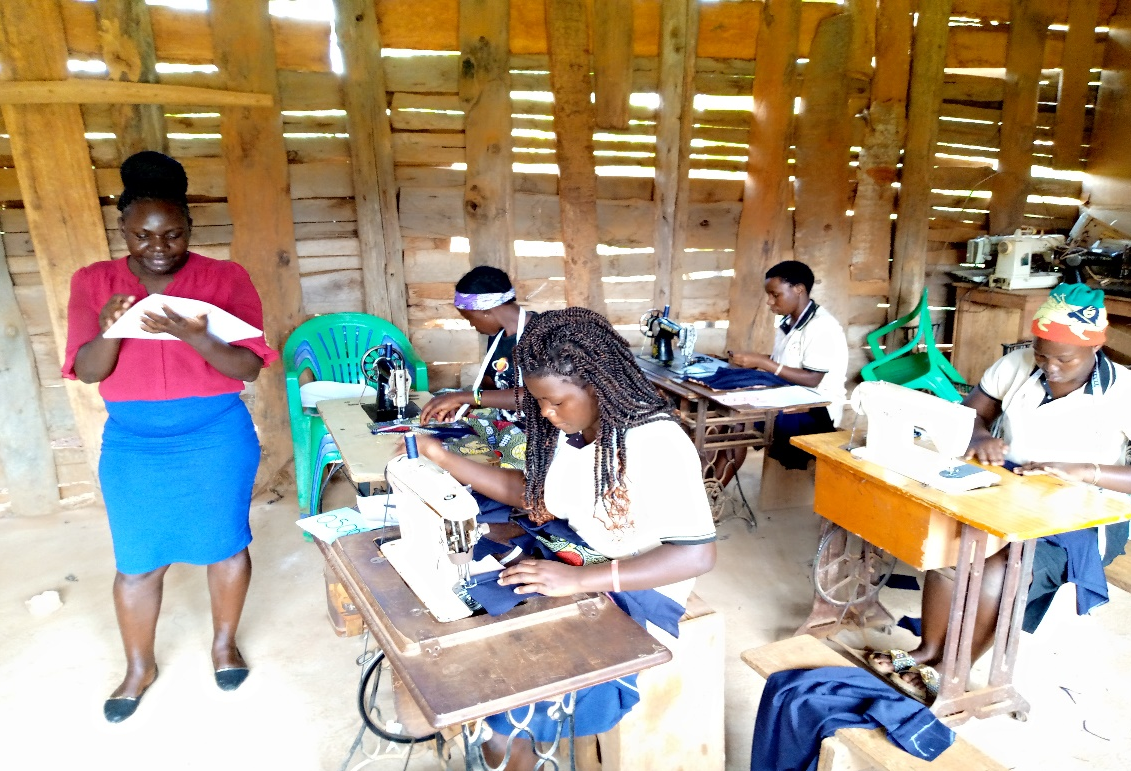
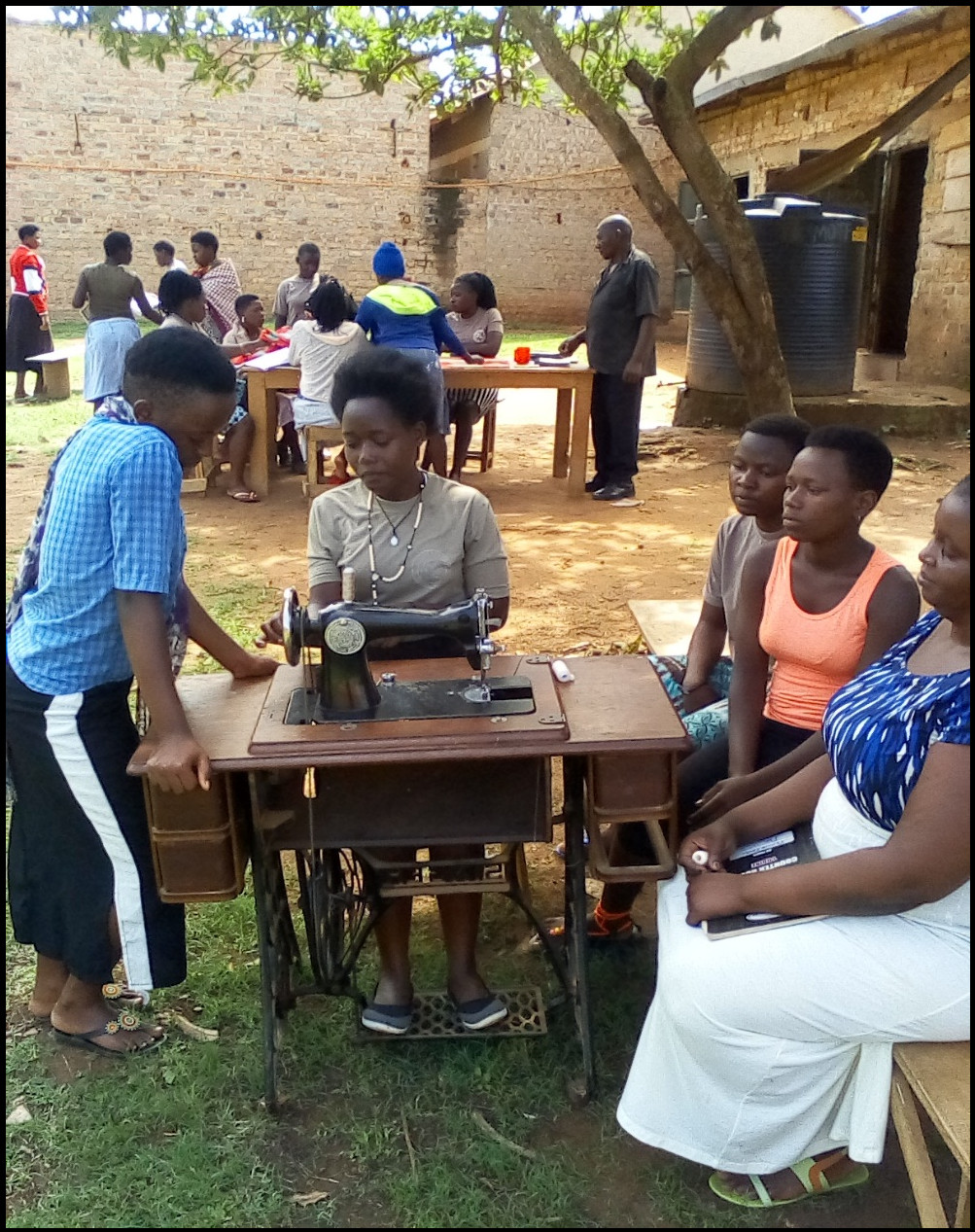
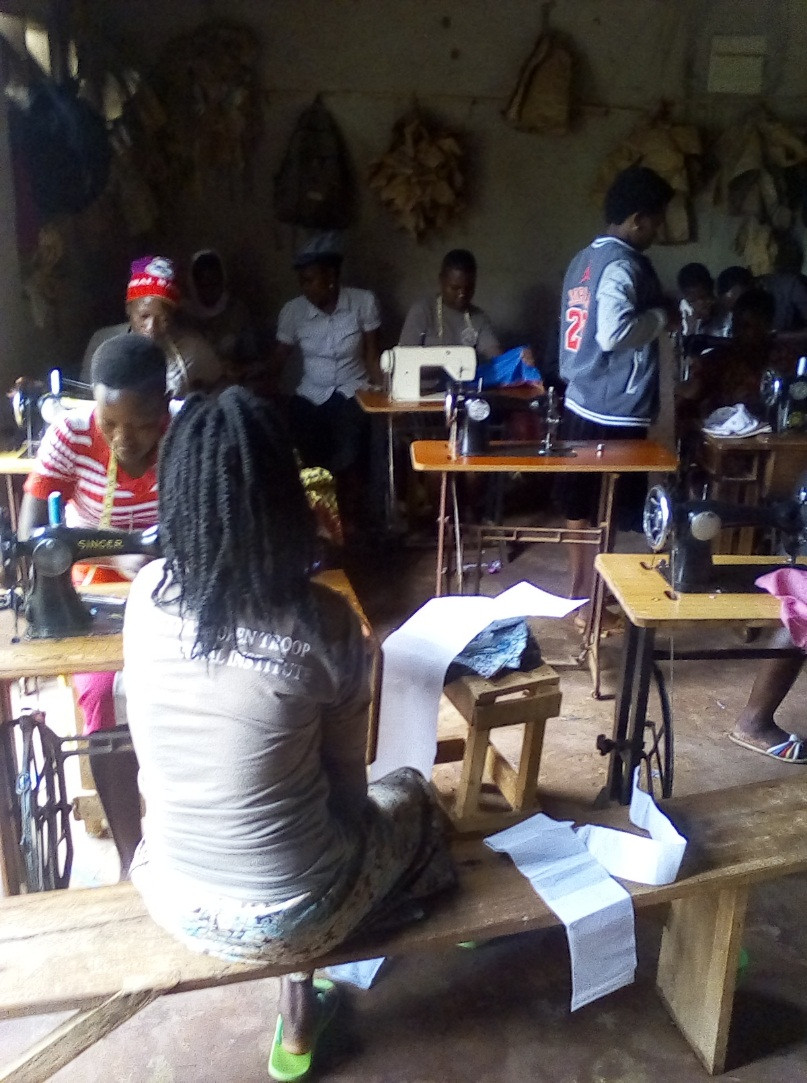
Uganda sewing class, May 2023Every trainee in the sewing program works with a sewing machine from the Pedals for Progress / Sewing Peace Project of the USA to enable proper hands-on training.

Other P4P/SP sewing machines are donated to the graduating youths to enable them to start their own workshops right away. In Uganda, graduating a trainee with only a certificate and no equipment is a waste of time. It’s estimated that 90% of Ugandan graduates can’t afford start-up equipment.

Achievements

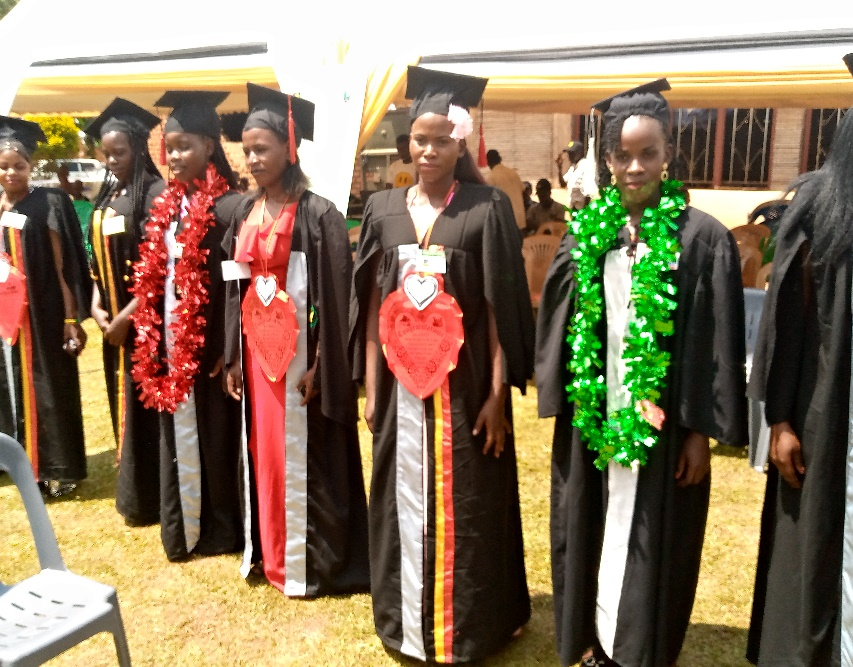
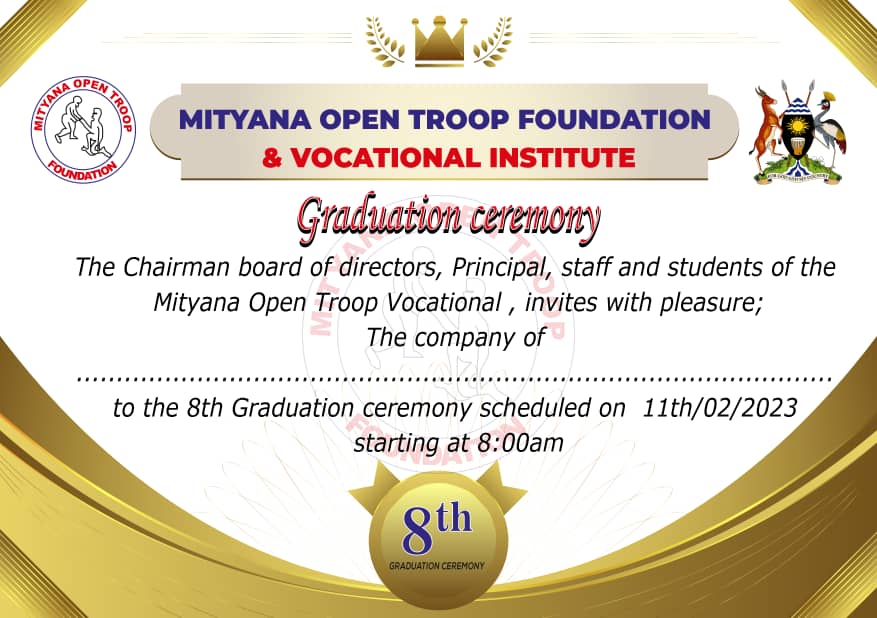
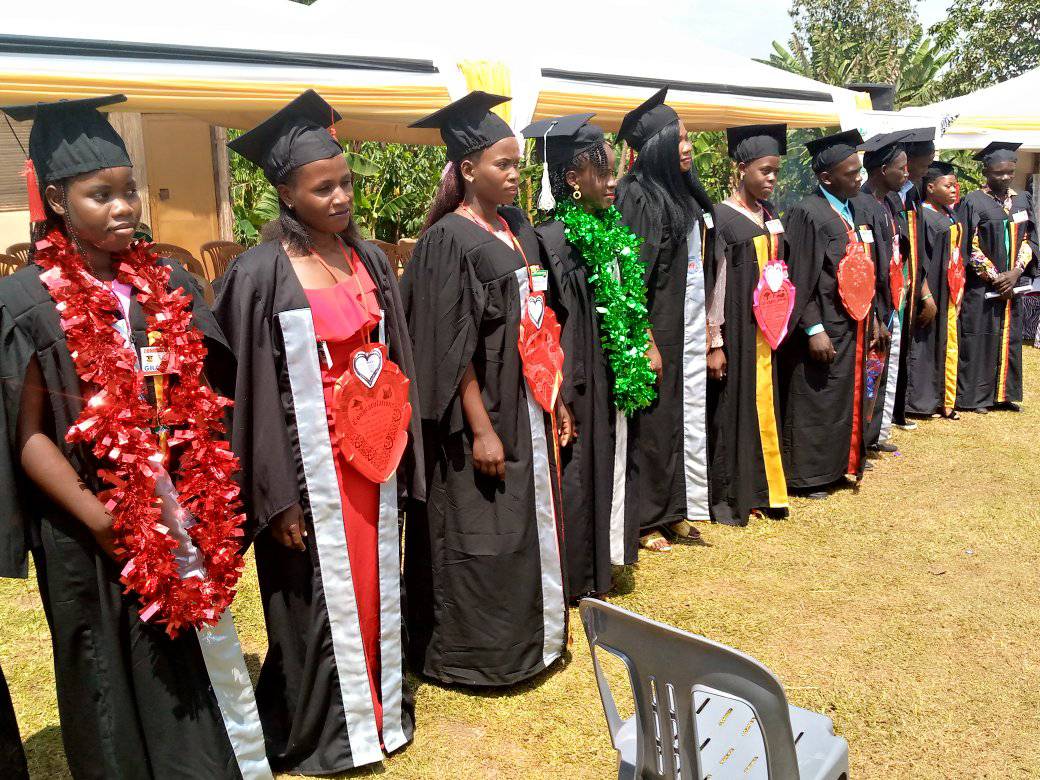
Uganda MOTF Graduation, February 2023The Vocational project held its Eighth Graduation Ceremony on February 11, 2023, when 205 youths graduated with sustainable skills. Because of the COVID-19 pandemic and Ebola in our Ugandan Operational Districts, this is our first graduation ceremony since the Seventh Graduation Ceremony in November 2018.

Breakdown of graduates:

  • 101 tailors
  • 70 hair dressers
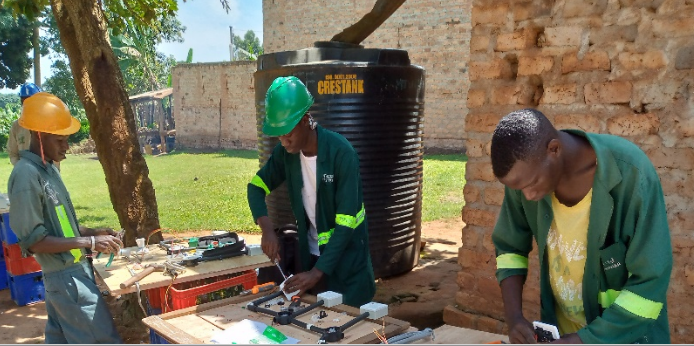
  • 10 domestic electricians
  • 20 motor vehicle mechanics
  • 4 bakers

The project leased a plot of land for growing maize and beans to feed project learners, as buying maize flour and beans from food stores is so expensive.

We also hold talks concerning STIs, HIV/AIDS, youth friendly services, etc.

Income and Expenditure January to April 2023

Exchange rate: 1 U.S. dollar (USD) to 3,300 Uganda shillings (UGX)

Income January 2023 to April 2023. (USD $) Expenditure January 2023 to April 2023. (USD $)
1. School fees contribution from trainees US $ 2,727 salaries for the Instructors and support staff US $ 600
2. Selling of Sewing machines. US $ 454 Sewing machine shipping from USA US $ 1600
3. Sewing & fashion products, embroidering services, face masks. US $ 110 Trainee feeding US $ 1000
4. Carpentry workshop products. US $ 301 Training working materials. US $ 500
5. Government of Uganda, youths skilling program support. -Nil- Electricity bills for school, carpentry, sewing shop. US $ 400
6. Kolping Mityana Womens Project, 5 Vulnerable Orphanage school fees support. US $ 500 Computer services & stationary. US $ 30
7. Fields of Life Orphanage school fees Support. US $ 419 Compound slashing / maintaining. US $ 60
8. Unbound Kampala Ltd Vulnerable Orphanage school fees Support. US $ 350 Sewing Show Room & Carpentry Workshop premise Renting. US $ 597
9. Firewood US $ 200
10. Operational licences / Taxes US $ 239
11. Sewing machine servicing -Nil-
12. Condolence support to project trainees and teachers, having lost their closest dear ones! US $ 1000
TOTALS: US $ 4,861 US $ 6,226

Challenges / Limitations

The Training Centre lacks clean water. There is a small water tank, 2000 liters, which is emptied in 2 days. Then students have to walk 2 km to get water from unprotected sources.

We lost Rev. Balam Mukwaya in February 2023, a board member who donated to the project land fund.

The organization requires office furniture and staff room, as instructors don’t have a place to sit and keep their kits.

The organization still encounters challenges in raising funds for shipping sewing machines from Pedals for Progress / Sewing Peace USA, as the project gives sewing machines to graduates as start-up equipment.

The organization lacks a computer, printer, and photocopier for printing end-of-term exams, and for other office computer work. Currently all computer work is taken to our town to be worked on.

The project needs a computer lab with internet access, to enable students to find dress fashions, learn computer skills, and get health information. In addition, this computer lab would be used by our community volunteers to access the Ministry of Health for health-related issues.

We have many cases of malaria among project trainees, as they lack mosquito nets.

Our project lacks a toilet for boys. Currently boys and girls share one pit latrine, which is not recommended by the Ministry of Education.

The project lacks an incinerator, where sanitary pads and other wastes can be burnt easily.

We lack our own land for growing maize, beans, and potatoes for feeding trainees. The same piece of land could be planted with Robusta coffee and macadamia nuts, cash crops for generating income.

Community Impact

Uganda men's workshop, May 2023The Mityana Open Troop Vocational Skills Project offers affordable training to school dropouts from our communities, including unemployed youths. The project trainees come from the six surrounding districts: Mityana, Mubende, Kiboga, Kasanda, Kyankwanzi, and Hoima. The non-formal skills training we offer has very much benefited parents whose children have dropped out of school, as most institutions in the area offer formal education only.

Over 800 trainees have graduated since our inception in 2007. These graduates go back to their communities and set up their own workshops, passing along their acquired skills to fellow youths who didn’t join our project.

The community can also buy inexpensive goods and services from trainees in the carpentry workshop and the sewing project, where we make uniforms and offer sewing repair services.

Our sewing shop also offers embroidery services to schools formerly traveling to Kampala.

The Mityana Open Troop Foundation is the only shop in the area delivering high quality used sewing machines at inexpensive prices. The machines are from Sewing Peace USA. Many schools and tailors in the area have been supplied with these machines.

Way Forward and Recommendations

We are fundraising for a new 2-classroom block, to enable us to create a conducive training environment and have room for more students.

We need an incinerator for burning sanitary pads and other waste.

We need a new toilet for boys, who currently share facilities with girls, which is not recommended!

We need embroidery machines with USB input, as the one we have is very slow and requires mechanical servicing all the time!

We are organizing a Christmas children’s party for December 27th, with guest speakers, drinks, cakes, biscuits, music, and gifts.

We welcome volunteers who can teach sustainable skills to our youths. We would like to partner with similar vocational training institutions elsewhere in the world. This will help us learn how they operate. Plus it will help our Ugandan youths create friendships with fellow youths and learn about their cultures.

Conclusion

In conclusion, on behalf of the Mityana Open Troop Foundation, I extend our sincere thanks to the following great friends / partners who have been so supportive of our activities: Mr. Chris Eldridge, Mr. David Schweidenback and Mr. Alan Schultz of the Sewing Peace Project USA.

I extend our thanks to the generous communities of the USA, who have been donating high-quality refurbished sewing machines to our needy Ugandan communities. Please, the used sewing machines which seem unimportant in the USA have uplifted our communities, changing peoples’ lives by creating a daily source of income. Thanks to all the volunteers involved in the collection of sewing machines and bicycles.

Please Continue Giving a Hand Up, Not a Hand out.

Thanks.

Report from Uganda, Fall 2022

By Mathew Yawe
Fall 2022 Newsletter

Mityana Open Troop Foundation is a Community-based Organization started in 1997 by a group of Boy Scouts who had been affected by socioeconomic issues leading to dropping out of school and unemployment,  while others had been affected by HIV/AIDS due to loss of their relatives/guardians. The high dropout rate led to high crime rates among youths in Uganda. The initiative started by conducting training on HIV/AIDS, health talk-shows, environmental protection, child nutrition in the most risky communities, promoting food security, providing support and education to vulnerable children and conducting functional adult learning to combat illiteracy.

Vocational Training Project

Because of the above concerns, our organization started a Vocational Training project in 2007 by recruiting and training vulnerable youths, widows, and orphans in sustainable skills such as sewing and fashion design, cosmetology, hair dressing, motor mechanics, and agriculture.

Group at treadle sewing machine
Before Sewing Peace Project machines

However, while much of our interest was in training youths in sewing and other occupational skills, we lacked the funding to afford the tools and machines that we needed.

Our project UK partner, Mr. Chris Eldridge, found the Sewing Peace Project USA, and we wrote an application for sewing machines to Mr. David Schweidenback.  Sewing Peace allocated us 72 sewing machines. This was a great miracle which we were not expecting to happen!!

At the beginning, the project had two manual sewing machines shared by 30 trainees!!

Uganda group in classroom
Sewing Peace Project machines

The donated refurbished sewing machines to the Mityana Open Troop Foundation were in very good condition, much better than the machines being sold in Kampala. The Sewing Peace machines were installed in our sewing workshop. Some of the machines were given out to the project graduating youths as start-up machines to enable them to start their own workshops within their communities. In Uganda, a sewing machine makes a very great difference in one’s daily income!

Donated Machines Generate Income for Our Project

Uganda Sewing Shop in townSome of the donated sewing machines are being sold in our shop at a cheaper price to some of the Ugandan schools, community based organizations, and artisans, who can’t afford buying the so-called new Chinese machines.

The profit from our shop is used to pay shipping costs,  Ugandan custom taxes, teachers’ salaries, and electricity bills.

Achievements of the Sewing Peace Project

  • As a result of the donated sewing machines since 2010, the project has received over 800 sewing machines, 451 projects graduates were provided each a start-up sewing machine.
  • The Mityana Open Troop Foundation has been selling at inexpensive prices the remaining sewing machines to other Ugandan charities, schools (both secondary and primary), and individual artisans. The income from the machines we sell has enabled us to pay teachers, electricity bills, and maintenance costs.
  • The project has over 40 sewing machines in the sewing workshop. This has enabled more hands-on training than when we started in 2010 with 3 machines.
  • The project has become an Ugandan sewing machine importer, paying import taxes to the Government.
  • The project owns a Sewing Shop in our town, equipped with an embroidery machine able to create school badges, names on uniforms, making school uniforms. The shop is selling refurbished machines to artisans, schools, and charities. These machines are much better than the Chinese machines in the market.
Ugana graduate in her workshop
Graduate in her workshop

Our project graduates have managed supporting their families: paying for food, medication, school fees, and scholastic materials for their young brothers and sisters, and paying rent for their workshops.

The majority of our project trainees are youths who had dropped out of schools due to socioeconomic factors. Some of them were even previously selling sex on the streets at a young age for survival and without thinking of becoming pregnant or  contracting STIs.

Challenges

  • The project encounters challenges in raising machine shipping costs, including paying the Ugandan Custom import taxes.
  • Lack of a toilet and washing rooms at our project.
  • Insufficient permanent classrooms/workshops.
  • Lack of clean water for trainees.

Conclusion: Many thanks to  the Sewing Peace Project, USA, all volunteers involved in the collections of machines, including refurbishing activities. We also extend our sincere thanks to Mr. Chris Eldridge from the UK, who is always supportive to our project.

‘The Good You Do to Others, Comes Back To You Unknowingly.’

Somalia: New Partner, 2022

By Abdi Noor
Fall 2022 Newsletter

[ Editor’s note: On September 2, 2022, we made our very first shipment to Somalia. Our partner there is the the Hiran Youth Council. Abdi Noor, a Somali now living in Portland, Maine, is our contact. Here is his message to P4P/Sewing Peace.]

I would like to sincerely thank you on behalf of the staff of the Hiran Youth Council and on behalf of the poor women and youth training in our program. From your generous donation we will be providing sewing machines to poor youth and women to earn an income through our program.

Your support has enabled us to provide free tailoring training to 72 poor youth and women, who will receive the machines after completing their courses. We are also planning to receive additional sewing machines from Sewing Peace to distribute more machines to students. Your support enabled us to provide refreshment to the poor women and youth for better learning.

Training programs like ours are great opportunities for our women and girls to further develop their marketable skills and take a step towards self-independence.

Without you, it would not be possible for them to receive this training or these machines that will allow them to start sewing at their homes. With time, they will be able to develop sewing businesses and earn a livable income.

Your support will bring them bright futures to our trainees. Many thanks again! We will keep you updated about our work and the progress of our graduates.

Cameroon: Rising Hope Foundation for Change Fashion and Design School Training Clubs

By Mbenja Clovert Anamani
Fall 2022 Newsletter

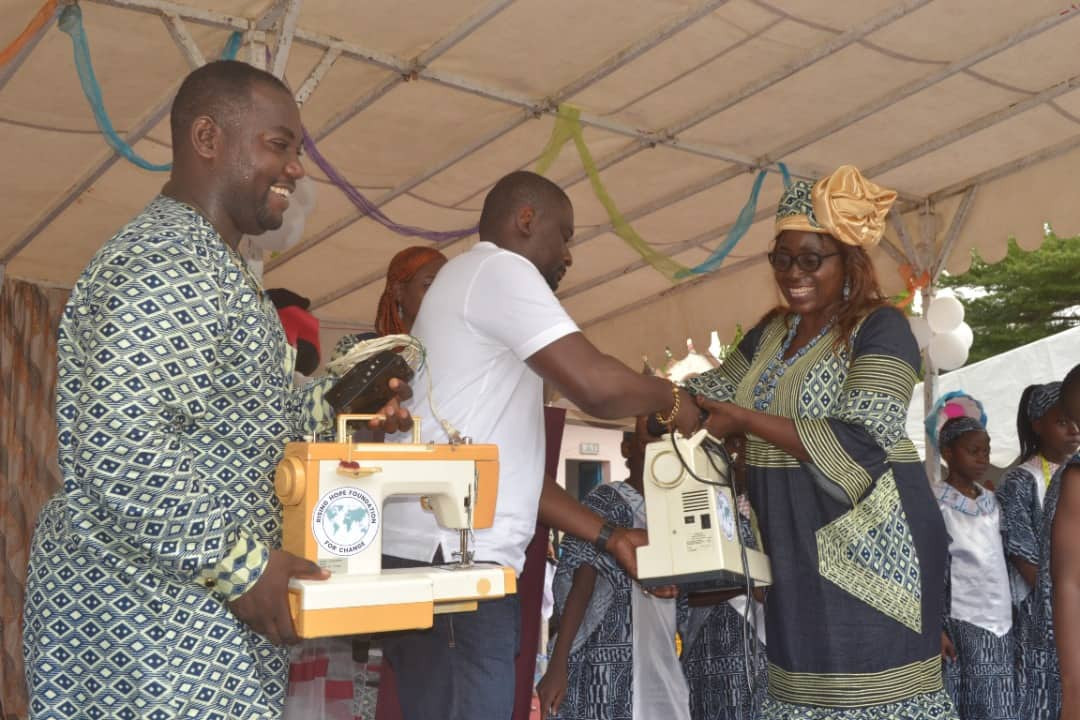
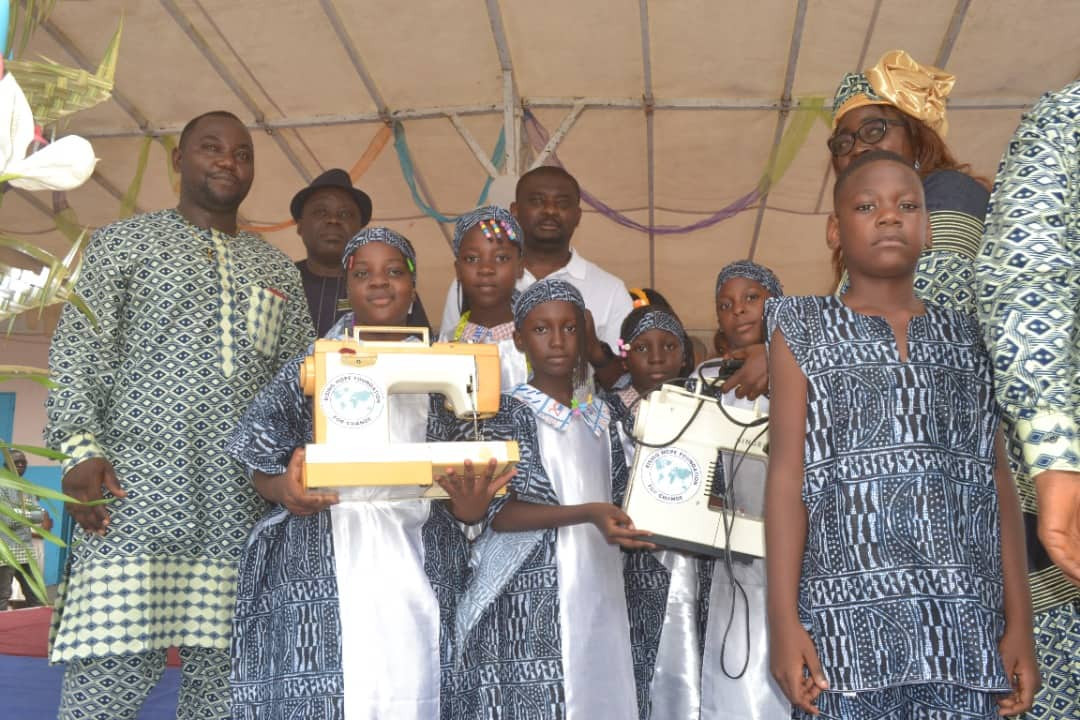
Cameroon partner awarding sewing machinesRising Hope for Change (RHFC), Cameroon, donated sewing machines to SIRA Bilingual Nursery and Primary school to start a pilot school fashion and design training club in Cameroon schools. The aim of this pilot project is to install Rising Hope Foundation for Change fashion and design training clubs in Cameroon schools in partnership with Sewing Peace America.

In line with our objective to provide quality sustainable projects to impact communities, RHFC donated sewing machines to SIRA Bilingual Nursery and Primary School Makepe Douala fashion and design pilot training Club for pupils. The entrepreneurial school will train young students how to sew from primary levels. It was during their end of school year and prize award ceremony that the project was launched, and these machines were handed to the club by the CEO of RHFC in the presence of the proprietor, parents, pupils, staff, and the director of the school. Receiving the gifts, the head of the club together with the pupils expressed their gratitude to the CEO and the entire RHFC family for the timely gesture and initiative of RHFC. The proprietor of the school in turn thanked the organization for supporting their vision. The occasion ended with a family photo.Cameroon school group with sewing machines

RHFC Empowering Women

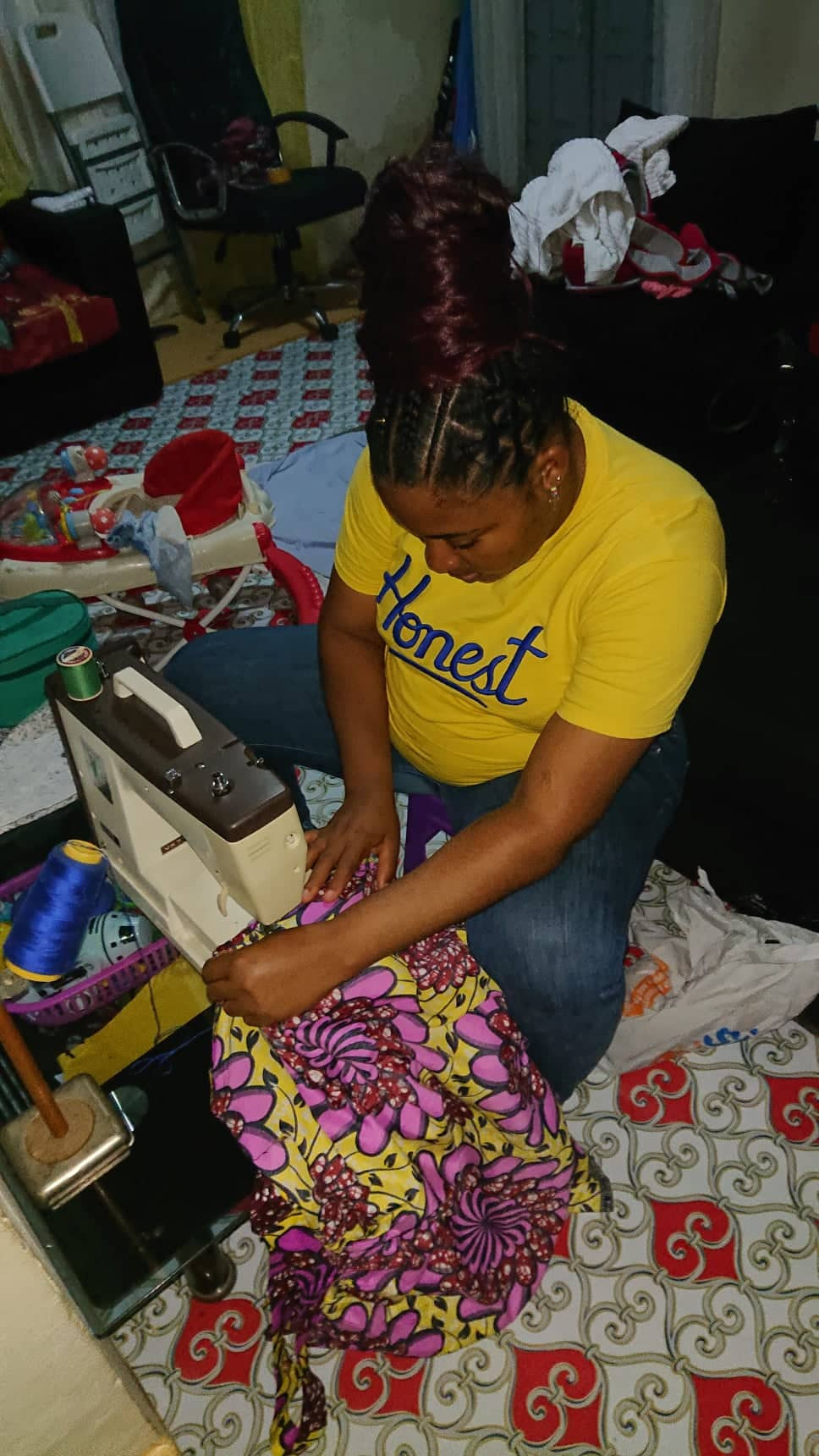
The largesse of the RHFC team was extended to an internally displaced persons (IDP) family based in Logpom Douala in Cameroon. Growing up in the southwest region of Cameroon, life was okay until the crisis started in 2016. Mme. Arrey Christelle from Manyemen left the village when the crisis was at its peak. Together with her entire family, they left behind many of their belongings since they were in a rush, leaving behind the only thing that was helping them to feed their family, the sewing machine. Her mother taught them how to sew dresses using the sewing machine they had. With their livelihood surrounding the sewing machine, they grew up to become skilled seamstresses. When they settled in Douala, life was not the same as in Manyemen. Without a sewing machine they had no source of income, they could not stitch their worn-out dresses, thus rose difficulties to eat and take care of minor bills. They cried out for help, RHFC heard their cry and offered a free sewing machine. This machine boosted their moral and increased Mme. Arrey Christelle’s income as she can again sew dresses for people and earn a living.

RHFC and IDPs (internally displaced persons)

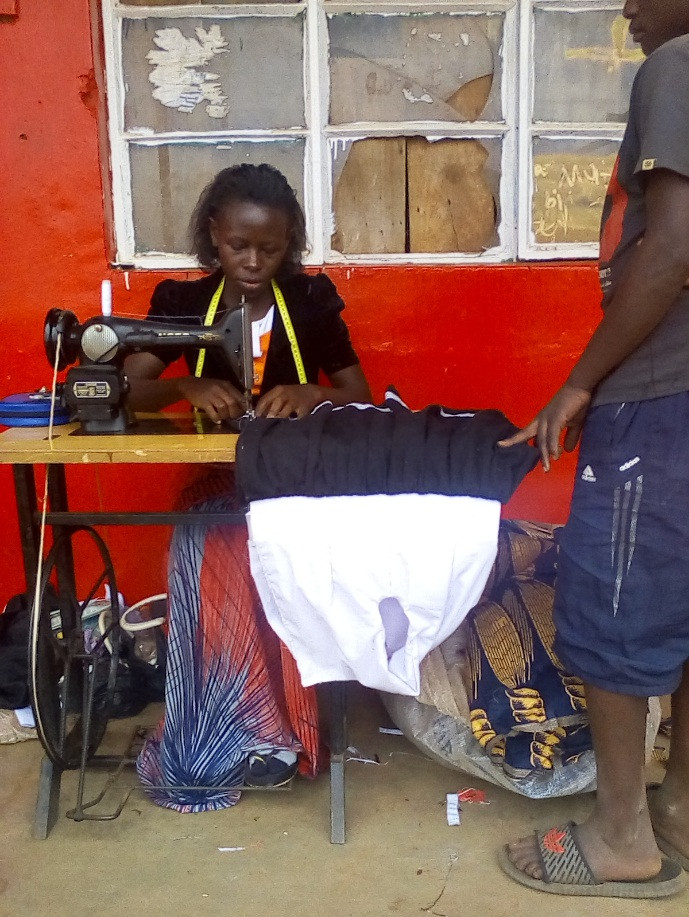
Cameroon woman sewingUnder the initiative of “RHFC and IDPs Empowerment”, RHFC has donated more than 20 Sewing Machines to Internally Displaced women and girls in the Southwest and other regions of Cameroon after some days of training. According to the Founder of RHFC, Mr Mbenja Clovert Anamani, this gesture will go a long way to improve the livelihood of these internally displaced persons and their families in one way or the other. Through their training, IDPs will be economically empowered, freed from sexual exploitation, and gain skills in business, enabling them to grow their sewing endeavors and have more investors to establish bigger and greater ideas. Innovative skills will boost their creativity in the world of technology, therefore foster entrepreneurship in the world of fashion and design.

Sewing Peace in the Belize Prison

By Derrick Pitts
Fall 2022 Newsletter

With the sewing machines we received from Sewing Peace we were able to partner with the local prison to start a sewing program for the inmates at the Belize Prison. The objectives of the sewing program are:

  1.     To introduce the inmates to a marketable life skill. A skill which they can gain an honest income from.
  2.     To save the prison money at the same time.

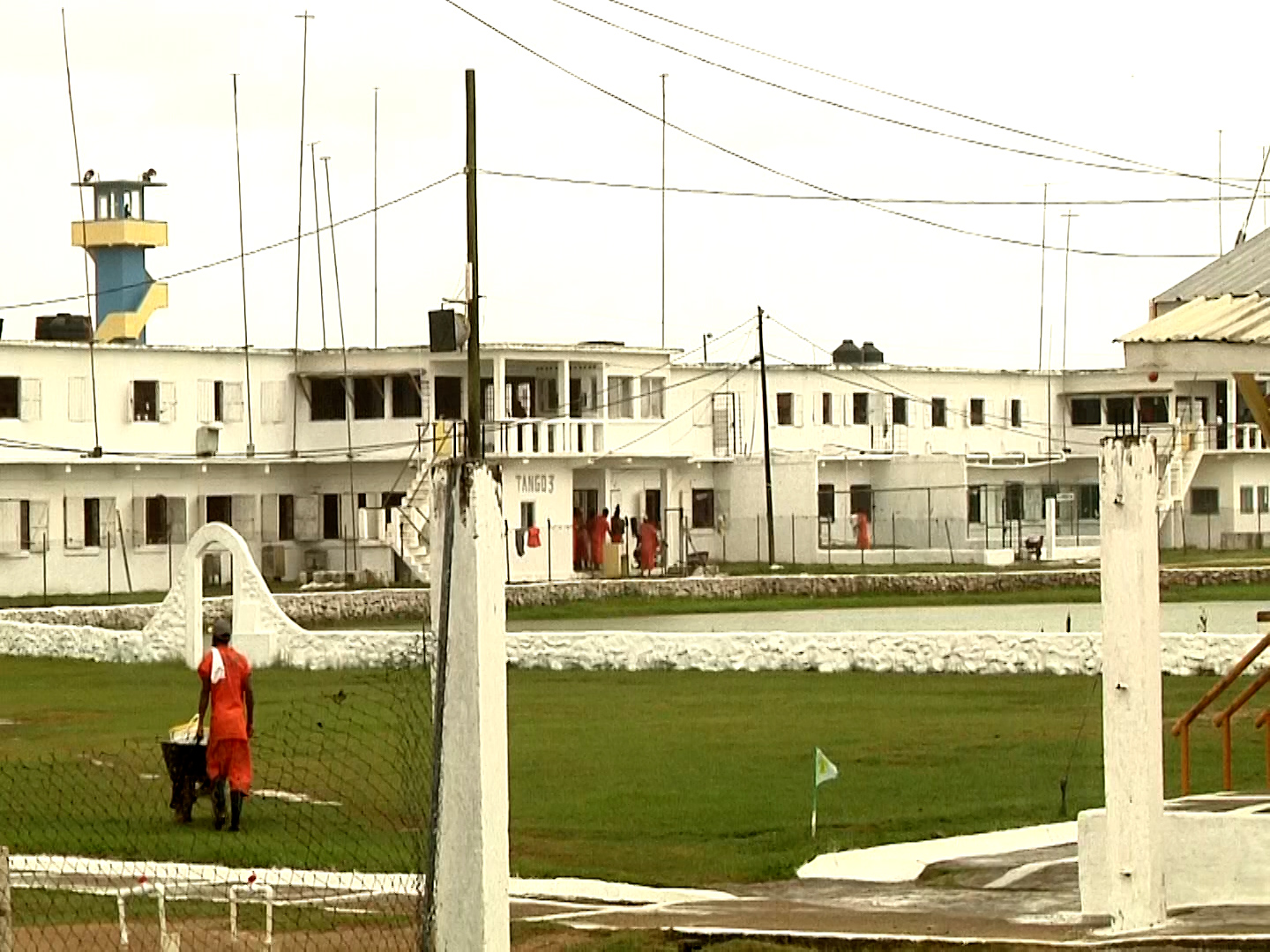
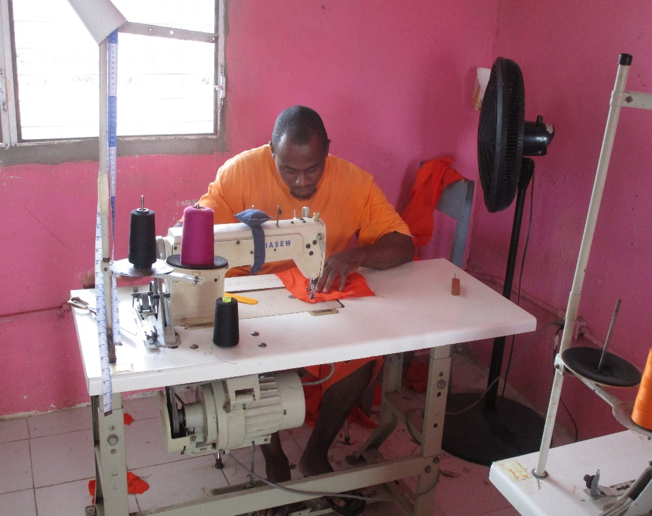
Belize Central PrisonWith 1200 inmates at a prison facility that operates off 80% donations, the cost of taking care of these inmates can be burdensome. To the point that some inmates don’t have proper clothing. After jumpsuits are laundered, the workforce inspects each one for tears and missing snaps. The prison sends out for repair an average of 200 jumpsuits per month at a cost of $5 each. That amounts to $12,000 per year. Since each jumpsuit costs about $15 to $17 to replace, damaged jumpsuits were disposed of after three repairs. However, through this partnership with Sewing Peace and Belizean volunteers we are able to teach inmates how to first sew and repair their inmates’ jumpsuits. Which will be a HUGE cost saving instrument for the prison.

Sewing in Belize Central PrisonUsing donated pieces of fabric and their own imaginations, “they are expressing themselves artistically,” said one of the volunteers. Using their creativity, the prison will market their artwork so they can gain an income while in prison. The ultimate goal is to see inmates have a second shot at life when they reenter society. It is our hope and plan that when inmates graduate from our program and are released from prison, they will receive a sewing machine, fabric, and a business plan to help sustain themselves and family.

This is a win-win for the prison and the inmates. A huge thanks to Sewing Peace and their generous donors for making this program a life changing success.