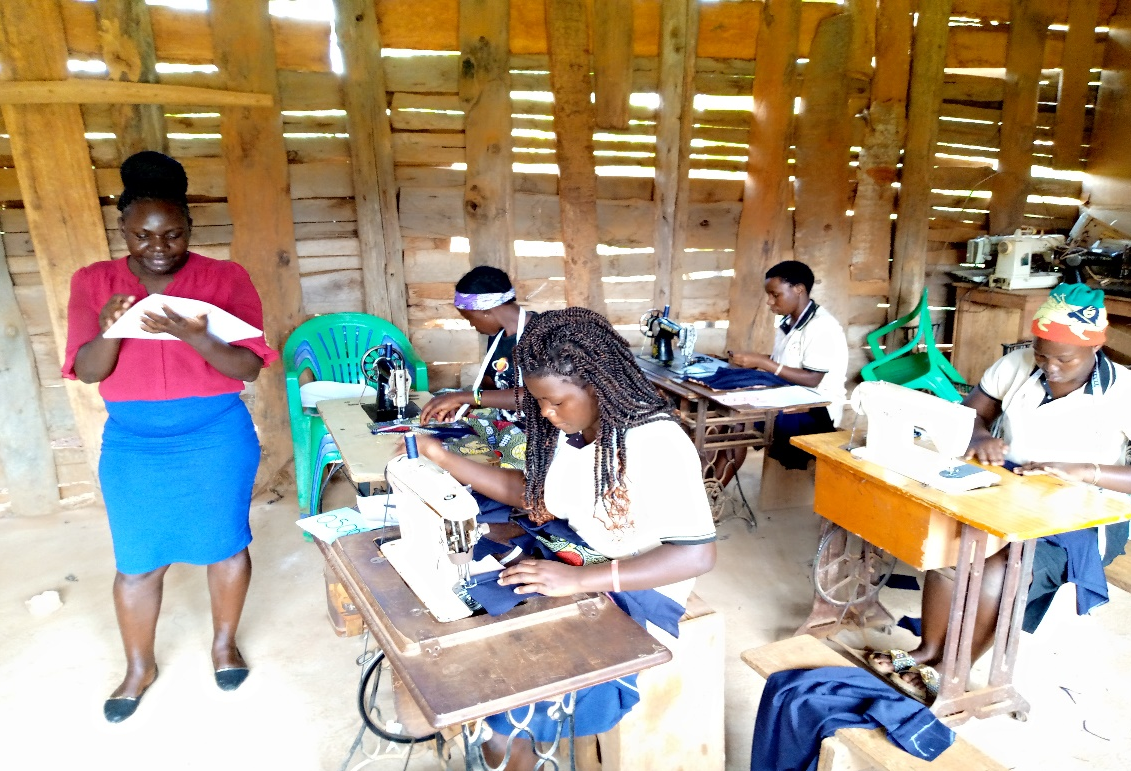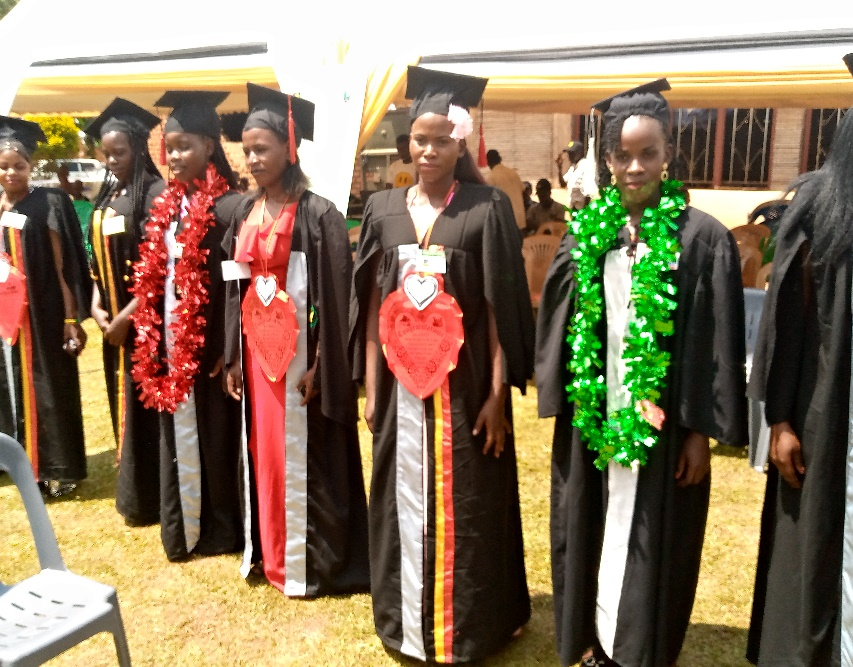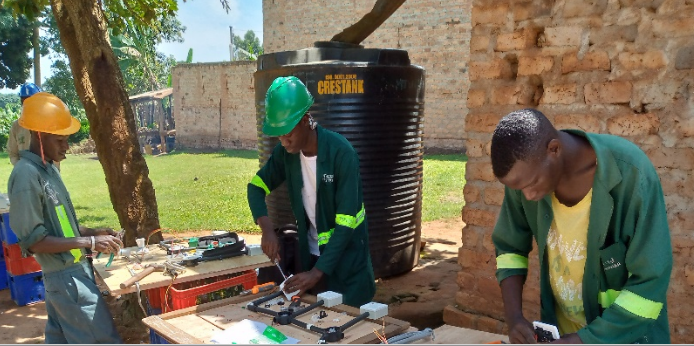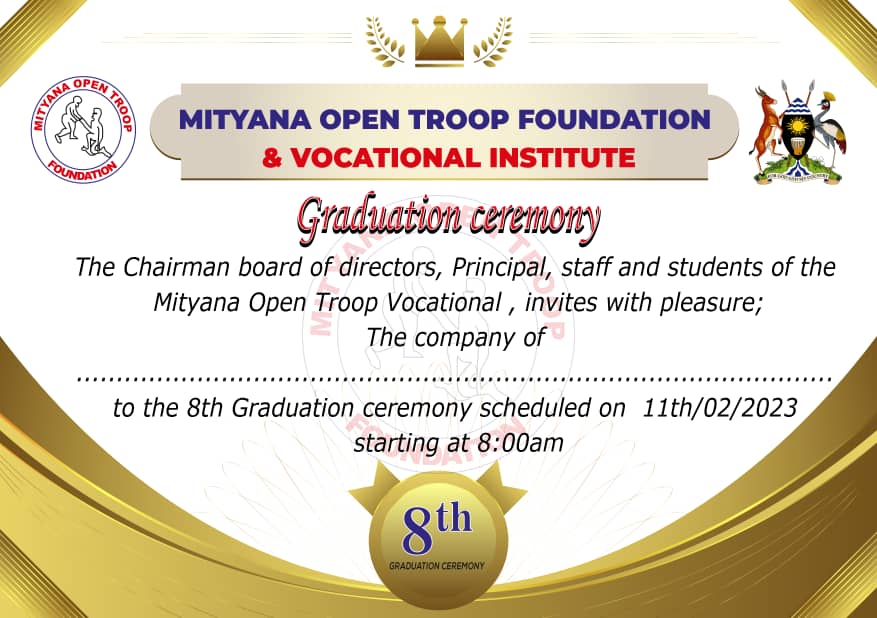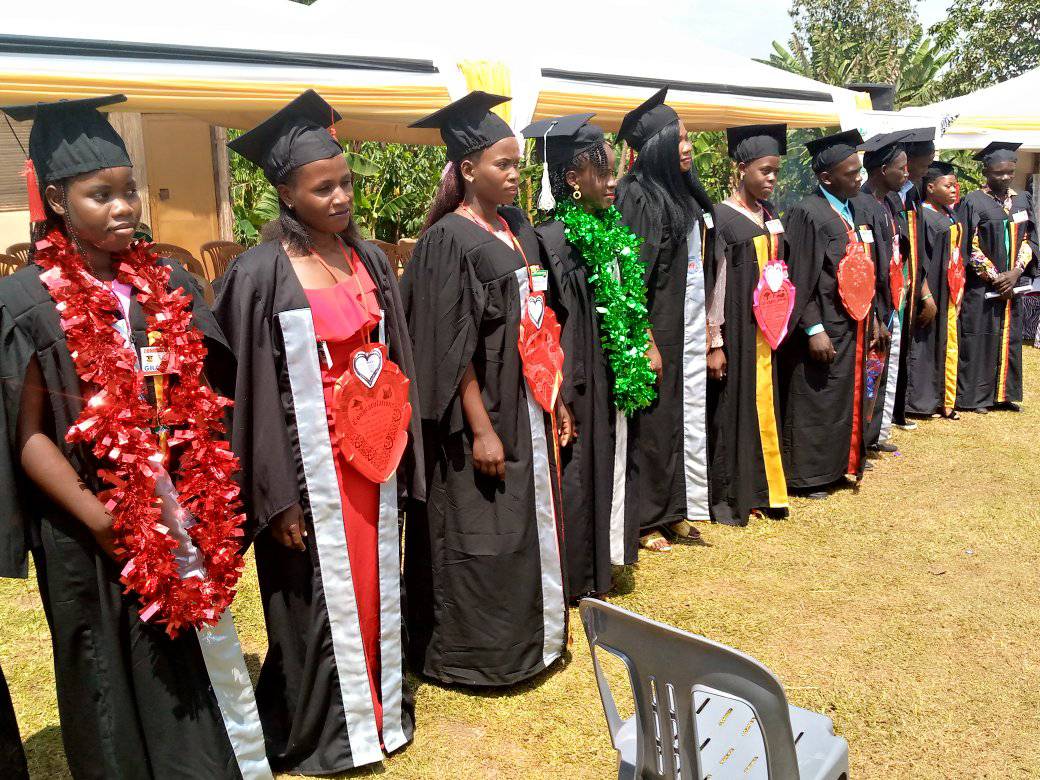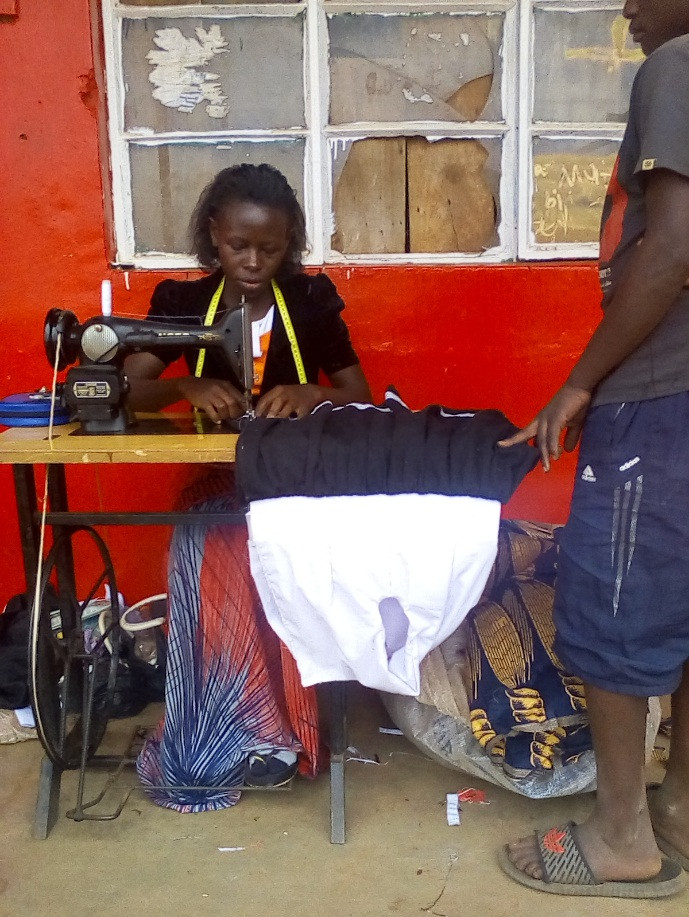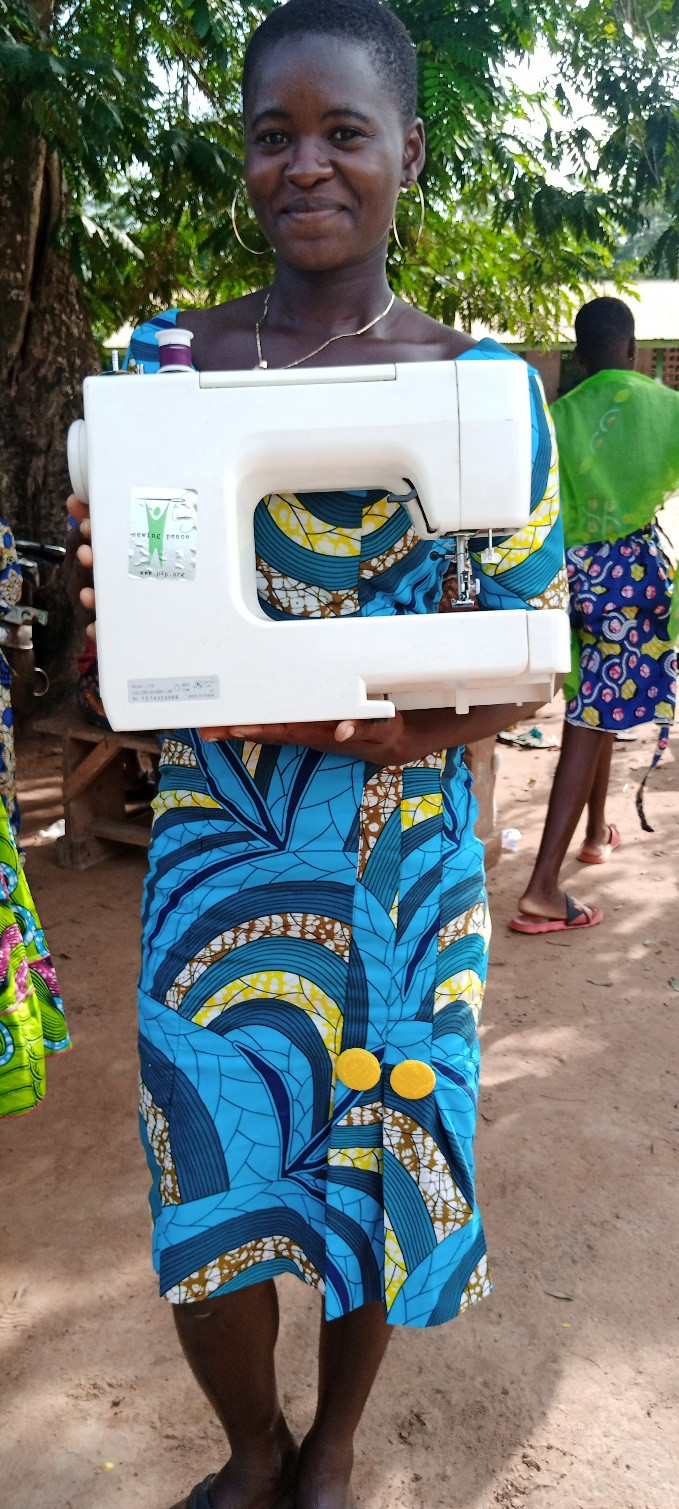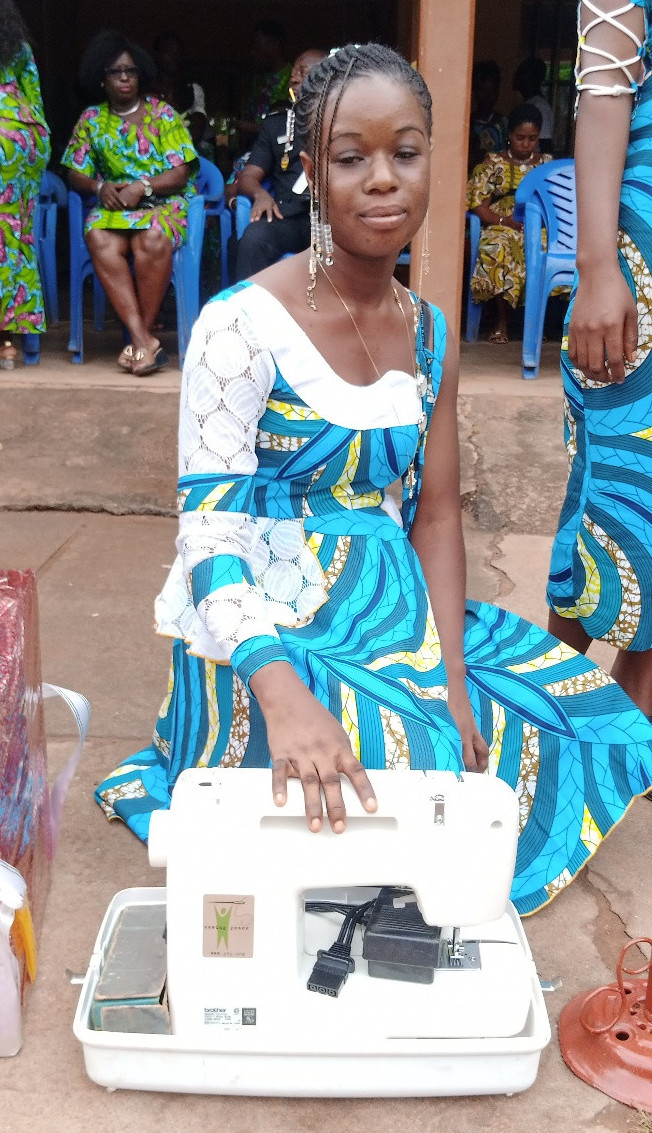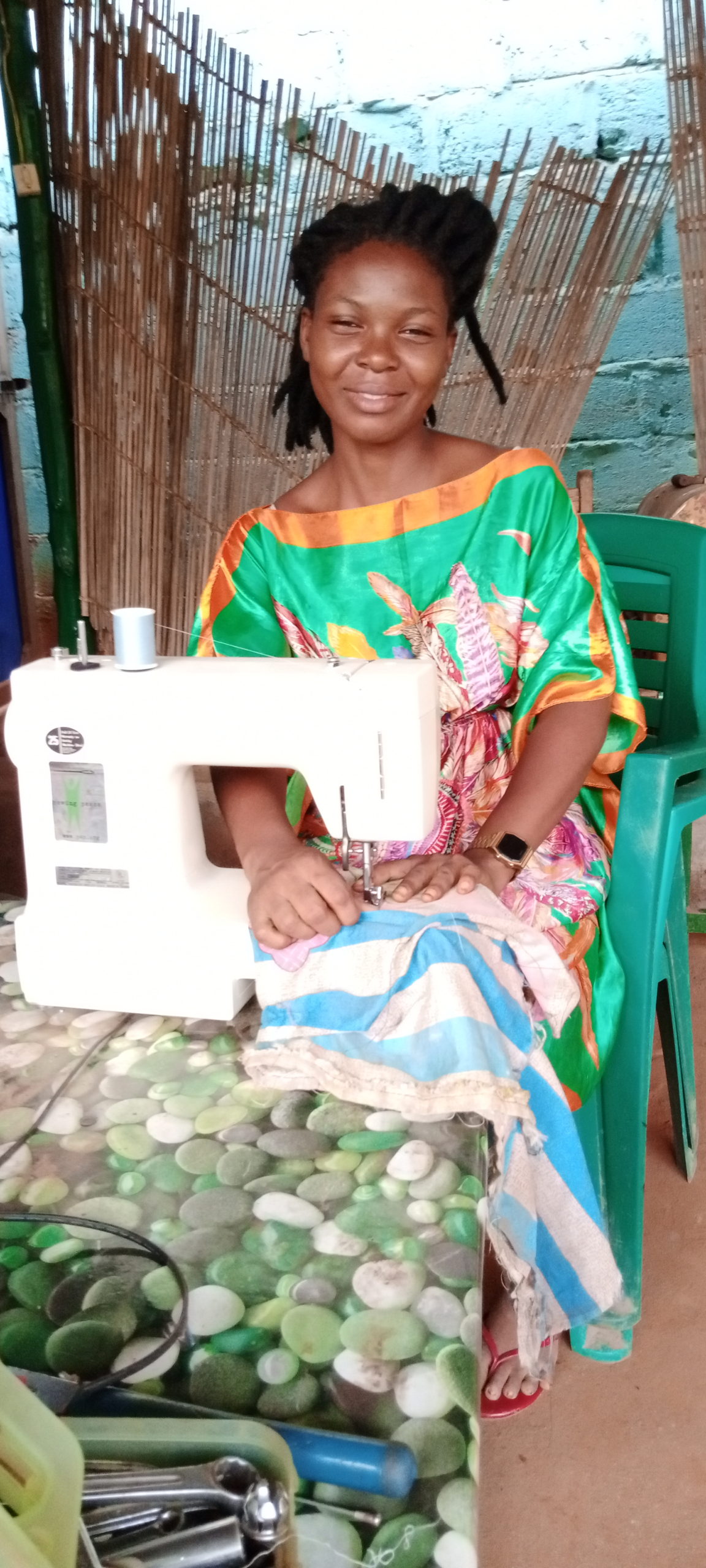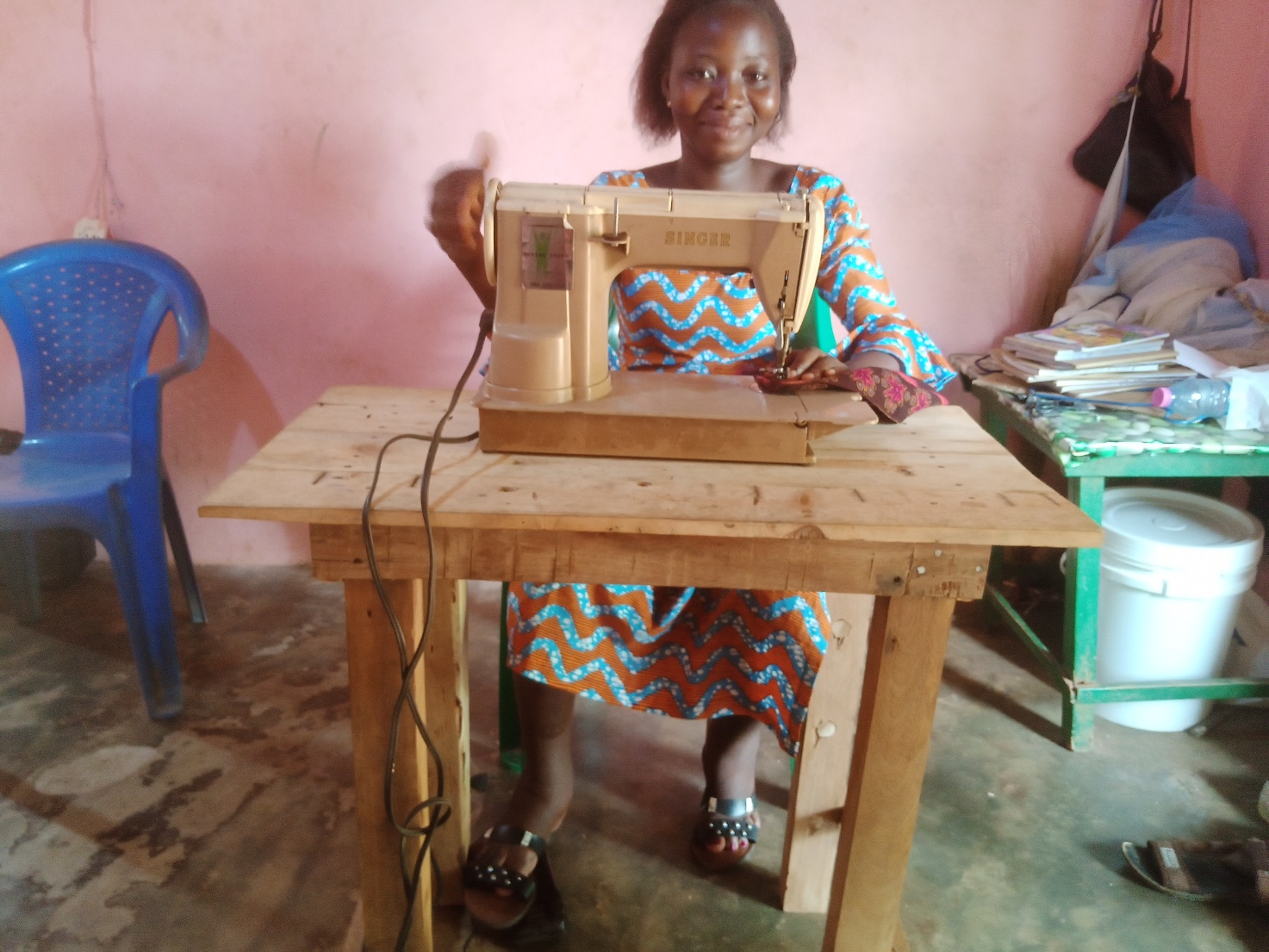
Dr. Patrick Byakatonda, Director, Directorate of Industrial Training, has today, 11 Feb 2023, commissioned 252 youths at the Mityana Open Troop Foundation & Vocational Institute.
Category Archives: Sewing Partners
Report from Uganda, Fall 2022
By Mathew Yawe
Fall 2022 Newsletter
Mityana Open Troop Foundation is a Community-based Organization started in 1997 by a group of Boy Scouts who had been affected by socioeconomic issues leading to dropping out of school and unemployment, while others had been affected by HIV/AIDS due to loss of their relatives/guardians. The high dropout rate led to high crime rates among youths in Uganda. The initiative started by conducting training on HIV/AIDS, health talk-shows, environmental protection, child nutrition in the most risky communities, promoting food security, providing support and education to vulnerable children and conducting functional adult learning to combat illiteracy.
Vocational Training Project
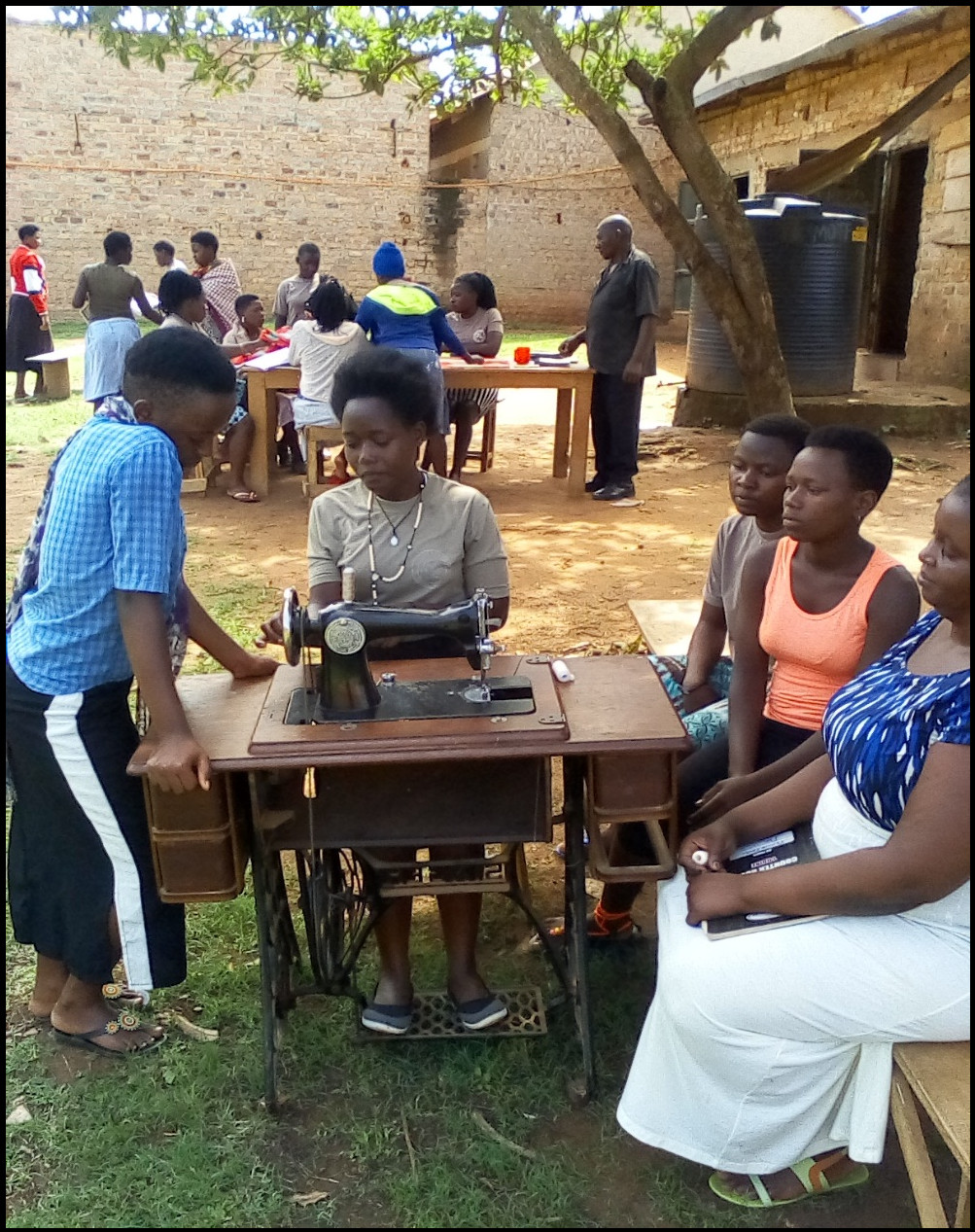
Because of the above concerns, our organization started a Vocational Training project in 2007 by recruiting and training vulnerable youths, widows, and orphans in sustainable skills such as sewing and fashion design, cosmetology, hair dressing, motor mechanics, and agriculture.

However, while much of our interest was in training youths in sewing and other occupational skills, we lacked the funding to afford the tools and machines that we needed.
Our project UK partner, Mr. Chris Eldridge, found the Sewing Peace Project USA, and we wrote an application for sewing machines to Mr. David Schweidenback. Sewing Peace allocated us 72 sewing machines. This was a great miracle which we were not expecting to happen!!
At the beginning, the project had two manual sewing machines shared by 30 trainees!!

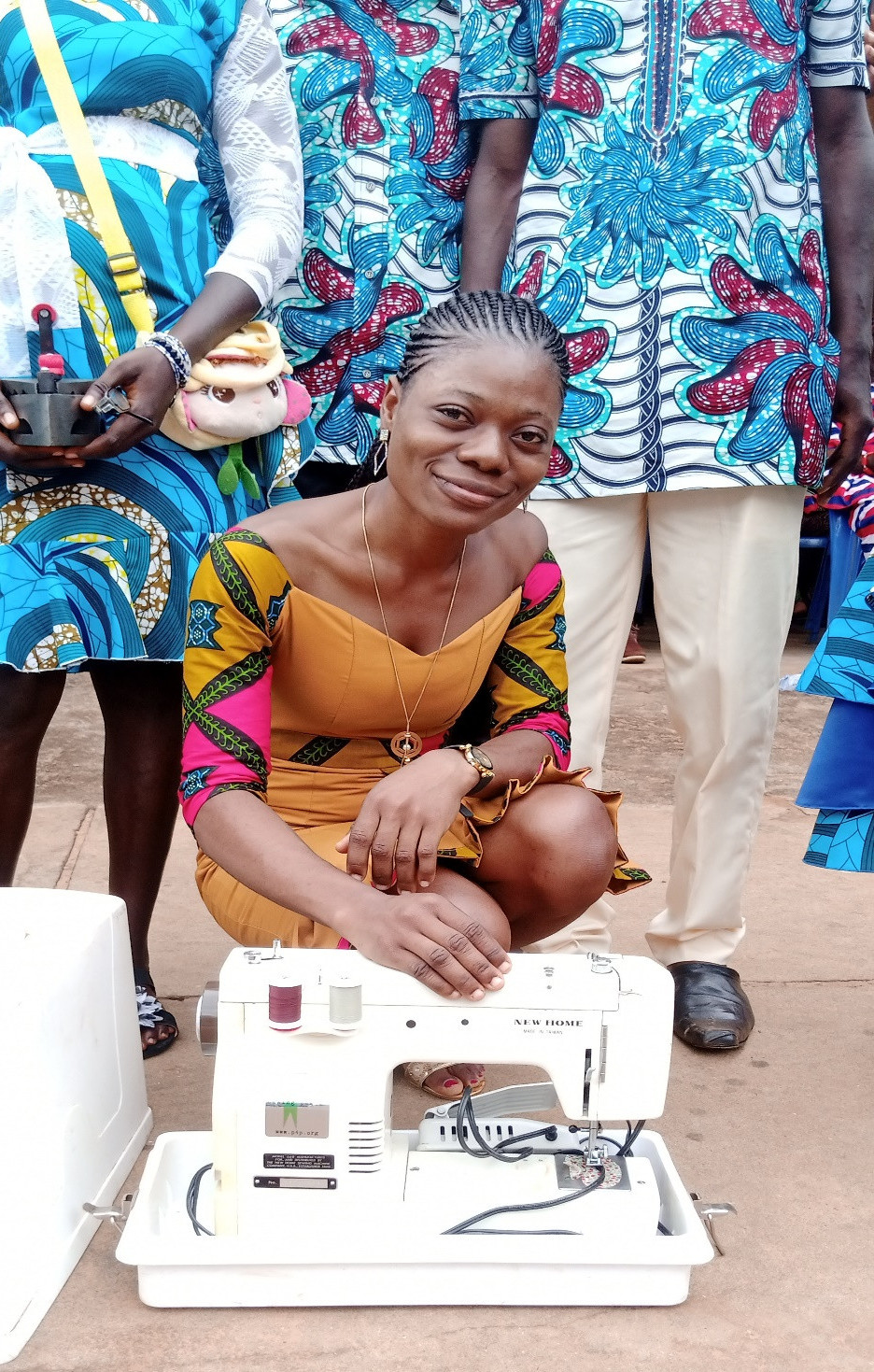
The donated refurbished sewing machines to the Mityana Open Troop Foundation were in very good condition, much better than the machines being sold in Kampala. The Sewing Peace machines were installed in our sewing workshop. Some of the machines were given out to the project graduating youths as start-up machines to enable them to start their own workshops within their communities. In Uganda, a sewing machine makes a very great difference in one’s daily income!
Donated Machines Generate Income for Our Project
Some of the donated sewing machines are being sold in our shop at a cheaper price to some of the Ugandan schools, community based organizations, and artisans, who can’t afford buying the so-called new Chinese machines.
The profit from our shop is used to pay shipping costs, Ugandan custom taxes, teachers’ salaries, and electricity bills.
Achievements of the Sewing Peace Project
- As a result of the donated sewing machines since 2010, the project has received over 800 sewing machines, 451 projects graduates were provided each a start-up sewing machine.
- The Mityana Open Troop Foundation has been selling at inexpensive prices the remaining sewing machines to other Ugandan charities, schools (both secondary and primary), and individual artisans. The income from the machines we sell has enabled us to pay teachers, electricity bills, and maintenance costs.
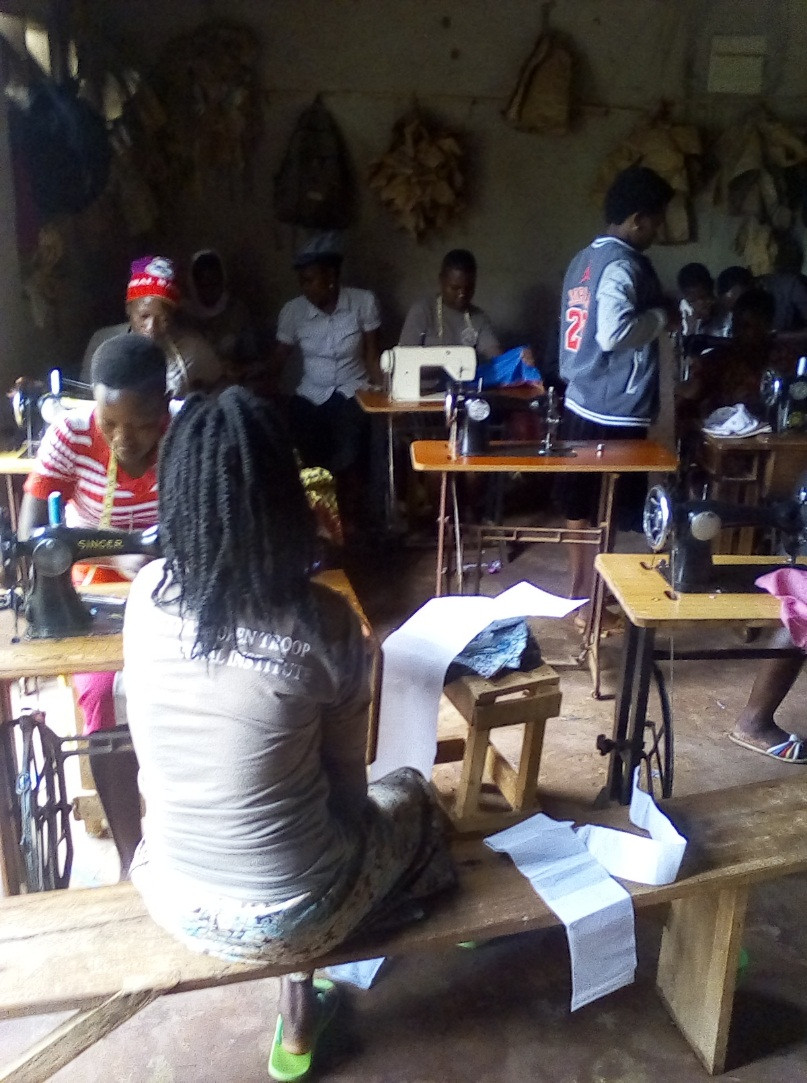
- The project has over 40 sewing machines in the sewing workshop. This has enabled more hands-on training than when we started in 2010 with 3 machines.
- The project has become an Ugandan sewing machine importer, paying import taxes to the Government.
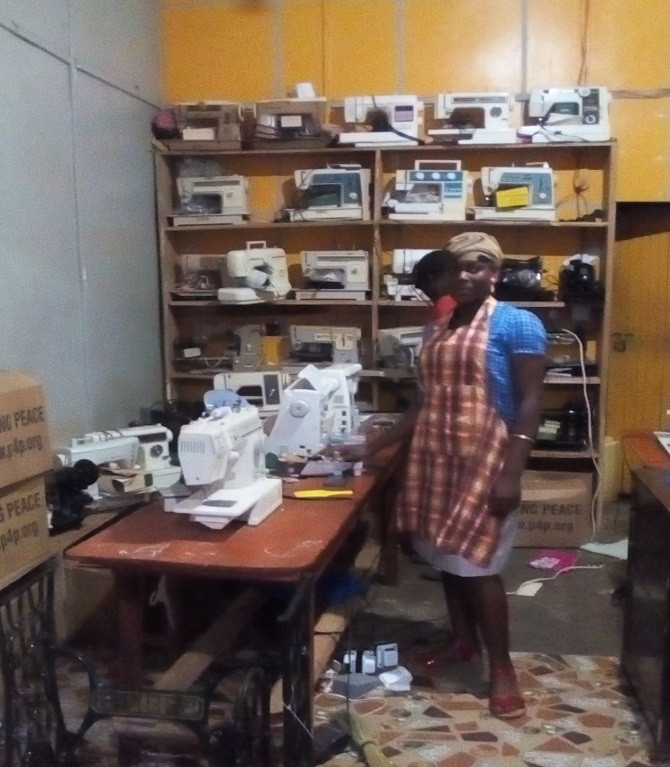
- The project owns a Sewing Shop in our town, equipped with an embroidery machine able to create school badges, names on uniforms, making school uniforms. The shop is selling refurbished machines to artisans, schools, and charities. These machines are much better than the Chinese machines in the market.

Our project graduates have managed supporting their families: paying for food, medication, school fees, and scholastic materials for their young brothers and sisters, and paying rent for their workshops.
The majority of our project trainees are youths who had dropped out of schools due to socioeconomic factors. Some of them were even previously selling sex on the streets at a young age for survival and without thinking of becoming pregnant or contracting STIs.
Challenges
- The project encounters challenges in raising machine shipping costs, including paying the Ugandan Custom import taxes.
- Lack of a toilet and washing rooms at our project.
- Insufficient permanent classrooms/workshops.
- Lack of clean water for trainees.
Conclusion: Many thanks to the Sewing Peace Project, USA, all volunteers involved in the collections of machines, including refurbishing activities. We also extend our sincere thanks to Mr. Chris Eldridge from the UK, who is always supportive to our project.
‘The Good You Do to Others, Comes Back To You Unknowingly.’
Somalia: New Partner, 2022
By Abdi Noor
Fall 2022 Newsletter
[ Editor’s note: On September 2, 2022, we made our very first shipment to Somalia. Our partner there is the the Hiran Youth Council. Abdi Noor, a Somali now living in Portland, Maine, is our contact. Here is his message to P4P/Sewing Peace.]
I would like to sincerely thank you on behalf of the staff of the Hiran Youth Council and on behalf of the poor women and youth training in our program. From your generous donation we will be providing sewing machines to poor youth and women to earn an income through our program.
Your support has enabled us to provide free tailoring training to 72 poor youth and women, who will receive the machines after completing their courses. We are also planning to receive additional sewing machines from Sewing Peace to distribute more machines to students. Your support enabled us to provide refreshment to the poor women and youth for better learning.
Training programs like ours are great opportunities for our women and girls to further develop their marketable skills and take a step towards self-independence.
Without you, it would not be possible for them to receive this training or these machines that will allow them to start sewing at their homes. With time, they will be able to develop sewing businesses and earn a livable income.
Your support will bring them bright futures to our trainees. Many thanks again! We will keep you updated about our work and the progress of our graduates.
Cameroon: Rising Hope Foundation for Change Fashion and Design School Training Clubs
By Mbenja Clovert Anamani
Fall 2022 Newsletter
Rising Hope for Change (RHFC), Cameroon, donated sewing machines to SIRA Bilingual Nursery and Primary school to start a pilot school fashion and design training club in Cameroon schools. The aim of this pilot project is to install Rising Hope Foundation for Change fashion and design training clubs in Cameroon schools in partnership with Sewing Peace America.
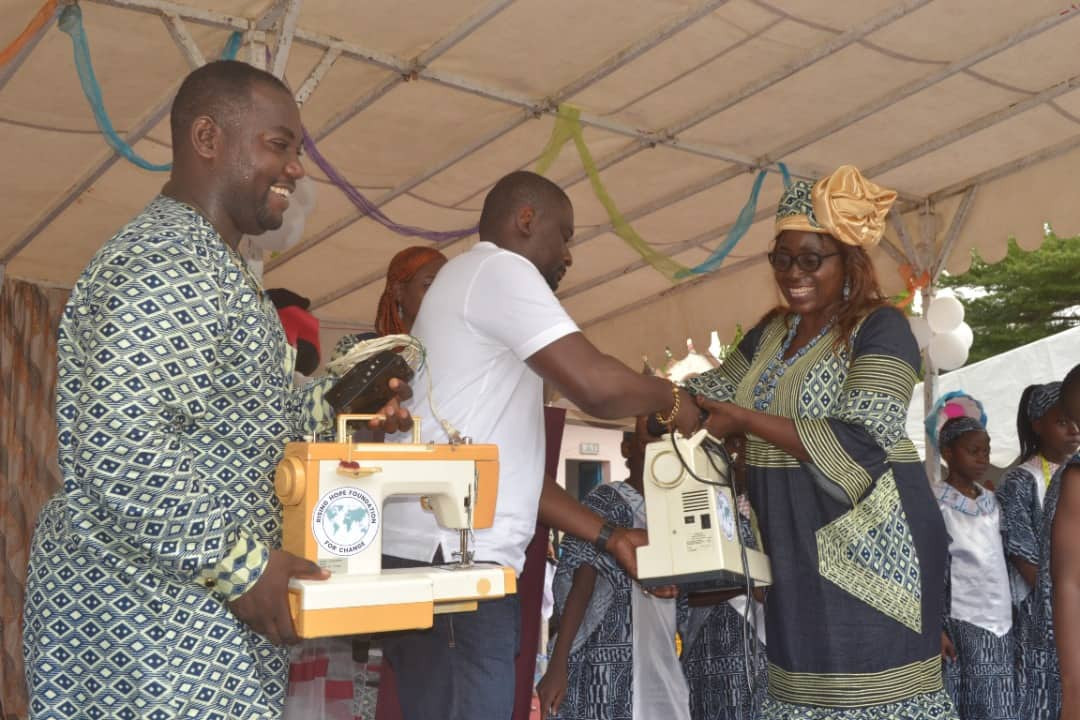
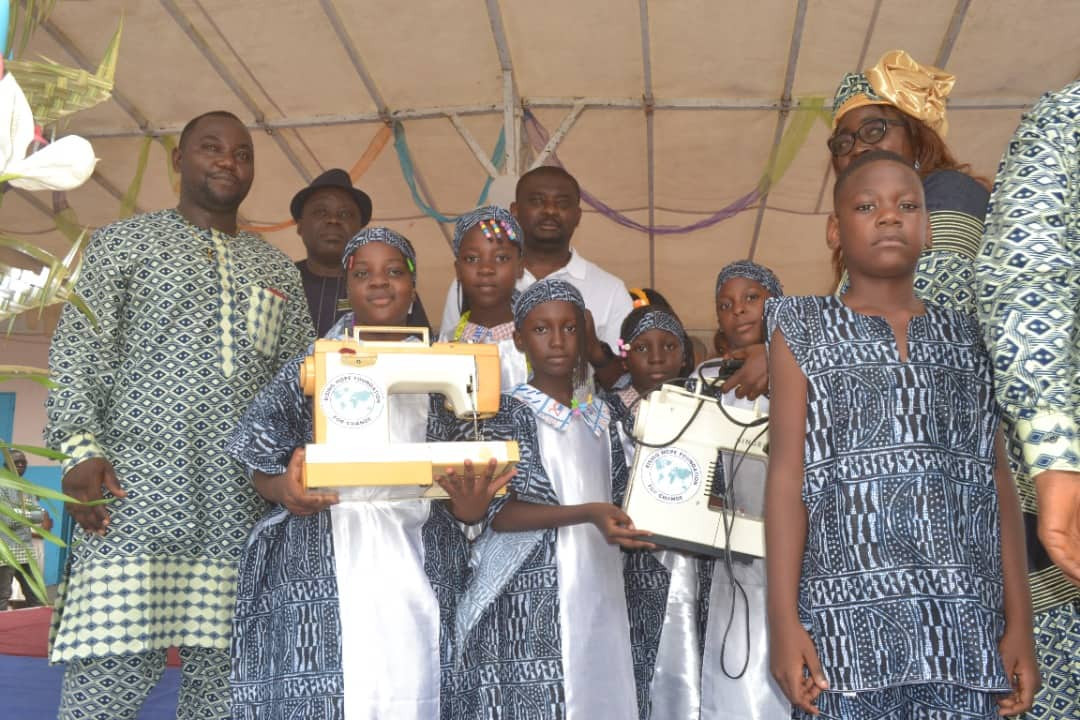
In line with our objective to provide quality sustainable projects to impact communities, RHFC donated sewing machines to SIRA Bilingual Nursery and Primary School Makepe Douala fashion and design pilot training Club for pupils. The entrepreneurial school will train young students how to sew from primary levels. It was during their end of school year and prize award ceremony that the project was launched, and these machines were handed to the club by the CEO of RHFC in the presence of the proprietor, parents, pupils, staff, and the director of the school. Receiving the gifts, the head of the club together with the pupils expressed their gratitude to the CEO and the entire RHFC family for the timely gesture and initiative of RHFC. The proprietor of the school in turn thanked the organization for supporting their vision. The occasion ended with a family photo.
RHFC Empowering Women
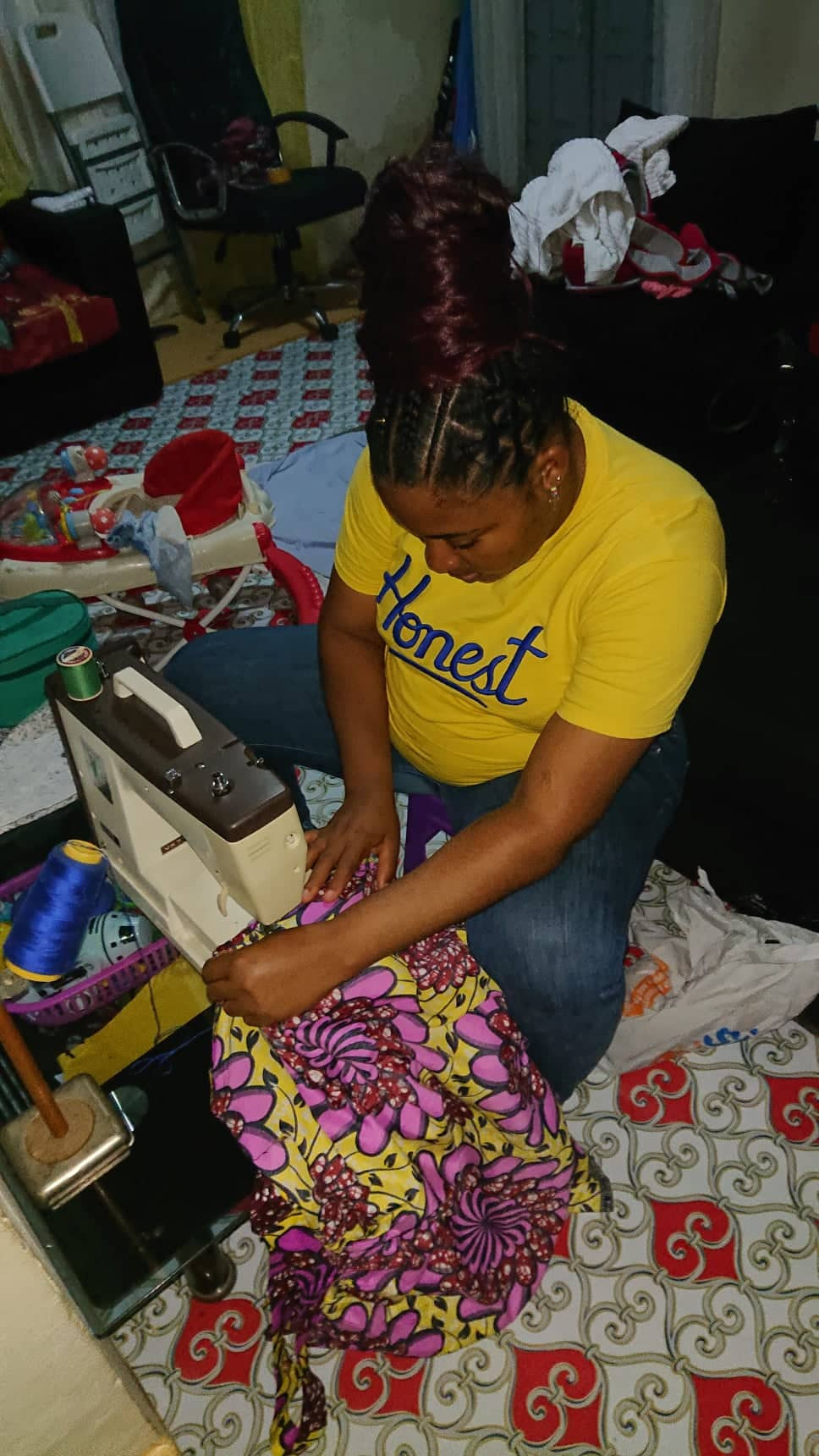
The largesse of the RHFC team was extended to an internally displaced persons (IDP) family based in Logpom Douala in Cameroon. Growing up in the southwest region of Cameroon, life was okay until the crisis started in 2016. Mme. Arrey Christelle from Manyemen left the village when the crisis was at its peak. Together with her entire family, they left behind many of their belongings since they were in a rush, leaving behind the only thing that was helping them to feed their family, the sewing machine. Her mother taught them how to sew dresses using the sewing machine they had. With their livelihood surrounding the sewing machine, they grew up to become skilled seamstresses. When they settled in Douala, life was not the same as in Manyemen. Without a sewing machine they had no source of income, they could not stitch their worn-out dresses, thus rose difficulties to eat and take care of minor bills. They cried out for help, RHFC heard their cry and offered a free sewing machine. This machine boosted their moral and increased Mme. Arrey Christelle’s income as she can again sew dresses for people and earn a living.
RHFC and IDPs (internally displaced persons)
Under the initiative of “RHFC and IDPs Empowerment”, RHFC has donated more than 20 Sewing Machines to Internally Displaced women and girls in the Southwest and other regions of Cameroon after some days of training. According to the Founder of RHFC, Mr Mbenja Clovert Anamani, this gesture will go a long way to improve the livelihood of these internally displaced persons and their families in one way or the other. Through their training, IDPs will be economically empowered, freed from sexual exploitation, and gain skills in business, enabling them to grow their sewing endeavors and have more investors to establish bigger and greater ideas. Innovative skills will boost their creativity in the world of technology, therefore foster entrepreneurship in the world of fashion and design.
Sewing Peace in the Belize Prison
By Derrick Pitts
Fall 2022 Newsletter
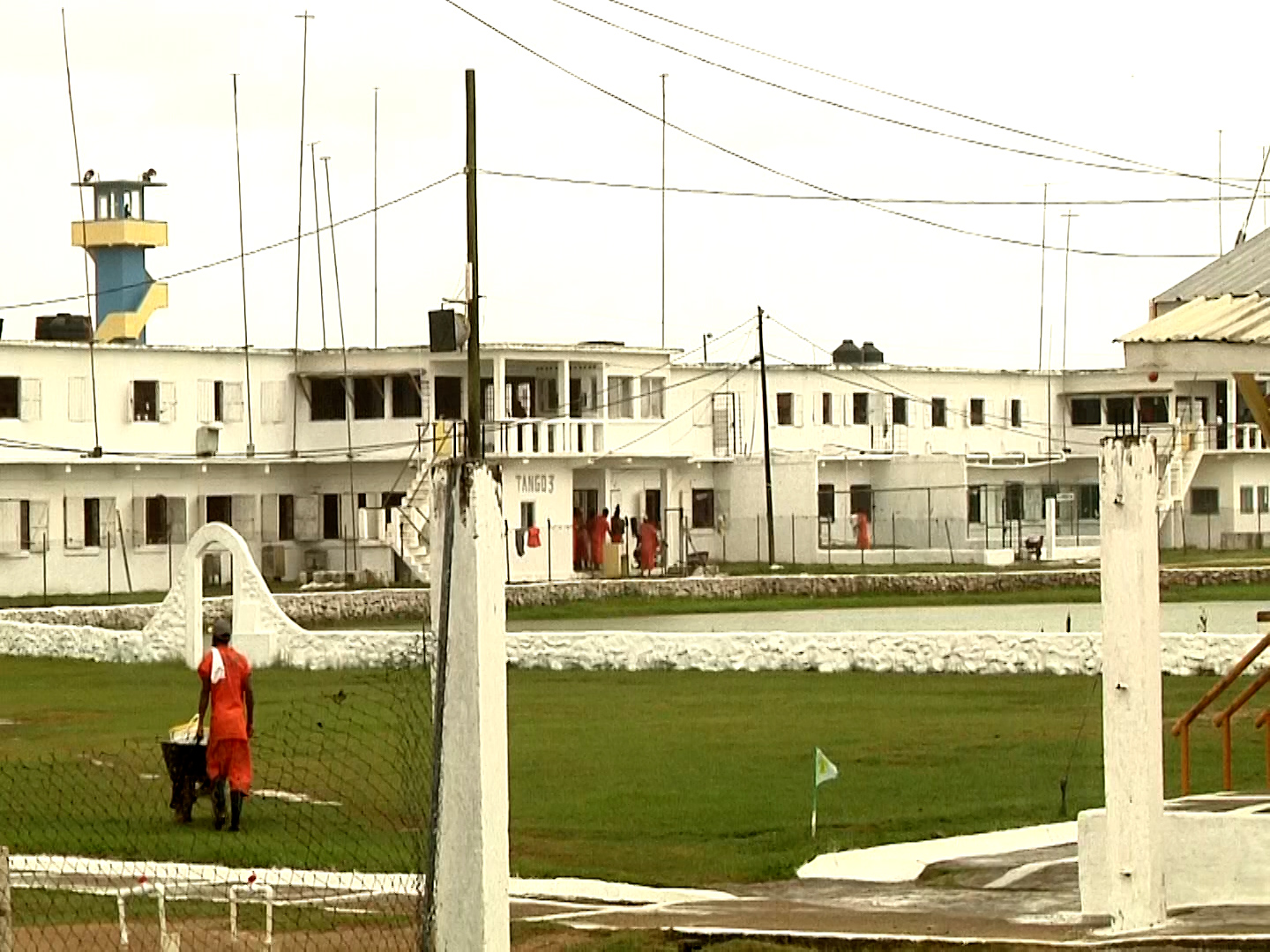
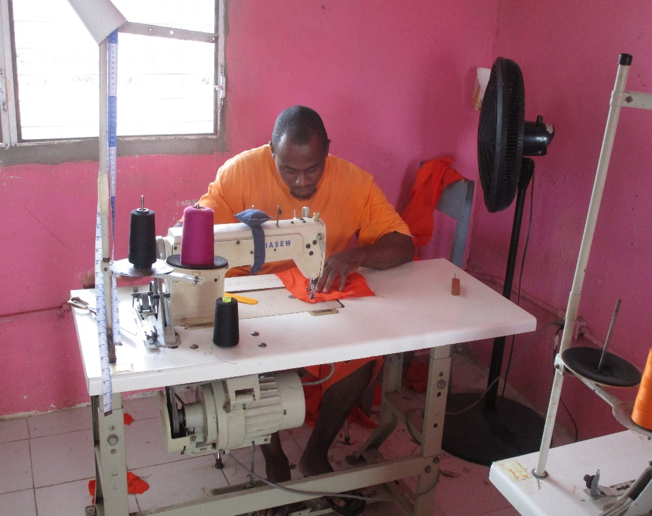
With the sewing machines we received from Sewing Peace we were able to partner with the local prison to start a sewing program for the inmates at the Belize Prison. The objectives of the sewing program are:
- To introduce the inmates to a marketable life skill. A skill which they can gain an honest income from.
- To save the prison money at the same time.
With 1200 inmates at a prison facility that operates off 80% donations, the cost of taking care of these inmates can be burdensome. To the point that some inmates don’t have proper clothing. After jumpsuits are laundered, the workforce inspects each one for tears and missing snaps. The prison sends out for repair an average of 200 jumpsuits per month at a cost of $5 each. That amounts to $12,000 per year. Since each jumpsuit costs about $15 to $17 to replace, damaged jumpsuits were disposed of after three repairs. However, through this partnership with Sewing Peace and Belizean volunteers we are able to teach inmates how to first sew and repair their inmates’ jumpsuits. Which will be a HUGE cost saving instrument for the prison.
Using donated pieces of fabric and their own imaginations, “they are expressing themselves artistically,” said one of the volunteers. Using their creativity, the prison will market their artwork so they can gain an income while in prison. The ultimate goal is to see inmates have a second shot at life when they reenter society. It is our hope and plan that when inmates graduate from our program and are released from prison, they will receive a sewing machine, fabric, and a business plan to help sustain themselves and family.
This is a win-win for the prison and the inmates. A huge thanks to Sewing Peace and their generous donors for making this program a life changing success.
Togo Success Stories, Fall 2022
DRVR-TOGO runs a sewing apprenticeship program. Click here for some background. In June 2022, the 13 graduates of our first class were awarded the tools of the trade: sewing machines, scissors, iron holders, charcoal irons, hair dryers, rechargeable clippers, plastic barrels, mirrors, … These young graduates have become bosses with their destinies in their hands. They are ready to open their own shops offering men’s sewing, women’s sewing, women’s hairdressing, and men’s hairdressing. We are eager to receive future containers to support this extensive program we have started. Your donations of bicycles and sewing machines improve living conditions here in Togo and elsewhere in the world. We want to tell you here and now that there is a waiting list for days, months, years to come.
Here are some success stories from our first group of graduates.
Akoélévi Antoinette ASSAGBAVI
My name is Akoélévi Antoinette ASSAGBAVI. I am 21 years old, and I have been one of the beneficiaries of the program of the DRVR-TOGO association for 3 years. I was born into a family of 7 children. We lost our mother very early and few girls in my community have the right to go to school like boys. We are made to accompany our mothers in the kitchen and various domestic activities. After the death of my mother, I was adopted by my aunt and brought to Nigeria at the age of 6 for a long period without education and also without learning a trade. Back in the village for my father’s funeral ceremonies, I finally decided not to go back to my aunt’s house to live this life of mistreatment and unhappy domestic life.
One day I heard a radio program about the possibility of free support for young people wishing to learn any trade of their choice. I quickly contacted their service and was admitted to the program. After 3 years of perseverance and courage, here I am, the holder of my end-of-training diploma in men’s and women’s sewing. At the beginning, I thought of a dream which finally became a reality: 12 other people and I who can now open our own workshops and save money to take care of ourselves and feed our families. Sincere thanks to DRVR-TOGO, P4P/SP, and all their staff and donors.
Grace Yawa AGBOZO
My name is Grace Yawa AGBOZO. I was born in 2000 in a polygamous family where my mother has 5 other co-wives with several brothers and sisters at the family home in Agbozo-kpédji/VO. My story is a little sad to listen to, but I ask you to understand me. I am my mother’s eldest; my parents never had the courage to enroll me in elementary school like all the other children of my age. When I was 10 years old, after a short illness, I was forced by my father to be admitted to a convent after a few ceremonies under the pretext of paying a family debt from our ancestors to the voodoo priest. The days and the months pass. It turns out that I have to marry the voodoo priest. I have just turned 12, but discussions about this contract started when I was born. I am at the end of my tether — how can a 12-year-old girl become a housewife? A few months later I had my first boy and then my second at less than 14 years old and then life goes on.
One evening, during a ceremony in a village not far from our home, my so-called husband had a stroke and he fell. We found a way to bring him to the hospital, but he didn’t survive. We women have been subjected to weeks of widowhood ceremonies. One day, I decided to escape this prison life with my two boys and return to my parents. The chief of my village called DRVR-TOGO to help us. I was sent directly to the evening school for adults organized by the DRVR team. After I learned to read and write French, I was sent to the apprenticeship program for a period of 3 years.
Today here I am among the stars. On my return to my village I will go with my beautiful sewing machines to the chief by whom all this good news began. My life and that of my two children have changed and I will sing the glory forever. All my family and I give thanks from the bottom of our hearts to all near or far who have contributed to making me a winner forever: to DRVR-TOGO and to P4P/SP, whose actions change living conditions on the other side of the world.
Mawuse Fiovi ADANLESSOSSI-AVOUDE
I am 23 years old. Since I was a child I have had problems with my vision. My parents found an excuse or saw fit not to enroll me in school. A child who cannot see well is going to have to learn a trade to have financial means to go to the big hospitals for treatment. One day when I was 17, my father spoke with a nurse passing through our village with a mobile vaccination program against poliomyelitis, a disease that frequently develops in children under 5 years old in our community. My father learned that a humanitarian organization would send me to the city hospital for consultation and treatment. I was taken in and over a period of 2 years my eyesight improved.
So I decided to go and learn the trade of sewing, which had always interested me. Four years later I was ready to take my final apprenticeship exam when to my great surprise I discovered that I did not have a birth certificate — another problem but quickly solved by the dynamism and the determination by the team of the DRVR-TOGO. I had my birth certificate, and I also passed my exam on time. Today I have my sewing machine, which will allow me to open my own workshop to work and achieve all my ambitions. This work is really great. Congratulations for always being there for the well-being of others. Congratulations to you wherever you are. Continue to save other people in difficulties worse than mine. Once again thank you and please do what you can.
Togo Success Stories, Spring 2022
Spring 2022 Newsletter

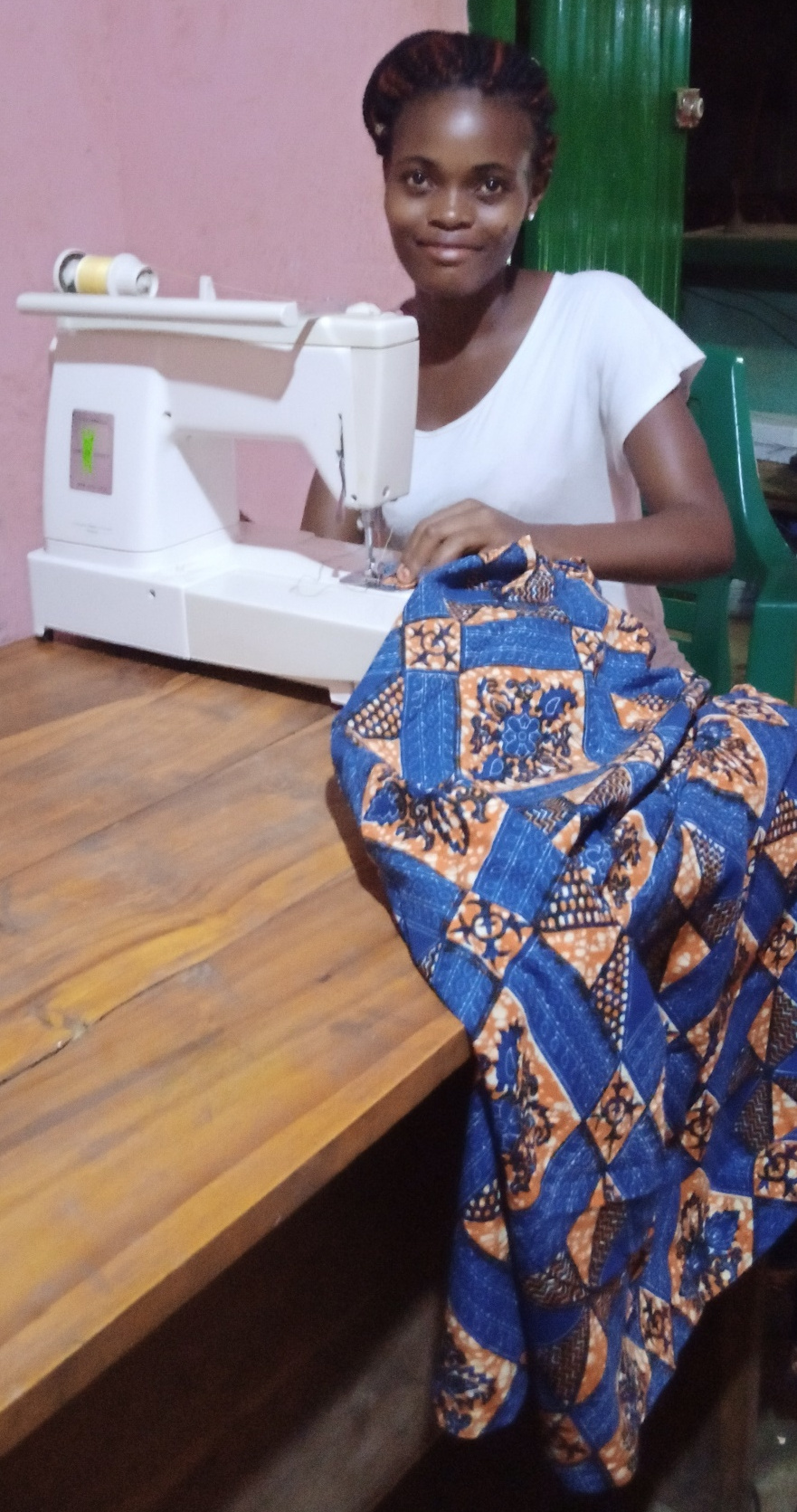
I am Catherine. My two colleagues in the photos are Akouwavi and Améyo. We are apprentice seamstresses and we are part of a program that our promoter calls Youth Socioeconomic Empowerment, a program that pays the costs of the training contracts and then, at the end of our apprenticeship, provides us with sewing machines to allow us to open our own workshops. A few weeks ago, we received our machines and are already working. It is a great joy to see these photos of ourselves.

With these sewing machines, we will work and save money, take care of ourselves, take care of our families and send our children to school. We have finally reached the end of our training and here we are with our sewing machines as promised. These machines are essential tools for our small businesses. All this is possible thanks to the support of the DRVR-TOGO and its partner Pedals for Progress / Sewing Peace. It is because of you, the donors, that our dreams have become realities.

We are appealing to all P4P loyal partners and donors: Used sewing machines, bikes, and other tools as far as the eye can see are left in your garages, basements, stores, and offices. Donating them to P4P will help people and save lives in communities thousands of miles away from you on the other side of the world. Many thanks to you, David, and all your tireless P4P team for your dedication to social causes.

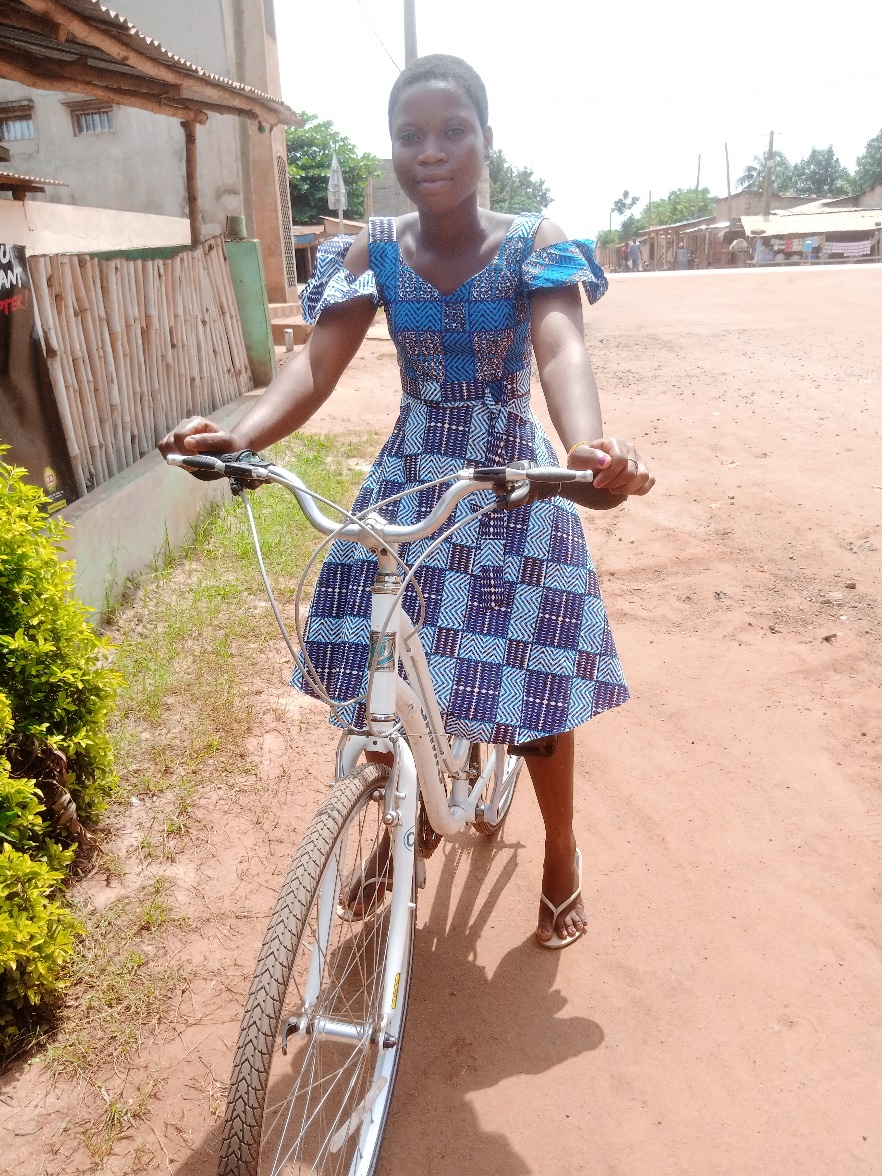
I am Essenam. I am an apprentice seamstress. I would like through this little note to express my gratitude to DRVR-TOGO, Pedals for Progress, and all their partners and donors who contribute from near and far to help support vulnerable populations all over the world and as well as our communities here in Togo. I have not been to school like many young girls of my age have, so I decided to learn a trade, and the choice fell on sewing, a trade of my dreams since childhood.
Before the DRVR-TOGO bicycle program, I had to leave the house very early in the morning. I would arrive at the workshop late and tired, and then come back late at night, when travel is risky.
With this nice bike in the photo, I now arrive on time at the workshop to continue my learning with a lot of determination. Words fail me and all my family to thank the American donors to the P4P organization. Once again thank you for everything. Through my voice, I appeal to P4P and its partners to continue this program again and again to help other people in different areas of need.

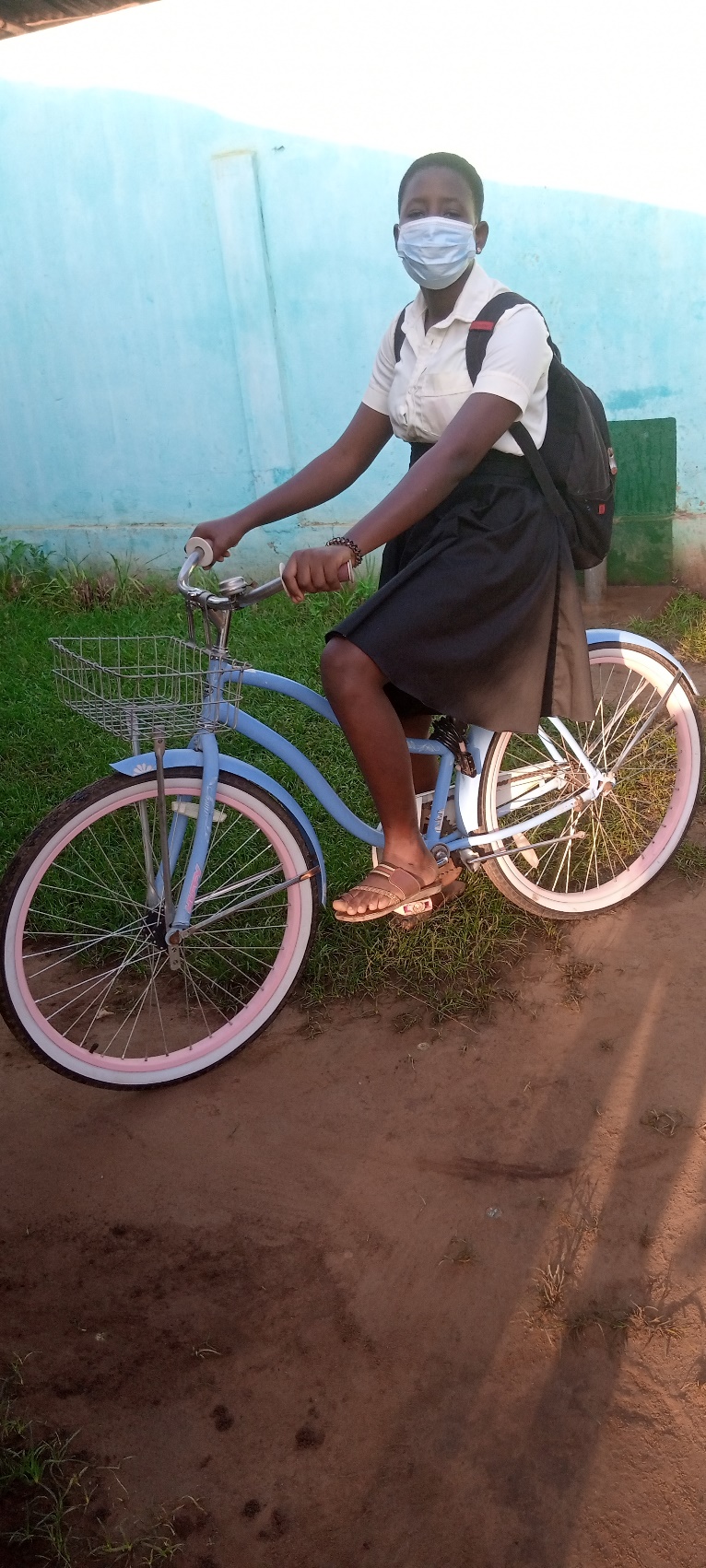
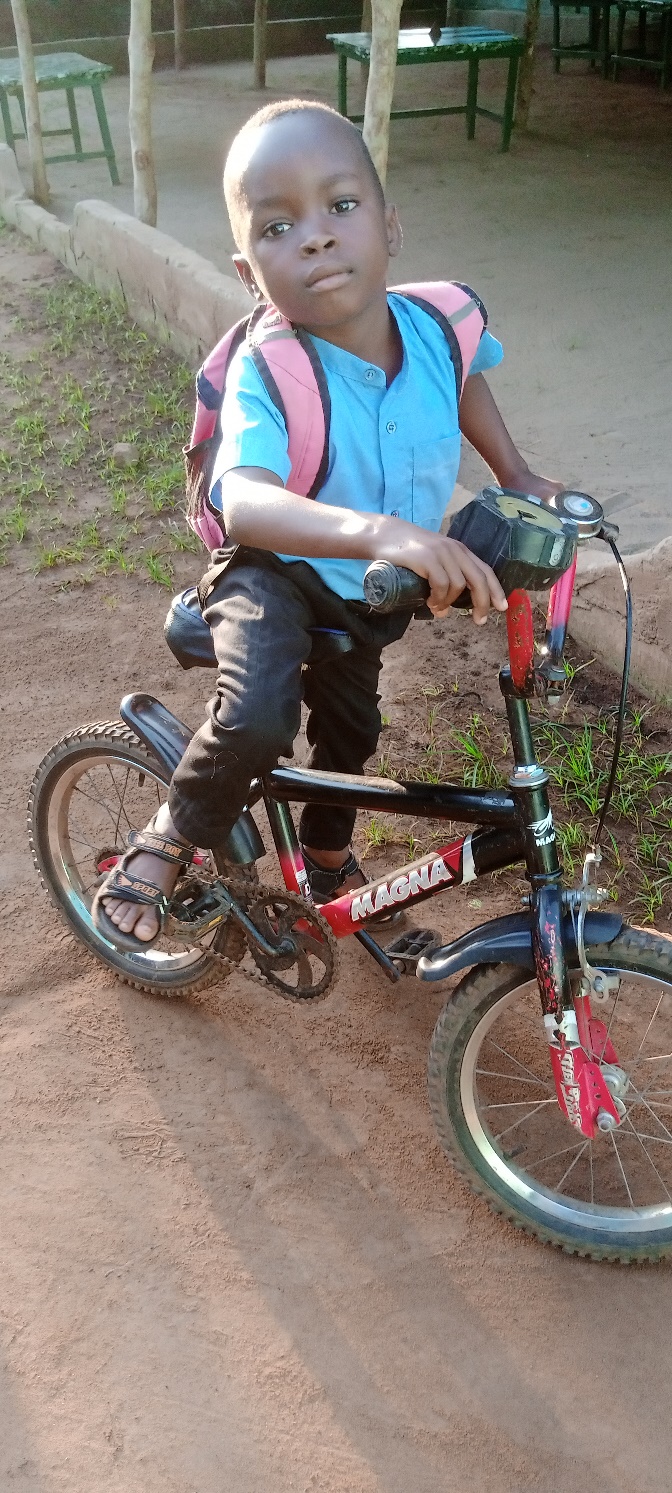
My name is Emefa and I am 14 years old. I am a student in the first-year class in high school. For the 2020–2021 school year, officials from DRVR-TOGO came to our establishment with a program to cover tuition fees and supplies and support to promote the education of orphaned and vulnerable children, especially young girls. I was the first in my class for the end-of-year exam. To continue my study in high school, I have to travel impossible kilometers to go to my classes, because there is no college in my village. You have to go to the town next door instead. With this bike from DRVR-TOGO and P4P, I could not hide my joy and that of my entourage. We sincerely thank you. My wish is that this program continues so that other students can benefit from it.

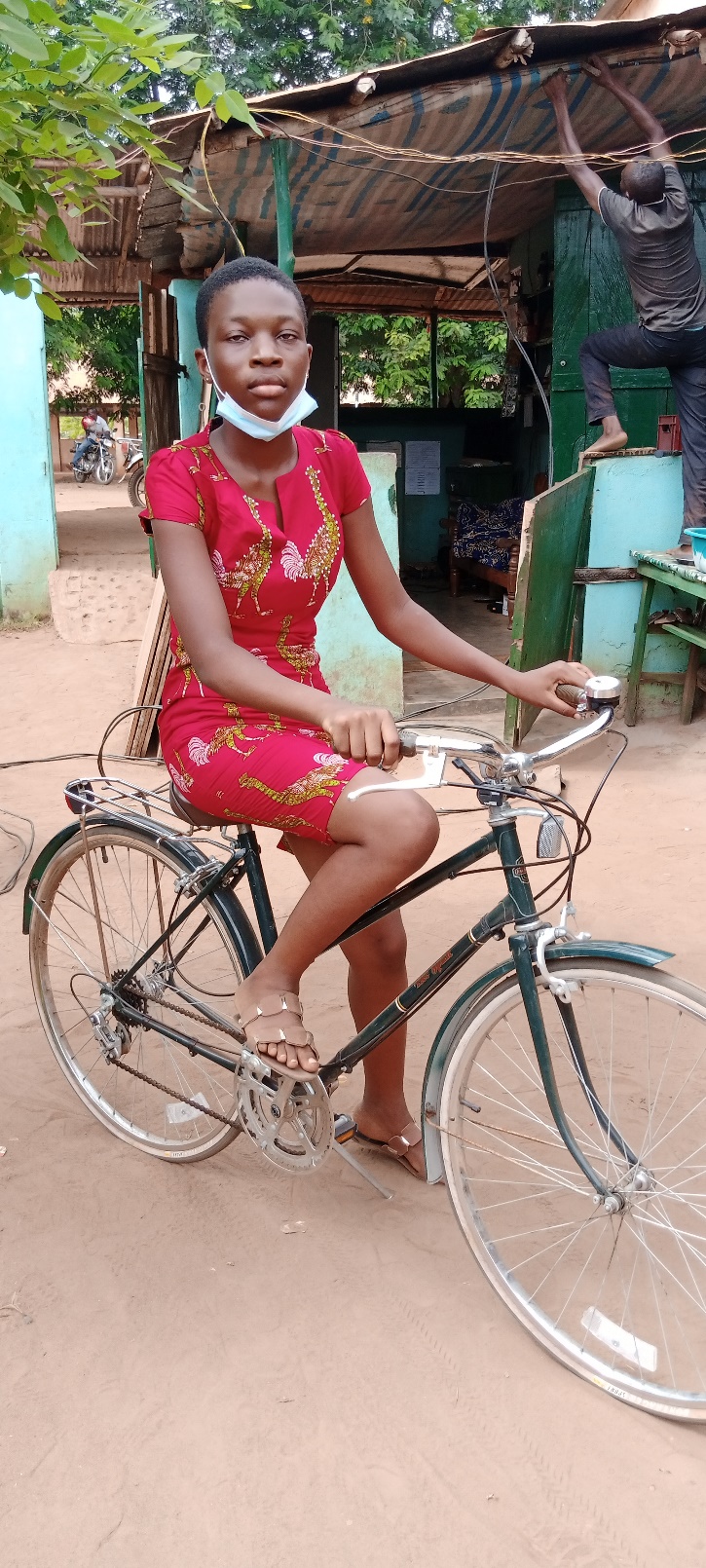
My name is Ania and I am a widow with two children: Afiwa is ten years old and Komlan is six. I sell boiled meat on the side of the road in my neighborhood to feed and take care of my children and especially to send them to school. Every morning I have to leave my activity and bring my children to school and pick them up in the evening at sunset.

Some time ago a client told me about a DRVR-TOGO bicycle program and a child who had already benefited. I went to inquire about the program, and to my great surprise my two children got their own bikes. Now they leave the house every morning and came back in the evening after class without difficulty.
My two children and I say thank you to you the donors, to P4P, its president, David, and all his staff. We also offer a big thank-you to DRVR-TOGO here with us in our community.
P4P Trip to Tanzania, November 2021
By Alan Schultz
Spring 2022 Newsletter
In November 2021, Dave Schweidenback and I went on a trip to Arusha, Tanzania, to make a visit to our partners at the Norbert and Friends Missions. While Pedals for Progress has made shipments to Tanzania in the past, our relationship with Norbert and Friends is still fresh, starting in the fall of 2019. We took the opportunity to meet Norbert and his dedicated team, give advice, and to learn from them on both a professional and cultural level.
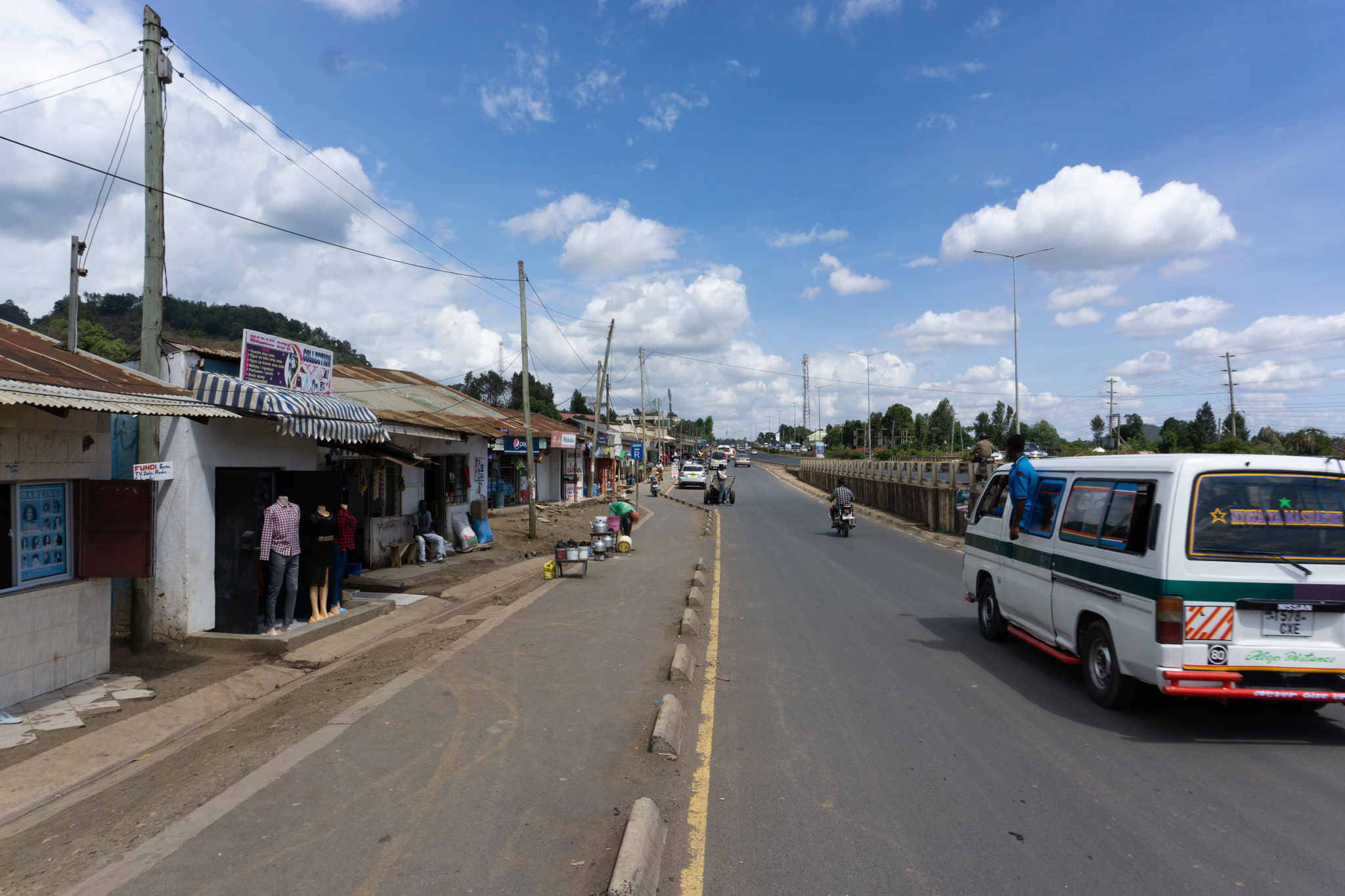
Arusha was busy. Fast moving taxis, buses, trucks, and motorcycles dominate the roads. The biggest takeaway was the sheer number of people who walked among these fast-moving vehicles. Everyone walks. You’d often see small children, five or six years old, walking with their much younger siblings in large groups. Mothers walk with babies on their backs. Marching squads of school children in matching clothes rush to and from school. Even along desolate, secluded roads you would pass people every mile, wondering how they got there. The number of bicycles was high, and it’s clear why bicycles are important – the pace of living is fast, and you need to keep up to make a living.
There is so much activity, so much movement, that you need a smart way to keep up. The bicycle fills this need. It shrinks the massive size of the country and makes distance more manageable. You instantly see the benefits when passing school children miles away from their schools. You see how the further you get from the main city, the more life gets stretched out. The doctor is further, schools are further, markets are further, everything is further away, yet the need to reach these destinations remains.
Moving along the roads you notice that nearly every home is transformed into a storefront during the day. Tin roofs cover the cement buildings, many open to the street, so you can get a glimpse of what’s inside. Hairdressers, art sellers, convenience stores, grocers, food vendors, clothing stores, carpenters, masons. It seemed that all business was done inside or at the doorstep of someone’s home. This began to excite me; I wanted the chance to meet some of these people who ran these shops, especially those associated with Norbert and Friends Missions.
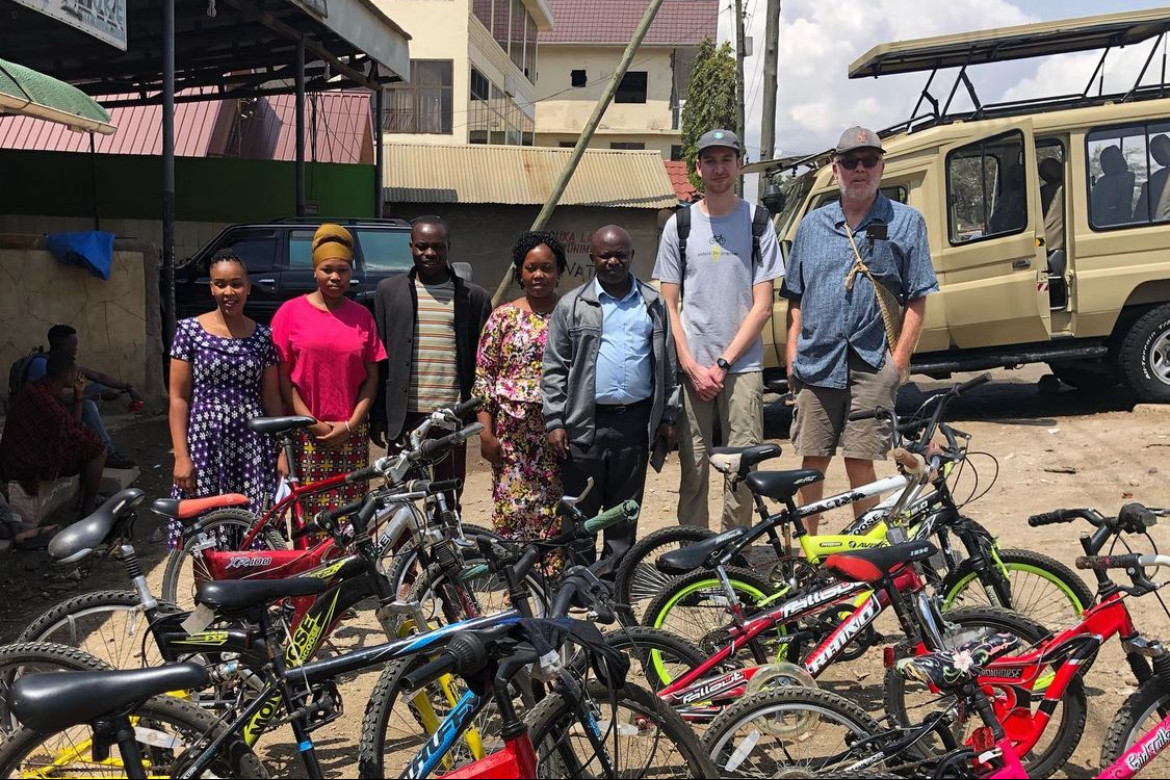
We met with Norbert and his team several times during our trip. We were able to talk about our organizations and exchange expectations, problems, and plans. Seeing their bicycle operation was an incredible experience. Their bike shop was like many of the shops along the main roads. It was modest, bare, but getting the job done. They had a handful of bikes on display with another 20 or so in storage as they were getting down to the last of their shipment. This was good to see, as it means the 444 bikes we shipped in July 2021 have been successfully distributed.
What blew me away most was recognizing some of the bicycles that I had a direct hand in loading. There was even a small motor we shipped that was donated by an individual at Faith Lutheran Church in New Providence, New Jersey! After making the long journey, standing there in the middle of their shop in Tanzania was an impressive reminder of how far our goods travel.
As we started to meet people, the significance of what we do continued to bloom. One of the groups associated with Norbert and Friends Missions is Master’s Men Africa, a religious men’s group focused on bringing awareness to mental health among men in Tanzania and Kenya. They advocate for removing the stigma of talking about mental health among men and they bring awareness to the high suicide rate of men throughout Africa.
I spoke with a new graduate of the group named Abura Markson from Uganda. We shared stories and spoke about our organizations. He was very interested in hearing about Pedals for Progress and happy to know that we were working so closely with Norbert. Talking with him made me realize a nuanced and overlooked aspect of the P4P mission. Poverty is a tremendous weight that people bear and deal with, in a multitude of ways. The emotions associated with poverty, such as shame, helplessness, and depression, can well and bubble within a person and across a community. Africa has the highest suicide rate in the world. Whatever the reasons may be, there is no doubt that extreme poverty has something to do with it. It was in that moment talking to Abura that I realized what we are doing could be saving people from taking their own lives, through the simple act of donating a bicycle.
Joel, our main point of contact with Norbert and Friends, and Sanai, an employee of Norbert’s, graciously took us around the city of Arusha and the surrounding areas, to introduce us to some of the recipients of our sewing machines.

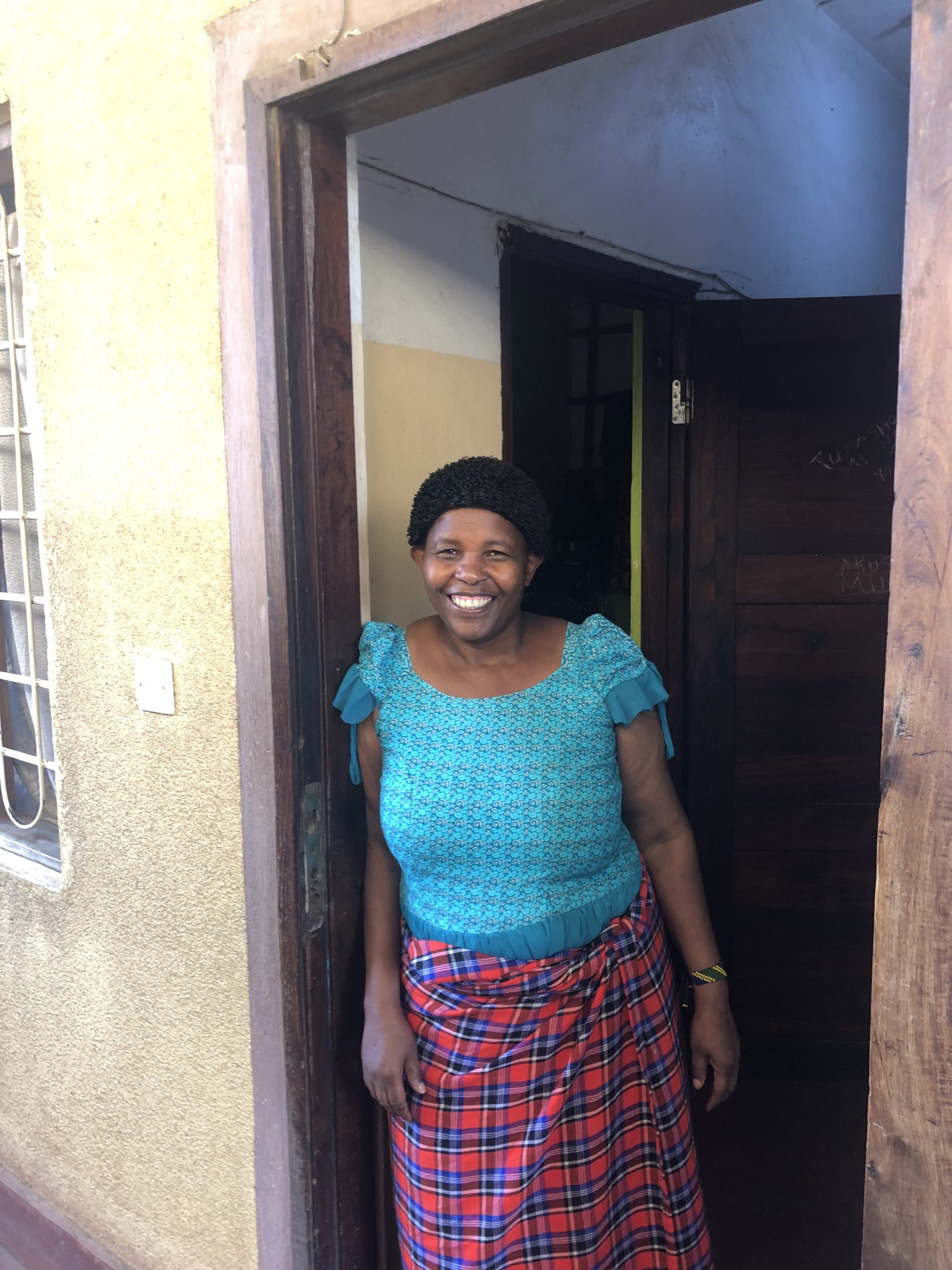
One of the first people we met who received a Sewing Peace machine was a woman named Sarah. Her small sewing studio is in the center of Arusha several levels up inside a multi-use apartment building. The small, dimly lit room, six by twelve feet, overflowing with fabric, was a sure signal of a hard-working individual. Sanai translated for us and retold bits of her story. She has been sewing for six years and since then has been able to put her children through school. Her four children are either now enrolled, or graduated university. She stays busy by making custom dresses, producing two or three elaborate dresses per day.
Access to electricity is the main challenge brought up by everyone we visited, Sarah being the first to mention it. The machines that are donated to us are mostly electric machines, and access to reliable electricity is simply something that the infrastructure of Tanzania cannot maintain. There is access but it’s sparse, as it will frequently shut off without warning with no telling when it will return. Manual treadle machines are great but older women like Sarah, who work long hours behind the machine, feel tremendous strain on their knees. Sarah mentioned how she likes to alternate to utilize the moments of electricity and to give her joints a rest.
Sarah also told us about the challenge of finding specific and specialized machines and attachments. At our collections we often say, “if we get it, they get it.” Sewing Peace simply does not have the capacity to seek out specific machines like overlock machines, which are highly sought after by independent seamstresses. These machines are highly desirable but relatively rare at our collections. At our most efficient we try to send at least two of these machines with every pallet of Sewing Peace sewing machines. However, that only accounts for two out of seventy-two, and even that we cannot guarantee.
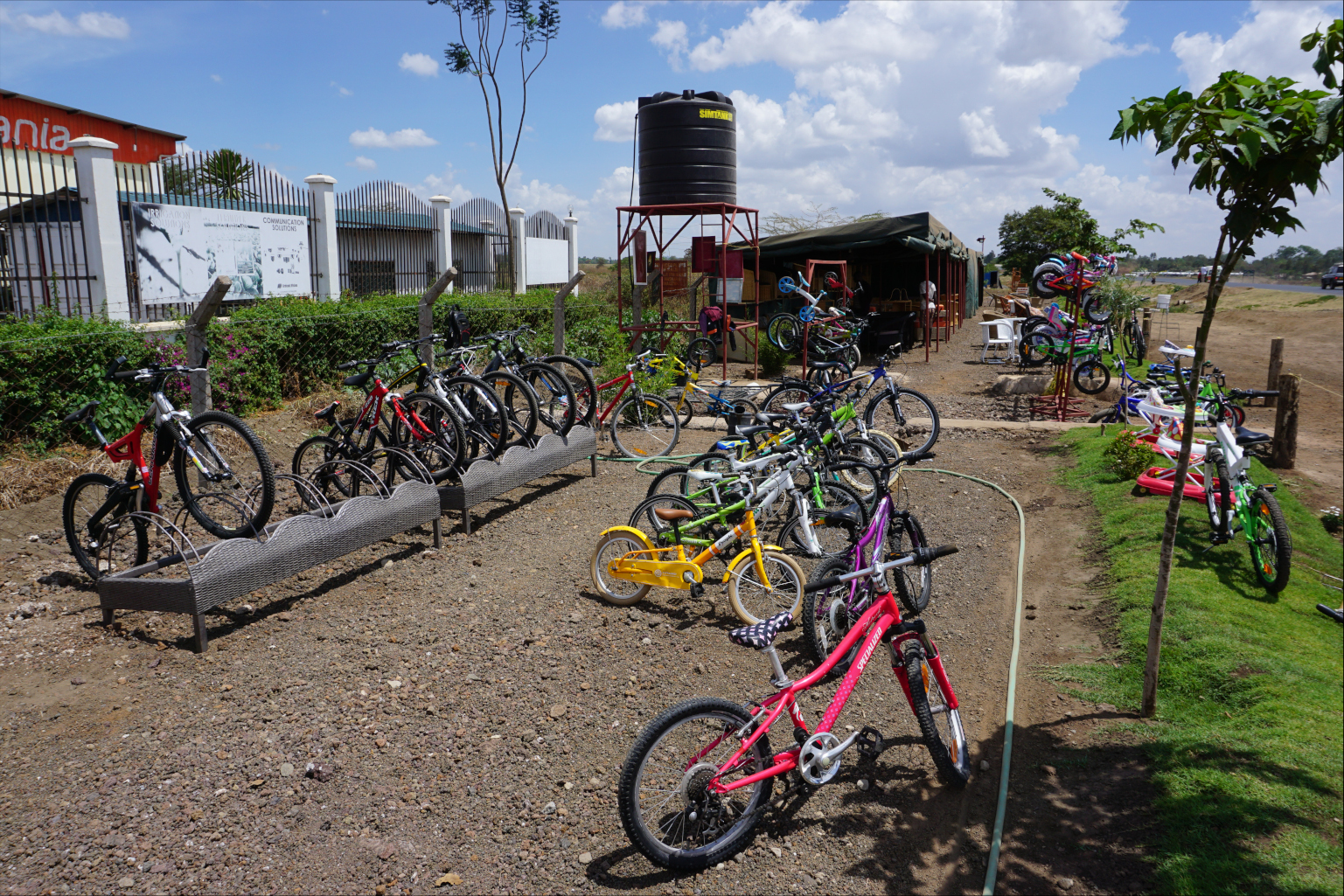
We moved a little further outside of Arusha, passing a road-side bike stand where we took a moment to stretch our legs and talk bikes. This shop at the crossroads of two main roads was relatively large, with a good range of quality bikes. We took the moment to explain to Joel and Sanai about bicycle quality differences so they could price P4P bikes accordingly. Our partners must be able to provide a fair range of prices, while also maximizing their profits by selling quality bikes to those that can afford them.

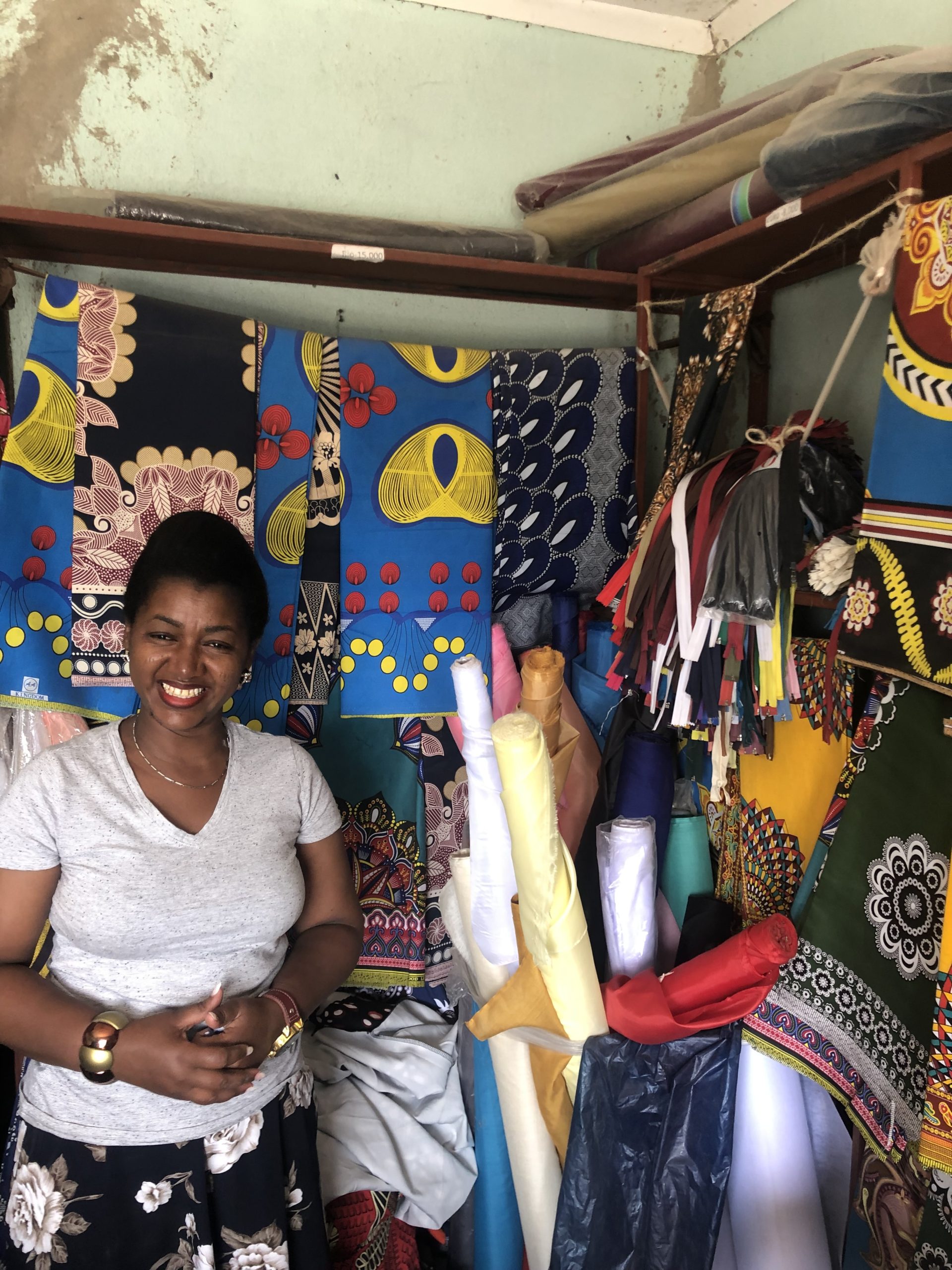
About 45 minutes outside of Arusha, we met a second sewing machine recipient, named Rachel, who has been running her shop within a busy market area for five years. She commented on how she loves the quality of her Sewing Peace machine but still runs into the same problem operating an electric machine on an unpredictable power grid. She works from the center of her small shop that has a counter with various sewing notions enclosed in a glass case. The back three walls have shelves filled with hygienic products, larger spools of thread, and a large assortment of fabric for sale.

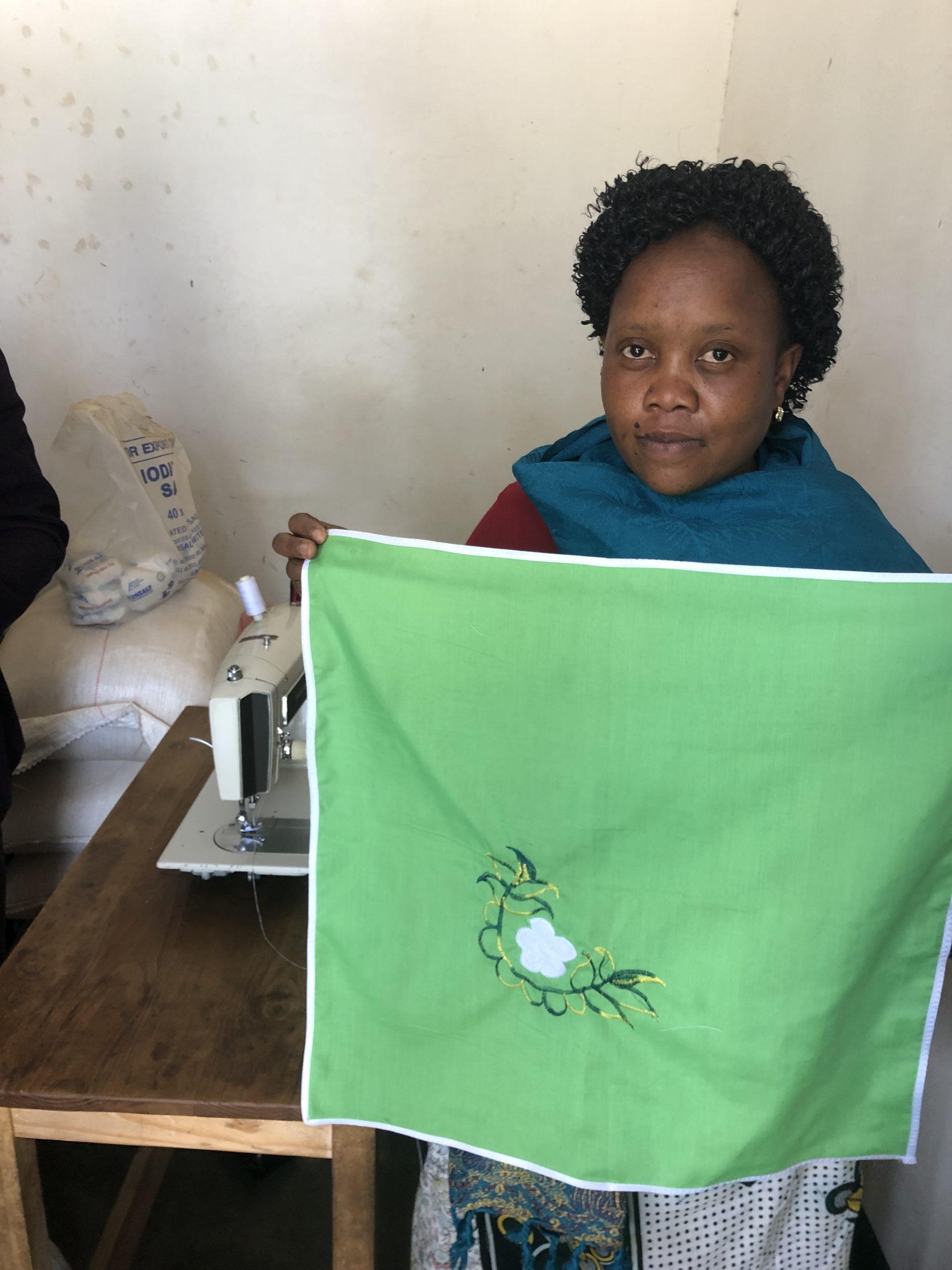
Later, we met Danielle, Norbert’s wife, who has been running a small shop in their neighborhood for the past two years. Her shop is very similar to Rachel’s, as she sells various goods surrounding her sewing machine in the middle of her shop. She mostly uses her shop as a convenience store for the neighborhood, selling soap, candy, cooking oil, and other goods. She uses her sewing machine to supplement shop income. She specializes in embroidered cloth used as dining mats or decoration. It is incredibly impressive as she uses a basic sewing machine to embroider flowers and other designs on colorful fabric. She takes custom orders for dresses and other commissioned design work.
It’s incredible to see firsthand how these women have created a life around one single machine. Hours upon hours of dedication have allowed them to build sturdy businesses around a specialized skill. It’s inspiring to see how they navigate problems beyond their control, all while continuing their enterprises. They either switch machines or find other ways to make money in the off time. Our machines donated by individuals in the United States end up in the hands of truly powerful businesswomen.
We left Tanzania feeling extremely satisfied. We have confidence in the Norbert and Friends Missions as they showed a high level of motivation and sense of urgency to supply their community with bicycles and sewing machines. We are excited to continue our relationship with them and to continue to supply them with the used bicycles and sewing machines donated by our generous donors throughout the tri-state area. The support we receive from our donors, volunteers, and organizations in the United States lifts the lives of others by helping build business, improve mental health, provide reliable transportation, and give hope and ambition to those who eagerly need a helping hand.
guatemala #22, december 2021
Fundación FIDESMA
San Andrés Itzapa, Chimaltenango, Guatemala
“Bicycles for all”
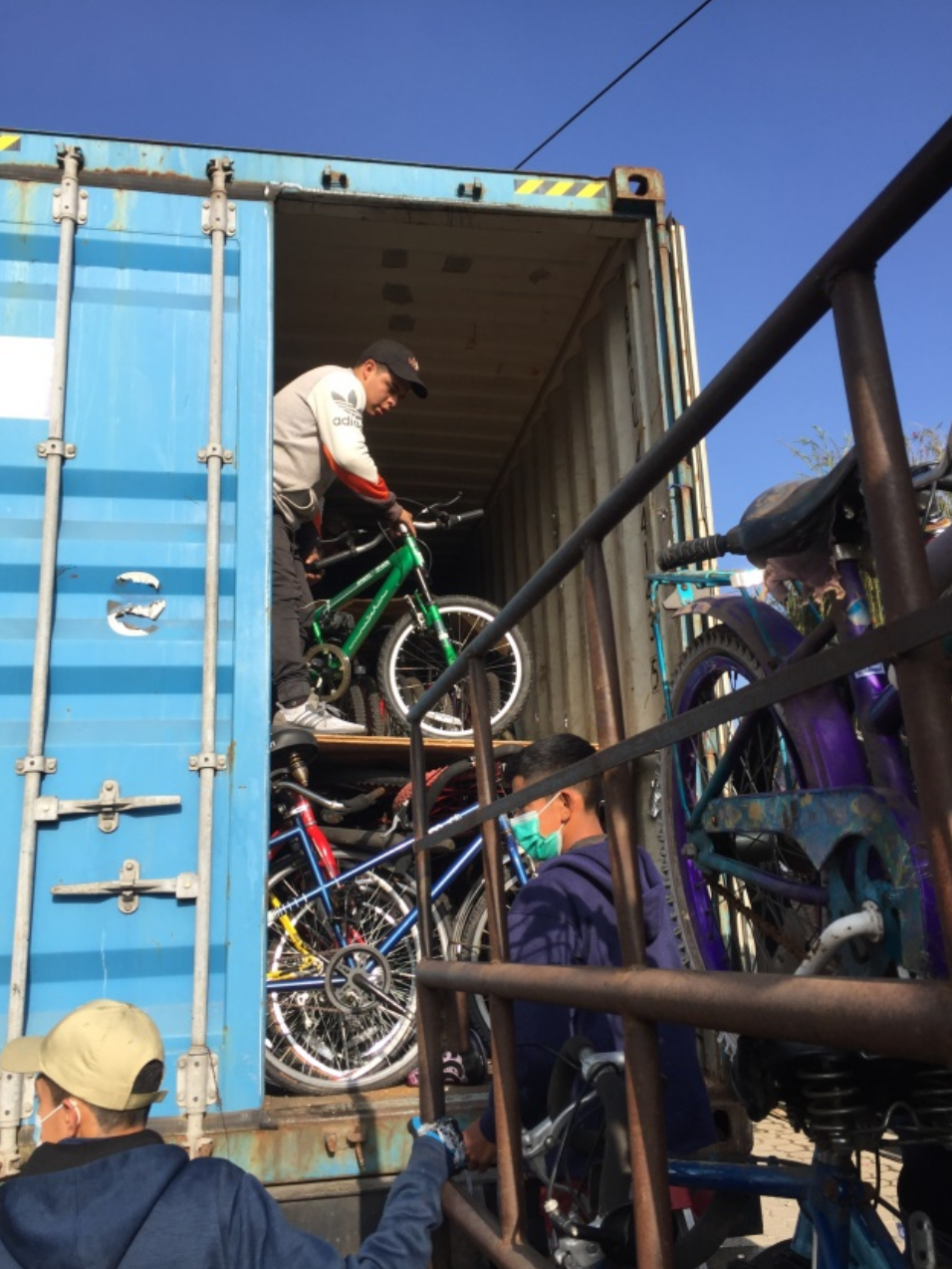
Container received: 30 December 2021
| Description | Quantity | Condition |
|---|---|---|
| Mountain bikes Wheel sizes 27, 26, 24, 20 |
252 | Good |
| BMX bikes Wheel sizes 20, 18, 12 |
156 | Good |
| Road bikes Wheel sizes 27, 26, 24 |
46 | Good |
| Touring bikes Wheel size 26 |
23 | Good |
| Total bicycles | 477 | |
| Sewing machines: Various parts and brands |
15 | Good |
| Bicycle Accessories: Helmets, mirrors, bike bags |
50 | Good |
| Bicycle Parts: Tires, tubes, pedals, tools |
73 | Good |
| Plywood | 9 | Good |
Empowering marginalized women and youth in Kosovo
In September 2021, “The Ideas Partnership” (TIP) non-governmental organization based in Kosovo used GoBike sewing machines to deliver training to women from the Roma, Ashkali, and Egyptian communities of Janjevo and Fushë Kosova. The aim of this project, “Women and youth for community development and cultural heritage”, is the empowerment of women and youth from marginalized communities through skill building activities promoting cultural heritage and diversity.
After 3 months, a group of 20 women and girls from the Roma, Ashkali, Egyptian, and other communities of Janjevo and Fushë Kosova have completed the skills development training on tailoring and handicrafts. During their training, the women learned how to use sewing machines, to work with materials, to sketch and sew, including learning handiwork with simple motifs and embroidery (bags, table covers, etc.). In addition, they have also created a network where they feel productive and are more confident that one day they will own a business or find employment. The sharing of space for mutual support, connection, and learning has shown them that no matter where they are from or what language they speak, it is cultural diversity that unites them more than ever, that they are all the same, and can make a difference in Kosovar society. This training was led by 5 women trainers of the Social Enterprise “Sa-Punë“, who share the same experience with participants and now are making a living of their own.
After this training, the TIP organization will continue to make use of GoBike sewing machines to train future cohorts of women and girls interested to learn a new skill and to socialize with one another. While in the past, TIP used to buy sewing machines in Albania, the GoBike partnership with P4P has enabled a much easier access to good quality sewing machines without the need to import from another country.
We hope that GoBike can continue to cooperate with similar organizations and noteworthy projects to put sewing machines to good use in empowering and improving the lives of many Kosovar women and girls.
The TIP project is part of the financial grant issued by “Cultural Heritage as a Driver for Intercommunity Dialogue and Social Cohesion” project that is funded by the European Union’s Instrument contributing to Stability and Peace (IcSP) and implemented by UNDP Kosovo.