By David Schweidenback, President
A number of our older self-sustaining partnerships reached a saturation point. Rivas in Nicaragua had been getting bikes for 28 years. While we have had tremendous success there and in some other programs it was time to start some new bicycle programs. In 2018, we started three new bike programs and two sewing machine programs.
Cameroon: On Hold
The first new bicycle program we started in 2018 was with United Action for Children in Cameroon. The shipment was funded by the Clif Bar Family Foundation. Our high hopes for this program did not pan out. The tax exemption that UAC had was not honored and the Cameroon government charged them $10,000 in import taxes. Then street violence broke out. Now Cameroon is on the brink of civil war. The amazing story is why Cameroon is at war. It’s not religious, nor tribal, it’s language. It is the English versus the French and the French versus the English. The country is about equally split between the two. Unfortunately, this is where I had delegated the Clif Bar grant of $5000. It is unlikely we’ll ship to this program again in the foreseeable future.
Kosovo: Promising New Program Underway
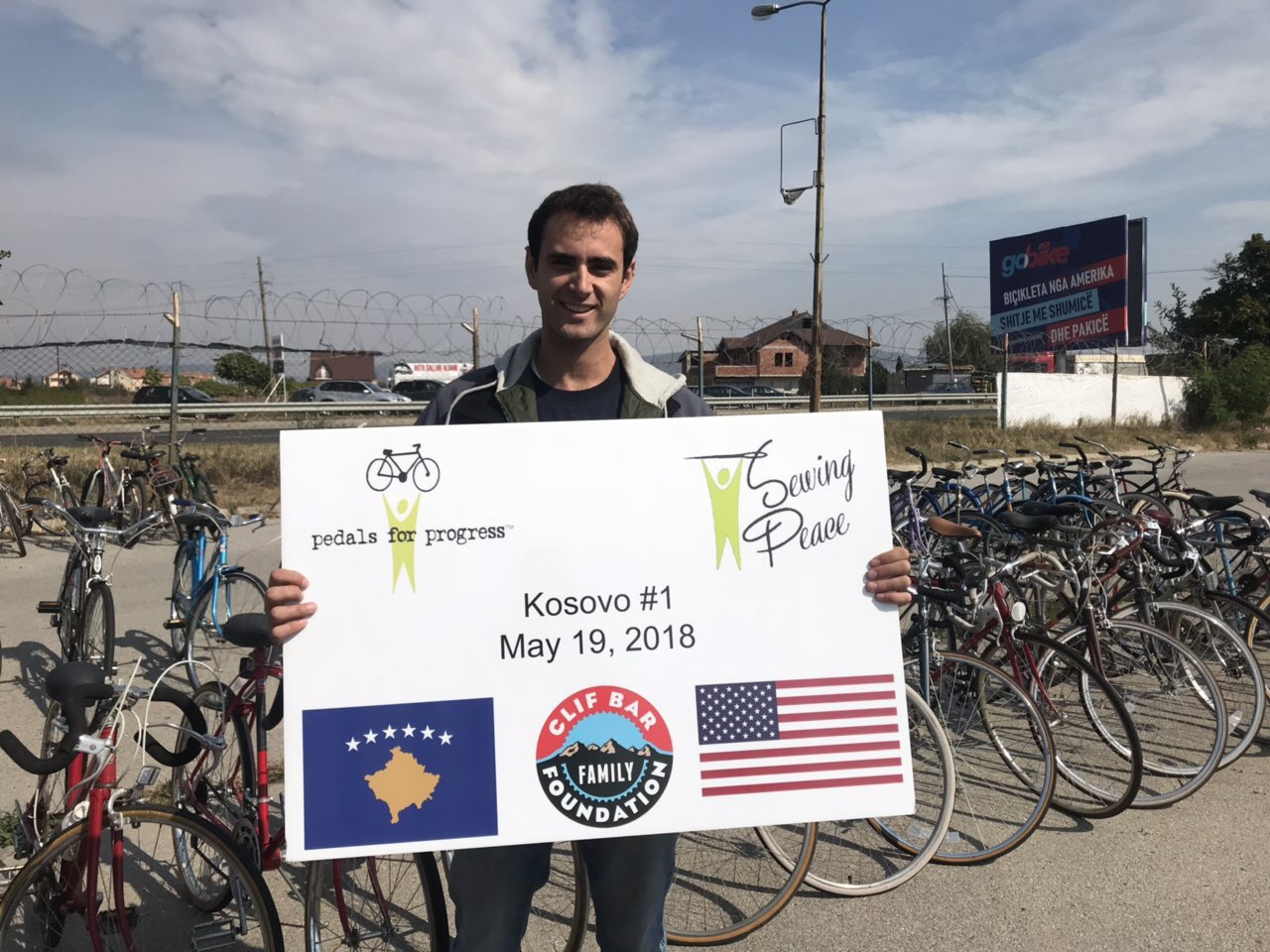 The second new bicycle program we started 2018 is in Kosovo. We took $5000 out of our general funds to pay for this shipment. It’s not something we can really afford but it is important to open new programs and create new revolving funds. Having no real warehouse we need to ship when we have enough bikes to ship. Our warehouse is a group of six non-roadworthy 45 foot trailers sitting on raw land. As soon as they are full we must ship in order to continue collections. GoBike Kosovo has worked. Many of the bikes have been distributed and people are making good use of them. Our Fall 2018 newsletter has a report on this project.
Vietnam and Kenya: Shipping Plans Changed because of Changes to Import Laws
In April 2018 we shipped 528 bikes to our partner in Vietnam. In September we were scheduled to ship another container to Vietnam. We were all ready to do it: the funds were available and the bikes were ready. Then Vietnam canceled our import permits. We do not know why.
My fallback position was to ship the container to a sewing machine partner in Kenya. We started a sewing machine project with Aid the Needy in Western Kenya during the spring. They were ready to graduate into a bicycle program. I had actually made the booking to load on October 6th and on October 1st the Kenyan government at the behest of the Chinese changed the import laws and we could no longer bring in the container. Once again we had a container worth of bikes and no immediate place to put it.
Tanzania: Brand New Bike Program
When Kenya blocked our shipment, we dug once more into current operational funds and invested $5000 in a new program in Tanzania to pay the majority of the shipping costs.
I have long wanted to open a bicycle program in Tanzania and in October we shipped our first container of bikes (469 bikes and 119 sewing machines) to MATOLO in Dar es Salaam. They will be starting out in Dar es Salaam but the goal is to bring a lot of the bikes to Arusha which is well inland near Kilimanjaro. This container will arrive December 25th. Here’s the story.
Ethiopia Update
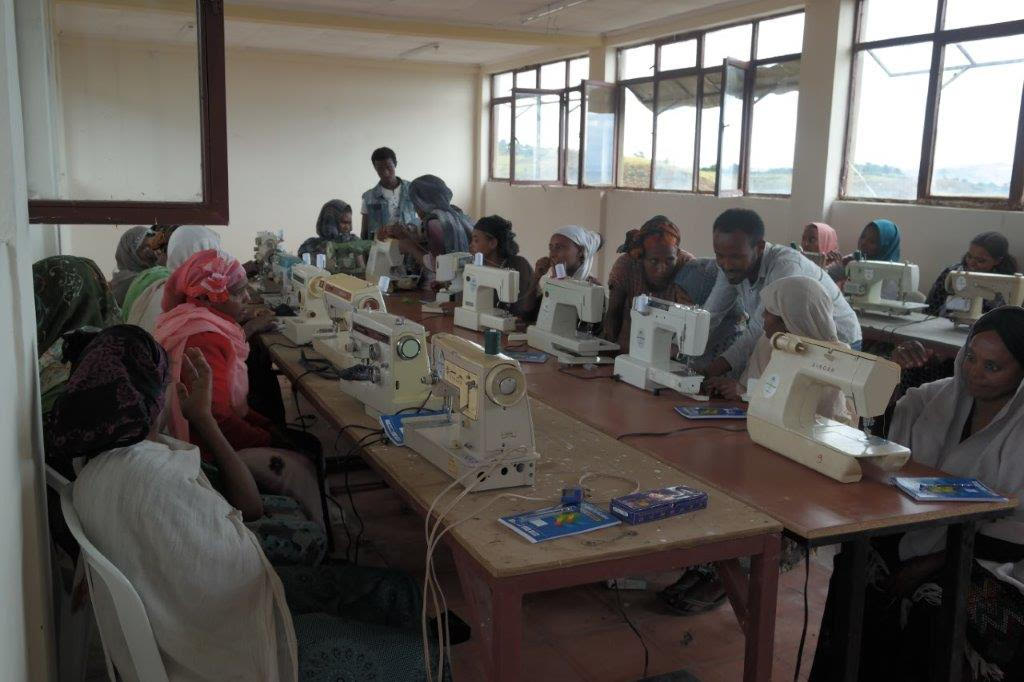
In 2017 we began a new sewing machine program in Ethiopia, funded in part by the Clif Bar Family Foundation. The program had trouble from the start. The Ethiopian government is extremely restrictive and what should have been a six-week process became four months. Once we finally got the sewing machines into the country the partner was just not ready to deal with setting up a workshop and the machines sat in a corner of the office for over a year. I had nearly given up on them. Apparently they received some funding to be able to hire a teacher and now they are running sewing classes. It took a long time to percolate but it’s working.
Summary
In 2018, Pedals for Progress shipped 6 containers and 4 LCL (less than container load) shipments for a total of 2,935 bicycles and 466 sewing machines to 9 nonprofit agency partners in 8 developing countries. This brings cumulative shipments since 1991 to 155,429 bicycles and 4,257 sewing machines.
In total we started three new bicycle programs and two new sewing machine programs this year. Of the bicycle programs, Cameroon is on indefinite hold, Kosovo is off to a good start, and Tanzania is too new to judge. Of the sewing programs, Kenya is on indefinite hold because of Kenyan import law. The other new sewing program is in the Peruvian Amazon. We made our first shipment to Alianza Arkana in June 2018. We do not yet have a report on that program.
I am sorry that we spent Clif Bar Family Foundation grant money this year on a program that is now on hold. Although we have no plans to continue with further shipments to Cameroon, there are 462 individuals who now own a bike to get to work or school and 100 who now have a sewing machine to generate income. So the money was well spent although it will not be the start of the long-term partnership we would have preferred. Your support is very important to us and we are deeply appreciative.
As always, for more information and our latest news, please see our website, p4p.org.
Our Fall 2018 Newsletter is now available.
Our fiscal year 2018 IRS Form 990 (1 October 2017 through 30 September 2018) is now available.
Appendix 1: 2018 Container Shipments: Bikes and Sewing Machines
- PASS, Albania: 1,016 bicycles and 70 sewing machines (2 shipments)
- United Action for Children, Cameroon: 462 bikes and 28 sewing machines
- Dariu Foundation, Can Tho City, Vietnam: 528 bicycles and 30 sewing machines
- WeBike, Ghana: 479 bicycles and 74 sewing machines
- GoBike, Kastriot, Kosovo: 450 bicycles and 50 sewing machines
Appendix 2: 2018 LCL Shipments: Sewing Machines Only
(LCL: less than container load)
- United Action for Children, Beau, Cameroon: 72 sewing machines
- Aid the Needy, Home Bay, Kenya: 72 sewing machines
- Mayor of Iganga, Uganda: 69 sewing machines
- Alianza Arkana Ucayali, Perú: 65 sewing machines
Appendix 3: 2018 collections
| Date Collection Partner Location | Bikes | Sewing Machines |
|---|---|---|
|
| ||
|
4/14/18 4 Track Bike Hike Hobby Blairstown, NJ | 14 | 0 |
|
4/15/18 Warren Hills Regional High School Washington, NJ | 141 | 39 |
|
4/21/18 Clinton Sunrise Rotary Clinton, NJ | 8 | 3 |
|
4/21/18 St. Andrew’s Presbyterian Church Lebanon, PA | 53 | 4 |
|
4/28/18 Bernardsville United Methodist Church Bernardsville, NJ | 26 | 6 |
|
4/28/18 Long Island Returned Peace Corps Volunteers Bellport, NY | 83 | 39 |
|
5/5/18 St. John’s Memorial Episcopal Church Ramsey, NJ | 143 | 39 |
|
5/12/18 Passaic County Office of Solid Waste & Recycling Woodland Park, NJ | 64 | 19 |
|
5/19/18 Rotary Club of Woodstown Pilesgrove, NJ | 7 | 1 |
|
5/19/18 Rotary Club of Norristown Norristown, PA | 97 | 13 |
|
5/20/18 Pascack Hills High School Montvale, NJ | 106 | 14 |
|
6/2/18 Colts Neck reformed Church Colts Neck, NJ | 29 | 7 |
|
6/3/18 Asbury Park Rotary Ocean Township, NJ | 40 | 6 |
|
6/9/18 New Dover United Methodist Church Edison, NJ | 14 | 3 |
|
6/9/18 Faith Lutheran Church New Providence, NJ | 54 | 0 |
|
6/10/18 South Brunswick Education Association Monmouth Junction, NJ | 66 | 4 |
|
6/13/18 Rotary Club of Gettysburg Gettysburg, PA | 17 | 4 |
|
6/16/18 Flemington Presbyterian Church Flemington, NJ | 60 | 12 |
|
9/9/18 Fair Lawn Rotary Club Fair Lawn, NJ | 54 | 5 |
|
9/15/18 Rotary Club of Branchburg Branchburg, NJ | 180 | 16 |
|
9/29/18 Green Mountain Returned Peace Corps Volunteers Burlington, VT | 193 | 75 |
|
10/6/18 Blooming Glen Mennonite Church Blooming Glen, PA | 36 | 2 |
|
10/6/18 Amazing Lash Studio Wayne, NJ | 33 | 4 |
|
10/13/18 Westfield Rotary Club Westfield, NJ | 50 | 9 |
|
10/27/18 Newtown Rotary Club Newtown, PA | 178 | 49 |
|
11/3/18 Delmar Reformed Church Delmar, NY 12054 | 37 | 27 |
|
11/3/18 Tohickon Middle School Doylestown, PA | 62 | 1 |
|
11/10/18 North Hunterdon Rotary Club Milford, NJ | 13 | 2 |
|
11/17/18 St. Mary School Middletown, NJ | 36 | 7 |