Category Archives: Sewing Partners

She Can Foundation, formerly the Tanzania Women and Youth Development Society (TWYDS): Organization Profile

[This description was written for the TWYDS. We will update it as we get more information from the She Can Foundation.]

INTRODUCTION

Tanzania Women and Youth Development Society (TWYDS) is a national non-governmental organization that facilitates the socio-economic, health, and situational development of marginalized women and young girls. TWYDS has been registered under Companies Act, 2002 registration number 128581, in the United Republic of Tanzania. The headquarters is located in Mbeya City in Southern Highland of Tanzania. TWYDS is working with women’s and girls’ issues countrywide. TWYDS’s main areas of work are social, economic and political empowerment, particularly in policy advocacy, community mobilization, awareness and sensitization on education and entrepreneurship training programs.

TWYDS is addressing critical issues that prevent completion of primary education for young Tanzanian girls and ensnare marginalized women in a poverty cycle. For Tanzanian girls, these issues include combating child marriages and protecting the girls, including working girls, to prevent child and adolescent pregnancies through general and reproductive health education. As a long-term response to reduce extreme poverty, TWYDS works further to empower Tanzania’s girls from harmful traditional and cultural practices which expose them to abuse and denial of continuous education.

For teen mothers and marginalized women, TWYDS offers support and entrepreneurship training as well as general life skills and social education which gives women means to survive and eventually improve their living standards.

Improving women’s well-being contributes to a cycle of better health and entrepreneurship education outcomes, more stable societies, and more sustainable development. TWYDS is committed to empowering women and young girls through education since it is essential for them to fulfill their human capability and for their families and societies to realize their full potential.

VISION

TWYDS envisions a society where women and girls are socially and politically emancipated and have attained economic empowerment leading to sustainable and self-sufficient lives.

MISSION

TWYDS aims to improve women’s socio-political and economic status and the positions of vulnerable and disadvantaged women and girls in society through creating awareness, training, sensitization and policy changes that can be made to combat ignorance, poverty and diseases.

MAIN GOAL

The organization’s main goal is the economic, social and political empowerment of marginalized women and girls in Tanzania.

CORE VALUES

TWYDS has a number of core values that guide the way the members, board, staff and partners relate and operate. The values of the TWYDS are:

  • Integrity
  • Accountability
  • Unity
  • Equality
  • Spirit of voluntarism and volunteerism
  • Teamwork
  • Conscientiousness

SPECIFIC OBJECTIVES

  • To promote girls’ rights with respect to girls’ care and provide them with better education and provide forums for discussing the girls’ dreams and ambitions in their life and how to make them work in the future.
  • To impart knowledge on reproductive health education among primary and secondary school girls and its consequences involved in early sex and unsafe sex.
  • To facilitate the change of attitude among the community members who are stereotypes in girls’ education.
  • Designing concrete, evidence-based plans for program designers, donors and policymakers that empower women to control their lives and help shape the future of their communities; measuring changes in the lives of women and girls to know how best to achieve gender equality.
  • Recommending policy priorities that give women opportunities to transform their lives.
  • Strive to increase women’s ownership, use and control of assets and property, to empower women as economic agents and better their ability to access markets on competitive and equitable terms.

CURRENT RECORDS AND SUCCESS

TWYDS has experience working on the ground in Tanzania. So far it has gained successes in:

  • Implement ‘SASA NAWEZA”, which literally means “NOW I CAN”. This project aims at empowering primary school girls to improve academic performance and impart life skills on reproductive health education.
  • Implement ‘WEKA AKIBA KUONGEZA MALI’. This program focuses on empowering marginalized women in saving and getting involved in entrepreneurship activities to overcome the burden of extreme poverty in Mbeya and Dar es Salaam Cities.
  • Establish the Orphanage Centre in the Mbeya region and provide education and health care services to orphans and the most vulnerable children.
  • Implement social accountability initiatives such as Public Expenditure Tracking System and PIMA Card to track public expenditures in delivery of health and education services.

PROGRAM IMPLEMENTATION STRATEGIES

TWYDS undertakes its program interventions through:

  • Conducting community outreach campaigns to advocate for girls’ education
  • Providing training on reproductive health education for school girls
  • Training specifically on women’s entrepreneurship education
  • Lobbying and advocacy on policy changes to promote women’s and girls’ rights.
  • Forming women’s action and organized groups

CORE ACTIVITIES/PROGRAMS

Our programs are aimed at proving long-term solutions to end poverty, injustice and illiteracy. TWYDS encourages self-reliance through sustainable development in the following areas:

Women’s Economic Empowerment

TWYDS supports programs focused on providing women access to education and training, health facilities, economic and social development, and other resources/opportunities/assets to help them achieve equity, sustainability and security. Ensuring that women have and can take advantage of full and fair opportunities to earn a living fundamental to social and economic development. The TWYDS’s program seeks to complement our existing portfolio by supporting a focused agenda on women’s economic empowerment through:

Open Market Fair Event

The Open Market Fair Event is conducted each year by TWYDS. It’s a two-day event held for the economic empowerment of women where the women entrepreneurs from various groups attend the event and sell their products, and have the opportunity to network with other big entrepreneurs as well to market their goods to potential customers.

Entrepreneurship Training

We support women’s entrepreneurship through training in production skills and techniques. In the entrepreneurship training, the women’s groups are taught how to make certain products, such as local soap, local jewelries and African patterned ‘Batik’ materials.

Savings and Basic Business Education

The women Entrepreneur groups formulated by TWYDS are taught how to start and develop a business and given the knowledge of budgeting, business management and education savings, helping them to certify businesses that adhere to quality standards in the workplace.

Girls’ Education Program

TWYDS is focusing on the development of education for girls in both urban and rural districts. The struggle against ignorance of girls who have no resources for education is a challenge. Our support is not limited to primary and secondary schools only but also on young women who never got the opportunity to complete their education. We inspire them to reach their full potential by addressing their basic needs through funding, partnerships and resources for education and vocational training. The core components of Girls’ Education Program are:

Girls’ Future Initiatives

TWYDS works with girls on “in-school” and “out-of-school” tracks. For girls who are engaged in the formal system, the focus will be on supporting them in as many ways as possible to be successful in school, attain a high school performance, and make the successful transition to post-secondary education. For girls who are out of school, the focus will be on connecting them back to school or connecting them with adult education. These programs provide high school equivalency and basic literacy instruction to out-of-school girls.

SASA NAWEZA

This program literally means ‘NOW I CAN’. The Girls’ Education Program teaches the girls to be vigilant in learning as soon as they are admitted into schools. This involves major challenges to the girls in their respective schools, whereby primary and secondary school girls are empowered with the knowledge, skills and options they need to reach their potential. Among other issues, we aim to reduce the rate of truancy, improve academic performance and teach sexual health awareness so the girls make better decisions about their bodies and lives.

Promoting Maasai Girls’ Education

TWYDS sensitizes the community about the consequences of harmful cultural practices affecting Maasai girls’ education. Girls escaping female genital mutilation have greater barriers to receiving essential services, particularly education. TWYDS strives to collaborate with government authorities, to help ensure girls are protected and to create partnerships with community leaders, educators and individual supporters to increase support available to Maasai girls.

TWYDS increases public dialogue and awareness on the practice and its harmful consequences to help shift tolerance and attitudes against it. TWYDS develops holistic programming of training and economic opportunities for women who perform the practice, to create alternative livelihood options and incentives, which can help in the process of abandoning the practice.

PARTNERS

In implementing its activities and programs, the TWYDS networks and collaborates with various organizations, including:

  • UVIKIUTA
  • Tanzania Women and Youth Development Society (TWYDS)
  • Tanzania Coalition on Debt and Development (TCDD)
  • The Leadership Forum (TLF)
  • Mtwara Non Governmental Organization Network (MTWANGONET)
  • Lindi Non Governmental Organization Network (LINGONET)

CONTACT US

Tanzania Women and Youth Development Society (TWYDS)
Block T Area, Kadege Street, Plot no. 169
P. O. Box 6464
Mbeya, Tanzania

Hotline: +255 713 403 231 / +255 788 319 131
Tinkerer Wanted!

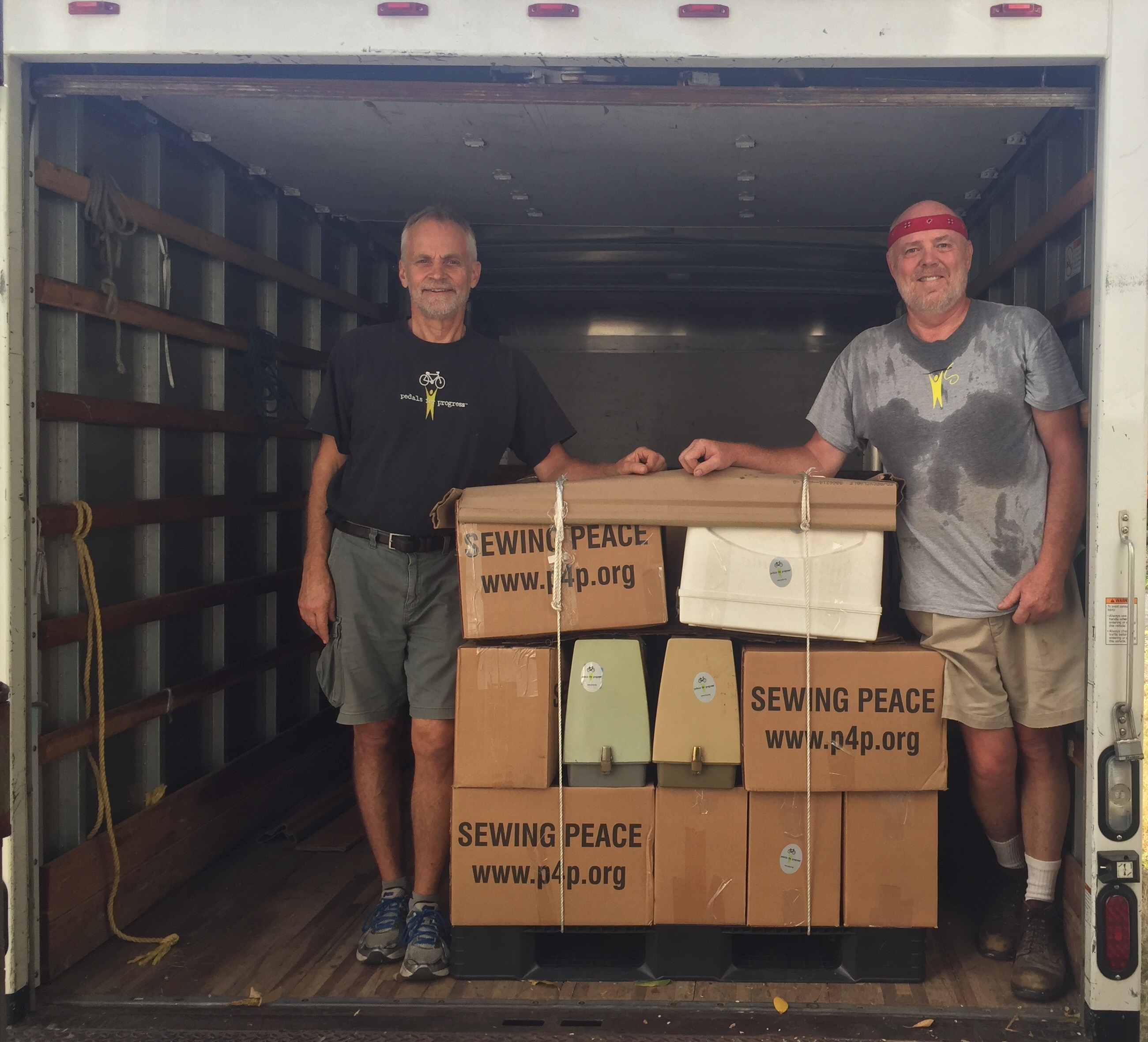
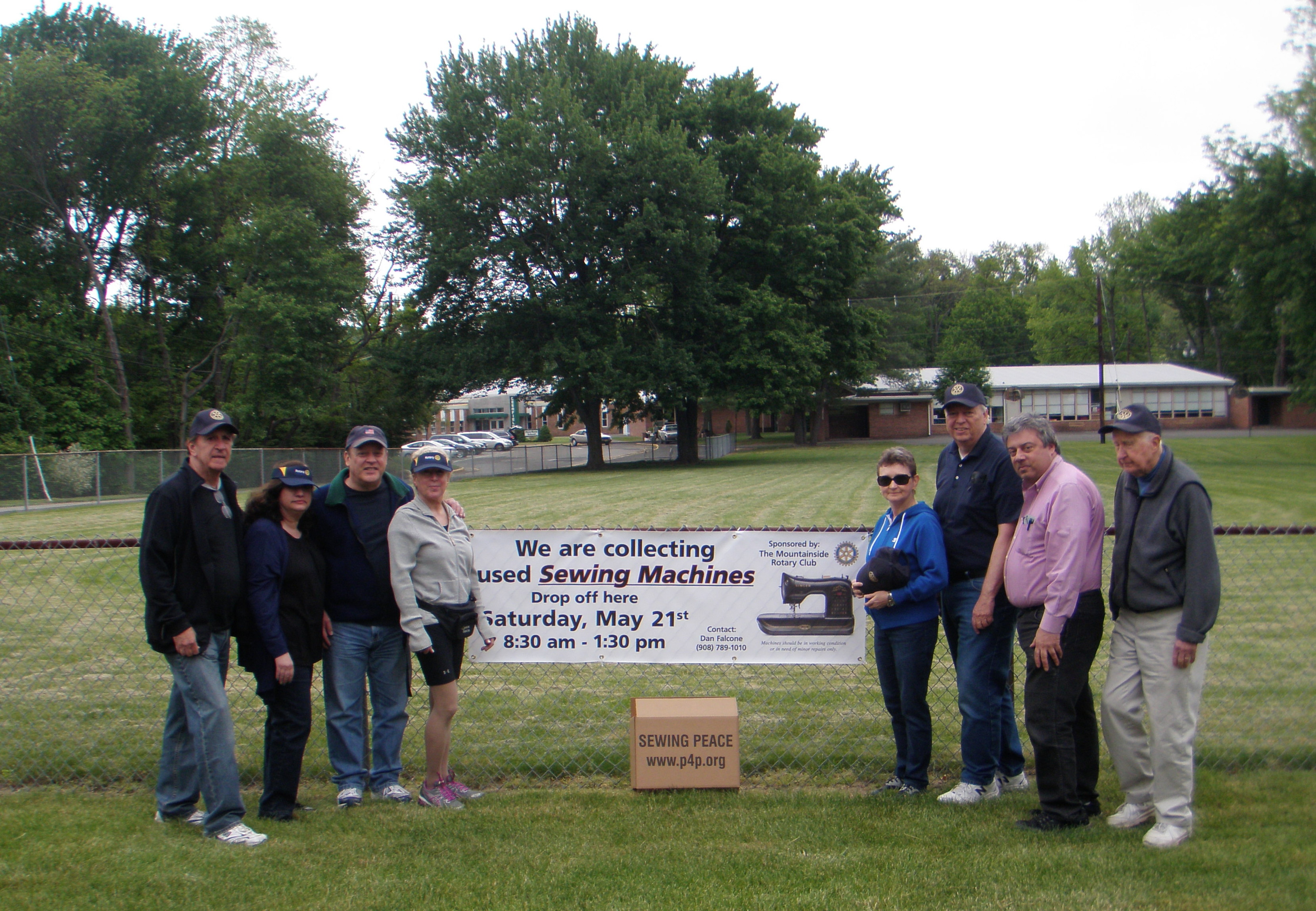
Every year, Sewing Peace & Pedals for Progress collect hundreds of sewing machines that we ship overseas. Most are in very good working order but there are many that need tuning. Someone who is handy with small gadgets could be of great assistance. If necessary we will train you to make minor repairs of sewing machines. Your help would allow us to reach hundreds more people annually. Please contact Dave at dschweidenback@gmail.com or (908) 638-8893 for more information.

Shifting Gears: Pedals for Progress and Sewing Peace Keep the Spirit of Economic Development Afloat

by Patricia Hamill
Fall 2016 InGear

Adaptability, resilience and initiative. These are the key factors that define success in the world of the NGO and that are the very foundation of Pedals for Progress (P4P), a small, but internationally active nonprofit. Founded in 1991 by David this undertaking was not intended to be part of a charity effort, but a leg up for the economically disadvantaged. Over the last 25 years, P4P has searched out communities in the developing world and connected them with access to employment and self-sufficiency by providing them with sewing machines, bicycles and maintenance parts.

To date, more than 145,000 bicycles and 3,200 sewing machines have been shipped to P4P’s nonprofit partners in more than 40 countries including Nicaragua, Guatemala, Ghana, Albania, and Fiji, and the numbers continue to grow as collections are scheduled year round. The partners in these countries arrange the pick up and delivery of the shipments, and they often serve as an ongoing center of support and education for those who purchase the bikes and sewing machines.

It is important to our philosophy of self-empowerment that people maintain a sense of self-reliance and initiative. Recipients of the bicycles and sewing machines that P4P collects and ships are required to purchase them. While the amount may be minimal, we feel that paying for affordable and low-maintenance access to employment offers a long-term solution to poverty. The recipients can earn their own way and take pride in their improved lifestyles. But what are the challenges of such an undertaking? When dealing with the bicycles, there are large containers to ship, customs to navigate, delivery to arrange at the recipients’ location and reliable partners to connect with so that this endeavor remains untouched by mismanagement. These obstacles are among the reasons why P4P is now expanding its focus and putting sewing machines at the front of the list of shipping priorities.

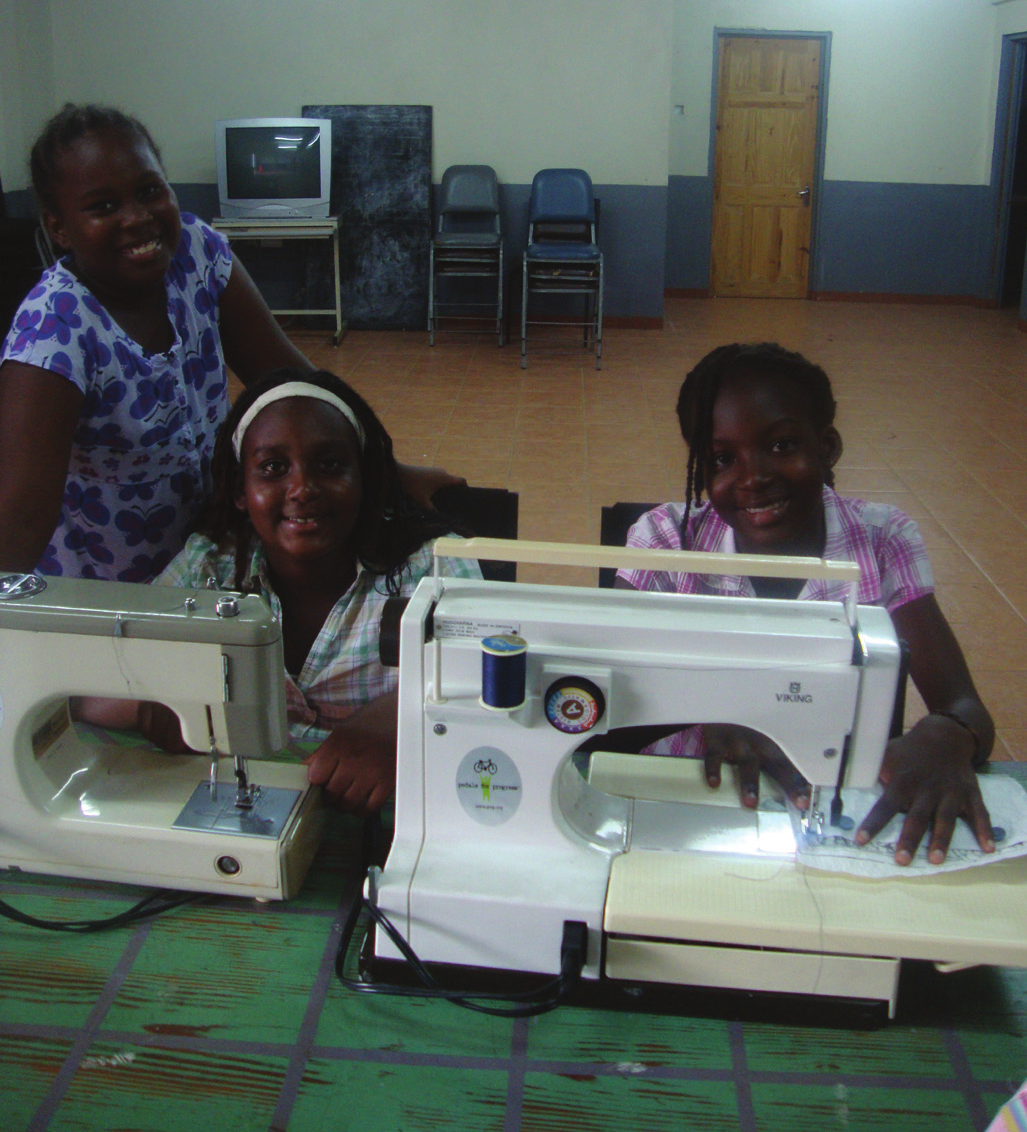
2016springShiftingGears3womenSewingOur sewing machine collections are under the auspices of Sewing Peace—still a part of P4P, but independent all the same. The shipping itself is less expensive and that enables Sewing Peace to allocate more funds towards outreach: We can stack the sewing machines on pallets and transport them in smaller vehicles once at their destination. Usually 20 or 30 machines are enough to fully supply a co-op or school without our needing to resupply. Sewing machines are practical because they are also technologically appropriate to the locations where they are distributed.

There are several success stories from long-term and new partnerships formed over the years. One such fortuitous relationship is with the Foundation for the Environment and Sustainable Development (FIDESMA). Located in Guatemala, this organization runs economic development programs that enable locals to learn a variety of skills such as computer use and more efficient methods of agriculture. FIDESMA is able to make use of the bicycles and sewing machines in two ways. First, those who purchase these enhance their earning power by accessing employment in more remote areas or by setting up their own sewing businesses right in their own homes. Then the income from the sales enables FIDESMA to continue to fund its programs and keep the classes running. This system of reciprocity is much more desirable than the cycle of poverty that exists so pervasively in this region.

The Barrouallie Secondary School on the island of St. Vincent is the fortunate institution that welcomed a dedicated Peace Corps Volunteer who was familiar with P4P’s work. She arranged for 20 sewing machines to add to the school’s vocational curriculum. These particular machines are strictly for educational purposes rather than commercial, but the skills these Vincentian students take away with them will help them avoid work in banana production and the insecurity that comes with crop diseases and other negative effects on prices. Tourism is a growing industry on the island, but there are only so many jobs to go around. The sewing machines do not rely on seasons or market values to function reliably.

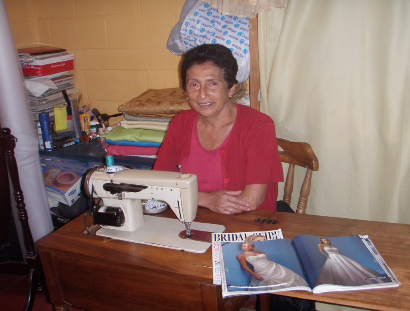
Señora Antonietta MesaAs bicycle donations dwindle in the face of a reduction in consumer spending and an increase in their value as scrap metal, it has become immensely important that P4P maintain its momentum and continue its mission uninterrupted. What Sewing Peace hopes to accomplish, in the spirit of P4P, is to connect with many more people who can provide and store unwanted sewing machines domestically and may have ideas and suggestions as to where Sewing Peace can expand their footprint in the world.

Making changes after 25 successful years can be difficult for some, but P4P was founded on challenge and filling a need. Pedals for Progress and Sewing Peace embrace the evolution that must happen to keep the spirit of economic stability alive. The needs of the poor stay the same but how they are met must evolve and this NGO is not losing any momentum shifting gears and running smoothly ahead. As the saying goes, “A rising tide lifts all boats.”

[Patricia Hamill, M.A., is the founder of Heron Moon Press and an adjunct faculty member at Pace University and Southern New Hampshire University specializing in Composition Studies. She is a freelance writer and editor who regularly contributes to “InGear,” the newsletter of Pedals for Progress. Her blog on writing and mindful living can be found at HeronMoon.com.]

Bula Vinaka from Fiji

Spring 2016 InGear

My name is Percival Epeli Navolo and I reside on the beautiful tropical land known as the Fiji Islands.

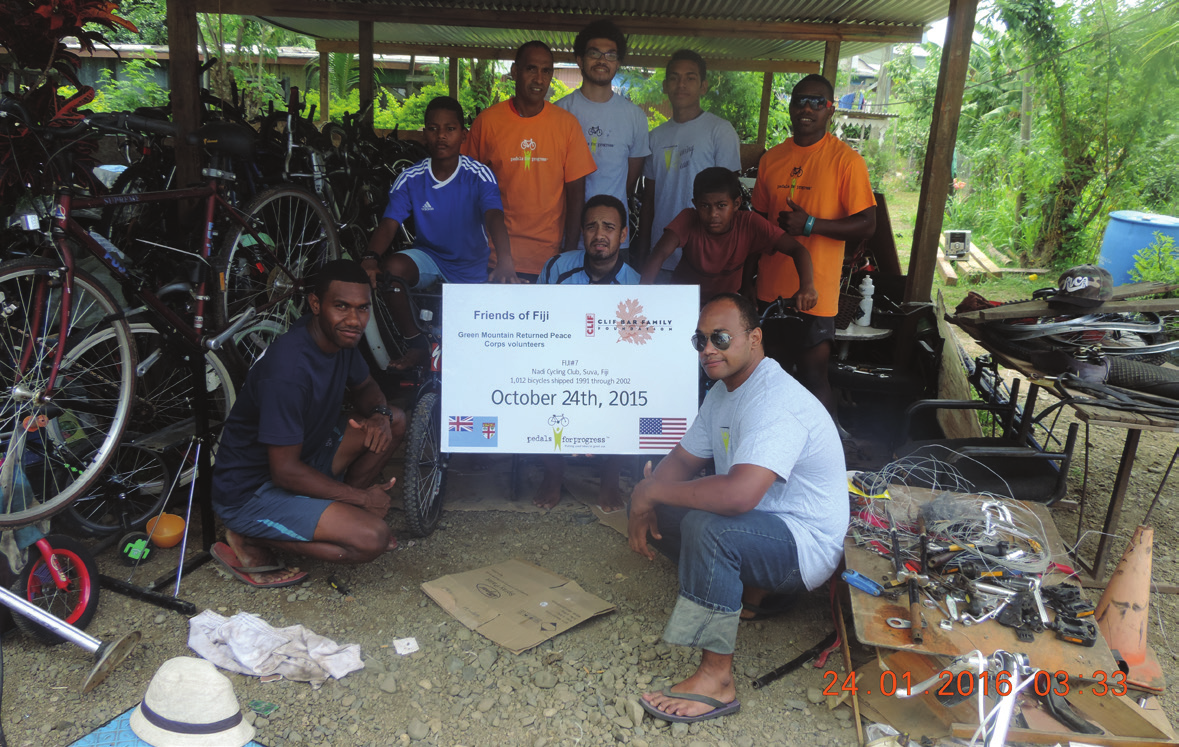
2016springFijiBikeGroupLife here on the Island has not fully modernized in certain areas compared to larger countries and many of us live day to day. Here on the Island income levels are low and many do not have the privilege of high-level education, so they cannot get good jobs. Still they have the capacity and capability of man and will power. I have involved myself in the sport of cycling for 30 years and have seen the benefits the sport brings, physically, mentally and environmentally. With the firm boosting support from the NGO organizations Pedals for Progress and Friends of Fiji, many Fijians now have a milestone opportunity to have their lives transformed.

I am formerly the president for a nationally recognised club known as the Nadi Cycling Club. We just got a 40-foot container provided by Pedals for Progress, Friends of Fiji, Green Mountain Peace Corps Volunteers, and Clif Bar Family Foundation. The container had 440 various species of bicycles and 68 perfectly operabable sewing machines.

With these materials the club can now fulfill our 3 basic goals:

  • Help unemployed youths avoid violence, and instead train them in the field of bike mechanics, the bicycle trade, and the development of the sport in the country.

  • Provide inexpensive, good-quality bicycles to low-income earners who need transportation to distant job locations. Besides giving them efficient transportation, bikes also help maintain their physical fitness.

  • And most importantly, advocate a more environmentally friendly mode of transportation, to lessen the release of harmful gases into the atmosphere, reducing damage to the ozone layer.

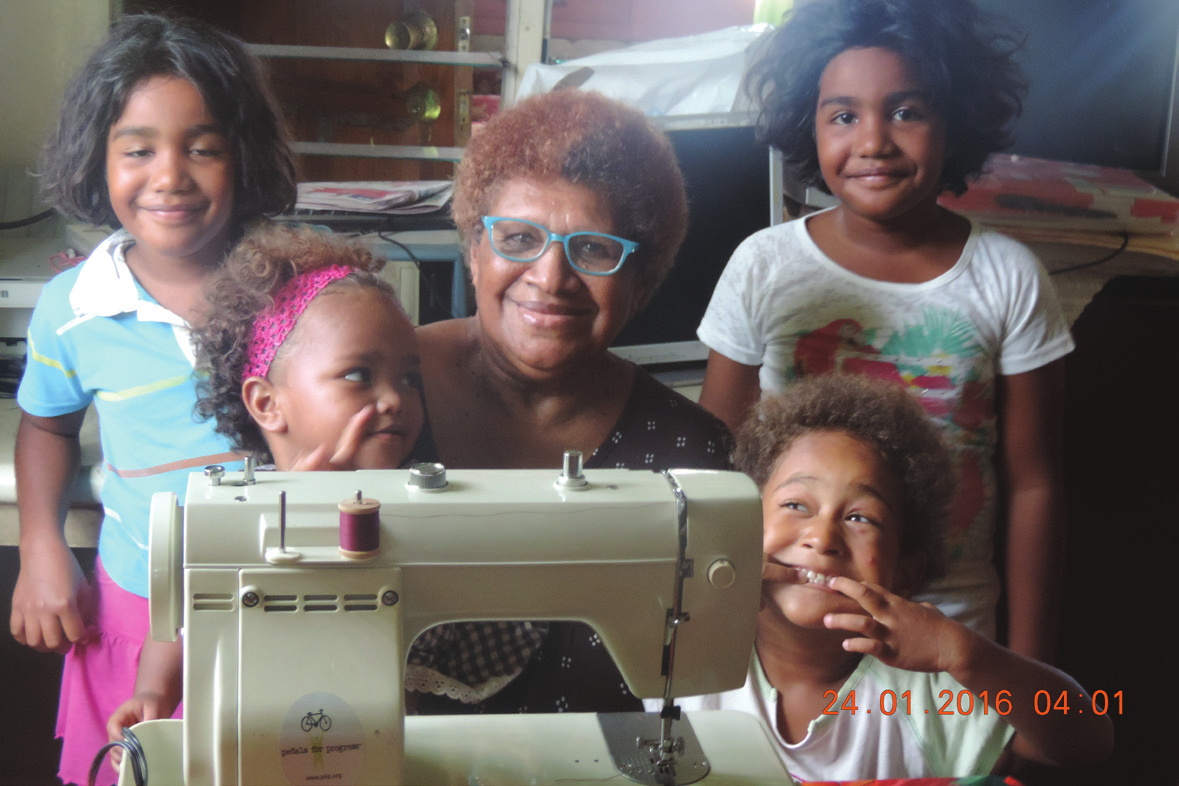
2016springFijiSewingGroupWe believe that each individual effort can make a difference. We were also blessed to have the first-hand privilege of helping unemployed widows who struggle to put food on their tables to feed their little young loved ones. With a source of income, these talented ladies can now use these sewing machines and sell garments they sew. Though it may not be hundreds or millions a day, the lovely smiles of relief on their faces gave us a humble relief that it was more than enough.

So we encourage all the donors and volunteers who have contributed to making a difference in individual lives all over the world to continue their hand in creating smiles and happiness.

So from the Nadi Cycling Club here in the Fiji Islands, we would like to convey a Big Vinaka Vakalevu to Pedals for Progress, Friends of Fiji, Clif Bar Family Foundation, Green Mountain Returned Peace Corps Volunteers and all the contributors for their extensive support in helping us here in the Fiji Islands move forward towards a better tomorrow.

FIDESMA report, January 2016

by Margarita Caté de Catú, President of FIDESMA, Guatemala

From December 1999 through 2015, we have received from Pedals For Progress 16 containers with 8,160 bikes and 400 sewing machines, which have directly benefited more than 8,560 people and their families.

The program has brought important benefits to our organization, to our communities, and to the country of Guatemala as a whole.

In San Andrés Itzapa, Chimaltenango, Guatemala, we face many problems: lack of employment, lack of opportunities for women, lack of education about the environment. Children suffer from malnutrition and lack of education and job training.

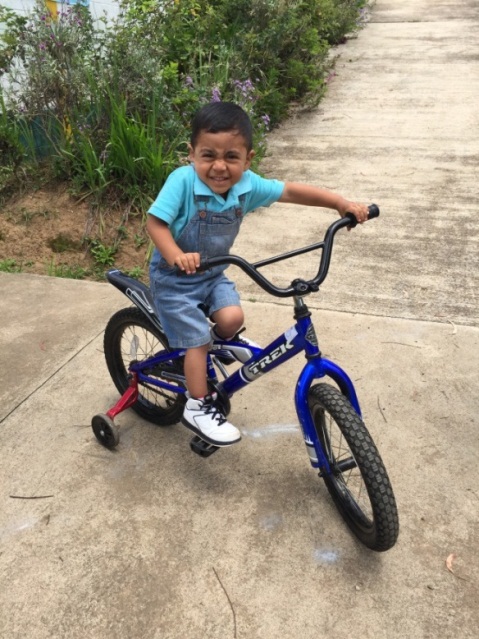
201601GuatBoyBlueBikeBut the FIDESMA/Pedals project gives kids and adults the chance to buy a bike to get around faster to school and to work, and to get some exercise, all without polluting the environment. As we have heard many times over the years, bicycles help people with their jobs. As examples consider the administrative staff of the foundation: a secretary, an accountant, a salesman, and a mechanic. With the help of their bikes, they all earn salaries that support their families.

Likewise our sewing machines benefit many families. Groups of women artisans work every day to earn a living and buy food for their children.

Besides its bicycle and sewing machine programs, FIDESMA generates funds for the maintenance and operation of the organization, for creating jobs, and for supporting social service projects. For example, we run one project for children and young people with disabilities, and another project that provides medical equipment, medicine, and basic food to the project’s medical clinics. Another project provides teaching materials to schools.

We also provide support groups for the training of women in areas such as these:

  • crafts
  • farming
  • participatory citizenship
  • dressmaking
  • baking
  • food packaging
  • welding

Directly and indirectly, FIDESMA has benefited more than 20,000 people across the country of Guatemala, which is why we are grateful to Pedals for Progress and especially its president David Schweindenback for the selfless support extended to us for the last 16 years.

[To see a recent photo album from Guatemala, click here.]

2015 Guatemala Photo Album

[Margarita Caté de Catú, President of FIDESMA, our partner in Guatemala, sent in a report on their recent activities. Click here to see her report. She also sent lots of great photos. Here they are.]

201601GuatDonationSixthGrade

Sixth-Grade Raffle

We donated bicycles for a sixth grade raffle to raise funds to buy uniforms and equipment for their soccer and basketball teams.

201601GuatGirlWheelchair

Children and Youth with Disabilities

We deliver groceries to children and youth with disabilities.


201601GuatMenBankPromotion

Community Banks

We promote community banks and training for small businesses.


ecolobiciGuatemalaLogo

Ecolobici

Ecolobici, our bicycle program, provides and promotes bicycles for men, women, and children of all ages.
201601GuatBoyOrangeBike

201601GuatGirlBigPinkBike


201601GuatBikersWkits

We organize cycling events.

201601GuatGroupRideInCity


201601GuatBikesInTrucks

We bring bikes to surrounding communities.


201601GuatKidsInSchool

Schools

We provide teaching materials to schools.


201601GuatWomenMeeting

Women’s Programs

We provide several programs for women.


201601GuatWomanWithProduce

Farming


201601GuatSewingMachinesWomen

Dressmaking


201601GuatWomenBaking

Baking


201601GuatThanksP4P

Gracias, Pedals for Progress!