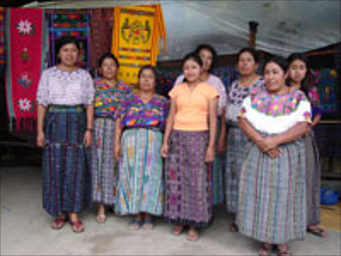
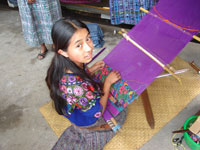
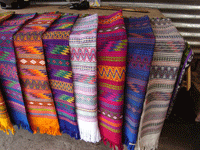
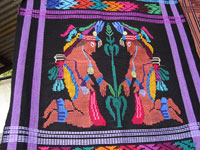
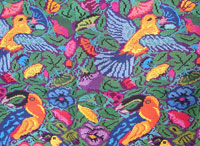
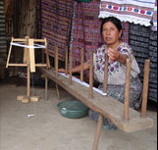
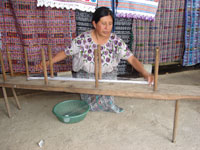
Mujeres Maya (Mayan Women) Kaqchiqoel of Santa Caterina de Barahona is a cooperative weaving business whose members create amazing hand weavings by using the traditional weaving techniques handed down to them by their grandmothers. The Mujeres Maya received a micro-loan from our partner FIDESMA in Guatemala to start their business. Today they have a stall in the major tourist city of Antigua, where they sell their goods.
Maria using the hand loom
Santa Caterina de Barahona
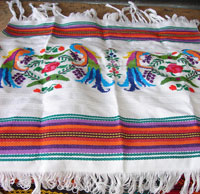
Table cloth with Quetzal
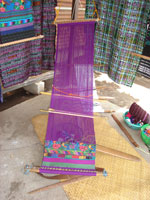
Traditional hand loom
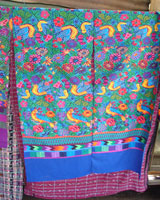
Huipil: traditional indigenous garment
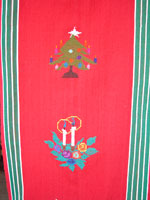
Christmas table runner
Table cloths
Dios de Maiz, Corn God
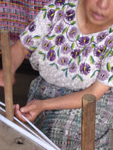
Detail of a huipil
Isabel demonstrates how the threads are counted for the hand-loom.
Señora Margarita is the founder of the Guatemalan foundation FIDESMA (Foundation for the Environment and Sustainable Development). The mission of FIDESMA is to promote the sustainable development of families and communities by promoting programs and projects in the areas of education, with technical assistance and economic aid for conservation, and protection of the environment in the rural regions of Guatemala. P4P has sent over 6,000 bicycles and close to 200 sewing machines to FIDESMA since 1999 to help support these programs.
Señora Margarita will give the presentation explaining in detail their programs that they run from their foundation headquarters in the rural highlands of her native country. FIDESMA has established facilities in San Andres Ixtapa from which they implement their programs in all of the surrounding communities.
Joining us will be documentary filmmaker Greg Sucharew sharing his trailer for the upcoming The Bicycle City. Based in Rivas, Nicaragua, this is “the story of the struggle, determination, idealism, and hope that has brought about the transformation of an entire society.”
For all of the supporters of Pedals for Progress and for those interested in discussing the sustainable and measurable success of partnering with a nonprofit, this is a wonderful opportunity to hear first-hand how American bicycles and sewing machines have had a significant impact on many Guatemalan and Nicaraguan lives and how important it is that we are able to continue supporting FIDESMA and related endeavors.
60 Sewing Machines from Pedals for Progress
Yemen is the poorest country in the Arab world and consistently ranks at the bottom of the United Nations Development Index. Still, for those fleeing war, persecution, and famine in the Horn of Africa, it is both a transit country and destination. With an estimated 210,000 refugees in Yemen, the capital city of Sana’a hosts one of the country’s largest urban refugee populations. With high levels of unemployment across the country, especially amongst the refugee population, livelihoods opportunities are hard to come by.
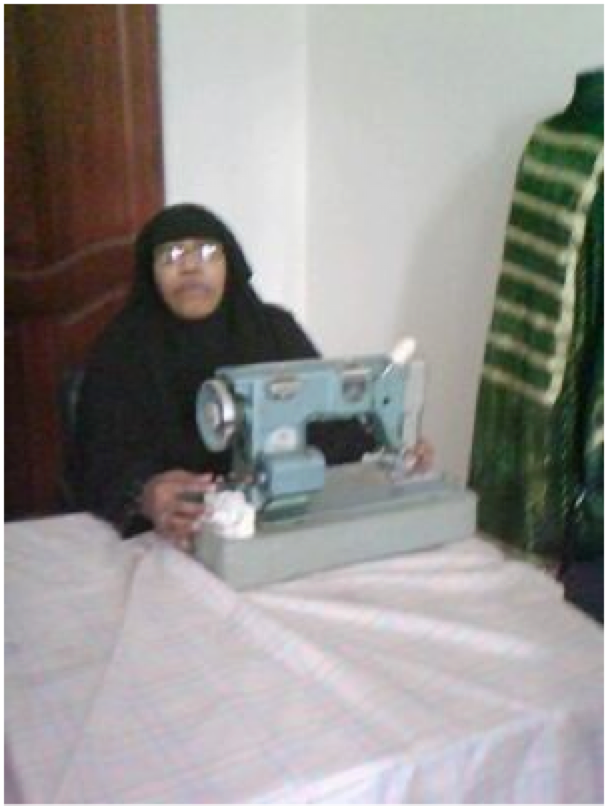
In 2011, IRD Yemen received 60 sewing machines from Pedals for Progress as a donation to support its UNHCR funded program, Community Services Assistance to Urban Refugees. The aim of the program is not only to support urban refugees, but also to add value to other organizations’ programs that support refugees in the capital city of Sana’a. As such, IRD works closely with a local NGO which provides vocational training services to female refugees and Yemeni women alike. From the in-kind donation, a total of 64 women (42 refugees and 22 Yemenis) are being trained on the sewing machines, of whom 50 of the top graduates will be rewarded with the actual machines upon graduation. In this way, the beneficiaries will not only have learnt the skills to develop livelihoods opportunities for themselves but they will also have the equipment to do so.
One of the challenges faced with this donation concerns the model of the sewing machines. Singer, the company that produces the machines, does not operate in Yemen and hence spare parts and maintenance services are not readily available. As such, 50 of the machines are being used for training while 10 of the lesser quality second-hand machines are being used for spare parts.
Zahra Jama Ahmed, a Somali refugee mother, was particularly grateful for the support, ‘Thanks to having the machines, I have been able to learn to sew which means I will be able to bring an income for my family’
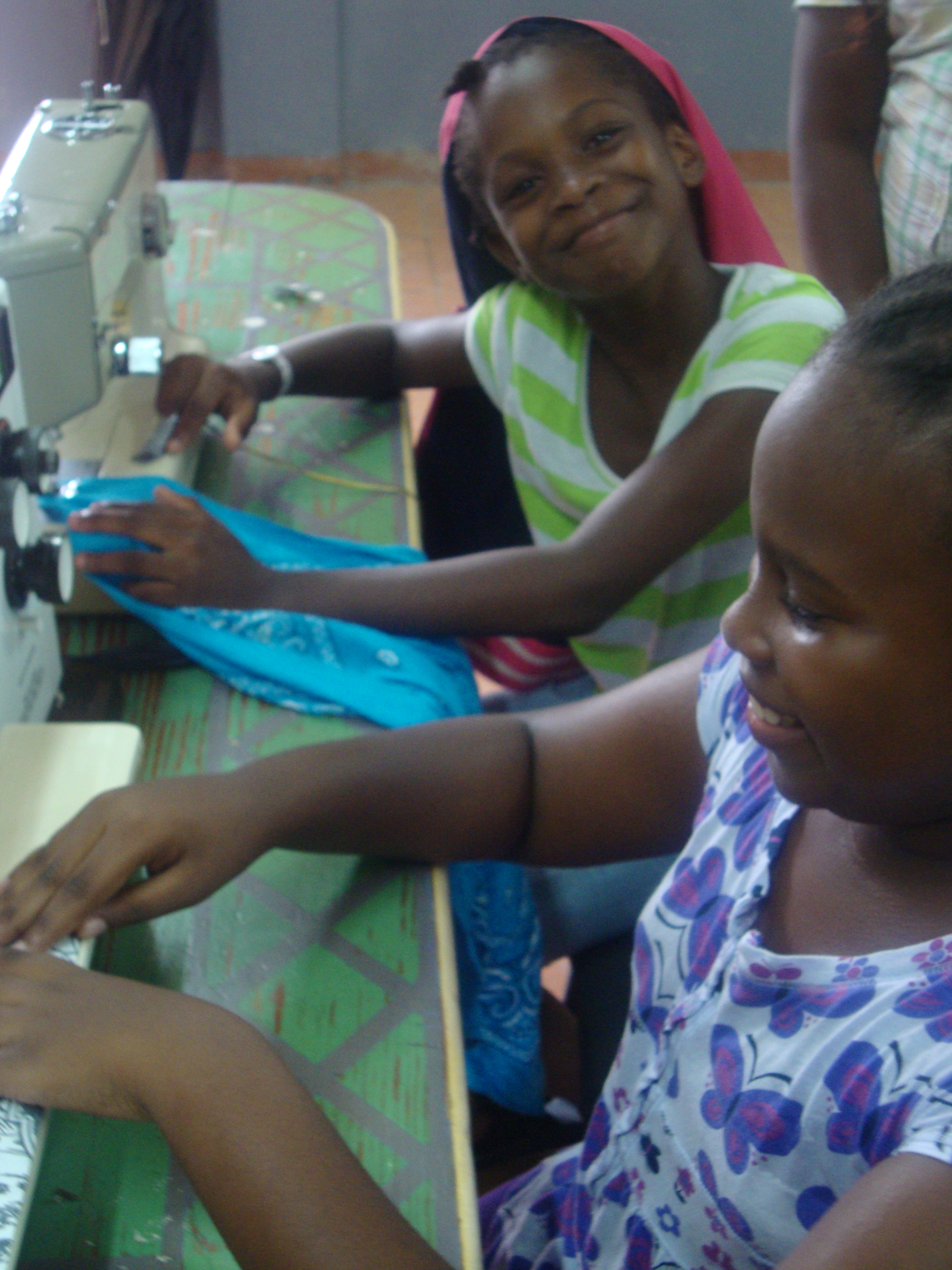
As you may have read on our web site, we received a wonderful letter from Peace Corps volunteer Liz Deppe thanking us for making it possible for the school where she teaches to acquire 20 sewing machines. Located on the island of St. Vincent, the Barrouallie Secondary School (BSS) is the fortunate institution to welcome Liz and, hence, receive the machines. Originally from Ames Iowa, Liz has only been in St. Vincent for 8 months as an assistant to the teachers in the art and reading courses; however, in that short time, she has made an enormous difference. Having known about P4P from our work in Iowa, she decided to contact us about donations of sewing machines to incorporate into the curriculum. What can they do for employment without this skill? While banana production has dominated the economy, the government has been seeking ways of diversifying so that Vincentians do not continue to be vulnerable to price fluctuations and crop diseases. Tourism is an industry that has grown widely, but not everyone is able to profit from this type of expansion. This is where the importance of a solid education backed up by practical vocational skills comes into our story. According to Liz, “[t]hat first project and many more projects the students at BSS will work on are teaching them more than just how to sew. They are learning patience, creativity, problem-solving skills and a sense of accomplishment.” While the machines are not used for production but strictly classroom learning, there is hope that more machines can be acquired so that families may be able to purchase them and begin their own businesses. At the very least, the students have a marketable skill to offer alongside the knowledge they gain from their studies.
Liz has witnessed firsthand the lasting effect that tangible results from focused effort provide: “What I believe is the most rewarding part of our newly created sewing program is a sense of accomplishment. At a school with little resources and many struggling students, it is amazing to watch a student, who has never felt proud, show you what they have accomplished. Their face beams as they hold up the finished product, something they can use and show off.” It is part of our mission to do the utmost to send our shipments as economically as possible while striving to get the sewing machines and bikes out to those in need as quickly as possible. P4P was able to ensure that the sewing machines could make it to the school and with as little financial burden as possible by sending them via sea rather than air. The cost was demonstrably lower at $10 per piece. If all goes well, we may be able to continue this relationship not only with the school but also expand to other institutions on the island. It is Peace Corps Volunteers like Liz and people like our partners and contributors who think progressively, initiate programs, and give support that make our efforts so successful.
When we initiated new programs we very diligently investigate our potential new partner. The 1st obvious reason is to select the best partners overseas. The 2nd reason is we realize, especially with sewing machine programs, we have very little ability to monitor many of these far-flung programs. In fact, to monitor the program is often more expensive than supplying the program. We have a basic understanding at P4P that we do not send gringos overseas. The material we ship is appropriate technology, they do not need technical support from us. We are much more effective using our limited funding for shipping as much material as possible.
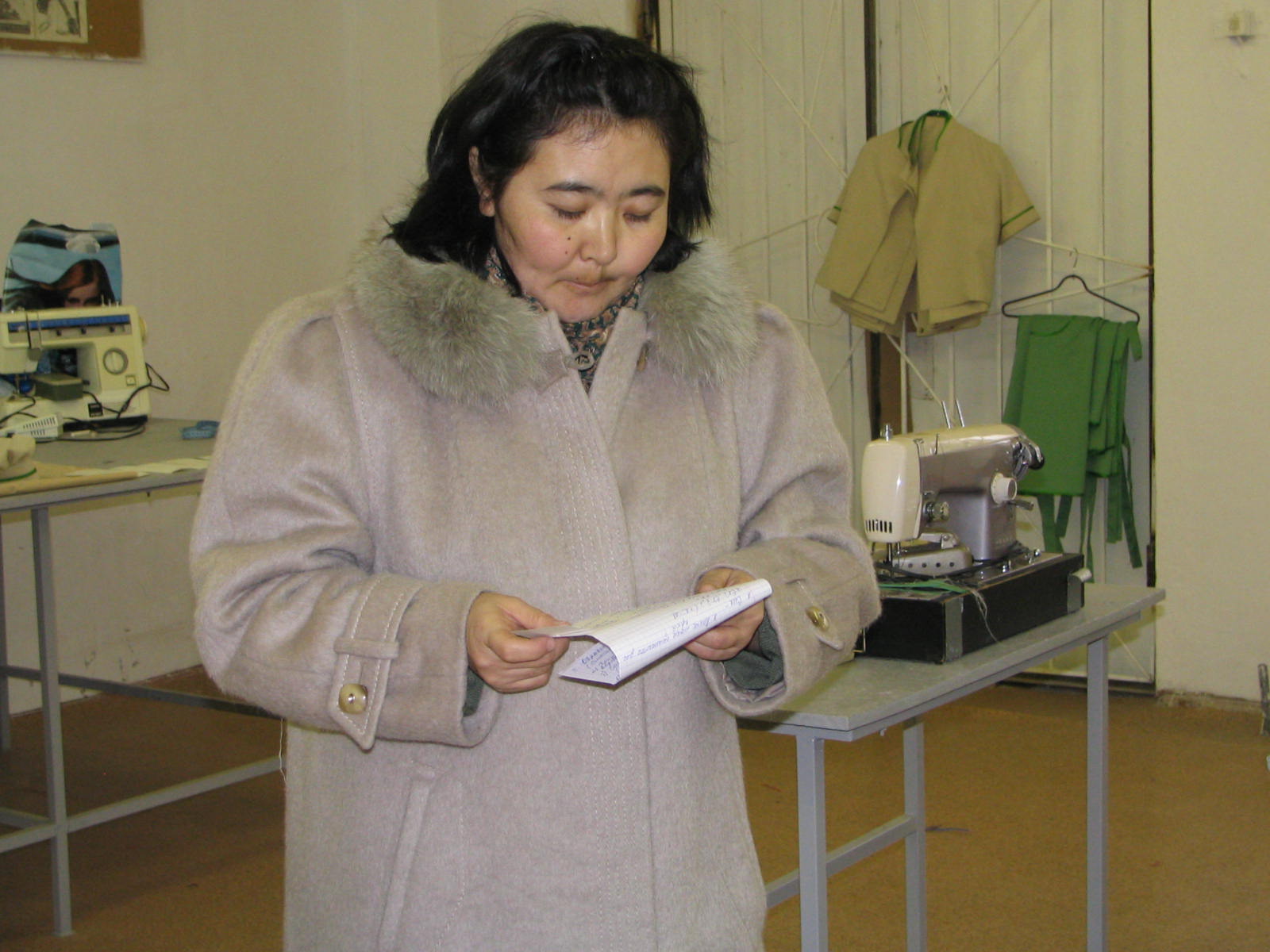
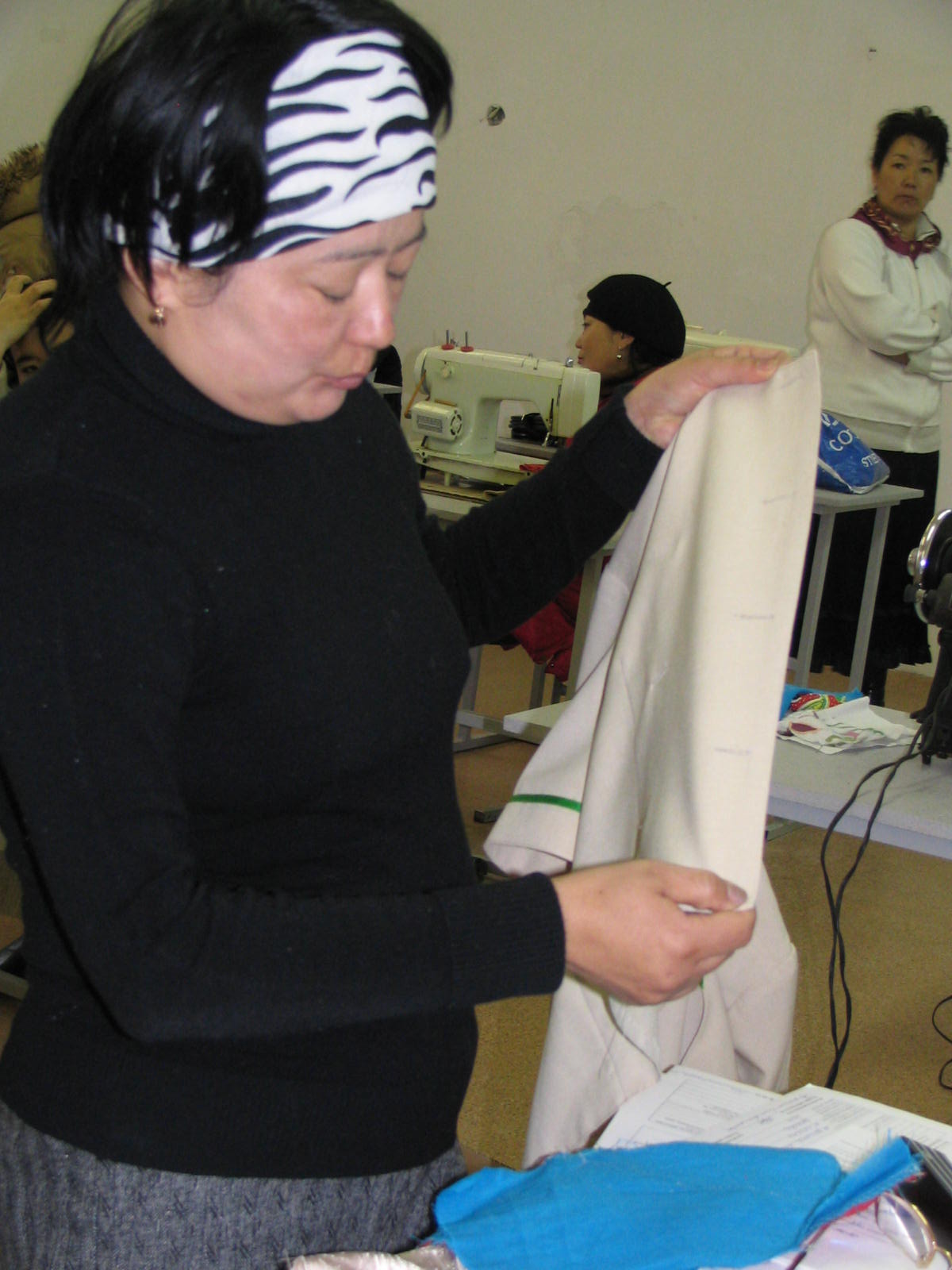
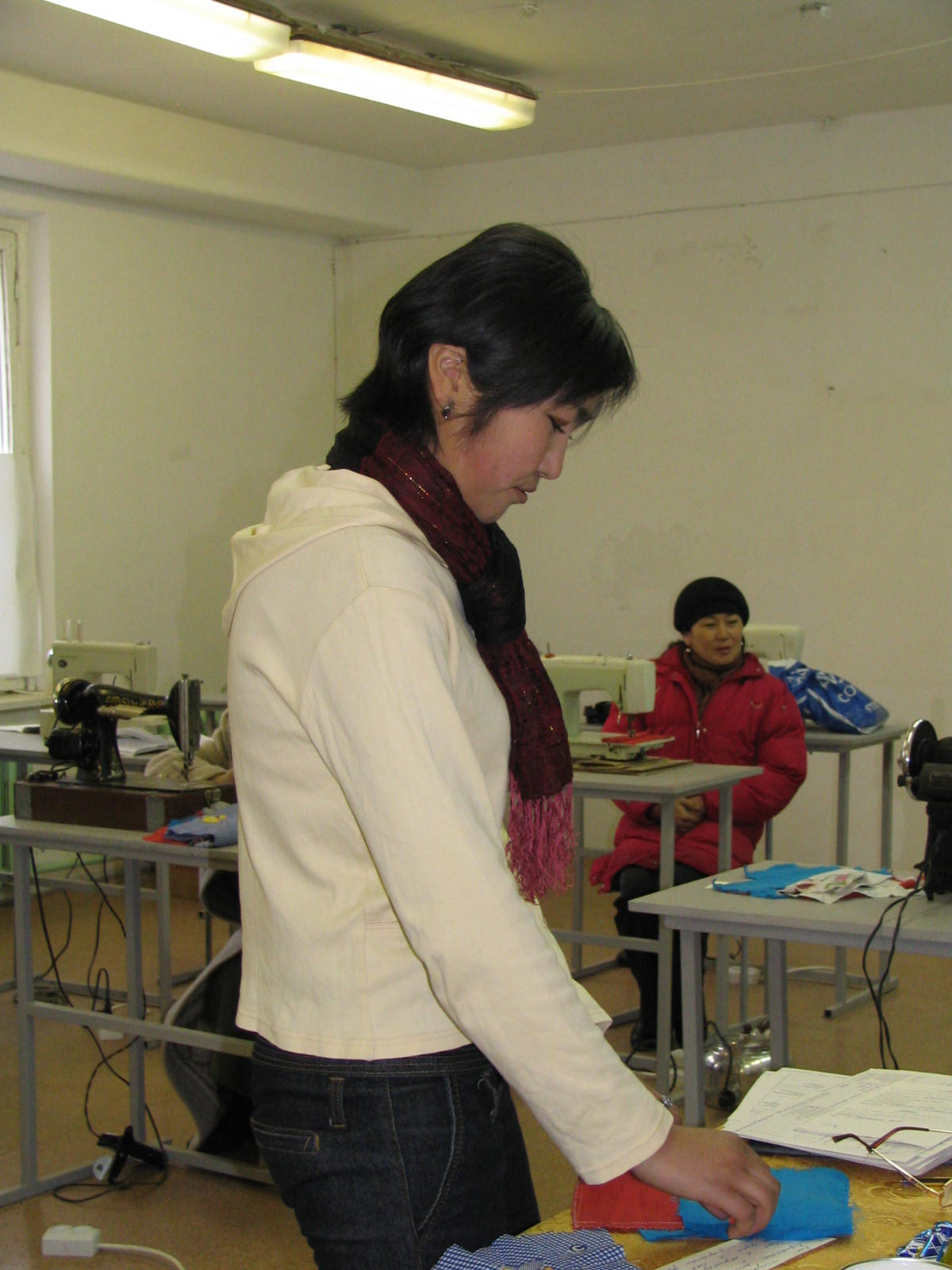
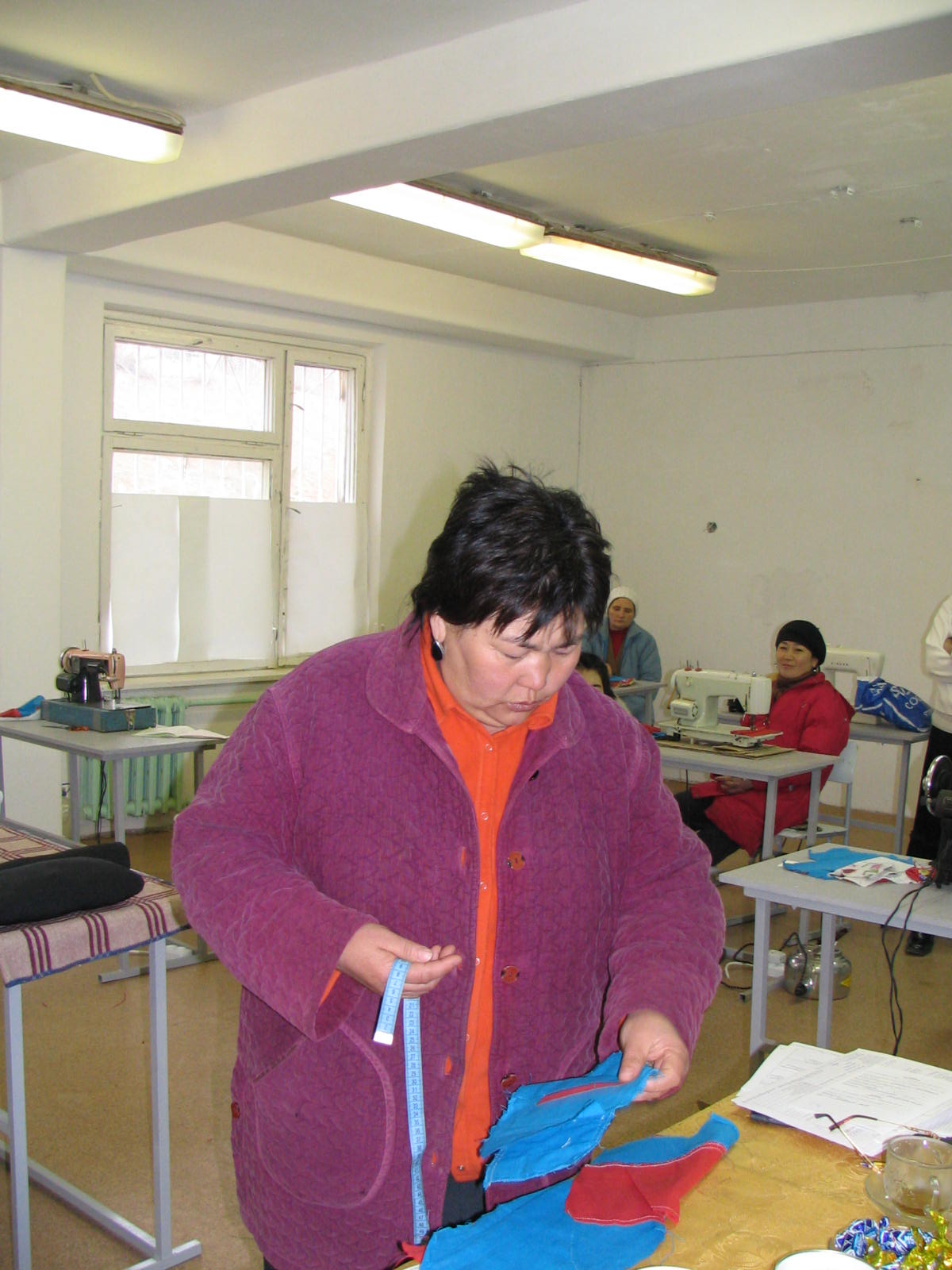
Longtime readers of our web site and newsletters will probably remember in 2008 with some assistance from the Clif Bar Family Foundation we sent a consignment of sewing machines to a Peace Corps volunteer in Kyrgyzstan. Kyrgyzstan is one of those geographical locations that we don’t happen to pass by often. When PCV Roberto left Kyrgyzstan, we lost contact with the sewing machine program.
I never lost faith that the sewing machine project in Cholpon-Ata could be successful, I just knew that I had no way to find out. I was so pleased this weekend to receive the following e-mail and photographs.
David,
I’m happy to report the sewing cooperative is functioning as both a producer of linens and a training center unemployed women who are interested in taking up sewing. The Peace Corps volunteer there forwarded me some new up-to-date pictures. Rob
Even though sometimes I do not get the story and photographs back quickly, to the community the bicycles and sewing machines we ship are so vitally important that they are made use of. To those of you who donated funding and or sewing machines in 2008, thank you from our staff and the employed women of Cholpon-Ata.
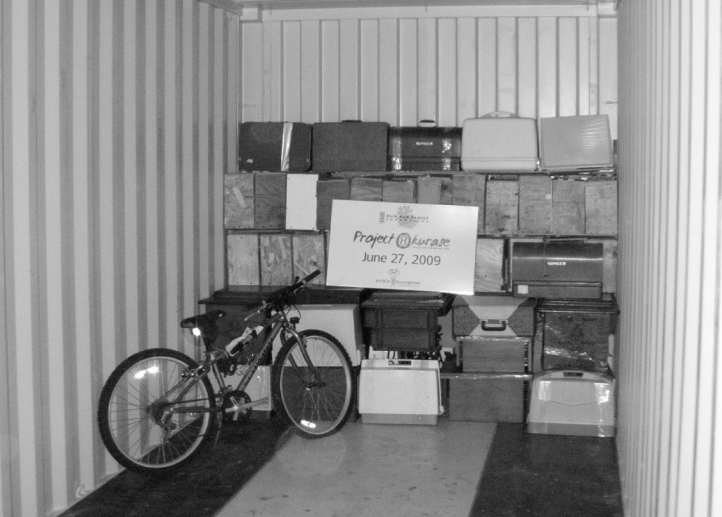
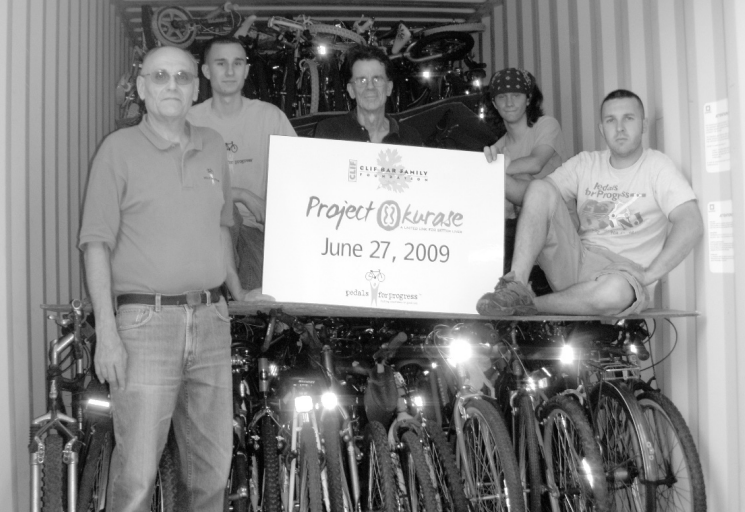
Project OKURASE, in Ghana, recently received their second container from Pedals for Progress, bringing the overall numbers shipped there to over 1,000 bicycles, 100 sewing machines, and even some soccer gear. These shipments have given a welcome boost to the Project’s mission to provide skills-training and formal education to vulnerable children and women, especially those affected by HIV/AIDS.
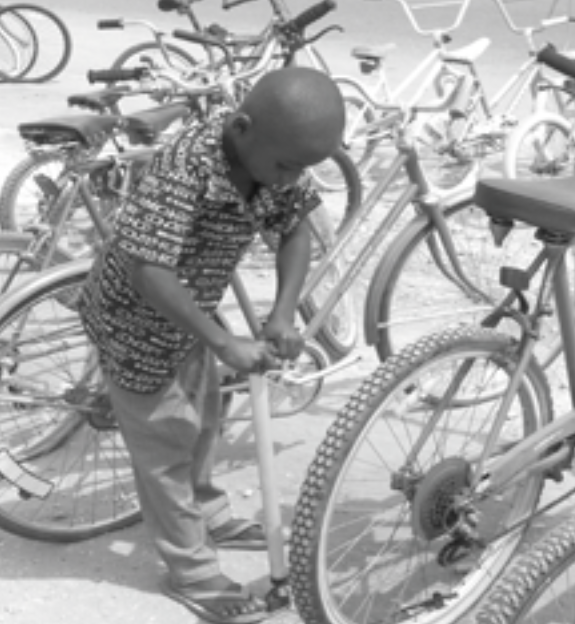
A number of undertakings and partnerships support the Project’s mission. Currently, one of the most dynamic initiatives is providing local women and children with a general education, vital job skills, and the opportunity for entrepreneurship. This is the area in which P4P has been able to most directly assist. With the bicycles received to date, the Project has been able to open two retail bike shops. The larger shop is located in the Dansoman district of Ghana’s capital, Accra, allowing the bikes to be distributed to the mass of people in the city. The second shop is located in the village of Okurase. Here, in addition to the main business of getting bicycles to those in need, interested villagers can learn bike repair and also the financial skills necessary to budget for a life-changing bicycle. The village has received the bicycle program very well.
But Project OKURASE’s name refers to more than just the village in which it is based. It is an acronym for the concepts its co-directors, Dr. Samuel Nkrumah Yeboah and Cynthia Cupit Swenson, PhD, see as the underpinnings of their mission: opportunity. For example, the distribution of bicycles supports this mission by helping farmers spend more time in their fields and less time in transit, by helping vendors bring more goods to market, and also by helping people from far-flung surrounding communities reach the Project’s educational programs.
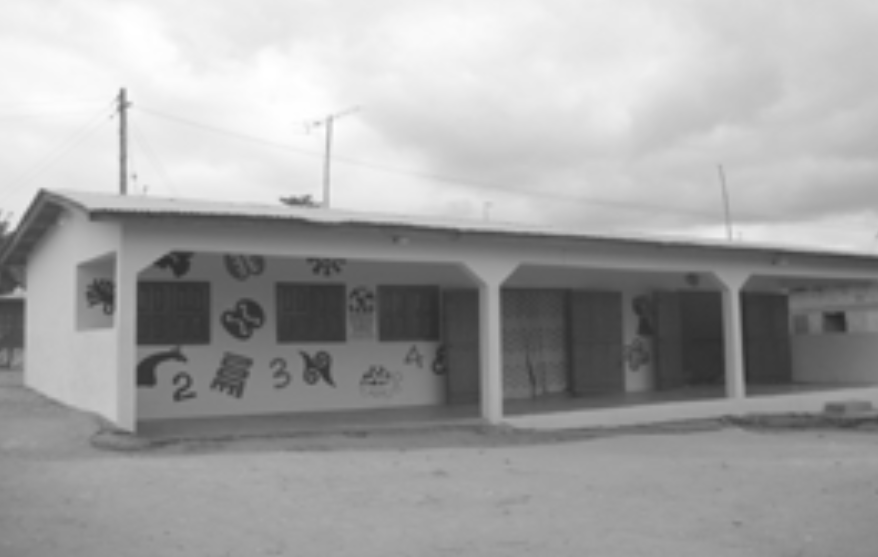
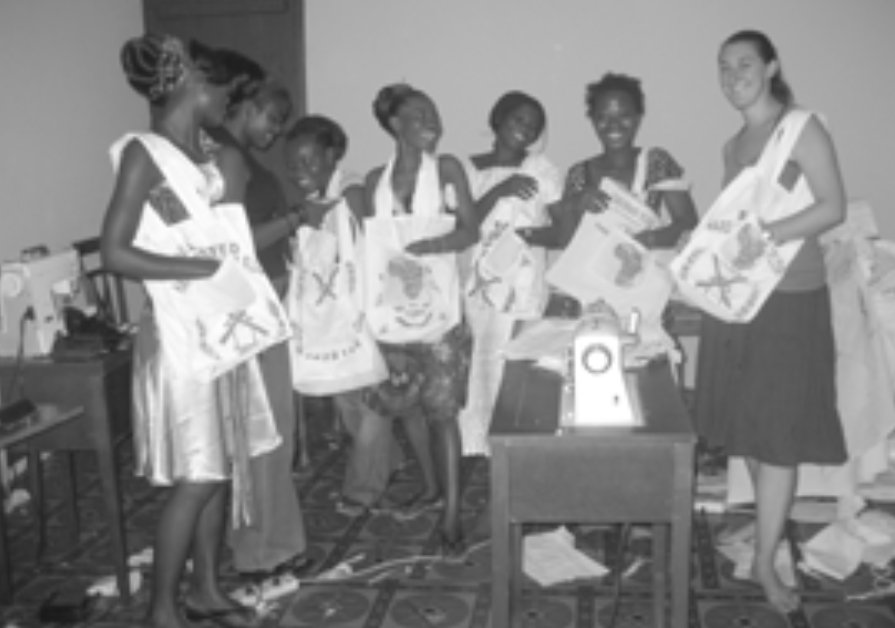
Students with their final products
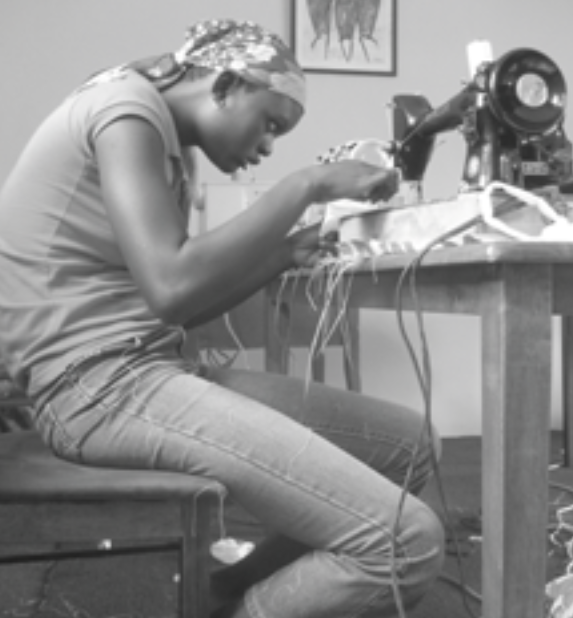
One of the most exciting of these educational programs is Rhion’s Sewing Centre. Established in Okurase upon the arrival of the first shipment of P4P sewing machines, it not only teaches young women needlecraft but also business skills. The Project’s U.S.-based volunteer creative director, Rhion Magee (who is also a creative director for DreamWorks Animation) has helped the Project design and develop marketable products handcrafted from readily-available recyclable materials. One example of what the women make and sell is an attractive and durable marketbag made of repurposed flour and rice bags. This and other products are available globally from the Project’s website.
The women of Rhion’s Sewing Center are also supporting one of Project OKURASE’s most inspiring efforts. In a partnership with a nonprofit group in Los Angeles, they are introducing an international line of children’s clothing. These clothes will be made from Ghanaian fabric, in Los Angeles, by women who are in recovery from difficult life situations. A portion of the proceeds will return to the women of Rhion’s Sewing Centre so they can produce more fabrics, and also make school uniforms for orphans and impoverished children in Ghana.
Project OKURASE has also used P4P machines in their sewing outreach program. It is simply not possible for every interested woman or child to reach a place like Rhion’s Sewing Centre. So, the Project donates sewing machines to other local partner organizations. One such is the Street Children’s Academy in Accra, which serves hundreds of street children in its day programs. Until they received one of P4P’s sewing machines through Project OKURASE, they had not been able to offer sewing classes. Another donation was made to New Life Orphanage in the Central Region, one of Ghana’s poorest districts. Several of the residents there had expressed a strong interest in learning the seamstress trade, which had hitherto been closed to them for want of training and equipment.
It is strong partners such as Project OKURASE that make it possible for P4P to do its overseas work. The United States is rich in equipment and resources that developing countries are desperately lacking and, with our supporters’ donations, we are able to collect a considerable amount of it, new and used, for distribution overseas. But it takes local organizations in the destination countries to know how best to share out that equipment and those resources where they will do the most good. In supporting Pedals for Progress, our contributors also support the efforts of our partners, who live in those developing countries and have very real stakes in their economic development.
The people of Project OKURASE wish to give their thanks, or medaase, to Pedals for Progress and our supporters. We at P4P would like to say medaase to you as well. It would not be possible to operate without your continued assistance.
A member of the Board of Project OKURASE contacted P4P earlier this year specifically looking for the donation of sewing machines. P4P was very interested in the project and wished to be of assistance. Through the good graces of our Ghanaian partner, WEBikes, we were able to get twelve sewing machines delivered to Project OKURASE. While this first donation has initiated the sewing job skills training program, it quickly became evident that the need was much greater.
P4P had fifty sewing machines that we wished to ship to Okurase, which included 3 manual foot pedal machines donated by Furniture Assist, a New Jersey nonprofit which collects used furniture that is donated to disadvantaged families in New Jersey. The standard problem presented itself; the goods were available here, needed there, but how to pay for the transportation costs.
The cost to airfreight sewing machines is very prohibitive. In fact the cost to ship these fifty machines air freight is not that much less than the cost of shipping a full container of bicycles. This is where Joey Penman, a strong supporter of Project OKURASE, and the Clif Bar Family Foundation, a major supporter of Pedals for Progress, came in. Together they donated enough funding that added to existing Project OKURASE funds made it possible to ship not only the fifty sewing machines, but to allow P4P to place those machines in among a full container of bicycles. Certainly receiving an unexpected 480 bicycles in addition to the 50 sewing machines will greatly change the small village of Okurase, located in the West Akyem district of the eastern region of Ghana.
The four overarching goals of Project OKURASE are to develop:
A family-based model of caring for orphans and vulnerable children.
A model for job and skills training for youth, young adults, and women in the arts and building industry.
A model for family and village-based formal education with special emphasis on female children.
A model for a community of green design or sustainable architecture.
In the developing world, in the hands of someone who knows how to use one, a sewing machine means instant income. The following two profiles are fairly typical examples of how sewing machines help people in the developing world, whether in Latin America, Africa, or Eastern Europe.
Juan Carlos and Migdalia Dávila
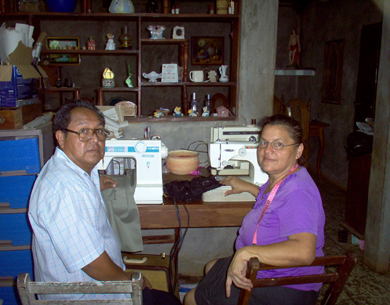
For years, Juan Carlos Dávila worked by day as a receptionist at a private institution in Jinotepe. His wife, Migdalia, is a skilled seamstress. At night, he helped her with the sewing to earn extra money for their family.
His receptionist salary was barely enough for them and their 11-year-old son to get by on. As their tailoring business grew, it was their hope that one day they could come to depend on it as their sole income. But a second sewing machine, a new one, was far too costly.
In November 2008, Juan Carlos was suddenly laid off from his receptionist job. Today, he and Migdalia survive because they can both sew, and because they were able to get a second sewing machine from Pedals for Progress through our partner organization Ecobicicletas Rivas. Today at their tailor shop, they make men’s suits, women’s dresses, curtains, table linens, and they are currently searching for an employee or two to expand their business.
Elvis Cruz
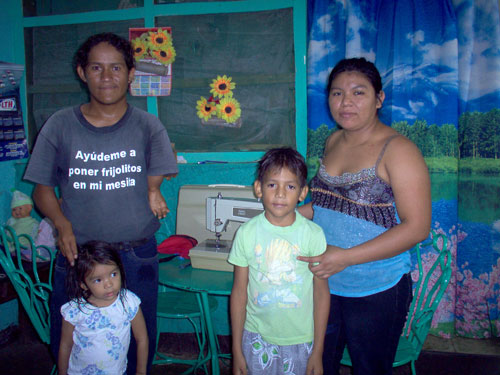
Elvis Cruz is 25 years old and from Managua, Nicaragua. He was born disabled; both of his arms are severely deformed. While this provided certain challenges, it hasn’t kept Elvis from working, playing baseball, or otherwise living a full life. Married with two young children, Elvis works as a flagman directing traffic in Managua. But his income wasn’t enough to adequately support his family. After making a public appeal on a local TV show for the opportunity to earn more money, his wife received a sewing machine from one of our partners. A talented seamstress, now she works from their home earning extra income for their family.
Donate bicycles and sewing machines to developing countries