Category Archives: Sewing Partners

One Woman and a Sewing Machine

It is often the case that the hardest and most expensive places to reach are where the greatest need exists. P4P works to surmount obstacles—both physical and financial—that stand in the way of isolated regions realizing economic success. Since 2006, we have measured our success in helping Ugandans develop economic independence by noting the increased demand for the delivery of bicycles. Now, through our existing partnership with the Entrepreneurship Institute of Applied and Appropriate Technology (EIAAT), which receives and distributes our shipments, we have included sewing machines along with the bicycles and extended more opportunities to more Ugandans.

Of course, this is not as simple as it sounds. Uganda is among the most expensive places to ship. Getting from here through the Suez Canal to Mombasa Kenya is relatively reasonable, but our vessel, the Maersk Alabama, was recently attacked again by pirates. Trucking containers inland across thousands of miles from Mombasa Kenya to Kampala Uganda on bad roads is much more expensive than maneuvering within pirate-infested shipping lanes. We funded the most recent shipment with grants from the Helen & William Mazer Foundation and the Clif Bar Family Foundation.
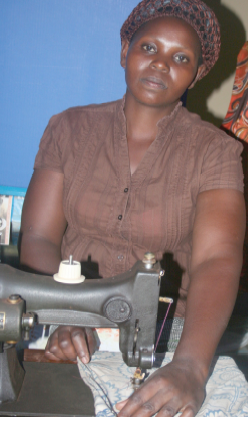
Jane in her workshop

The courageous hard working Jane Kigoye is just one example of how the inclusion of sewing machines in these shipments has begun to change lives for the better. Jane had no employment and worked as best she could in her garden for food. Sometimes she could find beans, nuts, and other cereals and she improvised as best she could. Her husband’s job as a motor vehicle mechanic did not bring in enough money to keep their four children from hunger. Jane did have some knowledge about basic tailoring; all she needed was a reliable sewing machine. As is often the case, necessity breeds innovation and she managed to search out and hire a manual sewing machine and a small shop to operate from. When she made some money, she made some inquiries in Kampala about the cost of sewing machines. From there she was directed to the EIAAT by one of the agents who buys bicycles from them. She went to the institute and, after looking at the various electric sewing machines, selected one. They told her that it cost $85 but, after some bargaining, they settled on $80. She only had $40, so she left that as a deposit and had to leave the sewing machine behind, promising to pay $10 from what she made from the tailoring every week.

During this time she was mastering the art of tailoring and the income she was making was used partly for home provisions and partly for her weekly payments on the sewing machine. As her business grew, she was no longer digging in the garden and she was able to hire casual labor to take the manual chores over. All her efforts were on growing her tailoring business and creating a stable life for her children. This may all sound rather charmed, but it was not an easy path that led to full stomachs and financial security. A major setback occurred after only two weeks of payments.

She arrived at the EIAAT almost in tears telling them that the sewing machine she had hired was taken away from her and she did not know what to do. Inevitably, if she lost her tailoring shop, somebody would readily move in and take over her customers. Getting a new place is very expensive. She would need to be able to pay for three to four months’ rent at once, plus the fee for the house “blocker” who finds the place for her. She would also have to furnish the new place and develop new clients.

 
  COUNTRY FACTS: UGANDA

  POPULATION: 25 MILLION

  GDP PER CAPITA: $1,200 per year  

  LITERACY RATE: 70%

Sowing Peace by Sewing Prosperity

Spring 2011 InGear

P4P’s long practice of supplementing our bicycle shipments with sewing machines has been a great success. Where we ship, little opportunity exists for people to find the employment that will enable them to earn a living wage. So sewing machines are a great way for us to make a difference—they are simple to operate and easy to maintain. With access to electricity, their owners can create their own opportunities to generate work.

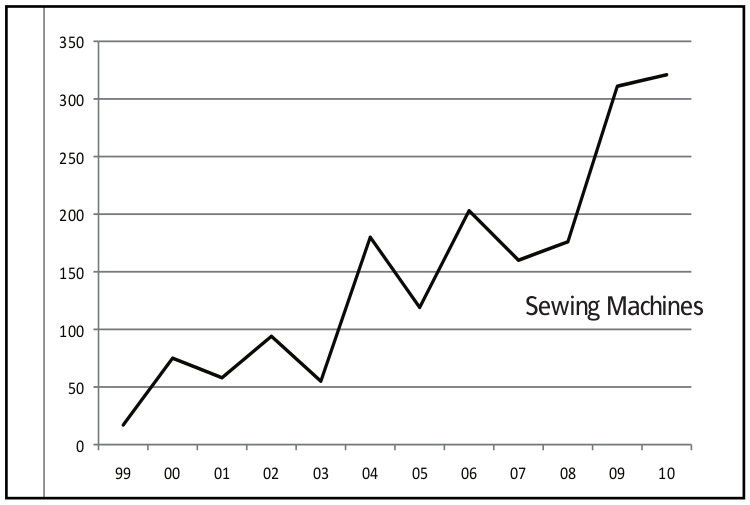
2011springSewingMachinesGraph
We’ve been able to distribute over 1,700 of them worldwide to help give thousands of people the opportunity of self- or full-time employment. They used to be just an extra goodie we could slip into our bike shipments, but now we are able to develop stand-alone sewing programs that we are sometimes able to supply by air freight.

Consider this chart: since we began shipping them in 1999 our sewing machine production has seen an overall increase, despite the challenges of the moribund economy. We need your help to keep this life-changing initiative growing. Sow peace by sewing prosperity, donate today.

A Friend In Need Is A Friend Indeed

by Constantin Bandiu
Fall 2010 InGear

Pelinia is one of the largest villages in northern Moldova, with a population of over eight thousand. The main occupation for villagers is farming, which keeps most residents busy all year round. Consult-Nord was founded in 2005, with the agreement of Pelinia’s citizens, to be a voluntary, independent, self-administrated, non-political organization to undertake projects for the benefit of the population of the Pelinia region as a whole.

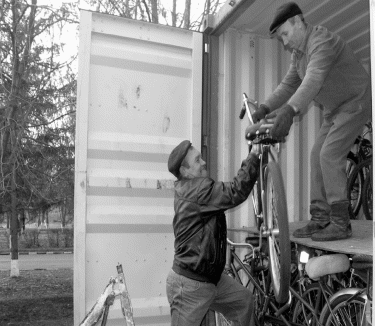
2010fallMoldovaTwoMenUnloadingOur association’s aims are to organize area youth and improve their socio-economic condition, to develop close relations with local, national, and international NGO partners, and to establish a closer partnership with the local public administration for more efficient community problem solving. We’ve also founded the Alliance of Community Centers of Access to Information and Training (ACCAIT), currently comprising over 100 centers across Moldova.  We are able to maintain our activities through nominal fees for our services and by fundraising from external resources.

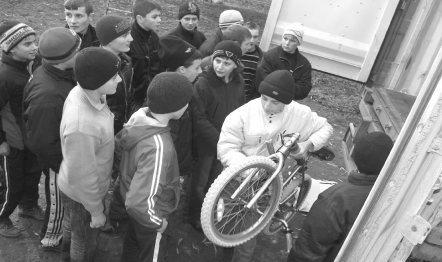
By 2006 we were able to implement the “Local Economical Development” project. Its major aim is to eradicate local poverty and unemployment by growing Pelinia’s economic sector and developing its infrastructure by organizing the resources of the community and its citizens. In 2008, due to a partnership with Pedals for Progress, the project was able to bring a container of bicycles from the United States. The aim of this initiative was to provide the bicycles at low cost to help Pelinians solve problems such as traveling around and outside the village efficiently, carrying heavy loads to and from their fields, etc.

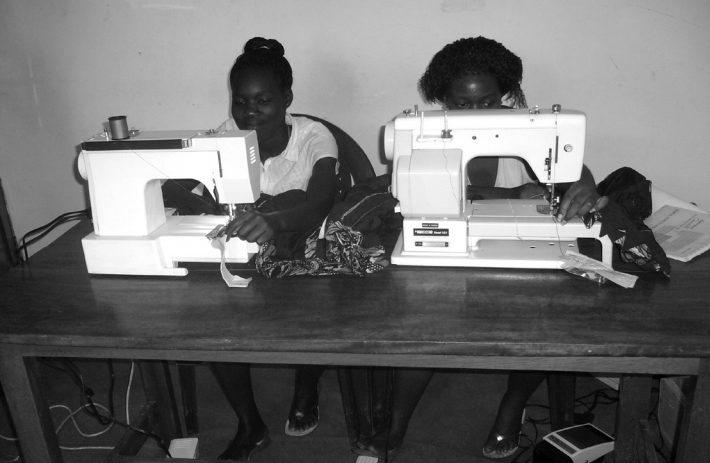
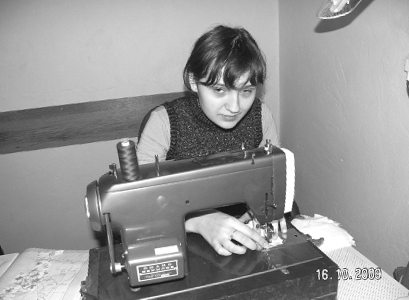
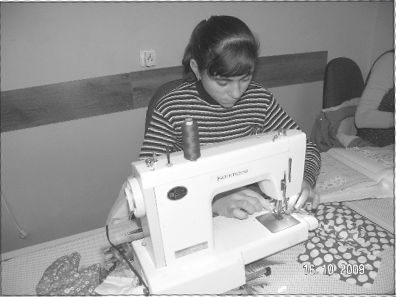
One of our most exciting projects has been our modern Sewing Workshop. Besides the bicycles, Pedals for Progress sent us 15 sewing machines. Last summer, with the proceeds of selling some of the bicycles and with the help of the Peace Corps in Moldova, we implemented the Sewing Workshop in the village. We prepared a room with five of the sewing machines, one industrial sewing machine, and the necessary furniture. Girls from the village were taught to perform certain sewing operations such as design and making up prototypes because these are most important in dressmaking. They studied the structure of fabrics, how to take measurements, and how to use the machines. Many of the graduates bought the machines at which they learned and now work at sewing garments for themselves, their families, and others.

Today’s economic crisis has affected us in Moldova, too. Nevertheless, we try to overcome this difficulty using patience and imagination. We don’t wait to act, we work everyday to find a way out. For instance, we have lowered the price of our bicycles to be even more affordable for those whose incomes have been reduced and need even more assistance. We’ve worked to place information and even photos on our web page — in this way we’ve expanded the assistance we are able to provide to other parts of Moldova and even into Romania.2010fallMoldovaCrewUnloading

At the end of 2009, with the money we got from selling our original shipment, we had funds enough to pay for the transportation of a new container from Pedals for Progress. We have just begun to make the bicycles available to the public, but I have promised to award two prizes for the best pupils of the year 2009–10 — one pupil from the primary school and the second from the gymnasium (note: in Moldova, the primary school serves students ages 6–10, while the gymnasium serves students ages 10–15). And, of course, we are going to reward the most active volunteers in our various programs.

We are thankful to Pedals for Progress and the American people for providing us the chance to solve some of our everyday problems, like helping us move more quickly through the village and its neighborhood and helping us carry heavy loads more easily.  Also, I can’t help mentioning the great help given by Peace Corps Volunteer Darren Enterline. He supported us greatly in implementing the Bikes for Everybody project and in opening the Sewing Workshop.  Thank you all ever so much for your kindness and generosity.  I wish you to be healthy and continue doing such generous charity for those who really need it so much nowadays.

Angels in Flight

Pedals for Progress has recently developed a unique partnership with Angels in Flight to send donated sewing machines to La Cuenca, Costa Rica. Founded by Cindy Paulus, Angels in Flight is a group of JetBlue flight attendants seeking to do what they can to make positive changes in the areas to which they travel. In the case of La Cuenca, P4P has been able to help by supplying donated sewing machines to a local sewing center established by Angels in Flight.

Sewing machines are a distinct challenge for P4P to ship overseas. It’s enormously expensive to send them by air freight, which is really the only feasible way to ship them conventionally—we can’t load a shipping container with sewing machines like we do bikes because it would take thousands of them to fill it and not only would it take years to collect such a vast amount, but what overseas partner could possibly absorb that many? So, typically, we send a few at a time along with our bikes to partners who also have sewing projects, like EIAAT in Uganda. Or, we are able to place them among the goods shipped by others, as in the case of International Relief and Development and their project in Georgia. We get them out however we can.

With Angels in Flight, one of our sewing machines gets a first class ticket with Cindy whenever she heads down to La Cuenca, located in the mountainous central region of Costa Rica in impoverished Heredia province. The neighborhood sewing center is dedicated to teaching local women a new craft and allowing them a fighting chance to put lives of drug use and prostitution behind them. So far, Cindy has been able to bring seven of our sewing machines, one at a time, with her to Costa Rica to stock the center.

We hope to be able to assist Cindy and all of the Angels in Flight in their endeavors to aid the needful communities they visit so often and wish so dearly to help.

P4P in Ghana: WEBike, OKURASE, Sew for Sisterhood

WEBike

For Pedals for Progress to get our bicycles to the smallest towns at the end of the road where the need for them is greatest, we need to find a local partner organization that has robust distribution potential. While most of our overseas partners are nonprofits, in a few instances we have chosen to work with effective for-profit organizations. Wright Enterprises is one of these.

Wright Enterprises is a for-profit company that imports consumer goods into Ghana. They have organized and maintain a supply chain across a very large swath of the countryside in order to bring all manner of goods to the small merchants who serve the needs of the local populations. Over the years, the merchants they supplied consistently requested bicycles for their customers, but importing bikes never proved cost-effective. After purchasing them abroad, then adding tariff and transportation costs, the final retail price of their bikes was too high for their end customers. The numbers simply didn’t make sense for them.

Then, in 2006, they contacted Pedals for Progress for assistance. Traditionally, we work with non-profit organizations. For a number of reasons, for-profit partners are usually unsuitable, but working with Wright Enterprises offered us a unique opportunity. As a commercial entity, they can get containers in-country easier because they bypass much of the red tape that keeps many non-profit groups from being effective. Most importantly, though, by partnering with them we gain access to many, many small markets we would otherwise not be able to reach.

For their part, Wright Enterprises established WEBike to distribute P4P bikes at little to no profit for themselves. As good businessmen, they realize that by supplying affordable transportation to their customers, those customers are able to earn more money and buy more of their merchandise. They have proven to be an extremely effective partner. While their main facilities are in Ghana’s capital, Accra, their supply networks extend through Accra’s populous suburbs, up the Volta River, and all along the Cape Coast.

ghanaOkraselinks

Project OKURASE

The purpose of Project OKURASE (Opportunity, Knowledge, Understanding, Renewed Health, Arts-Based, Skills Training and Education) is to address the HIV/AIDS crisis in Ghana by helping vulnerable and orphaned children who are impacted by HIV/AIDS in their family and their village. Click here to read the article on OKURASE in the Fall 2009 INGEAR.

Click here for the Project OKURASE facebook page.

Sew for Sisterhood

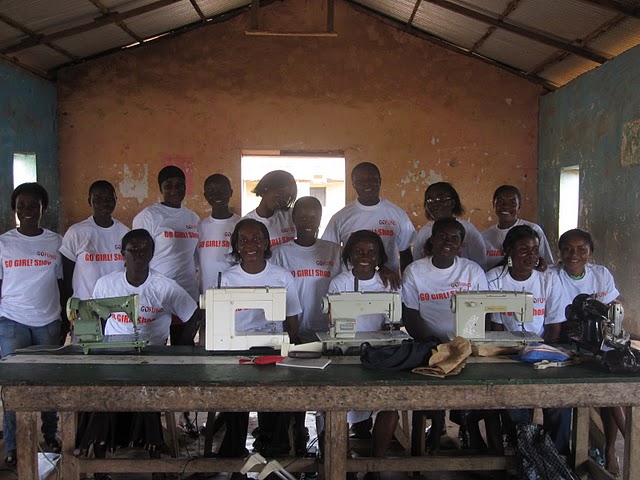
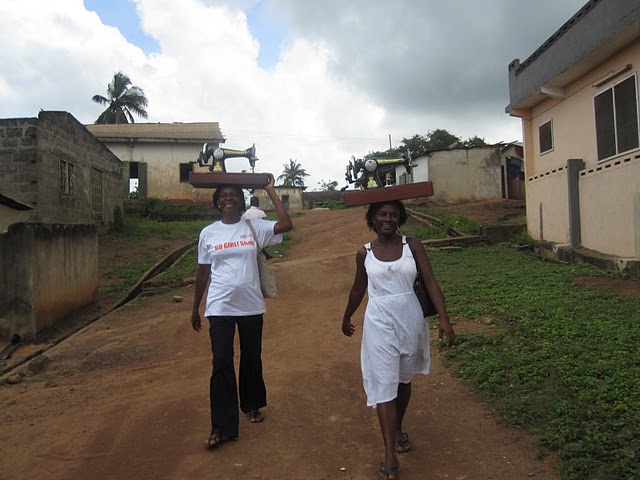
P4P is collaborating with the GO Fund to help support Sew for Sisterhood in Ghana. This is a true combined effort: the GO Fund supplies the trainers in the field while we supply the hardware. We are already planning our next joint venture in Kenya.

ghanaSewingClassIMG_1880 ghanaSewingMachinesOnHeadsIMG_1946

EcoBicicletas: P4P Partner in Nicaragua

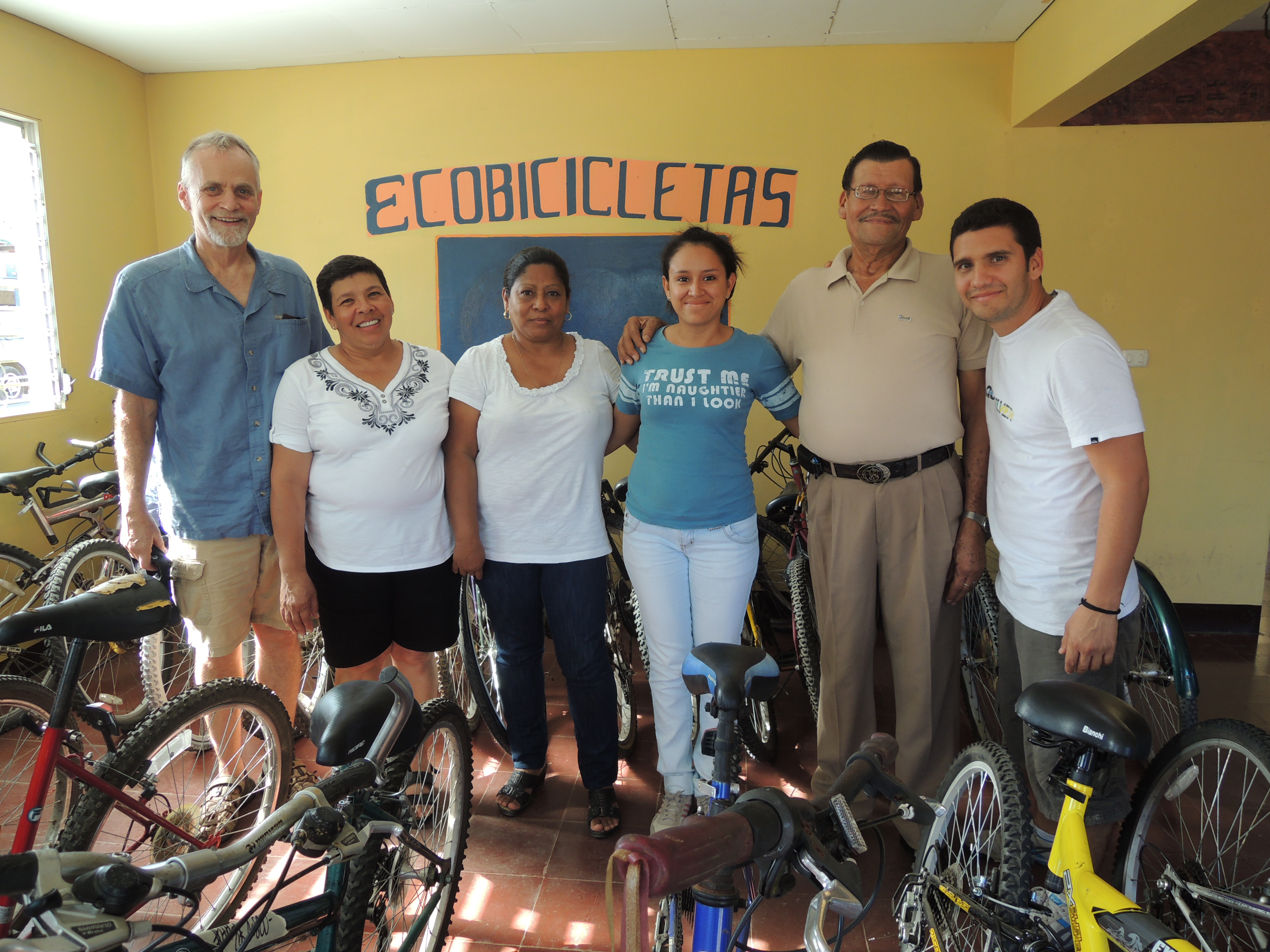
EcoBicicletas (“EcoBici”) is our partner in Nicaragua. EcoBicicletas is located in Rivas, Nicaragua, in the southwestern part of the country between the Pacific Ocean and Lake Nicaragua. Rivas, where we’ve shipped since 1992, is the oldest of our active programs, and we have sent more bikes to Nicaragua—more than 42,000—than to any other location. EcoBici is owned and managed by the Santana family, good friends as well as respected professional partners.

DSCN0913rivasBikeShopTeamGary

EcoBici serves low-income residents in the many small towns of the southern Pacific coast region of Nicaragua, where the terrain is flat and rolling, ideal for cyclists. EcoBici’s “profits” from sales finance small-scale rural community development projects selected and implemented by representative community organizations. These have included the construction of health clinics, schools, community potable-water systems, an infant feeding center, and the planting of community wood lots. EcoBici has also donated P4P-supplied sewing machines and baseball equipment to the José María Moncada School, the Susana López Carazo School, the Nandaime Women’s Center, and the Girasol Women’s sewing co-op on Ometepe Island. Pedals for Progress has placed more than 35% of the adult population of Rivas on wheels, and has created a self-supporting local bicycle import, assembly, and repair business.

  • Click here to read more about the early days of EcoBici.

  • Click here to read more about Karla Santana, the one-woman operation behind EcoBici. She is second from the left in the photo; her son Carlos, who also works at EcoBici, is on the right.

EIT: P4P Partner in Uganda

[As of Summer 2017, the P4P partner in Uganda is the Mityana Open Troop Foundation. The information below refers to our previous partner, the Entrepreneurship Institute of Technology.]

Based in Kampala, the capital city of Uganda, the Entrepreneurship Institute of Technology (EIT) is a vocational institute which serves men and women who, for many reasons, could not continue their formal schooling. Our mission is to prepare them for a working life and a bright future. We offer courses in, among other things, tailoring, welding, metal fabrication, bicycle repair, and computer literacy.

In our country, private institutions are among the most important providers of vocational training, accounting for almost half of all such education. A population of skilled workers is essential for any country seeking to reduce poverty and develop an economy strong enough to provide the hope for a better future for its citizens. Vocational schools help establish, sustain, and expand the industries necessary to do this.

But in Uganda there are not enough opportunities for youth to attend quality schools. There are widely differing standards of education. Poor administration and insufficient communication between institutions and the government mean many schools have failed to gain official recognition or attention from the people whom they should be helping. And student payments are the primary means of finance for vocational schools—resulting in high fees that the majority of Ugandans cannot afford.

Bicycles arrive at EIT.

EIT (formerly EIAAT, Entrepreneurship Institute of Applied and Appropriate Technology) was established by directors Charles Mulamata and Joyce Kayongo, a married couple who are also involved in other businesses. Their work in metal fabrication, solar and other renewable energies, and energy-efficient stoves helps them afford to run their institute differently than other Ugandan schools.

Another difference is that EIT receives donated containers of second-hand bicycles and sewing machines from Pedals for Progress. The used bicycles are sold at low cost locally. Most of the income is then used to finance the importation of more P4P containers. The surplus money is used to finance the vocational school’s administrative costs and its other development activities.

spring2009ugandaStudents

The sewing machines EIT receives from P4P are used in our school’s tailoring program. A student starts on a machine and learns how to use and maintain it. Students, if interested in their particular machines, have the option to pay for them in small installments as their studies progress. Then, if at the end of the course the sewing machine is fully paid, students can take them away for their future work. In this way students not only learn tailoring but are encouraged to plan and budget for the future, and motivated to care for their sewing machines. Students are introduced, in a practical way, to entrepreneurship.

In addition to our vocational programs, the distribution of bicycles is very important for us. They are more than a means of funding for our school. The benefits to purchasers of our bikes are enormous. The bikes are sold at low price and are very useful in Uganda, as we have very poor road conditions which are sometimes impossible to navigate by car. Some of these unreachable areas are left undeveloped because the local population do not have easy means of mobility to go where services are provided, and those services cannot come to them. The increasing cost of fossil fuels also contributes to the demand for alternative means of transport. The bicycle offers easy, low cost, all-weather, all-road, on-demand transportation and is clearly one of the most appropriate technologies for a developing country.

Mission Statement

The Entrepreneurship Institute of Technology (EIT) is an adult education program. Its primary purpose is the advancement of job creation and skilled worker education. Its goals are:

  • To attempt to enhance the income generating capacity of the graduates through the teaching of specific technical work-related skills
  • To provide on going consultation in small business development to the skilled craftsmen trained
  • To help create more economic prosperity for the Ugandan society in general and the region at large
  • To offer opportunities for all to train themselves for a skilled career
  • To offer the pride of self-sufficiency
  • To acquaint the students to the various job creation opportunities available
  • It shall act to promote school activities and that increase the students’ interest in job growth, education, personal growth and civic affairs.
  • It shall be non-denominational with no bias to race, religion, gender or political affiliation.

Click here for a 2011 report on EIT.

Letter from Dolinta Mihaela, Moldova

Fall 2010 InGear

Dear Pedals for Progress,

2010fallmoldovaDolinta

The Milesian philosopher Thales said that one of the very difficult things for men was “to know oneself.” But I also think it’s one of the most rewarding. We discover new sides of our personalities trying new things and learning new skills. These experiences help us look forward to new goals. That’s why it’s so important to try every opportunity to know yourself. At Consult-Nord’s sewing center I’ve had the opportunity to improve my sewing skills—and I found the experience beautiful. I always wanted to be a designer and create my own clothes and I’ve been able to make my dream come true. I didn’t need to become an expert to create clothing, I only needed the desire and inspiration of knowing how splendid it is to wear clothes you’ve made by yourself. But I also think the sewing center is more than simply a place to pursue an interest. It’s helping to meet a real need we have nowadays. Not everyone has the chance to buy a sewing machine in order to make or repair garments, so in this case the center provides a practical solution.

These sewing classes helped me a lot in improving my skills and now I’m sewing my own garments. That’s amazing, isn’t it? I feel myself very lucky because I learned to sew and I am thankful to all those people who implemented this project. Thanks a lot for helping people to realize their dreams!

Dolinta Mihaela, 12th grade student

Letter from Pripa Elena, Moldova

Fall 2010 InGear

Dear Pedals for Progress,

2010fallMoldovaPripa

I am a 15-year-old girl from Pelinia, Moldova, and trying to choose the way of my future. Frankly speaking, I was confused and didn’t know where to continue my studies. But now, after attending the “Art of Sewing” courses organized in our village by Consult-Nord, I know for sure that I will be a dressmaker. These courses were of great help to me, and my friends too. First, because we teenagers from the village are not so lucky as those from the cities, we don’t have the possibilities they do. Second, the courses were free.

We were satisfied here because we have learnt a lot of interesting things starting with the fabrics’ structure, taking measurements, and finishing with performing certain operations in sewing. We were given knowledge about the sewing process from start to finish. I sewed myself a nice dress and after I finished the courses my parents bought me the very machine I had worked on. I hope to make my parents happy sewing for them, too.

In conclusion, on behalf of the girls who attended the courses, I want to thank you for your kindness. I greatly appreciate you helping me reach my goals.

Pripa Elena, 9th grade student

Georgia & International Relief and Development

Fall 2010 InGear

P4P is pleased to announce a partnership with International Relief and Development (IRD), one of the world’s largest non-profit investors in international development and providers of humanitarian assistance. IRD has relief programs in over forty nations. One of these is Georgia.

Nestled in the Caucasus Mountains, Georgia is a former Soviet republic which has been attempting to remove itself from the shadow of Russia for nearly two decades. Despite large amounts of Western political and economic aid, Georgia’s economy remains inextricably tied to its powerful northern neighbor. Its domestic market is miniscule and the vast majority of its imports and exports come from or are destined for Russia. This is problematic in light of intermittent, politically-motivated bans on Georgian products by the Russian government and the fact that, since its independence, its outdated Soviet industries have struggled to compete internationally. In addition, Georgia’s notoriously corrupt government seemingly has little power to aid the plight of its people. Over a quarter of Georgia’s population lives below the official poverty line.

The 2008 conflict with Russia over South Ossetia hurt many Georgian families who had been forced from their homes and returned to find many of their tools and supplies stolen or lost during the Russian occupation. IRD is working with the United Nations High Commission for Refugees to provide assistance to more than eight hundred of these families. As part of the IRD effort, P4P-supplied 82 sewing machines, which are being made available to encourage local entrepreneurship. These machines are expected to arrive on the Georgia by mid-July.